Key Takeaways
Our Verdict
No single network dominates every scenario. Tesla Supercharger wins on consistency and highway coverage, Electrify America edges ahead on peak speed, EVgo is the strongest pick for urban drivers, ChargePoint suits workplace and destination charging, and Blink fills Level 2 gaps where others don't reach. The right answer depends on your vehicle, driving patterns, and whether you have home charging.
| Best for | Recommended |
|---|---|
| Highway road trippers who prioritize reliability and network density | Tesla Supercharger |
| Drivers of high-capability EVs who want maximum charging speed | Electrify America |
| Urban EV owners without home charging who need convenient city access | EVgo |
| Commuters seeking workplace or destination Level 2 charging | ChargePoint |
Why the Network You Use Matters More Than You Think
Picking the wrong charging network for a road trip isn't like pulling into the wrong gas station — it can mean a 45-minute wait at a broken stall, a surprise bill twice what you expected, or a detour of 30 miles to reach an alternative. The five networks profiled here — Tesla Supercharger, Electrify America, EVgo, ChargePoint, and Blink — collectively account for the majority of public DC fast-charging infrastructure in the United States, but they differ dramatically in where they place stations, how fast those stations charge, and what you'll pay.
For a fuller picture of how the US charging landscape is structured, see the complete US public charging network overview. This article zeroes in on the side-by-side metrics that actually affect your day-to-day and trip-planning decisions.
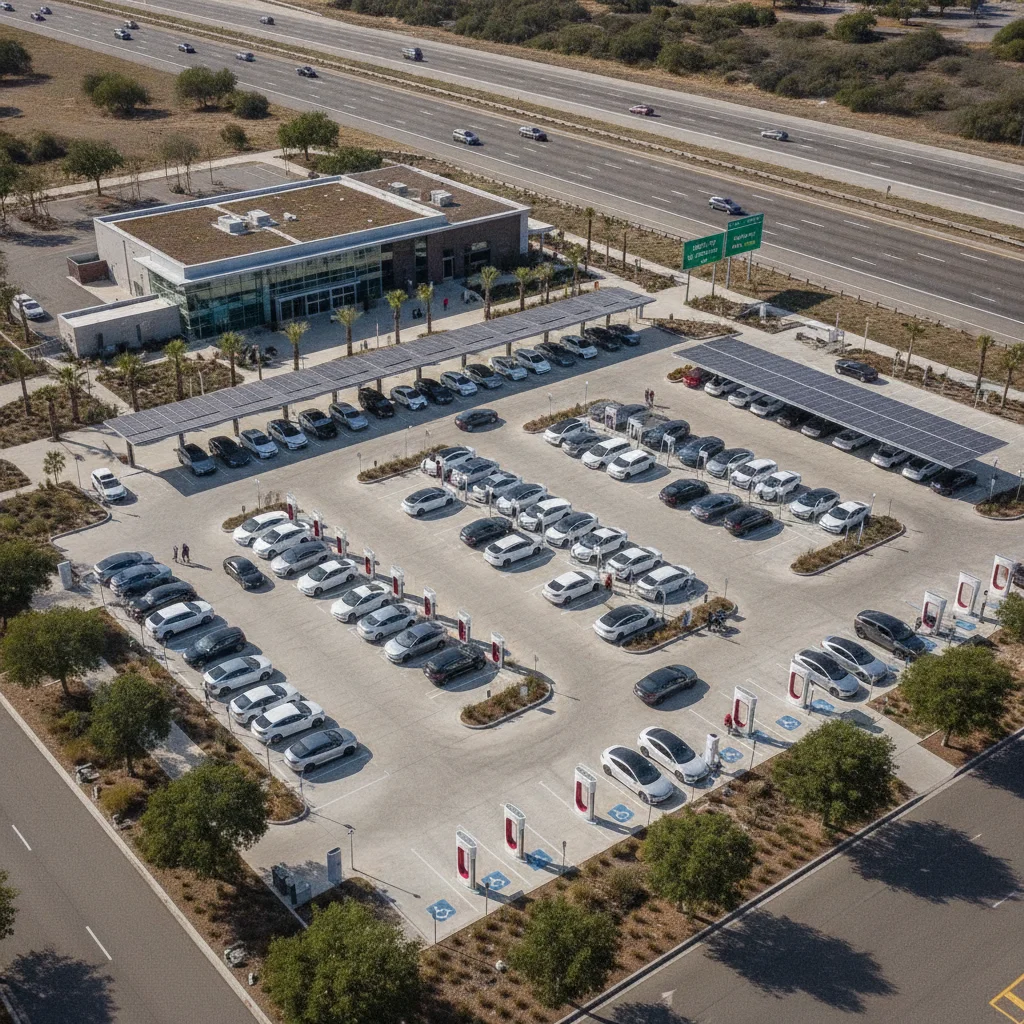
One structural point worth flagging upfront: the NACS (North American Charging Standard) transition is reshaping access across the board. Networks that once served only CCS-connector vehicles are adding NACS ports, and Supercharger stalls that were Tesla-only are now available to non-Tesla vehicles. That shift makes the competitive dynamics between networks more fluid than they've been in years. For a deep dive on that transition, see our piece on what the NACS standard means for all EV drivers.
Coverage: Where Each Network Actually Reaches
Raw station counts are a useful starting point, but location quality matters far more. A network with 30,000 Level 2 ports spread across office parks and hotels serves a very different use case than one with 5,000 DC fast chargers positioned every 50 miles along Interstate corridors.
Tesla Supercharger
Tesla operates roughly 2,000+ Supercharger stations in the US with more than 20,000 individual stalls. The network's defining strength is its deliberate placement along high-traffic highway corridors, making it the most useful for true long-distance driving. Supercharger stations typically cluster near amenities — food, restrooms, retail — which reflects Tesla's design philosophy of turning charging stops into planned breaks rather than anxious detours.
Electrify America
Electrify America operates around 900 stations and approximately 4,000 stalls. Funded initially through Volkswagen's Dieselgate settlement, the network has prioritized interstate highways and major metro areas. Coverage density is strongest in California, Texas, and the Eastern Seaboard, though rural gaps remain in the Mountain West and upper Midwest. See our state-by-state public charging coverage analysis for specifics on where shortfalls are most pronounced.
EVgo
EVgo has roughly 1,000 stations and around 3,500 stalls, concentrated heavily in metropolitan areas — shopping centers, grocery stores, urban garages. This makes EVgo exceptional for city dwellers but limited for highway travel. If you live in a major city and lack home charging, EVgo's urban density is arguably its strongest competitive advantage over every other network.
ChargePoint
ChargePoint claims the largest station count of any network — over 30,000 locations — but that figure requires context. The overwhelming majority are Level 2 AC chargers (typically 7–19 kW), and many are operated by third-party hosts who pay ChargePoint for the software and hardware. DC fast charger availability within the ChargePoint network is significantly more limited. For rural coverage, ChargePoint's Level 2 spread can be handy for overnight stays but won't support efficient daytime road-tripping.
Blink
Blink Network lists over 30,000 ports, but similar to ChargePoint, the majority are Level 2. Its DC fast-charging footprint is small relative to the other major players. Blink stations appear frequently at parking garages, hotels, and retail locations. Geographic distribution is broad on paper but thin in practice for drivers specifically seeking fast charging.
| Tesla Supercharger | Electrify America | EVgo | ChargePoint | Blink | |
|---|---|---|---|---|---|
| US Stations (approx.) | 2,000+ | ~900 | ~1,000 | 30,000+ (mostly L2) | 30,000+ (mostly L2) |
| Peak Charging Speed | 250 kW (V3), 500 kW (V4) | Up to 350 kW | Up to 350 kW | Up to 62.5 kW (most sites) | Up to 50–80 kW |
| DC Fast Charger Focus | Yes — highway optimized | Yes — highway optimized | Yes — urban focused | Limited | Limited |
| Pay-as-You-Go Rate | $0.25–$0.48/kWh | $0.48/kWh (avg) | $0.27–$0.45/kWh | Host-set (varies) | $0.39–$0.79/kWh |
| Membership Plan Available | No formal plan | $4/mo (Pass+) | $6.99/mo (Plus) | $8/mo | Yes (varies) |
| Plug-and-Charge Support | Autostart for Tesla | Yes (select vehicles) | Yes (ISO 15118) | Partial | No |
| Reliability (Industry Est.) | 99%+ | 95–97% | ~98% (new sites) | Variable by host | Below average |
| Rural Highway Coverage | Excellent | Good | Limited | Sparse (L2 only) | Sparse |
| Urban Density | Good | Moderate | Excellent | High (L2) | Moderate |
| App / UX Rating | Best-in-class | Good (improved) | Good | Solid for L2 | Below average |
Charging Speed: Peak kW and Real-World Delivery
Advertised peak charging rates look impressive on spec sheets. Real-world delivery depends on how many cars are sharing a cabinet's power supply, the vehicle's own charge curve, battery temperature, and state of charge at arrival. That said, the peak capability of a network's hardware sets the ceiling — and for drivers with capable vehicles, that ceiling matters.
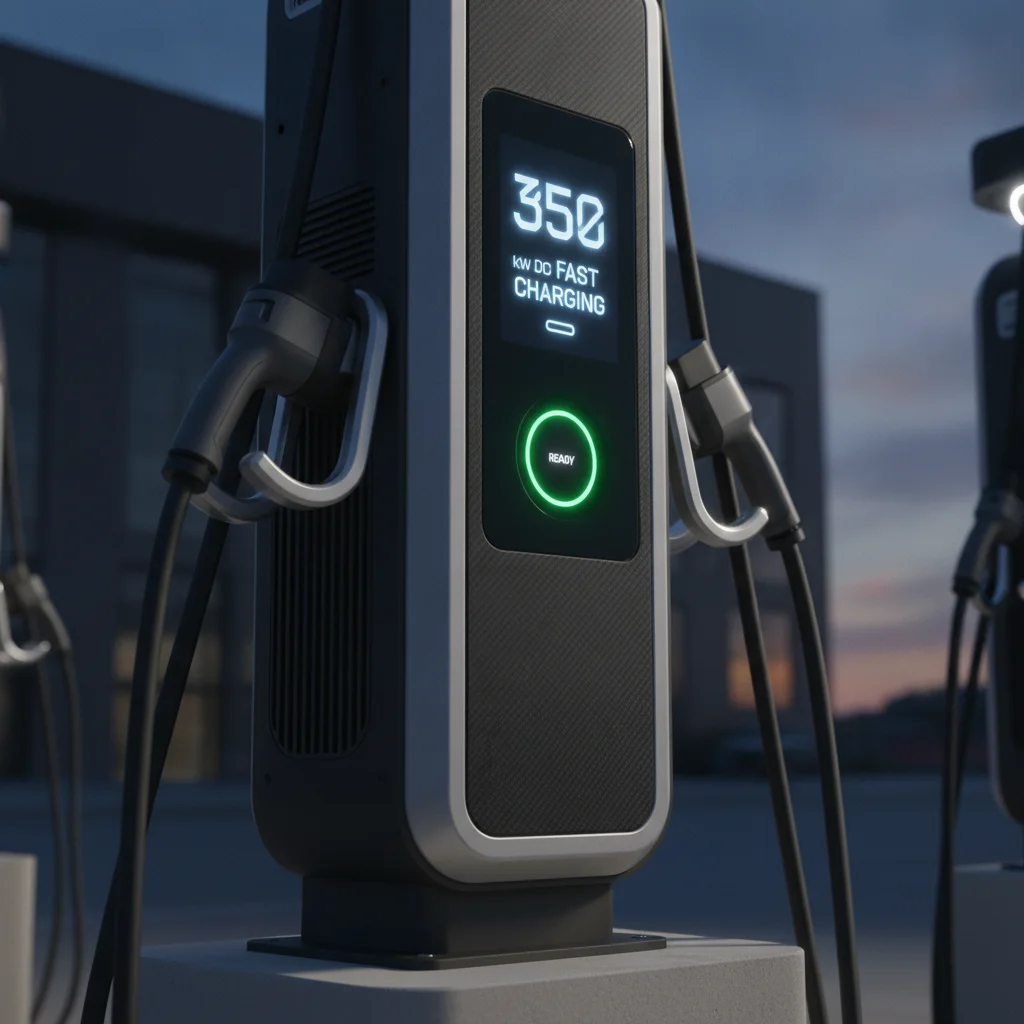
Tesla Supercharger: V3 and V4
Third-generation Supercharger (V3) stalls deliver up to 250 kW per vehicle. Fourth-generation (V4) stalls, now being deployed, are rated at up to 500 kW — though no current production EV can fully utilize that ceiling. Tesla's proprietary thermal management and charge curve optimization means that real-world speeds at Superchargers often outperform the equivalent kW rating at third-party networks. Average V3 delivery for a compatible Tesla hovers between 150–200 kW in practice.
Electrify America: Up to 350 kW
Electrify America stations are built around 150 kW and 350 kW dispensers, making them the fastest third-party option available today. Vehicles like the Hyundai IONIQ 6, Kia EV6, and Porsche Taycan can accept 200–350 kW at compatible EA stalls. The trade-off is that power is shared across dispensers within a station, so simultaneous high-demand sessions can reduce delivered speeds. For a focused look at how EA stacks up against the market leader, see our Tesla Supercharger vs. Electrify America comparison.
EVgo: Up to 350 kW at Newer Sites
EVgo's newer stations support up to 350 kW, though many legacy locations are capped at 50–100 kW. The network has been upgrading infrastructure through its ReNew program, but the pace means a meaningful portion of EVgo stalls still deliver speeds better suited to Level 2-style top-ups than rapid highway charging. The EVgo vs. Electrify America breakdown examines this gap in more detail.
ChargePoint: DC Fast Up to 62.5 kW (Most Locations)
ChargePoint's DC fast chargers are generally capped at 62.5 kW, though some newer Express Plus units support up to 500 kW in theory via a modular power block architecture. In practice, most drivers encounter 50–62.5 kW. For Level 2 charging, ChargePoint's networked stations typically deliver 7.2–19.2 kW depending on the hardware installed by the host site.
Blink: Primarily 50 kW DC Fast
Blink's DC fast chargers are predominantly 50 kW units. A newer generation of 80 kW and 180 kW units is being deployed, but fleet penetration remains low. Level 2 stations run at 6.2–7.2 kW for most locations. Blink is not competitive on speed for drivers prioritizing fast turnaround.
99%+
Tesla Supercharger estimated uptime
Multiple third-party assessments and PlugShare driver reports place Supercharger availability above 99% at established corridor stations.
350 kW
Peak speed at EA and EVgo top-tier stalls
Electrify America and EVgo both offer 350 kW dispensers at newer stations, enabling a 10–80% charge in under 20 minutes for compatible vehicles.
30,000+
ChargePoint US charging locations
ChargePoint operates the largest station count in the US, though the vast majority are Level 2 AC chargers rather than DC fast chargers.
$0.48/kWh
Electrify America non-member peak rate
Pay-as-you-go pricing at Electrify America averages $0.48/kWh, dropping to roughly $0.36/kWh for Pass+ subscribers at $4/month.
20,000+
Tesla Supercharger individual stalls in the US
Tesla's network spans over 2,000 US stations with more than 20,000 stalls — the densest DC fast-charging footprint of any single operator.
Pricing: What You Actually Pay Per Mile
Charging costs are one of the most opaque aspects of public EV infrastructure. Networks charge by the kilowatt-hour (most transparent), by the minute (common in states that restrict per-kWh billing), or by the session (rare). Membership plans layer on top, offering discounts in exchange for a monthly fee. The practical result is that the same 20-minute charging stop can cost $8 or $22 depending on the network, state, vehicle, and whether you have a subscription.
For a comprehensive look at how these billing structures work and who benefits from each, see how charging pricing models work across major networks. And for a direct comparison of public versus home charging costs, our home charging vs. public charging cost breakdown puts real numbers behind both options.
Tesla Supercharger Pricing
Non-Tesla vehicles pay per kWh, with rates varying by location — typically $0.25–$0.48/kWh. Tesla owners without an active subscription pay similar rates; those with certain plan benefits may receive discounted or free sessions. Idle fees apply when a vehicle stays connected after charging completes, which incentivizes stall turnover. No monthly membership is required, but Tesla's app-based payment is frictionless for account holders.
Electrify America Pricing
EA's pay-as-you-go rate runs approximately $0.48/kWh for 150 kW stalls and $0.48/kWh for 350 kW stalls (rates vary by state). Its Pass+ membership at $4/month reduces per-kWh costs to around $0.36/kWh — a meaningful discount for frequent users. Some EA stations bill per minute in states without per-kWh regulations, which disadvantages vehicles with slower acceptance rates.
EVgo Pricing
EVgo's standard rate averages $0.27–$0.45/kWh depending on location and connector type. Its EVgo Plus plan ($6.99/month) reduces per-kWh rates and offers credits. EVgo has pushed aggressively into partnerships with automakers — GM, Honda, and Nissan vehicles have received free charging credits or preferred rates through manufacturer agreements, which can significantly change the effective cost for qualifying drivers.
ChargePoint Pricing
ChargePoint pricing is host-determined, meaning the business or property owner operating the station sets the rate. Some locations are free; others charge $0.30–$0.50/kWh or flat session fees. This variability makes ChargePoint hard to budget for across locations. A ChargePoint subscription ($8/month) offers a modest per-session discount at participating locations, but it doesn't guarantee savings everywhere.
Blink Pricing
Blink charges $0.39–$0.79/kWh for DC fast charging (non-member) and $0.39–$0.59/kWh for members. Level 2 rates run $0.04–$0.08/minute or roughly $0.39/kWh at per-kWh stations. Blink's pricing sits at the high end of the market relative to the charging speeds it delivers — an unfavorable combination for value-conscious drivers.
Stack Memberships Strategically
The cost of subscribing to multiple networks simultaneously is often less than $20/month combined. If you take frequent road trips, an Electrify America Pass+ plan ($4/month) pays for itself after two fast-charging sessions. EVgo's Plus plan makes sense if you use urban charging more than twice a week. Evaluate your actual usage pattern over a two-month period before committing to any subscription.
Always Plan a Backup Charging Stop
Even on the most reliable networks, a single broken stall at a small station can leave you with limited options. When planning routes through less-served regions, identify at least one alternative charging location within comfortable range of every planned stop. Apps like A Better Route Planner (ABRP) automatically factor in network coverage and can suggest contingency stops before you depart.
Reliability: The Metric No Marketing Covers
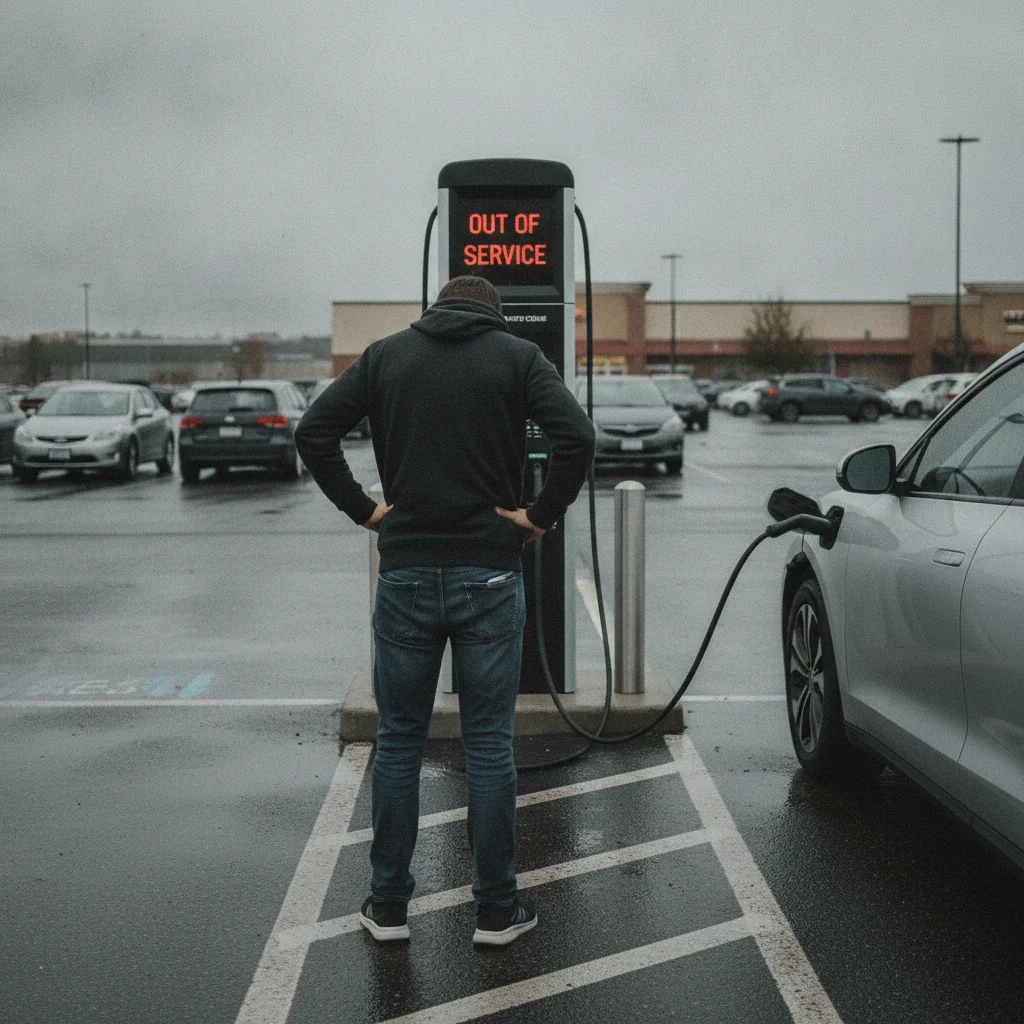
A charger that's broken when you arrive is worse than no charger at all — it creates false confidence during route planning. Uptime data is notoriously difficult to obtain independently, but multiple third-party reliability studies and driver-reported data from apps like PlugShare offer a consistent picture.
Tesla Supercharger has historically led on uptime, with independent assessments citing availability rates above 99% at many corridors. That reliability stems from Tesla's ownership and direct maintenance of its stations — there's no third-party host in the chain. For a deeper look at why public chargers fail and what's being done, see why public EV chargers still go down.
Electrify America has faced criticism for downtime, particularly in earlier network generations, though reliability has improved since 2022. Internal and third-party audits have clocked availability in the 95–97% range at mature stations, with newer installations performing better. EVgo has made reliability a brand-level priority, citing 98%+ uptime for its newer stations — a figure consistent with driver feedback in high-traffic urban markets.
ChargePoint's reliability is harder to summarize because individual station performance depends heavily on the host site's maintenance engagement. A ChargePoint station in a well-managed corporate campus may be highly reliable; one in a strip mall parking lot with an inattentive owner may not be. Blink has historically struggled more than its peers, with multiple J.D. Power studies placing it near the bottom of EV driver satisfaction ratings for public charging.
Don't Rely on Station Count Alone
Networks like ChargePoint and Blink report very large station counts, but these figures include thousands of slow Level 2 chargers unsuitable for highway road trips. When evaluating a network for long-distance driving, filter specifically for DC fast chargers above 50 kW. A network with 900 well-placed fast chargers is categorically more useful for interstate travel than one with 30,000 mixed-speed stations.
App Experience, Payment, and Ease of Use
The charging session begins before you plug in — it starts in the app (or at the in-vehicle navigation screen). Network apps vary substantially in real-time data quality, payment flow, and the accuracy of station status information. For an in-depth look at how the apps themselves perform, see our charging network apps comparison.
Tesla's integrated approach — where charging is planned and initiated through the vehicle's own navigation or the Tesla app — remains the smoothest experience in the industry. Plug in, charging starts automatically for Tesla vehicles, and billing is handled silently in the background. For non-Tesla vehicles accessing Superchargers, the experience now mirrors third-party network flows, requiring app authentication.
Electrify America's app has improved significantly, though tap-to-charge via credit card at the station remains an option that reduces app dependency. EVgo has invested heavily in plug-and-charge capability (ISO 15118), meaning compatible vehicles can authenticate and bill automatically without any manual app interaction — a feature that meaningfully reduces friction.
ChargePoint's app is robust for locating Level 2 stations and managing accounts, but in-station reliability data can lag. Blink's app experience ranks poorly in user reviews, with frequent complaints about payment errors and status inaccuracies. Both networks offer RFID card access as an alternative to smartphone-based authentication, which benefits drivers who prefer a hardware backup.
It's also worth considering the broader context of cost. Drivers evaluating public charging costs against home charging should review the real cost of public vs. home charging to understand when each option makes financial sense. And if you're setting up home charging, our home charging setup hub covers everything from equipment selection to installation.
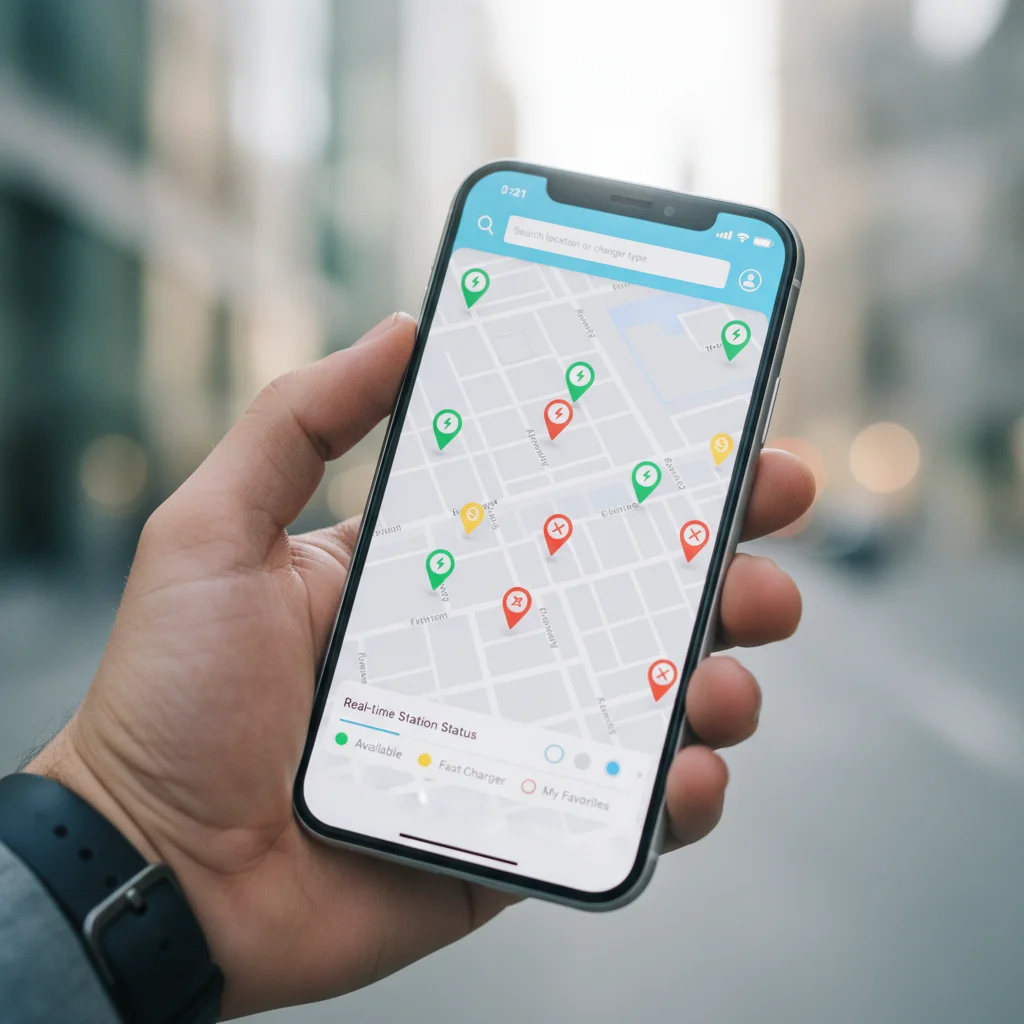
Beyond these five networks, smaller and regional players — Rivian Adventure Network, Francis Energy, Volta, and others — fill genuine gaps that the major five leave uncovered. If your routes take you into territory underserved by the networks profiled here, see charging stations beyond the big five networks for alternatives worth knowing about.
How to Choose the Right Network for Your Situation
No single network suits every driver, and most EV owners will end up with accounts on two or three networks within their first year of ownership. The decision framework below cuts through the overlap:
- If you drive a non-Tesla EV and regularly take long highway trips: Electrify America is your primary fast-charging option, supplemented by EVgo in metro areas and Supercharger access via NACS adapter or native NACS port where available.
- If you live in a major city without home charging: EVgo's urban density makes it the most practical primary network. Consider a monthly plan if you charge publicly more than twice per week.
- If your employer or regular destinations offer ChargePoint Level 2: Use ChargePoint as your free or low-cost top-up option and reserve DC fast charging for when you need rapid energy.
- If you own a Tesla: Supercharger remains your default. The network's reliability advantage and tight vehicle integration make third-party networks a fallback rather than a primary option for most routes.
- If you charge at hotels or destination locations: Blink and ChargePoint have the widest Level 2 presence at lodging properties. Overnight Level 2 charging at a hotel can add 60–120 miles of range — enough to cover many short-trip itineraries without a fast-charging stop.
Regardless of which network you lean on, understanding your total charging costs is essential for evaluating the true economics of EV ownership versus gasoline. The per-kWh rates you pay on public networks can dramatically shift your cost-per-mile if you're relying on them heavily instead of home charging.
Stack Memberships Strategically
The cost of subscribing to multiple networks simultaneously is often less than $20/month combined. If you take frequent road trips, an Electrify America Pass+ plan ($4/month) pays for itself after two fast-charging sessions. EVgo's Plus plan makes sense if you use urban charging more than twice a week. Evaluate your actual usage pattern over a two-month period before committing to any subscription.
Always Plan a Backup Charging Stop
Even on the most reliable networks, a single broken stall at a small station can leave you with limited options. When planning routes through less-served regions, identify at least one alternative charging location within comfortable range of every planned stop. Apps like A Better Route Planner (ABRP) automatically factor in network coverage and can suggest contingency stops before you depart.
All claims are backed by peer-reviewed research. Sources on request.