Key Takeaways
When planning a road trip on Superchargers as a non-Tesla driver, download the Tesla app and add a payment method before you leave home — attempting to set this up at a charging station is frustrating and time-consuming.
Non-Tesla vehicles require app-initiated sessions at Superchargers, and network registration can involve email verification steps that take several minutes even with good connectivity.
On EVgo and Electrify America networks, if a charger fails to initiate a session, try a different stall before calling customer support — fault isolation is faster and usually solves the problem in under two minutes.
Multi-stall stations often share backend infrastructure, and a single malfunctioning stall can sometimes affect the app UI for adjacent stalls, creating the illusion of a wider outage when only one unit is actually down.
Cross-reference PlugShare check-ins from the past 24 hours before relying on any non-Tesla fast charger for a critical road-trip stop — live user reports are more reliable than network-reported uptime data.
Network uptime dashboards often reflect network connectivity, not whether the charger actually successfully delivers power to a vehicle — recent PlugShare check-ins reflect real-world successful sessions.
Why Public Charging Networks Matter
About 80% of EV charging happens at home — but that remaining 20% is where range anxiety lives. Public charging infrastructure is the backbone that makes long-distance EV travel viable, enables apartment dwellers without home chargers to own electric vehicles, and provides a safety net when a driver misjudges their daily range.
The US public charging landscape has changed dramatically in the past five years. From a fragmented patchwork of slow Level 2 stations, it has grown into a multi-network ecosystem anchored by highway-speed DC fast chargers. As of 2024, the US Department of Energy counts more than 64,000 public charging stations housing over 180,000 individual outlets — a figure that was less than half that in 2020.
Still, the system is uneven. Charging station density skews heavily toward coastal metro areas. Rural corridors, the Southeast, and large swaths of the Mountain West remain underserved. Understanding which networks operate where — and what each one offers — is critical for any EV driver who plans to travel beyond their daily commute radius. This guide maps the full landscape so you can plan smarter and charge with confidence.
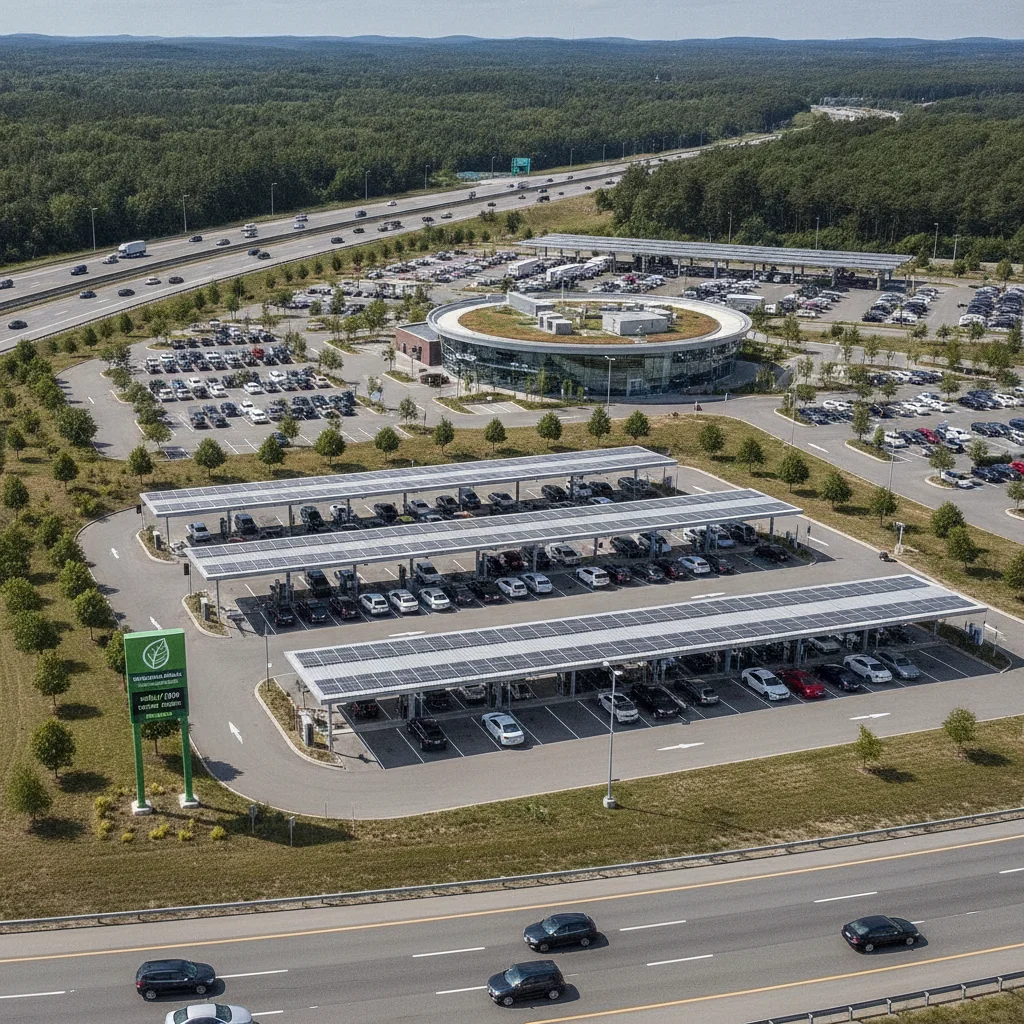
How Public EV Charging Works: Levels and Speeds
Before diving into specific networks, it helps to understand the three tiers of charging speed that define what any public station can actually do for your battery.
Level 1 (AC, ~1.4 kW)
Standard 120-volt household outlet power. Adds roughly 3–5 miles of range per hour. Rarely deployed intentionally in public settings, but occasionally found at workplaces or older hotel parking lots. Useful only for plug-in hybrids or in a genuine pinch.
Level 2 (AC, 3–22 kW)
The workhorse of everyday public charging. Delivered via 240-volt equipment, Level 2 chargers add roughly 15–30 miles of range per hour depending on the vehicle's onboard AC charger limit. Common in shopping centers, restaurants, hotels, parking garages, and workplaces. Ideal for topping off during a 1–3 hour dwell, but not suited for highway road-trip stops.
DC Fast Charging / Level 3 (50–350+ kW)
Bypasses the vehicle's onboard AC charger and delivers high-voltage DC power directly to the battery. Speeds range from 50 kW (older CHAdeMO hardware) to 350 kW on the newest Electrify America and Tesla V4 hardware. At 150–250 kW, most modern EVs can recover 100–200 miles of range in 20–30 minutes — a realistic highway pit stop. Not all vehicles can accept the highest power levels; the car and the charger must both support the speed for peak rates to apply.
DC Fast Charging Degrades Batteries Faster
Frequent DC fast charging — particularly above 80% state of charge — accelerates long-term battery capacity degradation compared to Level 2 charging. Most EV manufacturers recommend relying on DC fast charging primarily for road trips, not as a substitute for daily Level 2 or Level 1 charging. Some brands, including Rivian and Volkswagen, build in automatic charging limits to protect battery health.
Blink: Always Have a Backup Option
Blink Charging has faced persistent reliability criticism and scores below the industry average in third-party uptime audits. If your route depends on a Blink station as your sole fast-charging option in a given stretch, identify the nearest Electrify America, EVgo, or Supercharger as a contingency. This extra 5 minutes of planning can save hours of frustration.
For a detailed breakdown of connector types — including which plugs work on which vehicles — see our guide on EV charging connector standards.
Tesla Supercharger Network
Tesla's Supercharger network remains the gold standard of public fast charging in the US — and arguably the world. With more than 2,000 locations and over 22,000 individual stalls across North America as of mid-2024, it offers density, reliability, and seamless in-vehicle navigation that no competitor has matched.
A Network Now Open to All
The competitive calculus shifted dramatically when Tesla began opening Superchargers to non-Tesla vehicles in late 2023 and accelerated that rollout through 2024. Drivers of Ford, GM, Rivian, Mercedes, and a growing list of other brands can now use Superchargers — either through the Tesla app or, on newer vehicles equipped with NACS ports, without any adapter at all. CCS-equipped vehicles still need a Tesla-supplied adapter.
Speed and Hardware
The V3 Supercharger (250 kW peak) is the current standard at most US locations. V4 hardware (up to 615 kW theoretical, 350 kW practical) is being deployed at new sites and selected retrofits. Non-Tesla vehicles connecting via CCS adapter are generally limited to 150–175 kW due to communication protocol constraints — still fast, but below what the hardware can theoretically deliver to Tesla vehicles.
Pricing
Non-Tesla drivers pay a per-kWh or per-minute rate via the Tesla app — rates vary by state and location, typically ranging from $0.25 to $0.50 per kWh. Tesla owners pay similar rates unless they received free lifetime Supercharging with an older vehicle purchase. There is no annual membership option for non-Tesla drivers currently, meaning they pay retail rates every session.
When planning a road trip on Superchargers as a non-Tesla driver, download the Tesla app and add a payment method before you leave home — attempting to set this up at a charging station is frustrating and time-consuming.
Non-Tesla vehicles require app-initiated sessions at Superchargers, and network registration can involve email verification steps that take several minutes even with good connectivity.
On EVgo and Electrify America networks, if a charger fails to initiate a session, try a different stall before calling customer support — fault isolation is faster and usually solves the problem in under two minutes.
Multi-stall stations often share backend infrastructure, and a single malfunctioning stall can sometimes affect the app UI for adjacent stalls, creating the illusion of a wider outage when only one unit is actually down.
Cross-reference PlugShare check-ins from the past 24 hours before relying on any non-Tesla fast charger for a critical road-trip stop — live user reports are more reliable than network-reported uptime data.
Network uptime dashboards often reflect network connectivity, not whether the charger actually successfully delivers power to a vehicle — recent PlugShare check-ins reflect real-world successful sessions.
Coverage skews heavily toward interstates and population centers. Rural gaps exist, but for most major US highway corridors, Tesla's Supercharger network provides the most consistently reliable fast-charging experience available today.
Electrify America
Electrify America (EA) was born from Volkswagen Group's diesel emissions settlement with the US government — a mandate to invest $2 billion in zero-emission vehicle infrastructure over 10 years. That origin story gives it a unique regulatory accountability that other networks lack. EA has become the primary DC fast-charging alternative to Superchargers for non-Tesla vehicles.
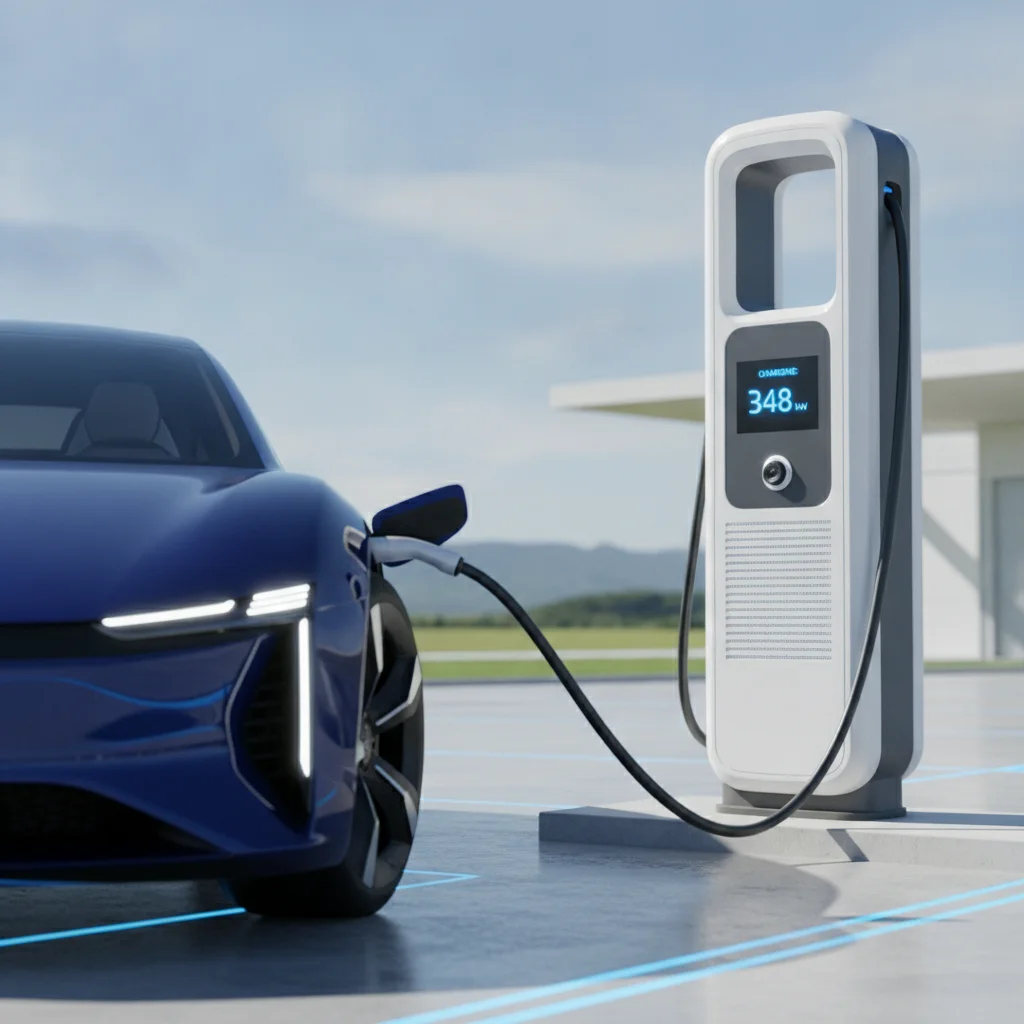
Network Scale and Hardware
EA operates approximately 900 stations with around 4,000 individual DC fast-charging stalls across the US and Canada. Crucially, EA committed early to high-power hardware: most stations include 150 kW stalls, and many flagship locations feature 350 kW Ultra-Fast chargers — the highest publicly available speeds in the country. EA is also deploying NACS connectors alongside CCS at new stations, broadening vehicle compatibility.
Pricing and Membership
EA offers a Pass+ membership at $4/month that reduces per-kWh rates by roughly 25–35% versus the pay-as-you-go rate. Base retail pricing runs approximately $0.43–$0.48 per kWh at 150 kW stalls, and slightly higher at 350 kW locations. Several automakers — including Volkswagen, Audi, Porsche, Ford (via BlueOval Charge Network), and Hyundai — bundle EA charging credits or discounted access into new vehicle purchases, making EA particularly attractive for drivers of those brands.
Reliability Concerns
EA's network reliability has historically been a point of friction. A 2023 study by the University of California, Berkeley found that approximately 27% of EA stations surveyed in the San Francisco Bay Area had at least one non-functioning charger. EA has invested in hardware upgrades and 24/7 monitoring since then, and reliability metrics have improved, but it remains a known variable that trip planners should account for.
Electrify America Reliability: Plan Accordingly
While Electrify America offers some of the highest power levels available on any public network, its reliability record has been inconsistent. Third-party audits and consumer reports have documented elevated out-of-order rates at certain locations. When routing through EA for a road trip, always identify an alternative fast charger — ideally a Tesla Supercharger or EVgo — within reasonable range of each EA stop, and check PlugShare for recent activity before committing to a stop.
ChargePoint
ChargePoint operates differently from most networks — it is primarily a hardware manufacturer and network software provider rather than a station owner. Businesses, municipalities, apartment complexes, and employers purchase ChargePoint hardware and connect it to the ChargePoint network. This business-to-business model has made ChargePoint the largest charging network in the US by sheer station count, with over 38,000 locations and approximately 100,000 Level 2 and DC fast-charging ports.
Strengths: Coverage and Workplace Charging
The ChargePoint model excels at workplace and destination charging. Because the network grows wherever a business decides to install ChargePoint hardware, it has penetrated office parks, shopping centers, universities, and multi-family housing in ways that highway-focused networks have not. If you charge at work, there's a reasonable chance it's on ChargePoint equipment.
DC Fast Charging
ChargePoint's DC fast-charging footprint — roughly 3,000 stations as of 2024 — is smaller than Electrify America's or Tesla's on a per-station basis, but it covers a solid spread of highway corridors. Maximum speeds top out at 62.5 kW on older hardware and up to 350 kW on newer CPE250 units, though the latter is still being rolled out.
Pricing
ChargePoint charges the host business rather than mandating a retail price, so pricing varies significantly by location. Some ChargePoint stations — particularly at workplaces — are free. Others charge by the hour, by the kWh, or via a flat session fee. The ChargePoint app displays pricing before you begin a session. A ChargePoint subscription ($4.99/month) provides a discount of roughly $0.10/kWh at participating stations.
ChargePoint Tip: Check Pricing Before Every Session
Because ChargePoint pricing is set by each individual host, rates at one ChargePoint station can differ dramatically from another even a mile away. Always tap through to the pricing screen in the ChargePoint app before starting a session. This is especially important at hotel and retail locations where session fees can be surprisingly high.
EVgo
EVgo is the largest US public fast-charging network focused exclusively on DC fast charging. Unlike ChargePoint's Level 2 destination-charging model, every EVgo port delivers at least 50 kW, and the majority of newer installations reach 100–350 kW. EVgo has roughly 1,000 locations and 3,500+ stalls, concentrated in urban and suburban areas with high EV adoption rates: California, New York, Texas, Florida, and the Pacific Northwest.
Walmart Partnership and Site Strategy
EVgo's 2023 partnership with Walmart to install fast chargers at up to 1,000 Walmart and Sam's Club locations is arguably the most strategically significant expansion in its history. Walmart's geographic distribution — particularly in suburban and exurban areas currently underserved by fast charging — directly addresses one of EVgo's historical coverage gaps. Early installations are underway as of 2024.
Pricing and Membership
EVgo's pay-as-you-go retail rate runs approximately $0.27–$0.35 per minute or $0.30–$0.48 per kWh depending on the state (per-kWh billing requires a state to permit it by law; otherwise per-minute billing applies). An EVgo+ membership at $7.99/month reduces rates meaningfully for frequent users. GM's Ultium Charge 360 and several other OEM programs provide complimentary EVgo access to qualifying new vehicle buyers.
Reliability
EVgo has historically ranked near the top among non-Tesla networks for uptime, in part because it operates its own stations rather than relying on third-party hosts. The network also moved early on 24/7 remote monitoring and has a faster-than-average hardware replacement cycle.
When planning a road trip on Superchargers as a non-Tesla driver, download the Tesla app and add a payment method before you leave home — attempting to set this up at a charging station is frustrating and time-consuming.
Non-Tesla vehicles require app-initiated sessions at Superchargers, and network registration can involve email verification steps that take several minutes even with good connectivity.
On EVgo and Electrify America networks, if a charger fails to initiate a session, try a different stall before calling customer support — fault isolation is faster and usually solves the problem in under two minutes.
Multi-stall stations often share backend infrastructure, and a single malfunctioning stall can sometimes affect the app UI for adjacent stalls, creating the illusion of a wider outage when only one unit is actually down.
Cross-reference PlugShare check-ins from the past 24 hours before relying on any non-Tesla fast charger for a critical road-trip stop — live user reports are more reliable than network-reported uptime data.
Network uptime dashboards often reflect network connectivity, not whether the charger actually successfully delivers power to a vehicle — recent PlugShare check-ins reflect real-world successful sessions.
Blink Charging
Blink Charging is one of the oldest US charging networks, founded in 2009, and operates a hybrid model: it owns some stations outright while offering the Blink network platform to third-party hosts in the ChargePoint style. The result is a network of approximately 68,000 charging ports — though the vast majority are Level 2, and the DC fast-charging footprint is substantially smaller than Electrify America or EVgo.
Where Blink Fits
Blink's strength is in destination charging at hotels, multifamily properties, and retail parking lots, often in markets that larger, higher-power networks haven't prioritized. Its geographic spread is broad — including secondary cities and smaller markets in the South and Midwest — but station density and power levels in any given metro rarely rival EA or EVgo.
Pricing
Blink pricing can be opaque. Rates vary widely by host, ranging from free to approximately $0.39–$0.79 per kWh on owned stations, with some locations billing per minute. The Blink app shows pricing before sessions begin. A Blink Plus membership ($4.99/month) offers modest discounts at Blink-owned stations.
Reliability Challenges
Blink has faced public criticism for charger reliability and maintenance responsiveness. Consumer reviews and third-party reliability audits have consistently ranked Blink below the industry average for uptime. This is worth factoring into trip planning — always have a backup option identified when a Blink station is your primary plan.
DC Fast Charging Degrades Batteries Faster
Frequent DC fast charging — particularly above 80% state of charge — accelerates long-term battery capacity degradation compared to Level 2 charging. Most EV manufacturers recommend relying on DC fast charging primarily for road trips, not as a substitute for daily Level 2 or Level 1 charging. Some brands, including Rivian and Volkswagen, build in automatic charging limits to protect battery health.
Blink: Always Have a Backup Option
Blink Charging has faced persistent reliability criticism and scores below the industry average in third-party uptime audits. If your route depends on a Blink station as your sole fast-charging option in a given stretch, identify the nearest Electrify America, EVgo, or Supercharger as a contingency. This extra 5 minutes of planning can save hours of frustration.
Beyond the Big Five: Other Networks Worth Knowing
The five networks above capture the bulk of US public charging infrastructure, but a growing ecosystem of smaller and regional networks fills critical gaps — particularly in rural areas, tribal lands, and underserved corridors that the major players have deprioritized.
- Rivian Adventure Network: Rivian is building a dedicated DC fast-charging network for its own vehicles, focused on adventure and off-highway corridors. Sites are strategically placed near national parks and remote destinations that other networks don't serve. Beginning in 2024, select Rivian stations are opening to other vehicles.
- Francis Energy: A Tulsa-based network specifically targeting the historically underserved rural and tribal communities of Oklahoma and surrounding states. Operates DC fast chargers in locations that major networks have bypassed.
- Volta: Acquired by Shell in 2023, Volta built its model around free Level 2 charging subsidized by digital advertising screens on charger units. Its future direction under Shell ownership is still evolving.
- Greenlots / Shell Recharge: Shell has consolidated multiple charging assets under the Shell Recharge brand, with a growing presence in urban and fleet-charging markets.
- NRCAN / FLO: A Canadian-headquartered network with meaningful US presence in the Northeast, often found at government and municipal locations.
For a deeper look at these and other emerging players, see our coverage of public charging stations beyond the big five networks.
180,000+
Public EV charging outlets in the US
According to the US Department of Energy Alternative Fuels Station Locator as of 2024, the US has more than 180,000 public EV charging outlets across all levels.
22,000+
Tesla Supercharger stalls in North America
Tesla reported over 22,000 individual Supercharger stalls across North America as of mid-2024, across more than 2,000 locations.
$5B
Federal NEVI infrastructure funding
The 2021 Infrastructure Investment and Jobs Act allocated $5 billion over five years through the NEVI Formula Program to build out EV charging on US highway corridors.
27%
EA stations with at least one faulty charger (2023)
A 2023 UC Berkeley study found approximately 27% of surveyed Electrify America stations in the San Francisco Bay Area had at least one non-functioning charger at the time of inspection.
80%
EV charging that happens at home
Industry surveys consistently show that approximately 80% of all EV charging sessions occur at home overnight, with public charging serving as supplemental infrastructure.
Connector Standards: NACS, CCS, and the Shifting Landscape
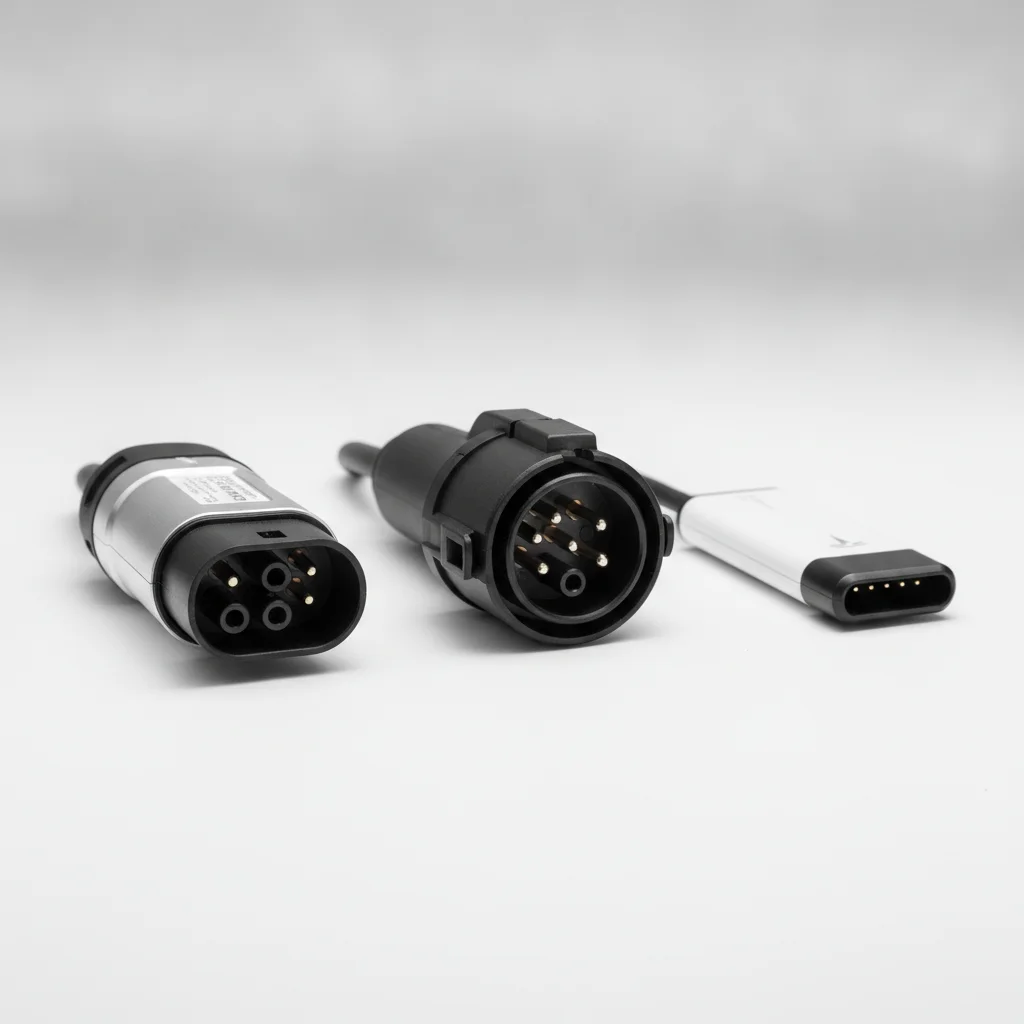
Connector compatibility is the detail that trips up more EV road-trippers than any other. A charger you can't physically plug into is useless, regardless of its power output or network quality.
The Three Connectors That Matter in the US
- CCS (Combined Charging System)
- The dominant standard for non-Tesla EVs sold in the US from roughly 2013–2023. Used by Ford, GM, Hyundai, Kia, BMW, Volkswagen Group, and others. Supports both AC Level 2 and DC fast charging through a single connector port.
- NACS (North American Charging Standard)
- Tesla's proprietary connector, now formally adopted as SAE J3400 and quickly becoming the industry default. Ford, GM, Rivian, Honda, Nissan, Toyota, and virtually every other major OEM have committed to NACS ports on new vehicles starting 2025 model year. Existing CCS vehicles can access NACS stations via a Tesla-supplied adapter.
- CHAdeMO
- A Japanese DC fast-charging standard used primarily by older Nissan Leaf models. Effectively being phased out in the US — EVgo and others are removing CHAdeMO hardware as it ages out. Only a minority of public fast chargers still include CHAdeMO plugs.
The NACS transition is the most consequential structural shift in public charging since the industry began. By 2026, most new EVs sold in the US will use NACS natively, and most major charging networks — Electrify America, EVgo, ChargePoint, Blink — have committed to adding NACS connectors alongside or instead of CCS at future stations.
For the full picture on how this transition affects current and prospective EV owners, our article on NACS adoption and what it means for all EV drivers covers the details.
“The shift to NACS is not just about a plug shape — it's about removing the last major interoperability barrier in US EV charging. When any car can use any charger without an adapter, the experience becomes something closer to gasoline fueling for consumers.”
— Sam Abuelsamid, Principal Analyst, Guidehouse Insights, specializing in e-mobility and charging infrastructure
How to Find and Pay for Public Charging
Navigating five major networks plus dozens of smaller ones doesn't require five separate apps — though having them all downloaded on your phone is not a bad idea. Here's a practical approach to locating and paying for public charging.
Aggregator Apps
PlugShare is the most widely used third-party charging map, aggregating stations from virtually every US network plus user-submitted check-ins, photos, and real-time comments on station status. It's the single most useful tool for planning charging stops on an unfamiliar route. ChargeHub and A Better Routeplanner (ABRP) offer similar aggregation with more sophisticated route-planning algorithms — ABRP in particular excels at multi-stop EV road trip planning, accounting for your specific vehicle's consumption curve and charging speeds.
In-Vehicle Navigation
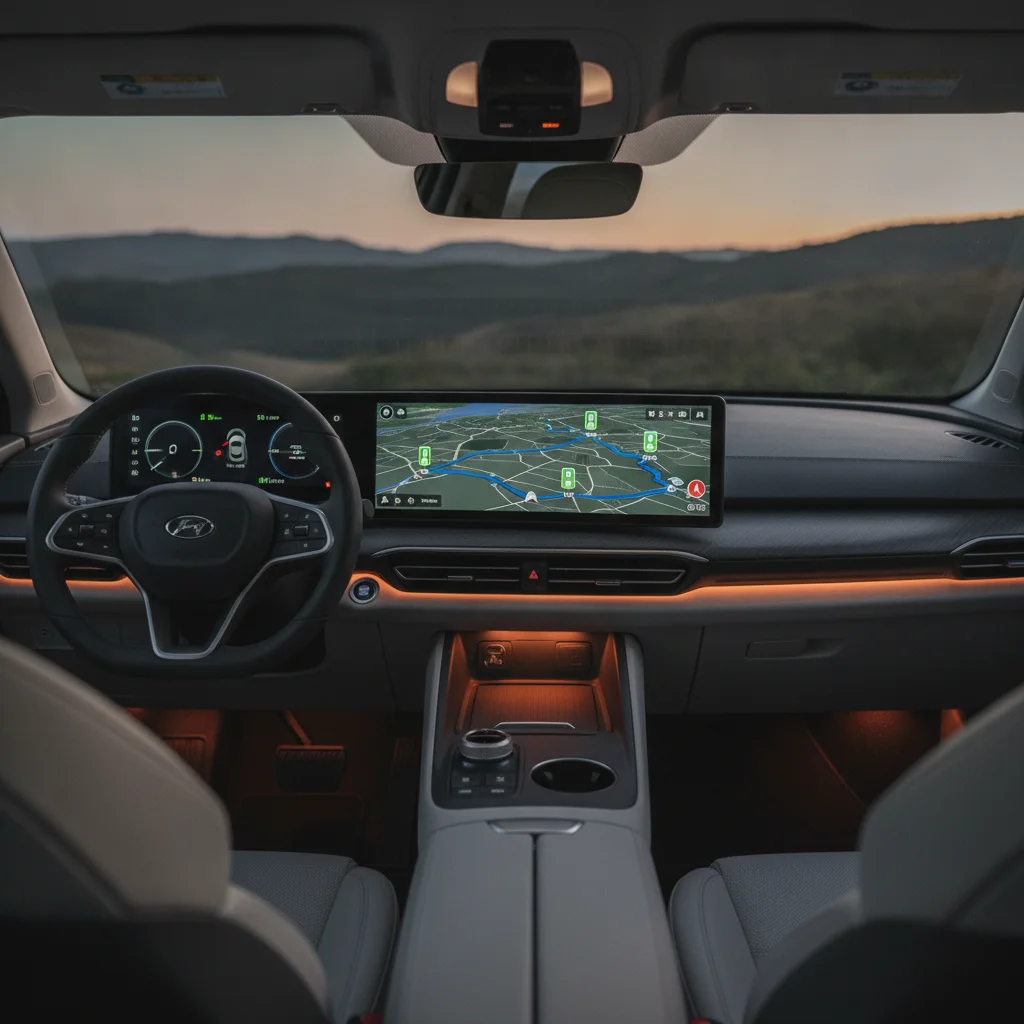
Most modern EVs with integrated navigation — including those running Google Automotive or a proprietary system — now offer charging-aware route planning that automatically suggests stops based on real-time battery state. Tesla's onboard navigation remains the benchmark, proactively routing to Superchargers and preconditioning the battery for faster charging on arrival. Several third-party EVs (Rivian, Hyundai Ioniq 6, Kia EV6) offer comparable functionality with improving real-world accuracy.
Payment Methods
Most networks support three payment paths: a dedicated app with a stored payment method, an RFID card issued by the network, or a credit card tap-to-pay (increasingly standard on newer hardware but still absent on older stations). Some networks — particularly ChargePoint — allow guest checkout without creating an account. Always confirm your payment method works before arriving at a remote location.
Per-Minute vs. Per-kWh Billing Matters
Several US states prohibit per-kWh electricity sales by entities other than regulated utilities, forcing some networks to bill by the minute instead. Per-minute billing disadvantages vehicles that charge more slowly, since they receive less energy for the same time cost. If you drive a vehicle with a lower maximum charge rate, per-minute billing stations are effectively more expensive per mile added. Check your state's billing model before assuming kWh pricing applies.
Understanding the cost difference between public charging and home charging is important context. See our hub on EV charging costs and savings for a full breakdown of how to estimate and reduce what you spend on electricity.
What to Expect on a Road Trip
Road-tripping in an EV is genuinely enjoyable — but it rewards preparation more than gasoline travel does. Here's what experienced EV road-trippers know that first-timers often discover the hard way.
Plan Your Stops Before You Leave
Use ABRP or your vehicle's native route planner to map charging stops before departure. Identify primary stops and note backup options within a few miles of each — because charger availability and functionality can never be guaranteed 100%. Download the apps for networks along your route and have your payment methods ready.
Charge to 80%, Not 100%
Lithium-ion batteries charge fastest between 20% and 80% state of charge. Above 80%, charging rates taper significantly — sometimes dramatically. On a road trip, arriving at a charger with 10–20% remaining and stopping at 80% almost always delivers more miles per hour stopped than waiting for a 100% top-off. Leave full charging for overnight stops.
Battery Preconditioning
Cold or hot batteries charge more slowly. Most modern EVs allow you to precondition the battery — bringing it to optimal temperature — while still plugged in at home or automatically when routing to a fast charger. Enable this feature. It can shave 10–15 minutes off a charging stop in cold weather.
Idle Fees Are Real
Most major networks charge idle fees — a per-minute penalty applied after your vehicle has reached its charge limit but remains plugged in. Rates typically run $0.40–$1.00 per minute. Set a phone alert for when your charge target is reached. This is both a financial consideration and a courtesy to other drivers waiting for a stall.
For a full guide on shared-charging etiquette — including ICEing, cable handling, and idle fee ethics — see public charging etiquette every EV driver should know.
The Future of US Public Charging
The next five years will reshape US public charging more dramatically than the previous decade did. Several converging forces are driving that change.
NEVI Federal Funding
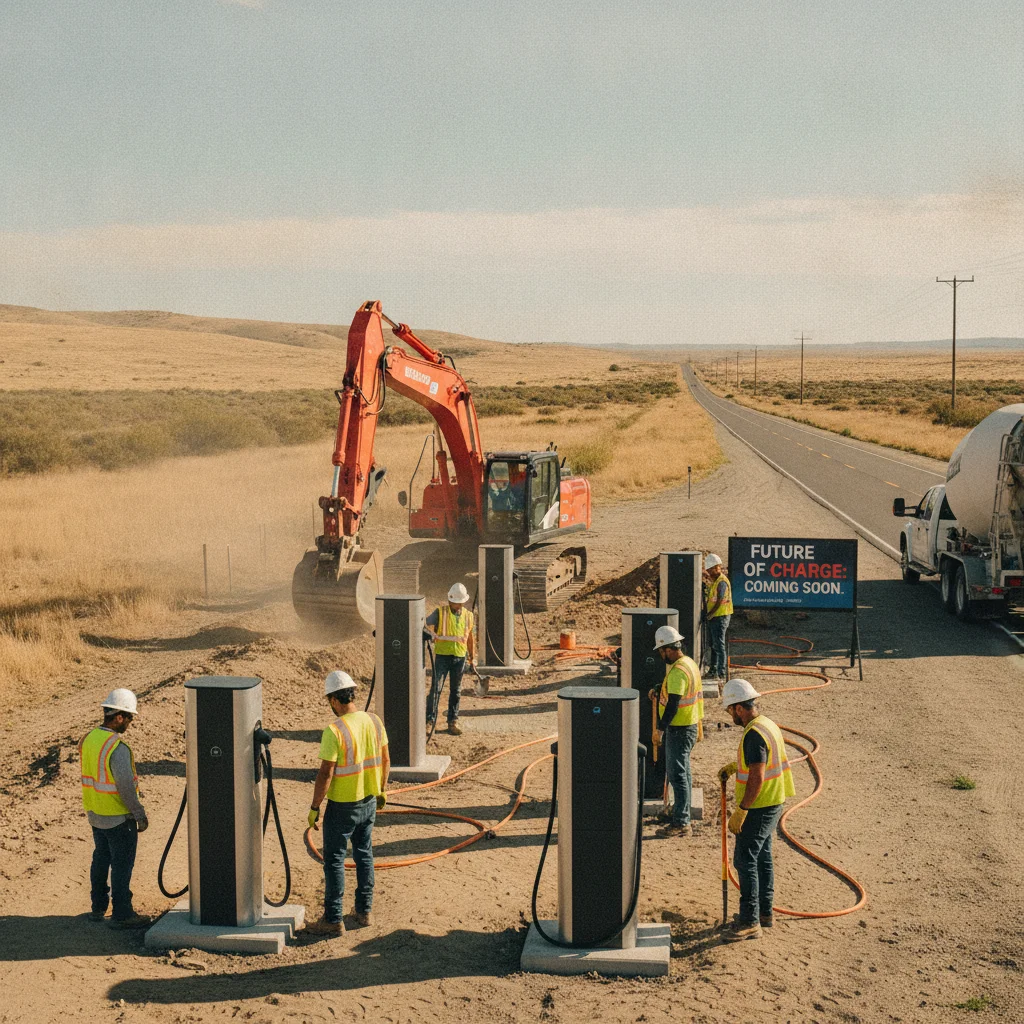
The National Electric Vehicle Infrastructure (NEVI) Formula Program, funded by the 2021 Infrastructure Investment and Jobs Act, allocates $5 billion to states over five years specifically for EV charging along designated Alternative Fuel Corridors — essentially the Interstate Highway System. NEVI requires stations to be spaced no more than 50 miles apart, located within 1 mile of the interstate, offer at least 150 kW per port, and provide 24/7 network connectivity and maintenance. As of 2024, states are actively building out NEVI-funded stations, and this program is expected to dramatically close the rural and highway gap that currently plagues non-Tesla travel.
Automaker-Built Networks
Beyond Tesla and Rivian, other automakers are investing in proprietary or co-branded charging networks. GM's Ultium Charge 360 aggregates multiple networks under one interface. Mercedes-Benz is installing its own high-power charging hubs in the US. These OEM efforts signal that seamless charging experience — not just kilowatt delivery — is becoming a product differentiator.
Grid Integration Challenges
High-power charging stations place significant demand on local electrical grids. Several planned fast-charging corridors face permitting and grid upgrade timelines that stretch 18–36 months beyond station construction readiness. This is the least visible but most fundamental constraint on how quickly the US charging network can scale.
Home Charging as the Baseline
It's worth noting that for the majority of EV drivers, public charging is supplemental. If you have the ability to install a Level 2 home charger, that infrastructure eliminates most charging stress before it starts. For a comparison of home versus public charging economics and installation options, see our hub on home EV charging setup.
The US public charging network is imperfect, uneven, and still maturing — but the direction of travel is clearly toward greater density, higher reliability, and more consistent interoperability. Drivers who understand the current landscape can navigate it successfully today while benefiting from rapid improvements over the next few years.
PlugShare
The most widely used EV charging map in North America, aggregating real-time station data and user check-ins across virtually every network. Essential for verifying charger status before arrival.
A Better Routeplanner (ABRP)
Sophisticated EV-specific route planner that calculates charging stops based on your vehicle model, battery state, weather, and driving speed. Far more accurate than generic navigation for multi-stop EV trips.
DOE Alternative Fuels Station Locator
The US Department of Energy's official public charging database, useful for verifying NEVI-funded corridor coverage and filtering by network, connector type, and charging level.
EV Charging Connector Standards: CCS, CHAdeMO, and NACS Decoded
A plain-language guide to every major EV charging connector type, which vehicles use them, and where the industry is headed — essential reading before your first public charging session.
Charging Costs & Savings Hub
How to estimate and reduce EV charging costs, compare public versus home charging economics, and identify membership plans that save money for your usage pattern.
Public Charging Etiquette Guide
The written and unwritten rules of public EV charging stations — covering ICEing, idle fees, cable management, and how to be a considerate charger in a shared infrastructure ecosystem.
All claims are backed by peer-reviewed research. Sources on request.