Key Takeaways
Start here
Why EV Mechanics Matter Before You Buy
Core knowledge
The Battery Pack: The Heart of Every EV
Go deeper
Electric Motors and Inverters: How the Car Actually Moves
Build context
Drivetrain Configurations: FWD, RWD, and AWD in EVs
Almost there
Regenerative Braking: Recapturing Energy You'd Otherwise Lose
Put it together
How These Systems Affect Your Real-World Ownership
Why EV Mechanics Matter Before You Buy
Walking into an EV dealership without understanding the hardware is like buying a house without knowing what a foundation is. Salespeople will quote kilowatt-hours, mention thermal management, and talk about dual-motor torque — and if those terms don't connect to anything concrete, you'll nod along and potentially make a $40,000 decision based on vibes.
You don't need an engineering degree to shop smart. You need a working mental model of the six or seven systems that actually determine whether a specific EV fits your life. Once you have that model, specs stop feeling like noise and start feeling like useful data.
This guide covers the core mechanical systems of a battery-electric vehicle (BEV) in plain language. If you're also considering plug-in hybrids or traditional hybrids, the EV types comparison hub covers how those powertrains differ. For a deeper dive into terminology, the EV terminology glossary defines 40 key terms you'll encounter on spec sheets and in showrooms.
Kilowatt-hour (kWh)
A unit of energy that measures how much electricity a battery can store. Think of it as the EV equivalent of a fuel tank's gallon capacity — bigger numbers generally mean more range.
Inverter
A device that converts the battery's stored DC electricity into AC electricity that the electric motor can use. It also controls motor speed by adjusting the frequency of the AC signal.
Regenerative braking
A system that uses the electric motor as a generator when slowing down, converting kinetic energy back into electricity and storing it in the battery instead of wasting it as heat.
Thermal management system
The hardware — usually liquid coolant circuits — that keeps the battery pack within its optimal temperature range for efficiency, charging speed, and long-term health.
Torque
The rotational force that actually accelerates a car. Electric motors deliver maximum torque instantly from a standstill, which is why EVs feel so quick off the line.
State of charge (SOC)
The percentage of the battery's usable capacity that is currently filled, equivalent to the fuel gauge in a gas vehicle. Most automakers recommend keeping SOC between 20% and 80% for everyday charging to extend battery life.
DC fast charging
A high-power charging method that delivers direct current straight to the battery, bypassing the onboard charger. It's the fastest way to add range on the road but should be used in moderation to limit battery stress.
One-pedal driving
A driving mode where lifting off the accelerator triggers strong regenerative braking, slowing the car aggressively and often bringing it to a full stop without using the friction brakes.
The Battery Pack: The Heart of Every EV
The battery pack is the most expensive single component in any EV, typically representing 30–40% of the vehicle's total cost. It's also the system that most directly determines your day-to-day experience — range, charging speed, and long-term value all trace back to the pack.
How Battery Packs Are Structured
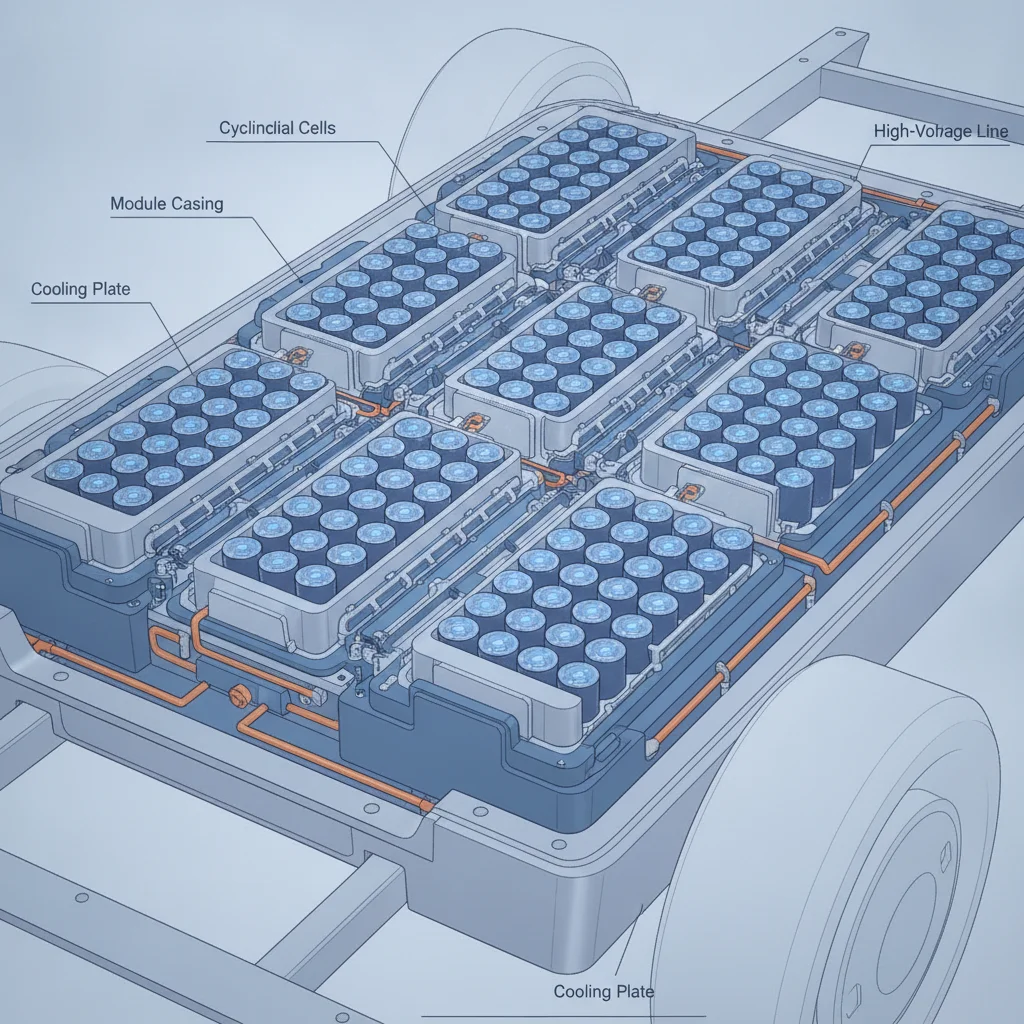
A pack isn't one giant battery. It's thousands of individual lithium-ion cells grouped into modules, which are then organized into the full pack. This modular structure allows manufacturers to design packs of different sizes using the same underlying cell technology, and it means that if a section of the pack degrades, theoretically only that module needs replacement — though in practice many automakers replace the entire pack under warranty.
Cells come in different form factors — cylindrical (like large AA batteries, used by Tesla and others), prismatic (flat rectangular), and pouch (thin, flexible). Each has different trade-offs in energy density, heat management, and manufacturing cost. As a buyer, you don't need to pick a cell format — but knowing your preferred brand's approach helps you ask informed questions about longevity.
What Kilowatt-Hours Actually Mean
Battery capacity is measured in kilowatt-hours (kWh). Think of kWh as the size of your fuel tank. A larger number means more stored energy and generally more range, but the relationship isn't perfectly linear because heavier packs also require more energy to move the car. A 77 kWh pack in a mid-size sedan will go further than the same pack in a large SUV.
| Battery Size (kWh) | Typical EPA Range | Common Segment |
|---|---|---|
| 40–55 kWh | 150–220 miles | Commuter EVs, entry-level |
| 60–80 kWh | 220–300 miles | Mid-size sedans and crossovers |
| 90–130 kWh | 300–400+ miles | Premium, performance, large SUVs |
Usable vs. Total Capacity
Automakers don't let you use 100% of the rated capacity. They reserve a buffer — typically 5–15% — at both the top and bottom of the charge range to protect cell chemistry and extend pack life. When you see a 75 kWh battery, expect roughly 70–72 kWh of usable capacity. This is normal engineering practice, not deceptive marketing.
Electric Motors and Inverters: How the Car Actually Moves
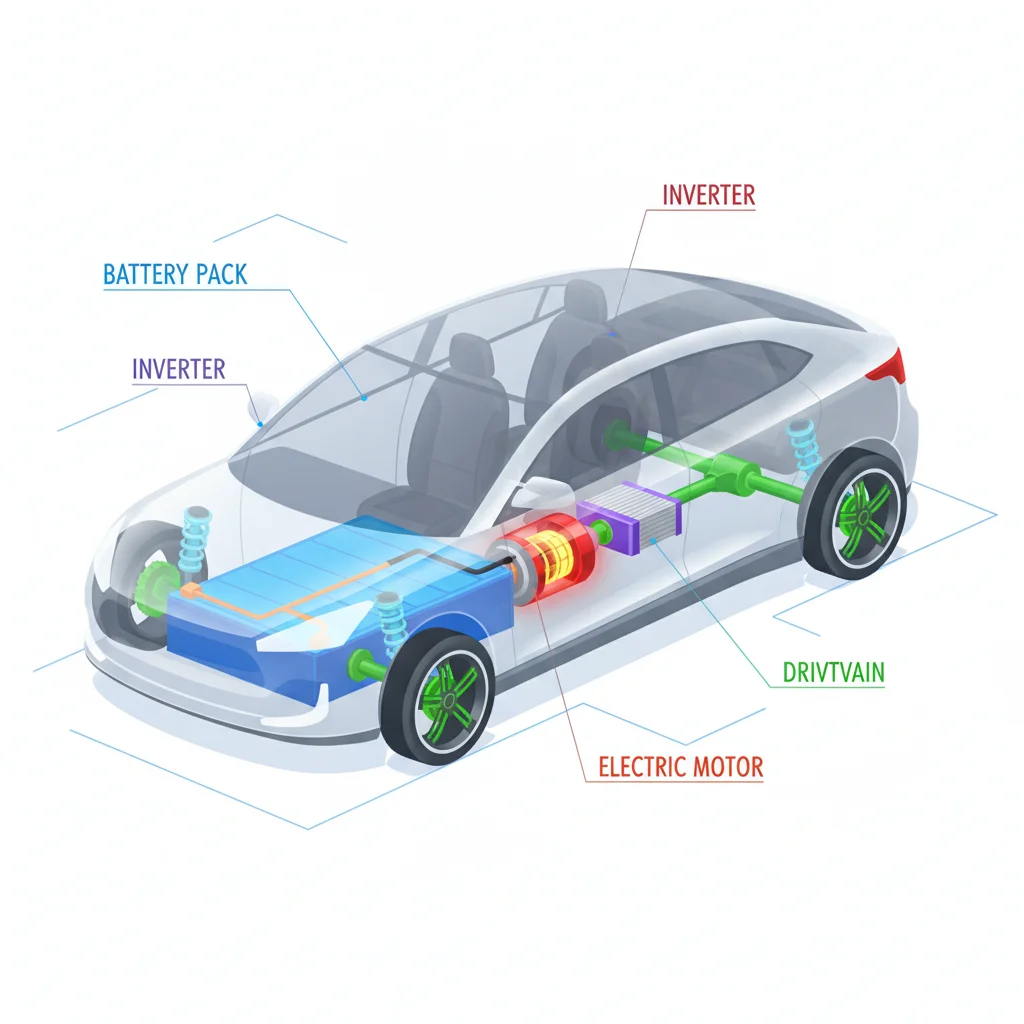
When you press the accelerator in an EV, electricity flows from the battery to an inverter, which converts it into a form the motor can use, and the motor spins the wheels. That three-step process — stored energy, conversion, rotation — happens in milliseconds and is why EVs feel so immediate compared to combustion engines.
The Electric Motor
Most consumer EVs use one of two motor types: permanent magnet synchronous motors (PMSM) or induction (AC) motors. Permanent magnet motors are more efficient across most driving conditions and are dominant in the market. Induction motors — historically associated with Tesla's rear units — are durable and don't use rare-earth magnets, but are slightly less efficient at lower loads.
The key advantage of any electric motor over a combustion engine is its torque delivery. A gas engine needs to rev up through its power band to reach peak torque. An electric motor delivers maximum torque from zero RPM — the moment it starts spinning. That's why a 300-horsepower EV feels faster off the line than a 300-horsepower gas car of equal weight.
The Inverter: The Often-Overlooked Middleman
The inverter converts the battery's stored direct current (DC) into the alternating current (AC) that most electric motors require. It also controls the frequency of that AC signal, which in turn controls motor speed. A high-quality inverter is critical to both performance and efficiency — it determines how precisely the system can modulate power delivery and how much energy is lost as heat during conversion.
Inverter technology is one area where premium EVs genuinely justify some of their price premium. More sophisticated inverters (such as those using silicon carbide semiconductors instead of traditional silicon) operate at higher efficiency, especially at the higher power levels needed for fast acceleration or DC fast charging.
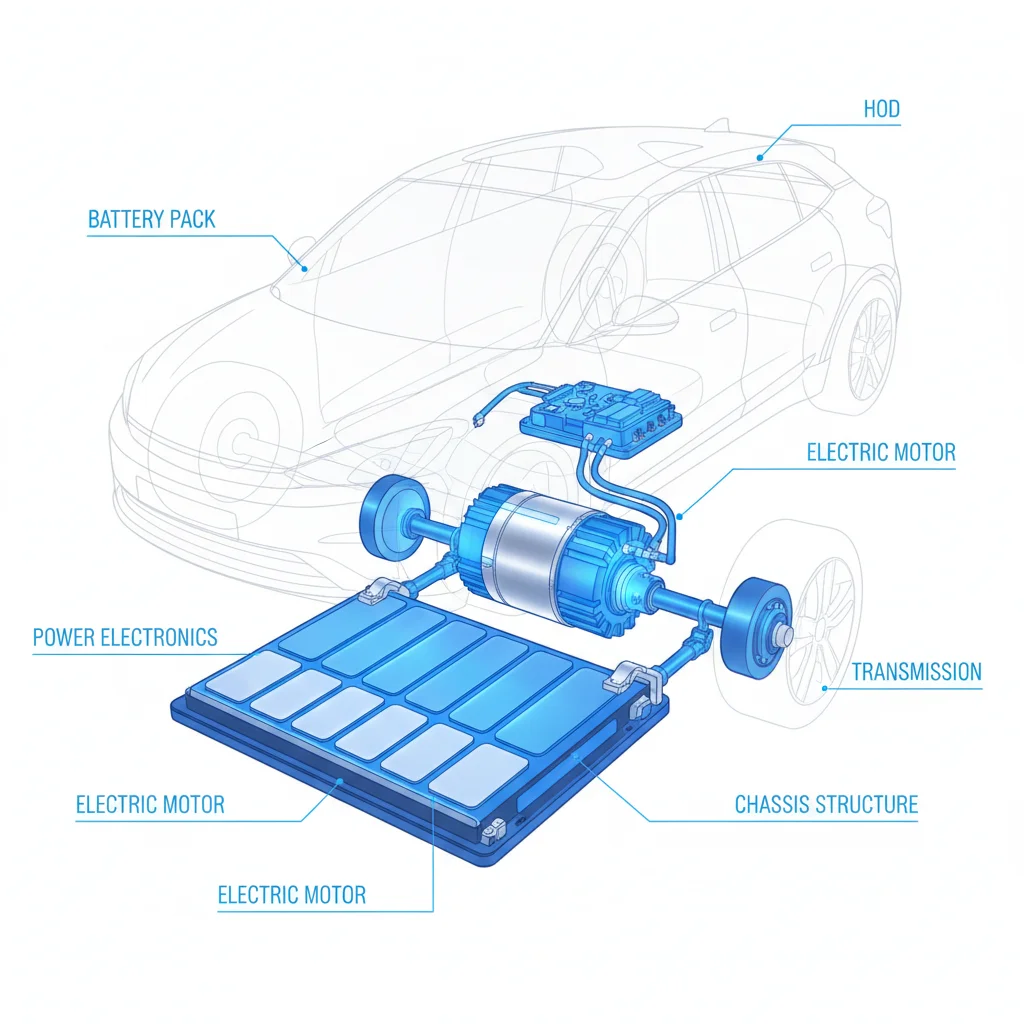
For a more detailed breakdown of how these components interact in a full BEV powertrain, see The All-Electric Powertrain guide.
Drivetrain Configurations: FWD, RWD, and AWD in EVs
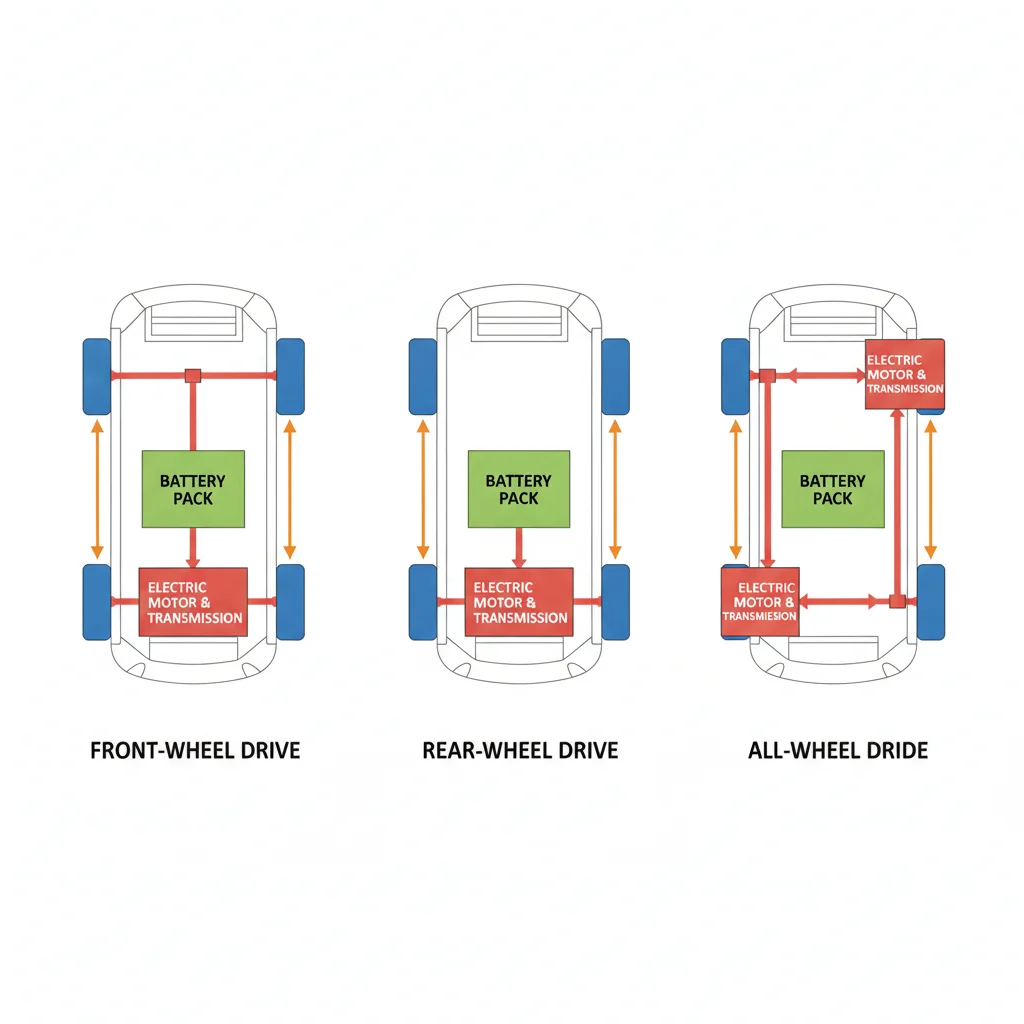
Unlike gas vehicles — where adding all-wheel drive means a complex transfer case, driveshaft, and rear differential — EVs add AWD by simply adding a second motor. This makes the engineering cleaner, but it also changes the trade-off math in ways that matter to buyers.
Single-Motor Layouts
Front-wheel drive (FWD) single-motor EVs place the motor and reduction gear at the front axle. They're mechanically simple, lighter, and typically the least expensive configuration. Most entry-level EVs use this layout. Traction in slippery conditions is adequate for most drivers but doesn't match AWD in deep snow or ice.
Rear-wheel drive (RWD) single-motor EVs place the motor at the rear. This is the traditional performance layout — better weight distribution for handling and more dynamic feel. Many mid-range and performance-oriented EVs (Tesla Model 3 Standard Range, for example) use RWD. It's generally more efficient than AWD because only one motor is being driven.
Dual-Motor AWD
Adding a second motor to the opposite axle creates instant, electronically controlled AWD with no mechanical coupling between axles. Each motor can be adjusted independently in milliseconds, enabling precise torque vectoring that outperforms traditional AWD systems. The trade-offs: more weight, higher purchase price, and a range penalty of roughly 10–30 miles on most models compared to the equivalent RWD version.
If you live somewhere with significant winter weather or regularly drive on unpaved roads, the AWD premium is often worth it. If you're primarily a highway and city commuter in a mild climate, single-motor RWD likely serves you just as well at lower cost.
Regenerative Braking: Recapturing Energy You'd Otherwise Lose
In a conventional car, kinetic energy dissipates as heat through friction brakes every time you slow down. In an EV, the motor can run in reverse — acting as a generator — to convert that kinetic energy back into electricity stored in the battery. This is regenerative braking, and it's one of the core efficiency advantages EVs hold over gas vehicles.
How Much Energy Does It Recover?
Regenerative braking can recover 15–30% of the energy that would otherwise be lost during deceleration. In city driving with frequent stops, the effect is pronounced and can meaningfully extend range. On long highway cruises with minimal braking, the benefit is smaller. This is why many EVs show higher efficiency ratings in city cycles than highway cycles — the opposite of what combustion engine drivers expect.
Adjustable Regeneration and One-Pedal Driving
Most modern EVs let you adjust regeneration strength. At the lightest setting, lifting off the accelerator produces minimal resistance — coasting behaves similarly to a gas car. At the strongest setting — often called one-pedal driving — the car decelerates aggressively when you lift off, frequently bringing the car to a full stop without touching the brake pedal.
One-pedal driving is surprisingly intuitive after a short adaptation period, and it significantly reduces wear on the physical brake hardware because the friction brakes are engaged far less often. This is one reason EV brake pads typically last significantly longer than those on comparable gas vehicles. See the EV maintenance basics guide for more on how regenerative braking changes your maintenance schedule.
Thermal Management: Keeping the Battery in Its Happy Zone
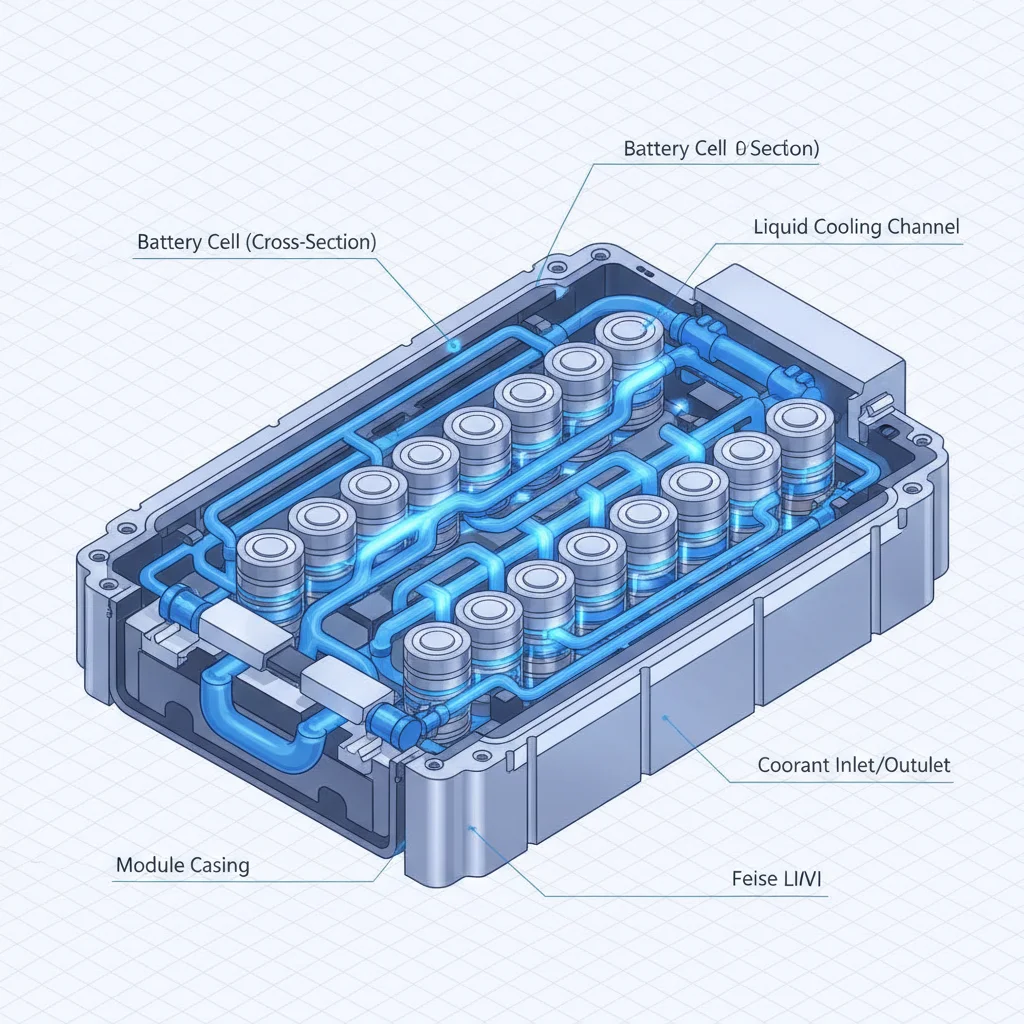
Lithium-ion batteries operate most efficiently and age most gracefully within a relatively narrow temperature window — roughly 60°F to 90°F (15°C to 32°C). Outside that range, you lose efficiency, and with repeated exposure to temperature extremes, you accelerate long-term capacity degradation. Thermal management is the system that keeps the pack in that range regardless of ambient conditions.
Active vs. Passive Thermal Management
Active liquid cooling is the gold standard. A glycol-based coolant circulates through channels in the battery pack, absorbing heat during charging and operation and rejecting it through a heat exchanger. The same system can warm the pack in cold weather using a heat pump or resistive heater. Most major EVs from established automakers now use active liquid thermal management.
Passive air cooling, still found in some older or lower-cost designs, relies on airflow to manage pack temperature. It's simpler and cheaper but significantly less effective. Nissan's early Leaf models used passive cooling, and high-degradation rates in hot climates became a well-documented issue. This is worth checking explicitly when shopping for a used EV.
Why This Matters for Buyers
Thermal management quality directly affects four things you care about: cold-weather range, DC fast-charging speed (packs charge more slowly when cold or too hot), long-term battery longevity, and battery warranty claim risk. A well-designed thermal system is one reason why EVs from brands with mature battery engineering tend to retain more capacity at high mileage than those with less sophisticated systems.
When evaluating any EV, ask: does it have active liquid cooling? Does it precondition the battery before fast charging (many modern EVs do this automatically when you navigate to a charging station)? These are concrete, answerable questions that reveal real engineering differences.
How These Systems Affect Your Real-World Ownership
Understanding the hardware isn't an academic exercise — it connects directly to decisions you'll make at the dealership, at home, and over the years you own the vehicle.
Buying Decisions
Battery size determines your range comfort margin. If your daily round trip is 60 miles, a 200-mile-range EV gives you plenty of buffer. If you regularly drive 150+ miles in a day, you'll want 280+ miles of EPA-rated range to avoid anxiety. EPA ratings are measured under controlled conditions — expect real-world range to be 10–20% lower in mixed driving and worse in winter.
Motor configuration — single vs. dual — should match your climate and use case, not just your performance preferences. And thermal management quality is something to research by brand before you set foot in a showroom, because it's not prominently advertised on window stickers.
Maintenance and Cost of Ownership
These mechanical systems have a direct bearing on what you'll spend after purchase. EVs eliminate oil changes, spark plugs, timing belts, and much of the traditional drivetrain servicing. But they introduce battery health monitoring, software updates, and eventual high-voltage system service as considerations. The EV maintenance basics hub covers routine ownership costs in detail.
Once you understand the hardware, the financial picture gets clearer too. Federal and state EV incentives can significantly offset purchase price, and knowing what you're buying helps you evaluate whether a given vehicle qualifies. Likewise, battery replacement costs factor into how you think about insurance — something covered in depth in our guide to insuring your first electric vehicle.
EV Terminology Glossary: 40 Terms Every Buyer Should Know
Once you understand the mechanics, this glossary fills in the vocabulary — from kWh to torque vectoring to CCS. Essential reference when comparing spec sheets across models.
EV Maintenance Basics Hub
A clear breakdown of what routine maintenance EVs actually require and how it compares to gas vehicles — directly relevant to understanding the long-term cost of the systems covered in this article.
PlugShare
A crowd-sourced map of public charging stations across the US. Useful for visualizing charging infrastructure along your regular routes before committing to an EV purchase.
U.S. Department of Energy Fuel Economy Guide
The official source for EPA range ratings, efficiency data, and fuel cost comparisons across all EV models sold in the United States — the most reliable benchmark for comparing real-world range expectations.
Charging at Home
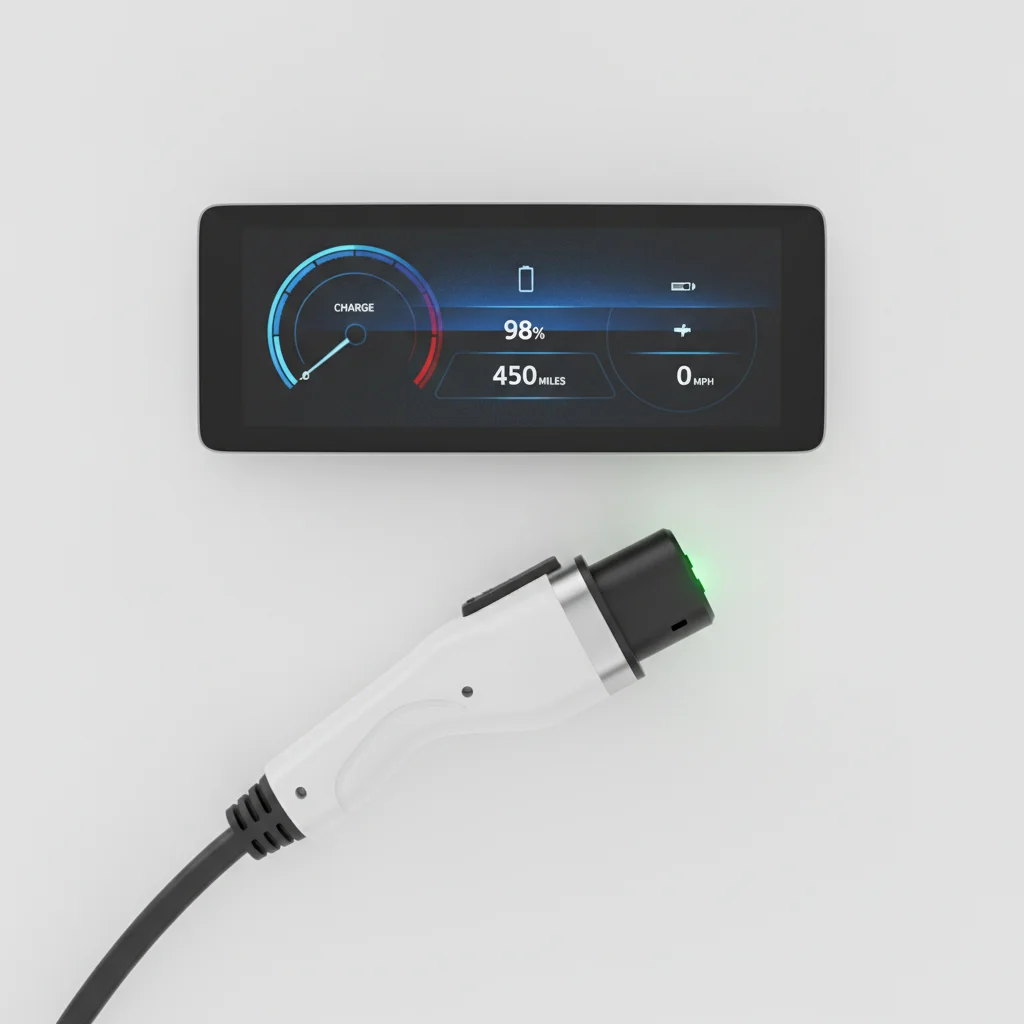
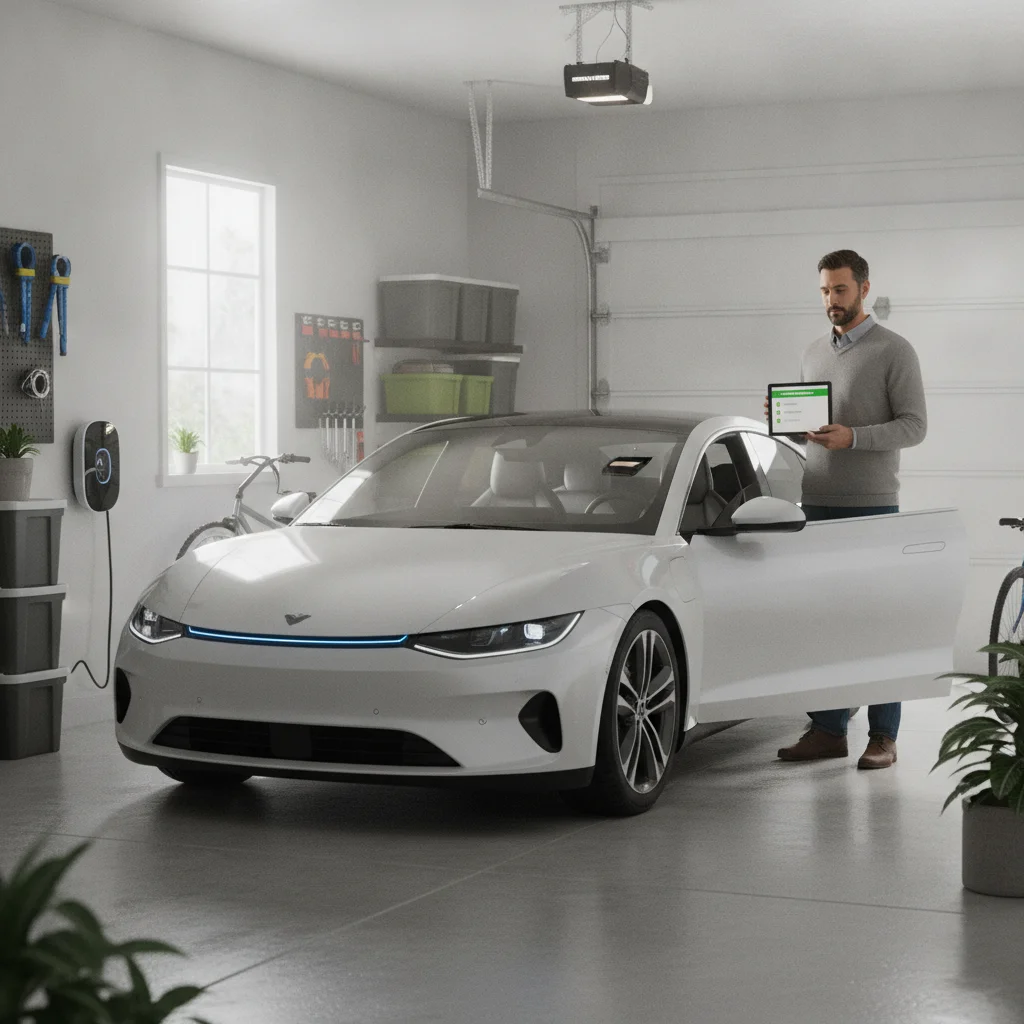
The mechanical systems in your EV also determine your home charging setup. A larger battery pack takes longer to charge on a standard Level 1 outlet (120V), often making a Level 2 (240V) home charger a practical necessity. The home charging options guide walks through every option from the included cord to a full Level 2 installation, with cost and timeline expectations for each.
The bottom line: the more clearly you understand how an EV's core systems work, the better equipped you are to evaluate trade-offs between models, ask the right questions at a dealership, and avoid expensive surprises over the life of the vehicle. You don't need to become an engineer — you just need enough mechanical literacy to shop like a well-informed adult.

All claims are backed by peer-reviewed research. Sources on request.