Key Takeaways
NACS (North American Charging Standard)
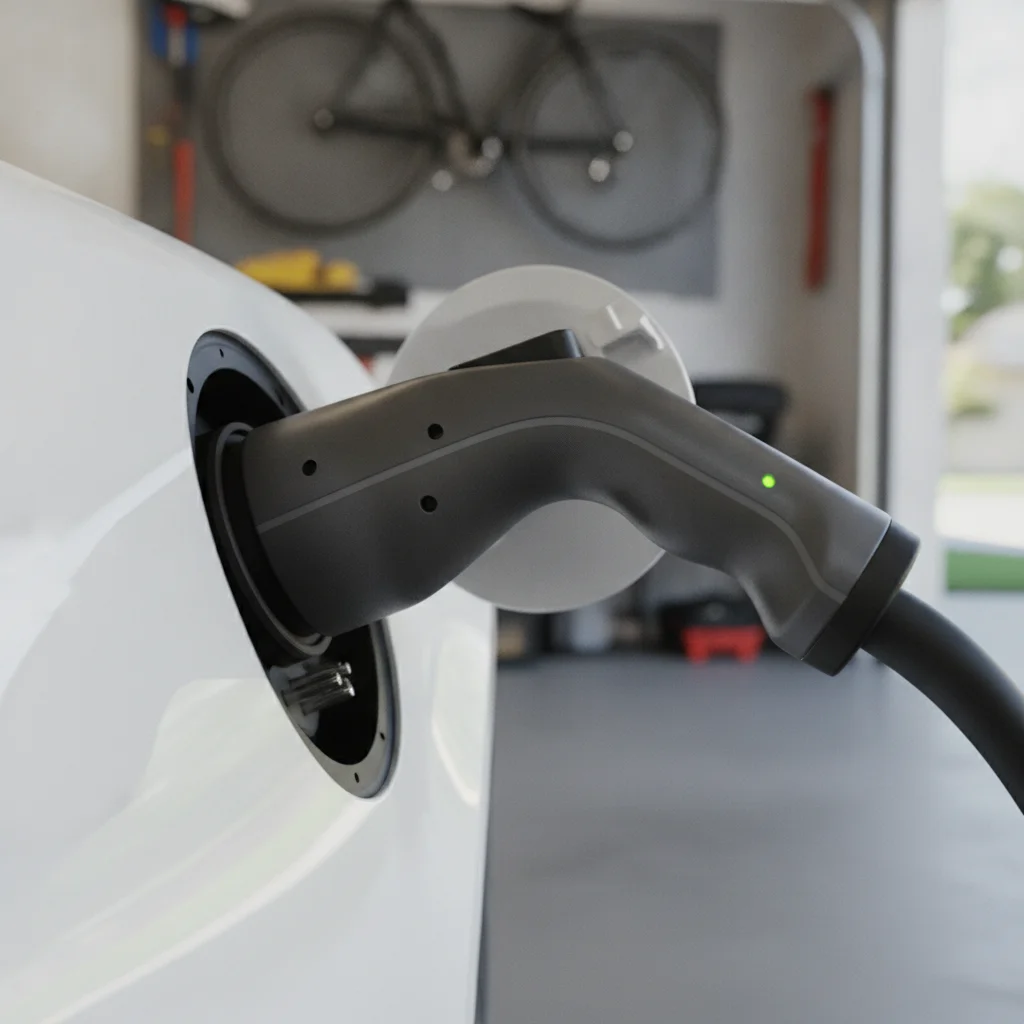
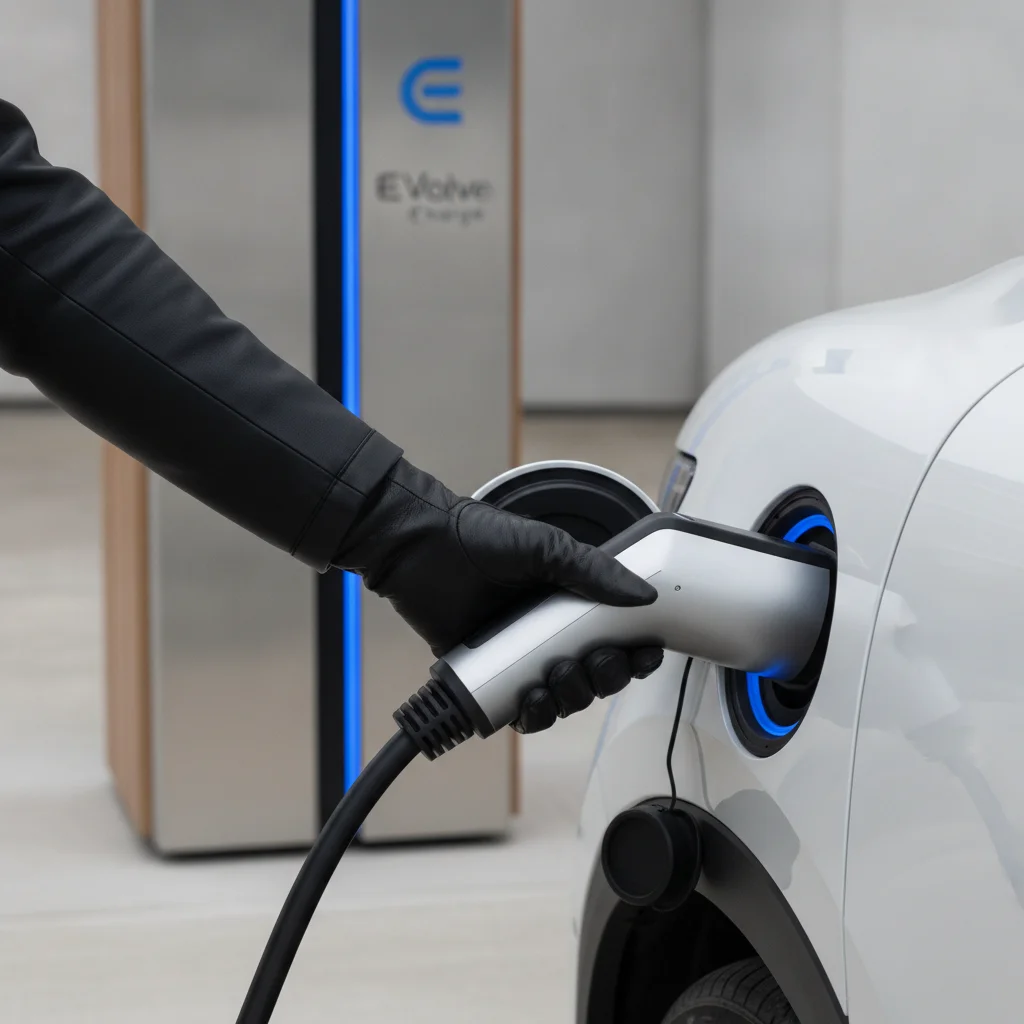
NACS, or the North American Charging Standard, is an EV charging connector originally developed by Tesla and used exclusively on its vehicles for over a decade. In 2022, Tesla opened the connector design to other automakers, and it has since been adopted by Ford, GM, Rivian, and most major manufacturers as the industry-wide standard for EV charging in North America. NACS connectors are smaller and handle both AC and DC charging through a single plug, simplifying the charging experience for drivers.
NACS was formally standardized as SAE J3400 by SAE International in June 2023, giving it official industry-standard status. The connector supports up to 1 MW of power delivery in its specification, far exceeding current real-world charging speeds.
How a Tesla Proprietary Plug Became an Industry Standard
For most of electric vehicle history in North America, charging connectors were a fragmented mess. Tesla ran its own closed ecosystem with a slim, proprietary plug. Everyone else converged — eventually — on CCS (Combined Charging System) for DC fast charging and J1772 for Level 2 AC charging. The result was a bifurcated landscape where Tesla owners had access to the most extensive fast-charging network on the continent, and non-Tesla drivers were largely locked out of it.
That changed dramatically in November 2022, when Tesla published its connector specification and invited the rest of the automotive industry to use it. The move was both strategically smart for Tesla — which stood to earn charging revenue from non-Tesla drivers — and a genuine inflection point for the EV industry. Within eight months, SAE International ratified the design as SAE J3400, the official connector standard for North America, dropping it into the same level of institutional legitimacy as any other engineering standard.
The industry response was swift. CCS, CHAdeMO, and NACS all compete for market position, but the momentum behind NACS became impossible to ignore once Ford broke ranks in May 2023, announcing it would adopt the Tesla connector for its EVs starting in 2025. General Motors followed within days. By the end of 2023, nearly every major automaker with a North American EV lineup had made the same pledge.
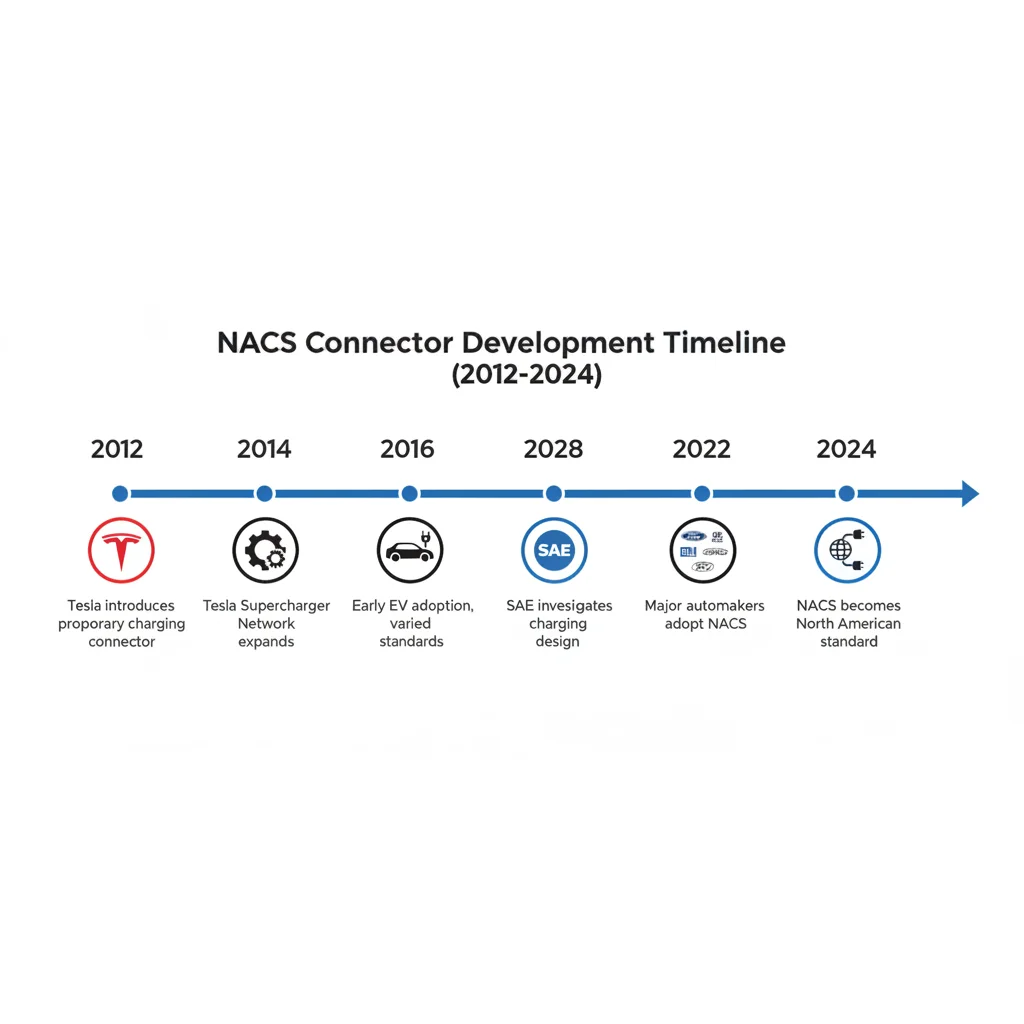
The speed of this alignment is historically unusual in the automotive industry, where standards battles typically drag on for decades. What accelerated the shift was the allure of Tesla's Supercharger network — more than 50,000 connectors across North America at the time of writing — and the recognition that fragmentation was actively slowing EV adoption by confusing consumers.
What Makes NACS Different from CCS and J1772
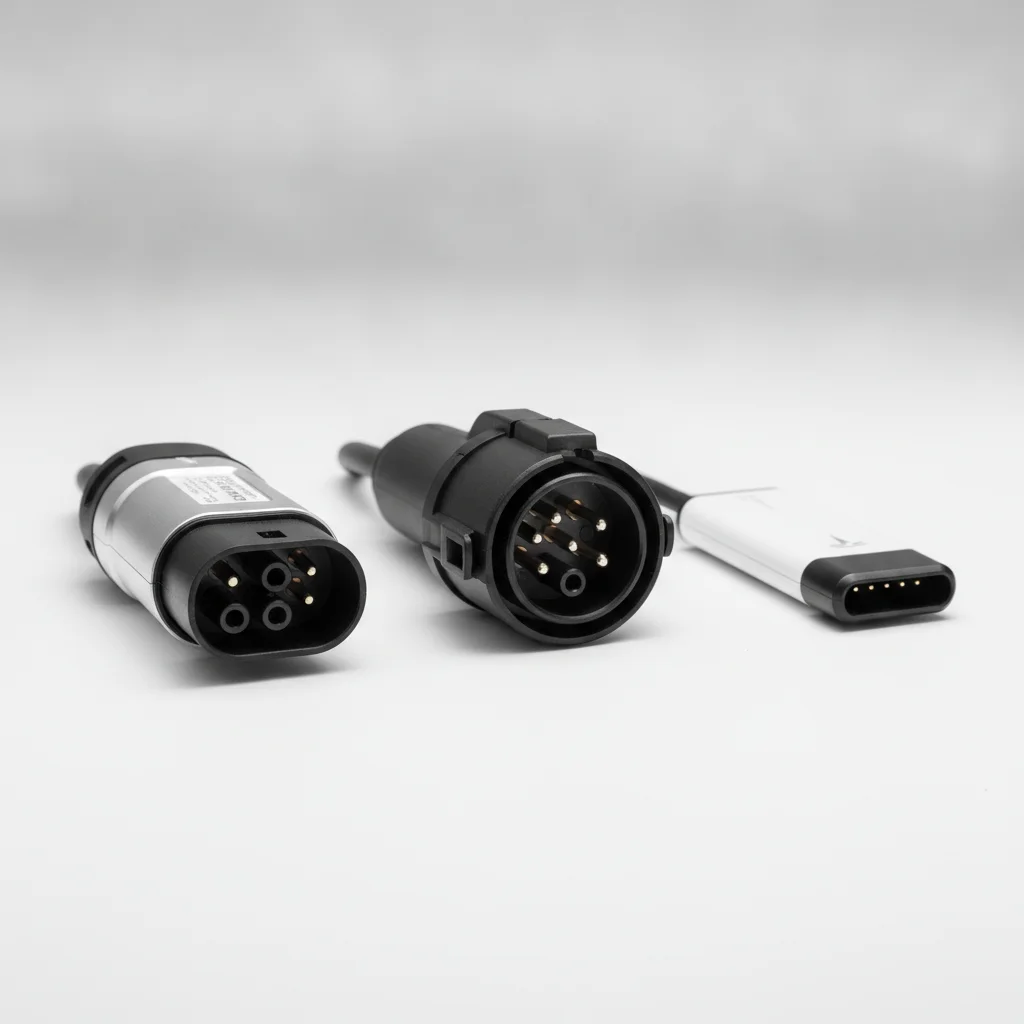
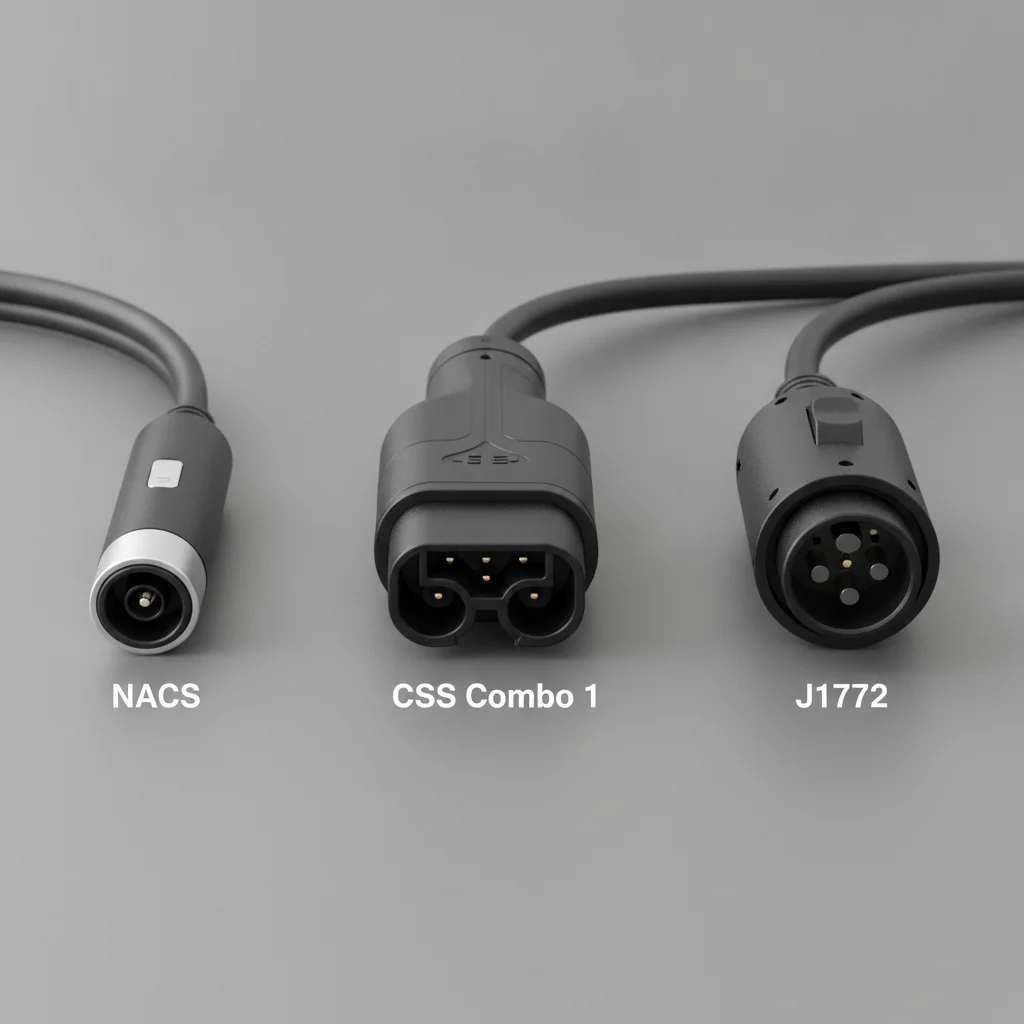
To understand why NACS adoption matters, it helps to compare it to the connectors it is replacing. The J1772 plug — the standard for Level 1 and Level 2 AC charging — is a five-pin connector used by virtually all non-Tesla EVs for home and public slow charging. It works reliably but handles only AC power, meaning a separate connector is needed for DC fast charging.
CCS (Combined Charging System, also called SAE J1772 Combo) addressed that gap by adding two large DC pins below the standard J1772 inlet. The result is a physically large connector that supports both AC and DC charging but requires a cumbersome dual-port setup on the vehicle. J1772 remains the standard for home Level 2 charging compatibility, but CCS's size and complexity left room for a better solution.
NACS addresses both limitations. It uses a single, compact two-pin connector — roughly the size of a Type 2 plug used in Europe — that handles both AC and DC power. There is no separate DC combo port. The connector's small form factor makes the charging experience more ergonomic, and the single-inlet design simplifies the vehicle's charge port architecture. Crucially, the NACS spec supports power levels up to 1 MW in theory, which far exceeds even the fastest current Superchargers (peaking around 250 kW) and leaves substantial headroom for future charging speeds.
50,000+
Supercharger connectors in North America
As of 2024, Tesla operates the largest fast-charging network on the continent, now accessible to non-Tesla NACS-compatible vehicles.
SAE J3400
Official NACS standard designation
SAE International ratified NACS as SAE J3400 in June 2023, giving the former Tesla connector full industry-standard status.
$7.5B
Federal NEVI funding for U.S. charging infrastructure
The Bipartisan Infrastructure Law allocated $7.5 billion for EV charging, with updated rules requiring NACS connectors at all NEVI-funded stations.
1 MW
Maximum power delivery in NACS specification
The NACS/SAE J3400 spec supports up to 1 megawatt of power, far beyond current real-world charging speeds, providing headroom for next-generation chargers.
12+
Major automakers committed to NACS
From Ford's May 2023 announcement through 2024, over a dozen major automakers pledged to adopt NACS ports on North American EV models.
CHAdeMO, the Japanese DC fast-charge standard used by older Nissan Leafs and a shrinking number of Mitsubishi EVs, is effectively a dead end in North America. Most new fast-charging stations have already stopped installing CHAdeMO connectors, and the standard's U.S. footprint is eroding. NACS's rise further marginalizes CHAdeMO to a legacy footnote.
The Supercharger Network: Why Access Matters So Much
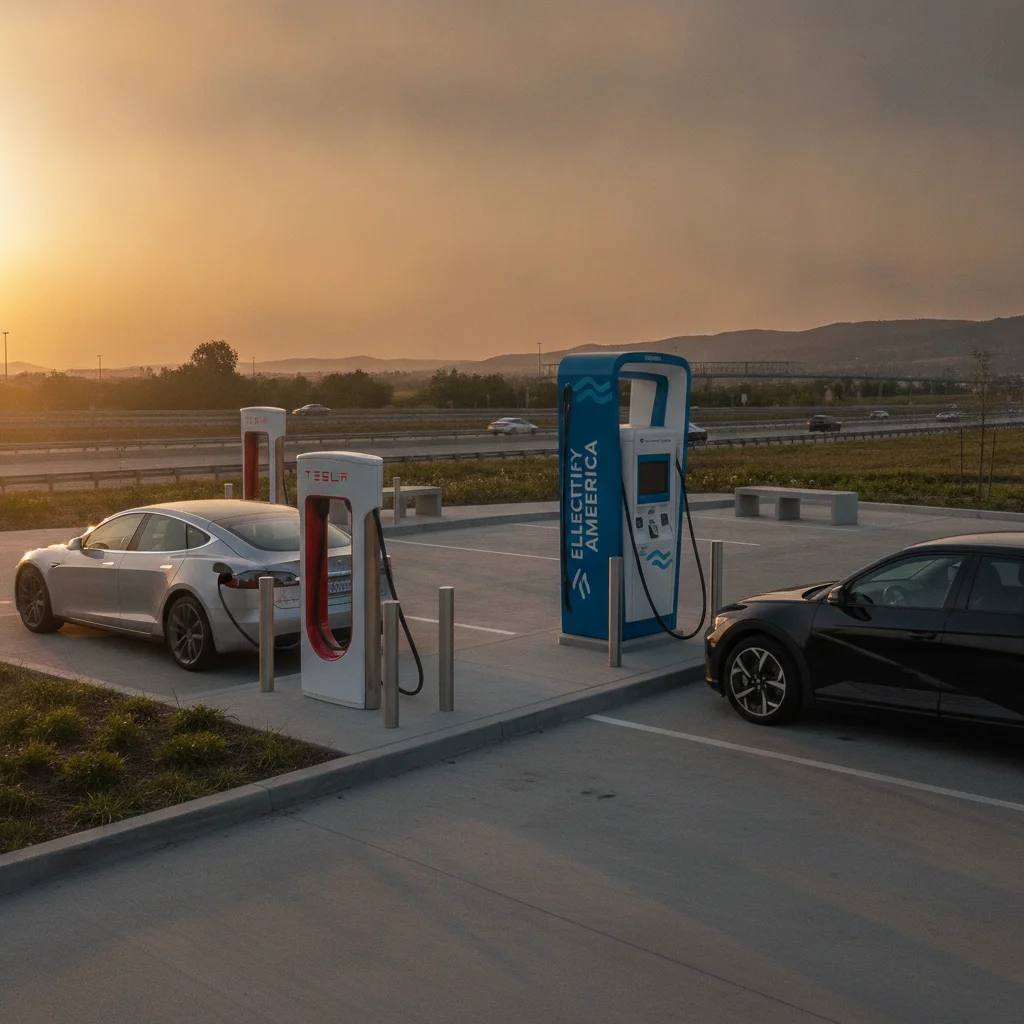
The practical reason NACS adoption is a big deal for non-Tesla EV owners is not the connector itself — it's what the connector unlocks. Tesla's Supercharger network is, by almost every measurable metric, the most reliable and well-distributed fast-charging network in North America. A direct comparison of Tesla Supercharger vs. Electrify America illustrates the gap in uptime and station density clearly.
Tesla began opening its Superchargers to non-Tesla vehicles in late 2022, initially through a pilot program in Europe and then rolling out to the U.S. in 2023. The process requires a CCS-to-NACS adapter and a Tesla account — but it works. Drivers of Ford Mustang Mach-E, Chevrolet Equinox EV, and other non-Tesla models have reported successfully charging at Supercharger locations equipped with Magic Dock adapters or by using adapters provided by their automakers.
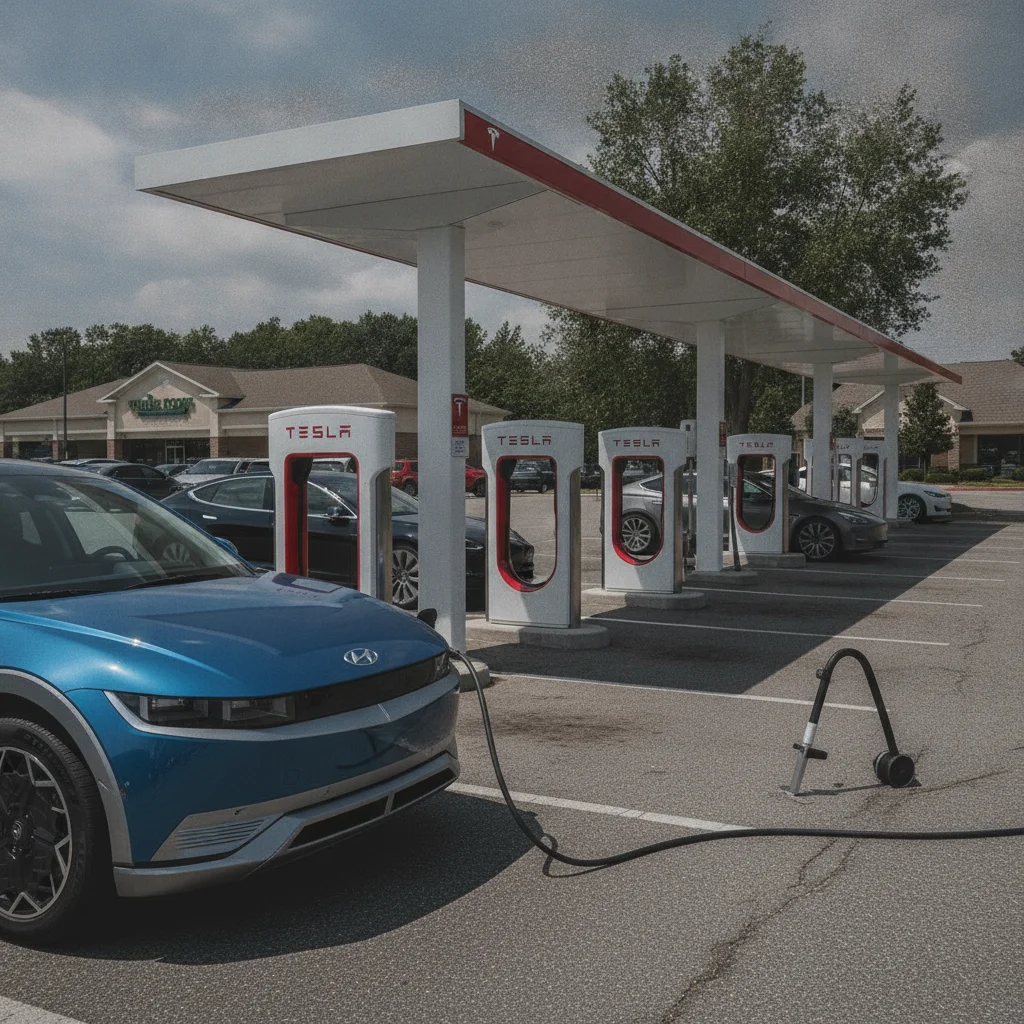
For road trippers, this is transformative. Before Supercharger access, planning a long-distance trip in a non-Tesla EV required careful routing around Electrify America, EVgo, or ChargePoint stations — a patchwork with variable reliability. Adding the Supercharger network to the mix dramatically improves coverage and redundancy. A complete overview of U.S. public EV charging networks shows just how much denser the combined map becomes when Superchargers are accessible to all NACS-compatible vehicles.
Check Your Automaker's Adapter Policy
Before purchasing a CCS-to-NACS adapter on your own, check whether your automaker is providing one to customers at no cost. Ford, for example, committed to providing adapters to Mach-E and F-150 Lightning owners. Buying an unnecessary adapter wastes money, and manufacturer-provided adapters are often better integrated with the vehicle's charging software.
Verify Adapter Power Ratings on Road Trips
Not all CCS-to-NACS adapters support the same peak power levels. If you plan to use a Supercharger rated at 250 kW, confirm that your adapter is rated to handle that load. Using an undersized adapter will throttle your charging speed and add time to your stops. Look for adapters that match or exceed your vehicle's maximum DC fast-charge acceptance rate.
Federal infrastructure funding has also accelerated NACS's institutional footprint. The National Electric Vehicle Infrastructure (NEVI) program, which channels billions of dollars toward public fast-charging stations along U.S. highway corridors, initially required CCS connectors. In 2023, the Federal Highway Administration updated its rules to require both CCS and NACS connectors at NEVI-funded stations, effectively mandating NACS at any new federally funded charging site. That policy shift locks in NACS's presence on the national infrastructure map for years to come.
The Adapter Situation: What Current EV Owners Need to Know
If you own an EV with a CCS port today, you are not stranded by the NACS transition — but you do need to think carefully about adapters. The two key adapters in play are:
- CCS-to-NACS (for non-Tesla vehicles at Superchargers): Tesla sells this adapter for $230. It allows CCS-port vehicles to plug into Tesla Supercharger stations that have a standard NACS cable (as opposed to Magic Dock stations, which have a built-in adapter). Some automakers — including Ford — committed to providing adapters directly to customers.
- NACS-to-CCS (for future NACS-native vehicles at legacy CCS stations): As new NACS-native vehicles hit the road from 2025 onward, their owners will encounter existing CCS fast-chargers at Electrify America, EVgo, and ChargePoint. SAE J3400 adapters in this direction are becoming commercially available through third parties, and charging networks are also upgrading their cable infrastructure.
The adapter period is temporary but real. Industry analysts expect the transition to be largely complete — meaning most new public fast chargers will offer native NACS cables — by 2026 to 2027. Until then, carrying the right adapter on road trips is practical insurance.
“The adoption of NACS as SAE J3400 is a pivotal moment for EV standardization. A single, widely supported connector reduces consumer confusion and accelerates the buildout of interoperable charging infrastructure across North America.”
— Carla Bailo, President and CEO, Center for Automotive Research
One important nuance: adapters introduce a potential point of failure and may cap charging speeds at the adapter's rated maximum. For day-to-day local charging, this is unlikely to matter. For high-speed DC fast charging on a road trip, verify that your adapter is rated for the power level you plan to use. A 150 kW CCS-capable vehicle using a lower-rated adapter may not achieve its full charging speed.
NACS and CCS in Europe Are Different
The NACS (SAE J3400) standard described in this article is specific to North America. In Europe, CCS Type 2 (also called CCS2) is the dominant standard and differs from the CCS1 Combo used in the U.S. Tesla's European vehicles use CCS2, not NACS. If you are researching EV charging for European travel, the standards landscape is distinct from what applies in the United States.
Magic Dock vs. Standard NACS Cables
Not all Supercharger locations are equally accessible to non-Tesla CCS vehicles. Stations with a Magic Dock have a built-in CCS adapter, allowing CCS vehicles to charge without a personal adapter. Stations with standard NACS cables require you to bring your own CCS-to-NACS adapter. The Tesla app and PlugShare both indicate which station type a location uses before you arrive.
Rural Charging Gaps Persist Beyond the Connector Shift
NACS standardization solves the connector fragmentation problem but does not automatically fill geographic gaps in charging coverage. Rural areas and secondary highway routes remain underserved relative to major interstate corridors. Drivers in these regions should continue to plan routes carefully using real-time tools like A Better Route Planner or PlugShare, regardless of which connector their vehicle uses.
Automaker Timelines and What to Expect When Buying New
If you are shopping for a new EV in 2024 or 2025, NACS compatibility is a purchase consideration worth examining. Here is a snapshot of where major automakers stand:
| Automaker | NACS Commitment | Expected Native Port Availability |
|---|---|---|
| Ford | Yes (announced May 2023) | Model Year 2025+ |
| General Motors | Yes (announced June 2023) | Model Year 2025+ |
| Rivian | Yes (announced June 2023) | Model Year 2025+ |
| Honda / Acura | Yes | 2025 onward |
| Nissan | Yes | 2025 onward |
| Toyota | Yes | 2025 onward |
| Mercedes-Benz | Yes | 2025 onward |
| Volvo / Polestar | Yes | 2025 onward |
| Hyundai / Kia | Yes | 2025 onward |
Hyundai and Kia were notable for initially hesitating given their investment in CCS infrastructure, but both confirmed NACS adoption in late 2023. Stellantis brands (Jeep, Ram, Dodge) have been slower to make formal announcements but are expected to align with the industry direction.
For buyers purchasing a 2024 model-year CCS vehicle, the key question is: does the manufacturer provide a CCS-to-NACS adapter, and is NACS access available via a software or hardware path before you sell or trade in the vehicle? Most committed automakers have addressed this with either bundled adapters or over-the-air update pathways to enable Supercharger access.
Check Your Automaker's Adapter Policy
Before purchasing a CCS-to-NACS adapter on your own, check whether your automaker is providing one to customers at no cost. Ford, for example, committed to providing adapters to Mach-E and F-150 Lightning owners. Buying an unnecessary adapter wastes money, and manufacturer-provided adapters are often better integrated with the vehicle's charging software.
Verify Adapter Power Ratings on Road Trips
Not all CCS-to-NACS adapters support the same peak power levels. If you plan to use a Supercharger rated at 250 kW, confirm that your adapter is rated to handle that load. Using an undersized adapter will throttle your charging speed and add time to your stops. Look for adapters that match or exceed your vehicle's maximum DC fast-charge acceptance rate.
What NACS Means for Public Charging Infrastructure and Road Trippers
For commuters who charge primarily at home, NACS adoption is mostly a background development — home charging setup remains the most cost-effective and convenient option regardless of public connector standards. The NACS shift matters most for two groups: long-distance road trippers who depend on fast-charging corridors, and urban EV owners without reliable home charging access.
For road trippers, the practical benefit is a materially denser fast-charging map. A side-by-side comparison of the major public charging networks shows that Tesla Supercharger stations outnumber Electrify America, EVgo, and ChargePoint DC fast-chargers combined on many highway corridors. Gaining access to that network — which has historically had the highest uptime rates in J.D. Power and PlugShare surveys — is a meaningful quality-of-life improvement.
Charging networks themselves are adapting quickly. Electrify America has begun installing NACS-capable cables at new and upgraded stations. EVgo announced NACS connector deployment across its network. ChargePoint, which primarily sells charging hardware to businesses and property owners, has updated its commercial product line to include NACS options. The transition is happening in real time, and the trajectory is clear: within a few years, pulling into a U.S. fast-charging station and seeing only NACS cables will be the norm rather than the exception.
The remaining concern is reliability and station density in rural areas. NEVI funding is specifically targeting highway corridors every 50 miles, which should reduce range anxiety on interstate routes. But rural secondary roads and less-trafficked regions remain underserved, a challenge that NACS adoption alone does not solve. Understanding EV ownership costs — including the real costs of public versus home charging — is valuable context for buyers deciding whether an EV fits their lifestyle.
NACS and CCS in Europe Are Different
The NACS (SAE J3400) standard described in this article is specific to North America. In Europe, CCS Type 2 (also called CCS2) is the dominant standard and differs from the CCS1 Combo used in the U.S. Tesla's European vehicles use CCS2, not NACS. If you are researching EV charging for European travel, the standards landscape is distinct from what applies in the United States.
Magic Dock vs. Standard NACS Cables
Not all Supercharger locations are equally accessible to non-Tesla CCS vehicles. Stations with a Magic Dock have a built-in CCS adapter, allowing CCS vehicles to charge without a personal adapter. Stations with standard NACS cables require you to bring your own CCS-to-NACS adapter. The Tesla app and PlugShare both indicate which station type a location uses before you arrive.
Rural Charging Gaps Persist Beyond the Connector Shift
NACS standardization solves the connector fragmentation problem but does not automatically fill geographic gaps in charging coverage. Rural areas and secondary highway routes remain underserved relative to major interstate corridors. Drivers in these regions should continue to plan routes carefully using real-time tools like A Better Route Planner or PlugShare, regardless of which connector their vehicle uses.
The Bottom Line for EV Buyers and Owners
NACS's rise from a proprietary Tesla connector to the official North American standard is one of the most significant infrastructure developments in EV history. For new car buyers, the message is straightforward: if you are purchasing an EV from a 2025 model year onward from a major automaker, expect a native NACS port and access to the full Supercharger network without adapters.
For current CCS vehicle owners, the transition requires a small but worthwhile investment — primarily a CCS-to-NACS adapter for road trips — and familiarity with which stations at your preferred charging networks have been upgraded. Most Supercharger locations now accept non-Tesla vehicles, and the process of charging is functionally the same as any other public DC fast charger.
The broader implication is that the EV charging experience in North America is consolidating around a single, well-engineered connector standard backed by the most extensive fast-charging network on the continent. That consolidation removes one of the historically cited barriers to EV adoption — charging confusion — and makes the case for switching away from gasoline meaningfully stronger for mainstream buyers.
Staying informed about which connector your current or prospective vehicle uses, which adapters you may need, and how the NEVI-funded infrastructure buildout is progressing in your region will put you ahead of most drivers navigating the transition. The connector wars in North America are, for practical purposes, over.
All claims are backed by peer-reviewed research. Sources on request.