Key Takeaways
Why Rural Charging Coverage Still Defines EV Viability
For EV drivers in cities, public charging is largely a convenience — a backup for days when home charging isn't enough. For rural residents and road trippers navigating anything more than a few hundred miles of open highway, it's a fundamental necessity. And unlike urban markets, where competition among networks has produced dense clusters of chargers, rural America has historically been treated as an afterthought.
The data reflects that reality. According to the US Department of Energy's Alternative Fuels Station Locator, more than 60 percent of public DC fast-charging stations are concentrated in urban and suburban ZIP codes, despite rural areas making up roughly 97 percent of US land mass. That disparity creates genuine range anxiety for drivers attempting cross-country trips, commuters living more than 50 miles from the nearest city, and buyers considering whether an EV can realistically replace their gas vehicle.
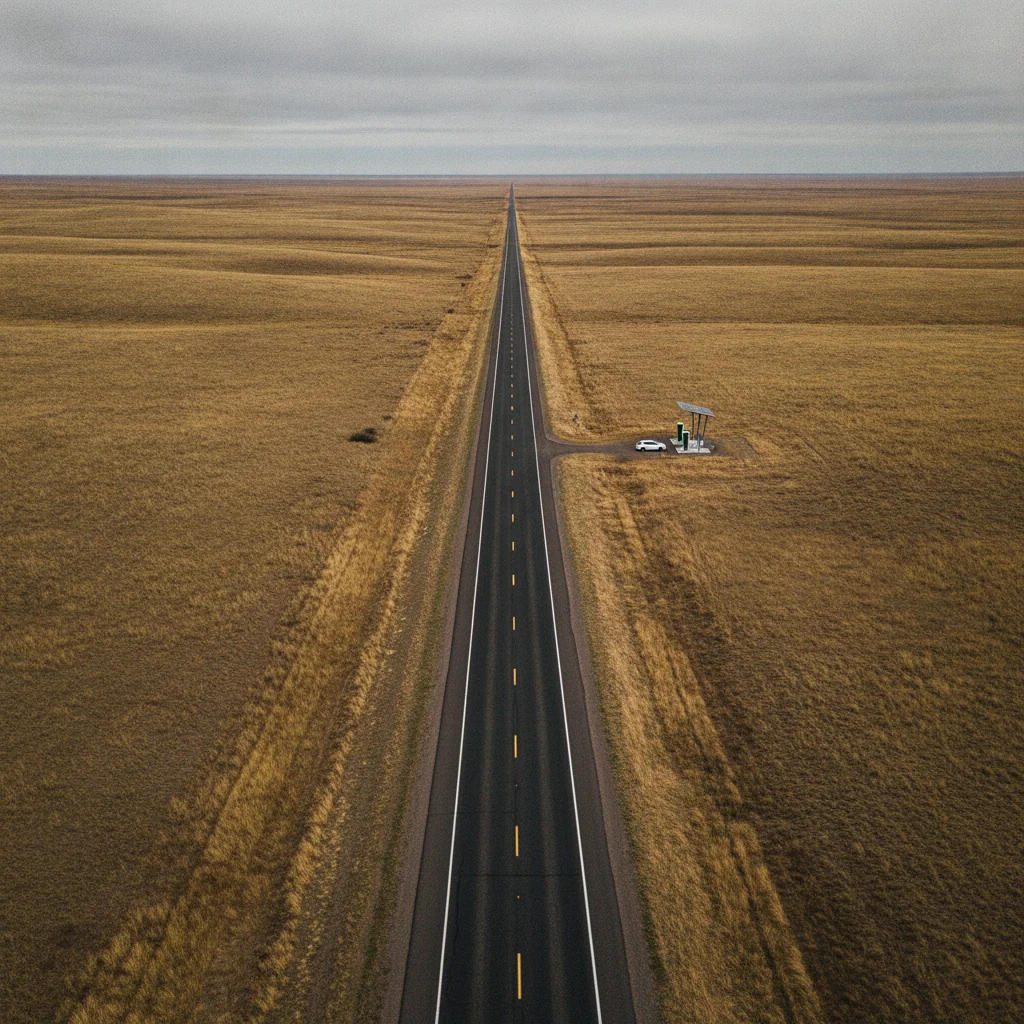
That said, the landscape is changing — and it's changing unevenly. Some networks have made rural expansion a strategic priority, placing stations along US highways, in small-town parking lots, and near rural interstates. Others remain almost entirely urban. Understanding the difference isn't just academic; it directly affects your ability to travel freely.
This article maps the charging networks making the most meaningful progress outside major metro areas, ranked by the combination of geographic reach, station reliability, charging speed, and corridor coverage. For a broader look at how all major networks compare on pricing and speed, see our side-by-side network comparison.
Tesla Supercharger Network
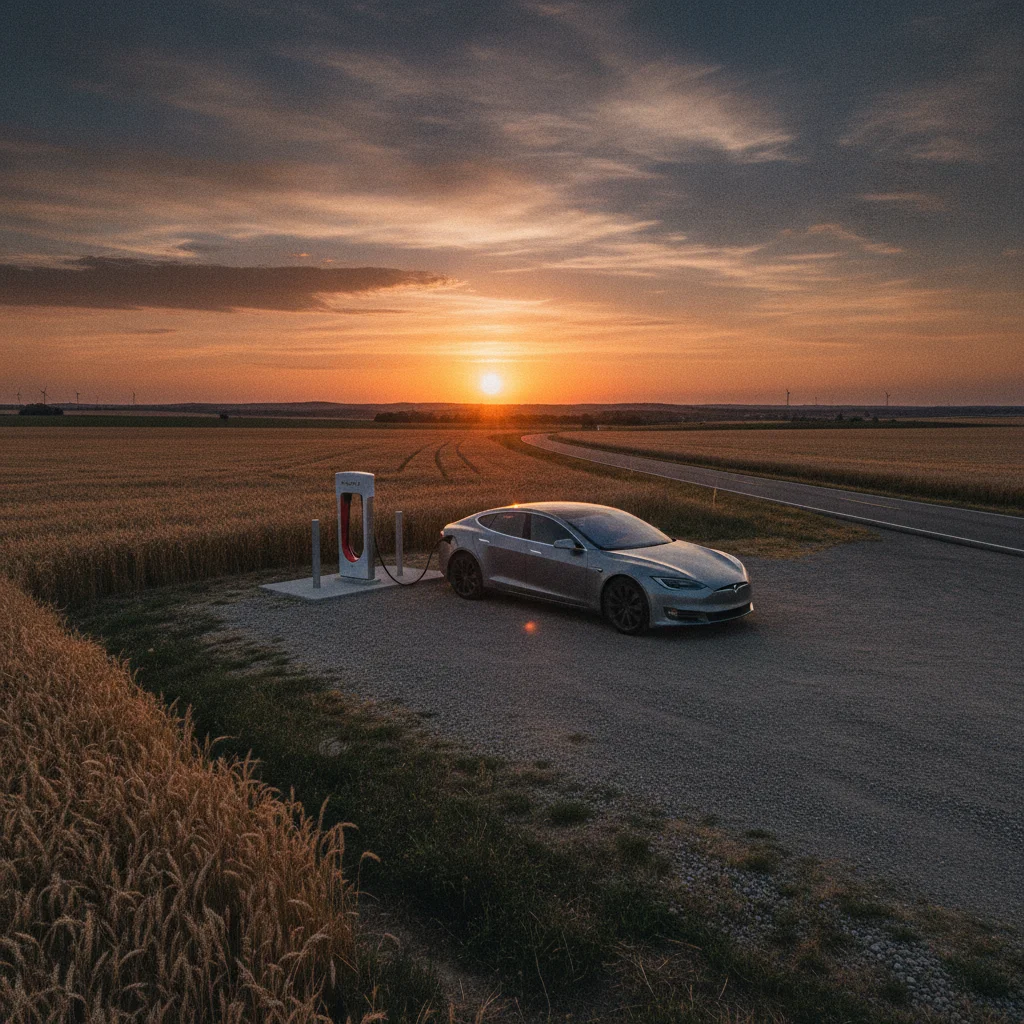
Tesla's Supercharger network remains the gold standard for rural corridor coverage in the US. With more than 20,000 individual connectors at over 2,000 US locations as of 2024, Superchargers appear not just on interstates but along US highways and in small towns that other networks haven't touched. Tesla engineered the network specifically to enable long-distance travel, which meant placing stations where drivers actually need them — at roughly 150-mile intervals along major travel routes.
The network's rural strength comes partly from Tesla's vertical integration: the company controls site selection, construction, and hardware, and it has prioritized highway-corridor density over urban saturation. A driver heading from Memphis to Denver, or from Minneapolis to Billings, will find Superchargers in towns with populations under 10,000 where Electrify America and EVgo have no presence.
Since Tesla opened the Supercharger network to non-Tesla vehicles in 2023, this rural infrastructure is now accessible to drivers of Ford, GM, Rivian, Volvo, and other brands adopting the NACS connector — either natively or via adapters. Pricing for non-Tesla drivers runs slightly higher than for Tesla owners, but the reliability and rural reach justify that premium for many drivers. Uptime rates reported by third-party monitors like PlugShare consistently rank Supercharger stations among the highest in the industry.
For rural road trippers, the key limitation is that Supercharger coverage still skews toward routes Tesla drivers historically traveled — western interstates, major north-south corridors, and tourist-heavy regions. Rural areas of the Deep South and parts of the northern Great Plains remain thinner. But among all networks, none matches Supercharger's combination of rural density, reliability, and increasingly broad vehicle compatibility.
No other network matches Tesla Supercharger's rural corridor density, reliability, and increasingly broad vehicle compatibility.
Electrify America
Electrify America was created under a Volkswagen settlement agreement with a specific mandate: build a nationwide public fast-charging network that includes underserved communities and rural corridors. That mission, combined with aggressive NEVI funding applications, has made Electrify America the most significant non-Tesla rural DC fast charger presence in the country.
The network's highway focus is its defining rural advantage. Electrify America has placed stations at Walmart locations — including rural Walmarts in towns that would otherwise have no fast charging — along with travel plazas, grocery stores, and rest areas along designated Alternative Fuel Corridors. Station locations in rural Nebraska, the Mississippi Delta, and rural Appalachia exist partly because of the company's original settlement-driven geographic mandate.
Charging speeds are competitive: most Electrify America stations offer between 150 kW and 350 kW, with the 350 kW ceiling relevant for drivers of vehicles that can accept ultra-fast charging like the Hyundai IONIQ 6 or Kia EV6. That speed matters on long rural drives where a 20-minute stop needs to meaningfully replenish range.
The network's rural weakness has historically been reliability. Early Electrify America stations developed a reputation for out-of-service chargers, a problem the company has worked to address with improved maintenance contracts and hardware upgrades. Recent third-party audits show improvement, but the gap with Tesla's uptime record remains. For more detail on how Electrify America stacks up on these metrics against EVgo, see our EVgo vs. Electrify America comparison.
Electrify America's rural Walmart placements and highway corridor focus give it unique reach in underserved regions.
ChargePoint
ChargePoint operates differently from every other network on this list. Rather than owning and operating charging hardware directly, ChargePoint sells and networks chargers installed by businesses, utilities, municipalities, and property owners. That franchise model has produced the largest single network by station count in the US — over 35,000 charging locations — but with important implications for rural coverage.
Because ChargePoint's rural penetration depends on local partners willing to install and maintain hardware, coverage is uneven. In rural states with active utility partnerships or state grant programs — Oregon, Iowa, Minnesota, and North Carolina among them — ChargePoint has a meaningful presence. A rural hospital, county fairground, or local hotel may have ChargePoint Level 2 stations where no DC fast charger exists for 50 miles.
That Level 2 presence is both ChargePoint's rural strength and its limitation. The vast majority of ChargePoint's rural stations deliver Level 2 charging at 6–19 kW, suitable for overnight stays or multi-hour stops but not for a 30-minute highway rest break. ChargePoint has been expanding its DC fast charging locations, but rural fast-charge density lags behind Tesla and Electrify America significantly.
For rural EV owners who primarily charge at home and use public charging for extended trips, ChargePoint's rural Level 2 network provides meaningful backup coverage — particularly for finding a charge at a rural destination like a state park, small-town hotel, or agricultural supply store. The ChargePoint app's route planning tools also aggregate third-party station data, giving drivers a broader view of options beyond the ChargePoint network itself.
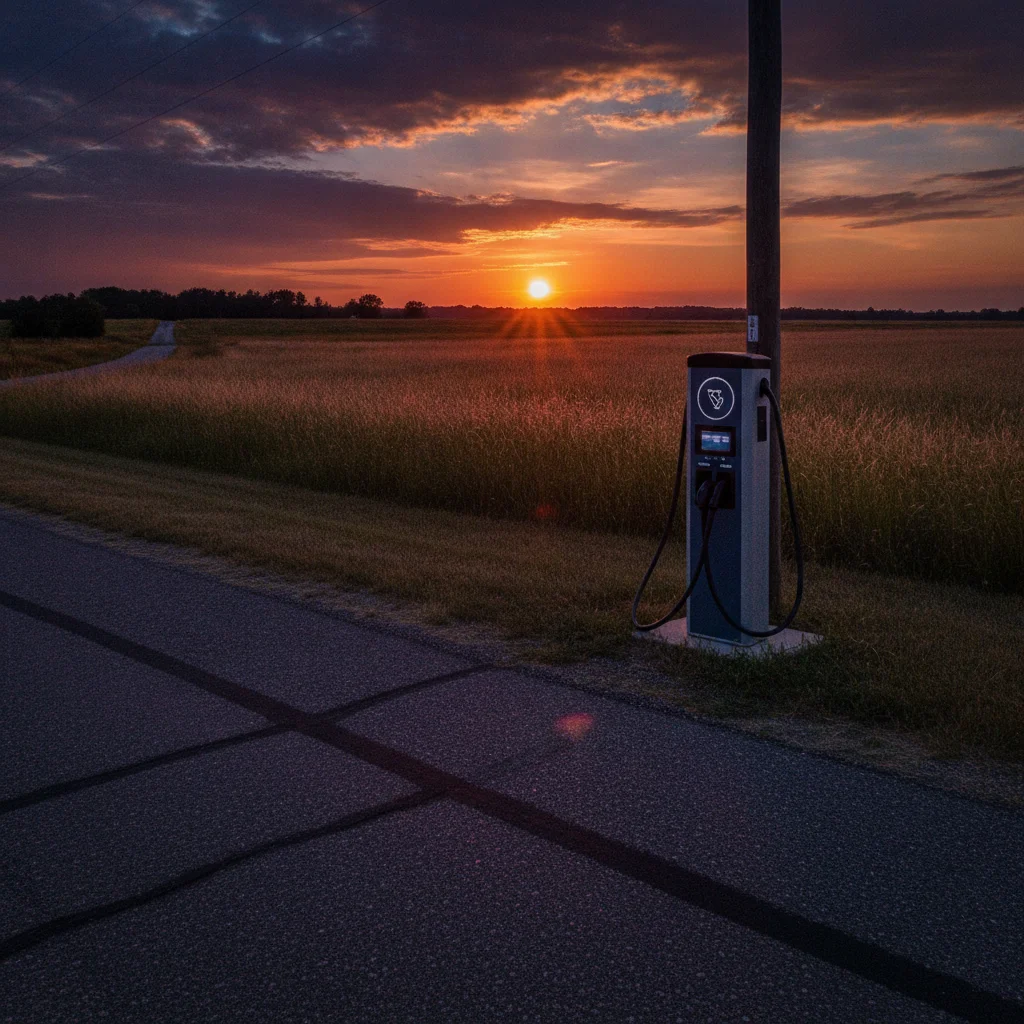
[in_content_images:2]ChargePoint's partner model has placed Level 2 chargers in rural hospitals, fairgrounds, and hotels where no fast charger exists.
Francis Energy
Francis Energy is the most important rural-specific charging network most EV drivers have never heard of. Founded in Oklahoma in 2019, Francis Energy built one of the densest EV charging networks in the Great Plains and Midwest — a region that larger networks systematically underserved. The company's stated mission was explicitly to bring DC fast charging to rural Oklahoma, Kansas, Arkansas, Missouri, and surrounding states before national players showed up.
The network's geographic concentration is its defining feature. Francis Energy doesn't try to compete with Tesla on a national scale; instead, it provides critical corridor coverage on routes through rural Oklahoma and the surrounding region where Supercharger gaps still exist. Stations appear in small towns, tribal nation facilities, and rural travel stops at intervals designed for practical trip planning rather than marketing optics.
Francis Energy received early NEVI-adjacent state grant funding that allowed it to build in locations that a pure market logic would never justify. That public subsidy model reflects a growing recognition that rural charging requires government support, not just private investment. The company has since expanded beyond Oklahoma, with stations in multiple neighboring states.
Charging speeds at Francis Energy stations typically range from 50 kW to 150 kW — adequate for most current EVs on a highway stop, though not at the bleeding edge of fast-charging technology. For drivers crossing the Great Plains or traveling through rural Oklahoma and Arkansas, Francis Energy stations may be the difference between a practical road trip and an impossible one. See our guide to smaller charging networks for more on regional providers like Francis Energy.
Francis Energy built DC fast charging in rural Oklahoma and the Great Plains before national networks considered it viable.
Blink Charging
Blink Charging occupies a contested middle position: it operates thousands of stations across the US, claims broad geographic coverage, and has received federal grant funding specifically targeting underserved areas. Its rural presence is real but requires more scrutiny than the network's station counts suggest.
Blink has placed chargers in rural locations — small-town hotels, rural hospitals, National Park gateway communities, and municipal lots in sub-10,000-population towns. In states like Montana, Wyoming, and rural New England, Blink stations sometimes represent the only public charging option within a significant radius. The network's partnerships with municipalities and small businesses have driven this geographic spread in ways that mirror ChargePoint's approach, though Blink typically owns and operates its hardware directly.
The network's significant weakness is reliability. Independent audits and driver-reported data on PlugShare have consistently shown Blink stations with higher out-of-service rates than Supercharger, Electrify America, or ChargePoint. In rural areas where a broken charger can strand a driver 60 miles from the next option, reliability matters more than in urban markets. Blink has acknowledged the problem and invested in hardware upgrades, but driver-reported experiences remain mixed as of 2024.
Blink's rural value is most defensible as a secondary or emergency resource rather than a primary corridor network. Knowing a Blink station exists 40 miles off the interstate may matter if weather or unexpected consumption depletes your battery — but trip planning should probably rely on more reliable options as the primary route. For a comprehensive look at all major networks including Blink, see our complete public charging network overview.
Blink's geographic reach is real, but reliability in rural areas remains a documented concern drivers should account for.
Rivian Adventure Network
Rivian's Adventure Network is purpose-built for rural and off-the-beaten-path travel — which makes it uniquely relevant to this conversation, even though it's currently exclusive to Rivian vehicles. The network was designed around Rivian's customer base: outdoor enthusiasts, overlanders, and travelers heading to national parks, ski resorts, forest service roads, and destinations that no other charging network has prioritized.
Station placement reflects this philosophy directly. Rivian Adventure Network chargers appear at trailheads, state park entrances, resort towns, and rural recreation areas in states like Colorado, Utah, Montana, Wyoming, and the Pacific Northwest. The network is explicitly not trying to mirror interstate highway coverage; it's filling the gaps that highway-focused networks leave when drivers veer off the main corridor toward actual wilderness destinations.
Charging speeds top out at 200 kW at most Adventure Network stations — fast enough to provide meaningful range in a 20–30 minute stop. Rivian designed the stations to integrate with their vehicles' navigation system, with route-aware charging prompts and reservation capability at high-traffic locations. Hardware quality and uptime have been strong based on Rivian owner reports, reflecting the company's control over both vehicle and charging infrastructure.
The exclusivity limitation is significant but may not be permanent. Rivian has signaled openness to expanding access, and as the company adopts NACS, the long-term picture for Adventure Network access could shift. For now, this network is a genuine differentiator for Rivian buyers in rural areas — and a preview of what targeted, use-case-specific rural charging infrastructure can look like. Rural EV buyers weighing Rivian against alternatives should factor Adventure Network access into total cost of ownership calculations alongside charging cost estimates.
Rivian Adventure Network places chargers at trailheads and rural recreation areas no other network has targeted.
Plan Rural Routes Using Multiple Apps
No single app shows every charging option accurately. For rural trip planning, cross-reference A Better Routeplanner (ABRP) with PlugShare's real-time check-in data before departure. ABRP models energy consumption based on your specific vehicle and weather conditions, while PlugShare's driver reports flag stations that may be offline or difficult to access. Using both together significantly reduces the risk of arriving at a broken or inaccessible charger.
The Bottom Line on Rural EV Charging
No single network has solved rural charging. What exists is a patchwork: Tesla's Supercharger backbone along major corridors, Electrify America's NEVI-funded highway nodes, ChargePoint's locally-anchored Level 2 presence, and smaller regional operators filling specific geographic gaps. The most prepared rural EV drivers combine a long-range vehicle with knowledge of at least two or three networks in their region.
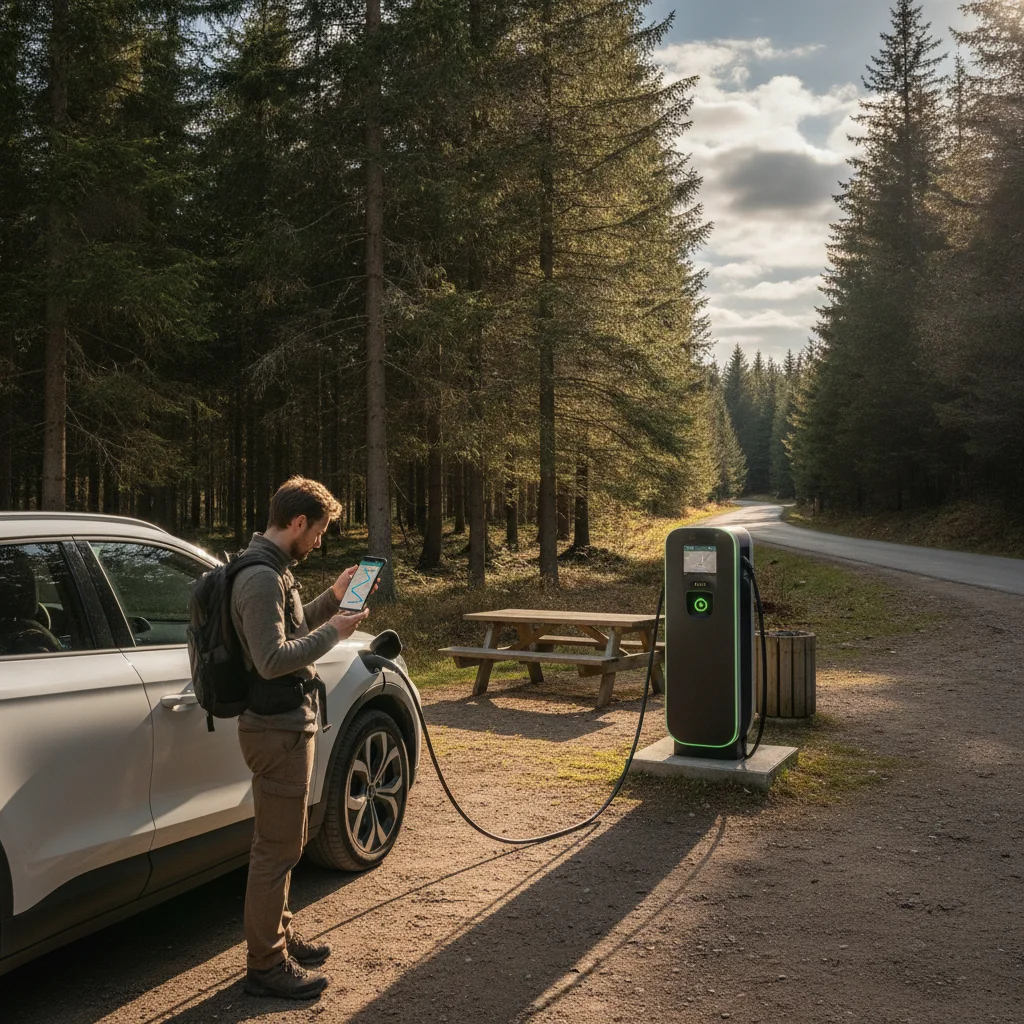
Federal NEVI funding is adding pressure on states to place fast chargers every 50 miles along designated Alternative Fuel Corridors, which will meaningfully improve highway travel in rural states. But NEVI progress is uneven — some states have broken ground on dozens of sites while others are still in the procurement phase. For a state-by-state breakdown of where gaps remain, see our state-by-state coverage analysis.
Drivers should also consider smaller regional networks that aren't in the top five nationally but serve real geographic needs. Networks like Francis Energy and Rivian Adventure Network have staked out territory that larger providers have largely ignored. And regardless of public infrastructure, most rural EV drivers benefit significantly from a solid home charging setup — see our home charging guide for setup recommendations that reduce dependence on public stations entirely.
What Counts as 'Rural' in Charging Data
Charging network coverage statistics typically use the US Census Bureau's urban-rural classification, which defines rural areas as any territory outside urbanized areas of 50,000 or more people and urban clusters of 2,500 to 50,000. By that definition, roughly 20 percent of Americans are rural residents. However, 'rural coverage' in the EV context also includes highway corridors passing through rural counties, which affects both trip planning and station economics. Networks with strong corridor coverage may show limited rural penetration in raw station counts even though they serve rural travelers effectively.
NEVI Funding Is Changing the Rural Map
The National Electric Vehicle Infrastructure (NEVI) Formula Program, funded by the 2021 Infrastructure Investment and Jobs Act, allocates $5 billion over five years to place fast chargers every 50 miles along federally designated Alternative Fuel Corridors. As of 2024, most states have NEVI-funded stations under construction or in procurement, with rural highway corridors as the primary target. The practical impact on rural coverage will be significant but will take until 2026–2027 to fully materialize across all states.
All claims are backed by peer-reviewed research. Sources on request.