Key Takeaways
Option A
EVgo
The urban-focused, city-dense fast-charging network.
Best for: City dwellers and suburban commuters who need reliable DC fast charging near where they live, work, and shop.
Option B
Electrify America
The highway-spanning, high-power coast-to-coast network.
Best for: Road trippers and long-distance drivers who need high-power fast charging at consistent intervals along major interstates.
If you primarily charge in cities and suburbs
EVgo
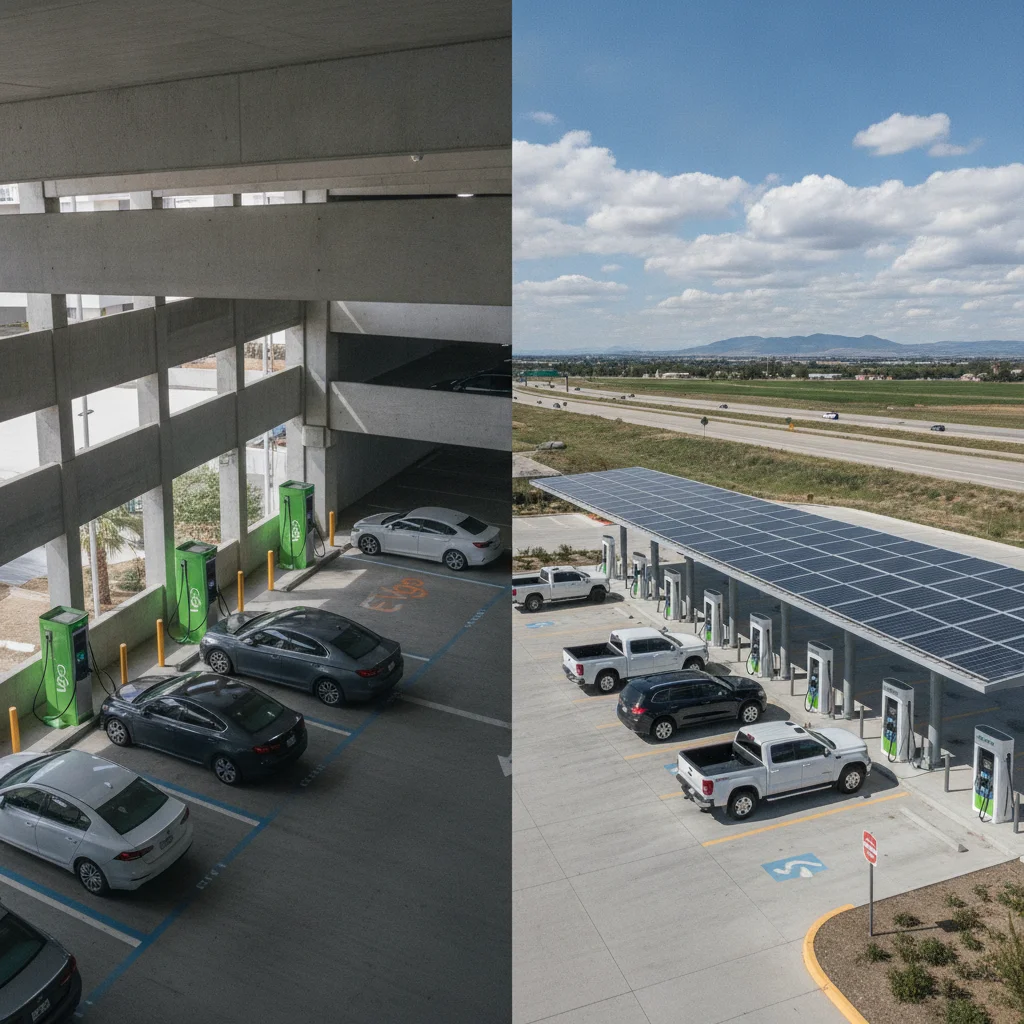
EVgo's dense urban placement — inside parking garages, grocery stores, and shopping centers — makes it the most accessible option for drivers who rarely leave metro areas.
If you regularly take long interstate road trips
Electrify America
Electrify America's highway corridor strategy mirrors Tesla Supercharger placement logic, covering major interstates at roughly 70–150 mile intervals across all 50 states.
If maximum charging speed is your top priority
Electrify America
Electrify America has deployed more 150–350 kW stalls overall, giving high-acceptance vehicles like the Hyundai Ioniq 6 and Kia EV6 the best chance of hitting peak charge rates.
If you want a simple, transparent pricing structure
EVgo
EVgo's per-kWh pricing is straightforward in most states, and its Plus membership plan offers a flat monthly fee that reduces per-kWh costs for frequent users without complex tier structures.
If you drive a non-Tesla EV and want the widest overall reach
Electrify America
With over 950 stations and more than 4,500 stalls across all 50 states, Electrify America offers the broadest geographic safety net for non-Tesla drivers venturing outside major metros.
Why This Comparison Matters Now
For most of the past decade, Tesla Supercharger was the only fast-charging network that consistently worked. That calculus has changed. EVgo and Electrify America have both matured into genuinely usable infrastructure — and for the growing number of non-Tesla EV owners, choosing between them isn't academic. It's a practical decision that affects where you can go, how long you'll wait, and how much you'll pay.
This isn't a comparison of two equal products. EVgo and Electrify America were built with different strategic mandates, funded differently, and optimized for different use cases. Understanding those structural differences is the fastest way to figure out which network actually fits your driving life. For a broader look at every major network in one place, see Public EV Charging Networks in the US: A Complete Overview.
If you're also weighing Electrify America against the Supercharger network specifically, Tesla Supercharger vs. Electrify America covers that matchup in depth. This article focuses exclusively on the head-to-head between the two largest third-party DC fast-charging operators.
Network Size and Geographic Coverage
Scale is the first lens through which most drivers evaluate a charging network, and here the gap between the two is substantial.
Electrify America currently operates more than 950 charging locations with over 4,500 individual stalls across all 50 states and Canada. That footprint was built with explicit highway-corridor logic — stations positioned every 70 to 150 miles along major interstates, mirroring the placement strategy that made Tesla Supercharger the default choice for road trippers. Volkswagen Group funded the network's initial buildout under its Dieselgate settlement requirements, which gave Electrify America both the capital and the regulatory mandate to expand aggressively.
EVgo operates approximately 950 locations as well, but with far fewer stalls per site — typically two to four versus Electrify America's six to twelve. Total EVgo stall count is closer to 3,500 nationally. The more telling difference is distribution: EVgo has historically concentrated in dense urban environments — parking structures attached to Whole Foods, Walmart, and Macy's locations, urban garages in Los Angeles, Chicago, Houston, and New York. That strategy maximizes utilization in high-traffic areas but leaves significant gaps on rural interstates.
| Criterion | EVgo | Electrify America |
|---|---|---|
| Total US locations | ~950 locations | ~950+ locations |
| Total stalls | ~3,500 stalls | ~4,500+ stalls |
| Peak charging speed | Up to 350 kW | Up to 350 kW |
| Primary coverage focus | Urban & suburban | Highway corridors |
| Connector types | CCS, CHAdeMO, NACS (rolling out) | CCS, NACS (rolling out) |
| Pay-as-you-go rate | ~$0.30–$0.45/kWh | ~$0.43/kWh avg. |
| Membership plan cost | $7.99/month (EVgo Plus) | $4/month (Pass+) |
| Plug-and-charge support | Yes (select vehicles) | Yes (select vehicles) |
| OEM charging credits | Limited partnerships | VW, Audi, Hyundai, others |
| Rural/interstate reach | Limited | Strong |
For drivers in major metros, EVgo's urban density is a genuine advantage. A commuter in Los Angeles can find EVgo stalls within a few miles in virtually any direction. For anyone planning a cross-country drive or a trip from a city to a national park, Electrify America's corridor coverage is the safer bet. Our article on charging networks with the best rural coverage shows how badly rural charging lags for both networks — and who's filling that gap.
Charging Speed: What the Numbers Actually Mean
Both EVgo and Electrify America advertise 350 kW peak charging speeds, and both have deployed hardware capable of delivering that rate. But the headline figure tells an incomplete story.
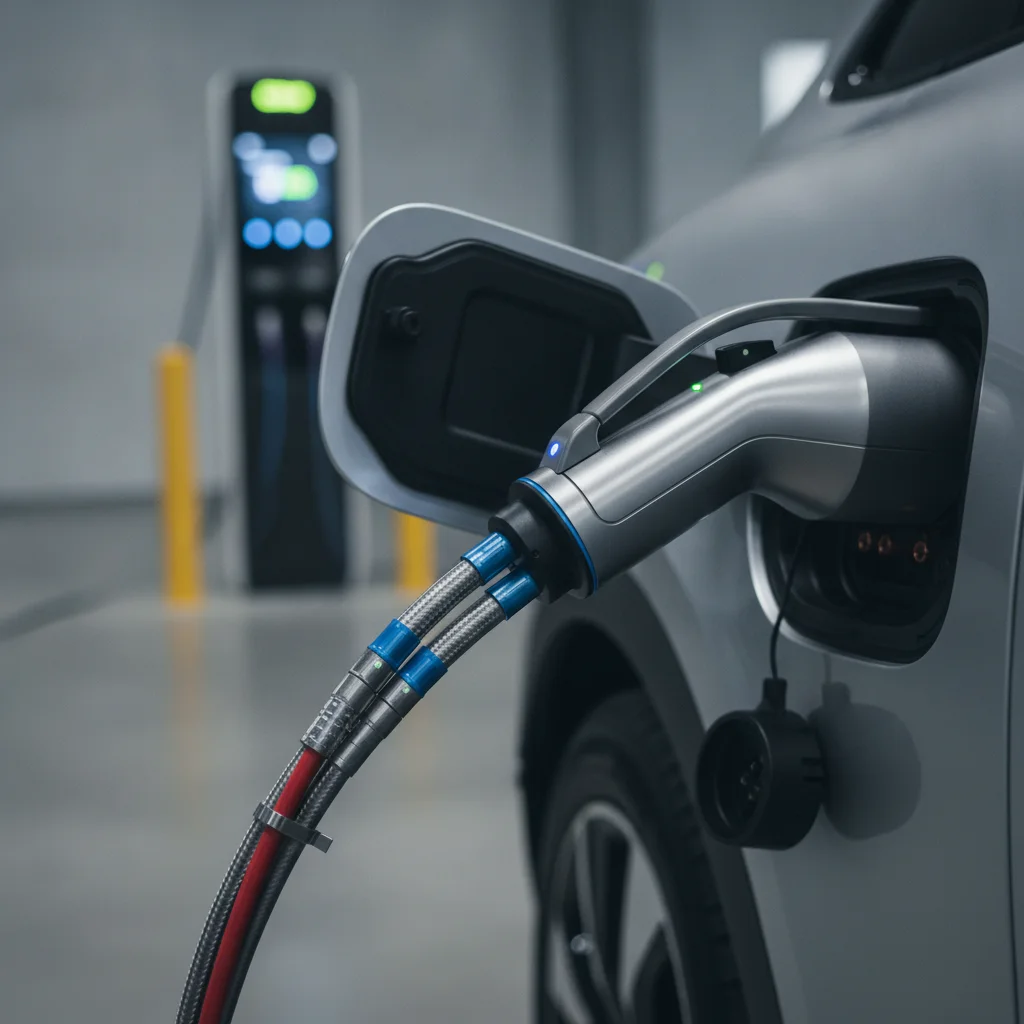
Electrify America's station architecture uses a liquid-cooled cable system with dynamic power sharing, meaning multiple vehicles charging simultaneously share power from a cluster of chargers. At busy stations, a nominally 350 kW stall may deliver significantly less during peak hours. In practice, most Electrify America users charging a 2023 Hyundai Ioniq 6 — one of the highest-acceptance vehicles available — see peak rates between 220 and 240 kW under optimal conditions.
EVgo's newer stations, particularly those built after 2022, also support 350 kW and use similar liquid-cooled cable technology. EVgo has additionally invested in a network modernization program it calls EVgo ReNew, which has been replacing older 50 kW and 100 kW legacy hardware at high-traffic urban locations. The practical effect is that EVgo's average delivered power has risen meaningfully over the past two years, though its older stations still drag down the network-wide average.
350 kW
Peak DCFC speed at newest stalls
Both EVgo and Electrify America have deployed 350 kW liquid-cooled hardware, though average delivered rates are typically 150–240 kW depending on vehicle and site load.
21%
Failed DCFC session rate (non-Tesla)
J.D. Power's 2023 US Electric Vehicle Experience Public Charging Study found roughly 1 in 5 DC fast-charging attempts resulted in a failed or incomplete session.
$1.8B
DOE loan guarantee for EVgo expansion
The US Department of Energy issued a conditional $1.8 billion loan guarantee to EVgo in 2023 to fund expansion toward a target of 7,000 stalls by 2026.
4,500+
Electrify America total US stalls
Electrify America's Phase 3 buildout, largely funded by Volkswagen Group's Dieselgate settlement, has placed it among the largest non-Tesla fast-charging operators in the country.
For vehicles with lower acceptance rates — say, a Nissan Leaf Plus capped at 50 kW or a first-generation Chevy Bolt at 55 kW — the theoretical maximum of either network is irrelevant. What matters for those drivers is connector compatibility and stall availability, not peak kilowatt figures. Both networks support CCS (SAE Combo) as their primary connector standard. EVgo also maintains CHAdeMO connectors at many locations, which remains relevant for Nissan Leaf owners. Electrify America dropped CHAdeMO support at most newer stations.
The broader context on how urban charging infrastructure differs from highway charging is explored in our piece on urban vs. highway fast charging.
Pricing: Membership Plans, Per-kWh vs. Per-Minute, and What You'll Actually Pay
Pricing is where EV charging networks have historically been most opaque, and both EVgo and Electrify America have simplified their structures in recent years — though neither is perfectly transparent yet.
EVgo Pricing
EVgo charges by the kilowatt-hour in most states, which is the most consumer-friendly pricing model because it's directly comparable to your home electricity rate. In states that legally require per-minute billing (a minority of US states), EVgo bills at two tiers based on charging speed. The pay-as-you-go rate averages between $0.30 and $0.45 per kWh depending on region. EVgo Plus, its membership tier at $7.99 per month, reduces that to approximately $0.25 to $0.32 per kWh. A typical 40 kWh session (adding about 150 miles of range to a mid-size EV) costs roughly $12 to $18 as a guest or $10 to $13 as a Plus member.
Electrify America Pricing
Electrify America uses per-minute billing in states that require it and per-kWh billing elsewhere — a distinction that matters enormously for slower-charging vehicles. If your car is capped at 50 kW and you're billed by the minute at a rate calibrated for 150 kW charging, you're paying significantly more per unit of energy delivered. Electrify America's pass-through rate for casual users averages $0.43 per kWh (or the per-minute equivalent), dropping to approximately $0.31 per kWh with an Electrify America Pass+ membership at $4 per month. Some vehicle manufacturers — most notably Volkswagen, Audi, and Hyundai — include complimentary Electrify America charging credits with new vehicle purchases, which changes the cost calculus for those buyers entirely.
Per-Minute vs. Per-kWh Billing: Why It Matters
When a network bills by the minute rather than by kilowatt-hour, slower-charging vehicles pay a disproportionately high effective rate for the energy they receive. A vehicle charging at 50 kW on a per-minute tariff calibrated for 150 kW vehicles pays roughly three times more per unit of energy than the network's headline rate implies. Twelve states currently require per-minute billing at public DCFC stations by law, though that number is declining as utility commissions update their regulations. Always check whether your state allows per-kWh billing before comparing published rate cards.
For a deeper analysis of how to estimate and reduce your overall public charging costs, the Charging Costs & Savings hub breaks down every variable, including time-of-use rates and home charging comparisons. And if you're still relying heavily on public DC fast charging because home charging isn't set up yet, the Home Charging Setup hub explains how to change that — typically the most cost-effective move any EV owner can make.
Reliability, App Experience, and Uptime
No charging comparison is complete without addressing reliability, and this is the dimension where both networks have the most room for improvement — and where they diverge most in character.
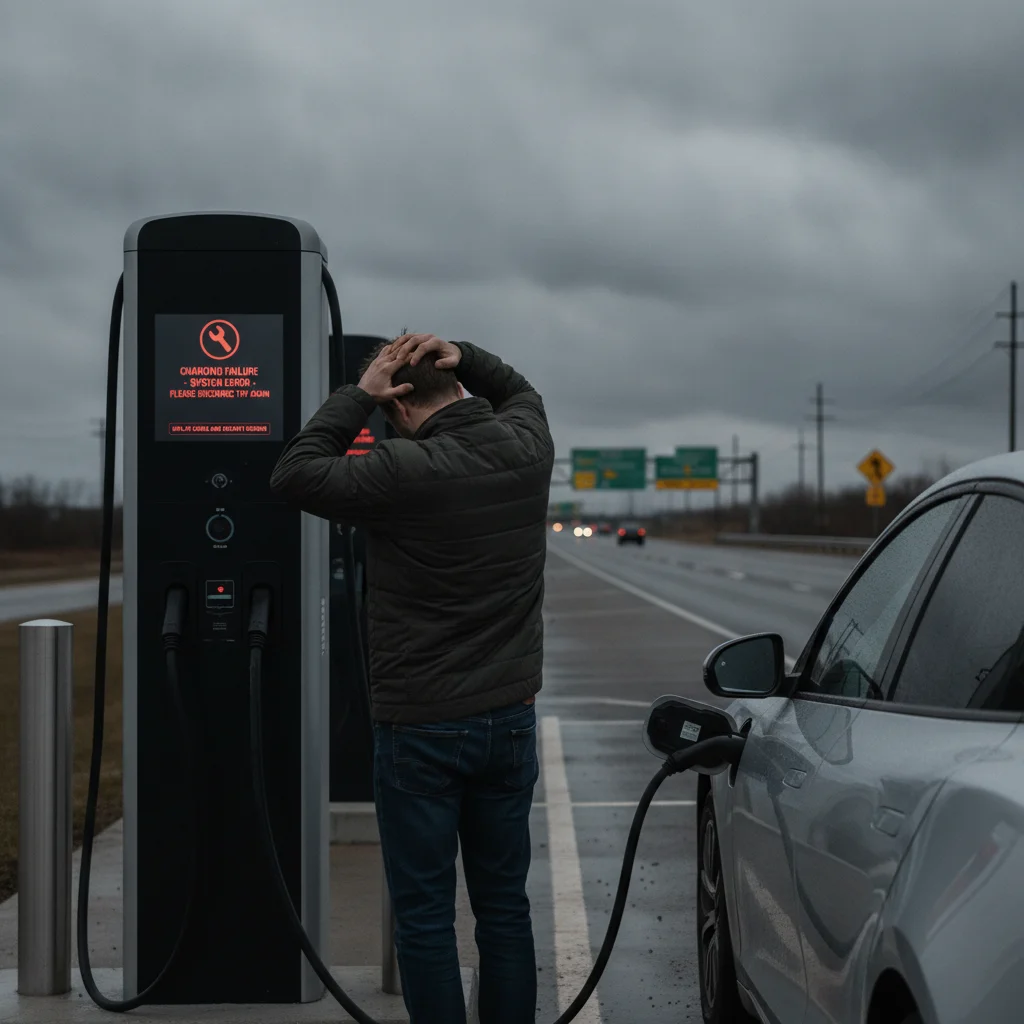
A 2023 study by J.D. Power found that approximately 21% of public DC fast-charging attempts by non-Tesla EV owners resulted in a failed session. Both EVgo and Electrify America contributed to that figure, though neither publishes granular uptime data by network. Independent data aggregators like PlugShare and ChargeHub suggest Electrify America has historically struggled more with uptime at highway locations — particularly in extreme temperature conditions — while EVgo's urban stations, which benefit from more regular foot traffic and faster maintenance dispatch, tend to show higher practical availability.
Electrify America has made meaningful investments in station reliability since 2022, including partnerships with vendors to improve networking hardware and on-site equipment. The network's 2023 National Park charging initiative also introduced more robust site designs with better weather protection. That said, a stranded charging failure at a highway station 80 miles from the next alternative is categorically worse than the same failure in a city where the next EVgo stall is 1.5 miles away.
On app experience, both have improved substantially. The EVgo app provides real-time stall availability, allows session monitoring, and integrates with Apple CarPlay and Android Auto for in-car navigation to open stalls. Electrify America's app similarly shows live availability and allows session start and stop, but has historically drawn more complaints about payment failures and session drop-offs mid-charge. Both apps now support plug-and-charge capability — a protocol that authenticates your vehicle automatically via the cable, eliminating the need to open any app at all — on compatible vehicles.
For context on how these networks fit into the broader US charging infrastructure picture, including the role of federal NEVI funding in expanding highway corridor coverage, see our piece on highway charging corridors.
Which Network Should You Use?
The most honest answer is: both, ideally. EVgo and Electrify America are not mutually exclusive, and experienced EV drivers typically maintain accounts on both networks alongside any manufacturer-specific credits they've received. The real question is which network deserves your primary loyalty — and which app should be the first you open when your battery indicator drops.
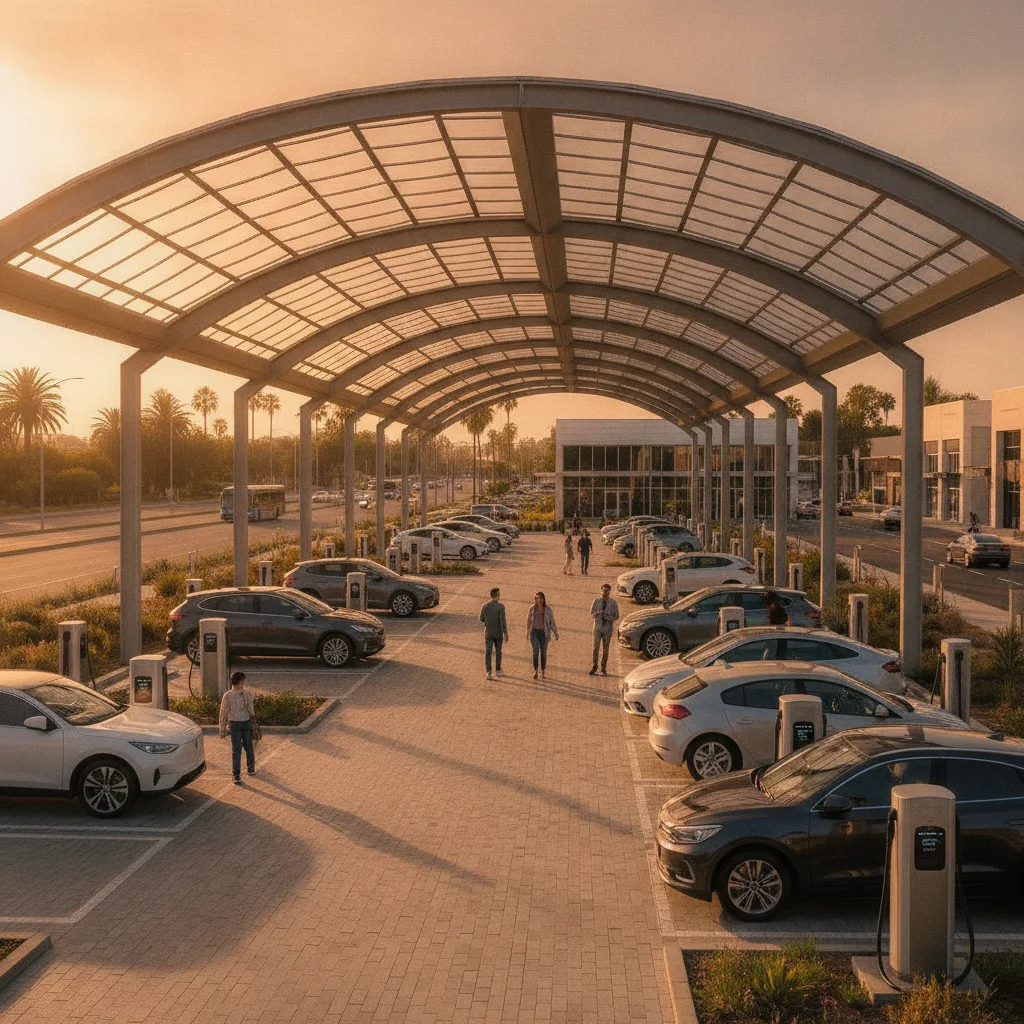
If your driving is primarily urban or suburban, EVgo's placement strategy aligns with your actual charging behavior. You're more likely to find an EVgo stall while you're already doing something else — shopping, eating, working — which minimizes the time you consciously spend charging. The membership math also favors frequent urban users who rack up multiple shorter sessions per week.
If you're a road tripper, or if you live in a smaller city or exurban area, Electrify America's highway corridor coverage is genuinely difficult to replicate. Its station count along I-40, I-80, I-95, and other major arteries gives it a structural advantage that EVgo simply hasn't matched yet. For those drivers, Electrify America functions closer to what Supercharger does for Tesla owners — a reliable backbone for long-distance travel.
It's also worth noting that neither network operates in isolation. Smaller and emerging networks fill specific regional gaps that both EVgo and Electrify America miss. Our coverage of charging networks beyond the big five identifies which providers are meaningfully expanding coverage in underserved corridors. And for a side-by-side look at how Level 2 networks like ChargePoint and Blink fit into the broader picture, see ChargePoint vs. Blink.
The competitive landscape is also shifting quickly. EVgo secured a $1.8 billion Department of Energy loan guarantee in 2023 to fund significant network expansion, with a stated goal of 7,000 stalls by 2026. Electrify America is simultaneously pursuing its own Phase 4 buildout. Both networks are also moving toward NACS (the North American Charging Standard, originally Tesla's connector) as an additional port option, which will expand compatibility with the full range of EVs currently on market. The network you evaluate today will look meaningfully different in 24 months — but the strategic DNA of each — urban density versus highway reach — is unlikely to reverse.
For a comprehensive side-by-side look at how EVgo and Electrify America stack up against Tesla Supercharger and the Level 2 giants in a single view, the major public charging networks compared side by side offers that full picture.
All claims are backed by peer-reviewed research. Sources on request.