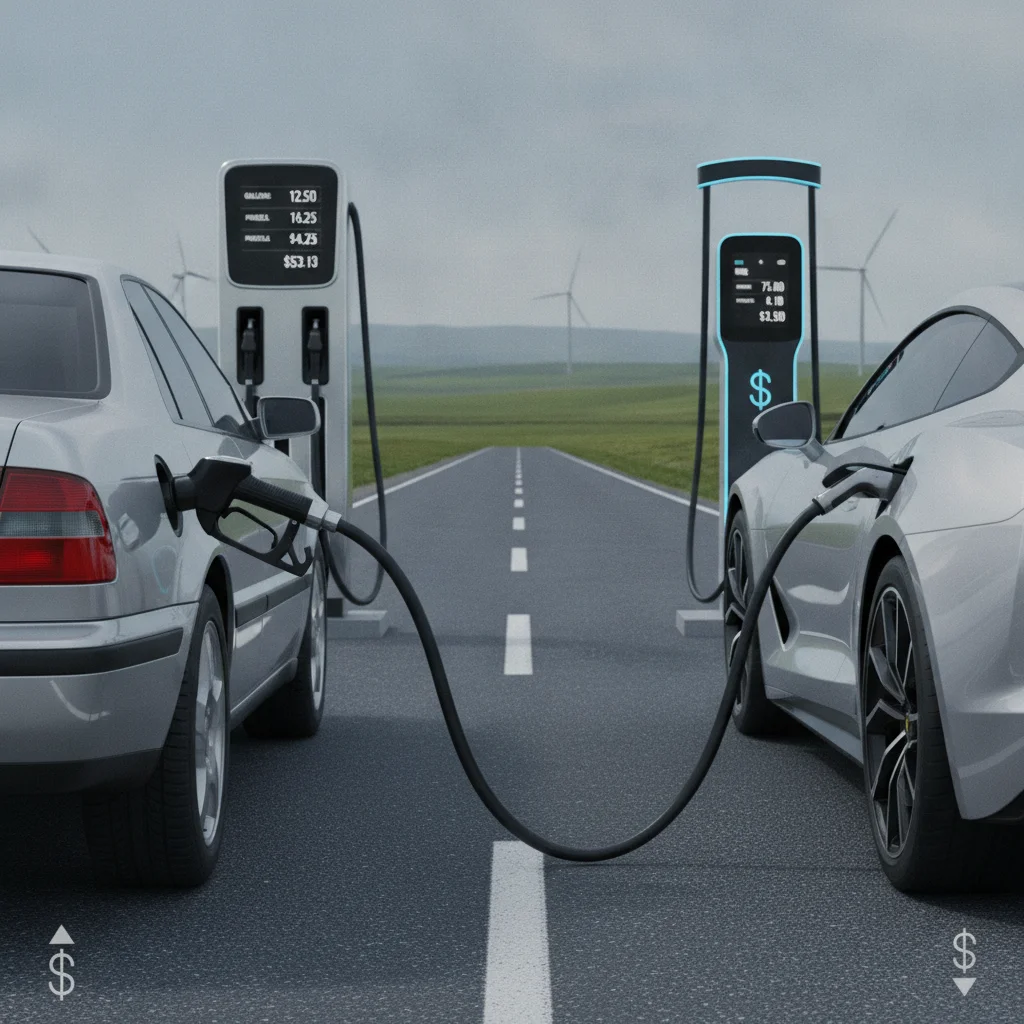
Key Takeaways
Option A
Home Charging (Level 2)
The lowest-cost, most convenient daily charging solution for EV owners with a garage.
Best for: EV owners who park at home overnight and want the lowest per-mile electricity cost with maximum convenience.
Option B
Public Charging (DCFC & Level 2)
The flexible, on-the-go option for road trips, apartment dwellers, and opportunistic top-ups.
Best for: Drivers who lack home charging access, are traveling long distances, or need a fast charge away from home.
If you own a home or apartment with a dedicated parking spot
Home Charging (Level 2)
Installing a Level 2 EVSE gives you the lowest per-mile cost in the industry and eliminates the inconvenience of stopping at public stations for routine charging.
If you're taking a road trip or need a quick charge far from home
Public Charging (DCFC & Level 2)
DC fast chargers are the only practical option for long-distance travel, restoring 100–200 miles of range in 20–45 minutes depending on the vehicle.
If you live in an apartment or condo without dedicated home charging
Public Charging (DCFC & Level 2)
Without home charging access, a combination of workplace charging and public Level 2 stations typically offers the best cost-per-kWh outside your own home.
If you want maximum lifetime savings on fuel costs
Home Charging (Level 2)
Over five years, a driver doing 12,000 miles per year can save $1,500–$3,000 compared to relying primarily on public DC fast charging.
If you drive fewer than 30 miles daily and only need occasional top-ups
Home Charging (Level 2)
A standard 120V outlet (Level 1) may suffice for very low-mileage drivers, but a Level 2 home charger still delivers far cheaper charging than any public option.
The Real Numbers: What You're Actually Paying Per Mile
Charging cost comparisons often get lost in abstractions — cents per kilowatt-hour, session fees, monthly plans. To cut through that noise, the most useful metric is cost per mile driven, because it puts home charging and public charging on equal footing regardless of your vehicle's efficiency.
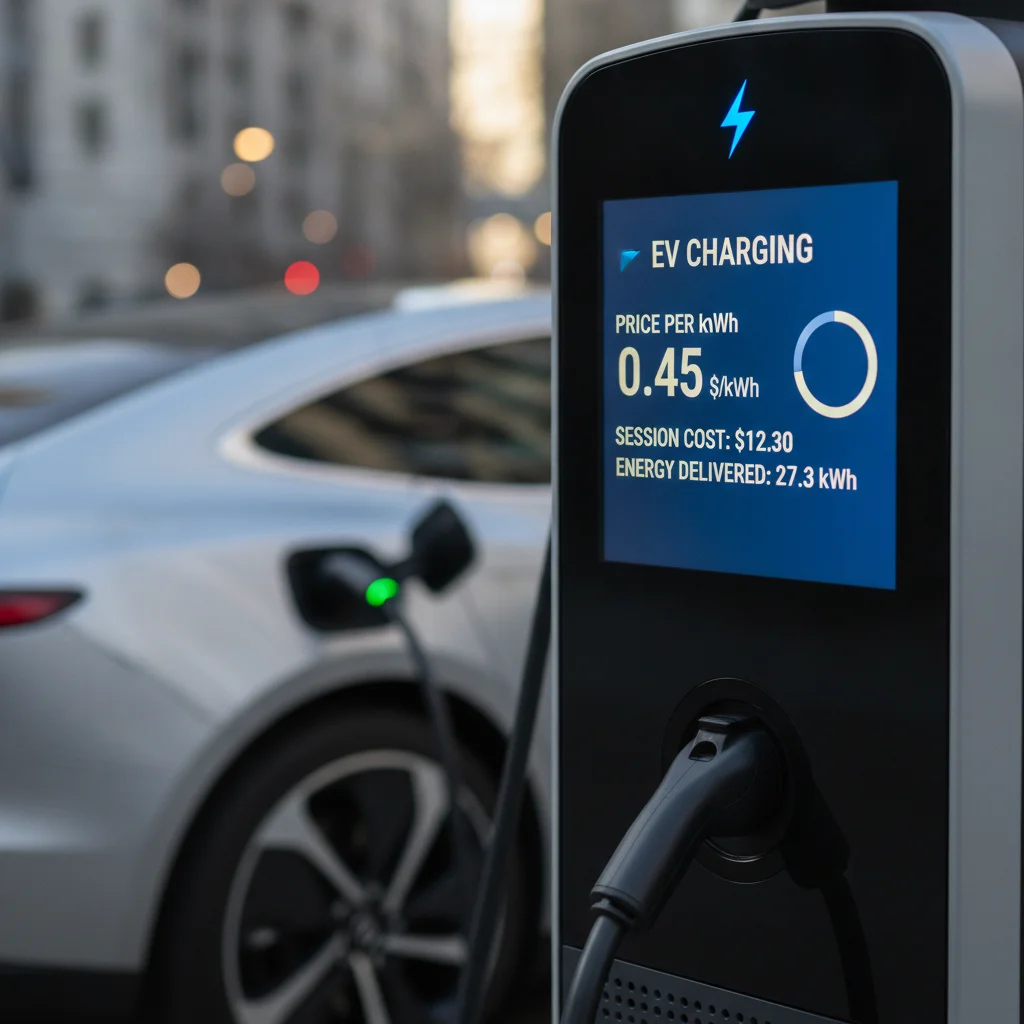
Here's how to build that number. Take the price you pay per kWh, divide by your EV's miles-per-kWh efficiency rating, and you have your fuel cost per mile. A 2024 Tesla Model 3 Long Range, for example, delivers roughly 4 miles per kWh in mixed driving. At the U.S. average residential electricity rate of $0.16/kWh, that's $0.04 per mile. At a public DC fast charger priced at $0.48/kWh — a common rate on Electrify America and EVgo — that same mile costs $0.12. Three times as expensive.
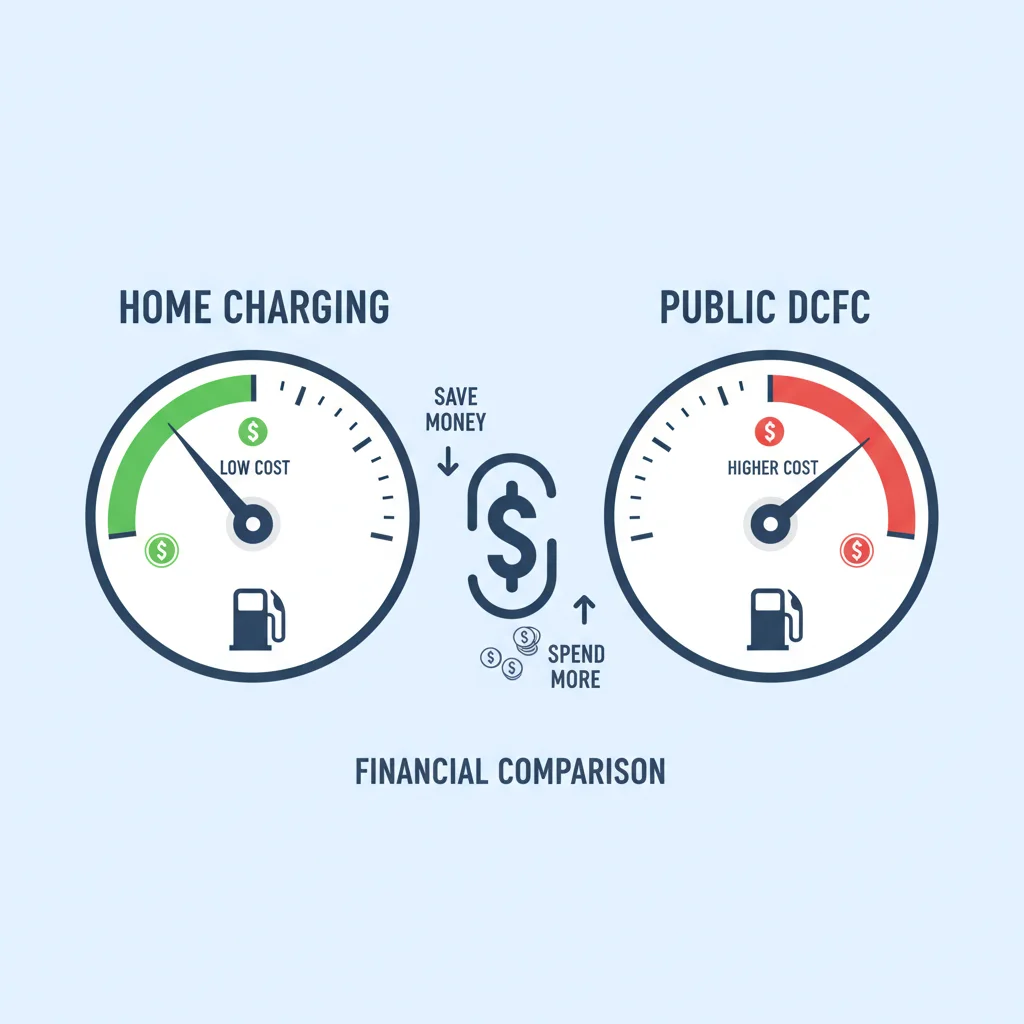
Those numbers aren't hypothetical edge cases. They represent typical conditions for millions of EV owners. The gap between home and public charging is wide enough that it fundamentally shapes how you should think about where and when to charge. For a direct comparison of how electricity stacks up against gasoline on a per-mile basis, see our per-mile fuel cost breakdown.
$0.04
Per mile at home (average U.S. rate)
Based on the U.S. average residential electricity rate of $0.16/kWh and a vehicle efficiency of 4 miles/kWh, per EIA 2024 data.
$0.12
Per mile at public DCFC (standard rate)
Calculated using a common Electrify America and EVgo rate of $0.48/kWh at 4 miles/kWh vehicle efficiency, without membership discount.
3×
Cost multiplier: public DCFC vs. home charging
Public DC fast charging typically costs three times more per mile than home Level 2 charging at average U.S. electricity rates.
$857
Annual savings favoring home charging
Estimated for a 12,000-mile/year driver comparing $0.15/kWh home charging against $0.40/kWh blended public DCFC costs.
< 2 years
Payback period for home EVSE installation
At ~$857 in annual savings versus a net installation cost of ~$1,500 after federal tax credit, payback occurs in under two years.
Breaking Down Home Charging Costs
Home charging economics start with your electricity rate and the upfront cost of equipment. Level 1 charging — plugging into a standard 120V household outlet — requires no additional hardware, but it delivers only 3–5 miles of range per hour, which most EV owners find insufficient for daily needs. Level 2 charging via a 240V circuit is the practical standard, adding 20–30 miles per hour and fully replenishing most EVs overnight.
Equipment and Installation Costs
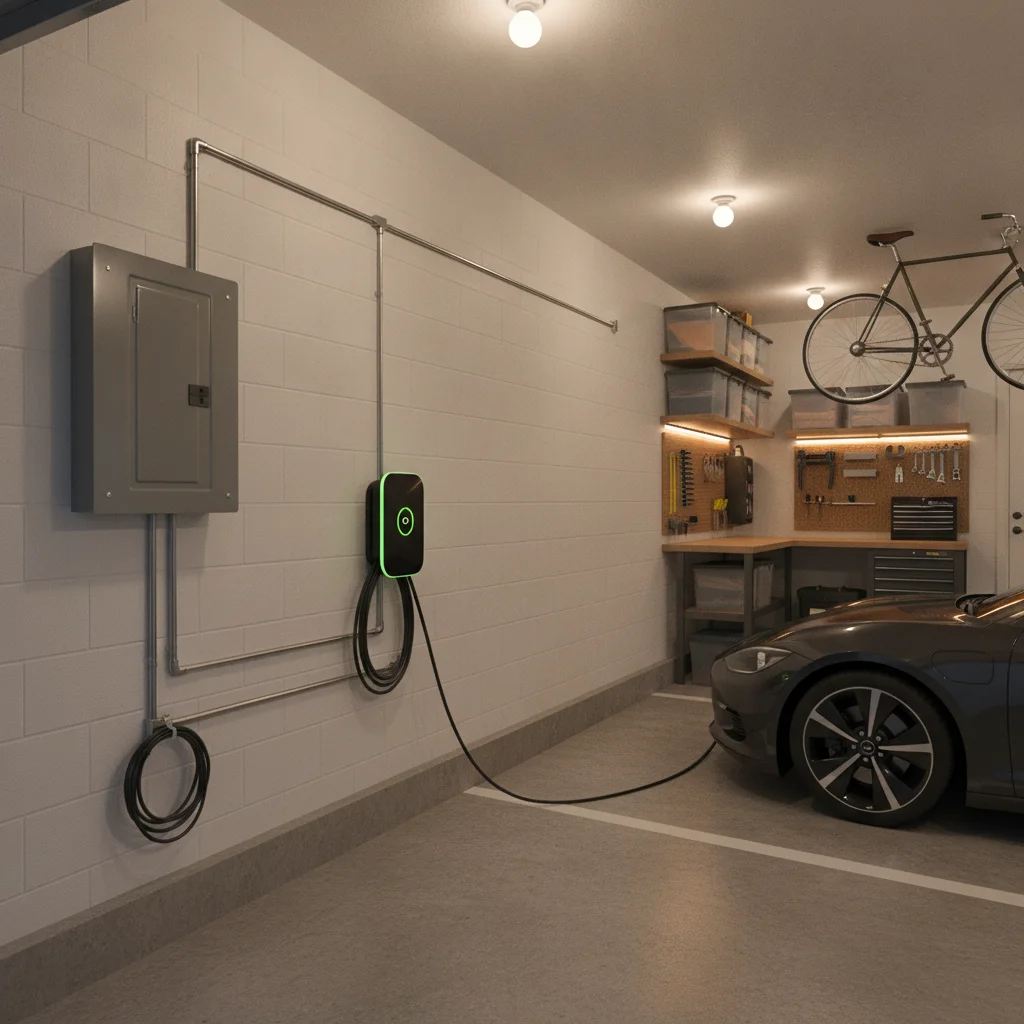
A quality Level 2 EVSE (Electric Vehicle Supply Equipment) unit costs $200–$600. Installation by a licensed electrician adds $300–$1,500 depending on the distance from your electrical panel to your parking spot — a variable that catches many new owners off guard. If you're installing in a home with an older panel that needs upgrading, expect to add another $1,000–$3,000. See how conduit and cable distance affect your installation cost for a detailed breakdown of those variables.
The federal Alternative Fuel Vehicle Refueling Property Credit (Form 8911) currently covers 30% of equipment and installation costs up to a $1,000 credit for homeowners, partially offsetting that upfront investment. Many states and utilities offer additional rebates.
Ongoing Electricity Costs
Residential electricity rates vary significantly by state. Hawaii averages $0.39/kWh; Louisiana averages $0.11/kWh. Most EV owners in the continental U.S. pay $0.12–$0.22/kWh during off-peak hours. Time-of-use (TOU) rate plans — offered by most major utilities — can drop overnight rates to $0.07–$0.12/kWh in exchange for shifting charging to late-night hours, typically 9 p.m. to 6 a.m. This is the single most effective way to minimize home charging costs.
Time-of-Use Rates: Check Before You Assume
Not all utilities offer dedicated EV time-of-use rate plans, and enrollment processes vary widely. Some require a separate meter for your EVSE, while others apply TOU rates to your entire home electricity bill. Contact your utility directly or check their website for EV-specific programs before purchasing your home charger, as the rate plan choice can affect which EVSE and installation setup makes the most financial sense.
Free Public Charging: Too Good to Count On
Many retail locations, apartment complexes, and hotels offer free Level 2 charging as an amenity, but availability is inconsistent and these stations are often the least maintained on public networks. Treat free public charging as a welcome bonus rather than a budget line item. Stations that are free today may implement fees tomorrow as operators seek cost recovery, and reliability data on free stations is often poor compared to major paid networks.
Your Strategy Will Evolve With the Market
Public charging pricing has changed significantly over the past three years as networks have scaled and sought profitability. Rates that seemed stable have risen, and new pricing tiers have appeared. Revisit your charging cost assumptions annually — recalculate your per-mile costs, check whether your current network memberships still break even, and monitor your utility for new EV rate options. The math that made sense when you bought your EV may look different two years later.
At a blended average of $0.15/kWh with a vehicle efficiency of 3.5 miles/kWh, annual home charging costs for a 12,000-mile-per-year driver run approximately $514. Compare that to gasoline: a 30 MPG car at $3.50/gallon costs $1,400 annually for the same mileage. The savings case for EVs is built almost entirely on cheap home electricity.
The home charging setup hub covers EVSE selection, installation planning, and utility TOU rate enrollment in detail for owners ready to optimize their setup.
Public Charging Costs: The Layers You Need to Understand
Public charging pricing is genuinely complex — more so than any other consumer energy product. Three distinct billing models coexist across networks, sometimes at different ports within the same station.
| Criterion | Home Charging (Level 2) | Public Charging (DCFC) |
|---|---|---|
| Typical cost per kWh | $0.12–$0.22 (off-peak TOU) | $0.28–$0.52 (network rates) |
| Typical cost per mile | $0.03–$0.06 | $0.08–$0.15 |
| Upfront hardware cost | $200–$600 (EVSE unit) | $0 (no equipment needed) |
| Installation cost | $300–$1,500 (electrician) | $0 |
| Charging speed (Level 2) | 20–30 miles/hour | 20–30 miles/hour (L2 public) |
| Charging speed (DC fast) | Not available at home | 100–300+ miles/30 min |
| Billing model | Per kWh (utility bill) | Per kWh, per minute, or session fee |
| Availability / convenience | Always available at home | Requires finding a station |
| Additional fees | None (after installation) | Idle fees, session fees, membership |
| Best use case | Daily charging, overnight top-up | Road trips, no home access |
Per-kWh vs. Per-Minute Billing
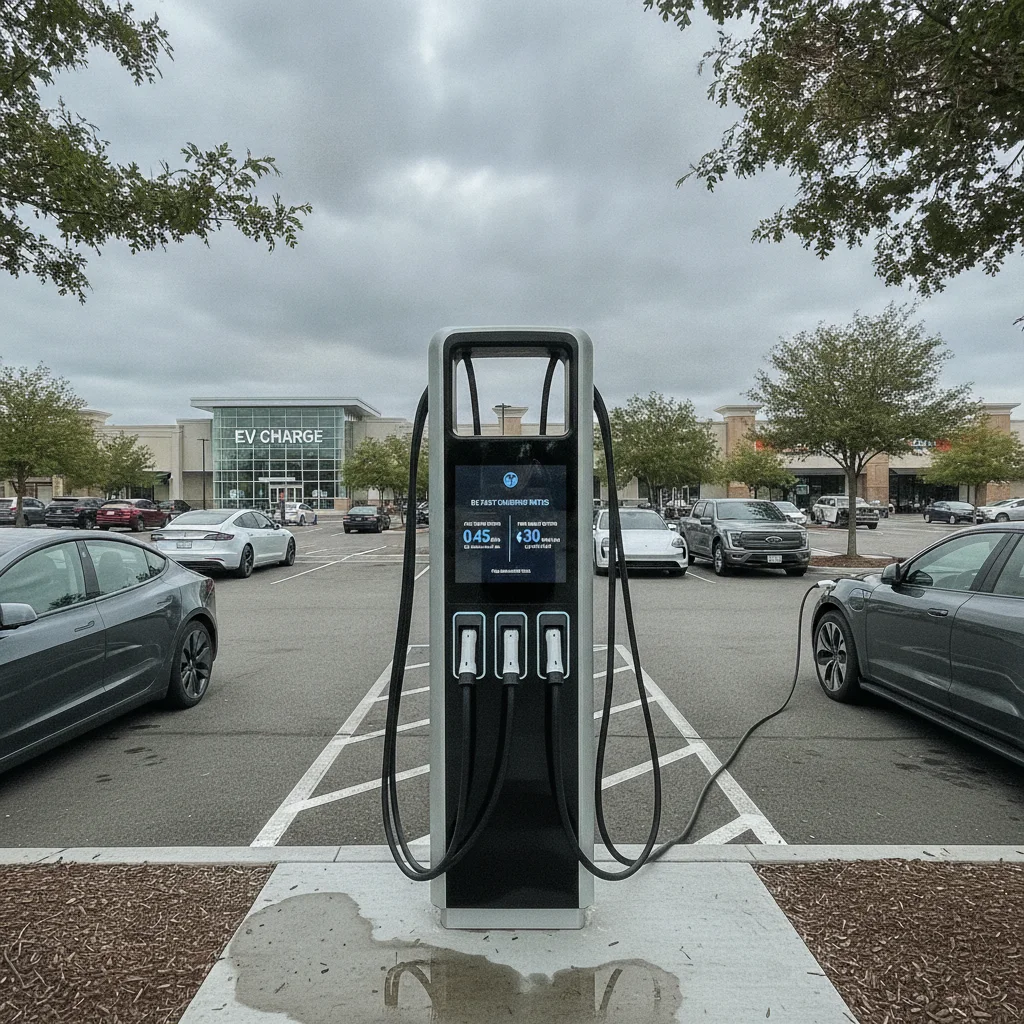
Per-kWh pricing is straightforward and consumer-friendly: you pay for energy delivered, just like home electricity. It's the fairest model because cost scales directly with how much charge you receive, regardless of how fast your car accepts it. Most states now legally require per-kWh billing for public EV chargers, and major networks including Tesla, Electrify America, and EVgo have adopted it where permitted.
Per-minute pricing — still used in some states where per-kWh billing isn't licensed — is where costs become opaque and inequitable. Slower-charging vehicles pay far more per kWh than faster ones, because they spend more time connected to receive the same energy. A vehicle accepting 50 kW at a 150 kW charger pays twice as much per kWh as one drawing 100 kW. For a deep dive into how these models work across specific networks, our guide to charging pricing models is the place to start.
Membership Plans and Their Real Value
Most major networks offer monthly membership subscriptions that reduce per-kWh rates in exchange for a flat monthly fee. Electrify America's Pass+ plan charges $4/month and drops DCFC rates from roughly $0.48/kWh to $0.36/kWh. EVgo's EvGo+ plan offers similar discounts. Whether these plans save money depends entirely on your monthly public charging volume — typically you need to consume at least 30–40 kWh per month on that specific network for the membership to break even. Our membership plan analysis shows the math for several common driving profiles.
Idle Fees and Session Charges
Beyond the energy cost itself, many public networks charge idle fees — typically $0.40–$1.00 per minute — that kick in once your vehicle reaches full charge and you haven't unplugged. Leaving a vehicle connected 30 minutes past full can add $12–$30 to a session cost. Understanding idle fee structures is essential for drivers who regularly use busy urban stations.
Some Level 2 networks also charge flat session initiation fees ($1–$2) regardless of energy delivered, which disproportionately penalizes short top-up sessions. Factor these in when calculating your actual per-kWh effective cost.
The Full Financial Picture: Upfront Costs vs. Lifetime Savings
A fair comparison has to account for the home charger's upfront cost against the ongoing premium paid for public charging. The math favors home charging, but the payback timeline varies considerably by driving habits.
Consider a driver covering 12,000 miles annually in an EV averaging 3.5 miles/kWh:
- Home charging at $0.15/kWh: ~$514/year in electricity
- Public DCFC at $0.40/kWh (blended, with some membership): ~$1,371/year
- Annual savings from home charging: ~$857
Against a $1,500 total installation cost (equipment + labor, net of tax credit), that home charging setup pays for itself in under two years. Over a five-year ownership period, the savings reach roughly $4,285 — a compelling case even before accounting for the convenience factor of waking up every morning with a full battery.
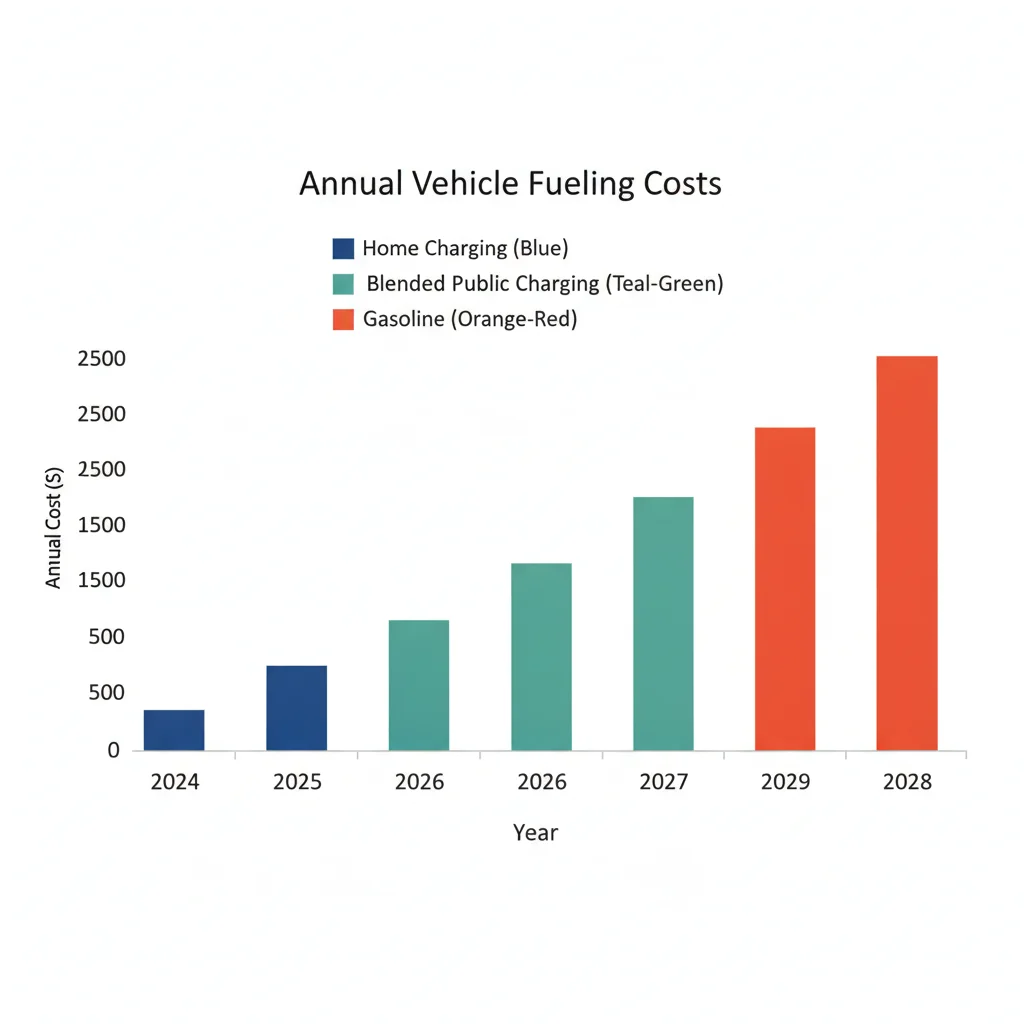
Drivers who lack home charging access face a structurally different equation. If you're relying entirely on public charging, your annual electricity bill looks more like gasoline than the EV savings narrative suggests. Our guide for apartment-dwelling EV owners maps out realistic strategies for minimizing those costs, including workplace charging and targeted network memberships.
One often-overlooked variable: free workplace charging can be worth $400–$900 per year depending on your commute — potentially closing much of the gap between home-charging and public-charging economics for those without a garage.
When Public Charging Makes Financial Sense
Public charging isn't always the more expensive option in every context. There are specific scenarios where it becomes cost-competitive or outright necessary.
Road Trips: No Realistic Alternative
For long-distance travel, DC fast charging is simply the only practical choice. The cost premium over home charging is real, but it's the price of long-distance EV travel — comparable to how gas cars pay highway fuel prices rather than warehouse club prices. At current DCFC rates, road-trip charging typically adds $0.08–$0.15 per mile, which remains cheaper than a comparable gasoline vehicle at $0.12–$0.18 per mile at current fuel prices.
Strategic use of charging networks matters here. Tesla Superchargers remain the most price-competitive DCFC option for Tesla owners, while non-Tesla drivers who do significant road travel should consider comparing network coverage and pricing before committing to a membership plan.
Opportunistic Free and Low-Cost Charging
Many retail locations, hotels, and employers offer free or low-cost Level 2 charging as an amenity. When these are available during natural stops — shopping, dining, overnight hotel stays — the effective cost drops to zero or near-zero. Building this opportunistic charging into your routine can meaningfully reduce your monthly charging spend, particularly for higher-mileage drivers.
Time-of-Use Rates: Check Before You Assume
Not all utilities offer dedicated EV time-of-use rate plans, and enrollment processes vary widely. Some require a separate meter for your EVSE, while others apply TOU rates to your entire home electricity bill. Contact your utility directly or check their website for EV-specific programs before purchasing your home charger, as the rate plan choice can affect which EVSE and installation setup makes the most financial sense.
Free Public Charging: Too Good to Count On
Many retail locations, apartment complexes, and hotels offer free Level 2 charging as an amenity, but availability is inconsistent and these stations are often the least maintained on public networks. Treat free public charging as a welcome bonus rather than a budget line item. Stations that are free today may implement fees tomorrow as operators seek cost recovery, and reliability data on free stations is often poor compared to major paid networks.
Your Strategy Will Evolve With the Market
Public charging pricing has changed significantly over the past three years as networks have scaled and sought profitability. Rates that seemed stable have risen, and new pricing tiers have appeared. Revisit your charging cost assumptions annually — recalculate your per-mile costs, check whether your current network memberships still break even, and monitor your utility for new EV rate options. The math that made sense when you bought your EV may look different two years later.
High Electricity Rates at Home
In high-rate states like Hawaii ($0.39/kWh average), the cost advantage of home charging shrinks. At $0.39/kWh, home charging costs roughly $0.11 per mile — still below typical DCFC rates, but the margin is smaller. Drivers in these markets benefit most from enrolling in TOU plans and concentrating public charging at lower-cost Level 2 stations rather than premium-priced DC fast chargers.
For a comprehensive look at how specific networks compare on pricing, coverage reliability, and app experience, see our full public vs. home charging cost analysis and the public charging networks hub.
Building Your Personal Charging Cost Strategy
The most important insight from this comparison isn't that home charging always wins — it's that your optimal strategy depends on a handful of variables specific to your situation. Work through these questions to build a personalized approach.
- Do you have reliable home charging access? If yes, install a Level 2 EVSE and enroll in your utility's TOU rate plan. This single decision has the largest impact on your lifetime EV operating cost.
- What's your local electricity rate, and does your utility offer off-peak discounts? Rates vary 3x across the U.S. Check your utility's EV rate programs before assuming the national average applies to you.
- How much annual mileage is long-distance travel vs. daily commuting? If more than 20% of your miles are road-trip miles, DCFC costs become significant. A network membership on your primary corridor network may be worthwhile.
- Does your employer offer workplace charging? Even Level 2 workplace charging at $0.00–$0.10/kWh can handle most of a daily commute at very low cost. Calculate its real dollar value before discounting it.
- Which public networks cover your regular routes? Network app quality and real-time reliability data matter as much as pricing. Comparing charging network apps can help you choose where to invest a membership fee.

The EV ownership calculus is shifting rapidly as both home electricity rates and public charging infrastructure evolve. What's constant is that the most economical EV owners use home charging as their primary fuel source and treat public charging — especially DC fast charging — as a supplemental tool rather than a routine expense. Treat DCFC like a premium fuel option: useful when you need it, worth minimizing when you don't.
Time-of-Use Rates: Check Before You Assume
Not all utilities offer dedicated EV time-of-use rate plans, and enrollment processes vary widely. Some require a separate meter for your EVSE, while others apply TOU rates to your entire home electricity bill. Contact your utility directly or check their website for EV-specific programs before purchasing your home charger, as the rate plan choice can affect which EVSE and installation setup makes the most financial sense.
Free Public Charging: Too Good to Count On
Many retail locations, apartment complexes, and hotels offer free Level 2 charging as an amenity, but availability is inconsistent and these stations are often the least maintained on public networks. Treat free public charging as a welcome bonus rather than a budget line item. Stations that are free today may implement fees tomorrow as operators seek cost recovery, and reliability data on free stations is often poor compared to major paid networks.
Your Strategy Will Evolve With the Market
Public charging pricing has changed significantly over the past three years as networks have scaled and sought profitability. Rates that seemed stable have risen, and new pricing tiers have appeared. Revisit your charging cost assumptions annually — recalculate your per-mile costs, check whether your current network memberships still break even, and monitor your utility for new EV rate options. The math that made sense when you bought your EV may look different two years later.
All claims are backed by peer-reviewed research. Sources on request.