Key Takeaways
Why EV Myths Stick — And Why They Cost You Money
Electric vehicles have been commercially available in the U.S. for well over a decade, yet the same misconceptions keep circulating in comment sections, dealership showrooms, and family dinner tables. Some myths originated from early-generation technology that has since improved dramatically. Others are seeded by people with a financial stake in keeping you in a gas car. A few are simply the product of unfamiliarity — EVs work differently enough from combustion vehicles that honest confusion is understandable.
What's not understandable is making a $35,000–$70,000 purchase decision based on outdated or flat-out wrong information. Whether you're seriously shopping or just evaluating whether an EV fits your life, the myths below are the ones I hear most consistently from first-time buyers — and the ones most likely to push you toward a decision you'll regret.
For context: this article focuses on the broad mechanics and ownership experience of EVs. If you want to go deeper on specific sub-topics, I've linked to companion articles on home charging myths, range misconceptions, and maintenance myths throughout.

The Myths — Fact-Checked
Below are the most stubborn EV misconceptions, each paired with what the evidence actually shows. These are drawn from federal safety data, manufacturer warranty terms, Department of Energy research, and real-world ownership reports.
Myth
EV batteries die after about 100,000 miles, leaving you with a worthless car and a $15,000–$20,000 replacement bill.
Fact
Modern EV batteries are warrantied by law for a minimum of 8 years or 100,000 miles, and real-world data shows most retain 80%+ capacity well past that threshold.
This is the myth that kills more EV sales than any other, and it's built on early 2010s Nissan Leaf data — a battery chemistry and thermal management system that no current mainstream EV uses. Federal law (the Clean Air Act) requires automakers to warranty EV batteries for at least 8 years or 100,000 miles, whichever comes first, against defects and capacity degradation below 70% (some manufacturers set the floor higher).
Real-world fleet data tells an even better story. A 2023 analysis of over 15,000 EVs by Recurrent Auto found median battery capacity retention above 90% at 100,000 miles for most major models. Tesla's own data, drawn from its connected fleet, has shown similar results. And unlike an engine, an EV battery doesn't have a catastrophic failure mode tied to routine wear — it degrades gradually and predictably.
Battery replacement costs have also fallen sharply. The DOE's target of $100/kWh pack cost has been approached by several manufacturers, meaning a 75 kWh pack — enough for 250+ miles of range — would cost roughly $7,500 at materials cost, not $20,000. Out-of-warranty replacements vary by brand, but the apocalyptic numbers circulating online are typically misquotes of early-gen Leaf replacements from a decade ago.
For a full look at what EV maintenance actually costs versus gas vehicles, see EV maintenance basics.
Myth
Electric vehicles catch fire constantly — they're much more dangerous than gas cars.
Fact
Per vehicle mile traveled, EVs catch fire at a substantially lower rate than gasoline-powered vehicles, according to federal data.
EV fires get disproportionate media coverage because they're novel, visually dramatic, and difficult to extinguish once started. That last point is real — lithium-ion thermal runaway fires burn hot and require large volumes of water to suppress. But the relative frequency of fires tells a different story than the headlines suggest.
A frequently cited analysis from AutoinsuranceEZ using NHTSA and BLS data found approximately 25 EV fires per 100,000 vehicles sold, compared to roughly 1,530 fires per 100,000 hybrid vehicles and 1,530 per 100,000 gas vehicles. The methodology in studies like these varies, but no credible federal dataset shows EVs catching fire more frequently than gas vehicles on a per-mile or per-vehicle basis.
The more accurate concern is that EV battery fires are harder to fully extinguish, can reignite hours or days later, and require specialized firefighter training. Those are legitimate operational challenges for emergency responders — not a reason for an average driver to conclude their EV is a fire hazard parked in their garage.
[in_content_images:3]Proper charging behavior (not leaving the vehicle charging unattended with a damaged cable, not charging a vehicle with a flood-damaged battery) eliminates the majority of controllable ignition risk. The same common sense applies to gas cars and their fuel systems.
Myth
You can't charge an EV in the rain, and it's dangerous to plug in during wet weather.
Fact
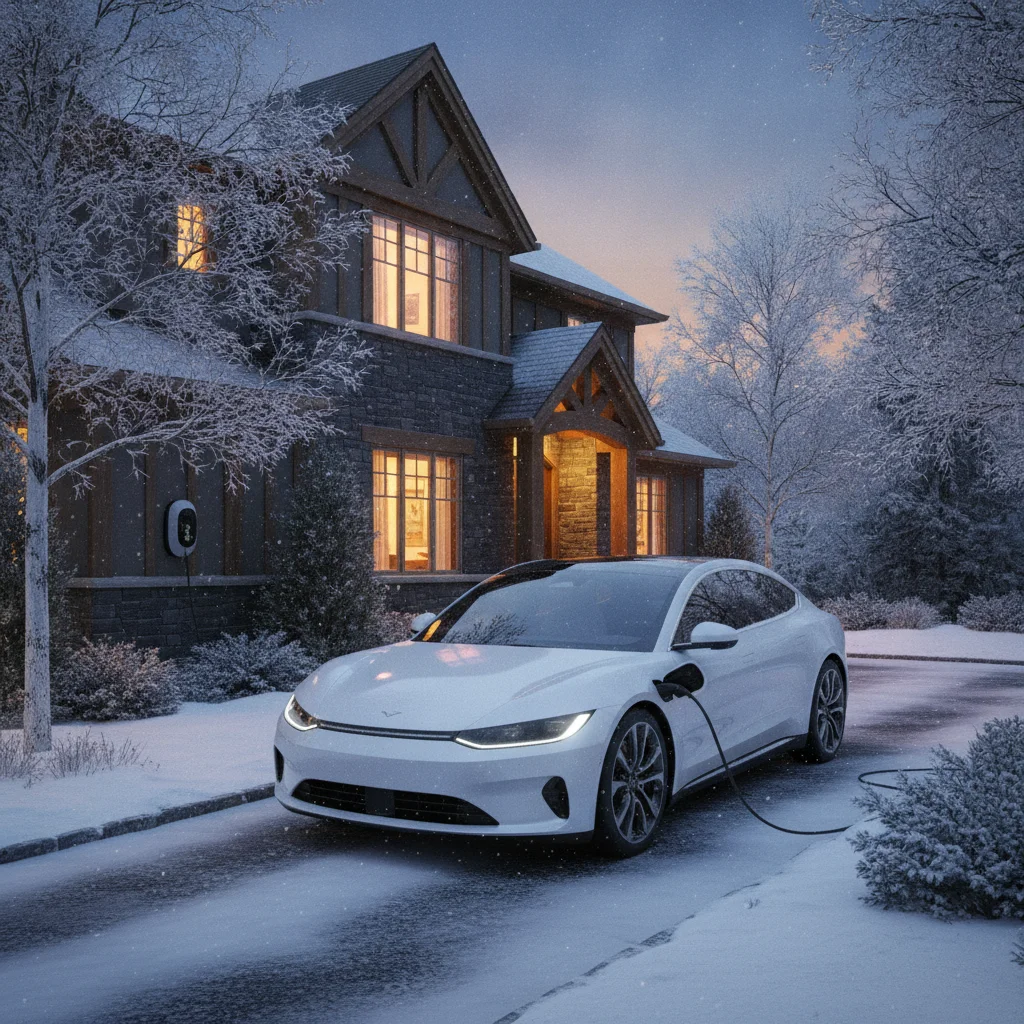
EV charging systems are specifically engineered to be weatherproof — rain, snow, and humidity do not create a shock hazard when using properly maintained equipment.
This one has intuitive appeal — electricity and water don't mix, right? The engineering reality is that every charging connector, port, and cable sold in the U.S. market must meet IP (Ingress Protection) ratings that account for rain and moisture exposure. SAE J1772 connectors (the standard Level 1/Level 2 plug used by most non-Tesla EVs) and the CCS DC fast charging standard are both rated for outdoor use in precipitation.
The vehicle's charging port closes when not in use and is sealed against moisture infiltration. The charging circuit itself operates through a handshake protocol — no power flows through the cable until the connector is securely seated and the vehicle confirms a safe connection. You are not completing a circuit by touching wet components.
Charging in standing water deep enough to submerge the vehicle is a different matter — that's a flood scenario, not a rain scenario, and it applies equally to gas vehicles and their electrical systems. Normal rain, including heavy rain, is not a charging hazard. Millions of EV drivers in the Pacific Northwest, the Great Lakes region, and the UK (where it rains constantly) charge outdoors without incident.
Myth
Every EV buyer gets a $7,500 federal tax credit, making EVs significantly cheaper than the sticker price suggests.
Fact
The federal EV tax credit has strict income limits, vehicle price caps, assembly requirements, and battery sourcing rules that disqualify many buyers and many vehicles.
The Inflation Reduction Act restructured the federal EV tax credit starting in 2023, and the eligibility rules are genuinely complicated. Here's what actually determines whether you qualify:
- Income limits: $150,000 adjusted gross income for single filers; $225,000 for head of household; $300,000 for married filing jointly. Exceed these and you get zero credit.
- Vehicle price caps: $55,000 MSRP for sedans and hatchbacks; $80,000 for SUVs, trucks, and vans. Vehicles above these caps are ineligible regardless of other factors.
- Assembly location: Final assembly must occur in North America. Several popular EVs, including some Korean and European models, have been excluded under this rule.
- Battery sourcing rules: A portion of battery components and critical minerals must be sourced from the U.S. or free-trade partners. This rules disqualifies additional vehicles even if assembly qualifies.
- It's nonrefundable: If your federal tax liability is less than $7,500, you only receive a credit equal to what you owe. The remainder is not paid out as a refund.
Starting in 2024, buyers can transfer the credit to dealers at point of sale — effectively making it a discount — but the eligibility rules above still apply. Always verify the specific vehicle's credit status on the IRS's fuel economy credit list before negotiating.
Myth
Charging an EV costs about the same as fueling a gas car — the electricity savings are minimal.
Fact
In most U.S. regions, fueling an EV at home costs roughly half or less of what an equivalent gas car costs per mile, with significant variation by local electricity rates.
The math here is straightforward once you plug in real numbers. The average U.S. electricity rate as of 2024 is approximately 16 cents per kWh. A typical EV uses about 3–4 miles per kWh of energy. At 3.5 miles/kWh and $0.16/kWh, you're paying about 4.6 cents per mile in electricity.
Compare that to gasoline: at $3.50/gallon and 30 mpg (a reasonably efficient gas car), you're paying about 11.7 cents per mile — more than double. For someone driving 15,000 miles per year, that gap represents roughly $1,065 in annual fuel savings. Over five years, that's over $5,000, which meaningfully offsets a higher EV purchase price.
The calceat: public DC fast charging rates are significantly higher — often 25–45 cents/kWh or priced per minute — and can approach or exceed gas cost-per-mile for drivers who rely on public charging exclusively. The savings math works best for drivers who charge primarily at home. See our detailed breakdown in charging cost myths for the full picture on public vs. home charging economics.
Myth
EVs are terrible in cold weather — the battery dies quickly and you'll be stranded in winter.
Fact
Cold weather does reduce EV range — typically 20–40% in extreme cold — but this is a predictable, manageable limitation, not a catastrophic failure.
Lithium-ion batteries genuinely do perform worse in cold temperatures. The electrochemical reactions that store and release energy slow down as temperatures drop, reducing both available capacity and charging speed. AAA testing found EV range drops an average of 12% when the cabin heater is in use at 20°F, with some vehicles seeing up to 40% range reduction in extreme cold. This is real and worth planning around.
What it isn't is a showstopper for the vast majority of winter drivers. A few practices dramatically reduce cold-weather range loss:
- Pre-conditioning: Most EVs allow you to heat the cabin while still plugged in, using grid power rather than battery power. You arrive at a warm car with a full charge.
- Regenerative braking adjustment: Some vehicles automatically reduce regen in very cold weather to protect the battery. This is a feature, not a fault.
- Keeping the battery warmer: Parking in a garage — even an unheated one — meaningfully reduces overnight battery temperature loss compared to outdoor parking.
- Planning for reduced range: If you know your 280-mile EV drops to 200 miles in a January cold snap, build that into your route planning for longer trips.
Drivers in Norway — where winter temperatures routinely drop well below freezing — have among the highest per-capita EV adoption rates in the world. Cold weather is a planning variable, not a dealbreaker.
~25
EV fires per 100,000 vehicles sold
Compared to approximately 1,530 per 100,000 for gasoline vehicles, per analysis of NHTSA and BLS data compiled by AutoinsuranceEZ.
90%+
Median battery capacity at 100,000 miles
Recurrent Auto's 2023 analysis of over 15,000 EVs found median battery retention above 90% at the 100,000-mile mark for most major models.
~4.6¢
Average home-charging cost per mile
Based on the U.S. average electricity rate of ~$0.16/kWh and a typical EV efficiency of 3.5 miles per kWh, per DOE data.
20–40%
Range reduction in extreme cold
AAA testing found EV range drops an average of 12% with cabin heat running at 20°F, with some models seeing up to 40% reduction in extreme conditions.
8 years
Minimum federal EV battery warranty
Federal law requires automakers to warranty EV battery packs for at least 8 years or 100,000 miles against defects and excessive capacity loss.
The Financial Picture: Incentives, Insurance, and True Cost
A significant chunk of EV confusion isn't about mechanics — it's about money. The federal tax credit alone has generated more misinformation than almost any other aspect of EV ownership.
The Tax Credit Is Not a Rebate at Purchase
The Inflation Reduction Act's $7,500 EV tax credit (IRC §30D) is a nonrefundable credit applied against your federal tax liability. If you owe $4,000 in federal taxes for the year, you get a $4,000 credit — not $7,500. The unused portion doesn't carry forward. There are also income caps ($150,000 for single filers, $300,000 for joint filers) and vehicle MSRP caps ($55,000 for cars, $80,000 for trucks and SUVs). Assembly location, battery sourcing, and dealer registration with the IRS also affect eligibility. Always verify with a tax professional before factoring the credit into your budget.
Verify Tax Credit Eligibility Before You Negotiate
The $7,500 federal EV tax credit is not automatic and not universal. Your income, the vehicle's MSRP, where it was assembled, and where its battery materials were sourced all determine eligibility. Use the IRS's official clean vehicle credit lookup and consult a tax professional before factoring any credit into your purchase budget. Dealers are not required to verify your eligibility — that responsibility falls on you.
Insurance Is More Complicated Than a Simple Premium Comparison
EVs can cost more to insure than equivalent gas cars, but that's not a universal rule. Premium differences depend on the vehicle model, your insurer, your location, and how repair costs for that specific EV are rated. A Tesla Model 3 and a Chevy Equinox EV can sit in very different risk buckets. See our EV insurance myth breakdown and our EV insurance guide for specifics on what drives those premium differences.
Total Cost of Ownership vs. Sticker Price
Comparing a $42,000 EV to a $28,000 gas sedan on sticker price alone is incomplete math. EVs carry lower fuel costs (electricity vs. gasoline), reduced routine maintenance (no oil changes, fewer brake jobs due to regenerative braking), and potentially longer powertrain longevity. The Consumer Reports 2023 owner satisfaction survey found EV owners report significantly lower average maintenance costs than owners of internal combustion vehicles. That gap compounds over a five-year ownership period.

Don't Rely on Dealer Credit Estimates
Some dealers quote the full $7,500 credit as a guaranteed discount without verifying your income, filing status, or the vehicle's current eligibility under IRS sourcing rules. This can lead to a painful surprise at tax time. Independently verify your specific situation before signing a purchase agreement that assumes a credit you may not receive.
Public Fast Charging Can Erode Fuel Savings
If your living situation prevents home charging — apartment without a dedicated outlet, no garage access — and you rely heavily on DC fast chargers, your per-mile fuel cost climbs sharply and the economic case for an EV weakens. Solve for home charging access before buying, or model your costs honestly using public charging rates in your area.
What to Actually Evaluate Before You Buy
Once you've cleared the myths out of the way, the real evaluation questions become straightforward:
- Daily mileage vs. range: If you drive 40 miles a day and can charge at home overnight, virtually every modern EV handles your routine driving without a second thought. Range anxiety is almost entirely a long-trip concern.
- Home charging setup: A Level 1 (120V) outlet charges roughly 3–5 miles of range per hour — adequate if you're not a high-mileage driver. A Level 2 (240V) charger adds 20–30 miles per hour and costs $500–$1,500 installed. Our home charging guide walks through the real setup considerations.
- Public charging access: Check PlugShare or the DOE's Alternative Fuels Station Locator for DC fast charging availability along your regular routes and any road trips you take annually.
- Tax credit eligibility: Use the IRS's clean vehicle credit tool or consult a tax professional before negotiating price. Don't bank on a credit you may not qualify for.
- Total cost modeling: Use the DOE's Vehicle Cost Calculator to compare your specific candidates. Input your actual annual mileage and local electricity/gas prices for a realistic 5-year cost comparison.
If you're also weighing a plug-in hybrid or conventional hybrid as an alternative, check out our breakdown of hybrid car misconceptions — many of the same false narratives apply there too.
The EV market has matured enough that a first-time buyer today is in a substantially better position than buyers five years ago: more model choices, more robust charging infrastructure, longer battery warranties, and more competitive pricing. The biggest remaining obstacle isn't technology — it's bad information. Clear that away, and the decision becomes a practical one you can actually make with confidence.

All claims are backed by peer-reviewed research. Sources on request.