Key Takeaways
Our Verdict
For day-to-day reliability and a seamless payment experience, ChargePoint edges out competitors on open networks, while Tesla's native app remains unmatched within its own ecosystem. Road trippers who mix networks will get the most value by pairing a primary network app with PlugShare as a real-time reliability overlay. No single app covers every dimension, so building a two-app habit is the most practical strategy for most EV drivers today.
| Best for | Recommended |
|---|---|
| Tesla drivers staying within the Supercharger ecosystem | Tesla App |
| Drivers who prioritize polished payment and the widest Level 2 network | ChargePoint App |
| Cross-network road trippers needing real-world reliability data | PlugShare |
| DC fast-charge-focused drivers along major highway corridors | Electrify America App |
Why the App Matters as Much as the Charger
The hardware at a charging station is only half the equation. A 350 kW DC fast charger means little if the app that controls access to it is slow, crashes mid-session, or can't tell you whether the stall next to you is actually working. For many EV drivers — especially those venturing beyond their home network for the first time — the app is the entire experience.
Yet charging network apps vary enormously. Some are polished tools built by companies that treat software as core infrastructure. Others are barely functional wrappers over a back-end billing system. The differences show up in three critical areas: navigation and map accuracy, real-time station reliability data, and payment friction. This comparison evaluates the five major apps — Tesla, Electrify America, EVgo, ChargePoint, and PlugShare (as a cross-network aggregator) — across all three dimensions.
For a broader look at how network coverage and charging speeds stack up, see our major public charging network comparison.
Navigation and Map Accuracy
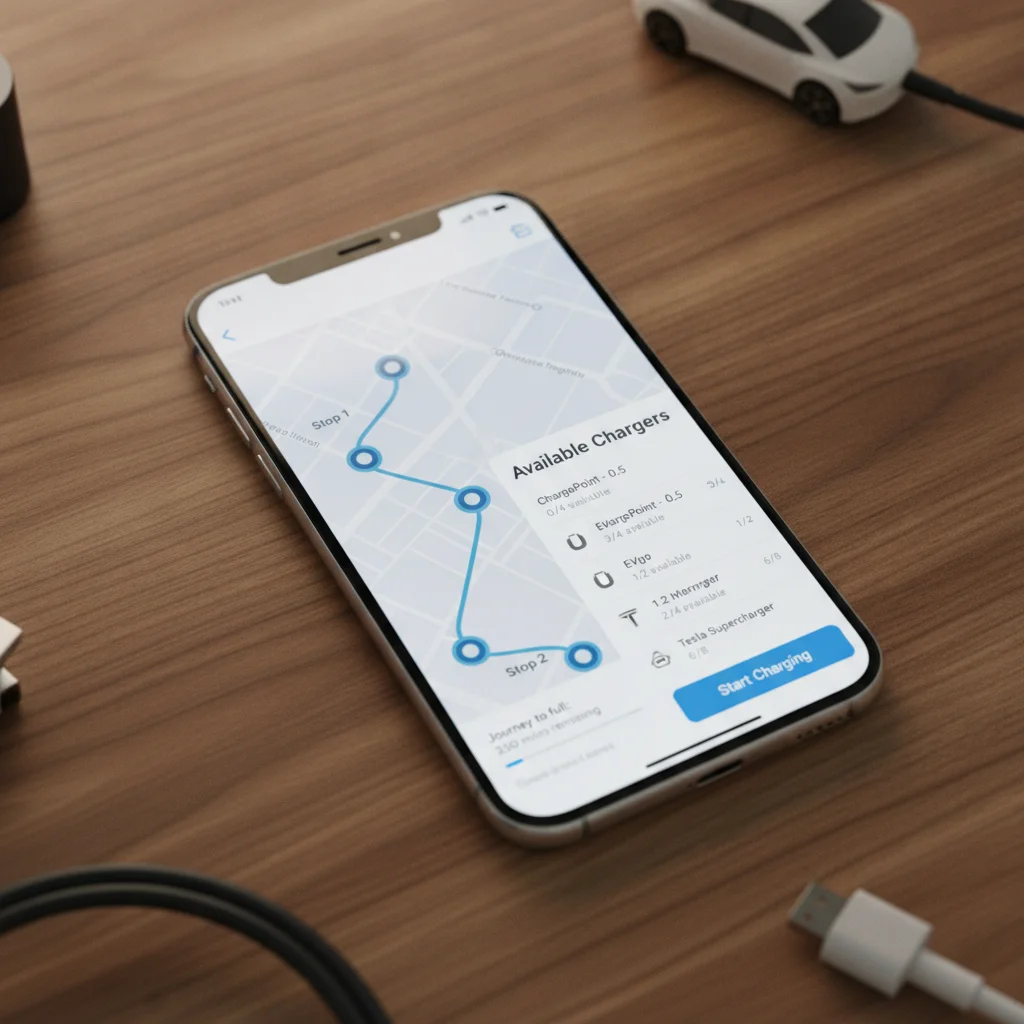
A charging network app's map is your primary interface with the physical infrastructure. It needs to tell you where stations are, how far they are from your route, and — critically — whether the information it displays reflects reality.
Tesla App
Tesla's navigation is deeply integrated with the vehicle itself. The in-car system automatically routes to Superchargers when range requires it, pre-conditions the battery for optimal charging speed, and shows per-stall availability in real time. The standalone smartphone app mirrors this data. Because Tesla controls both the software and the hardware, map accuracy is consistently high — a stall shown as available almost always is.
Electrify America
The Electrify America app received a significant redesign in 2023 that improved map legibility and added filtering by connector type and charging speed. Route planning is functional, allowing users to string together charging stops on longer trips. The app integrates with Apple CarPlay and Android Auto, though the integration is shallower than Tesla's native experience. Mapping accuracy is generally reliable for station location, though real-time stall status lags (more on that below).
EVgo
EVgo's app maps are clean and easy to read. The network's stations tend to cluster in urban areas, and the app reflects this with a city-focused interface. Route planning for long-distance travel is limited compared to Electrify America or Tesla, largely because EVgo's network is less highway-corridor-oriented. Station location data is accurate; the weak point is real-time status granularity.
ChargePoint
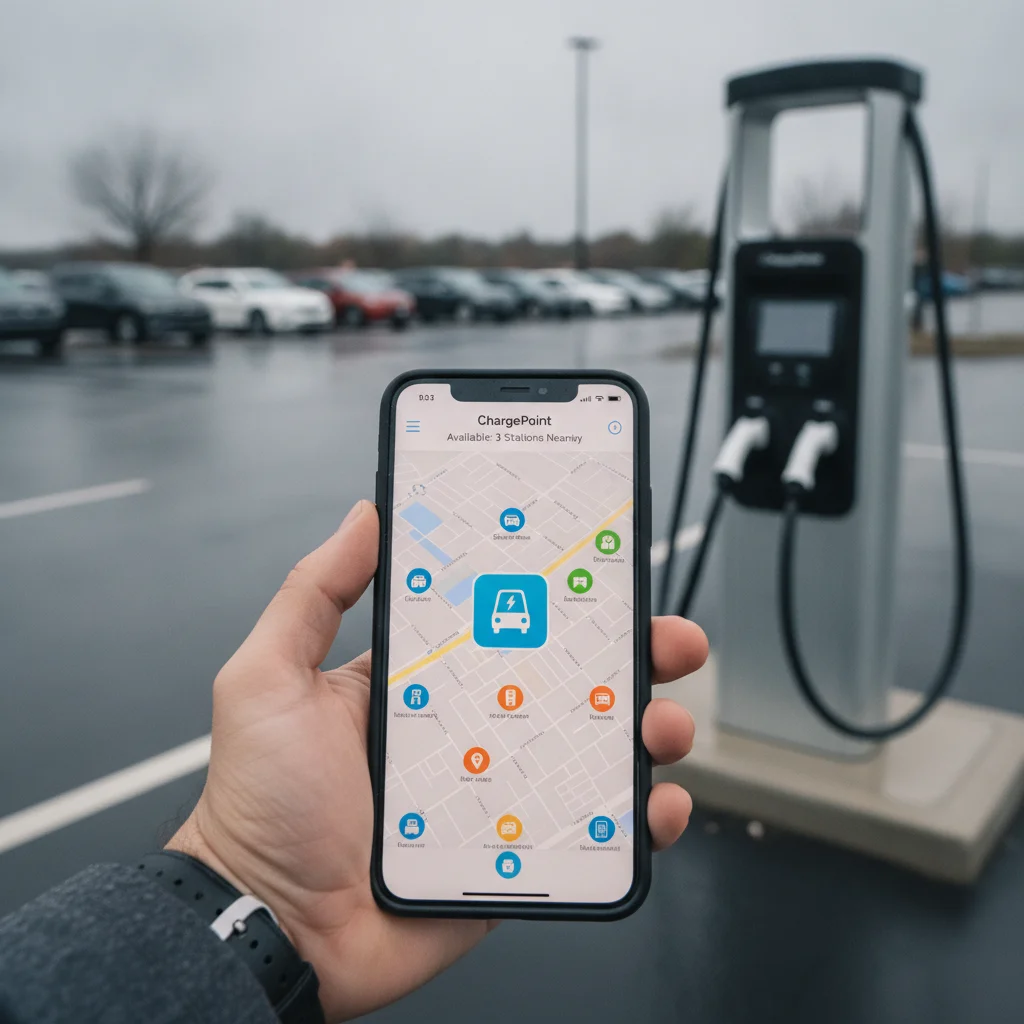
ChargePoint operates the largest open-network map in the US by station count, with over 35,000 charging locations listed. The app's map is genuinely useful for Level 2 charging discovery — finding a charger at a destination hotel, a shopping center, or a workplace. Filters for connector type, speed, and amenities work reliably. Long-distance route planning was added in recent app updates and works reasonably well, though it's not as polished as Tesla's integrated approach.
PlugShare
PlugShare is not a network operator — it aggregates data from multiple networks plus privately shared Level 2 chargers. Its map is the most comprehensive available, covering networks that don't have their own widely used apps. The key differentiator is community-sourced check-ins layered on top of operator data. When a station's official status says "available" but a driver checked in 20 minutes ago reporting a broken screen, PlugShare surfaces that. For pure map completeness, nothing else competes.
| Tesla App | Electrify America | EVgo | ChargePoint | PlugShare | |
|---|---|---|---|---|---|
| Map accuracy | Excellent (closed network) | Good | Good | Very good | Excellent (aggregated) |
| Real-time stall status | Best-in-class | Inconsistent | Above average | Variable by location | Community-sourced, high value |
| Payment options | Auto-billed (Tesla acct) | Tap-to-pay + app | Plug-and-charge + app | App, RFID, tap | No native payment |
| Route planning | Native vehicle integration | Functional, multi-stop | Limited (urban focus) | Improving, multi-stop | N/A (no routing) |
| Membership / loyalty | Referral credits | Pass+ ($4/mo) | EV-Rewards points | Commercial tiers | None |
| Cross-network coverage | Supercharger only | EA network only | EVgo network only | ChargePoint network | All networks + private |
| Vehicle integration | Full native | CarPlay/Android Auto | Plug-and-charge | CarPlay/Android Auto | None |
| Guest / no-account access | Account required | Yes (tap-to-pay) | Limited | RFID or app needed | Read-only, no account |
| Reliability reporting tool | Hardware telemetry | OCPP telemetry | Remote diagnostics | Driver issue reports | Community check-ins |
| Best use case | Tesla owners | Highway DCFC trips | Urban plug-and-charge | Level 2 destination | Cross-network research |
Real-Time Reliability Data: The Gap Between What Apps Say and What Drivers Find
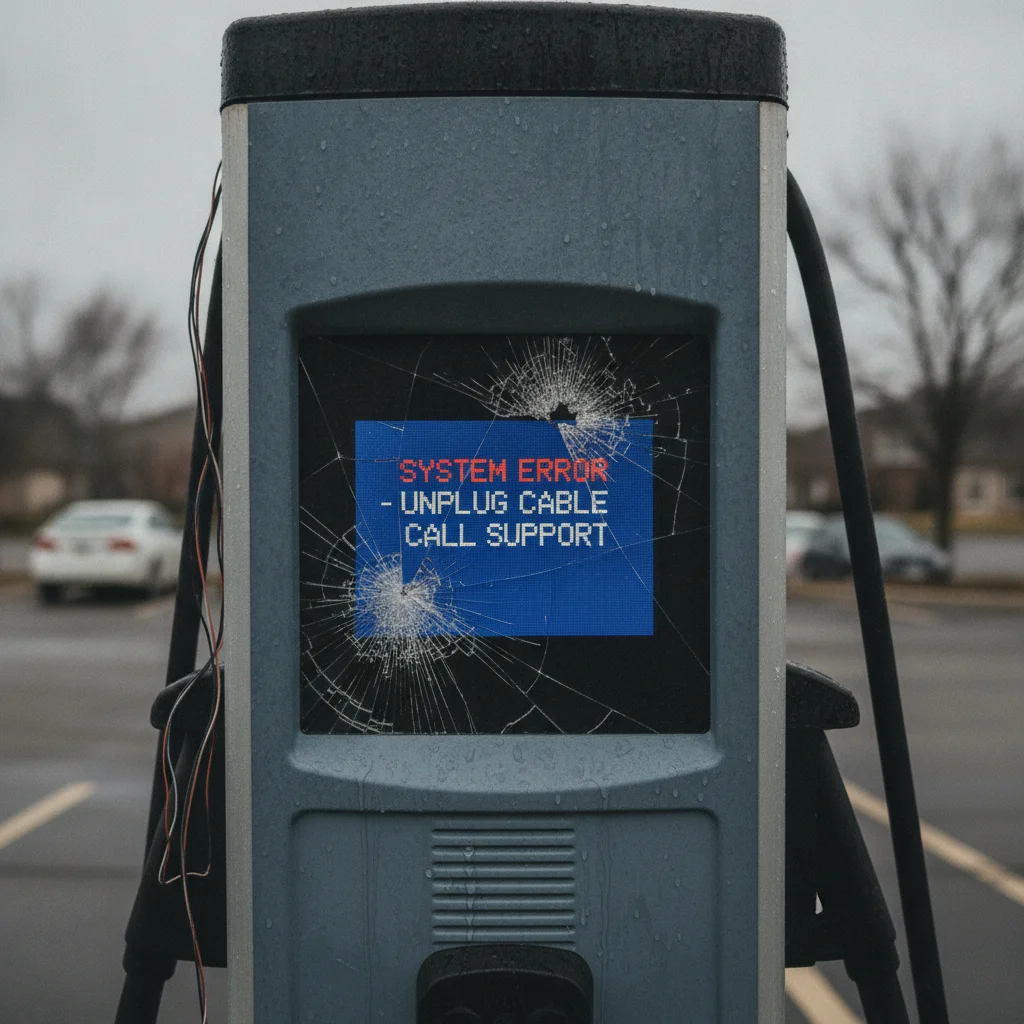
Outdated or inaccurate status data is the single most frustrating element of the public charging experience. Arriving at a station to find broken equipment — despite the app showing all stalls as available — erodes driver confidence in both the network and the app.
~20%
DC fast chargers out of service at any given time
A 2023 J.D. Power Electric Vehicle Experience Public Charging Study found roughly 1 in 5 DCFC attempts resulted in a non-functioning charger.
35,000+
ChargePoint charging locations in the US
ChargePoint's own network data as of 2024, making it the largest open-network operator by station count in North America.
72%
EV drivers who use more than one charging network
According to J.D. Power's 2023 EV Charging Report, the majority of EV drivers regularly access multiple networks rather than relying on one exclusively.
4–8 min
Average time lost to payment friction per charging session
Estimated by the Rocky Mountain Institute based on observed session start delays at open-network DCFC stations without tap-to-pay.
How Each App Handles Status Data
Tesla benefits from a closed-loop telemetry system. Every Supercharger stall reports its status directly to Tesla's servers, typically updating within seconds. Error states — a stall that's faulted but not yet flagged by a technician — are often surfaced in the app before the hardware displays a fault message. This is the gold standard, and it's achievable precisely because Tesla controls both ends of the data pipeline.
Electrify America has made real-time stall status a stated priority, but execution remains inconsistent. The OCPP (Open Charge Point Protocol) telemetry it uses is industry-standard but relies on station hardware reporting accurately — a gap that shows up most often at older or recently serviced stations. A 2023 ChargerHelp reliability study found Electrify America stations had an out-of-order rate around 13–17% at any given time, though the app doesn't always reflect this clearly.
EVgo displays per-stall status in its app and has invested in remote diagnostic tools. Its urban-focused network tends to have newer hardware with more reliable reporting. Reliability data accuracy is generally above the industry average for open networks, though it still falls short of Tesla's closed-system precision.
ChargePoint shows station status prominently and even allows drivers to report issues directly from the app — a crowd-sourced feedback loop that helps flag outages faster than hardware telemetry alone. The accuracy varies by location because ChargePoint is primarily a network platform; the physical stations are often owned and maintained by third parties, introducing variability in hardware quality and reporting consistency.
PlugShare handles reliability differently. Its real-time layer is almost entirely community-driven: drivers check in when they arrive, report wait times, note broken equipment, and leave reviews. This human-sourced data is remarkably accurate in aggregate, but it's only as fresh as the last driver who stopped. For high-traffic corridors, that lag is often minutes. For rural stations, it might be days.
App Status Data Is Not Always Ground Truth
Every network app displays station status based on telemetry data that can be delayed, incorrect, or simply not updated after a hardware fault. A stall showing 'available' in an app may be physically unusable. Never plan a charging stop with zero range buffer based solely on app status — always build in enough margin to reach an alternative station if the first is out of service.
Pre-Loaded Wallet Balances Have Real Downsides
Some network apps require adding funds to an account wallet before you can start a session, rather than billing a card directly. This creates a problem if you switch networks or a company changes ownership — pre-loaded balances can be difficult or impossible to recover. Whenever an app offers direct card billing as an alternative to a wallet, prefer it to avoid locking funds in a platform you may not use long-term.
For drivers relying on smaller regional networks, PlugShare's community data is often the only real-time reliability signal available.
Payment Experience: Friction, Flexibility, and Fees
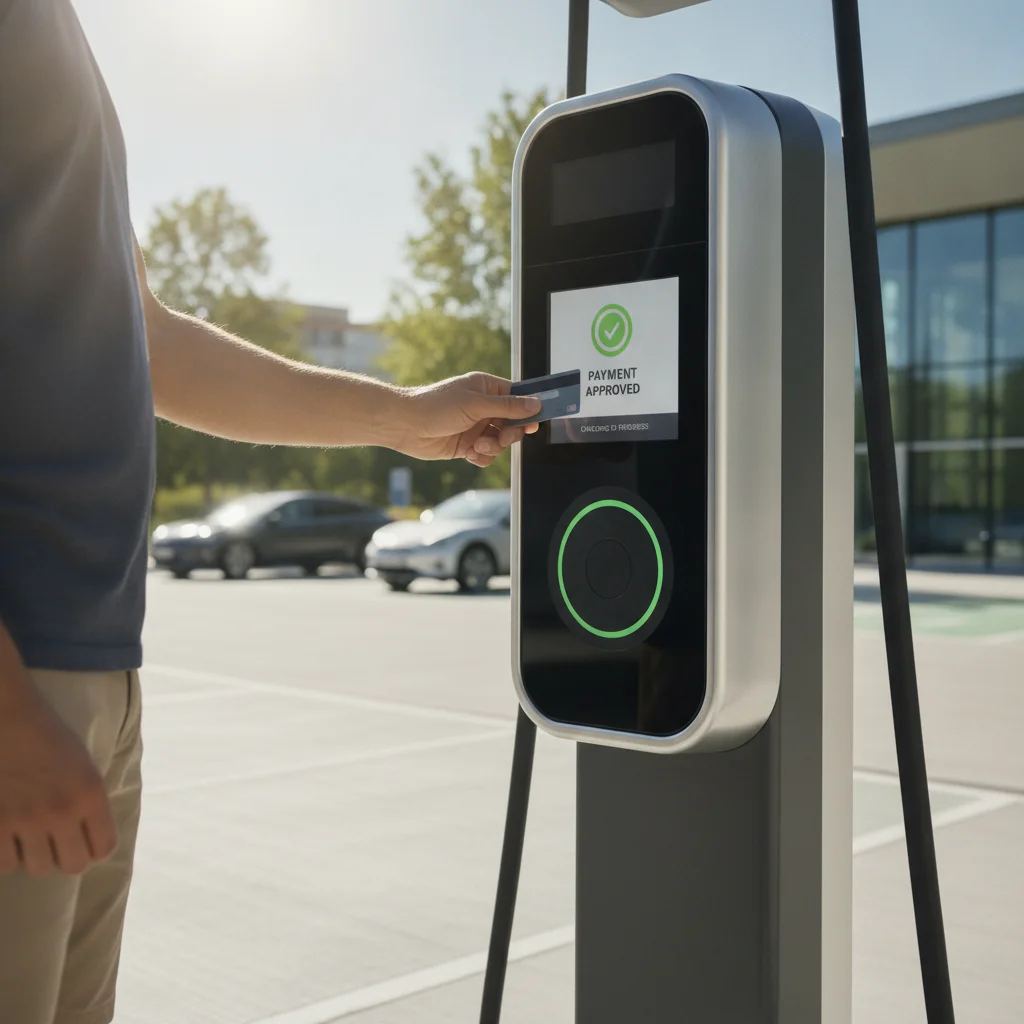
Payment at public chargers has historically been a mess — a patchwork of RFID cards, app accounts, pre-loaded wallet balances, and credit card tap payments that vary by station, network, and even by individual charger hardware version. Recent regulatory pressure, particularly NEVI (National Electric Vehicle Infrastructure) program requirements mandating credit card payment at federally funded stations, is forcing improvement. But the current state still varies widely.
Tesla App
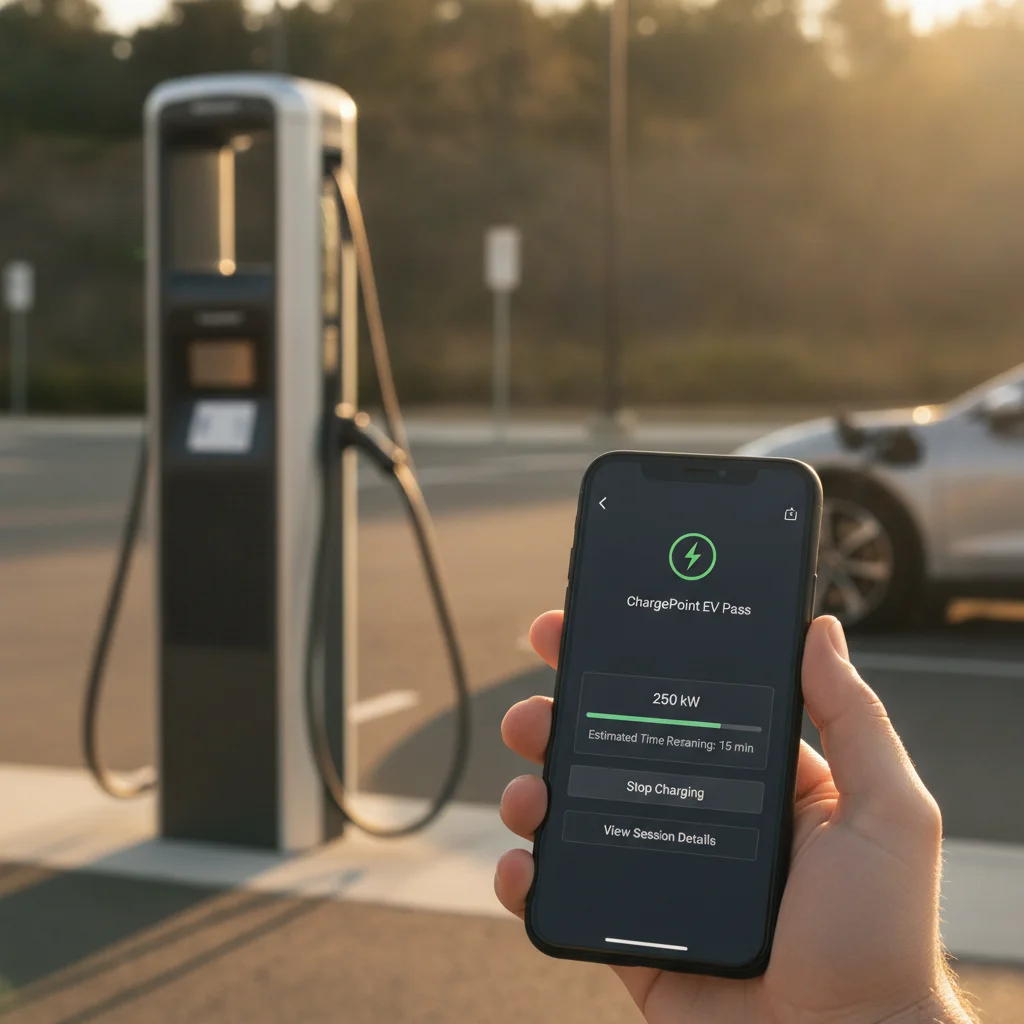
For Tesla vehicle owners, payment is invisible. Charging costs are billed automatically to the credit card on file in the Tesla account — no tapping, no QR code, no RFID card needed. Non-Tesla vehicles using Superchargers (now open to all EVs at most US locations) must use the Tesla app, which requires account creation and a saved payment method. The flow is clean but does require setup before arriving at a station.
Electrify America
Electrify America supports credit card tap-to-pay at most of its DC fast chargers — one of the stronger contactless payment stories among open networks. The app adds the ability to start sessions remotely and access membership pricing. The guest payment flow (no app required) works reliably at most locations, which reduces friction for occasional users. See our EV charging membership plan analysis for whether Electrify America's Pass+ subscription makes financial sense for your usage pattern.
EVgo
EVgo has leaned into plug-and-charge technology, which allows compatible vehicles to authenticate and begin billing automatically when connected — no app interaction required at the charger. This works with a growing list of vehicles including select Hyundai, Kia, BMW, and Ford models. For drivers whose cars support it, this is the most seamless experience available on any open network. For those without plug-and-charge compatibility, the app payment flow is functional but requires a pre-registered account.
ChargePoint
ChargePoint's payment experience is among the most flexible on open networks. Users can pay via the app, RFID card, or credit card tap. The app wallet is straightforward, and billing history is clearly displayed. One friction point: ChargePoint stations operated by third-party hosts sometimes have separate pricing from ChargePoint's own network, which can confuse users expecting a consistent rate. The ChargePoint vs. Blink comparison explores this pricing variability in detail.
PlugShare
PlugShare does not process payments directly — it redirects users to the native app or payment terminal for whichever network owns the station. This is a meaningful limitation for users who treat it as a one-stop-shop. The value is in discovery and reliability research, not payment convenience.
For a deeper look at how pricing models themselves differ across networks — per-minute vs. per-kWh vs. session fees — see our guide to charging pricing models.
Pre-Load Your Accounts Before You Need Them
Payment friction spikes when you're setting up a new account at a charger for the first time — often in the cold, with a low battery. Download and configure any network app you might use on a road trip before you leave home. Add a payment method, verify your email, and run a short test session at a local station if possible. Ten minutes of setup at home can save significant stress on the road.
Use PlugShare Before Every Unfamiliar Stop
Before pulling into any charging station you haven't used before, spend 30 seconds checking its PlugShare listing. Sort check-ins by most recent and look for any reports of broken equipment, long waits, or access issues. This single habit catches the majority of problem stations before you've committed to the detour. It's especially valuable at locations with older hardware or sparse traffic.
Plug-and-Charge Is Worth Enabling If Your Vehicle Supports It
Plug-and-charge authentication — available through EVgo and increasingly other networks — eliminates every payment step at the charger. If your vehicle is compatible (check your owner's manual or the manufacturer's app), the one-time setup in the network app is worth the effort. It's the closest open-network experience to Tesla's seamless automatic billing.
Membership Plans, Notifications, and Quality-of-Life Features
Beyond the core functions, the best charging apps add features that reduce stress on longer trips and help drivers optimize cost. These include membership pricing tiers, push notifications when a session completes or when a preferred station becomes available, and integration with the vehicle's own navigation system.
Session Notifications
ChargePoint and EVgo both send push notifications when a session completes or when charging is interrupted — useful at destination chargers where you've walked away from the car. Tesla's native notification system is the most reliable, given direct vehicle integration. Electrify America's notifications have historically been inconsistent, though recent app updates have improved delivery reliability.
Membership and Pricing Tiers
Electrify America's Pass+ subscription ($4/month) lowers per-kWh rates substantially at high-speed chargers. EVgo offers an EV-Rewards loyalty program that provides credits on usage. ChargePoint's membership plans target fleet and commercial customers more than individual drivers. Understanding whether any membership plan pays off requires modeling your actual charging frequency — do the math before subscribing.
Vehicle Integration
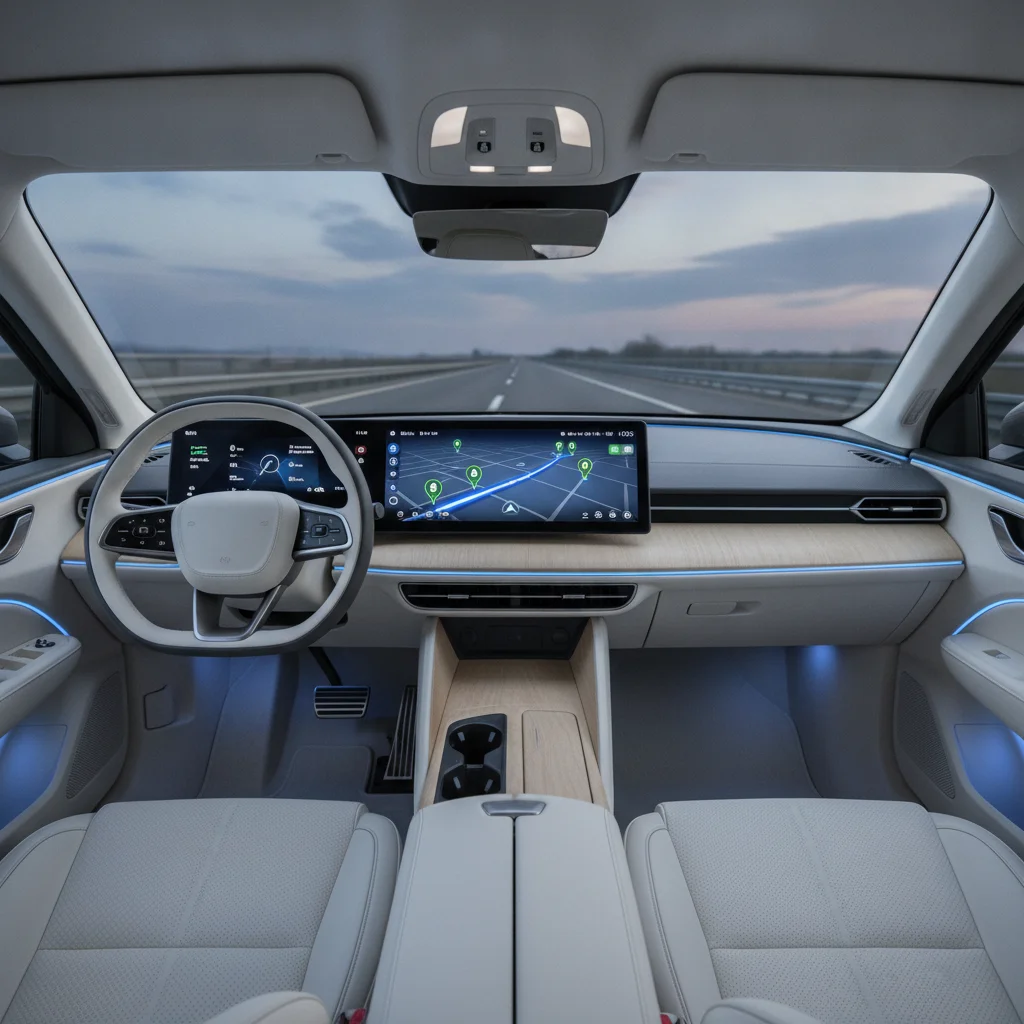
Tesla's integration is native and requires no setup. Ford, GM, and Rivian have built in-dash integrations with specific networks through their own apps and connected vehicle systems. For most other EVs, Apple CarPlay and Android Auto provide a secondary layer of navigation integration — Electrify America and ChargePoint both support this, allowing the charging map to appear in the vehicle's infotainment display without a fully native integration.
Drivers primarily charging at home who only use public infrastructure occasionally should weigh these features differently than daily commuters or frequent road trippers. Our home vs. public charging cost comparison provides context on how often most EV drivers actually need public infrastructure.
The Practical Two-App Strategy
No single app wins across all three dimensions evaluated here. Tesla's app is definitive within its own network but irrelevant for multi-network road tripping. ChargePoint has the best Level 2 coverage and payment experience but less DCFC depth than Electrify America. PlugShare provides the best reliability intelligence but can't process a payment.
The most practical approach for most EV drivers:
- Primary network app — the app for the network you use most based on your vehicle, geography, and route patterns. For non-Tesla drivers in urban areas, that's likely ChargePoint or EVgo. For highway travelers, Electrify America. For Tesla drivers, the Tesla app handles nearly everything.
- PlugShare as a reliability overlay — check PlugShare before pulling into any unfamiliar station, particularly outside major metro areas. The community check-in data is uniquely reliable for flagging broken equipment the operator's own app hasn't caught yet.
A third app is worth considering for specific use cases: EVgo's plug-and-charge capability justifies its installation for compatible vehicle owners even if it's not your primary network, since it removes all friction from the payment step.
Pre-Load Your Accounts Before You Need Them
Payment friction spikes when you're setting up a new account at a charger for the first time — often in the cold, with a low battery. Download and configure any network app you might use on a road trip before you leave home. Add a payment method, verify your email, and run a short test session at a local station if possible. Ten minutes of setup at home can save significant stress on the road.
Use PlugShare Before Every Unfamiliar Stop
Before pulling into any charging station you haven't used before, spend 30 seconds checking its PlugShare listing. Sort check-ins by most recent and look for any reports of broken equipment, long waits, or access issues. This single habit catches the majority of problem stations before you've committed to the detour. It's especially valuable at locations with older hardware or sparse traffic.
Plug-and-Charge Is Worth Enabling If Your Vehicle Supports It
Plug-and-charge authentication — available through EVgo and increasingly other networks — eliminates every payment step at the charger. If your vehicle is compatible (check your owner's manual or the manufacturer's app), the one-time setup in the network app is worth the effort. It's the closest open-network experience to Tesla's seamless automatic billing.
For drivers building out their broader EV infrastructure knowledge, the Charging Costs & Savings hub covers the full picture from per-mile cost estimates to membership plan math.
All claims are backed by peer-reviewed research. Sources on request.