Key Takeaways
Option A
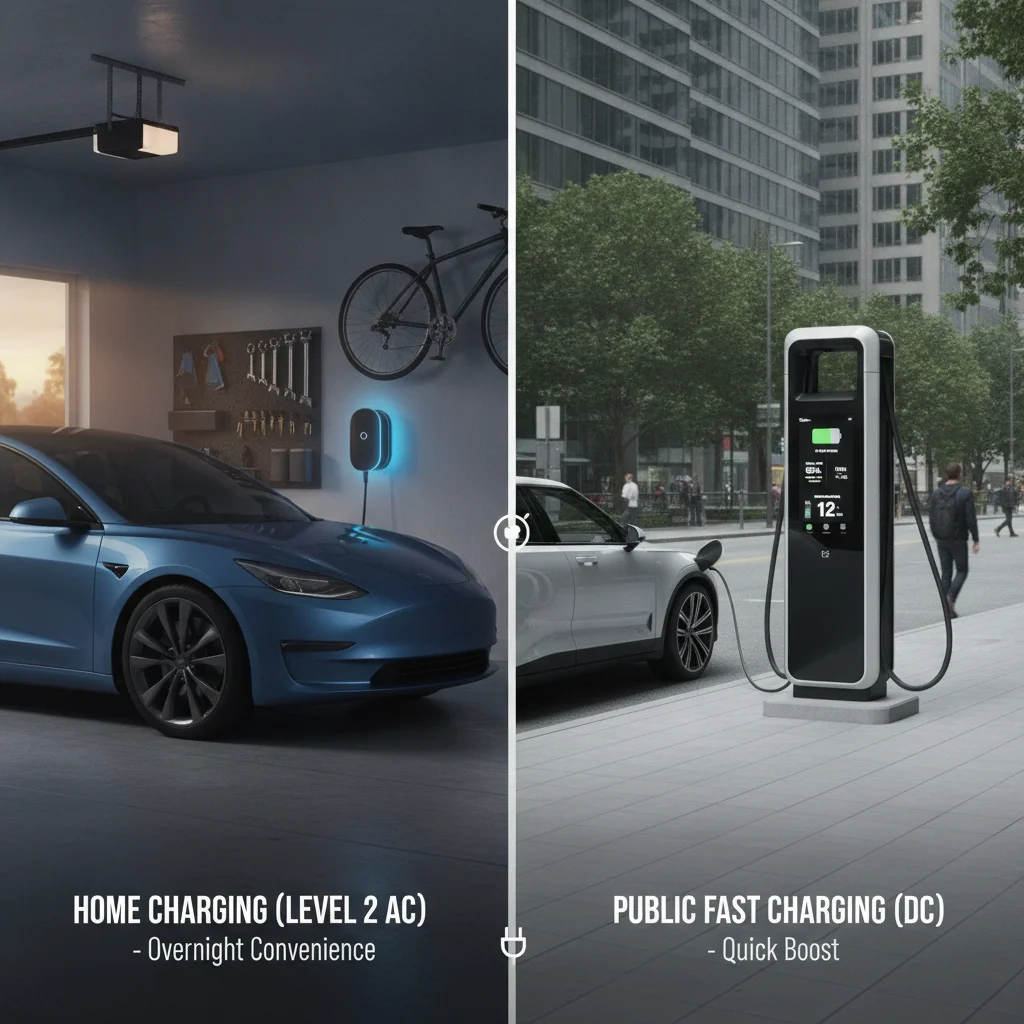
AC Charging (Level 1 & Level 2)
The everyday, at-home workhorse.
Best for: Best for overnight home charging, workplace charging, and drivers with predictable daily mileage under 200 miles.
Option B
DC Fast Charging (Level 3)
The rapid road-trip rescue.
Best for: Best for long-distance travel, topping up quickly on the road, and situations where time at the charger is measured in minutes, not hours.
If you charge at home every night and drive under 50 miles daily
AC Charging (Level 1 & Level 2)
A Level 2 home charger will fully replenish most EV batteries overnight. You'll never need to think about public charging for your daily routine.
If you're taking a road trip or need a quick top-up between destinations
DC Fast Charging (Level 3)
DC fast chargers can add 150+ miles of range in under 30 minutes — no other option comes close for time-sensitive situations.
If you live in an apartment without home charging access
DC Fast Charging (Level 3)
Without a reliable home charging option, frequent use of public DC fast chargers becomes necessary. Prioritize an EV with a higher DC acceptance rate and good battery thermal management.
If you want to preserve long-term battery health
AC Charging (Level 1 & Level 2)
Slower AC charging is gentler on battery cells and generates less heat, which is the primary enemy of long-term battery capacity.
If you're evaluating which EV to buy and charging speed matters
DC Fast Charging (Level 3)
Check each vehicle's peak DC charging rate before purchasing — differences between 50 kW and 350 kW acceptance rates translate directly to minutes saved on every road trip stop.
Why the AC vs. DC Distinction Actually Matters
Walk into any conversation about EV charging and you'll hear terms like Level 1, Level 2, Level 3, AC, DC, onboard charger, and EVSE used almost interchangeably. They're not the same thing, and the confusion costs buyers real money and real time.
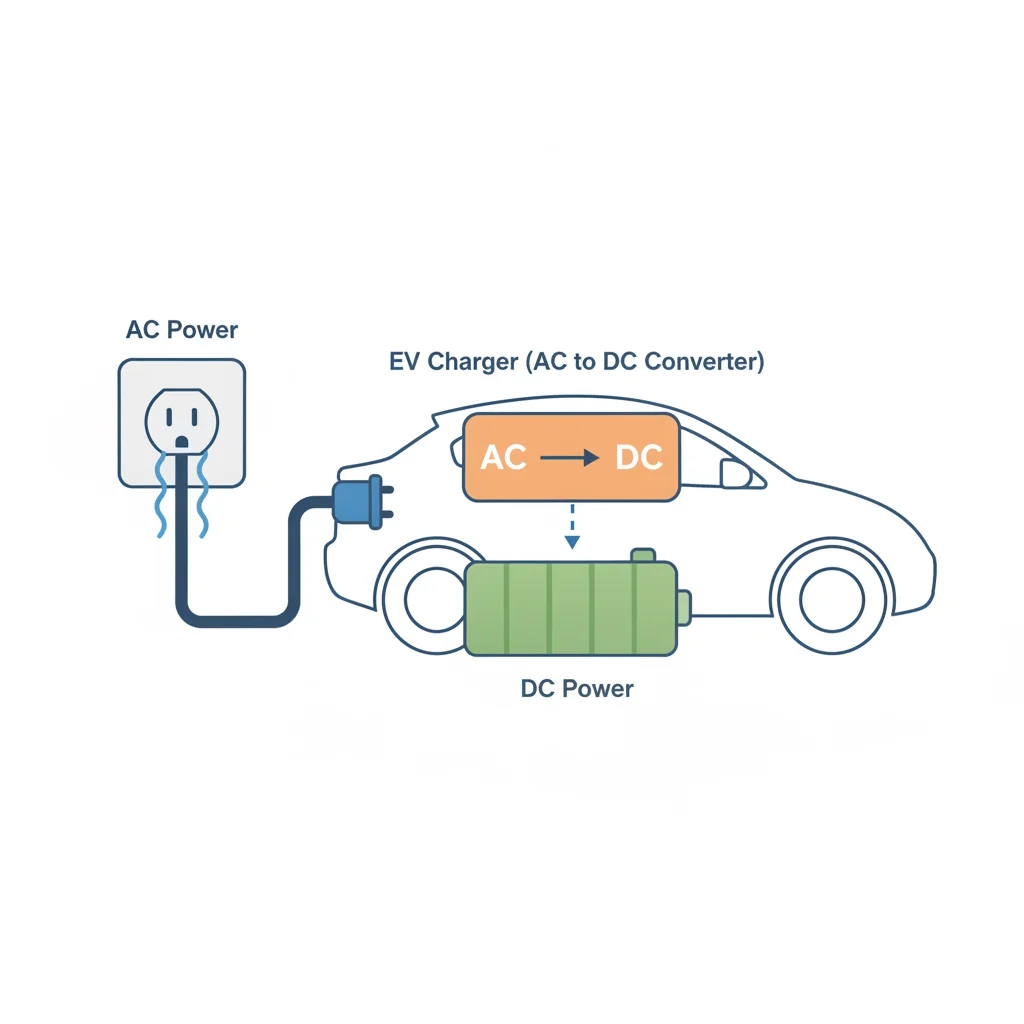
Here's the single most important concept to lock in: every EV battery stores energy as DC (direct current), but the electricity coming from your home or a standard public charging station is AC (alternating current). That gap between what the grid delivers and what the battery needs has to be bridged somewhere — and where that conversion happens is exactly what separates AC charging from DC fast charging.
Understanding this distinction doesn't require an engineering degree. It does require about five minutes of reading, and it will change how you evaluate every EV on a dealer lot.
For a broader look at how your charging access should shape the type of EV you choose, see how charging infrastructure should shape your EV type decision.
How AC Charging Works — and What Limits It
When you plug into a Level 1 (standard 120V outlet) or Level 2 (240V) charger at home or a public station, you're delivering AC power to your vehicle. But here's the catch: your car doesn't have an AC battery. It has a DC battery. So the conversion from AC to DC has to happen inside the car, using a component called the onboard charger (OBC).
The OBC is a physical box — typically mounted in the engine bay or under the floor — that does the AC-to-DC conversion. Its power rating, measured in kilowatts (kW), is the hard ceiling on how fast AC charging can work. If your car has a 7.2 kW onboard charger and you plug into an 11 kW Level 2 station, your car will only accept 7.2 kW. The station's extra capacity goes unused.
| Criterion | AC Charging (Level 1 & Level 2) | DC Fast Charging (Level 3) |
|---|---|---|
| Where conversion happens | Inside the car (onboard charger) | Inside the charging station |
| Typical power range | 1.4 kW – 19.2 kW | 50 kW – 350 kW |
| Miles added per hour | 3–30 miles/hr | 200–1,000+ miles/hr equivalent |
| Session time to 80% | 4–12+ hours | 15–45 minutes |
| Speed limited by | Vehicle's onboard charger rating | Vehicle's DC acceptance rate |
| Typical use case | Home, workplace, overnight | Road trips, quick top-ups |
| Connector (US, non-Tesla) | J1772 (universal) | CCS or NACS |
| Impact on battery health | Minimal — gentler chemistry | Higher heat; limit frequent use |
| Cost per session | Low (home electricity rates) | Higher (per kWh or per minute) |
| Infrastructure availability | Very widespread (any outlet) | Growing but still patchy rurally |
This is a fact that trips up a lot of first-time EV buyers. You might spend extra money at a rental property for a 48-amp Level 2 charger (about 11.5 kW), only to discover your vehicle's OBC caps out at 7.2 kW and you're getting no benefit from the upgrade. Always check your vehicle's onboard charger rating before investing in home charging hardware.
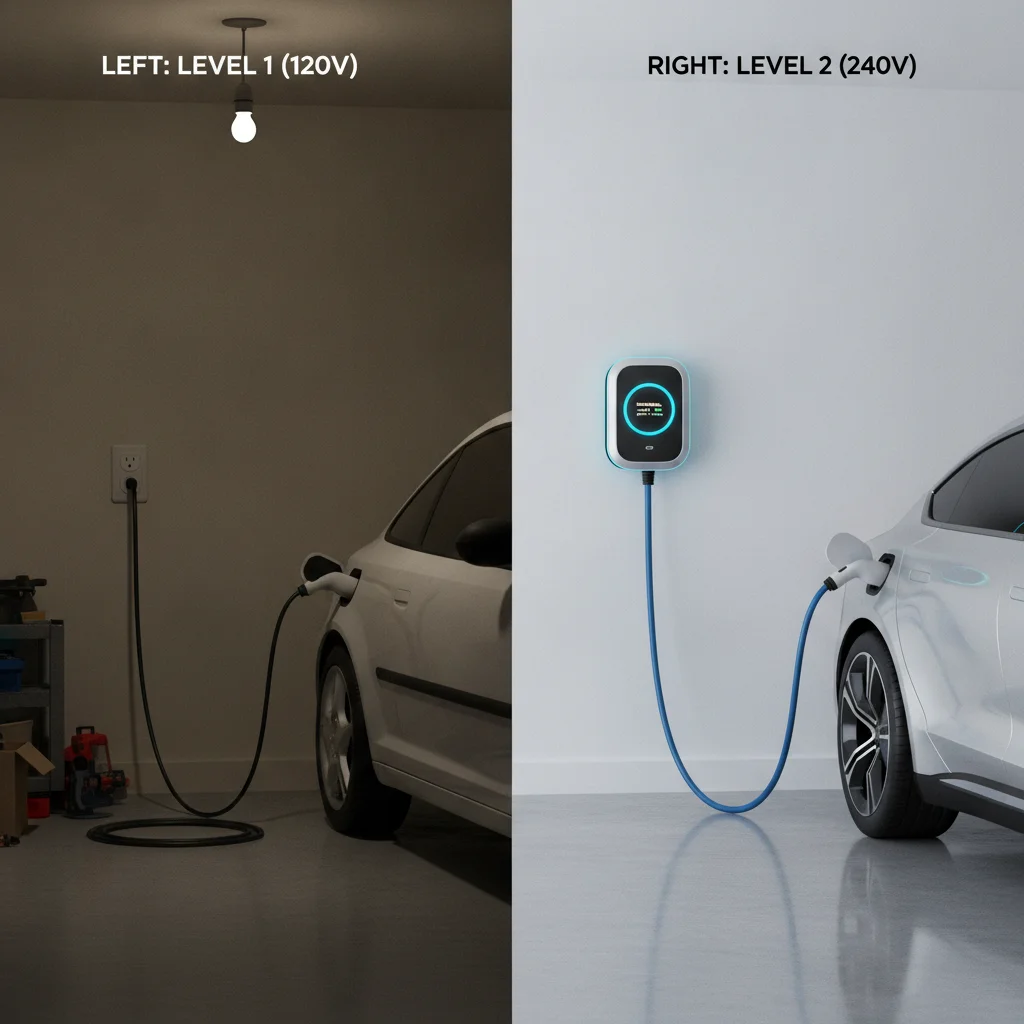
Level 1 charging — using a standard three-prong 120V outlet — delivers roughly 1.4 kW, which translates to about 3–5 miles of range per hour. Useful as a backup, but impractical as a primary charging method for most people. Level 2 charging at 240V delivers anywhere from 3.3 kW to 19.2 kW depending on the EVSE and the vehicle's OBC, typically adding 15–30 miles per hour of charging.
For a detailed comparison of what these two home options actually mean for your daily driving routine, see Level 1 vs Level 2 home charging.
Your Charger Rating vs. Your Car's Rating
A common source of buyer confusion: EVSE manufacturers advertise their equipment's output capacity, but that number is only relevant if your car can actually accept it. If you buy a 48-amp (11.5 kW) Level 2 charger for a vehicle with a 7.2 kW onboard charger, you're paying for capacity your car will never use. Match the EVSE to your vehicle's OBC rating — or buy slightly above it only if you plan to upgrade vehicles in the future.
How DC Fast Charging Works — and Why It's So Much Faster
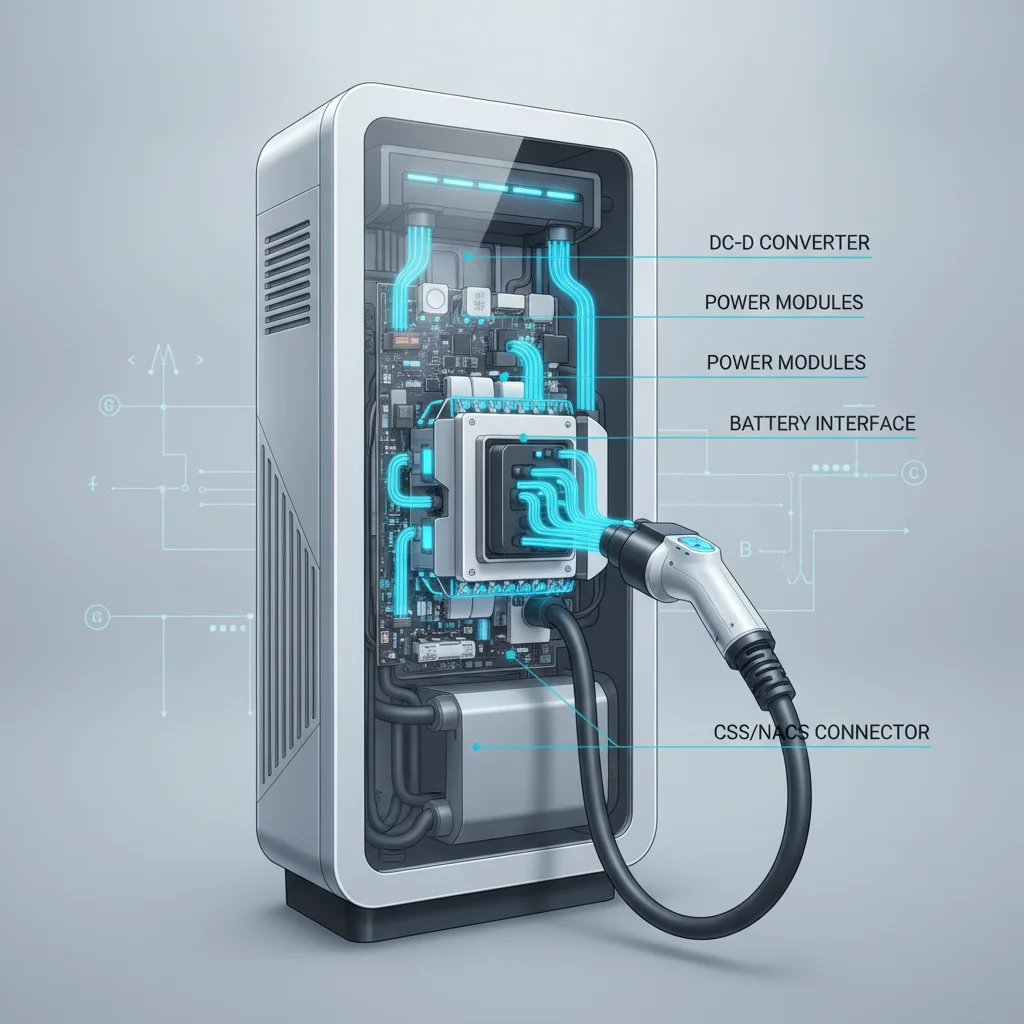
DC fast charging — sometimes called Level 3 charging, though that term isn't formally standardized — takes a fundamentally different approach. Instead of sending AC power to your car and letting the onboard charger handle the conversion, the charging station itself contains a massive, industrial-grade AC-to-DC converter. It does the conversion before the power enters your car, then delivers DC electricity directly to the battery.
By bypassing the onboard charger entirely, DC fast chargers can push power at rates that would be physically impossible through the OBC bottleneck. Modern DC fast chargers range from 50 kW at the lower end to 350 kW at the high end (Electrify America's current top tier). A 150 kW session can add 100–150 miles of range in roughly 20–30 minutes on a compatible vehicle.
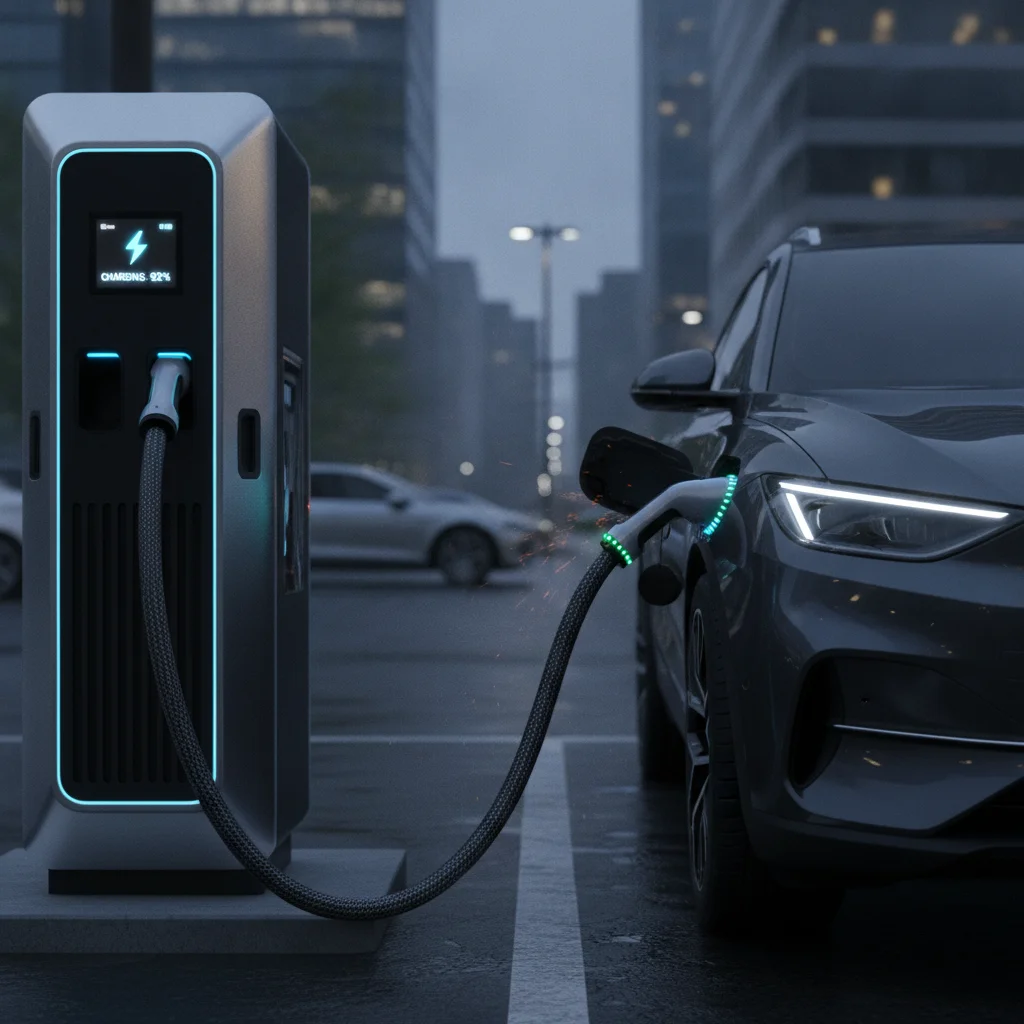
The catch: your car still has to be built to accept that power. Every EV has a maximum DC fast charge acceptance rate — a separate spec from the onboard charger rating. A car rated for 50 kW DC will charge no faster than 50 kW even at a 350 kW station. Vehicles like the Hyundai IONIQ 6 accept up to 350 kW; a first-generation Nissan Leaf accepts only 50 kW. The difference at a 150 kW charger? Potentially 30 minutes versus well over an hour for the same amount of range added.
350 kW
Peak DC fast charge rate available today
Electrify America operates 350 kW stations capable of serving vehicles like the Hyundai IONIQ 5 and Porsche Taycan at their maximum acceptance rates.
~20 min
Time to add 150 miles at 150 kW
On a vehicle accepting 150 kW DC, a 20-minute charging stop can deliver roughly 150 miles of EPA-rated range, comparable to a gas station fill-up in time.
7.2 kW
Most common onboard charger rating
Many mass-market EVs ship with a 7.2 kW onboard charger, which fully charges a 60 kWh battery in roughly 8–9 hours on a Level 2 station.
80%
DC fast charge taper threshold
DC fast chargers automatically reduce charge rate above 80% state of charge to protect battery cells — the last 20% can take as long as the first 80%.
For a deeper technical breakdown of what's actually happening inside the charger hardware, DC fast charging explained covers the full picture.
Battery Health: Does Charging Method Matter?
Yes, and it's a more nuanced conversation than most EV marketing materials acknowledge. Lithium-ion batteries — the chemistry in virtually every consumer EV — degrade over time, losing some capacity with every charge cycle. The rate of that degradation is influenced by heat, depth of discharge, and charging speed.
DC fast charging generates significantly more heat than AC charging, because pushing high current through the battery creates resistance heat. Most modern EVs have active liquid thermal management systems that work to keep battery temperature within an acceptable range during DC fast charging — but that system has limits, and repeated back-to-back DC fast charge sessions will stress the battery more than regular Level 2 charging at home.
This doesn't mean DC fast charging ruins batteries. Studies from institutions like Idaho National Laboratory and real-world data from fleet operators suggest that occasional DC fast charging has minimal measurable impact on long-term degradation for vehicles with robust thermal management. The problem is exclusive reliance on DC fast charging — particularly on older vehicles or those without active cooling.
Most automakers are transparent about this: Tesla, Hyundai, and others recommend using DC fast charging for road trips and relying on Level 2 home charging for daily replenishment. Follow that guidance and you're unlikely to see premature degradation.
Understanding how your charging setup relates to long-term ownership decisions starts at home. See the home charging setup hub for everything you need to plan your home installation.
Connectors, Networks, and the Practical Reality of DC Fast Charging
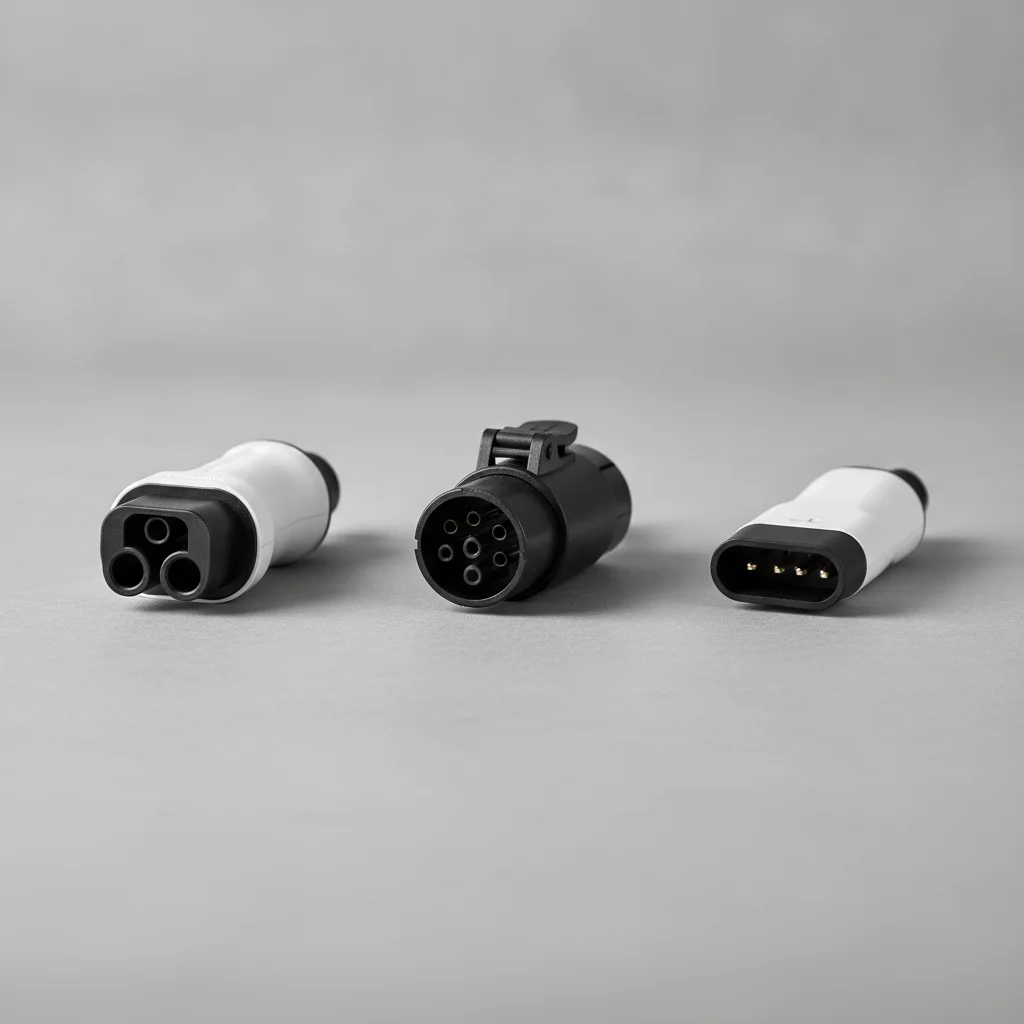
One complication specific to DC fast charging: connector standards. For AC Level 1 and Level 2 charging, the J1772 connector is effectively universal among non-Tesla EVs in the US — your car will work at virtually any AC station. But DC fast charging has historically been fragmented.
The three standards you'll encounter are CCS (Combined Charging System), used by most non-Tesla EVs; CHAdeMO, now largely legacy and used primarily by older Nissan Leafs; and NACS (North American Charging Standard), Tesla's connector that the rest of the industry is rapidly adopting. By 2025, most major automakers have committed to NACS, and adapters are widely available for the transition period.
For a complete breakdown of each connector type and what it means for your specific vehicle, see EV charging connector standards decoded.
The two largest non-Tesla DC fast charging networks in the US are EVgo and Electrify America. They differ in station count, geographic focus, and pricing structures. If road trips are part of your EV calculus, EVgo vs. Electrify America is worth reading before you commit to a vehicle that relies on public fast charging. You can also explore the broader public charging networks hub for a full comparison of the US DC charging landscape.
One more terminology clarification worth making: the equipment you plug into — at home or in public — is technically an EVSE (Electric Vehicle Supply Equipment), not a charger. The actual charger is the onboard converter inside your car. What is an EVSE and why does it matter explains why that distinction matters more than it seems.
What to Check Before You Buy an EV
Now that you understand the mechanics, here are the specific specs to look up for any EV you're considering — they won't always appear on the window sticker:
- Onboard charger rating (kW): This determines your maximum Level 2 charging speed. Higher is better; 11.5 kW is the current sweet spot for home charging efficiency.
- Maximum DC fast charge acceptance rate (kW): This is the number that determines road-trip usability. Anything under 100 kW will feel slow at modern fast chargers.
- Battery thermal management system: Active liquid cooling is the gold standard. Passive or air-cooled systems (like older Leafs) degrade faster under repeated DC fast charging.
- Connector type: CCS or NACS? NACS is becoming the default, but CCS vehicles with adapters still work fine at major networks.
These four data points will tell you more about real-world EV usability than the EPA range estimate alone. A 300-mile EV that accepts only 50 kW DC and has a 7.2 kW OBC is a fundamentally different ownership experience than a 250-mile EV that accepts 250 kW DC and has an 11 kW OBC.
The bottom line: AC charging is how you'll power your EV on most days, and it's well-suited to that role. DC fast charging is the solution to the one scenario where EVs still require more planning than a gas car — the road trip. Get both specs right for your lifestyle, and you won't have much to regret.

All claims are backed by peer-reviewed research. Sources on request.