Key Takeaways
Public-Only EV Charging
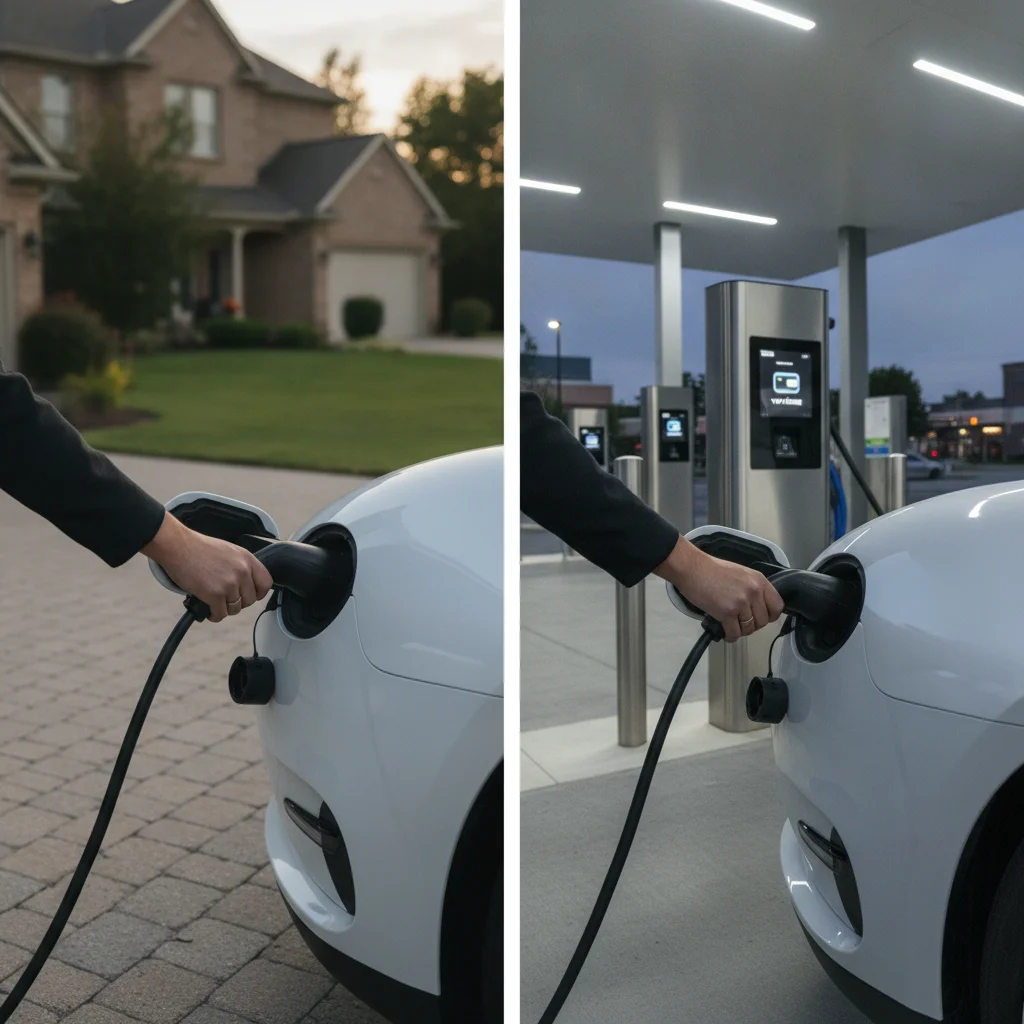
Public-only EV charging refers to a situation where an electric vehicle owner relies entirely on publicly accessible charging stations — Level 2 or DC fast chargers — rather than a dedicated home charger. This typically applies to apartment renters, condo residents, or anyone without a private parking space and electrical outlet. The cost structure, convenience, and planning required differ significantly from home charging.
Public charging is billed either per kilowatt-hour (kWh), per minute, or via a session fee depending on the network and local regulations. State laws in some jurisdictions restrict per-kWh billing at public stations, which can affect the true cost per mile.
The Home Charging Advantage You Don't Have
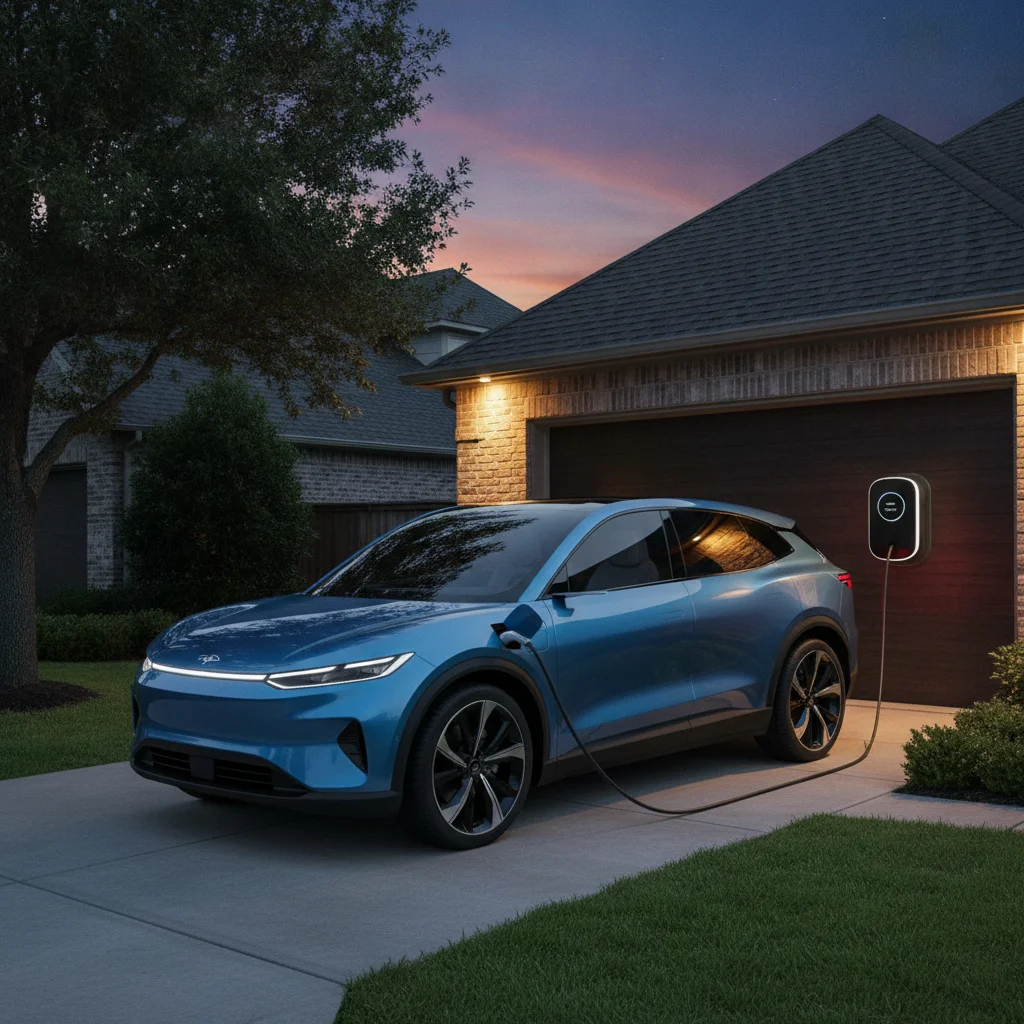
Ask most EV advocates about the cost of charging and they'll tell you it's the best part: plug in overnight, wake up to a full battery, and pay the equivalent of roughly $1.00–$1.50 per gallon of gasoline at average U.S. electricity rates. That math is accurate — but it assumes you have a garage, a driveway, or at minimum a dedicated outlet near your parking space.
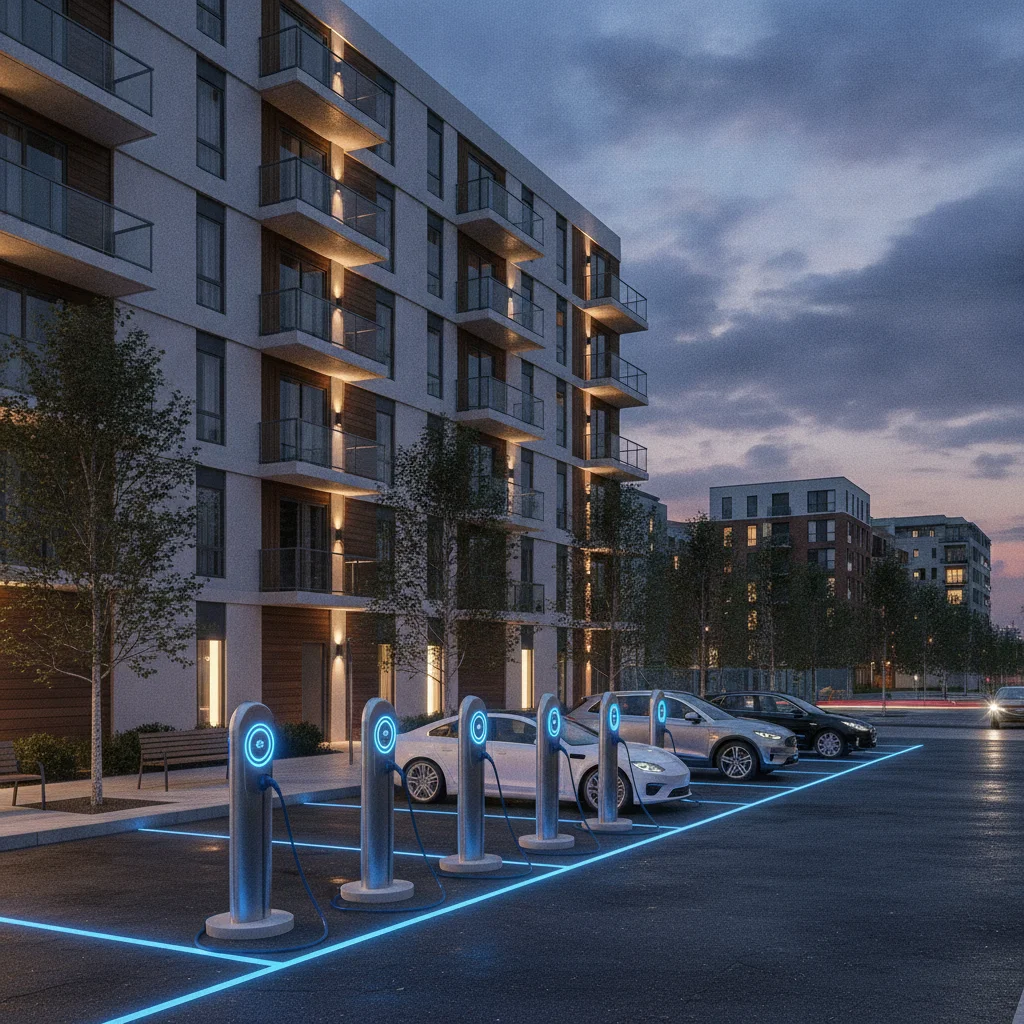
For the roughly 44 million Americans living in apartments, that assumption falls apart. If your building doesn't offer EV charging and your landlord isn't required to provide it, you're left navigating the public charging network as your primary energy source — not as a backup for long road trips. That changes the financial picture considerably.
This guide is written specifically for that situation: someone who owns or is considering an EV without reliable home charging access. The goal is an honest accounting of what public-only charging actually costs, how to minimize that cost, and how to decide whether the numbers still work for you. For a broader look at how all these factors interact, our end-to-end charging cost guide covers the full landscape.
What Public Charging Actually Costs: The Numbers
Public EV charging costs money in three different structures depending on the network and your state's utility regulations:
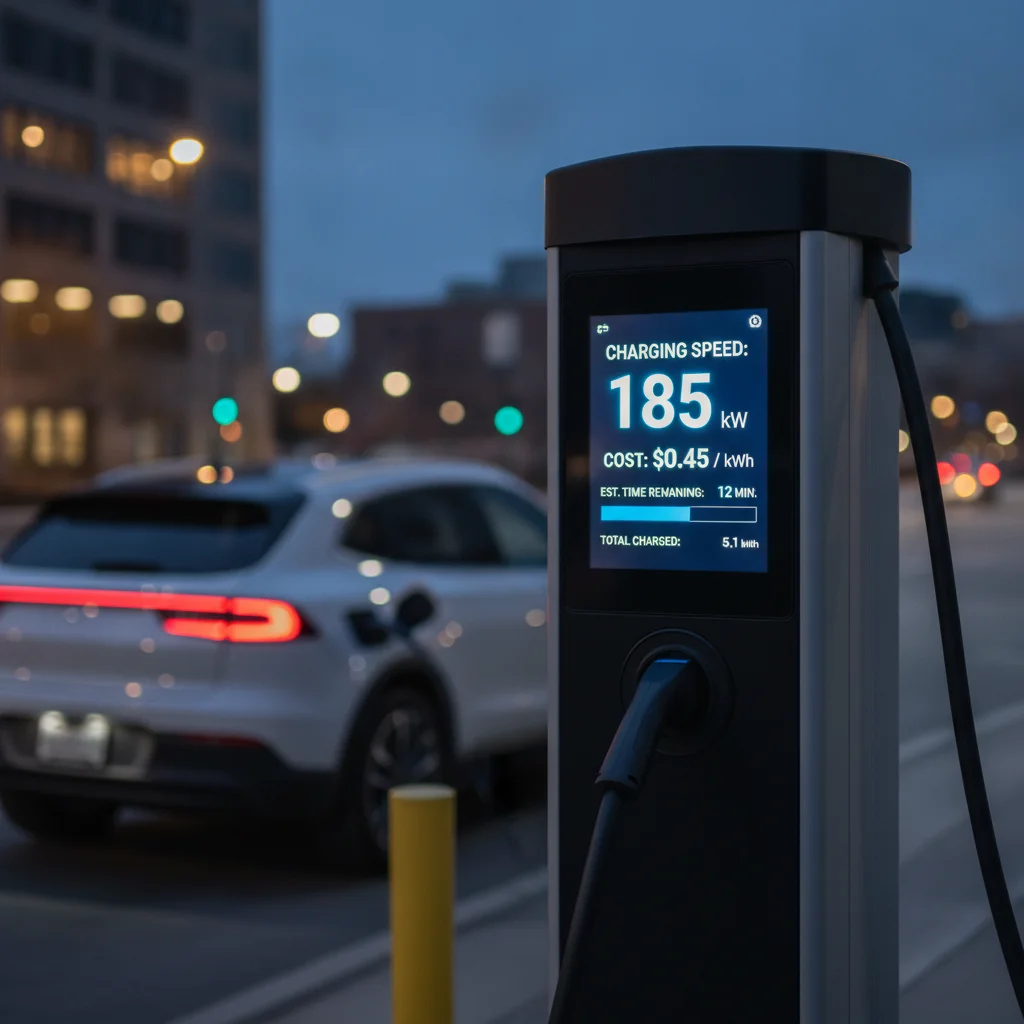
- Per kWh: The most transparent model, equivalent to how you'd pay at home. National averages at public Level 2 stations run roughly $0.20–$0.35/kWh; DC fast chargers range from $0.28 to $0.60/kWh depending on the network and location.
- Per minute: Common at some DC fast charge sites, billed regardless of how fast your car actually charges. This can dramatically inflate costs for older EVs with slower onboard charge acceptance rates.
- Session or flat fee: A flat charge per session, sometimes combined with a per-minute or per-kWh component. Often seen at destination chargers in hotels or retail locations.
To put those numbers in real-world terms: a 2024 Chevrolet Equinox EV with a 73 kWh battery costs approximately $20–$44 to charge from near-empty to full at a public DC fast charger, depending on the network's rate. At home on a Level 2 charger, the same charge would cost roughly $10–$14 at median U.S. residential electricity prices.
2–4x
Cost premium of public vs. home EV charging
Based on median U.S. residential electricity rates ($0.12–$0.16/kWh) compared to typical public Level 2 and DC fast charging network pricing in 2024.
44M+
Americans living in apartments
U.S. Census Bureau data; a significant share of the U.S. population lacks direct access to private parking with home charging capability.
$0.48/kWh
Average Electrify America non-member DC fast charge rate
Electrify America published pricing as of early 2024; rates vary by state and station due to local utility tariff structures.
18+
States with right-to-charge laws for renters
According to the National Conference of State Legislatures, as of 2024, at least 18 states have enacted legislation protecting tenants' right to install EV charging equipment.
37 miles
Average American daily driving distance
Federal Highway Administration data; this figure is relevant because a single 6-hour Level 2 workplace charging session can often cover this distance at no cost.
Per-mile costs tell an even starker story. Home Level 2 charging typically works out to $0.03–$0.05 per mile. Public Level 2 sits at roughly $0.06–$0.10 per mile. DC fast charging can push $0.12–$0.25 per mile — overlapping with or exceeding the per-mile fuel cost of an efficient gasoline vehicle in some markets.
For a detailed state-level breakdown of how electricity prices shift these numbers depending on where you live, our state-by-state EV charging cost analysis is a useful companion.
Per-Minute Billing Can Be a Hidden Trap
Some DC fast charging networks — particularly older Blink stations — bill by the minute rather than by kWh consumed. If your EV's onboard charger accepts power at a slower rate than the station's maximum output, you'll pay for time rather than energy delivered, making your effective per-kWh cost significantly higher. Always check whether a station bills by time or energy before plugging in.
Free Charging Has a Tax Implication
Employer-provided EV charging is generally treated as a tax-free fringe benefit under current IRS guidelines, similar to other workplace transportation benefits. However, if your employer provides a cash stipend for charging rather than direct charger access, that amount may be taxable income. It's a distinction worth clarifying with your HR department if the benefit is meaningful in size.
Level 2 vs. DC Fast Charging: Choosing Your Primary Network
Apartment dwellers without home charging face a fundamental choice that homeowners rarely think about: which type of public charger becomes your default?
Level 2 Public Charging
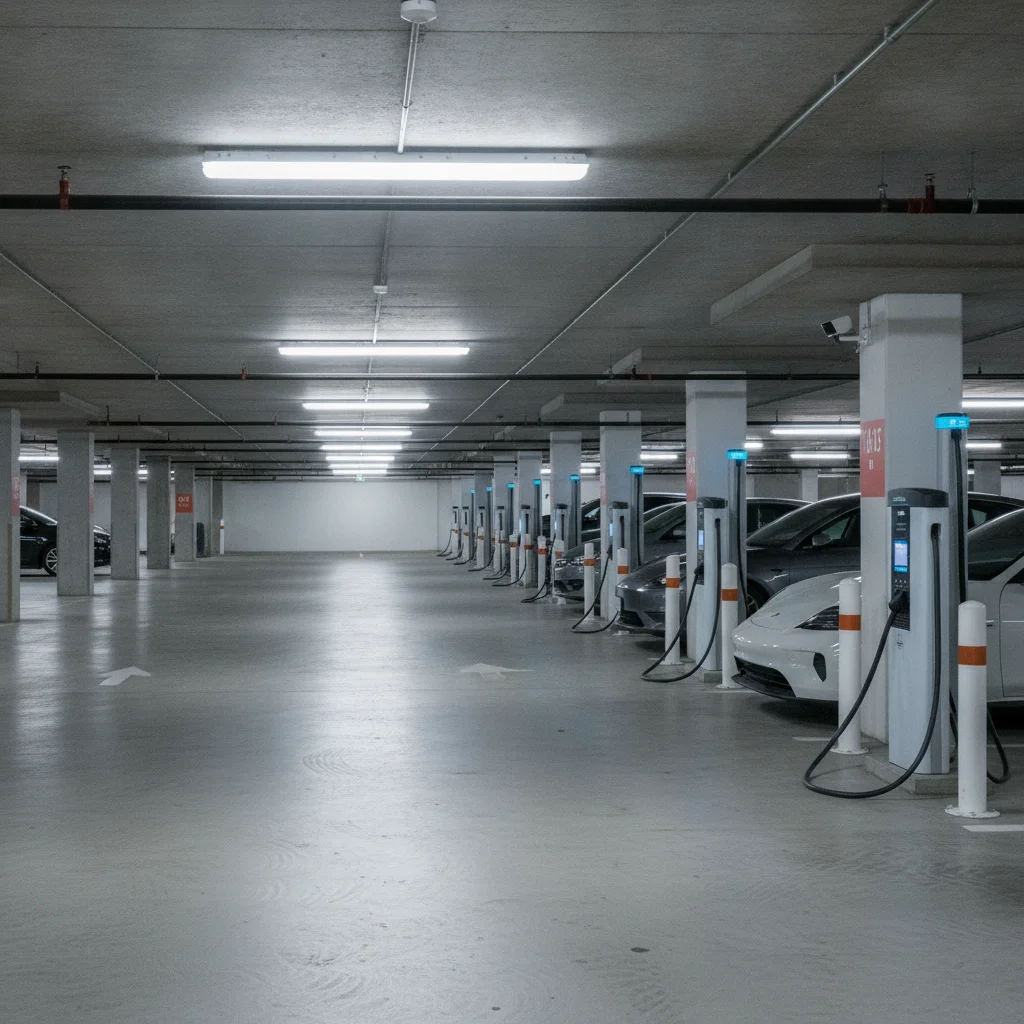
Level 2 stations (typically 7–19 kW) are slower — adding roughly 15–30 miles of range per hour — but significantly cheaper. They're the workhorses of destination charging: found in parking garages, shopping centers, libraries, gyms, and workplaces. Many are free or low-cost because they're operated by municipalities or businesses as an amenity rather than a revenue source.
If your lifestyle allows you to park for 3–6 hours at locations that offer Level 2 charging — a workday commute, a weekend shopping trip, a gym session — you can cover meaningful daily mileage at near-home charging costs. The limitation is that you need to plan around where you'll be parked, not just when you need charge.
DC Fast Charging
DC fast chargers (50–350 kW) can recover 100–200+ miles of range in 20–40 minutes, making them operationally similar to filling a gas tank. For apartment dwellers, this convenience is tempting — but the cost premium is substantial. Our analysis comparing public DC fast charging to home charging costs shows the per-mile gap widening significantly at fast-charge rates.
Relying on DC fast charging as a primary energy source is feasible but expensive. It's best reserved for longer trips or genuine time constraints rather than routine daily charging.
Map Your Charging Stops Before Buying
Before purchasing an EV without home charging access, spend a week mapping every Level 2 charging station within a half-mile of your regular destinations — work, grocery stores, gym, family visits. Use PlugShare's free map and filter for stations rated 4 stars or higher. If you can identify at least 8–10 reliable, low-cost charging locations, the public-only EV lifestyle becomes significantly more manageable.
Stack Memberships Strategically
You don't have to commit to a single network. Paying for one membership (e.g., EVgo or Electrify America) while using free ChargePoint or municipal stations as your Level 2 default is a legitimate cost-reduction strategy. Review your charging history after two months and cancel any membership that isn't saving you more than its monthly fee.
Network Memberships and How to Reduce Your Monthly Bill
Every major public charging network — ChargePoint, EVgo, Blink, Electrify America — offers a membership or subscription tier that reduces per-session costs. The savings are real: EVgo's Plus plan, for example, reduces DC fast charging rates by roughly $0.05–$0.10/kWh compared to the pay-as-you-go price. At typical apartment-dweller usage levels, a $6.99–$9.99/month membership can pay for itself after just two or three charging sessions.
Tesla's Supercharger network, now open to non-Tesla vehicles at many locations, prices non-Tesla sessions slightly higher than Tesla owner rates but remains competitive in markets where other networks are sparse.
“The drivers who thrive without home charging aren't the ones who found a magic cheap network — they're the ones who engineered charging into their weekly routine so systematically that they rarely need to pay fast-charge rates.”
— Loren McDonald, EV analyst and founder of EVAdoption research platform
The practical approach for apartment dwellers is to identify the two or three networks with the densest station coverage along your regular routes, then evaluate whether a monthly plan makes financial sense based on your projected session frequency. Most network apps provide a break-even calculator or allow side-by-side rate comparisons.
Free and Subsidized Charging You Shouldn't Overlook
A significant wild card in apartment EV budgets is free or employer-subsidized charging. According to the U.S. Department of Energy, workplace charging is one of the fastest-growing categories of EV infrastructure. If your employer offers free Level 2 charging — even just during a standard 8-hour workday — that alone can cover 40–60 miles of daily range at zero cost, which is sufficient for the average American's 37-mile daily commute.
- Workplace charging: Often free; worth explicitly asking HR or facilities management about.
- Retail destination charging: Target, Whole Foods, IKEA, and many hotels offer free Level 2 as a customer amenity.
- Municipal chargers: City-operated stations, particularly in urban cores, frequently charge below-market rates.
- New vehicle incentives: Many automakers include complimentary fast-charging credits with new EV purchases (e.g., Hyundai, Kia, and Ford have offered 2–3 years of free Electrify America sessions).
The Landlord Question: Pushing for On-Site Access
The most durable solution to public charging costs isn't a better network membership — it's getting a charger installed at your building. This is increasingly achievable, not aspirational.
As of 2024, at least 18 states have enacted some form of 'right to charge' legislation that limits a landlord's ability to deny reasonable requests for EV charger installation. California, Colorado, Florida, and New York are among them. Even in states without explicit right-to-charge laws, many landlords are receptive to proposals where the tenant bears the installation cost or a utility handles the billing directly.
Our guide to renting and EV charging covers how to structure that conversation, what documentation landlords typically need, and how to approach shared-cost arrangements in multi-unit buildings. It's worth reading before writing off on-site charging as impossible.
For buildings where on-site installation genuinely isn't feasible — older structures with limited electrical capacity, historic buildings with permitting restrictions — the public network remains the only path. But it's worth attempting the landlord conversation first.

Building a Realistic Monthly Charging Budget
With all the variables in play, what does a realistic monthly charging budget look like for a public-only EV driver? The answer depends heavily on three inputs: how many miles you drive monthly, which charger types you primarily use, and how much free or subsidized charging you can access.
Here's a scenario-based breakdown for a driver covering 1,000 miles per month in a vehicle with an efficiency of roughly 3.5 miles/kWh (consuming about 286 kWh per month):
| Charging Mix | Estimated Monthly Cost | Notes |
|---|---|---|
| 100% DC fast charging, no membership | $115–$172 | Worst-case scenario; assumes $0.40–$0.60/kWh average |
| 100% DC fast charging, with membership | $86–$129 | Membership discount of ~$0.10/kWh applied |
| 60% Level 2 public, 40% DC fast | $60–$95 | Realistic mixed-use scenario |
| 50% free (workplace/destination), 50% DC fast | $40–$72 | Achievable with consistent workplace charging |
| Home Level 2 charging (benchmark) | $25–$45 | Residential rate of $0.09–$0.16/kWh |
These figures reinforce that public-only charging is more expensive than home charging in every scenario — but the gap narrows considerably when free Level 2 access is factored in. For context on the full math behind these numbers, see what EV charging really costs when you factor in all variables.
Per-Minute Billing Can Be a Hidden Trap
Some DC fast charging networks — particularly older Blink stations — bill by the minute rather than by kWh consumed. If your EV's onboard charger accepts power at a slower rate than the station's maximum output, you'll pay for time rather than energy delivered, making your effective per-kWh cost significantly higher. Always check whether a station bills by time or energy before plugging in.
Free Charging Has a Tax Implication
Employer-provided EV charging is generally treated as a tax-free fringe benefit under current IRS guidelines, similar to other workplace transportation benefits. However, if your employer provides a cash stipend for charging rather than direct charger access, that amount may be taxable income. It's a distinction worth clarifying with your HR department if the benefit is meaningful in size.
Is an EV Still Worth It Without Home Charging?
The honest answer is: it depends on your specific situation, and the math is more marginal than EV advocates often acknowledge.
The case for an EV without home charging is strongest when you have access to regular free workplace or destination Level 2 charging, when gasoline prices in your area are high, when your annual mileage is moderate (under 12,000 miles), and when you're choosing an EV with a strong efficiency rating and low maintenance costs. Lower brake wear due to regenerative braking, no oil changes, and simpler drivetrain servicing still represent real savings regardless of how you charge.
The case against sharpens when your only realistic option is frequent DC fast charging at full pay-as-you-go rates, when your commute is long and daily mileage is high, or when you're comparing the EV against a hybrid rather than a conventional gasoline vehicle. A plug-in hybrid — which can be charged at slower speeds with a standard outlet — may actually offer better economics for an apartment dweller in a market with high public fast-charge rates.
Understanding home charging setup options is still worth reading even for apartment dwellers, because it clarifies exactly what infrastructure you'd need if your situation changes — a building upgrade, a move, or a parking situation that allows a Level 1 or Level 2 outlet.
Map Your Charging Stops Before Buying
Before purchasing an EV without home charging access, spend a week mapping every Level 2 charging station within a half-mile of your regular destinations — work, grocery stores, gym, family visits. Use PlugShare's free map and filter for stations rated 4 stars or higher. If you can identify at least 8–10 reliable, low-cost charging locations, the public-only EV lifestyle becomes significantly more manageable.
Stack Memberships Strategically
You don't have to commit to a single network. Paying for one membership (e.g., EVgo or Electrify America) while using free ChargePoint or municipal stations as your Level 2 default is a legitimate cost-reduction strategy. Review your charging history after two months and cancel any membership that isn't saving you more than its monthly fee.
All claims are backed by peer-reviewed research. Sources on request.