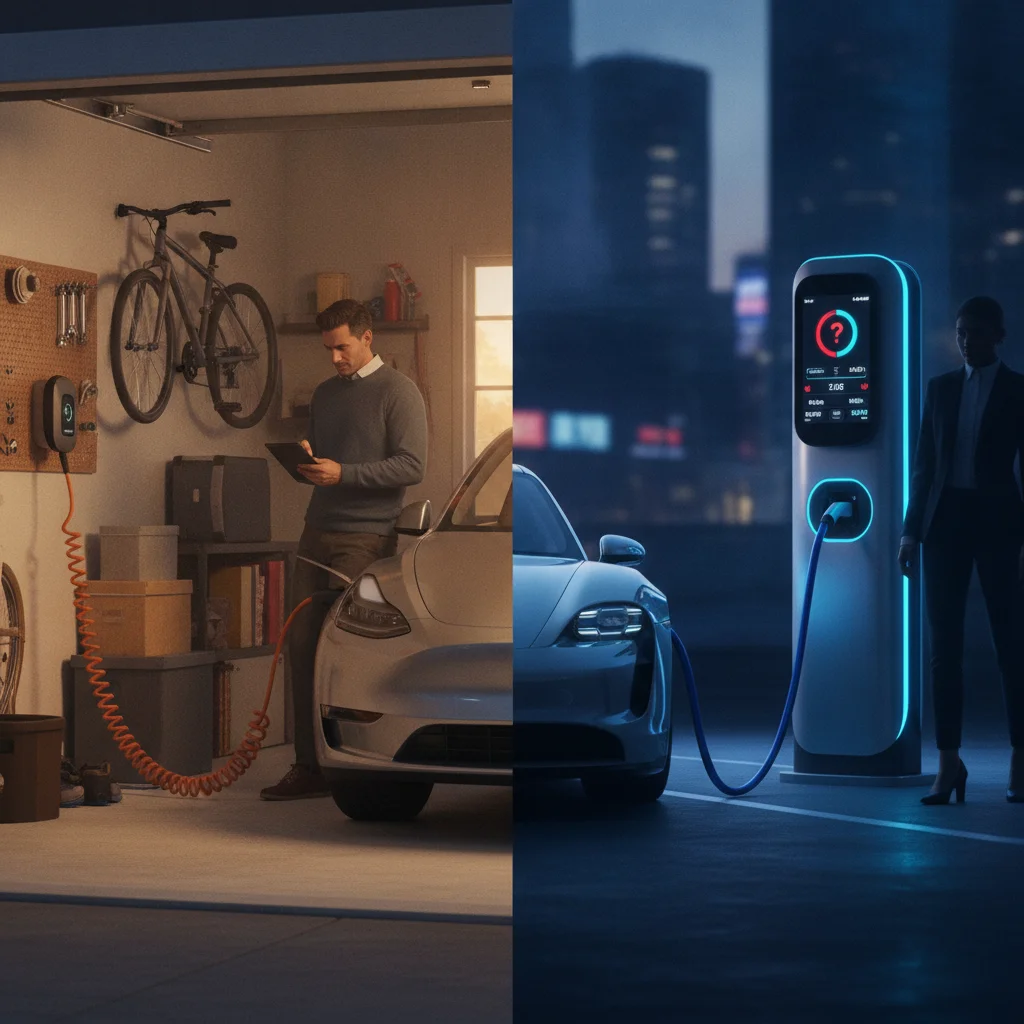


Key Takeaways
Workplace Charging as a Commuter Benefit
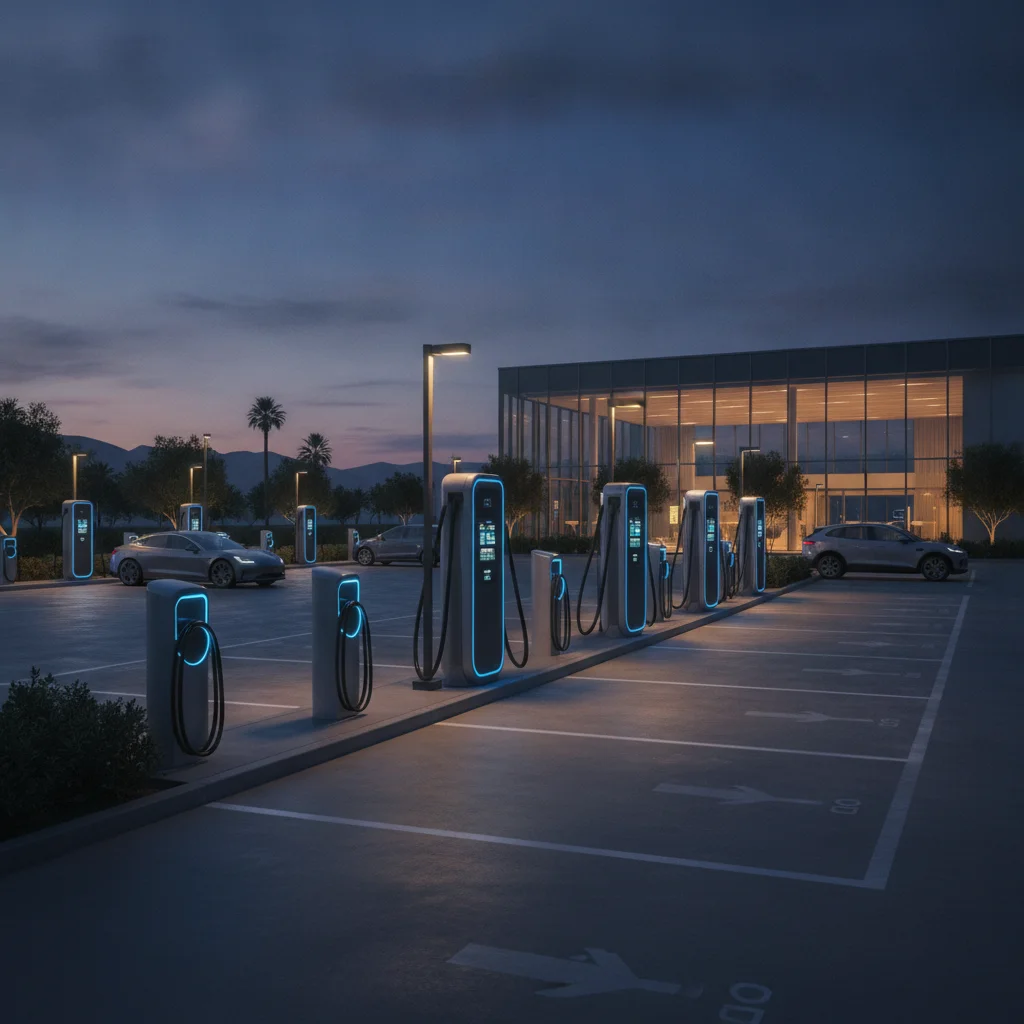
Workplace EV charging is when an employer provides on-site electric vehicle charging equipment — typically Level 2 AC chargers — that employees can use free or at a subsidized rate during work hours. Like a 401(k) match or free parking, it's a tangible financial perk that directly reduces the cost of owning and operating an EV. The real dollar value depends on how far you commute, your local electricity rates, and how often you plug in at work.
Employer-provided EV charging may qualify for tax-advantaged treatment under IRS qualified transportation fringe benefit rules (IRC §132(f)), allowing up to $315/month in 2024 to be excluded from employee gross income for qualified parking and transit — though the IRS's specific treatment of charging electricity as a benefit continues to evolve.
Why Workplace Charging Is More Valuable Than It Looks
When companies list employee perks, workplace EV charging rarely gets the same headline treatment as health insurance or remote work flexibility. That's a mistake — at least from a financial perspective. For a commuter driving an average 30 miles round-trip in an electric vehicle, free workplace charging can effectively eliminate the daily fuel cost entirely, shifting that expense from the employee's pocket to the employer's utility bill.
The key is understanding that the value isn't abstract. It can be calculated precisely, just like a gas allowance or a transit subsidy. And once you run the numbers, it often rivals or exceeds other common commuter benefits in total annual dollar value.
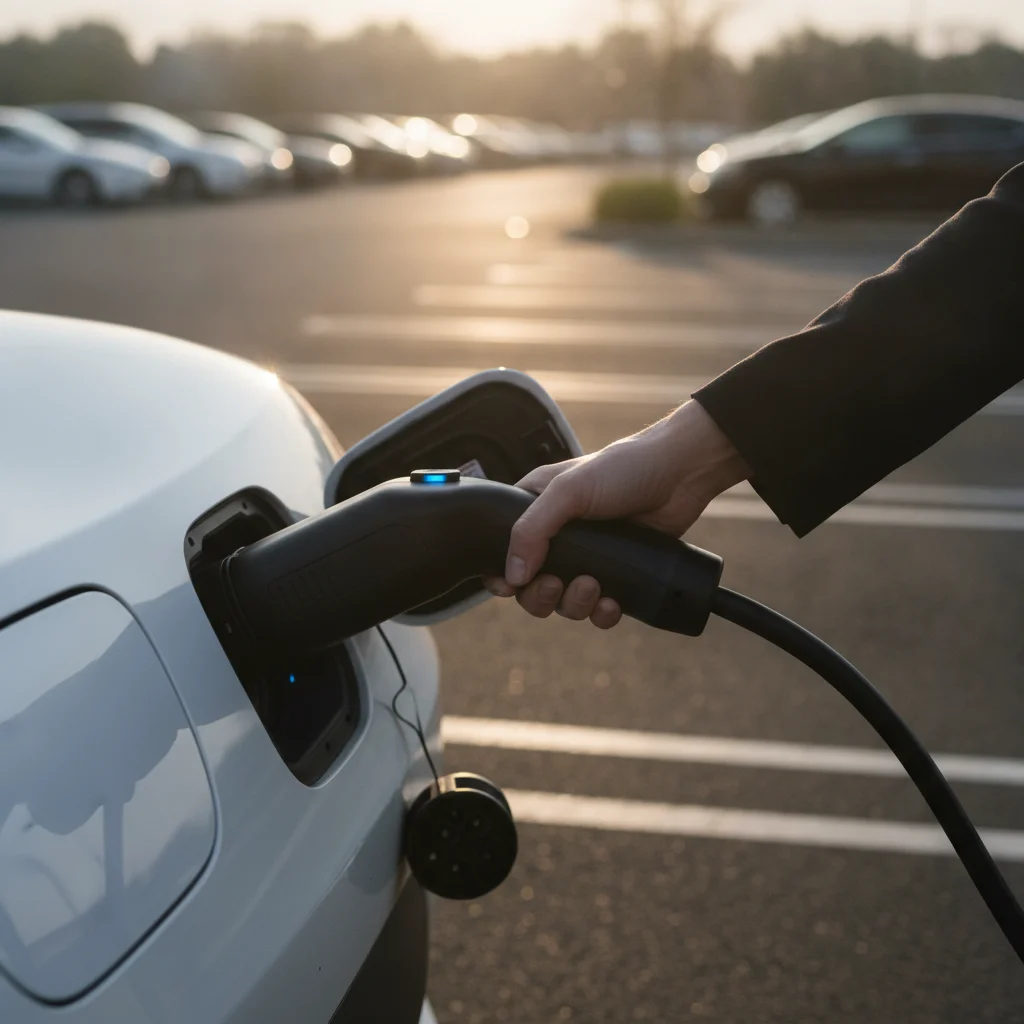
Consider the baseline: the average U.S. residential electricity rate sits around 16 cents per kilowatt-hour (kWh) as of 2024, according to the U.S. Energy Information Administration. A typical modern EV consumes about 3 to 4 miles per kWh. For a 30-mile round-trip commute, that's roughly 7.5 to 10 kWh of electricity — or about $1.20 to $1.60 worth of power per workday. Over 250 working days, that adds up to $300 to $400 annually.
But that's the cost if you're charging at home. If your employer covers that same electricity at work, the savings come straight back to you. And in states where residential electricity rates run higher — California, New York, Hawaii — the benefit scales up proportionally. See how home versus public charging costs compare for a broader view of where your charging dollars go.
$0.16/kWh
Average U.S. residential electricity rate (2024)
According to the U.S. Energy Information Administration's 2024 residential electricity price data.
$300–$1,200+
Estimated annual savings from free workplace charging
Range reflects varying commute distances (20–60 miles round-trip) and electricity rates across U.S. states.
30%
Federal tax credit for employer EV charging installation
Available under the Alternative Fuel Vehicle Refueling Property Credit (IRS Form 8911), per the Inflation Reduction Act.
3–4 miles/kWh
Typical EV energy efficiency
Based on EPA ratings for popular mid-range EVs including the Tesla Model 3, Chevrolet Equinox EV, and Hyundai Ioniq 6.
250 days
Average U.S. annual working days
Standard baseline used in commuter benefit calculations, accounting for holidays, PTO, and remote work days.
How to Calculate Your Exact Annual Savings
The math behind workplace charging savings is straightforward, and running it yourself takes about five minutes. Here's the formula broken into steps:
- Find your vehicle's efficiency rating. Check the EPA's fueleconomy.gov listing for your specific model and trim. This number is expressed in kWh per 100 miles (e.g., 27 kWh/100 miles for a Tesla Model 3 Long Range, 34 kWh/100 miles for a Hyundai Ioniq 5).
- Calculate your daily kWh consumption. Divide your round-trip commute miles by 100, then multiply by your vehicle's kWh/100 miles rating. Example: 30 miles ÷ 100 × 27 kWh = 8.1 kWh per day.
- Apply your local electricity rate. Multiply daily kWh by your home electricity rate. At $0.16/kWh: 8.1 × $0.16 = $1.30 per day. In California at $0.28/kWh: 8.1 × $0.28 = $2.27 per day.
- Multiply by annual workdays. Using 250 workdays: $1.30 × 250 = $325/year at the U.S. average rate; $2.27 × 250 = $567/year in California.
- Adjust for partial charging. If you only need to top off half your range at work, halve the result accordingly.
Use Your Vehicle's EPA Rating, Not the Advertised Range
Manufacturers advertise maximum range under ideal conditions, but the EPA's combined efficiency rating (in kWh/100 miles) gives you a more realistic baseline for cost calculations. You can find it for any EV on fueleconomy.gov. Using the advertised range figure will underestimate your actual energy consumption and overestimate your savings.
Frame the Ask Around Cost Per Employee, Not Total Installation Cost
When presenting a workplace charging proposal to management, the total installation price can feel like a large number in isolation. Instead, calculate the annual electricity cost per employee — often $200–$400 at commercial rates — and present it alongside existing per-employee benefit costs. This reframes the conversation from capital expense to ongoing benefit investment.
For commuters with longer drives — say, 50 or 60 miles round-trip — the savings scale significantly. At 50 miles and California rates, the same Model 3 would save approximately $945 per year in charging costs alone. At that level, workplace charging becomes a benefit worth more than many gym membership subsidies or even monthly transit passes.
It's also worth noting what you're not paying when you charge at work: time-of-use peak rates. Many utilities charge more for electricity used during evening hours (typically 4–9 p.m.), which is exactly when you'd plug in after a commute if relying solely on home charging. By loading up at the office during off-peak or mid-peak hours, you naturally sidestep those premium rates — an indirect savings that doesn't always get counted.
For a direct comparison of what you'd spend using public charging networks instead, see our analysis of the real cost of charging at a public station vs. at home.
The Technical Side: What Level 2 Charging Means for a Workday
Most workplace charging stations operate at Level 2, which uses a 240-volt AC supply — the same voltage as a clothes dryer — typically delivering between 6 and 25 miles of range per hour depending on the charger's amperage and the vehicle's onboard charger capacity. A standard 7.2 kW station adds roughly 20–25 miles of range per hour.
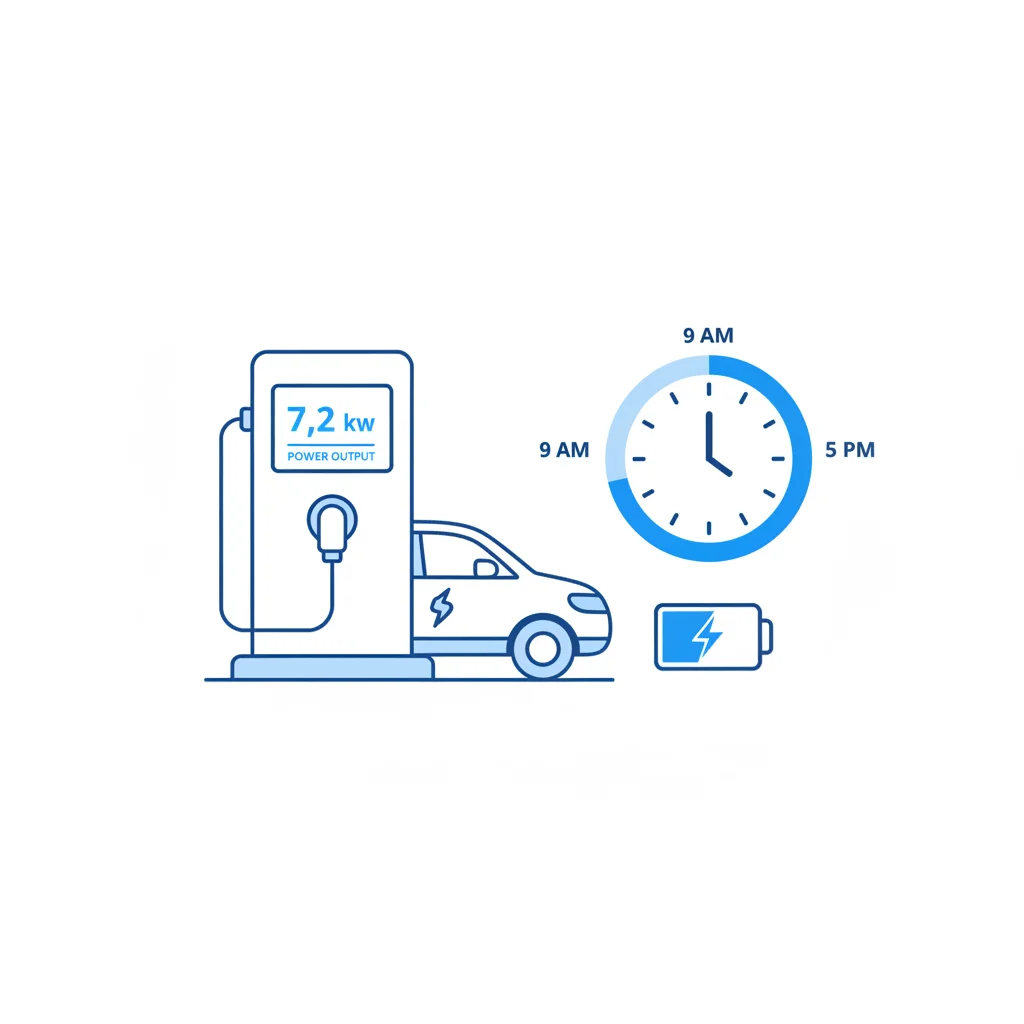
For the average 8-hour workday, that translates to 160–200 miles of range restored — far more than most commuters need. In practice, most employees only need 1 to 3 hours of charging to fully replace the energy used in their commute, which means the charger is available for other employees the rest of the day. This is a selling point worth raising when advocating for workplace charging: the equipment doesn't need to be dedicated to a single vehicle.
Charger Sharing Makes Capacity Go Further
Most EV commuters only need 1–3 hours of Level 2 charging to replenish a typical daily commute. A single charging station can realistically serve 2–3 employees per day using a first-come, first-served or scheduling system. Employers should model charger utilization before assuming a 1:1 charger-to-employee ratio is required.
IRS Guidance on Charging as a Fringe Benefit Is Still Evolving
The IRS has not issued a comprehensive ruling specifically categorizing employer-provided EV charging electricity as a qualified transportation fringe benefit separate from parking. Employees and employers should consult a tax professional familiar with IRC §132(f) for current guidance, especially as the EV market grows and regulatory clarity increases.
DC fast charging, which can add 100–200 miles in 20–30 minutes, is rarely the right tool for workplace charging. The hardware costs are significantly higher, the power draw is substantial, and the speed is simply unnecessary when a car sits parked for eight hours. Workplace charging versus DC fast charging covers when each speed tier actually makes sense.
Tax Treatment: What Employers and Employees Should Know
Workplace charging occupies an interesting position in the U.S. tax code. Under IRC §132(f), qualified transportation fringe benefits — including transit passes, vanpool costs, and qualified parking — can be excluded from an employee's gross income up to a statutory monthly limit ($315 in 2024). The IRS has not definitively classified employer-provided EV charging electricity as a separately excludable qualified transportation fringe benefit, but the parking exclusion can apply when charging is bundled with a qualified parking space.
“Workplace charging is really a fuel subsidy by another name. When you look at the per-employee cost to an employer versus the retention and recruitment value, it's one of the most cost-efficient benefits a company can offer for its EV-driving workforce.”
— Genevieve Cullen, President, Electric Drive Transportation Association
On the employer side, the picture is clearer. The Alternative Fuel Vehicle Refueling Property Credit (IRS Form 8911) allows businesses to claim a credit of 30% of the cost of installing EV charging equipment, up to $100,000 per location for property placed in service after December 31, 2022, under the Inflation Reduction Act. This substantially lowers the capital cost of deploying workplace chargers, which is a critical point when making the financial case to a CFO or facilities manager.
Employees who receive free charging should be aware that the IRS's position on whether the electricity itself constitutes taxable income is not fully resolved. In practice, most employers and tax professionals treat it similarly to free parking or a de minimis fringe benefit. For additional context on government programs that affect charging costs, see federal and state incentives that reduce EV charging costs.
Charger Sharing Makes Capacity Go Further
Most EV commuters only need 1–3 hours of Level 2 charging to replenish a typical daily commute. A single charging station can realistically serve 2–3 employees per day using a first-come, first-served or scheduling system. Employers should model charger utilization before assuming a 1:1 charger-to-employee ratio is required.
IRS Guidance on Charging as a Fringe Benefit Is Still Evolving
The IRS has not issued a comprehensive ruling specifically categorizing employer-provided EV charging electricity as a qualified transportation fringe benefit separate from parking. Employees and employers should consult a tax professional familiar with IRC §132(f) for current guidance, especially as the EV market grows and regulatory clarity increases.
How Workplace Charging Compares to Other Commuter Benefits
To understand the real value of workplace charging, it helps to stack it against other commuter benefits that employees already treat as meaningful compensation. Here's a straightforward comparison:
| Benefit | Typical Annual Value | Notes |
|---|---|---|
| Free workplace EV charging | $300–$1,200+ | Scales with commute distance and local electricity rates |
| Employer transit subsidy (max IRS exclusion) | Up to $3,780 | $315/month cap; only relevant in transit-served areas |
| Free or subsidized parking | $1,200–$5,000+ | Value varies enormously by city |
| Gym membership subsidy | $300–$600 | Typical employer contribution |
| Cell phone stipend | $300–$600 | Common in tech and professional services |
Workplace charging lands squarely in the range of gym subsidies and phone stipends on the low end, but can significantly exceed them in high-rate electricity states or for longer commuters. Unlike a gym membership, the savings are unavoidable: every mile you drive still costs energy. Eliminating that cost at work has the same effect as a pay increase of equivalent size.
It's also worth noting what workplace charging is not: it's not the same as free public charging, which often comes with contractual strings or is limited by time, speed tier, or network membership. Free EV charging perks often come with conditions that workplace charging typically avoids.
Making the Case to Your Employer
If your company doesn't yet offer workplace charging, the financial argument is your strongest lever — and it works in both directions. For the employer, installing charging equipment is a one-time capital expense offset by the federal tax credit, followed by modest ongoing electricity costs that are typically far smaller than the recruitment and retention value of the perk.
Here's a concise framework for building your case:
- Quantify demand. Survey coworkers who own or are considering EVs. Even 5–10 interested employees shifts the cost-per-user equation significantly.
- Model the employer cost. A commercial Level 2 charging station runs $500–$2,500 per unit in hardware; installation adds $1,000–$5,000 depending on electrical panel proximity. After the 30% federal tax credit, a two-unit installation might net to $2,100–$10,500 — spread across several years of use and multiple employees.
- Present the per-employee electricity cost. At commercial electricity rates (often 10–12 cents/kWh), powering one employee's commute costs the employer roughly $200–$400 annually — less than many other benefits.
- Connect it to ESG goals. Many companies have sustainability commitments. On-site EV charging directly supports reduced employee emissions and can count toward Scope 3 emission reduction targets.
- Reference peer employers. Large employers including Google, Apple, and many Fortune 500 companies have offered workplace charging for years. The infrastructure is proven and the vendor ecosystem is mature.
Use Your Vehicle's EPA Rating, Not the Advertised Range
Manufacturers advertise maximum range under ideal conditions, but the EPA's combined efficiency rating (in kWh/100 miles) gives you a more realistic baseline for cost calculations. You can find it for any EV on fueleconomy.gov. Using the advertised range figure will underestimate your actual energy consumption and overestimate your savings.
Frame the Ask Around Cost Per Employee, Not Total Installation Cost
When presenting a workplace charging proposal to management, the total installation price can feel like a large number in isolation. Instead, calculate the annual electricity cost per employee — often $200–$400 at commercial rates — and present it alongside existing per-employee benefit costs. This reframes the conversation from capital expense to ongoing benefit investment.
When framing the request, treat workplace charging the way HR teams treat any other benefit: as a retention tool with a calculable cost-per-employee. The annual cost to an employer of providing charging to one employee is often less than the cost of a single day of that employee's lost productivity. That context tends to resonate with finance-minded decision-makers.
For a broader view of how public charging networks compare as an alternative when workplace charging isn't available, or guidance on setting up home charging as your primary solution, both options are worth understanding before you advocate internally.
The Bottom Line: What Workplace Charging Is Actually Worth
Workplace EV charging is not a novelty perk — it's a quantifiable financial benefit that directly offsets one of the primary recurring costs of EV ownership. For the average commuter, it's worth several hundred dollars a year. For drivers in high-rate electricity states with longer commutes, it can exceed $1,000 annually with no additional effort beyond plugging in when you arrive at the office.
The math is accessible to anyone willing to spend five minutes with their EPA efficiency rating and a local utility rate. Run it for your own situation, and you'll have a concrete number to put in front of your HR department, your facilities manager, or your own personal finance spreadsheet.
Free charging sounds simple. But when you calculate its actual dollar value — and stack it against what you'd otherwise spend at home or at a public station — it turns out to be one of the most underappreciated financial wins available to EV commuters today.
All claims are backed by peer-reviewed research. Sources on request.