Key Takeaways
EV Maintenance
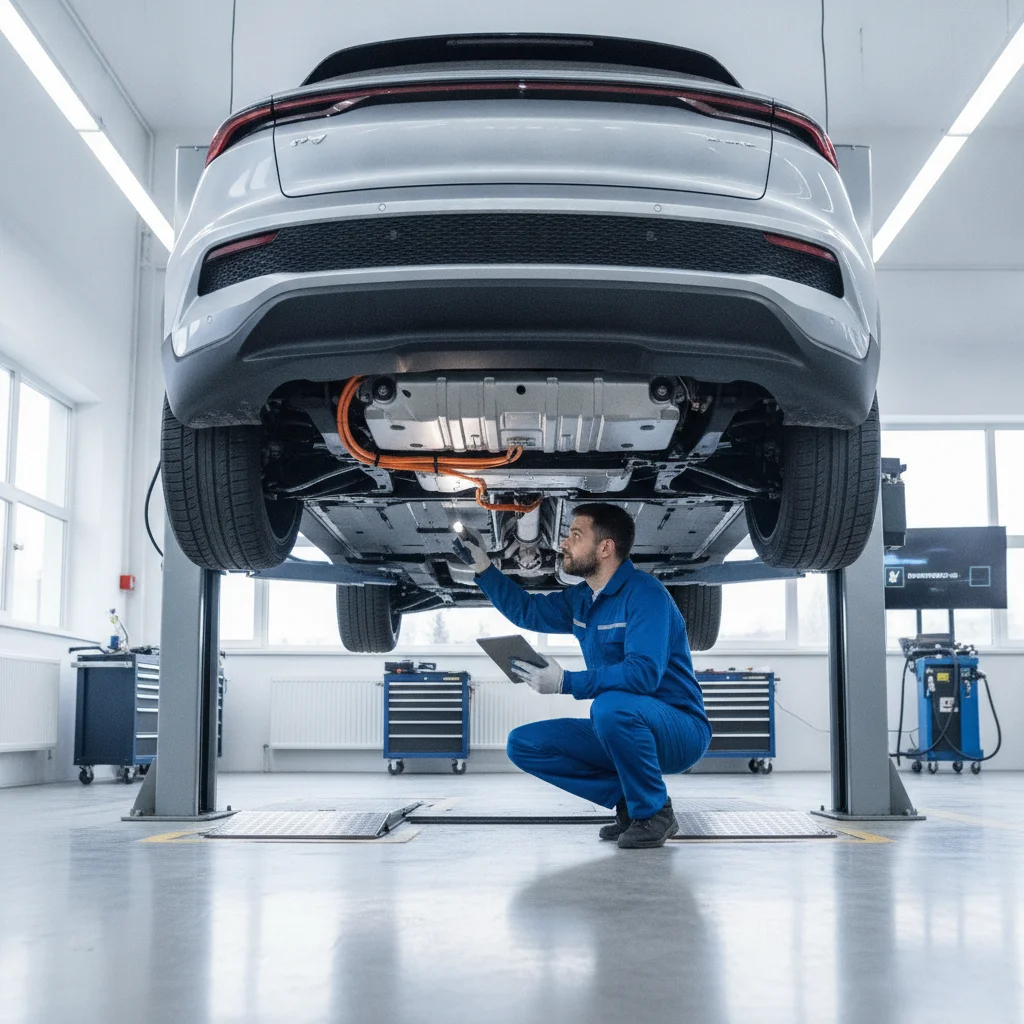
Electric vehicle maintenance refers to the routine upkeep tasks that keep an EV running safely and efficiently over its lifespan. While EVs eliminate many tasks required by gas-powered cars — like oil changes, spark plug replacements, and timing belt service — they still require regular attention to tires, brakes, fluids, batteries, and software. Skipping these tasks can shorten the vehicle's life and increase long-term costs.
EVs use regenerative braking, which reduces brake pad wear compared to gas cars, but brake fluid still absorbs moisture over time and requires periodic replacement regardless of pad wear.
The 'No Maintenance' Myth and Where It Comes From
When automakers market electric vehicles, the phrase "lower maintenance" gets compressed — by enthusiasts, journalists, and social media — into "no maintenance." It's an understandable shorthand, but it's wrong in ways that cost EV owners real money.
The confusion makes sense on the surface. Compared to a gas-powered vehicle, an EV drops a long list of service tasks: no engine oil changes, no spark plugs, no timing belt, no exhaust system, no multi-speed transmission fluid. For a driver who has been dutifully scheduling oil changes every 5,000 miles for decades, an EV genuinely feels maintenance-free by comparison.
But "fewer tasks" is not the same as "no tasks." An electric vehicle is still a 4,000-plus-pound machine rolling down the highway at 70 mph. It has tires, brakes, suspension components, fluids, filters, and a battery system that all age with use. Ignoring them doesn't just risk a roadside breakdown — it can void your warranty, accelerate wear, and quietly erode the resale value you're counting on.
EV maintenance myths are widespread and can lead to specific upkeep mistakes that accumulate over time. This article breaks down exactly which maintenance tasks survive the transition to electric — and why each one still matters.
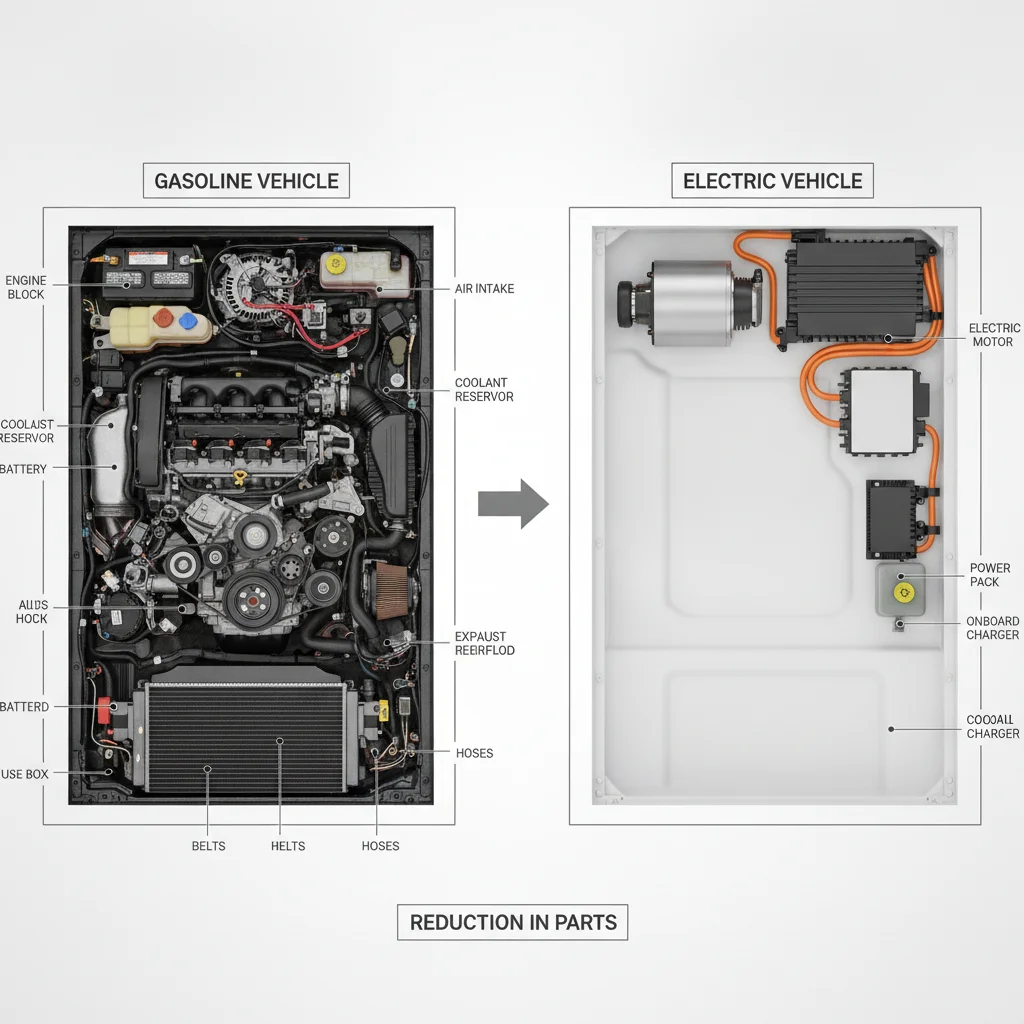
What Actually Goes Away with an EV
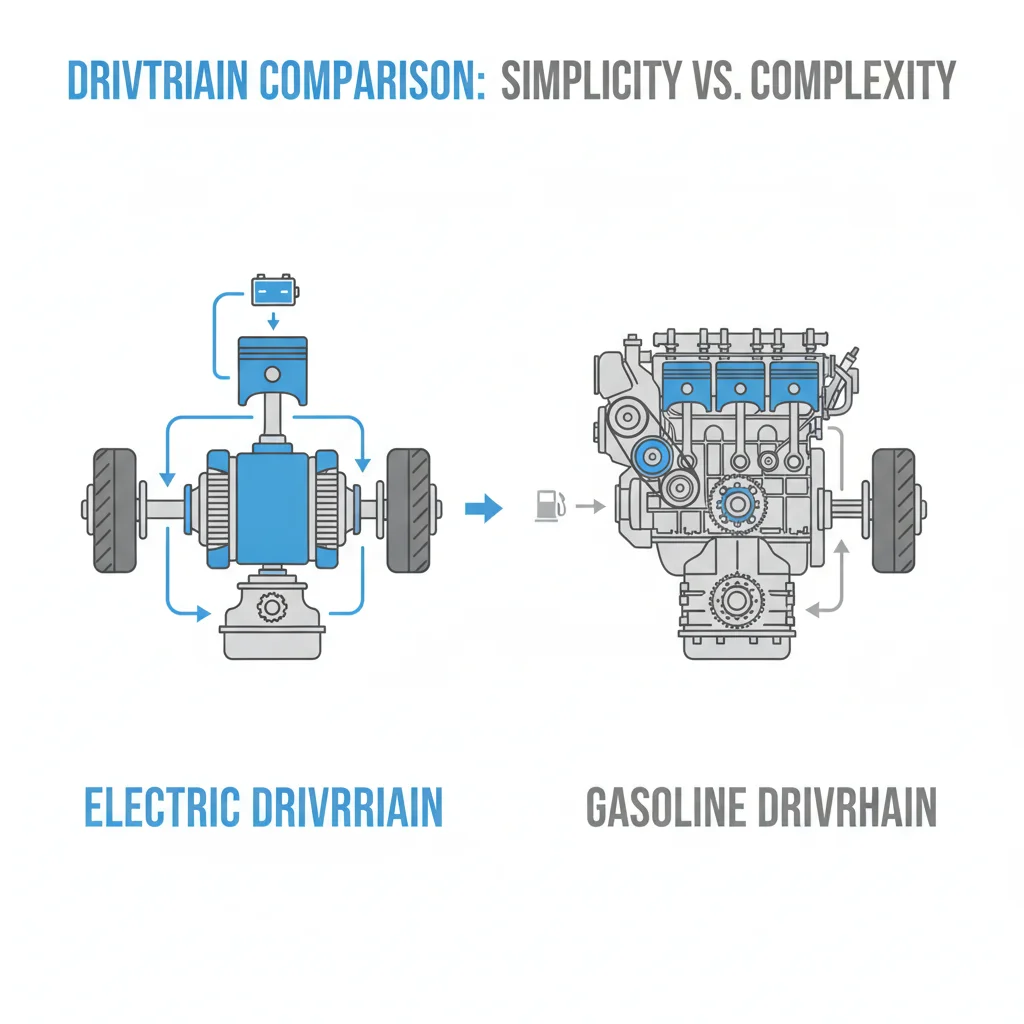
To understand what remains, it helps to be precise about what genuinely disappears. EVs eliminate maintenance tasks tied directly to internal combustion: the explosive, oil-lubricated, thermally stressed environment inside a gas engine.
- Engine oil and filter changes — no engine, no oil
- Spark plug replacement — no combustion cycle
- Timing belt or chain service — no camshaft-to-crankshaft synchronization needed
- Exhaust system repairs — no tailpipe, no catalytic converter, no muffler
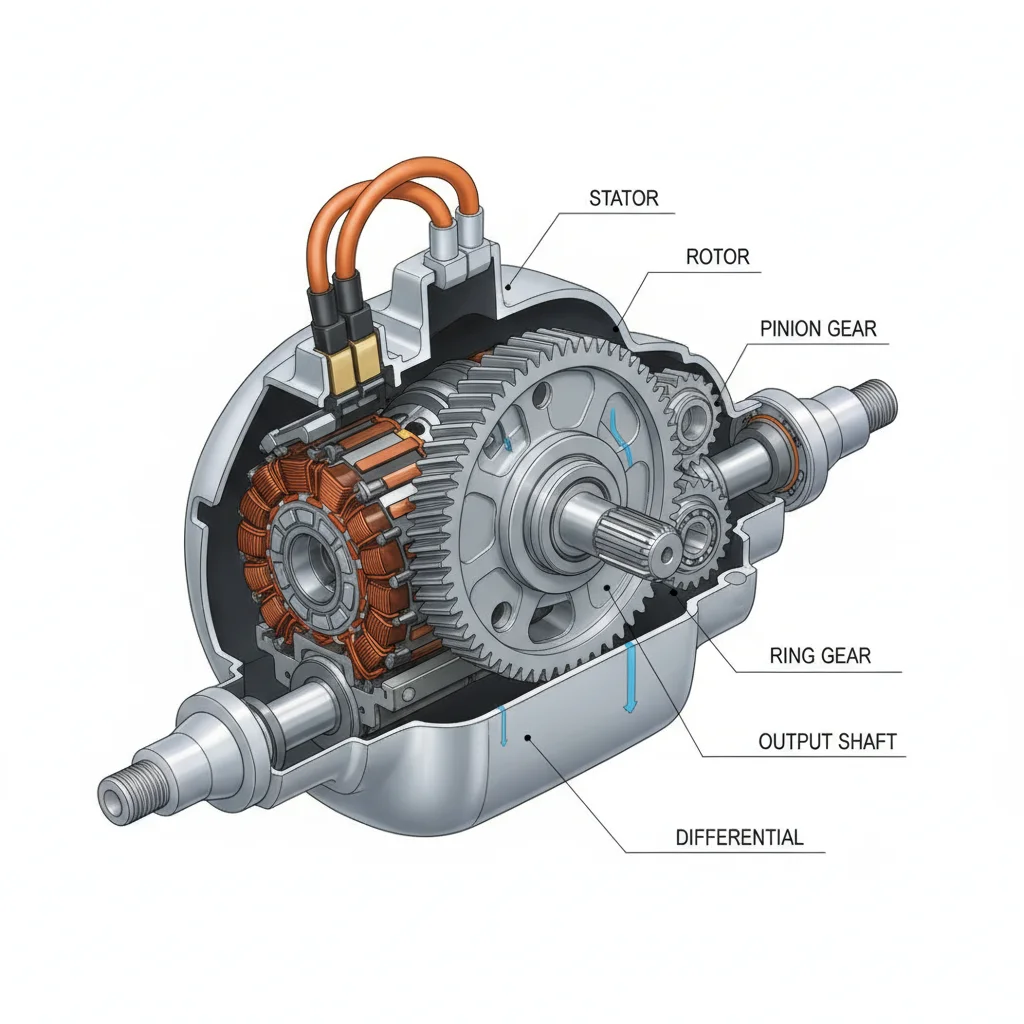
- Transmission fluid changes — most EVs use a single-speed reduction gearbox that requires minimal servicing
- Serpentine belt replacement — no accessory belt-driven components
These eliminations are real and meaningful. The U.S. Department of Energy estimates that EV owners spend roughly 40% less on maintenance over time compared to gas car owners, primarily because of these omissions. That's a significant financial advantage — but it doesn't mean the remaining tasks become optional.
For a deeper comparison of what disappears and what stays, fewer moving parts translates to lower but not zero service needs.
~40%
EV maintenance cost savings vs. gas vehicles
According to U.S. Department of Energy analysis, EV owners spend approximately 40% less on maintenance over the vehicle's lifetime compared to gas car owners.
$0.06/mile
Average EV maintenance cost per mile
A 2020 Consumer Reports study found EV owners spent about half as much per mile on maintenance and repairs as gas car owners, who averaged around $0.10/mile.
8 years / 100K miles
Federal minimum EV battery warranty
U.S. federal law requires automakers to warrant EV traction batteries for at least 8 years or 100,000 miles, whichever comes first.
2–3 years
Brake fluid replacement interval for most EVs
Tesla, Hyundai, and most other EV manufacturers recommend brake fluid inspection or replacement every 2–3 years, regardless of mileage or brake pad condition.
600+ lbs
Extra weight a typical EV carries vs. a gas equivalent
Battery packs add substantial curb weight to EVs — a key reason tire wear rates are often higher than gas car owners anticipate when switching to electric.
Tires: The Most Underestimated EV Maintenance Item
Talk to any experienced EV owner and tires will come up fast. Electric vehicles are heavier than their gas counterparts — a Tesla Model Y weighs roughly 600 pounds more than a similarly sized Toyota RAV4 — and they deliver full torque the instant you press the accelerator. Both factors accelerate tire wear.
Some EV owners report needing new tires 20–30% sooner than they expected based on their gas car experience. Premium EV-specific tires (engineered for low rolling resistance and higher load ratings) can cost $200–$350 per tire, making premature wear an expensive surprise.
EV Tires Are Not Generic
Many EVs come from the factory with tires specifically rated for higher load capacity and lower rolling resistance. Replacing them with a standard equivalent can reduce range and handling performance. Always check the recommended tire spec in your owner's manual or door jamb sticker before purchasing replacements.
PHEVs Have a More Complex Maintenance Picture
If you own a plug-in hybrid rather than a battery-only EV, most of this article's gas-car maintenance still applies to you. PHEVs retain a full internal combustion engine that needs oil changes, spark plugs, and exhaust service. The electric component reduces how often those services occur, but doesn't eliminate them.
Document Everything for Warranty and Resale
Keep digital or paper records of every service — tire rotations, fluid changes, filter replacements, and software updates. EV battery warranty claims and private resale negotiations both benefit from clear documentation. A simple spreadsheet or photo log stored in the cloud takes minutes to maintain and can pay off significantly.
What that means practically:
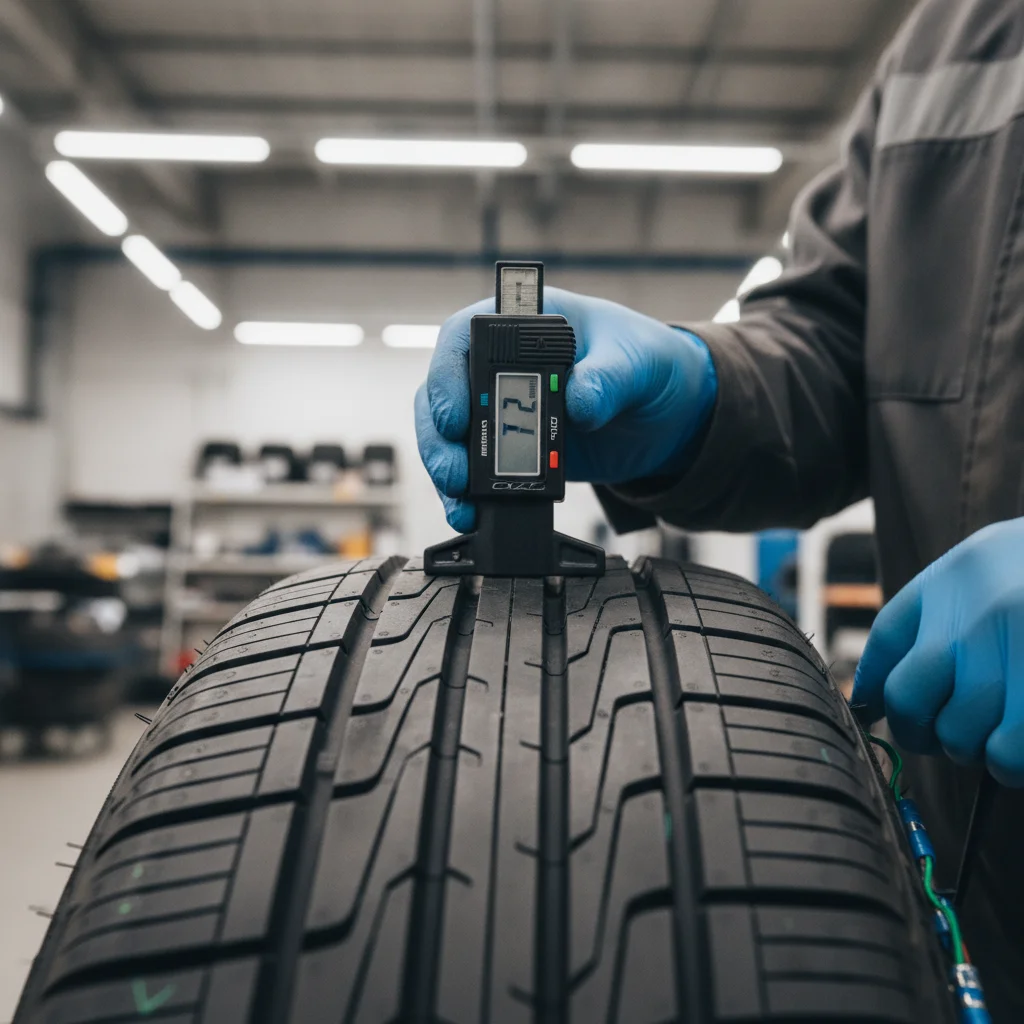
- Rotate tires every 5,000–7,500 miles. Many EV manufacturers specify shorter rotation intervals than gas car owners are used to. Check your owner's manual — it likely doesn't say 10,000 miles.
- Check tire pressure monthly. EVs are sensitive to underinflation because it increases rolling resistance, directly cutting range. Most EVs display real-time pressure in the infotainment system.
- Inspect tread depth every rotation. Use the quarter test or a $5 tread depth gauge. Don't wait for the wear indicator bars.
Driving habits like aggressive acceleration and hard cornering chew through EV tires even faster. If you're using the sport mode frequently or towing regularly, expect to rotate and inspect more often.
Brakes: Less Wear, But Not Zero
Regenerative braking is one of the genuinely clever features of EV design. When you lift off the accelerator, the electric motor runs in reverse, converting kinetic energy back into electricity — slowing the car and recharging the battery simultaneously. In everyday driving, many EV owners almost never touch the friction brakes.
That's good news for brake pad longevity. Many EV owners report their original brake pads lasting 100,000 miles or more. But here's what trips people up: longevity of the pads does not mean the brake system needs no attention.
What still needs servicing
- Brake fluid: Brake fluid is hygroscopic — it absorbs moisture from the air over time. Absorbed moisture lowers the boiling point, which can cause brake fade in hard stops. Tesla recommends testing brake fluid every 2 years; most manufacturers suggest replacement every 2–3 years regardless of mileage. This is non-negotiable safety maintenance.
- Caliper inspection: Because the friction brakes are used so rarely on some EVs, calipers can corrode and seize. A stuck caliper creates uneven braking and can destroy a rotor quickly. Annual inspection — particularly in snowy, road-salt environments — catches this early.
- Rotor condition: Rotors can develop surface rust if the car sits for extended periods without using friction brakes. Mild surface rust usually clears after a few hard stops, but deep pitting requires rotor replacement.
Apply the Friction Brakes Occasionally
If you drive in a high one-pedal-driving mode most of the time, make a habit of applying the friction brakes firmly at least once per trip — especially in winter or after the car has sat for several days. This helps clear surface rust from the rotors and keeps the calipers from seizing due to inactivity.
Set a Charge Limit in the App, Not Just in Your Head
Most EVs allow you to set a maximum charge limit directly in the vehicle settings or companion app — usually 80% for daily use. Configuring this in the car means you don't have to remember to unplug at the right time. It's one of the easiest ways to protect long-term battery health with no effort after the initial setup.
Fluids and Filters That Still Matter
Gas car owners are conditioned to think of fluid maintenance as oil-centric. EVs shift that focus, but fluids don't disappear entirely.
Battery coolant
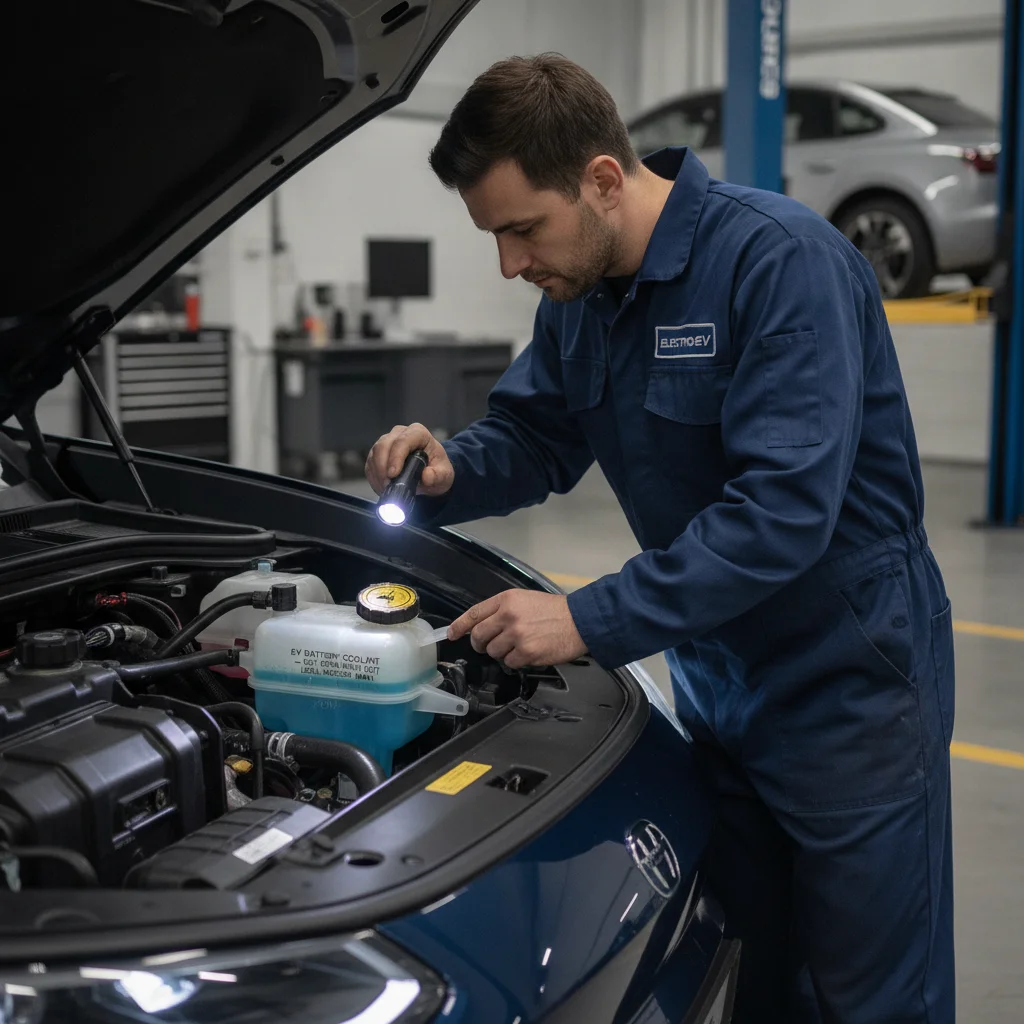
Most EVs use a liquid-cooled battery thermal management system to keep the pack within its optimal temperature range — usually 60°F to 80°F. That system circulates a water-glycol coolant that degrades over time, just like engine coolant in a gas car. Manufacturers typically call for inspection or replacement every 5 years or 100,000 miles. Neglecting it risks reduced battery performance and, in extreme cases, shortened pack life.
Windshield washer fluid
Unchanged from any other vehicle. Top it off with a proper winter-rated fluid if you live in a cold climate.
Cabin air filter
EVs have HVAC systems, and those systems pull air through a cabin filter. Depending on your driving environment and local air quality, replacement is typically recommended every 12,000–15,000 miles or annually. A clogged filter reduces HVAC efficiency — and in an EV, running the heater or AC at full blast already draws measurably from range.
HEPA filter (where applicable)
Vehicles like Tesla Model 3 and Model Y include a HEPA filtration option. Tesla recommends replacing the HEPA filter every 3 years. It's a more expensive item ($60–$100 for the filter alone) but an easy DIY job.
For a full schedule of what to check and when, the EV maintenance schedule is a practical reference to bookmark.
“The maintenance cost advantage of EVs is real, but owners who treat 'lower maintenance' as 'no maintenance' are setting themselves up for avoidable expenses. Tires, brake fluid, and battery thermal systems still need attention on a schedule.”
— Jake Fisher, Senior Director of Auto Testing, Consumer Reports
The 12-Volt Battery: The EV Part Most Owners Forget
Here's the maintenance item that blindsides more EV owners than almost anything else: the 12-volt auxiliary battery.
Every EV — regardless of how large the traction battery pack is — also carries a small 12-volt lead-acid or lithium battery. This battery powers the low-voltage systems: door locks, lights, infotainment, and critically, the contactors that connect the high-voltage pack to the drivetrain. If the 12-volt battery dies, the car won't start or move, even with a fully charged traction battery.
This isn't a theoretical problem. EV forums are full of posts from confused owners whose car won't respond — not because the big battery is dead, but because the small one failed. Traditional lead-acid 12-volt batteries typically last 3–5 years. Some automakers have moved to a lithium 12-volt auxiliary (which lasts longer), but many entry-level and mid-range EVs still use lead-acid.
Check whether your manufacturer recommends periodic 12-volt battery testing — usually at 3-year service intervals. Replacement costs $100–$300 for the part, which is manageable. Getting stranded in a parking garage because nobody told you about this battery is not.
Software Updates and Battery Care: The New Maintenance Frontier
EVs introduce a category of maintenance that has no equivalent in the gas world: software and battery management.
Over-the-air software updates
Most modern EVs receive software updates wirelessly, similar to a smartphone. These updates can improve range estimates, fix charging bugs, refine regenerative braking behavior, and address safety-related issues. Tesla, Rivian, and several other manufacturers push updates regularly. Accepting these updates — and ensuring your car is connected to Wi-Fi when parked — is genuinely part of maintaining an EV in 2024 and beyond.
Battery charging habits
The traction battery is the most expensive component in an EV — typically 40–60% of the vehicle's replacement cost. Manufacturer guidance on charging is not filler: it's maintenance advice with real financial stakes.
- Daily charge limit: Most manufacturers recommend charging to 80% for everyday use, reserving 100% for long trips. Consistently charging to 100% accelerates battery degradation.
- Avoid deep discharge: Regularly running the battery below 10–15% stresses the cells. Treat it like a phone: top it off rather than running it flat.
- DC fast charging frequency: Occasional DC fast charging is fine, but relying on it daily for years has been shown to increase degradation compared to regular Level 2 home charging.
Comprehensive lifetime EV maintenance spans from battery care to software to physical components — each layer affects the others.
Apply the Friction Brakes Occasionally
If you drive in a high one-pedal-driving mode most of the time, make a habit of applying the friction brakes firmly at least once per trip — especially in winter or after the car has sat for several days. This helps clear surface rust from the rotors and keeps the calipers from seizing due to inactivity.
Set a Charge Limit in the App, Not Just in Your Head
Most EVs allow you to set a maximum charge limit directly in the vehicle settings or companion app — usually 80% for daily use. Configuring this in the car means you don't have to remember to unplug at the right time. It's one of the easiest ways to protect long-term battery health with no effort after the initial setup.
If you own a plug-in hybrid rather than a full battery EV, note that your maintenance picture is more complex. PHEVs and HEVs carry different maintenance burdens than pure battery EVs because they retain an internal combustion engine alongside the electric drive system.
What Skipping EV Maintenance Actually Costs You
The financial case for staying current on EV maintenance isn't abstract. It breaks down into three concrete areas:
Warranty compliance
Most EV battery warranties — typically 8 years/100,000 miles — include language requiring the owner to follow the manufacturer's recommended maintenance schedule. If a battery issue arises and you can't document basic service history, a manufacturer may dispute coverage. Keeping records of tire rotations, fluid services, and software updates is cheap insurance.
Resale value
Used EV buyers are increasingly sophisticated. A car with documented service history, healthy tires, and a well-maintained brake system commands a better price than one sold with "it's electric, it doesn't need maintenance." "Low maintenance" has a specific meaning that doesn't mean zero upkeep history on the Carfax report.
Compounding repair costs
Deferred maintenance compounds. A neglected tire rotation leads to uneven wear that requires early full replacement ($800–$1,400 for a set of four EV-spec tires). Ignored brake fluid leads to corrosion and a seized caliper ($400–$800 to repair). These aren't hypothetical — they're the same failure patterns that skipping routine maintenance always produces, just in different systems than gas car owners are used to watching.
The bottom line: EV maintenance is simpler and cheaper than gas car maintenance. But "simpler" still means something. Work the schedule, document the work, and the ownership math stays favorable for the long run.
EV Tires Are Not Generic
Many EVs come from the factory with tires specifically rated for higher load capacity and lower rolling resistance. Replacing them with a standard equivalent can reduce range and handling performance. Always check the recommended tire spec in your owner's manual or door jamb sticker before purchasing replacements.
PHEVs Have a More Complex Maintenance Picture
If you own a plug-in hybrid rather than a battery-only EV, most of this article's gas-car maintenance still applies to you. PHEVs retain a full internal combustion engine that needs oil changes, spark plugs, and exhaust service. The electric component reduces how often those services occur, but doesn't eliminate them.
Document Everything for Warranty and Resale
Keep digital or paper records of every service — tire rotations, fluid changes, filter replacements, and software updates. EV battery warranty claims and private resale negotiations both benefit from clear documentation. A simple spreadsheet or photo log stored in the cloud takes minutes to maintain and can pay off significantly.

All claims are backed by peer-reviewed research. Sources on request.