Key Takeaways
Set your EV's daily charge limit to 80% in the vehicle's app or settings today — not just when you remember. This one habit has more long-term impact on battery health than any other single action.
Lithium-ion battery chemistry experiences accelerated stress at states of charge above 90%, which compounds over thousands of cycles. Manufacturers like Tesla, Rivian, and GM embed this recommendation directly into their charging configuration menus.
Schedule your first tire rotation earlier than you think necessary — around 5,000 miles — and inspect for uneven wear patterns at that point. Early wear patterns on EVs can reveal alignment issues that compound quickly.
EV torque delivery is immediate and concentrated, making uneven wear develop faster than on gas vehicles. Catching alignment problems early is far cheaper than replacing a set of prematurely worn tires.
Replace your 12V auxiliary battery proactively around the 4-year mark rather than waiting for symptoms. The cost is low; the consequence of failure — complete vehicle shutdown — is disproportionate.
Unlike a gas car's 12V battery, which typically causes a gradual starting problem, an EV's 12V failure can prevent the high-voltage system from waking up entirely, leaving the vehicle completely inoperable without warning.
Before a long road trip with multiple fast-charging stops, navigate to your first charging station using the vehicle's built-in nav. This triggers battery preconditioning that can reduce charging time by 20–30% at cold temperatures.
Lithium-ion cells accept charge fastest within a specific temperature window. Cold batteries charge slowly regardless of charger speed. Using the navigation system to trigger thermal preconditioning is a built-in feature that many owners never use.
When shopping for replacement tires, look specifically for tires rated for EV use or with low rolling resistance ratings. The difference in range efficiency between a standard and EV-optimized tire set can be 3–5% on a typical drive cycle.
EV-rated tires are engineered with load ratings appropriate for heavier EV curb weights and compound formulations that minimize rolling resistance — both of which directly affect efficiency and tire wear patterns.
The EV Maintenance Reality Check
The marketing pitch for electric vehicles often leads with one irresistible promise: no more oil changes. That's true — but it's also incomplete. EVs eliminate a meaningful chunk of traditional upkeep, yet they introduce their own set of tasks that are just as real and, in some cases, more consequential to long-term ownership costs than anything you'd do on a gas car.
If you've bought an EV expecting zero maintenance, you're going to be caught off guard. If you've avoided EVs because you assumed they'd be expensive or complicated to maintain, the actual picture is more encouraging than you think. This guide covers both sides honestly — what goes away, what stays, and what's new — from the day you drive off the lot to the day you sell or trade in.
To understand why the maintenance profile changes so dramatically, it helps to understand the core technology. How EVs work is foundational reading if you're new to the platform — knowing what's under the hood (or lack thereof) makes every task on this list make more sense.
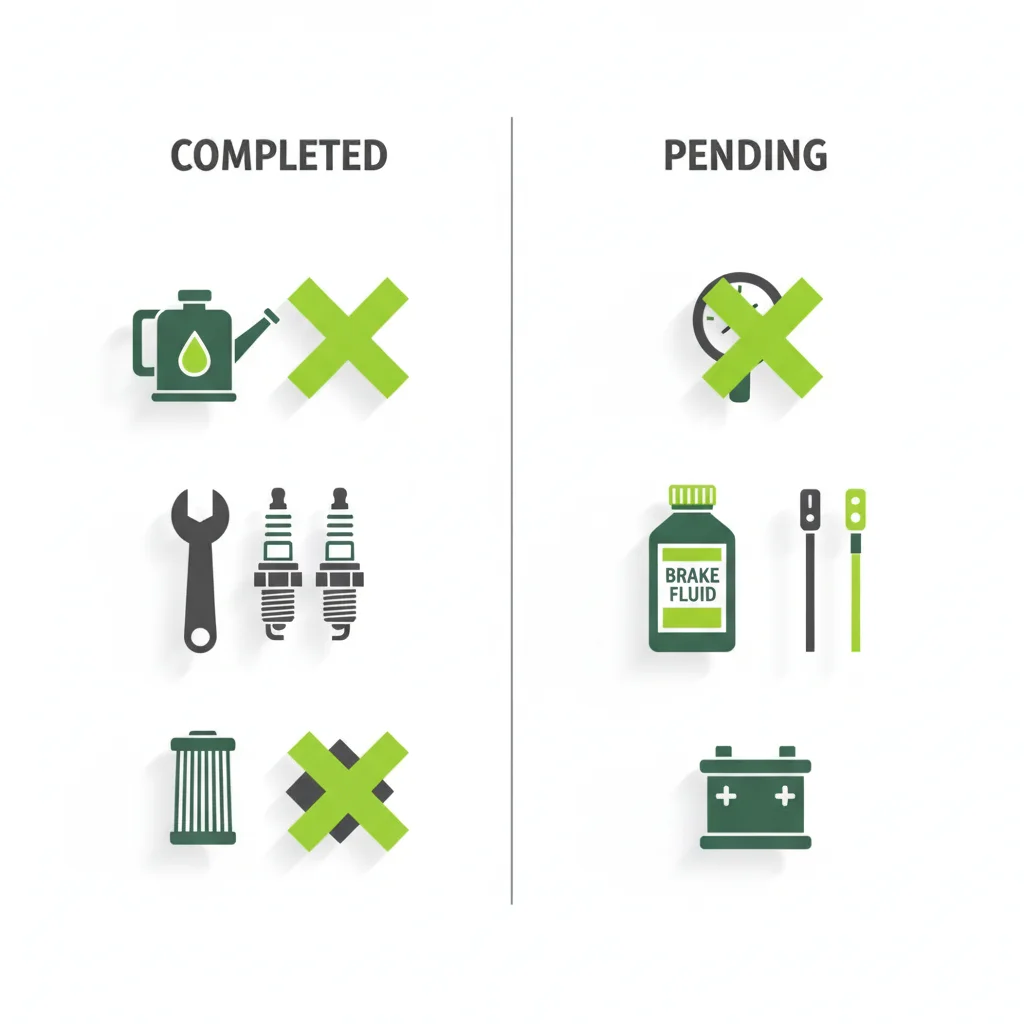
Here's the quick accounting of what disappears with an EV:
- Engine oil and filter changes
- Spark plug replacement
- Timing belt or chain service
- Transmission fluid (for single-speed EVs)
- Radiator coolant flushes (though thermal management coolant remains)
- Exhaust system repairs
- Fuel system maintenance
And here's what stays or gets added:
- Tire rotation and replacement (more frequent than you'd expect)
- Brake fluid replacement
- Cabin air filter replacement
- Windshield washer fluid
- 12V auxiliary battery replacement
- HVAC system service
- Thermal management system coolant (on many models)
- Software updates
- High-voltage battery monitoring and care
The net result is fewer service visits, lower average annual costs, and far less time at the shop. But the tasks that remain matter — and some of them, particularly battery care, have outsized consequences if ignored. Why electric vehicles still need regular maintenance digs into the mechanics behind each of these remaining tasks.
30–40%
Lower lifetime maintenance costs vs. gas vehicles
According to a 2020 U.S. Department of Energy study comparing BEV and ICEV maintenance costs over vehicle lifetimes.
10–15%
Typical battery capacity loss at 100,000 miles
Based on real-world data aggregated by Recurrent Auto from thousands of EV battery health reports across multiple makes and models.
5,000–7,500 mi
Recommended tire rotation interval for EVs
Most EV manufacturers specify rotation intervals at or below the standard gas vehicle recommendation due to higher vehicle weight and torque.
$8,000–$20,000+
Out-of-warranty battery replacement cost
Replacement battery pack estimates for popular EV models including Tesla Model 3 and Chevy Bolt, based on parts and labor at authorized service centers.
2–3 years
Brake fluid replacement interval
Standard specification across most EV manufacturers, unchanged from gas vehicle norms despite reduced friction brake usage due to moisture absorption in the fluid.
Battery Health: The Core of Every EV
The high-voltage traction battery is not just the most expensive component in an electric vehicle — it's the one that most directly determines range, performance, resale value, and the total cost of ownership over time. Understanding how to protect it is the most valuable thing this guide can give you.
How Battery Degradation Works
All lithium-ion batteries degrade over time. Capacity slowly shrinks as charge cycles accumulate and as the battery chemistry ages. A well-managed battery in a modern EV might lose 10–15% of its original capacity over 100,000 miles. A poorly managed one can lose significantly more. The good news: most of the factors that accelerate degradation are within your control.
Set your EV's daily charge limit to 80% in the vehicle's app or settings today — not just when you remember. This one habit has more long-term impact on battery health than any other single action.
Lithium-ion battery chemistry experiences accelerated stress at states of charge above 90%, which compounds over thousands of cycles. Manufacturers like Tesla, Rivian, and GM embed this recommendation directly into their charging configuration menus.
Schedule your first tire rotation earlier than you think necessary — around 5,000 miles — and inspect for uneven wear patterns at that point. Early wear patterns on EVs can reveal alignment issues that compound quickly.
EV torque delivery is immediate and concentrated, making uneven wear develop faster than on gas vehicles. Catching alignment problems early is far cheaper than replacing a set of prematurely worn tires.
Replace your 12V auxiliary battery proactively around the 4-year mark rather than waiting for symptoms. The cost is low; the consequence of failure — complete vehicle shutdown — is disproportionate.
Unlike a gas car's 12V battery, which typically causes a gradual starting problem, an EV's 12V failure can prevent the high-voltage system from waking up entirely, leaving the vehicle completely inoperable without warning.
Before a long road trip with multiple fast-charging stops, navigate to your first charging station using the vehicle's built-in nav. This triggers battery preconditioning that can reduce charging time by 20–30% at cold temperatures.
Lithium-ion cells accept charge fastest within a specific temperature window. Cold batteries charge slowly regardless of charger speed. Using the navigation system to trigger thermal preconditioning is a built-in feature that many owners never use.
When shopping for replacement tires, look specifically for tires rated for EV use or with low rolling resistance ratings. The difference in range efficiency between a standard and EV-optimized tire set can be 3–5% on a typical drive cycle.
EV-rated tires are engineered with load ratings appropriate for heavier EV curb weights and compound formulations that minimize rolling resistance — both of which directly affect efficiency and tire wear patterns.
Daily Charging Habits That Preserve Capacity
The single most impactful daily habit is not charging to 100% unless you need it. Most EV manufacturers recommend keeping daily charge levels between 20% and 80% for routine use. Full charges and deep discharges both stress the battery chemistry over time. Tesla, Rivian, GM, and others all embed this recommendation directly into their charging settings.
- Set a daily charge limit of 80% in your vehicle's app or settings.
- Use 100% charge only before long trips, and try to begin driving shortly after reaching full charge rather than leaving it sitting topped up.
- Avoid regular deep discharges below 10–15%. Running the battery to near-empty repeatedly accelerates capacity loss.
- Use Level 2 (AC) charging as your daily driver. DC fast charging is convenient on road trips, but frequent reliance on it — particularly ultra-fast 150kW+ chargers — generates more heat and stress than slower AC charging.
Thermal Management and Preconditioning
Most modern EVs use active liquid cooling to manage battery temperature. Cold batteries charge slowly and deliver less range; hot batteries degrade faster. Both extremes hurt you. Your job as an owner is to work with the car's thermal system, not against it.
- Precondition the battery before fast charging in cold weather. Many EVs do this automatically if you navigate to a fast-charging station; use that navigation feature rather than just showing up cold.
- Park in a garage in extreme temperatures when possible. Even an unheated garage provides meaningful thermal buffer versus open-air parking at -10°F or 110°F.
- Use the vehicle's preconditioning feature before driving in very cold weather. It warms the cabin and battery while still plugged in, preserving range and protecting battery chemistry.
Warranty Coverage and What It Means
Federal law requires EV manufacturers to warrant the battery for at least 8 years or 100,000 miles, whichever comes first, covering defects and significant capacity loss (typically defined as below 70% of original capacity). This doesn't cover normal, gradual degradation — it's a floor, not a guarantee of perfect performance.
Know Your Battery Warranty Terms Before They Expire
Federal law mandates a minimum 8-year/100,000-mile battery warranty covering defects and capacity loss below roughly 70% of original capacity. However, the specific capacity threshold varies by manufacturer — some set it at 70%, others at 60%. Read your warranty documentation carefully and get a battery health report before the warranty expires. Filing a claim after the warranty lapses is not possible regardless of what the degradation data shows.
Don't Let an Independent Shop Touch High-Voltage Systems
General automotive repair shops — even excellent ones — typically lack the training, equipment, and safety certification to work on EV high-voltage systems, including the traction battery, drive unit, and integrated AC compressor. Work on these systems must be performed by manufacturer-certified technicians. Improper handling of high-voltage components is a serious safety risk and can void warranty coverage. For routine work (tires, cabin air filter, brake fluid), any qualified shop is fine.
Keep records of your battery state-of-health readings. Many EVs report this through the app or instrument cluster, and third-party apps like Recurrent or OVMS can track degradation trends over time. Having documented battery health at the point of sale is a meaningful selling point.
For a closer look at ongoing battery care from the moment you take delivery, see EV maintenance from day one.
Tires, Brakes, and Suspension: The Mechanical Essentials
This is where EV ownership gets humbling for people expecting near-zero mechanical upkeep. The rolling gear — tires, brakes, and suspension — is essentially the same as any other vehicle, and in some respects demands more attention on an EV than on a comparable gas car.
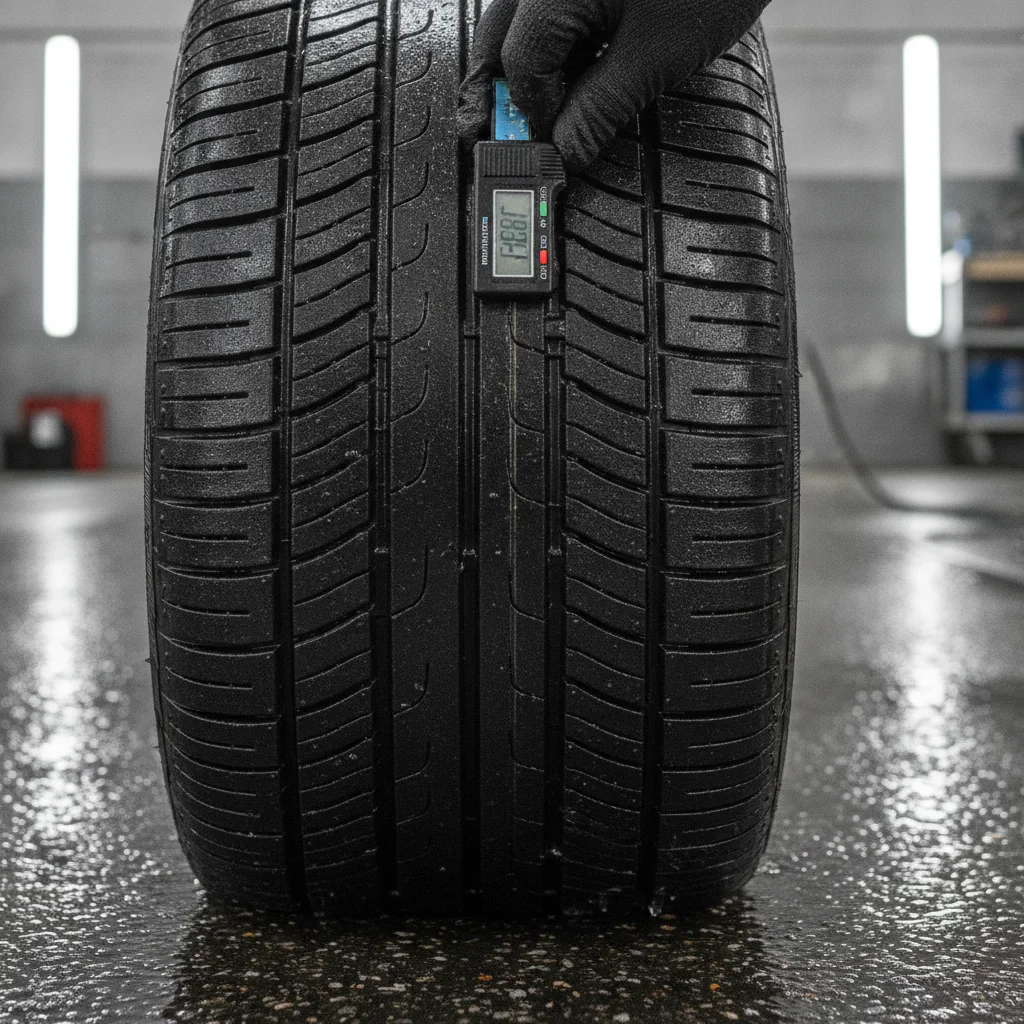
Tires: More Wear Than You'd Expect
Electric vehicles are heavy. A mid-size EV sedan typically weighs 10–20% more than its gas equivalent, thanks to battery pack mass. That weight sits on the same four contact patches, and it accelerates tire wear. Add in the instant torque delivery that makes EVs satisfying to drive — and that drivers regularly use — and tire wear rates rise further.
Standard guidance for tire rotation on most gas vehicles is every 5,000–7,500 miles. For EVs, staying at or toward the lower end of that range is wise, particularly on rear-wheel-drive models where propulsion torque is concentrated. Many EV manufacturers specify 6,250-mile rotation intervals explicitly.
- Check tire pressure monthly. EV range is meaningfully sensitive to underinflation. A tire that's 6 PSI low can reduce range by 2–3%. Most EVs display tire pressure in real time — use it.
- Buy EV-rated replacement tires when available. Tires marketed for EVs (low rolling resistance, reinforced sidewalls for load capacity) genuinely affect range and handling. They're not just marketing.
- Rotate front-to-rear on a fixed schedule, and perform a full inspection at each rotation — tread depth, sidewall condition, signs of uneven wear that could indicate alignment issues.
Brakes: Less Wear, But Not Zero
Regenerative braking is one of the genuinely impressive engineering achievements in modern EVs. By using the electric motor as a generator during deceleration, the car recaptures energy and slows down without engaging the friction brakes. In everyday city driving, many EV owners can go 100,000 miles or more before needing brake pad replacement.
That said, two maintenance items remain non-negotiable:
- Brake fluid replacement every 2–3 years (or per manufacturer specification). Brake fluid is hygroscopic — it absorbs moisture from the air over time, which lowers its boiling point and compromises braking performance under hard use. This doesn't change just because you're using regen more often.
- Brake caliper inspection and lubrication. Because friction brakes are used so infrequently on EVs, calipers can seize or corrode — particularly in humid climates or on vehicles that sit unused for extended periods. An annual inspection is smart preventive care.
Use One-Pedal Driving to Extend Brake Life
If your EV supports it, enable maximum regenerative braking and practice one-pedal driving for city use. This routes nearly all deceleration through the motor rather than friction brakes. Over a typical ownership period, this can extend brake pad life to 100,000 miles or beyond — a substantial cost savings that also means fewer service visits.
Document Battery Health Before Selling
Pull a battery state-of-health report from your manufacturer's app or a tool like Recurrent Auto before listing your EV for sale. A documented report showing strong capacity retention is a genuine selling point that can justify a higher asking price and reduce buyer negotiating leverage.
Time Your Software Updates Wisely
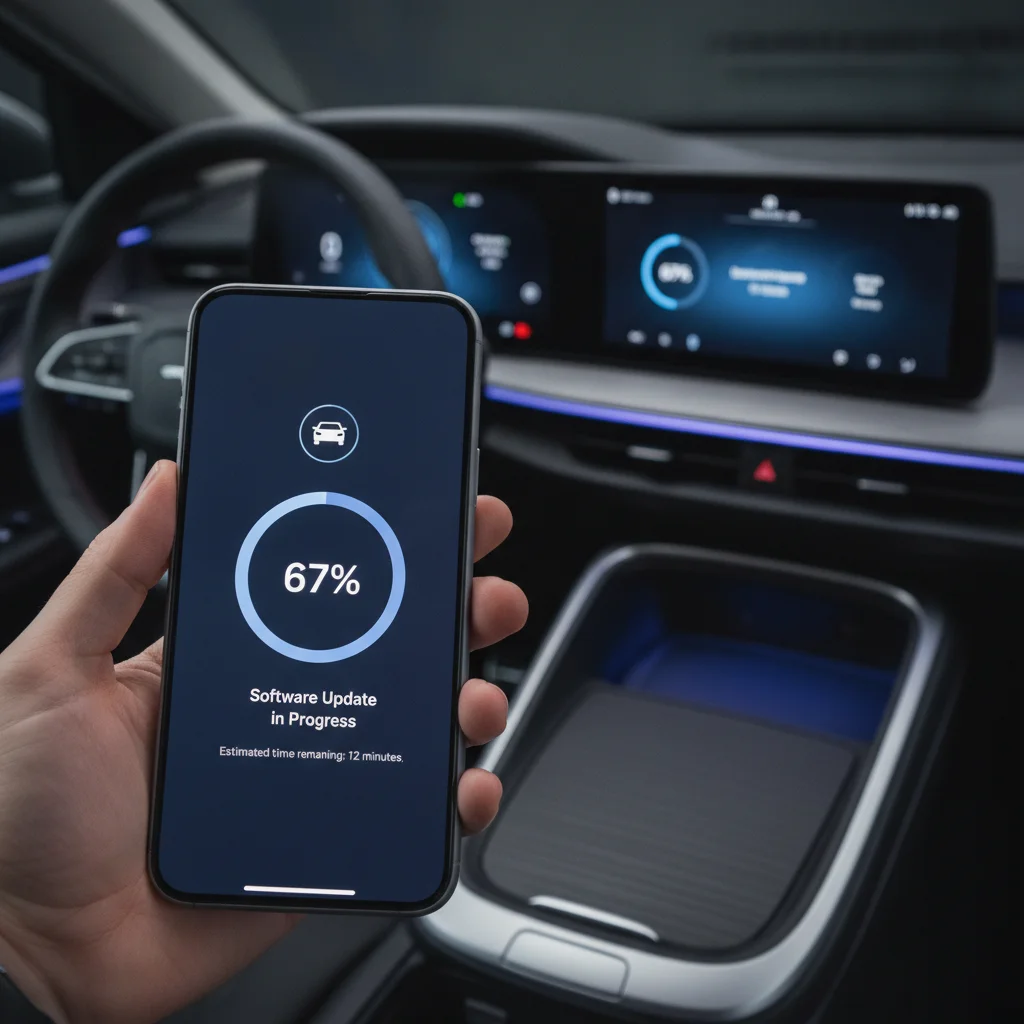
Most EV software updates take 20–45 minutes and require the vehicle to be stationary and plugged in. Schedule them overnight so they don't interrupt your day. Avoid deferring updates repeatedly — some manufacturers have noted that extended update deferral can create dependency conflicts that require a dealer visit to resolve.
Suspension and Alignment
Suspension components — struts, shocks, control arm bushings, ball joints — wear at roughly the same rate as on gas vehicles, driven primarily by road conditions and miles driven rather than powertrain type. Alignment, however, deserves special attention on EVs given the impact on tire wear and rolling resistance (which directly affects range).
Have alignment checked annually or any time you hit a significant pothole or curb strike. An EV that's pulling slightly out of alignment is quietly costing you range every mile you drive.
Fluids You Still Need to Check
"No oil changes" is real — but EVs are not fluid-free vehicles. Several systems still require fluid maintenance, and confusing "no engine oil" with "no fluids" is a mistake that can result in expensive repairs.
PHEVs Have a Different Maintenance Profile
This guide focuses on battery-electric vehicles (BEVs). Plug-in hybrid electric vehicles (PHEVs) retain a conventional combustion engine, which means they still require oil changes, spark plug replacement, and other engine-related maintenance on their gas side. The battery-related guidance here applies to PHEVs, but the fluid and engine sections do not. If you drive a PHEV, consult your owner's manual for the combined schedule.
Manufacturer Intervals Override Generic Guidance
Every EV model has its own maintenance schedule published in the owner's manual, and those intervals are authoritative for your specific vehicle. Use the guidance in this article as a framework and reality check, but always cross-reference with your manufacturer's documentation. Intervals vary meaningfully across Tesla, GM, Ford, Hyundai/Kia, Rivian, and other brands.
Some EVs Are Nearly Sealed-System Vehicles
A small number of EV models are designed with fully sealed drivetrain components — gearboxes filled with lifetime fluid and battery packs not intended for user-serviceable maintenance. This is more common on earlier-generation EVs like the first-generation Nissan Leaf. "Sealed for life" doesn't mean the system is problem-free; it means that when problems occur, the intervention cost is higher because the system wasn't designed for routine service access.
Brake Fluid
As covered in the brakes section: replace every 2–3 years. Some manufacturers (notably BMW and Toyota) specify more frequent intervals. Check your owner's manual and don't skip this one — it's inexpensive and genuinely safety-critical.
Thermal Management Coolant
Most battery EVs use a dedicated liquid cooling circuit to regulate battery temperature. This coolant is separate from any engine coolant and is typically specified for replacement every 5 years or 150,000 miles, though intervals vary by manufacturer. Tesla, for example, specifies coolant inspection every 4 years for the Model S/X. Check your owner's manual — this is not a universal interval.
Windshield Washer Fluid
Not glamorous, but relevant. EVs don't generate waste engine heat that keeps the front of the vehicle warm in winter, which means washer fluid that freezes at 32°F is a real operational problem. Use a fluid rated for -20°F or lower if you live in a cold climate.
Power Steering Fluid (If Applicable)
Most modern EVs use electric power steering, which requires no hydraulic fluid. But some older or larger EVs and plug-in hybrids may still use hydraulic systems. Verify which system your vehicle uses in the owner's manual.
Differential and Gearbox Fluid (Model Specific)
Single-speed EVs with no traditional transmission still have reduction gearboxes that use gear oil. Some manufacturers (like Tesla on earlier models) have called for inspection or replacement of this fluid; others design it as sealed-for-life. Check your model's documentation — this is not something the average service writer will flag proactively.
For a comprehensive task-and-interval reference covering all of the above, the EV maintenance schedule is a useful companion document to keep bookmarked.
Software Updates and Electronics
This is the maintenance category that didn't exist a generation ago and that many owners don't think of as maintenance at all. Modern EVs are fundamentally software-defined vehicles — the battery management system, regenerative braking calibration, charging behavior, driver assistance features, and even suspension tuning on some models are all governed by software that manufacturers update over-the-air (OTA) or through dealer service visits.
“Over-the-air software updates represent a fundamental shift in how we think about vehicle maintenance. We can now fix issues, improve performance, and add features to vehicles already in customers' driveways — something that simply wasn't possible a decade ago.”
— Mary Barra, Chief Executive Officer, General Motors
Why Software Updates Matter for Maintenance
Software updates aren't just about adding features. They routinely include:
- Battery management improvements that can increase range, adjust charging behavior, or recalibrate state-of-charge estimates.
- Safety-critical patches for driver assistance systems, braking behavior, or charging system protection.
- Thermal management tuning that affects how the car handles temperature extremes.
- Efficiency improvements to motor control algorithms.
Tesla has famously extended the range of vehicles via software updates. GM issued OTA updates to the Bolt EV to address battery fire risk. Ford updated the Mustang Mach-E's onboard charger limits via software. These are not trivial — they are functionally equivalent to a service bulletin or recall.
What to Do
- Enable automatic OTA updates if your vehicle supports them. Most manufacturers recommend installing updates promptly rather than deferring indefinitely.
- Check for pending updates before long trips — some updates require the vehicle to be stationary and plugged in for an extended period.
- Keep your vehicle's connectivity active. Letting your LTE subscription lapse (on models that require it) means OTA updates won't reach you.
- Verify that software-related recalls have been applied through NHTSA's recall lookup tool (nhtsa.gov/recalls) using your VIN. Some recalls are remedied via OTA update without requiring a dealer visit.
The 12V Auxiliary Battery
Every EV has a conventional 12V auxiliary battery that powers low-voltage systems — locks, lights, infotainment, the systems that wake up the high-voltage battery. This battery is completely separate from the traction battery and behaves like any other 12V automotive battery — it can fail, especially in cold weather or after several years of use.
Expect to replace the 12V battery every 3–5 years. The cost is typically $100–$300 depending on the model. Some EVs (notably certain Teslas) have experienced unexpected shutdowns due to 12V battery failure, leaving owners stranded. It's worth proactive replacement around the 4-year mark rather than waiting for failure. Battery maintenance and 12V systems provides helpful background on how these auxiliary batteries work.
HVAC, Cabin Air, and Thermal Management
Climate control in an EV is a bigger deal than most owners realize — not just for comfort, but for range and battery health. Understanding how it works helps you maintain it properly.
Cabin Air Filter
Cabin air filters on EVs work exactly like those on gas vehicles — they filter particulates, pollen, and pollutants from the air entering the passenger cabin. Most EVs specify replacement every 15,000–25,000 miles or annually, whichever comes first. Some Tesla models specify every 2 years for non-HEPA and every 3 years for HEPA variants.
This is a straightforward DIY task on most EVs — the filter is usually accessible behind the glove box or under a dashboard panel, and replacement filters cost $20–$60. Skipping it reduces cabin air quality and can strain the HVAC blower motor over time.
Heat Pump vs. Resistive Heating
EVs use significant energy for cabin heating in cold weather, and the type of heating system matters. Older and lower-cost EVs use resistive electric heating — basically a big electric coil — which draws heavily on the battery and can reduce range by 30–40% in very cold conditions. Newer and higher-end EVs use heat pump systems that are 2–3x more efficient at the same task.
If your EV has a heat pump, keeping it in good working order is important — the refrigerant circuit can develop leaks just like a home HVAC system, and performance degradation is gradual and easy to miss. If your range in cold weather seems dramatically worse than the rated reduction, have the heat pump inspected.
AC System
The air conditioning system in an EV is refrigerant-based and nearly identical to that in a gas vehicle. It uses R-134a or R-1234yf refrigerant and can develop leaks over time. Most manufacturers don't specify proactive refrigerant service, but if you notice reduced cooling performance, have it checked. AC system repairs on EVs can be more expensive than on gas vehicles because the compressor is electrically driven and integrated with the vehicle's high-voltage system — not a job for a generic shop.
Infrequent Brake Use Can Lead to Caliper Seizure
Because EVs use regenerative braking so heavily, the friction brakes can go months without meaningful engagement. In humid climates, this can lead to rotor surface rust, stuck calipers, and seized caliper slides — even on relatively new vehicles. Deliberately using the friction brakes during occasional highway exits or parking-lot stops helps keep the system in functional condition. Have the calipers inspected annually even if the pads look brand new.
EV AC Repairs Are Not Standard Shop Work
The air conditioning compressor in an EV is electrically driven and connected to the high-voltage system — not belt-driven like in a gas car. This means AC diagnosis and repair requires EV-certified technicians and specialized equipment. Taking your EV to a general shop for AC work risks incorrect diagnosis, incomplete repair, and potential safety issues from high-voltage exposure. Budget accordingly, as labor rates at EV-certified shops typically run higher.
Long-Term Battery and Drivetrain Milestones
Beyond the routine annual and mileage-based tasks, EV ownership involves a set of longer-horizon decisions and potential interventions that are worth planning for.
50,000–75,000 Miles
- Battery state-of-health check (through OBD diagnostics or manufacturer app)
- Full brake system inspection including calipers and fluid
- Thermal management coolant inspection (not necessarily replacement yet)
- Tire replacement likely needed (dependent on driving style)
- Cabin air filter: second or third replacement
100,000 Miles / 8 Years
This is the federal warranty threshold for the traction battery. Before you cross this mark, it's worth getting a battery health report documented — either through the manufacturer's service system or a reputable third-party tool. If the battery has dropped below the warranty threshold (typically 70% of original capacity), you may have a warranty claim before coverage expires.
At this mileage, expect:
- Thermal management coolant replacement on most models
- Possible 12V battery replacement (second unit if you've owned from new)
- Full drivetrain inspection including motor mounts and reduction gearbox
- Suspension component inspection — bushings, ball joints, and wheel bearings
150,000+ Miles
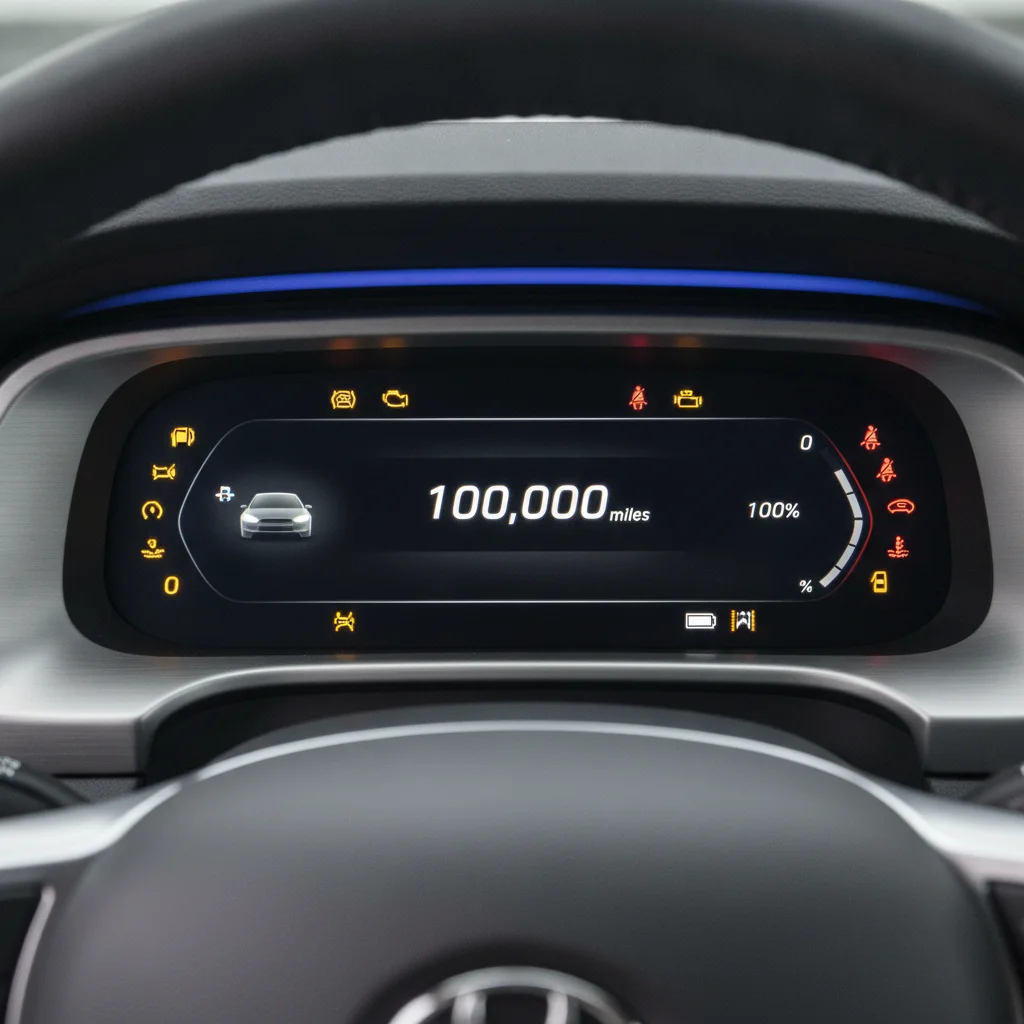
The honest answer here is that the long-term data on high-mileage EVs is still accumulating. Taxis and fleet vehicles have proven that some models (particularly the Tesla Model 3 and Model Y) can reach 300,000+ miles with manageable degradation under careful battery management. The reduction gearbox and motor windings appear to be exceptionally durable components in well-designed EVs.
The main risk at high mileage is battery replacement cost. A replacement battery pack for a Model 3, Leaf, or Bolt can run $8,000–$20,000+ for parts and labor, though this cost is declining as battery technology matures and the aftermarket develops. Factoring this into your total-cost-of-ownership calculation is important. EV upkeep advantages and underestimated tasks covers this trade-off in depth.
For a gas vehicle comparison covering the same long-horizon service milestones, see the full ownership maintenance timeline.
What EV Maintenance Costs Over a Lifetime
Numbers matter. Here's an honest accounting of what EV maintenance typically costs compared to a conventional gas vehicle across a 10-year, 150,000-mile ownership period.
| Maintenance Category | EV (Estimated) | Gas Vehicle (Estimated) |
|---|---|---|
| Oil changes | $0 | $1,500–$3,000 |
| Spark plugs / ignition | $0 | $200–$600 |
| Transmission service | $0–$200 | $400–$1,200 |
| Brake pads / rotors | $200–$600 | $800–$2,000 |
| Brake fluid | $150–$400 | $150–$400 |
| Tire rotation / replacement | $1,500–$3,000 | $1,200–$2,500 |
| Cabin air filter | $150–$400 | $150–$400 |
| 12V battery | $200–$600 | $200–$500 |
| Thermal system coolant | $100–$300 | $150–$400 |
| Exhaust / emissions | $0 | $500–$2,000 |
| Miscellaneous repairs | $500–$1,500 | $1,000–$3,000 |
| Total Estimated | $2,800–$7,000 | $6,250–$16,000 |
Estimates are ranges based on typical ownership scenarios. Actual costs vary by vehicle make/model, driving style, climate, and local labor rates.
The savings are real, but they're not uniform. Tire costs are higher for EVs, and a battery replacement event — if it happens outside of warranty — would dwarf everything else in the table. Managing battery health proactively is essentially risk management against that tail scenario.
For a deeper look at how total costs vary across battery EVs, plug-in hybrids, and hybrids, ownership costs across EV types provides a five-year model. And if you want a direct task-by-task comparison with a gas vehicle, EV vs. gas car maintenance lays it out side by side.
30–40%
Lower lifetime maintenance costs vs. gas vehicles
According to a 2020 U.S. Department of Energy study comparing BEV and ICEV maintenance costs over vehicle lifetimes.
10–15%
Typical battery capacity loss at 100,000 miles
Based on real-world data aggregated by Recurrent Auto from thousands of EV battery health reports across multiple makes and models.
5,000–7,500 mi
Recommended tire rotation interval for EVs
Most EV manufacturers specify rotation intervals at or below the standard gas vehicle recommendation due to higher vehicle weight and torque.
$8,000–$20,000+
Out-of-warranty battery replacement cost
Replacement battery pack estimates for popular EV models including Tesla Model 3 and Chevy Bolt, based on parts and labor at authorized service centers.
2–3 years
Brake fluid replacement interval
Standard specification across most EV manufacturers, unchanged from gas vehicle norms despite reduced friction brake usage due to moisture absorption in the fluid.
Preparing Your EV for Resale
When it comes time to sell or trade in your EV, a few specific steps can meaningfully improve your return — and some EV-specific factors affect resale value in ways that don't apply to gas vehicles.
Battery Health Documentation
This is the single most powerful thing you can do for resale value. A documented battery state-of-health report — showing, say, 87% capacity retained at 80,000 miles — is a tangible, credible selling point for a private buyer and signals a well-maintained vehicle to dealers. Pull this from your vehicle's diagnostic system, the manufacturer app, or a reputable third-party tool like Recurrent Auto, and present it with the vehicle.
Service Records
The same principle applies as with any vehicle: complete service records increase buyer confidence and justify asking price. For an EV, this means documenting tire rotations, brake fluid replacements, cabin air filter changes, thermal system service, and any warranty work performed on the battery or drive unit.
Software and Updates
Ensure all available software updates have been applied before listing the vehicle. A buyer inheriting a vehicle that's several major software versions behind is getting a degraded product — and sophisticated EV buyers will know to check. An up-to-date software version is a green flag.
Cosmetic Condition
EVs have fewer mechanical items to disclose, which means cosmetic condition carries relatively more weight. Paint, interior, and wheels matter. For practical guidance on which detailing and repair steps deliver the best return before a sale, detailing and repairs is a useful reference.
Charging Equipment
If you have a Level 2 EVSE (home charging unit) that you're willing to transfer with the vehicle, include it in the listing. Many buyers — especially first-time EV buyers — value the continuity and will factor it into their willingness to pay. The cost to you is zero if you're leaving the home anyway.
Use One-Pedal Driving to Extend Brake Life
If your EV supports it, enable maximum regenerative braking and practice one-pedal driving for city use. This routes nearly all deceleration through the motor rather than friction brakes. Over a typical ownership period, this can extend brake pad life to 100,000 miles or beyond — a substantial cost savings that also means fewer service visits.
Document Battery Health Before Selling
Pull a battery state-of-health report from your manufacturer's app or a tool like Recurrent Auto before listing your EV for sale. A documented report showing strong capacity retention is a genuine selling point that can justify a higher asking price and reduce buyer negotiating leverage.
Time Your Software Updates Wisely
Most EV software updates take 20–45 minutes and require the vehicle to be stationary and plugged in. Schedule them overnight so they don't interrupt your day. Avoid deferring updates repeatedly — some manufacturers have noted that extended update deferral can create dependency conflicts that require a dealer visit to resolve.
The broader EV ownership landscape — including the tasks people get right and the ones they routinely underestimate — is worth reviewing before you list. EV upkeep advantages and the tasks people underestimate is a balanced assessment that also helps you communicate value to prospective buyers.

All claims are backed by peer-reviewed research. Sources on request.