Key Takeaways
The 'Low Maintenance' Claim: Where It Comes From
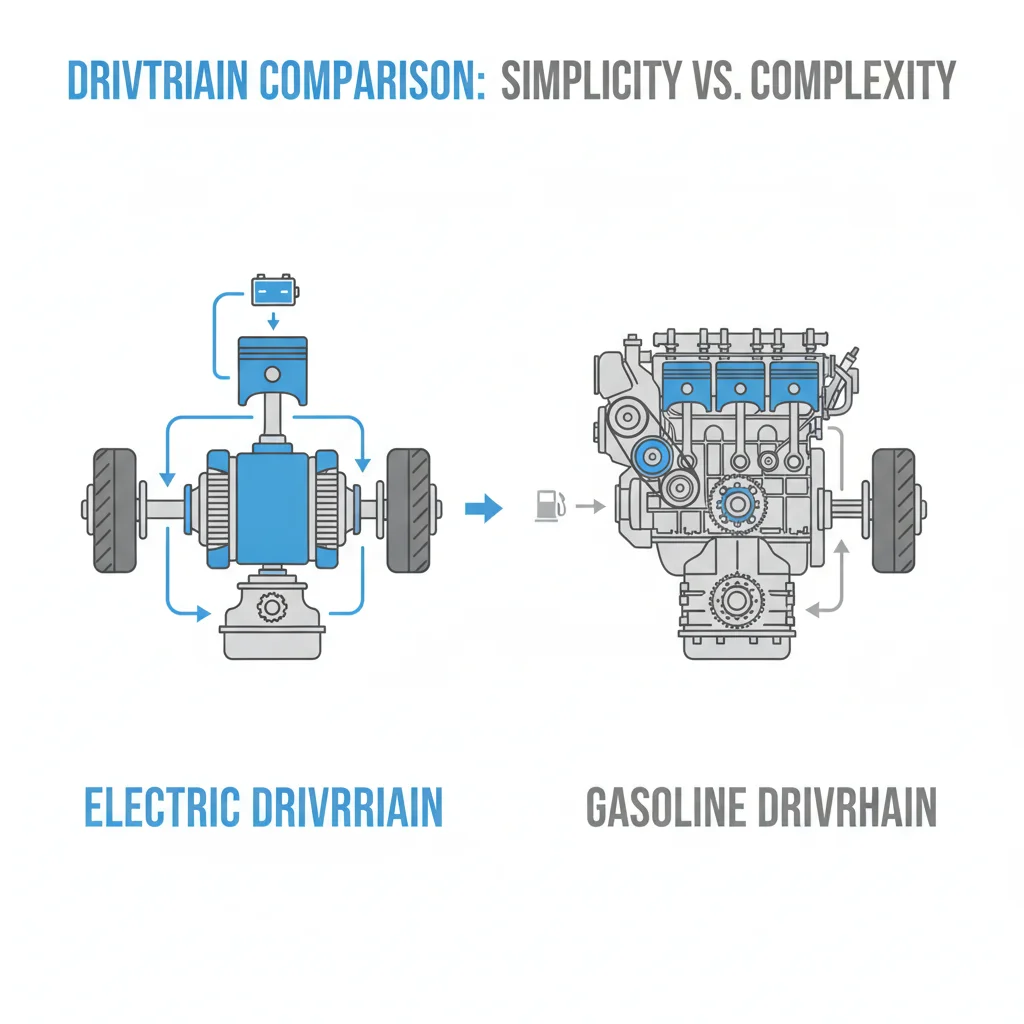
Every EV marketing pitch includes some version of it: no oil changes, no spark plugs, fewer trips to the shop. And that's not entirely wrong. Electric vehicles do eliminate a meaningful chunk of the routine maintenance associated with internal combustion engine (ICE) vehicles. The question is what exactly gets eliminated — and what still demands your time and money.
Understanding the real maintenance profile of an EV matters before you buy one, refinance around one, or set up a long-term ownership budget. The mechanics of how EVs work — electric motors, single-speed transmissions, regenerative braking — are genuinely simpler in several respects. But simpler isn't synonymous with maintenance-free, and conflating the two leads owners to skip service intervals they should be keeping.
This article breaks down the most common myths around EV maintenance, corrects them with specifics, and helps you build a realistic picture of what low maintenance actually looks like over years of ownership.
Myth
EVs don't need any regular maintenance — just charge and drive.
Fact
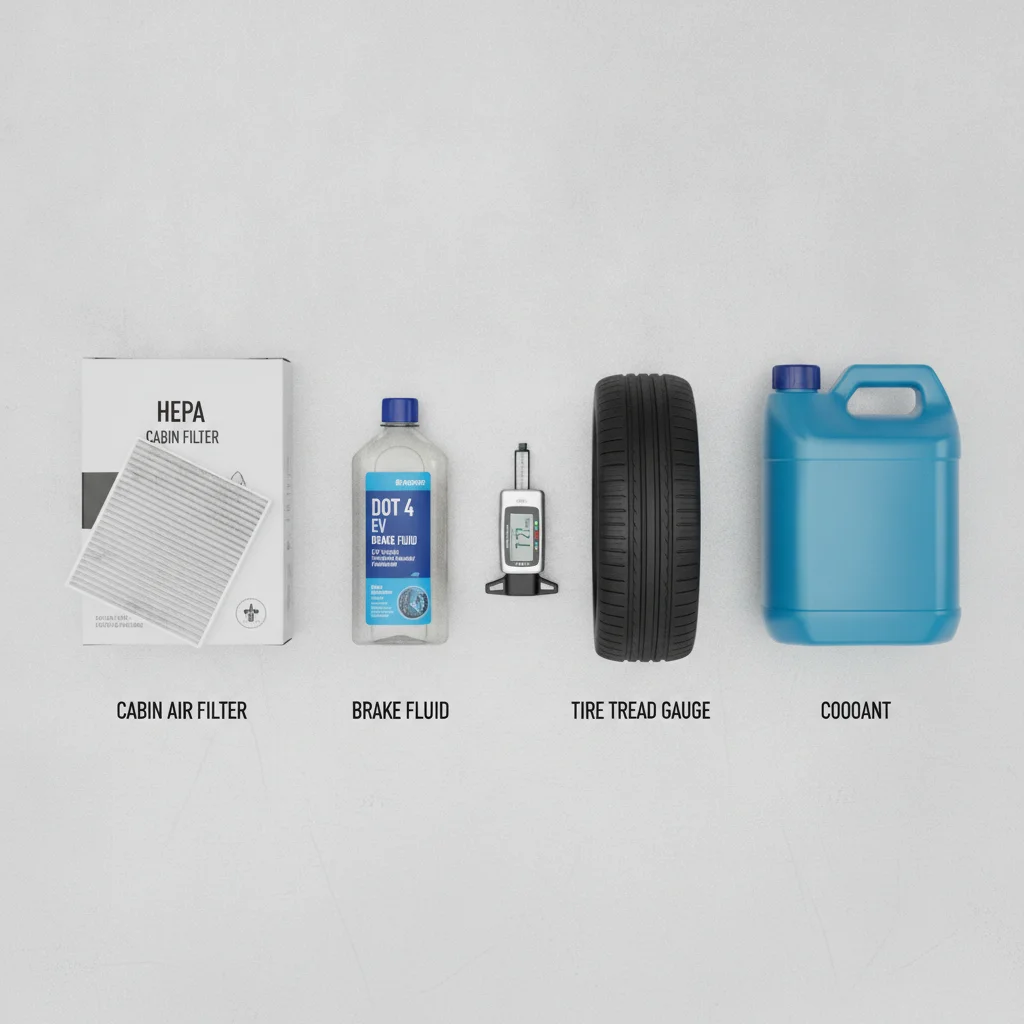
EVs eliminate many ICE-specific tasks but still require tire rotations, brake fluid changes, cabin air filter replacements, and coolant service.
This is the most pervasive EV myth, and it's understandable given how aggressively it's been amplified by automakers. The elimination of oil changes alone removes the most visible and frequent maintenance touchpoint most drivers know. But removing oil changes doesn't mean removing all maintenance obligations.
Tires on EVs wear faster than on comparable gas vehicles — sometimes significantly so. The instant torque delivery that makes EVs feel responsive also accelerates tread wear, especially on the front axle. Regenerative braking reduces wear on brake pads, but it does nothing for brake fluid, which still absorbs moisture over time and must be flushed on schedule. Cabin air filters accumulate particulates regardless of what's powering the vehicle. And thermal management systems — critical to battery longevity and fast-charging performance — use coolant that requires periodic inspection and eventual replacement.
The maintenance list is shorter and less frequent. It is not empty. Owners who treat their EV as truly zero-maintenance tend to discover that fact at resale time, when buyers or dealers notice deferred service in the vehicle's history.
Myth
EVs have regenerative braking, so brake pads essentially never wear out.
Fact
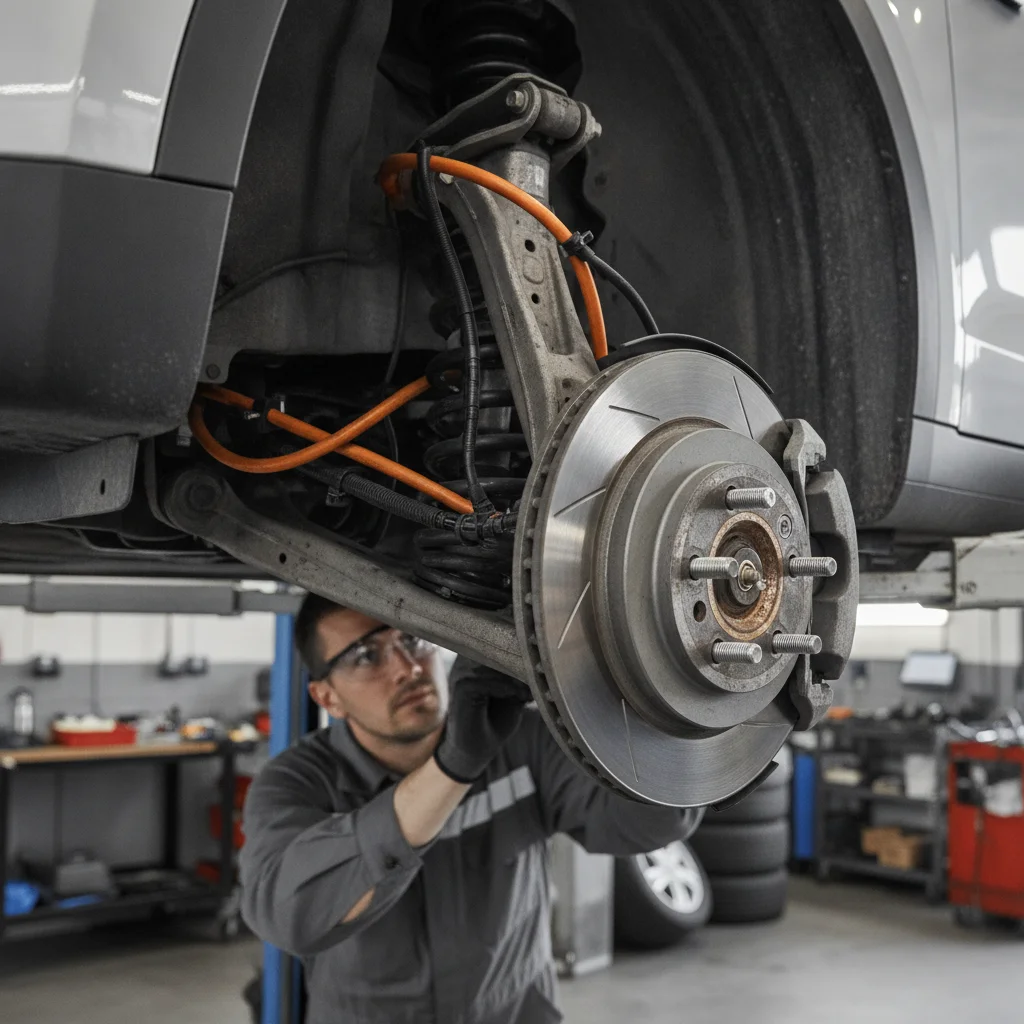
Regenerative braking dramatically extends brake pad life, but pads and rotors still need periodic inspection — and rotors can actually corrode faster from underuse.
Regenerative braking is real and genuinely beneficial. In typical urban driving, regen can handle the vast majority of deceleration events, leaving friction brakes barely touched. Some EV owners report going well over 100,000 miles before needing new brake pads — a stark contrast to the 30,000–70,000 mile intervals common in gas vehicles.
But the flip side is a problem that many owners don't anticipate: rotor corrosion. When friction brakes are rarely used, rotors don't get the natural cleaning that comes from regular pad-on-rotor contact. Surface rust builds up, particularly in humid climates. This can eventually cause brake shudder, noise, or uneven braking — and in some cases requires rotor replacement even when the pads themselves have plenty of life remaining.
The practical takeaway: EV owners should occasionally apply friction brakes intentionally on low-traffic roads or in parking lots to scrub accumulated surface rust. And mechanics should still inspect rotors at every tire rotation, even if pads look pristine. Don't skip brake inspections just because you assume regen is handling everything.
Myth
Charging to 100% every night is fine — it's what the battery is for.
Fact
Routinely charging to 100% accelerates battery degradation; most manufacturers recommend keeping daily charge between 20% and 80% for long-term health.
Lithium-ion batteries — the chemistry underpinning virtually every modern EV pack — degrade faster at the extremes of their charge range. Keeping a battery at 100% state of charge for extended periods, or repeatedly draining it near zero, stresses the cell chemistry in ways that reduce usable capacity over time.
Every major EV manufacturer addresses this in their owner documentation, though the specifics vary. Tesla, Ford, GM, Hyundai, and others all recommend setting a daily charge limit of 80–90% for routine use, reserving 100% charges for long-distance trips where the full range is genuinely needed. Many vehicles allow you to program this limit directly in the charging settings.
[in_content_images:3]The financial stakes are real. EV battery packs are the single most expensive component in the vehicle, often representing 30–50% of the car's original cost. Accelerated degradation that drops usable capacity by 20–30% over seven to ten years rather than the typical 10–15% can significantly affect resale value and trigger out-of-warranty replacement costs that run into thousands of dollars. Battery management is EV maintenance — it just happens in the charging settings rather than at a service center.
Myth
You never need to go to a dealership or shop for an EV — everything is handled over the air.
Fact
Over-the-air updates handle software, but physical service — tire rotations, fluid checks, brake inspections — still requires in-person appointments.
Over-the-air (OTA) software updates are one of the genuinely transformative aspects of modern EV ownership. Tesla pioneered the capability, and most major manufacturers now offer it for varying functions. OTA can push fixes for charging behavior, adjust regenerative braking tuning, update navigation maps, and in some cases improve range estimates or add new features. This is maintenance that a gas car cannot receive remotely, and it's a real ownership advantage.
But OTA updates address software. They don't rotate your tires. They don't flush your brake fluid. They don't inspect your cabin filter or check your coolant reservoir. Physical maintenance still requires physical access — a trained technician, a lift, and the right tools and fluids.
There's also a subtler point worth making: EV-specific service networks are still maturing. In some regions, finding a technician qualified to work on EV high-voltage systems — particularly battery diagnostics and thermal management — can be more difficult than finding a standard mechanic. This is a practical, near-term ownership consideration that owners in rural or underserved markets should account for when planning their maintenance approach. For a broader look at which myths actually cost owners money, see EV maintenance myths that are costing owners money.
Myth
EV tires are the same as regular tires and wear at the same rate.
Fact
EVs are heavier and deliver torque more abruptly than gas cars, which accelerates tire wear — and many EVs require specific low-rolling-resistance tires.
Tires are consistently one of the most underestimated ongoing costs for EV owners. There are two compounding factors at work.
First, EVs are heavy. The battery pack adds significant weight — often 400 to 1,000 pounds more than a comparable gas vehicle — and that weight presses down on the contact patch with every mile. More weight means more friction, more heat, and faster tread wear.
Second, EVs deliver torque instantaneously. Even moderate acceleration puts more rotational force through the tires than a gas engine spinning up through its powerband. This is especially pronounced on the front axle on front-wheel-drive EVs and on both axles for all-wheel-drive configurations.
The combination means EV tires typically wear 20–30% faster than those on equivalent ICE vehicles, depending on driving style and vehicle weight. Aggressive drivers can eat through a set faster still. Regular rotations — every 5,000 to 7,500 miles — are essential to even out wear patterns. And when it's time to replace, owners should use tires specifically rated or optimized for EVs when possible; standard tires can affect range and ride quality on vehicles designed around specific rolling resistance targets.
Myth
If the car doesn't tell you something needs service, nothing needs service.
Fact
EV maintenance reminders in the instrument cluster are incomplete — some service intervals, including brake fluid, are not always flagged automatically.
Modern vehicles are increasingly good at notifying drivers about certain maintenance needs — tire pressure warnings, oil life monitors (on hybrids), and battery state indicators. But the onboard diagnostic systems do not catch everything, and EV owners who rely entirely on dashboard alerts for their maintenance schedule will miss items.
Brake fluid is a prime example. It absorbs moisture from the atmosphere over time through the hydraulic system, lowering its boiling point and degrading its performance — but this process doesn't trigger a warning light. Most manufacturers recommend a brake fluid inspection every one to two years and a full flush every two to three years, regardless of mileage. Many EV owners have no idea this interval exists because their car never told them.
The same applies to cabin air filter condition, coolant level in the thermal management loop, and visual inspection of suspension and steering components. These are time-based or mileage-based intervals that require proactive tracking by the owner, not passive reliance on alerts. Why electric vehicles still need regular maintenance covers this gap in more depth.
What EV Maintenance Actually Costs Over Time
The data on EV maintenance costs is encouraging — but it requires context. Consumer Reports, the U.S. Department of Energy, and industry analysts broadly agree that battery-electric vehicles cost less to maintain than comparable gas-powered cars over their lifetime. But the savings are not evenly distributed, and they're not guaranteed if owners neglect the upkeep tasks that do remain.
40%
Lower maintenance costs vs. ICE vehicles
A 2020 U.S. Department of Energy study found BEV maintenance costs are roughly 40% lower per mile than comparable gasoline-powered vehicles.
$900/yr
Average annual EV maintenance spend
Consumer Reports estimates EV owners spend about $900 annually on maintenance and repairs, versus roughly $1,200 for ICE vehicle owners.
20–30%
Faster tire wear on EVs
Industry data and owner reports consistently show EV tires wearing significantly faster than those on equivalent gas vehicles due to weight and torque delivery.
$5,000+
Potential battery replacement cost (out of warranty)
Out-of-warranty EV battery module repairs or replacements can range from several thousand to over $15,000 depending on the vehicle and damage scope.
10–15%
Typical battery capacity loss over 10 years
Well-managed EV batteries typically lose 10–15% of usable capacity over a decade of normal use, per data from Tesla, Nissan, and independent fleet studies.
The biggest savings come from eliminating engine-related service: no oil changes (typically $75–$150 per visit, two to four times a year), no spark plug replacements, no timing belt service, and no exhaust system repairs. These costs add up to several thousand dollars over the life of a typical ICE vehicle. For a detailed breakdown of what disappears with an EV, see why EVs have fewer moving parts.
What remains are costs that owners often underestimate: tires, brake fluid, coolant, cabin air filters, wiper blades, and eventually battery-related service. The upkeep tasks people underestimate with EVs are real, and skipping them has real consequences for reliability and resale value.
Deferred Maintenance Affects Resale and Warranty Claims
Skipping EV maintenance intervals — even ones that feel minor, like brake fluid or coolant checks — can create problems when you go to sell or trade in the vehicle. Dealers and private buyers increasingly request service records, and gaps can justify lower offers. More critically, some manufacturers can deny warranty coverage for battery-related issues if they can demonstrate that the owner's charging or maintenance habits contributed to premature degradation.
PHEVs Still Need Full ICE Maintenance
Plug-in hybrid electric vehicles carry both an electric drivetrain and a conventional internal combustion engine. That means they still require oil changes, spark plug replacements, and all the engine-related service a gas car needs — in addition to the EV-specific upkeep. Don't assume PHEV ownership delivers the same maintenance simplicity as a full battery-electric vehicle.
Building a Realistic EV Maintenance Schedule
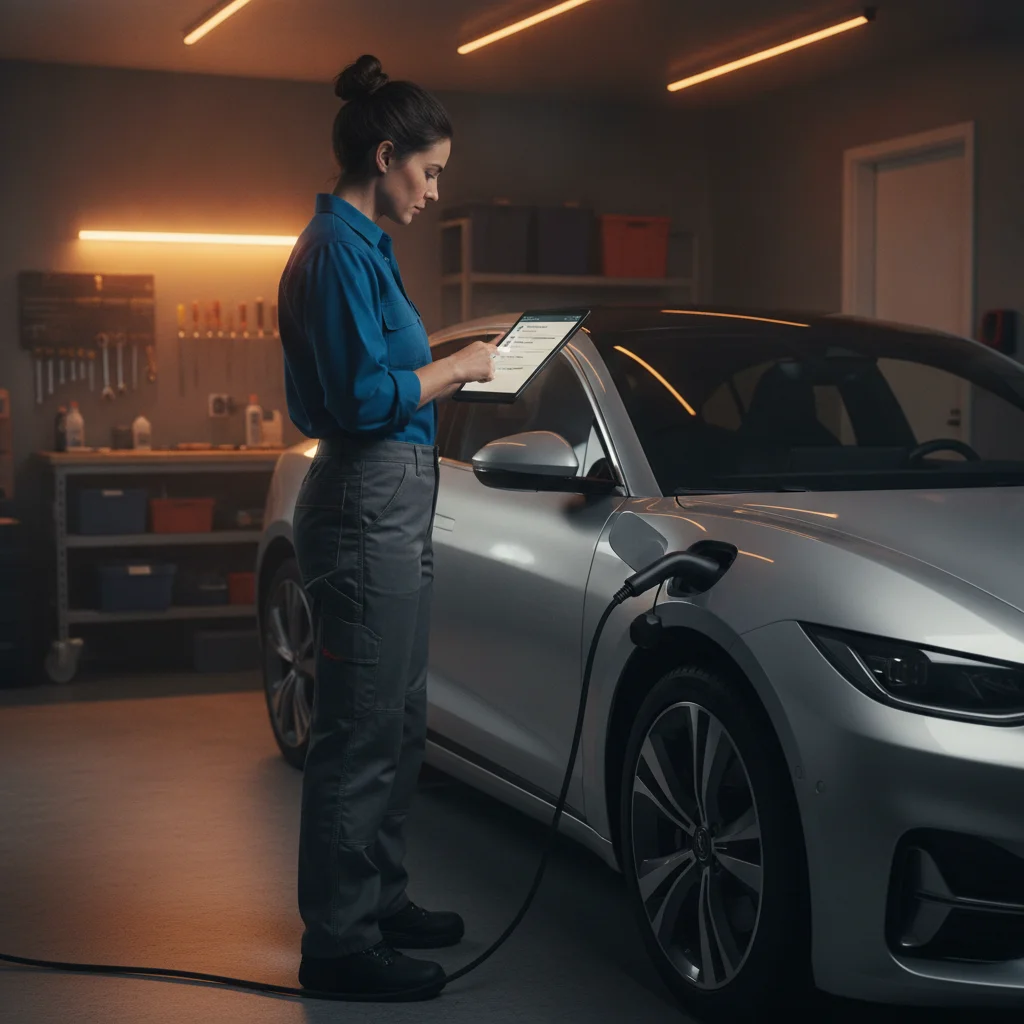
Rather than relying on the vague promise of 'low maintenance,' EV owners benefit from treating their vehicle with the same systematic approach they'd bring to any major asset. The intervals differ from a gas car, but the discipline doesn't.
Here's a practical framework:
- Every 6–12 months: Rotate tires, inspect brake pads and rotors, check and top off washer fluid.
- Every 1–2 years: Replace cabin air filter, inspect brake fluid, check coolant level in thermal management system.
- Every 2–3 years: Flush brake fluid (moisture absorption degrades performance even with light brake use).
- Periodically: Apply software updates as released by the manufacturer — treat these like you would any safety-critical update.
- Battery-specific: Avoid routinely charging above 80–90% (except for long trips), minimize prolonged exposure to full charge or near-zero states, and use DC fast charging selectively rather than exclusively.
For a comprehensive cradle-to-resale view of every maintenance task an EV owner should track, see everything that goes into maintaining an EV over its lifetime.
Keep in mind that not all EVs are the same. Battery-electric vehicles (BEVs), plug-in hybrids (PHEVs), and conventional hybrids (HEVs) carry different maintenance profiles. PHEVs, for instance, retain an internal combustion engine alongside the electric drivetrain — meaning oil changes and related ICE service still apply. If you're still deciding which type fits your lifestyle, the EV types explained hub is a useful starting point.
Battery Habits Are the Highest-Stakes Maintenance Decision
No single maintenance habit has more long-term financial impact for an EV owner than how they manage their battery's state of charge. Routinely charging to 100%, regularly depleting to near zero, or relying heavily on DC fast charging without occasional Level 2 sessions can meaningfully accelerate degradation. Battery replacement costs can dwarf the cumulative savings from skipping oil changes. Set your daily charge limit to 80–90% in the vehicle's settings and treat it as a non-negotiable habit from day one.

All claims are backed by peer-reviewed research. Sources on request.