Key Takeaways
Single-Speed Gearbox (EV)
A single-speed gearbox — also called a single-speed transmission or fixed-ratio reducer — is the drivetrain component in most electric vehicles that transfers power from the electric motor to the wheels using one fixed gear ratio. Unlike a conventional automatic or manual transmission, it has no gear shifts, no clutch packs, and no torque converter. Because electric motors produce strong torque across a wide range of speeds, they don't need multiple gear ratios to keep the engine in its power band.
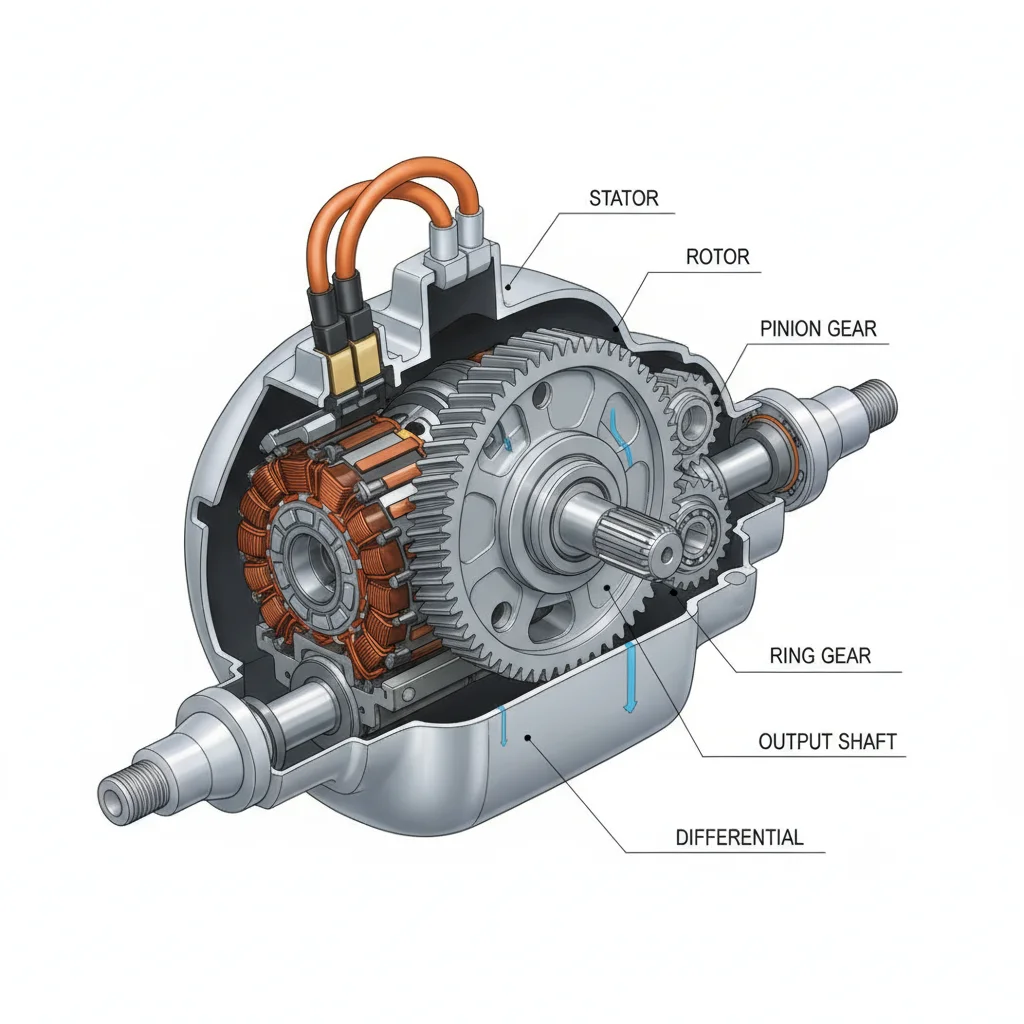
The single-speed unit typically reduces motor RPM to wheel RPM through a fixed ratio (commonly between 7:1 and 10:1) using a helical gear set and differential, all housed in a compact sealed unit sometimes called a transaxle.
Why Electric Motors Don't Need Multiple Gears
To understand why an EV uses a single-speed gearbox, you first need to understand why gasoline engines need multiple gears in the first place. A combustion engine produces usable power only within a relatively narrow RPM band. Below that band, the engine lugs and stalls. Above it, power drops off and the engine over-revs. A multi-speed transmission exists to keep a gas engine spinning in its sweet spot across a wide range of vehicle speeds — that's why a highway cruise might use sixth gear while a full-throttle launch uses first.
Electric motors don't work that way. They produce peak torque from zero RPM and maintain strong, smooth power delivery across an extremely wide speed range — often 0 to 15,000 RPM or higher. There's no narrow band to stay inside. The motor simply turns the shaft, and the power is available whether you're creeping through a parking lot or cruising at 75 mph.
That fundamental difference in power delivery is what makes a single fixed gear ratio workable — and actually ideal — for most electric vehicles. The gearbox doesn't need to change ratios because the motor's own characteristics handle what multiple gears would otherwise manage.
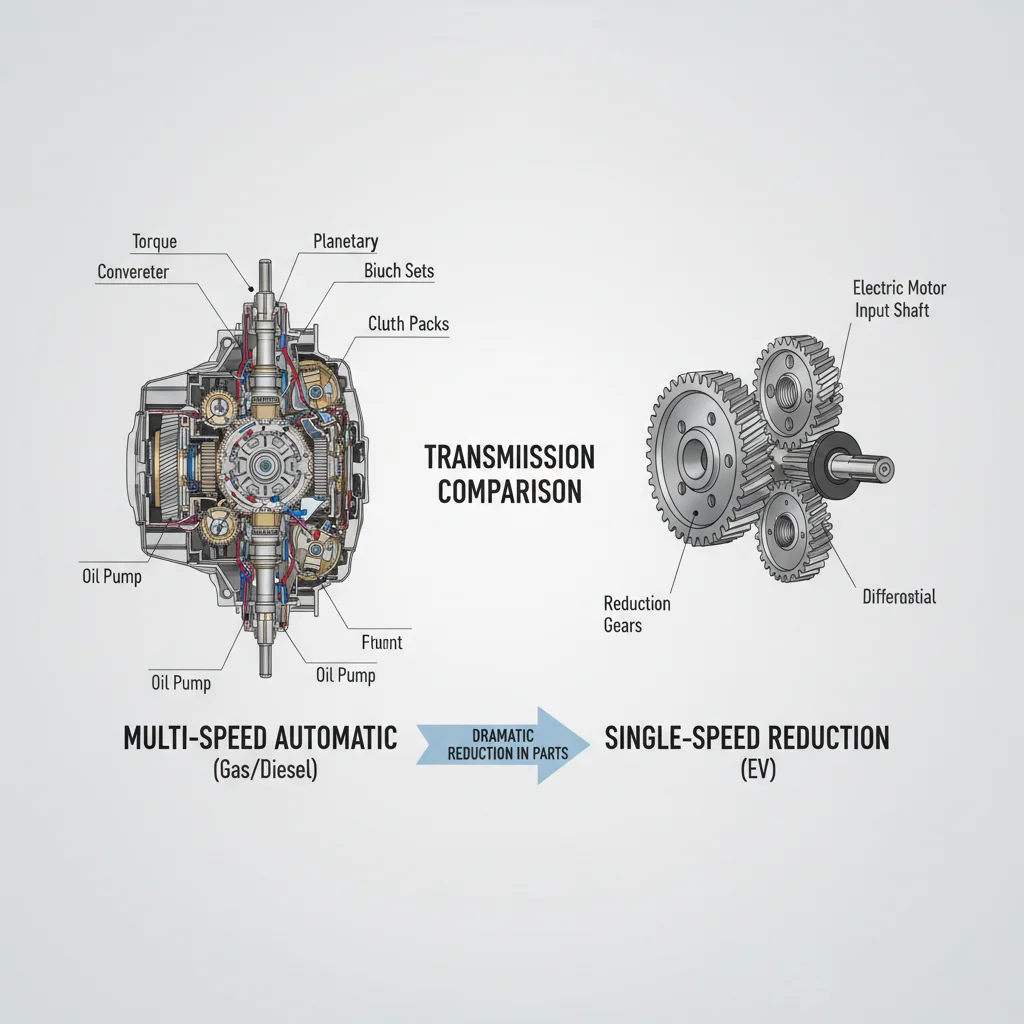
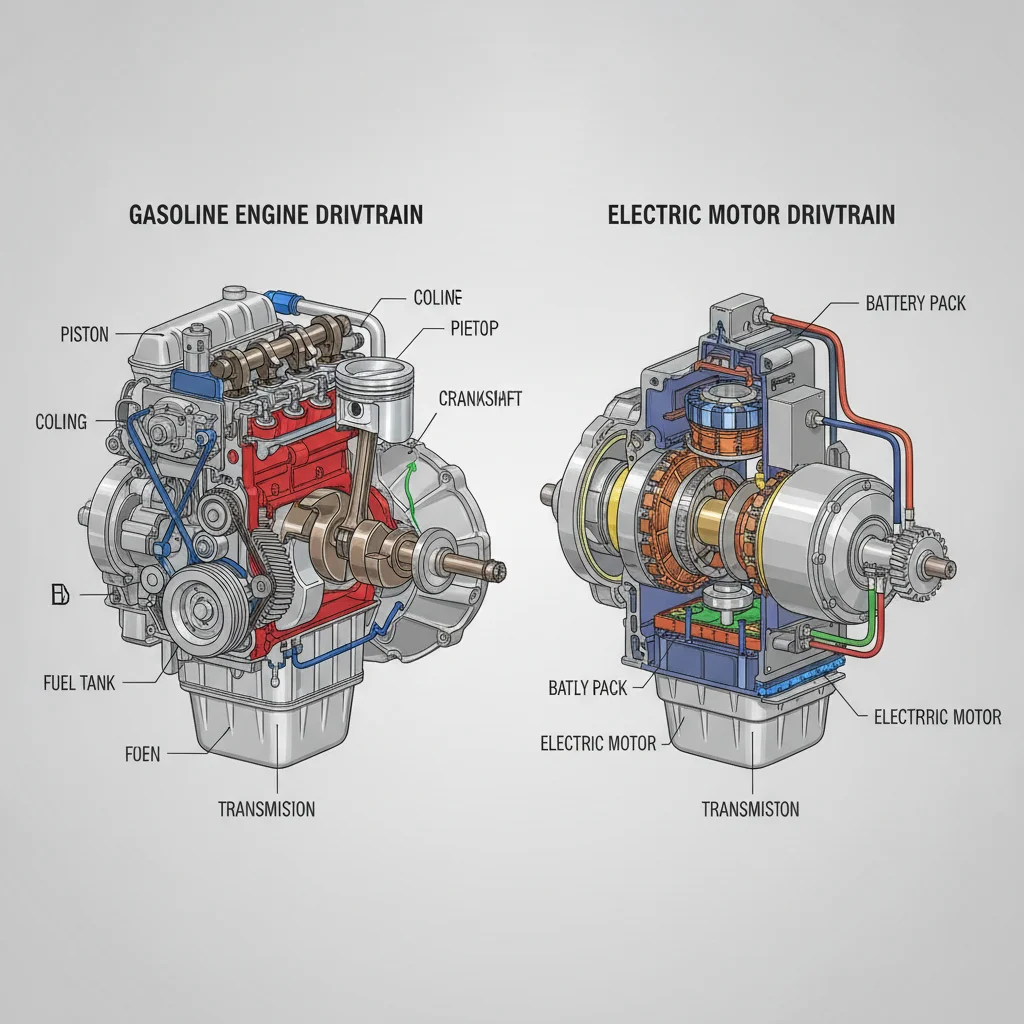
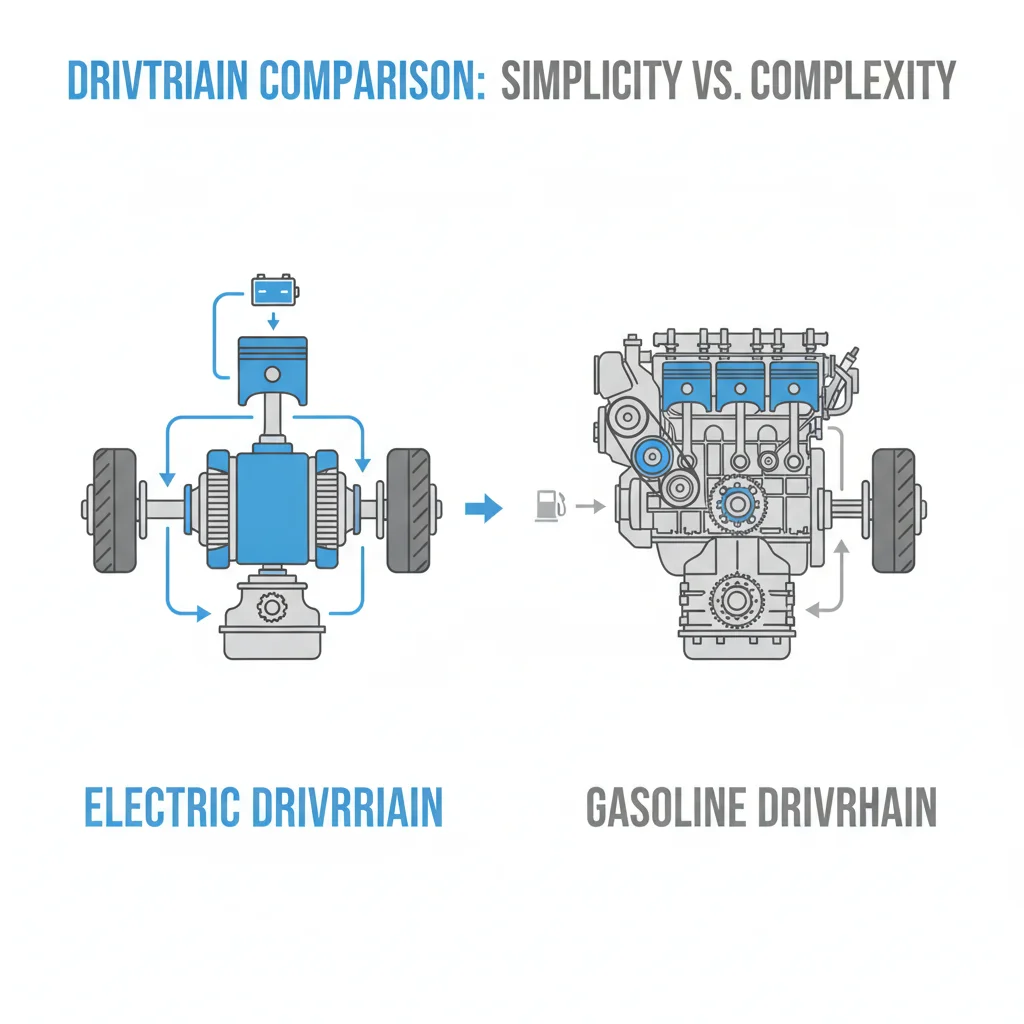
For a deeper look at how the entire EV powertrain differs from a gas-powered one, see our component-by-component comparison. The contrast between what's present in an ICE vehicle and what's simply absent in an EV is striking.
What the Single-Speed Gearbox Actually Contains
The term "gearbox" can be misleading — it might conjure images of a complex automatic transmission filled with clutch packs, planetary gear sets, and a hydraulic valve body. The EV single-speed unit is dramatically simpler. In most battery electric vehicles, the gearbox housing contains just a few elements:
- A helical gear set — typically one or two gear pairs that step down the motor's high rotational speed to a usable wheel speed
- A differential — allowing the left and right driven wheels to rotate at different speeds during cornering
- Gear oil or ATF-type fluid — lubricating and cooling the gear mesh and bearings
- Bearings and seals — supporting the shafts and keeping fluid contained
That's largely it. There are no clutches to wear, no solenoids to fail, no torque converter to replace, and no transmission control module managing dozens of shift parameters. The gear ratio is fixed at the factory. The unit is typically sealed and compact, often integrated directly with the motor in a single transaxle assembly.
"Sealed for Life" Has Practical Limits
When a manufacturer labels a component "lifetime fill," that lifetime is often calibrated to expected ownership periods — not 200,000-mile high-mileage scenarios. If you plan to run your EV well past the 100,000-mile mark, it's prudent to have a technician inspect the drive unit fluid condition regardless of whether a formal interval exists. Fluid degradation is real, even in low-stress sealed systems.
Not All EV Drivetrains Are Identical
Dual-motor AWD EVs have two separate drive units — one per axle — each with its own gear set and fluid. If you own an AWD EV, any fluid inspection or change guidance applies to both units, not just one. Service costs remain low, but it's worth confirming with your service advisor that both units are being evaluated.
This simplicity is a meaningful financial advantage over time. A conventional automatic transmission rebuild can run $2,500 to $4,500 or more. The equivalent failure in an EV's gear reduction unit — which is far less likely — involves far fewer components to address.
For context on how this fits into the broader EV maintenance picture, our guide on EV moving parts and maintenance walks through every system that changes — or disappears entirely — when you go electric.
What Maintenance the Gearbox Actually Needs
"Minimal" doesn't mean zero. The gear reduction unit does contain fluid, and that fluid degrades over time from heat cycling and mechanical shear. Most manufacturers treat the gearbox fluid as a lifetime fill — meaning they don't publish a standard change interval — but that language requires some scrutiny.
~$0
Typical EV gearbox service cost over 100k miles
Most BEV single-speed units require no scheduled service before 100,000 miles under normal driving conditions, per manufacturer guidelines.
30–40%
Lower EV drivetrain maintenance cost vs. ICE
The U.S. Department of Energy estimates EV powertrain-related maintenance costs are 30–40% lower per mile than comparable gasoline vehicles.
7:1–10:1
Typical EV single-speed gear reduction ratio
Most production EVs use a fixed reduction ratio in this range to convert high motor RPM into appropriate wheel speed and torque.
~$150–$300
Cost of EV gear unit fluid change if needed
When a fluid inspection does prompt a change — typically past 100,000 miles — the service cost is modest compared to conventional transmission work.
In practice, manufacturer guidance varies significantly:
- Tesla does not publish a fluid change interval for its drive unit gear oil and considers it a sealed, lifetime fill under normal conditions.
- Chevrolet (Bolt EV) similarly makes no standard fluid change recommendation for the single-speed unit.
- Rivian recommends inspecting the drive unit fluid at 150,000 miles or 8 years.
- Hyundai (Ioniq 5/6) recommends inspecting the reducer oil every 100,000 miles.
The honest position is this: "lifetime fill" is an optimistic label. Gear oil does degrade. If you plan to own your EV past 100,000 miles, it's worth asking your service department to inspect the fluid condition at that interval. A fluid change on a sealed EV gear unit typically costs $100 to $300 — a minor expense compared to what the fluid protects.
Check Your Owner's Manual for Reducer Fluid Intervals
Don't rely on a general rule — look up your specific EV's maintenance schedule for 'reducer oil,' 'drive unit fluid,' or 'transaxle fluid.' Manufacturers vary considerably, from truly lifetime fills to 100,000-mile inspection windows. Knowing your vehicle's recommendation costs nothing and protects a component that's expensive to replace if neglected.
Flag Unusual Sounds Early — Don't Dismiss Them
EVs are quiet, which actually works in your favor for diagnosing drivetrain issues. A new whine, grind, or vibration that correlates with vehicle speed is easier to notice without engine noise masking it. If you hear something new and consistent, have it checked promptly — early diagnosis is almost always cheaper than a post-failure repair.
Beyond fluid, the gearbox's seals and bearings should be flagged if you notice any oil residue around the drive unit, a new whine or grinding sound at specific speeds, or vibration that wasn't there before. These are uncommon issues, but they do occur, particularly in high-mileage or high-performance applications.
Exceptions: When EVs Use More Than One Speed
While single-speed drivetrains are the norm, a handful of EVs use two-speed transmissions to push performance envelopes. The Porsche Taycan is the best-known example: its rear motor uses a two-speed transmission specifically to extend high-speed range and improve top-speed efficiency. The first gear provides hard acceleration off the line; the second gear lowers RPM at autobahn-level speeds, reducing heat and improving range.
Audi has also deployed two-speed arrangements on performance EV variants. In these cases, the drivetrain is more complex — there are shift actuators, additional gear sets, and more potential wear points. Owners of performance EVs with multi-speed units should review their manufacturer's maintenance schedule specifically for the transmission, since it more closely resembles a conventional drivetrain in its service requirements.
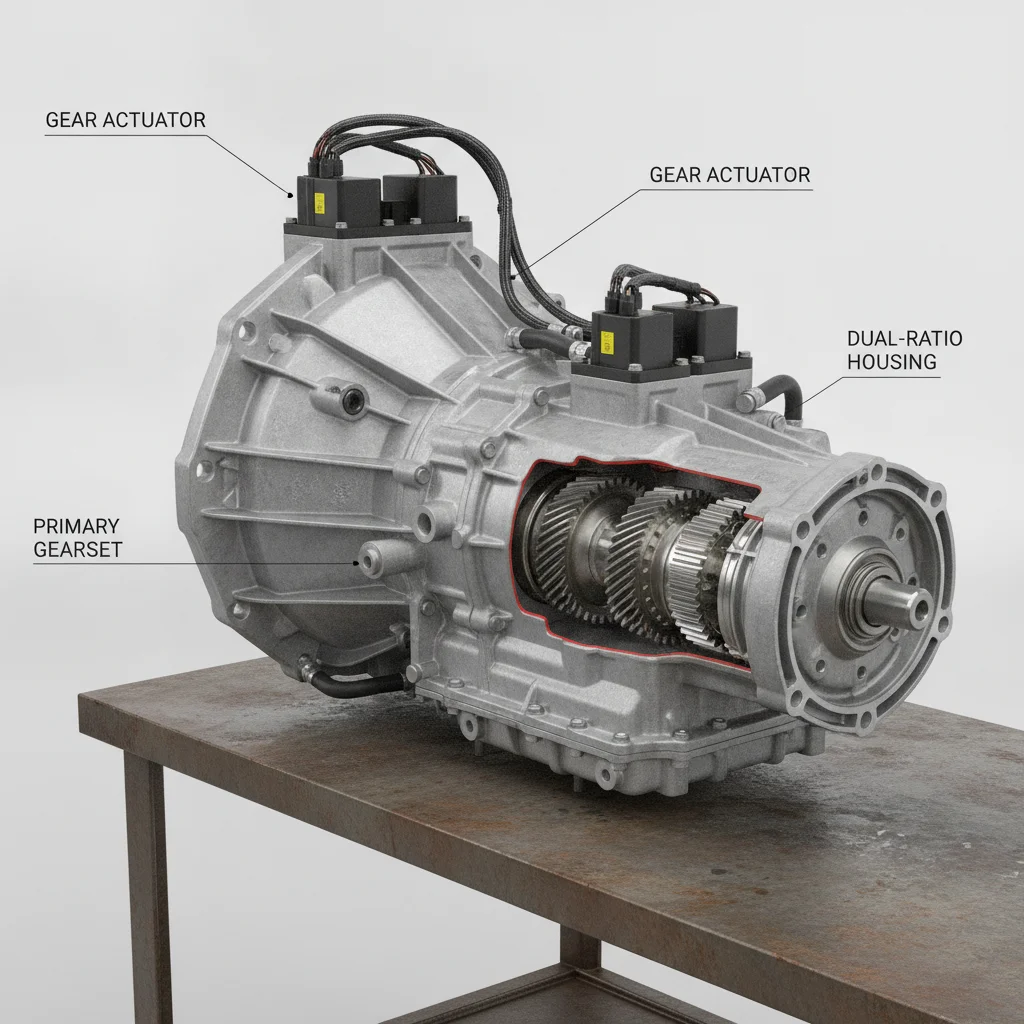
For most buyers — the vast majority of whom are purchasing family EVs, commuter vehicles, or mainstream trucks — a two-speed gearbox simply isn't part of the equation. The single-speed unit handles everything the vehicle needs without complication.
If you're comparing EV types and wondering how drivetrain complexity affects long-term costs across BEVs, PHEVs, and hybrids, our maintenance cost comparison by EV type breaks that down clearly.
What This Means for Your Long-Term Ownership Costs
The single-speed gearbox is one of several reasons EV drivetrain maintenance costs run meaningfully lower than those of equivalent gas vehicles. Studies from Consumer Reports and the Department of Energy consistently show EV powertrain-related service costs running 30–40% lower per mile than ICE equivalents. The transmission is a significant contributor to that gap.
“The simplicity of the electric drivetrain isn't just a marketing point — it's an engineering reality. Fewer moving parts means fewer things to go wrong, and the single-speed reducer is one of the clearest examples of that advantage in practice.”
— Greg Pannone, Automotive engineer and EV drivetrain researcher, SAE International contributor
To be direct about what this means in practice: if you budget $0 for transmission-related service across the first 100,000 miles of EV ownership, you'll likely be right. Fluid inspection around 100,000 miles might prompt a $150 to $250 fluid change. That's it. Compare that to the $150 to $250 per service a traditional automatic transmission typically needs every 30,000 to 60,000 miles under manufacturer schedules — or the multi-thousand-dollar rebuild risk if service is skipped.
Where EV owners do still spend money is on items that don't go away: tires (EVs are often heavier and wear tires faster), brake fluid (hydraulic systems remain), cabin air filters, coolant in the battery thermal management system, and of course battery health over time. The drivetrain itself is simply not a major cost center.
Our full breakdown of EV maintenance tasks that still matter covers those remaining items in detail — and explains why ignoring them can still cost you.
What to Listen and Look For Anyway
Even a simple, low-wear system can develop problems. Knowing the warning signs specific to an EV gear reduction unit keeps you from ignoring something that deserves attention.
Sounds That Warrant Investigation
- A persistent whine that changes with speed — could indicate bearing wear or low/degraded fluid in the drive unit
- Clunking when changing direction — could be related to CV joints (separate from the gearbox itself, but part of the drivetrain)
- Grinding or roughness at steady speed — unusual in an EV and worth a service inspection promptly
Visual Signs
- Oil residue or staining around the drive unit housing
- Any visible seal deterioration noted during tire rotation or brake service
Most EV owners will go years — possibly the entire ownership period — without encountering any of these symptoms. But being aware of them means you won't dismiss an early warning sign as "just an EV thing."
Check Your Owner's Manual for Reducer Fluid Intervals
Don't rely on a general rule — look up your specific EV's maintenance schedule for 'reducer oil,' 'drive unit fluid,' or 'transaxle fluid.' Manufacturers vary considerably, from truly lifetime fills to 100,000-mile inspection windows. Knowing your vehicle's recommendation costs nothing and protects a component that's expensive to replace if neglected.
Flag Unusual Sounds Early — Don't Dismiss Them
EVs are quiet, which actually works in your favor for diagnosing drivetrain issues. A new whine, grind, or vibration that correlates with vehicle speed is easier to notice without engine noise masking it. If you hear something new and consistent, have it checked promptly — early diagnosis is almost always cheaper than a post-failure repair.
For a complete picture of the EV drivetrain — including the motor, inverter, and battery systems that work alongside the gearbox — the How EVs Work hub is a solid starting point if you want to go deeper on the engineering side.

All claims are backed by peer-reviewed research. Sources on request.