Key Takeaways
Fewer Moving Parts (EV)
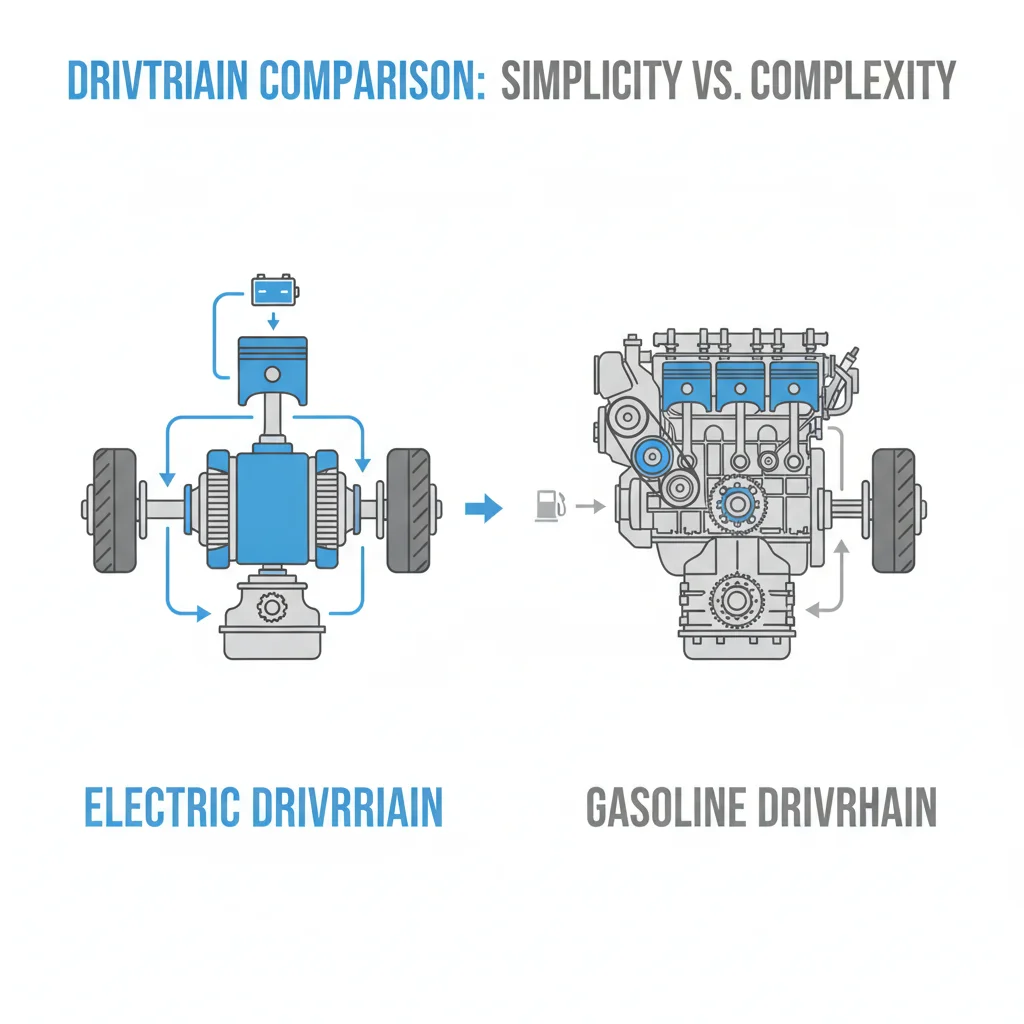
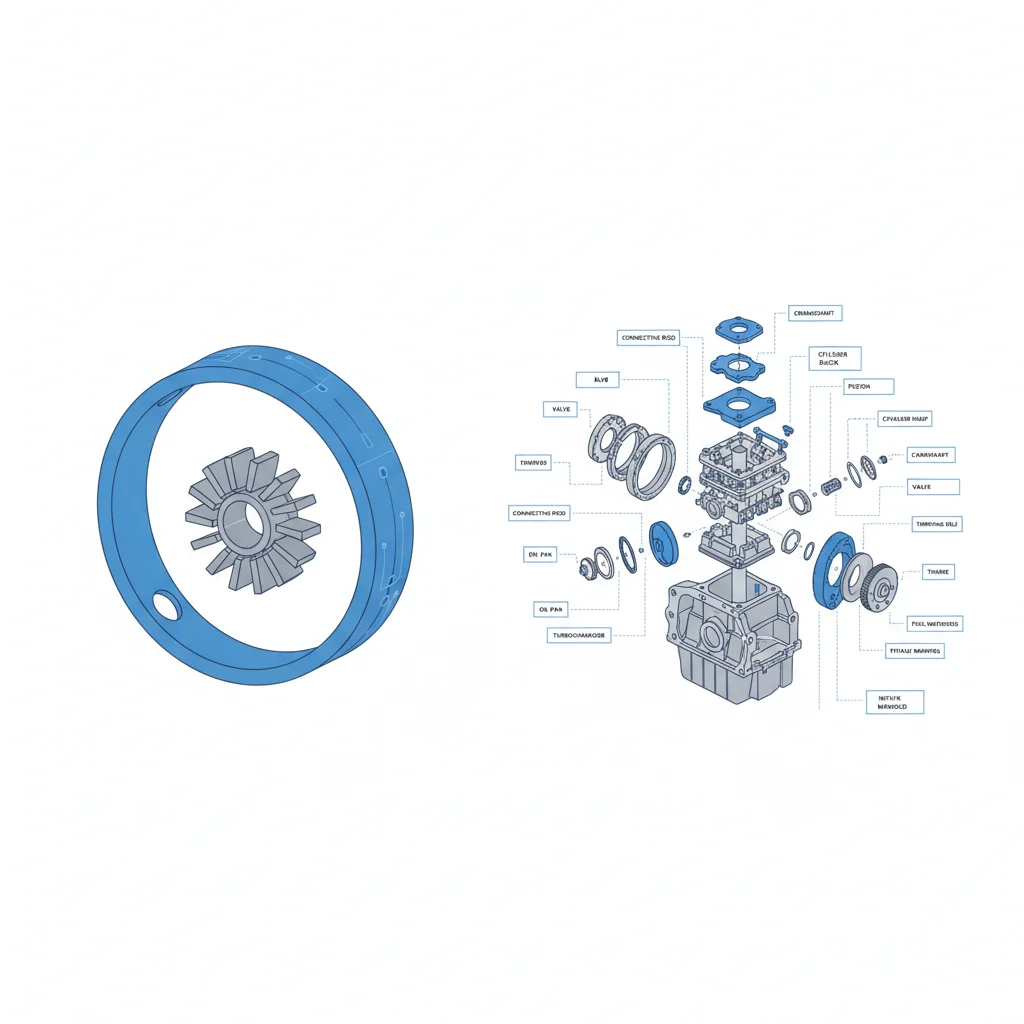
Electric vehicles (EVs) use an electric motor and battery pack instead of an internal combustion engine. An electric motor has just a handful of moving components — essentially a rotor spinning inside a stator — compared to hundreds of precision parts in a gasoline engine. This fundamental mechanical simplicity is what drives the claim that EVs are cheaper and less burdensome to maintain over time.
A typical battery electric vehicle (BEV) drivetrain contains roughly 20 moving parts, while a comparable internal combustion engine vehicle (ICEV) drivetrain can have 2,000 or more — including pistons, valves, camshafts, and timing components.
The Engine Problem EVs Don't Have
The internal combustion engine is an engineering marvel — and a maintenance nightmare. To convert fuel into motion, a gasoline engine requires hundreds of precisely machined parts moving in tight coordination: pistons compressing air-fuel mixtures, valves opening and closing thousands of times per minute, a timing belt or chain keeping the camshaft and crankshaft synchronized, and an oil system constantly lubricating the whole operation. Any one of those components can wear, fail, or fall out of spec.
An electric motor works on a completely different principle. Electricity flows through a coil of wire, which generates a magnetic field, which spins a rotor. That's essentially it. There are no combustion cycles, no valves, no pistons, and no need for continuous lubrication with a sacrificial fluid. The rotor is the primary moving part. The stator around it doesn't move at all.
This is the core mechanical difference that reshapes EV ownership. It's not marketing language — it's physics. And the downstream effect on what you'll spend at a shop, and how often you'll need to go, is substantial.
What Gets Eliminated Completely
When you switch to a battery electric vehicle, a specific list of service items simply disappears from your calendar. Understanding exactly what goes away — and why — gives you a clearer picture of real ownership costs.
Engine Oil and Filters
No combustion means no engine oil. Oil in a gas engine serves as a lubricant and coolant for metal surfaces that would otherwise grind against each other at high temperatures. An electric motor's bearing system requires minimal lubrication, and that lubrication doesn't degrade the same way. You won't be scheduling oil changes every 5,000 to 10,000 miles.
Timing Belts and Chains
The timing system synchronizes the camshaft and crankshaft — critical in an engine where valves and pistons must never collide. Timing belt replacement can cost $500 to $1,000 or more on many gas vehicles. In an EV, this component category doesn't exist.
Spark Plugs and Ignition Components
Spark plugs ignite the air-fuel mixture inside each cylinder. They wear out, foul with carbon, and require periodic replacement. Electric motors have no ignition system at all — there's nothing to spark because there's no fuel to ignite.
Exhaust System
Gas vehicles produce exhaust gases that must be routed through a catalytic converter, muffler, and tailpipe system. All of those components corrode over time and can fail. An EV produces no exhaust whatsoever, so there's no system to maintain or replace.
Transmission Complexity
Most gasoline vehicles use multi-speed transmissions — automatics with planetary gear sets, torque converters, and transmission fluid that degrades over time. Most EVs use a single-speed fixed-ratio gear reduction. No fluid changes, no solenoid failures, no clutch packs to worry about.
~20
Moving parts in a typical EV drivetrain
Compared to 2,000 or more in a conventional internal combustion engine vehicle, according to automotive engineering analyses.
40%
Maintenance cost reduction for BEV owners
A 2020 study by the U.S. Department of Energy's National Renewable Energy Laboratory found BEV owners spend roughly 40% less on maintenance than gas vehicle owners.
8 yrs / 100K mi
Standard EV battery warranty
Federal law requires EV manufacturers to warrant the battery pack for at least 8 years or 100,000 miles — whichever comes first — on all vehicles sold in the U.S.
2x
Typical brake pad lifespan advantage in EVs
Regenerative braking significantly reduces friction brake engagement, with many EV owners reporting brake pad life double or more that of equivalent gas vehicles.
$500–$1,000+
Typical timing belt replacement cost
A service item that occurs every 60,000–100,000 miles on many gas vehicles — and doesn't exist at all on a battery electric vehicle.
PHEVs and HEVs Are a Different Story
The maintenance simplicity described in this article applies primarily to battery electric vehicles (BEVs) — cars with no gasoline engine at all. Plug-in hybrids (PHEVs) and conventional hybrids (HEVs) retain an internal combustion engine alongside their electric components, meaning they still require oil changes, spark plugs, and other traditional services. For a detailed comparison, see our <a href="/electric-vehicles/ev-ownership-costs/ev-maintenance-basics/ev-ownership-the-upkeep-advantages-and-the-tasks-people-underestimate">look at EV upkeep advantages and what people underestimate</a>.
Software Updates Are a New Maintenance Category
Modern EVs receive over-the-air software updates that can affect battery management, charging behavior, and performance calibration. While not a physical maintenance task, staying current on these updates is important — some updates specifically address battery longevity or charging efficiency. Think of it as maintenance for the brain of the vehicle, not the body.
What Still Needs Regular Attention
The "EVs need no maintenance" claim is a simplification that can set owners up for unpleasant surprises. Several systems still wear out and require service. The difference is that this list is meaningfully shorter, and the intervals are often longer.
Tires
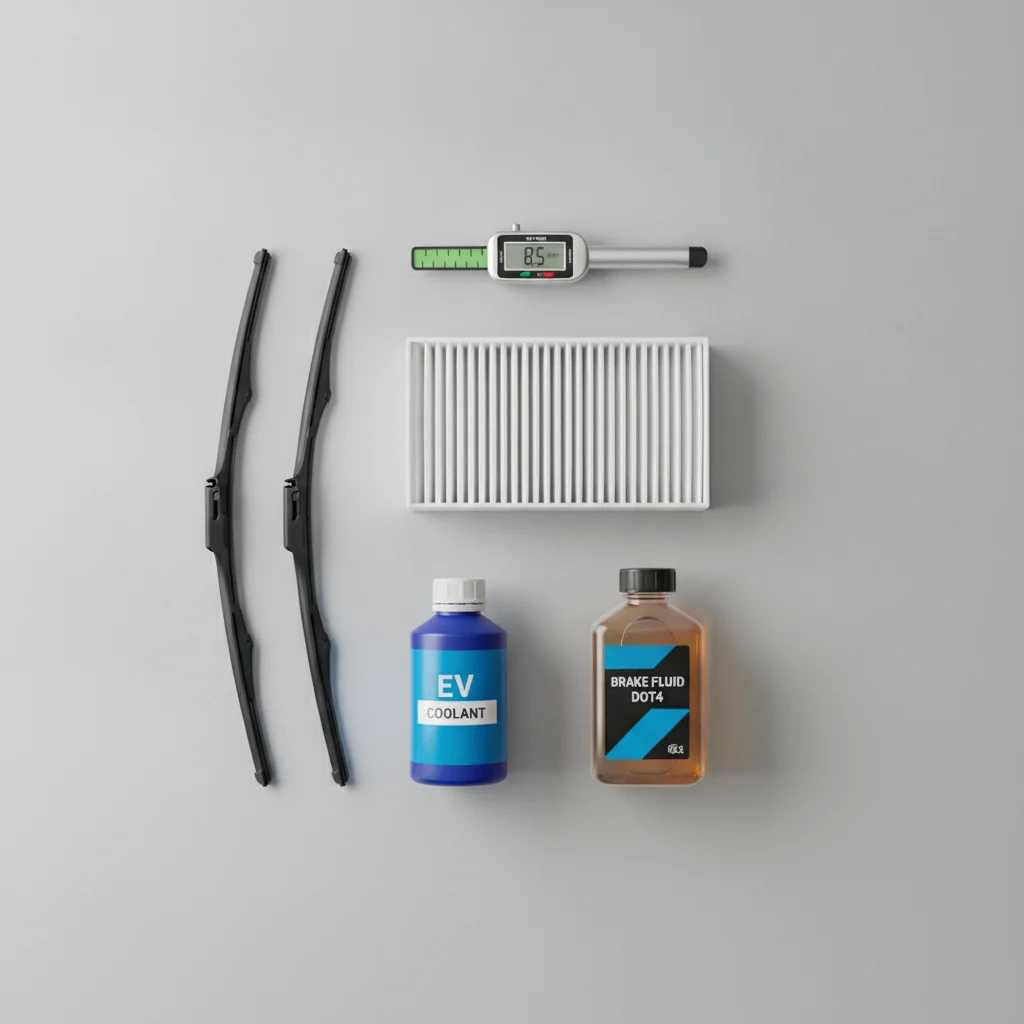
EV tires wear faster than many drivers expect. Battery packs add significant weight — the battery pack in a Tesla Model Y weighs roughly 1,000 pounds — and the instant torque available from electric motors accelerates wear further. Rotation every 5,000 to 7,500 miles is important, and you should expect to replace tires somewhat more frequently than on a comparable gas car. See our complete guide to EV wear items for specifics on tire grades and load ratings.
Brake Fluid
Brake fluid is hygroscopic — it absorbs moisture from the air over time, which lowers its boiling point and can compromise braking performance. Even though regenerative braking reduces how often the physical brakes engage, the fluid still degrades. Most manufacturers recommend replacing it every two to three years regardless of mileage.
Cabin Air Filters
The HVAC system in an EV draws air through a cabin filter just like any other car. Depending on where you drive, these filters can clog with pollen, dust, and particulates within a year or two. Replacement is inexpensive and straightforward on most models.
Battery Coolant System
Most modern EVs use a liquid thermal management system to keep the battery pack within its optimal temperature range. This system uses a coolant fluid that requires periodic inspection and eventual replacement — typically at longer intervals than engine coolant, but it's not indefinite. Neglecting thermal management can accelerate battery degradation.
Wiper Blades
As basic as it gets, but worth stating: wiper blades don't care what's under the hood. Replace them annually or when streaking begins.
Check Your Manufacturer's Maintenance Schedule
Every EV model has its own service requirements — don't assume they're all identical. Tesla, for example, publishes a maintenance schedule that differs substantially from what Chevrolet recommends for the Equinox EV. Download your vehicle's owner's manual and cross-reference it with your dealership's service recommendations before skipping any item.
Build Battery Habits Early
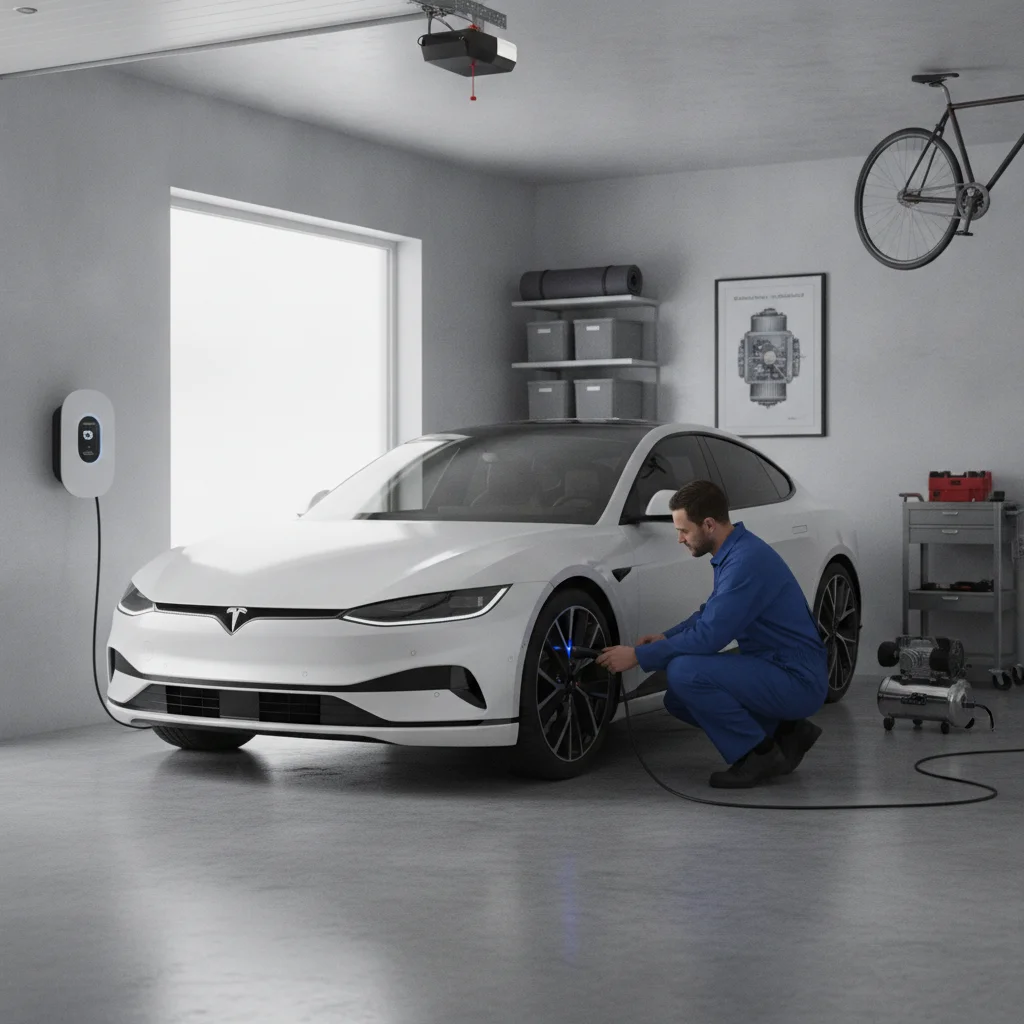
The choices you make in the first year of EV ownership set the trajectory for long-term battery health. Set your charging limit to 80–90% for daily use, use DC fast chargers only when necessary, and try to park in a garage during temperature extremes. These habits cost nothing and can meaningfully extend usable battery capacity over the vehicle's life.
Brakes: A Case Study in Regenerative Savings
Brake maintenance is one of the clearest examples of how EV mechanics translate to real-world savings. In a gasoline vehicle, every time you slow down, you're pressing brake pads against rotors — generating heat and wearing down the friction material. In a city driving cycle with frequent stops, this adds up quickly.
Electric vehicles use regenerative braking as the primary deceleration method. When you lift off the accelerator, the motor reverses its role, acting as a generator that converts kinetic energy back into electricity stored in the battery. The physical brake pads only engage when you need hard stops or near-zero-speed deceleration.
“Regenerative braking is one of the most underappreciated advantages of electric vehicles. In city driving, it handles the vast majority of deceleration — the friction brakes almost become a backup system. It's not uncommon to see EVs with 80,000 miles still on their original brake pads.”
— Jake Fisher, Senior Director of Auto Testing, Consumer Reports
In practice, this means brake pad life on a BEV can be double or more what you'd get on a comparable gas vehicle. Some EV owners report going 100,000 miles or more before needing a brake pad replacement. The flip side: rotors on EVs can sometimes develop light surface rust more quickly because they're used so infrequently. This is generally cosmetic and clears itself with normal use, but it's something to be aware of if your car sits for extended periods.
The Battery: Your Biggest Long-Term Variable
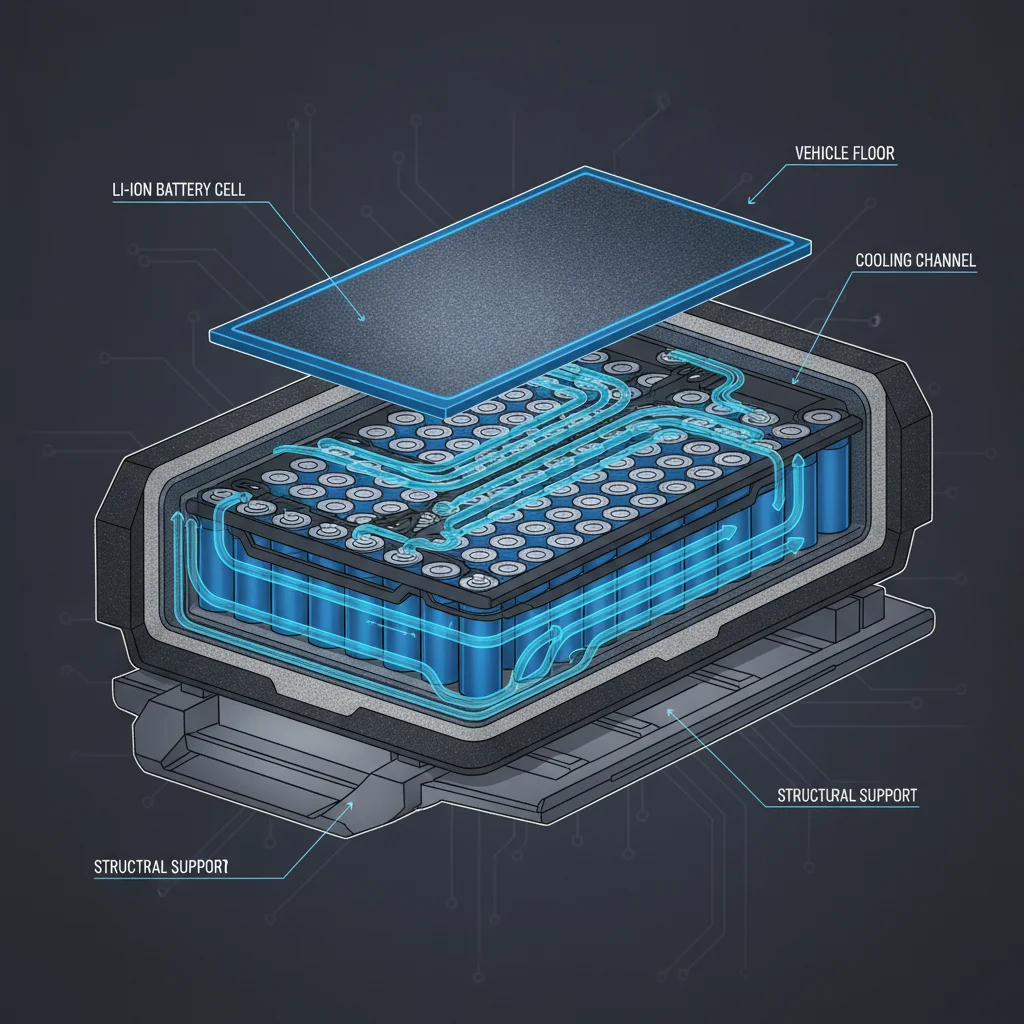
If the elimination of oil changes and timing belts represents the maintenance savings side of EV ownership, the battery pack represents the long-term risk variable that demands attention. A battery isn't a moving part — it doesn't wear through friction — but it does degrade over time through charge cycles, thermal exposure, and calendar aging.
Most EV manufacturers warrant their battery packs for 8 years or 100,000 miles, whichever comes first, with a guaranteed minimum capacity retention (often 70% of original capacity). That warranty backstop matters: battery replacement outside warranty coverage is expensive, with costs ranging from roughly $5,000 to over $20,000 depending on the vehicle.
The practical guidance for protecting battery health is straightforward: avoid frequent DC fast charging when possible, don't habitually charge to 100% or run down to 0%, and keep the vehicle garaged in extreme temperatures when feasible. None of these are maintenance tasks in the traditional sense — they're habits that preserve a critical component.
For a detailed look at how maintenance costs compare across different electrified powertrains over a vehicle's lifetime, see our comparison of BEV, PHEV, and HEV maintenance costs over time.
PHEVs and HEVs Are a Different Story
The maintenance simplicity described in this article applies primarily to battery electric vehicles (BEVs) — cars with no gasoline engine at all. Plug-in hybrids (PHEVs) and conventional hybrids (HEVs) retain an internal combustion engine alongside their electric components, meaning they still require oil changes, spark plugs, and other traditional services. For a detailed comparison, see our <a href="/electric-vehicles/ev-ownership-costs/ev-maintenance-basics/ev-ownership-the-upkeep-advantages-and-the-tasks-people-underestimate">look at EV upkeep advantages and what people underestimate</a>.
Software Updates Are a New Maintenance Category
Modern EVs receive over-the-air software updates that can affect battery management, charging behavior, and performance calibration. While not a physical maintenance task, staying current on these updates is important — some updates specifically address battery longevity or charging efficiency. Think of it as maintenance for the brain of the vehicle, not the body.
What This Means When You're Making a Purchase Decision
For a car buyer comparing an EV against a gas vehicle, the mechanical simplicity of an electric drivetrain has concrete financial implications. A 2020 analysis by the U.S. Department of Energy's National Renewable Energy Laboratory found that BEV owners spend roughly 40% less on maintenance than owners of internal combustion engine vehicles over a comparable ownership period.
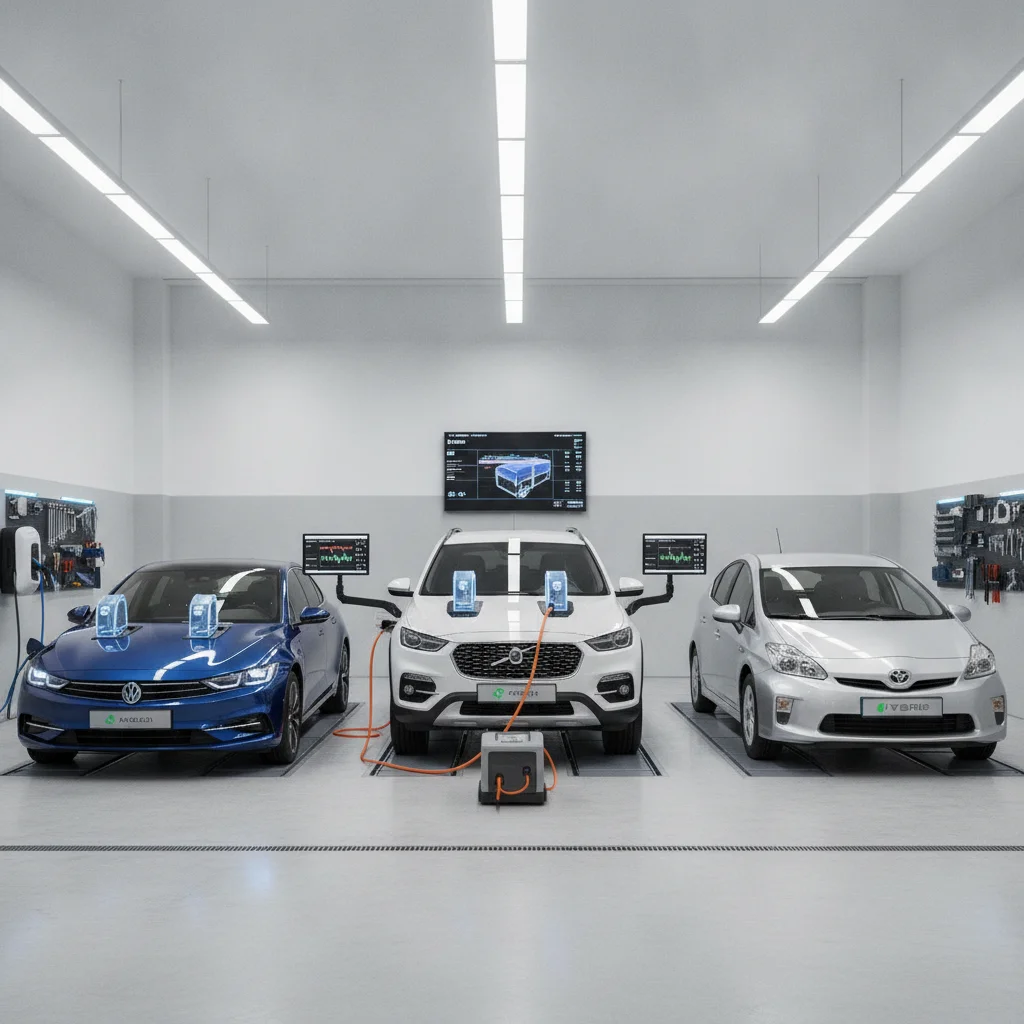
That gap matters most in the middle years of ownership — after the manufacturer's bumper-to-bumper warranty expires but before any major components require replacement. Gas vehicles in this window can accumulate transmission service, spark plug replacement, timing belt jobs, and other mid-life maintenance items. Most BEVs in the same window primarily need tires, brake fluid, and cabin air filters.
However, the full picture is more nuanced if you're considering a plug-in hybrid (PHEV) rather than a pure BEV. PHEVs retain a gasoline engine alongside their battery and electric motor, which means they inherit many of the traditional maintenance requirements — oil changes, spark plugs, exhaust systems — in addition to the battery care requirements unique to electrified vehicles. See our breakdown of how each EV type compares on maintenance for a side-by-side look.
The honest framing for any buyer: an EV is genuinely lower maintenance, not maintenance-free. The tasks that remain are fewer, simpler, and often less expensive — but they still exist and still require attention. For a complete picture of everything an EV needs across its ownership life, our lifetime EV maintenance guide walks through each item and approximate cost. And if you want an honest look at what the "low maintenance" marketing claim actually covers — and what it quietly omits — our article on what low maintenance really means for an EV is worth reading before you sign anything.
Check Your Manufacturer's Maintenance Schedule
Every EV model has its own service requirements — don't assume they're all identical. Tesla, for example, publishes a maintenance schedule that differs substantially from what Chevrolet recommends for the Equinox EV. Download your vehicle's owner's manual and cross-reference it with your dealership's service recommendations before skipping any item.
Build Battery Habits Early
The choices you make in the first year of EV ownership set the trajectory for long-term battery health. Set your charging limit to 80–90% for daily use, use DC fast chargers only when necessary, and try to park in a garage during temperature extremes. These habits cost nothing and can meaningfully extend usable battery capacity over the vehicle's life.

All claims are backed by peer-reviewed research. Sources on request.