
Key Takeaways
Severe vs. Normal Driving Conditions
Automakers define two service tracks in every owner's manual: 'normal' and 'severe' (sometimes called 'special' or 'extreme'). Normal driving assumes mostly highway miles at steady speeds in moderate weather. Severe conditions cover short trips, stop-and-go traffic, towing, extreme temperatures, dusty environments, and other stresses that accelerate component wear. Most American drivers actually qualify as severe — even if they don't realize it.
Under SAE and OEM engineering standards, a trip shorter than five to ten miles in cold weather is considered severe because the engine never fully reaches operating temperature, preventing moisture and combustion byproducts from burning off the oil.
Why the Mileage on the Sticker Isn't the Whole Story
Walk into any quick-lube shop and you'll still see a sticker in the upper left corner of your windshield — an odometer reading telling you when to come back. For decades, that number was the single governing metric of car maintenance. It was simple, easy to track, and almost completely inadequate at capturing how a vehicle was actually being used.
The mileage-only model assumes a kind of average driving that, in practice, very few people do. It assumes steady highway speeds, moderate temperatures, and trips long enough for the engine to fully warm up. In reality, the American driving profile looks nothing like that. The U.S. Department of Transportation estimates that the average one-way commute in this country is about 27 minutes — and many of those trips happen at low speeds, in traffic, in climates ranging from desert heat to upper-Midwest winters.
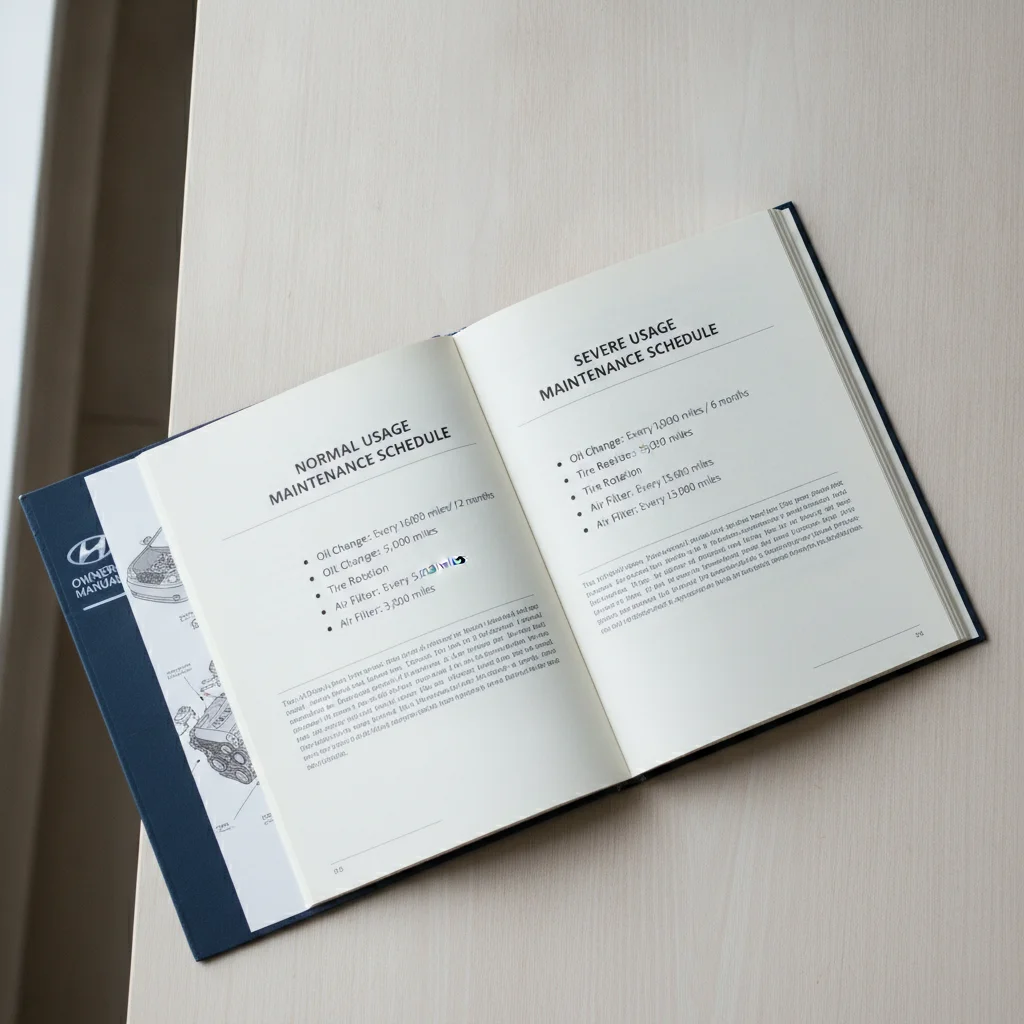
Modern automakers have long recognized this. Pick up almost any owner's manual produced in the last 20 years and you'll find two distinct maintenance schedules: one for normal conditions, one for severe. The gap between them is significant. On oil changes alone, some manufacturers recommend intervals 30 to 50 percent shorter under severe conditions. On transmission service, the differential can be even wider.
Understanding where your actual driving habits land — and aligning your service schedule accordingly — is one of the most practical and cost-effective things you can do as a vehicle owner. It also has downstream consequences for resale value. Skipped maintenance is one of the quiet forces that accelerates depreciation, often far more than owners realize.
Short Trips: The Hardest Miles Your Engine Ever Sees
Among all the driving patterns that accelerate wear, chronic short-trip driving may be the most underappreciated. A five-minute trip to the grocery store seems harmless — and in isolation, it is. But when that becomes the dominant use case for your vehicle, the cumulative effect on engine health is significant.
The core problem is thermodynamics. An internal combustion engine is designed to operate efficiently within a narrow temperature window — typically between 195°F and 220°F coolant temperature. It takes anywhere from five to fifteen minutes of driving to reach that range, depending on ambient conditions. When you shut the engine off before it gets there, several things happen that wouldn't occur during a full-warm drive:
- Water vapor from combustion condenses in the oil rather than evaporating out through the PCV system.
- Fuel blow-by past the rings dilutes the oil without the heat necessary to burn it off.
- Cold-start fuel enrichment runs longer, which also contributes to oil contamination.
The result, over hundreds of short trips, is oil that degrades far faster than its mileage interval would suggest. This is why the SAE and virtually every major OEM define a trip shorter than five to ten miles as a contributing factor to severe service classification. If most of your driving is short-haul, you should be changing your oil based on time — typically every three to six months — as much as mileage.
Short-Trip Driving and Battery Drain
Vehicles with large numbers of electrical accessories — heated seats, large touchscreens, advanced driver assistance systems — face a higher recharge demand after each cold start. If your commute is predominantly short trips, a battery tender or trickle charger used during long parking periods can extend battery life meaningfully, particularly in cold climates where battery capacity is already reduced.
Coolant Concentration Testing Is Simple and Free
Most auto parts stores will test coolant freeze-point concentration for free using a simple test strip or refractometer. If you're unsure when the coolant was last serviced — especially on a used vehicle purchase — this is one of the quickest checks you can do before winter sets in. Diluted or degraded coolant that freezes in a cold snap can cause thousands of dollars in engine damage.
Short-trip driving also affects battery health. The alternator needs sustained running time to fully recharge the battery after a cold start. Frequent short trips can produce a chronic partial-charge state that shortens battery life measurably — particularly with the larger demands of modern vehicles loaded with infotainment, heated seats, and advanced driver-assistance systems.
Stop-and-Go Traffic: What It Does Beyond Killing Your MPG
Most drivers understand intuitively that stop-and-go traffic is bad for fuel economy. What's less discussed is the mechanical toll it takes on specific components — particularly brakes, transmission, and the cooling system.
~70%
U.S. drivers who qualify as 'severe' service
Industry estimates consistently suggest the majority of American drivers meet at least one severe-service criterion, yet most follow normal-service intervals.
5–15 min
Time to reach full engine operating temperature
OEM engineering data shows trips shorter than this window prevent oil from purging moisture and fuel contamination effectively.
30–50%
Shorter battery life in hot climates
Battery Council International data indicates vehicles in hot-climate states see significantly shortened battery service life compared to moderate-climate averages.
2x
Brake wear rate in stop-and-go vs. highway driving
Automotive engineers estimate that urban stop-and-go driving can double the rate of brake pad wear compared to predominantly highway use.
50%
Recommended oil interval reduction when towing
Most light-truck manufacturers advise cutting standard oil change intervals in half under regular towing or hauling conditions.
Brakes are the most obvious casualty. In stop-and-go conditions, you're applying friction force hundreds of times per commute rather than dozens on a highway run. Each braking event generates heat, and cumulative heat is what degrades brake pads and — over enough cycles — warps rotors. Aggressive urban drivers can see brake pad life cut to 20,000–30,000 miles against the 50,000–70,000 miles some manufacturers project under moderate driving assumptions.
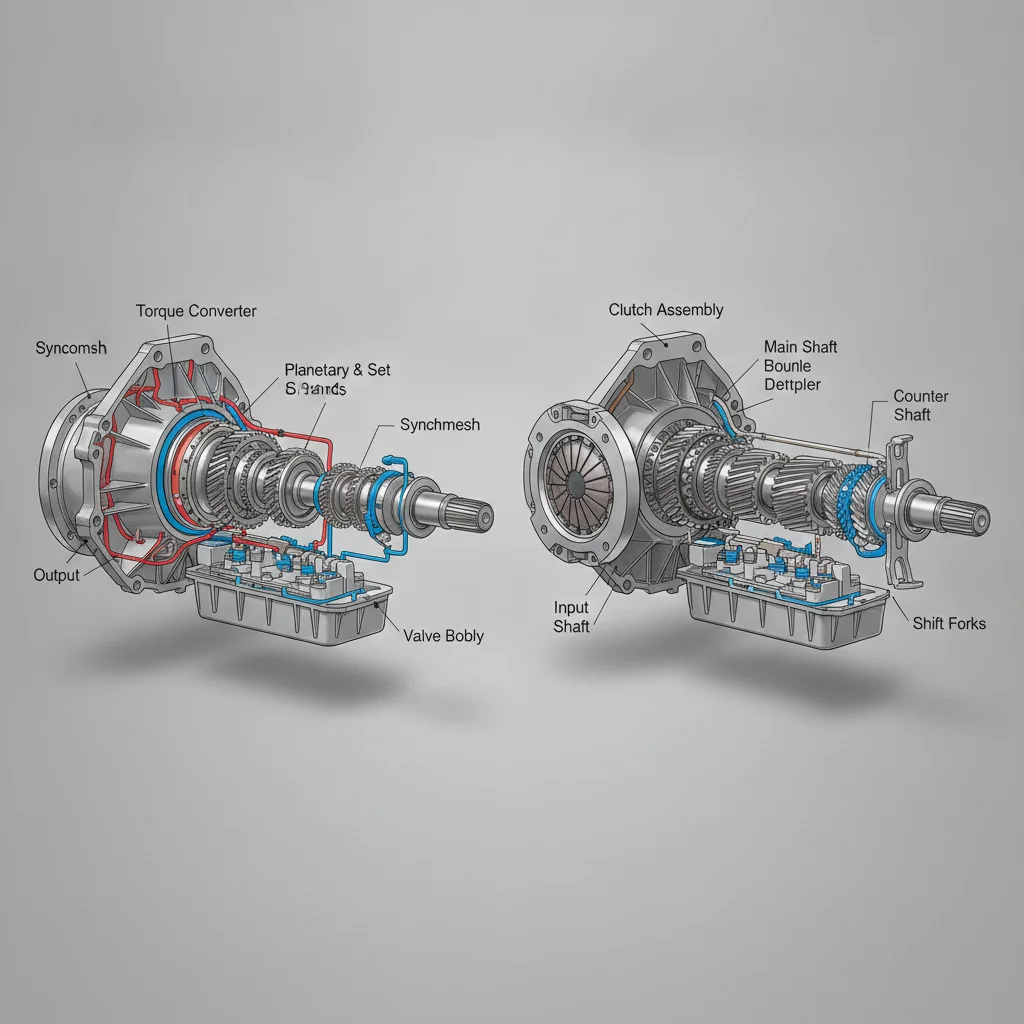
Transmission fluid takes a similar hit, particularly in automatics. Every acceleration-and-deceleration cycle from a stop engages the torque converter and causes the transmission to hunt through gears, generating heat and shear stress on the fluid. Automatic and manual transmissions have different service needs, but both require more frequent fluid changes in stop-and-go conditions than in highway use.
Cooling systems also work harder in traffic. At highway speeds, airflow through the grille provides passive cooling to the radiator. In slow traffic, the engine fan and water pump must compensate — and if either is marginally functional, coolant temps can creep up. This is why coolant service intervals matter: degraded coolant loses its corrosion inhibitors and heat-transfer efficiency, making the system more vulnerable precisely when demand is highest.
Use Both Time and Mileage as Triggers
Don't rely on just one measurement. If you drive mostly short trips or accumulate low mileage, time-based intervals (every three to six months for oil, annually for coolant checks) are more protective than waiting to hit a mileage threshold. Your car's chemistry doesn't pause between drives.
Ask Your Shop to Note Fluid Condition
When you bring your car in for service, ask the technician to note the actual condition of your oil, coolant, brake fluid, and transmission fluid — not just whether the mileage threshold has been reached. Discolored, foamy, or burnt-smelling fluid is a direct signal that your driving habits are putting more stress on the car than the standard interval accounts for.
For drivers whose commutes are predominantly urban, certain driving habits compound both fuel economy losses and mechanical wear — particularly hard acceleration between stops, which stresses the drivetrain and returns essentially none of the efficiency gained from momentum.
Towing, Hauling, and Heavy Loads
Towing a trailer or hauling heavy cargo is probably the single highest-stress use case for a passenger vehicle or light truck. The engineering involved isn't subtle: your engine, transmission, brakes, suspension, and cooling system are all working at or near their design limits for sustained periods. Service intervals should reflect that.

The most immediate concern is engine oil. When towing, the engine produces significantly more power for longer — particularly on grades — and oil temperatures rise accordingly. At higher temperatures, oil oxidizes faster, losing its viscosity and film strength. Many truck manufacturers explicitly recommend halving the standard oil change interval when towing regularly. If your owner's manual says 7,500 miles normally, that recommendation may effectively become 3,500–4,000 miles under sustained towing use.
Transmission fluid is equally critical. Automatic transmissions, in particular, generate enormous heat when managing torque converter slip under load. Some trucks and SUVs come equipped with transmission coolers for exactly this reason; if yours doesn't, aftermarket cooler kits are widely available and worth considering for frequent towers. Regardless, plan on more frequent fluid changes.
Cooling system capacity is tested hard. Even vehicles rated for their tow capacity can run marginally hot in sustained uphill pulls on a warm day. Monitor coolant levels and condition carefully, and ensure the cooling system has been flushed on schedule — degraded coolant can't shed heat effectively at exactly the moments you need it to.
Brakes and suspension also bear disproportionate loads. Trailer sway events and downhill braking with a loaded trailer can overheat brakes quickly. Inspect brake pad thickness and rotor condition more frequently than you might for unloaded driving, and check suspension components — springs, shocks, and ball joints — for accelerated wear.
“The most expensive maintenance is the maintenance you didn't do. The second most expensive is the maintenance you did too late because you were following the wrong schedule for how you actually drive.”
— Dave Cappert, Technical Services Manager, National Institute for Automotive Service Excellence (ASE)
Extreme Temperatures: Heat, Cold, and What Each Destroys First
Temperature is one of the most powerful variables in mechanical wear, and it operates on your vehicle from both ends of the thermometer.
Hot Climates
Sustained heat — the kind found across the Southwest, Southeast, and Gulf Coast for much of the year — accelerates degradation of virtually every fluid in your vehicle. Engine oil thins faster and oxidizes more quickly. Coolant's corrosion inhibitors break down sooner. Brake fluid, which is hygroscopic (it absorbs moisture from the air), reaches its boiling point at lower temperatures once contaminated, reducing braking effectiveness in exactly the high-demand moments you need it most.
Batteries are counterintuitively more vulnerable to heat than to cold. High temperatures accelerate the chemical reactions inside the battery, which sounds productive but actually means the plates corrode and the electrolyte evaporates faster. A battery that tests fine in spring may fail by September. In hot-climate states, battery service life can be 30–50 percent shorter than in moderate climates.
Tires are another heat casualty. Underinflated tires generate more heat through flexion; combined with already-high road surface temperatures, this significantly raises blowout risk. Check tire pressure monthly in summer — tire pressure increases roughly one PSI per 10°F of ambient temperature, which can mask underlying under-inflation.
Cold Climates
Cold weather creates a different set of problems. Oil thickens at low temperatures, reducing its ability to flow immediately to critical engine surfaces on startup. This cold-start interval — the seconds before oil pressure fully builds — is when the majority of engine wear actually occurs over a vehicle's lifetime. Synthetic oils mitigate this significantly due to their broader viscosity range, which is one reason many manufacturers in cold-climate markets now specify synthetics as standard fill.
Coolant must be maintained at proper freeze-point protection, typically to around -34°F for most U.S. climates. Old or diluted coolant that freezes in passages can cause catastrophic damage — cracked blocks and heads are not unheard of. Test coolant concentration every two years at minimum, or annually if you live in extreme cold.
Certain maintenance tasks — including keeping fresh oil and properly inflated tires — also directly affect fuel economy, and cold weather amplifies the penalty for neglecting either. A cold engine running on thickened oil in an underinflated tire scenario can drop real-world fuel economy by 10–15 percent before you've even reached the highway.
Short-Trip Driving and Battery Drain
Vehicles with large numbers of electrical accessories — heated seats, large touchscreens, advanced driver assistance systems — face a higher recharge demand after each cold start. If your commute is predominantly short trips, a battery tender or trickle charger used during long parking periods can extend battery life meaningfully, particularly in cold climates where battery capacity is already reduced.
Coolant Concentration Testing Is Simple and Free
Most auto parts stores will test coolant freeze-point concentration for free using a simple test strip or refractometer. If you're unsure when the coolant was last serviced — especially on a used vehicle purchase — this is one of the quickest checks you can do before winter sets in. Diluted or degraded coolant that freezes in a cold snap can cause thousands of dollars in engine damage.
Dust, Dirt, and Off-Road or Rural Driving
Drivers who regularly travel unpaved roads, farm paths, or genuinely off-road terrain introduce a different class of wear that standard service schedules often undercount. The culprit is particulate contamination — fine dust and grit that finds its way into every filtration system on the vehicle.
The engine air filter is the most directly affected. In dusty environments, an air filter that might last 20,000–30,000 miles on clean pavement can clog in 10,000 miles or fewer. A restricted air filter forces the engine to work harder, affects the air-fuel ratio, and in extreme cases can pull contaminants past the filter into the intake tract. Inspect the air filter visually at every oil change if you drive in dusty conditions.
The cabin air filter, which protects both the HVAC system and the occupants, sees similar accelerated loading in dusty environments. Beyond comfort, a clogged cabin filter reduces airflow to the evaporator, which can affect air conditioning efficiency and, over time, cause moisture buildup and mold growth inside the HVAC system — an expensive fix.
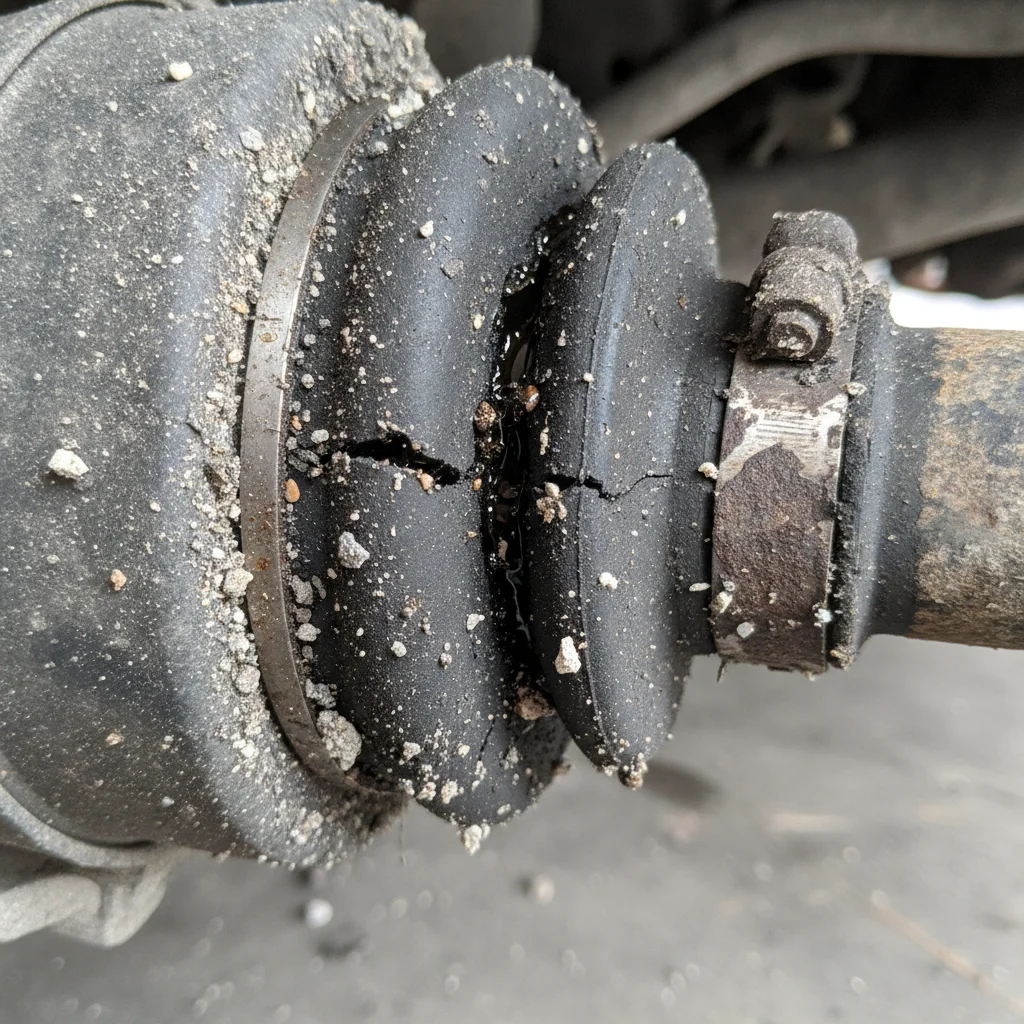
Undercarriage components — CV boots, ball joints, tie rod ends, and wheel bearings — are all exposed to road debris and moisture in off-road conditions. Gravel and dirt embedded in CV boot material causes cracks that allow grease to escape and contaminants to enter. Inspect these components at every oil change in rough-road driving contexts; catching a torn boot early costs perhaps $50–$80 to fix; replacing the CV axle after contamination has destroyed the joint runs $300–$600 or more.
Oil change intervals should also be shortened for sustained dusty driving. Even with a functional air filter, some contaminants make it into the oil over time, and the fine abrasives accelerate engine wear in proportion to their concentration. Many four-wheel-drive and truck owners in agricultural or mining regions change oil every 3,000–4,000 miles by habit — and the condition of their used oil samples supports that conservatism.
Building a Service Schedule Around Your Actual Life
The most actionable thing any driver can do is stop treating the owner's manual as a single-number lookup and start reading the conditions that govern which schedule applies. Most manuals are clear about what qualifies as severe — the list typically includes any two or three of the following:
- Most trips are under 10 miles
- Frequent stop-and-go or idling in traffic
- Driving in extreme heat (above 90°F frequently) or extreme cold (below 10°F frequently)
- Regular towing or hauling near rated capacity
- Driving on dusty, unpaved, or gravel roads
- Frequent mountain or steep-grade driving
If you check two or more of those boxes, you're a severe-conditions driver. That doesn't mean your car will fall apart — it means you should follow the shorter intervals in the manual, pay attention to time-based triggers (not just mileage), and inspect fluid condition rather than relying solely on mileage counters.
Use Both Time and Mileage as Triggers
Don't rely on just one measurement. If you drive mostly short trips or accumulate low mileage, time-based intervals (every three to six months for oil, annually for coolant checks) are more protective than waiting to hit a mileage threshold. Your car's chemistry doesn't pause between drives.
Ask Your Shop to Note Fluid Condition
When you bring your car in for service, ask the technician to note the actual condition of your oil, coolant, brake fluid, and transmission fluid — not just whether the mileage threshold has been reached. Discolored, foamy, or burnt-smelling fluid is a direct signal that your driving habits are putting more stress on the car than the standard interval accounts for.
Modern oil-life monitoring systems, available on most vehicles produced since the mid-2000s, do a reasonable job of calculating remaining oil life based on actual driving patterns — factoring in temperature, load, and trip length rather than just odometer readings. If your vehicle has one, use it. If it doesn't, err toward shorter intervals when conditions are harsh.
For higher-mileage vehicles, the calculus shifts again. Vehicles past 100,000 miles need service adjustments that go beyond standard interval charts. Seals harden, tolerances widen, and components that once had years of life remaining may now be approaching end-of-service. Proactive inspection — not just reactive maintenance — becomes the governing principle.
Finally, it's worth noting that the maintenance conversation looks different for electric vehicles, though not entirely absent. EVs skip oil changes but still require meaningful upkeep — brake fluid, coolant for the battery thermal management system, tire rotation, and cabin air filters all remain on the schedule. Driving habit effects on EVs, particularly short-trip charging patterns and thermal stress, mirror some of the same dynamics seen in combustion engines.

All claims are backed by peer-reviewed research. Sources on request.