
Key Takeaways
Why EV Insurance Comparison Is a Different Exercise
Shopping for auto insurance has never been simpler on the surface — a handful of aggregator sites promise side-by-side quotes in minutes. But those tools were built around a relatively uniform product: liability, collision, and comprehensive coverage for gasoline-powered vehicles. Electric vehicles introduce a layer of complexity that most comparison engines quietly skip over.
The battery pack alone can represent 30 to 50 percent of a new EV's sticker price. Charging equipment at home or at work may or may not be covered depending on policy wording. Certified repair facilities capable of handling high-voltage systems are far less common than standard body shops. These aren't footnotes — they're central to whether a policy will actually protect you when something goes wrong.
As the EV market has expanded, insurers have responded unevenly. Some have developed purpose-built EV policies with explicit battery provisions and charging infrastructure riders. Others have simply issued standard policies to EV owners while adding a marginal surcharge for vehicle value. Understanding the difference requires looking past the premium line and into the policy document itself.
This guide walks through the specific dimensions of EV insurance comparison that matter — and explains how to evaluate them systematically rather than defaulting to the cheapest quote. For a broader primer on why EVs are priced differently in the first place, see how insurers price EVs differently from gas vehicles.
Start With Battery Coverage — It's the Most Consequential Gap
No element of EV insurance comparison carries more financial weight than understanding exactly what a policy does and doesn't cover regarding the battery. A replacement battery pack for a mid-range EV can run anywhere from $8,000 to more than $20,000 depending on the model and chemistry. If your insurer's comprehensive or collision coverage excludes battery degradation or limits payout to actual cash value on a heavily depreciated pack, you could face a significant out-of-pocket expense after an otherwise covered event.
Request the full policy document — not just the quote summary — before making any comparison decisions.
Quote summaries produced by aggregators and insurer websites omit exclusions, endorsement requirements, and coverage sub-limits that can be decisive for EV owners. Battery and charging equipment provisions in particular are frequently buried in policy language rather than surfaced in marketing materials.
Confirm in writing whether battery degradation is covered as a standalone peril or only as a consequence of physical damage.
Battery capacity loss is a real and measurable financial event for EV owners. Insurers define 'physical damage' differently, and many exclude gradual degradation entirely. Without written confirmation, owners may assume coverage that doesn't exist.
Verify that the insurer's certified repair network includes facilities trained and authorized for your specific EV brand.
Routing an EV to an uncertified repair facility can result in improper high-voltage system handling, voided manufacturer software warranties, and extended repair times. The repair network behind a policy is as important as its written terms.
Ask explicitly whether home-installed Level 2 charging equipment is covered under the auto policy, the homeowners policy, or neither.
EVSE hardware at the residence occupies an ambiguous zone between auto and home insurance. Without explicit confirmation, a claim involving charger damage may be denied by both policies simultaneously.
Evaluate rental reimbursement terms specifically for EV-capable or EV loaner options.
Standard rental reimbursement provisions are calibrated for gasoline vehicles. An EV owner accustomed to a 300-mile range may face significant disruption if reimbursed only for a compact gasoline rental during a multi-week repair. Some insurers now offer EV-class rental provisions.
Check gap coverage availability and confirm how the insurer calculates total loss value for EVs, including battery condition.
EVs depreciate at variable rates depending on model, battery health, and software update history. Total loss settlements based on actual cash value can fall well short of the loan balance, particularly in the first few years of ownership. Gap coverage bridges this exposure.
When reviewing battery provisions, look for three specific things. First, does the policy cover battery failure caused by a collision or covered peril, or only physical damage to the vehicle structure? Second, does it exclude gradual capacity loss — sometimes called degradation — from the definition of physical damage? Third, if the vehicle is totaled, does the insurer calculate the settlement based on replacement cost or actual cash value, and does the battery's condition factor into that calculation independently?
Some insurers now offer battery-specific endorsements that cover capacity loss below a stated threshold — often 70 percent of original capacity — even outside of a collision scenario. These riders are worth the additional premium for owners of older EVs or models with documented degradation concerns. EV policies differ from conventional coverage in precisely these structural ways that standard comparison checklists rarely surface.
Manufacturer Warranties and Insurance Are Not the Same
A battery warranty from the manufacturer — typically covering capacity loss below 70 percent for 8 years or 100,000 miles under federal requirements — does not replace insurance coverage. Warranties address manufacturing defects and premature degradation under normal use. Insurance covers loss events: collisions, fire, theft, weather, and similar perils. The two protections operate independently and should both be evaluated when assessing your financial exposure as an EV owner.
Used EV Insurance Requires Extra Due Diligence
If you're buying a used EV, the battery's state of health at the time of purchase affects both its insurable value and how a total loss settlement will be calculated. Some insurers will request a battery health report before binding coverage. Others will simply use vehicle age and mileage as proxies, which may not accurately reflect actual battery condition. Request a battery diagnostic from a certified technician before finalizing both the purchase and the insurance policy.
Evaluate Charging Equipment and Home Infrastructure Coverage
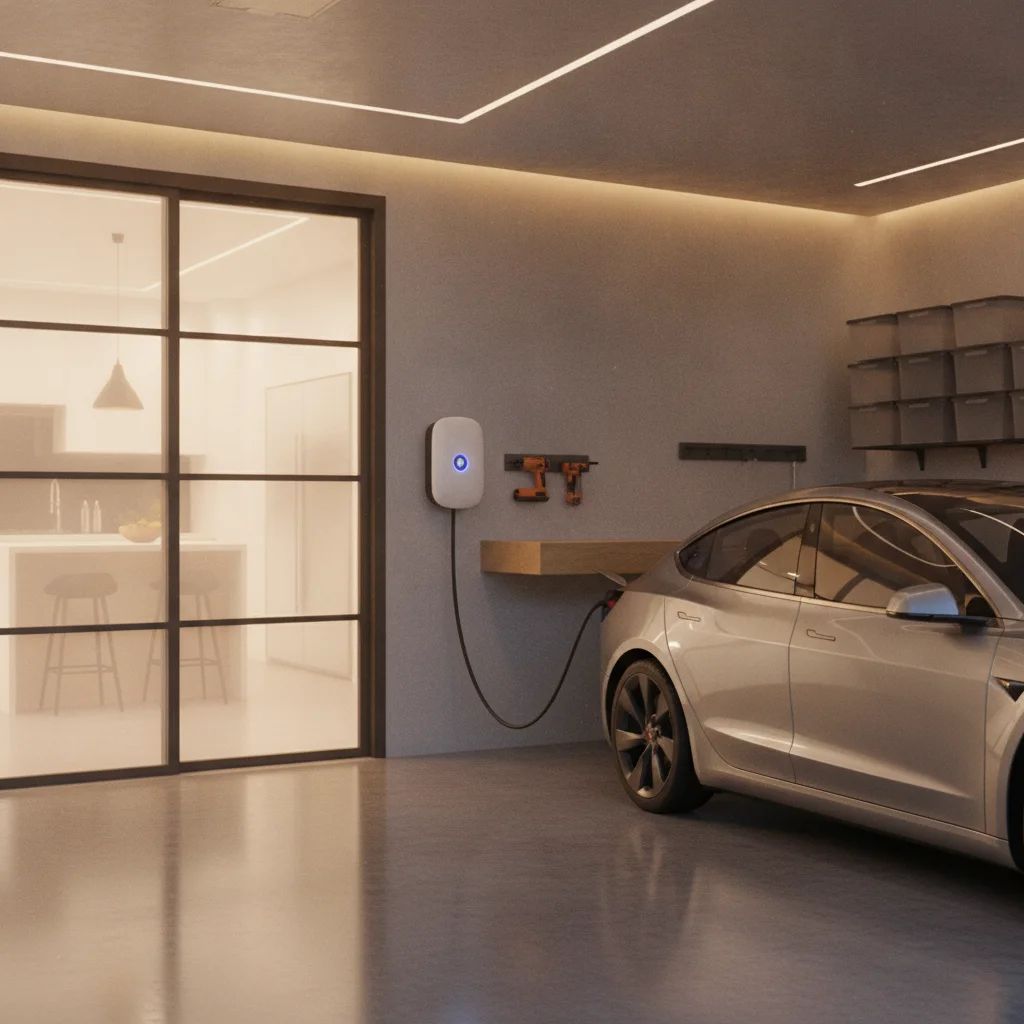
Most EV owners install a Level 2 charger at home — a $500 to $1,500 hardware investment before installation labor. That equipment sits in your garage or on an exterior wall, and its coverage status is ambiguous under many standard auto policies. Some insurers fold home charging equipment into comprehensive coverage; others treat it as home property that must be addressed through a homeowners or renters policy. A few EV-specific insurers explicitly include it as a covered item in the auto policy.
The risk isn't hypothetical. A power surge, fire originating near the charger, or theft of charging hardware can result in a claim that falls between your auto and home policies if the coverage boundary isn't clearly stated. Before comparing premiums, ask each insurer to confirm in writing whether Level 2 EVSE (electric vehicle supply equipment) installed at your residence is covered, under which policy, and up to what limit.
Public charging incidents present a different scenario. If your vehicle is damaged while plugged in at a commercial charging station — by another vehicle, vandalism, or equipment malfunction — standard comprehensive coverage typically applies to the car itself. Damage to the charging cable or portable EVSE adapter may not be covered. Confirm the treatment of these items explicitly.
Use a dedicated EV policy checklist before signing to verify that charging equipment provisions are clearly documented rather than implied.
Assess Repair Network Quality and OEM Parts Requirements
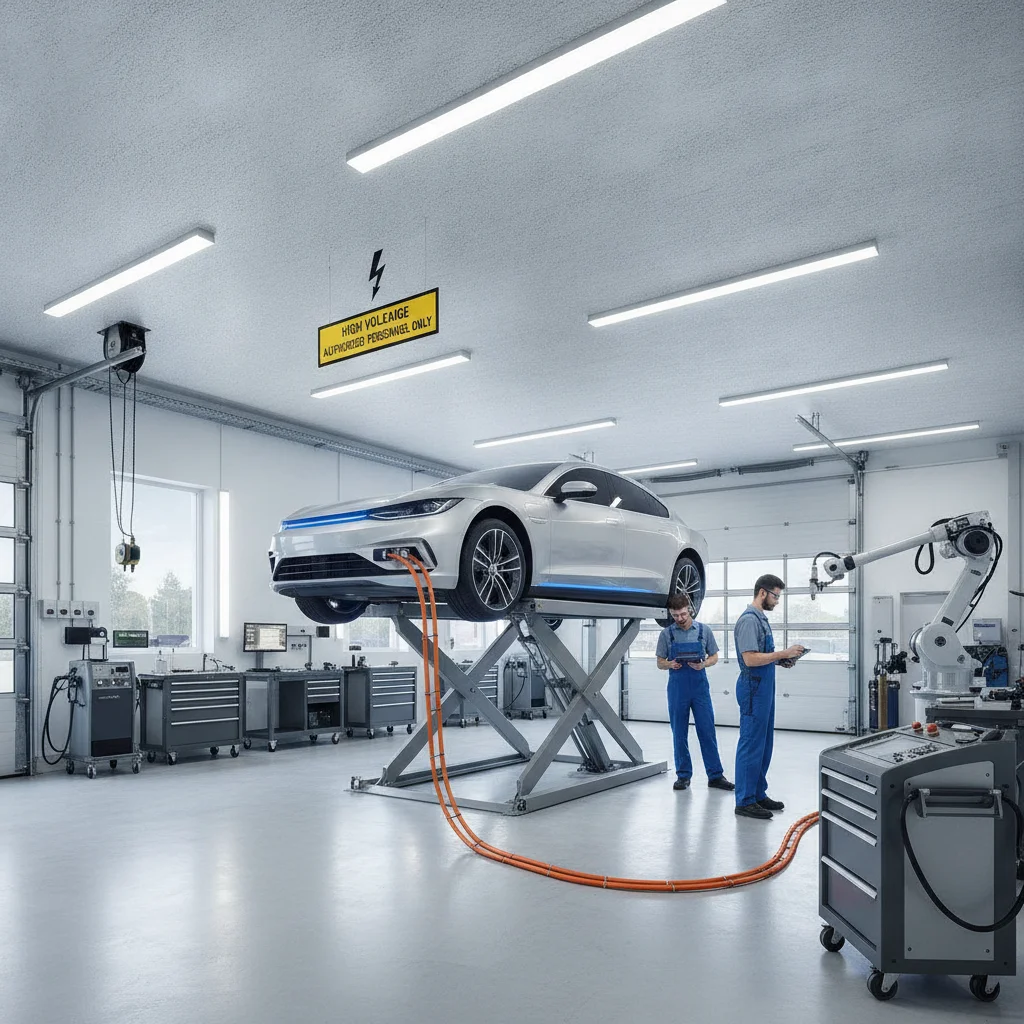
EVs are not interchangeable with conventional vehicles in the repair bay. High-voltage battery systems require trained technicians, specialized diagnostic equipment, and in many cases, manufacturer-specific procedures. A policy that sends your damaged EV to a generalist body shop — or that authorizes aftermarket parts to reduce repair costs — can compromise both safety and resale value.
$8,000–$20,000+
Typical EV battery pack replacement cost
Battery costs vary by model chemistry and capacity; figures drawn from manufacturer service data and independent repair estimates as of 2024.
24%
Higher average repair cost for EVs vs. gas vehicles
According to a 2023 Mitchell International report, EV collision repair costs run approximately 24 percent higher than comparable internal combustion vehicles.
3–4 weeks
Average EV collision repair time at certified facilities
Repair cycle times are longer for EVs due to parts availability constraints and required high-voltage system safety protocols, per industry claims data.
30–50%
Share of EV sticker price represented by the battery
Battery packs represent a disproportionate fraction of vehicle value — making their insurance treatment central to total loss and repair claim outcomes.
When comparing policies, ask each insurer two direct questions: Does the policy require or permit the use of OEM (original equipment manufacturer) parts for repairs? And does the insurer maintain a certified repair network that includes facilities trained for your specific EV brand?
Tesla vehicles, for example, have a proprietary repair certification program. An insurer without relationships to Tesla-certified shops may route your claim to an uncertified facility, extending repair times and potentially voiding software-related warranties. The same dynamic applies to Rivian, Lucid, and other brands with newer, more limited service footprints.
Specialty EV insurers vs. major carriers differ significantly on this dimension — purpose-built EV insurers often have pre-negotiated relationships with manufacturer-certified shops, while traditional carriers may offer broader geographic coverage but less EV-specific expertise.
Verify OEM Parts Coverage Before a Claim, Not After
Ask your insurer to confirm in writing whether OEM parts are required or only permitted for collision repairs on your EV. Some policies default to 'like kind and quality' parts — which can mean aftermarket components that haven't been validated for high-voltage system safety. For EVs, this distinction can affect both safety outcomes and manufacturer warranty status. Get the confirmation in writing as part of the policy documentation before you sign.
Don't Assume Your Quote Reflects EV-Specific Pricing
Some insurers generate EV quotes using standard vehicle rating categories with a value adjustment, without building in EV-specific repair cost data or battery exposure. This can result in a premium that appears competitive but reflects underwriting assumptions that may not hold at claim time. Ask the insurer directly: 'Does your rating model account for EV battery and repair costs specifically, or is this a standard collision and comprehensive structure applied to the vehicle value?'
Compare Claims Satisfaction and EV-Specific Handling Experience
A low premium means nothing if the insurer performs poorly when you actually file a claim. For EV owners, this risk is amplified — an insurer without EV claims experience may misclassify damage, undervalue battery components, or extend repair timelines due to unfamiliarity with the vehicles they're covering.
Third-party claims satisfaction data from J.D. Power and the National Association of Insurance Commissioners (NAIC) complaint index provides a baseline for evaluating insurer performance. But these metrics aggregate across all vehicle types. An insurer with strong overall scores may still handle EV claims poorly if EVs represent only a small share of their book of business.
“The auto insurance industry built its pricing models and claims processes around internal combustion vehicles. EV owners who don't ask specific, pointed questions about how their battery and repair experience will be handled are essentially assuming coverage they may not have.”
— Douglas Heller, Insurance Expert, Consumer Federation of America
Ask directly: How many EV claims has this insurer handled in your state over the past 12 months? Do they have dedicated EV claims specialists? What is the average repair cycle time for EV collision claims? These aren't adversarial questions — reputable insurers will answer them or direct you to documented resources. Those who can't are telling you something important about their operational readiness.
For a structured framework on claims evaluation beyond EV-specific concerns, compare insurers on claims satisfaction rather than price alone.
Factor In Discounts and Telematics Programs Available to EV Drivers
EVs often generate superior telematics data compared to gasoline vehicles — detailed trip logs, precise energy consumption metrics, and real-time driving behavior records are baked into the vehicle's architecture. This creates a genuine opportunity to benefit from usage-based insurance programs that reward safe, low-mileage, or off-peak driving behavior.
Several major carriers offer green vehicle discounts for EVs and plug-in hybrids, typically ranging from 2 to 10 percent off base premiums. Bundling your EV policy with a homeowners or renters policy through the same insurer can yield additional reductions. Low-mileage programs — particularly relevant for EV owners who charge at home and rarely exceed 40 miles per day — can also trim costs meaningfully when accurately reported.
Usage-based insurance and EVs carries trade-offs worth understanding before opting in — particularly around data privacy and the risk of premium increases if driving behavior shifts. Discounts EV owners can actually qualify for covers the full landscape of available reductions by carrier type.
When comparing quotes, request a discount breakdown rather than just a net premium figure. Two quotes at identical premium levels may reflect very different base rates and discount structures — which matters if your eligibility changes at renewal.

Build a Side-by-Side Comparison Framework
The most effective approach to EV insurance comparison is building a structured evaluation matrix rather than sorting quotes by premium. This doesn't need to be elaborate — a simple spreadsheet with each insurer across columns and key policy dimensions along rows is sufficient.
Your comparison framework should include: base premium; deductible options; battery coverage terms (collision, comprehensive, degradation); charging equipment coverage (EVSE type, limit, which policy); OEM parts requirement; certified repair network access for your specific EV brand; rental car or loaner provisions (EV-capable rental coverage is meaningful); gap coverage availability; claims satisfaction score and complaint index; and available discounts.
Populate each cell from direct insurer communications — not from the summary sheet in an aggregator quote. Policy documents, endorsement riders, and agent confirmations in writing provide reliable source material. Anything left vague or verbal should be treated as uncovered until documented otherwise.
A practical framework for evaluating auto insurance policies end to end offers a comprehensive template applicable to any vehicle type, which can be adapted with the EV-specific rows outlined here. And why premium-only comparison is a flawed strategy explains in depth why the aggregator-first approach consistently leads to coverage gaps that only surface at the worst possible moment.
If you're insuring a used EV rather than a new one, the framework needs additional rows. Battery state of health, remaining warranty coverage, and prior claims history for that specific vehicle all influence how insurers will price and handle future claims. Insuring a used EV presents distinct risks and savings opportunities that new-car buyers don't face. And once you've made your decision, the right questions to ask your insurance agent can confirm that what you've compared on paper matches the actual policy terms before you sign.
All claims are backed by peer-reviewed research. Sources on request.