Key Takeaways
EV Auto Insurance Pricing
EV auto insurance pricing refers to the way insurers calculate premiums specifically for battery-electric vehicles, accounting for factors that don't apply to conventional gas-powered cars. These include higher vehicle purchase prices, expensive high-voltage battery packs, a limited network of certified repair technicians, and distinct theft and safety profiles. Because the risk calculus differs meaningfully from traditional vehicles, most EV owners pay more for comparable coverage levels.
Actuarially, insurers assign EVs to symbol rating tiers based on vehicle cost, parts expense, and historical claims data — all of which currently skew higher for battery-electric models than for equivalent internal-combustion vehicles.
How Insurers Think About Risk — And Why EVs Change the Equation
Auto insurance pricing is fundamentally a risk-modeling exercise. Before an insurer sets your premium, its actuaries examine the statistical likelihood that your vehicle will be involved in a claim, how severe that claim is likely to be, and how much it will cost to resolve. For decades, those models were built almost entirely on data from internal-combustion-engine vehicles. Electric vehicles — with their fundamentally different drivetrains, cost structures, and repair ecosystems — are forcing a meaningful recalibration.
The core inputs insurers use to price any vehicle haven't changed: purchase price, repair cost, theft frequency, safety rating, and claims history. What has changed is the value of those inputs for EVs. A midsize electric SUV often costs $10,000–$20,000 more than a comparable gas model. Its repair costs, when something goes wrong, can run 20–40% higher. Its certified repair network is a fraction of what's available for conventional vehicles. Those differences ripple directly into your annual premium.
Understanding how EV insurance works starts with recognizing that insurers aren't penalizing you for going green — they're pricing a genuinely different risk profile. This article walks through the specific variables that make EV coverage calculations different from what you'd see for a gas-powered car.

Vehicle Value and the Starting Point for Every Premium
Every auto insurance premium starts with the vehicle's actual cash value. A higher-value car means higher potential payout in the event of a total loss, so it commands a higher comprehensive and collision premium from the outset. EVs, on average, carry significantly higher MSRPs than comparable gas vehicles — and that gap hasn't fully closed even as EV prices have come down industry-wide.
The 2024 average transaction price for a new EV in the United States hovered around $55,000, compared to roughly $48,000 for all new vehicles. That $7,000+ starting difference immediately pushes EV premiums higher before a single other factor is considered. But the bigger challenge is what's inside the vehicle.
~$55,000
Average EV transaction price in 2024
According to Kelley Blue Book, the average EV transaction price in early 2024 exceeded the overall new-vehicle average by several thousand dollars.
10–25%
EV premium increase over gas-car equivalents
Industry analysis from LendingTree and Bankrate consistently shows EV owners paying 10–25% more for comparable coverage levels than gas-vehicle owners.
$10K–$20K+
Typical EV battery replacement cost
Battery replacement quotes from major EV manufacturers and independent repair estimates, as reported by Consumer Reports and J.D. Power.
30–50%
Share of EV manufacturing cost from the battery
BloombergNEF and the International Energy Agency both estimate battery packs account for 30–50% of an EV's total production cost, though this share is declining.
20–40%
Higher repair costs vs. gas vehicles
Mitchell International's claims data and CCC Intelligent Solutions both document EV repair costs running 20–40% above comparable internal-combustion vehicle repairs.
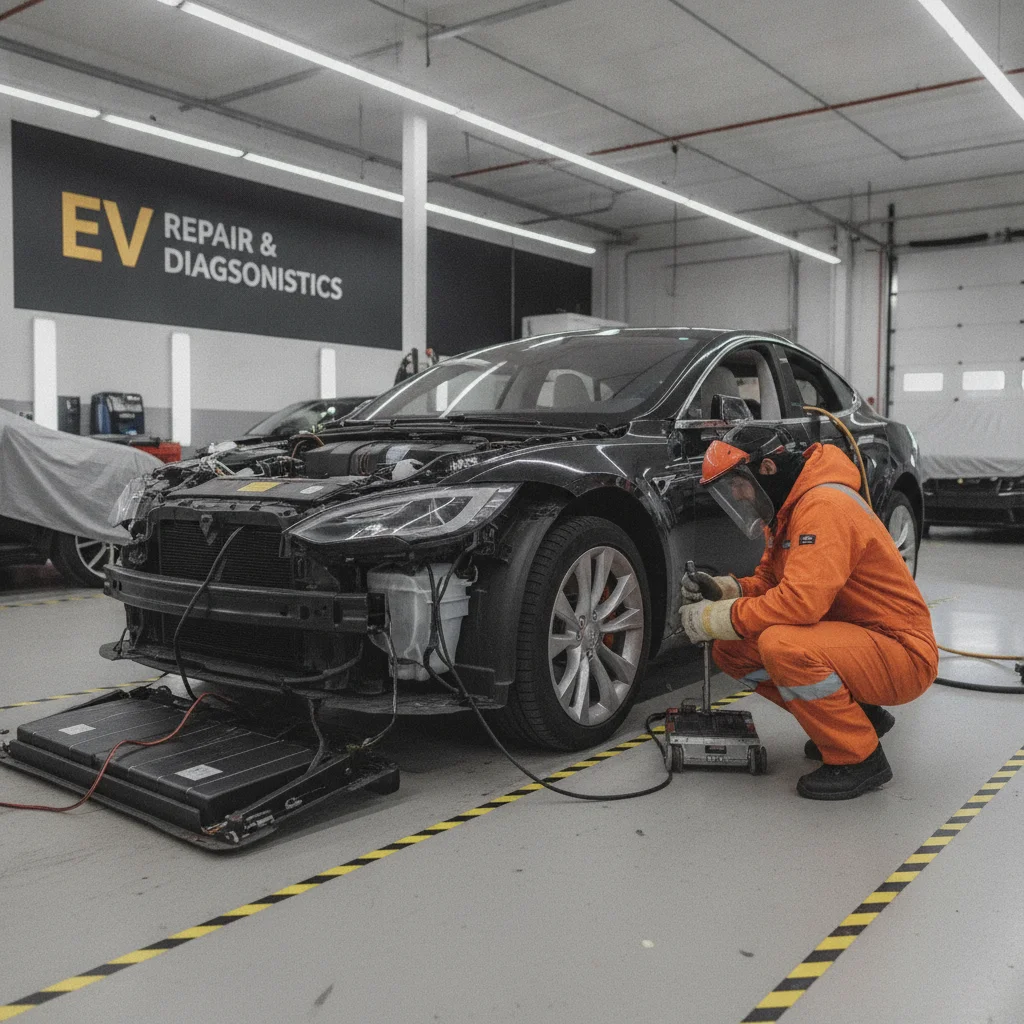
The high-voltage battery pack — the heart of any battery-electric vehicle — typically accounts for 30–50% of the vehicle's total manufacturing cost. A replacement battery for a popular midsize EV can run anywhere from $10,000 to more than $20,000, depending on capacity and model. When a collision or fire damages that battery, the cost to repair or replace it can easily push a claim into total-loss territory — even on a vehicle that looks relatively intact from the outside. How insurers handle totaled EV batteries is a question more EV owners are encountering as the fleet ages.
Insurers track this through what's called a vehicle's "insurance symbol" — a rating assigned to each model that reflects its expected cost to insure based on price, parts, and safety. EVs consistently receive higher symbol numbers than their gas equivalents, meaning higher base premiums across the board.
Repair Costs: Where the Real Premium Driver Lives
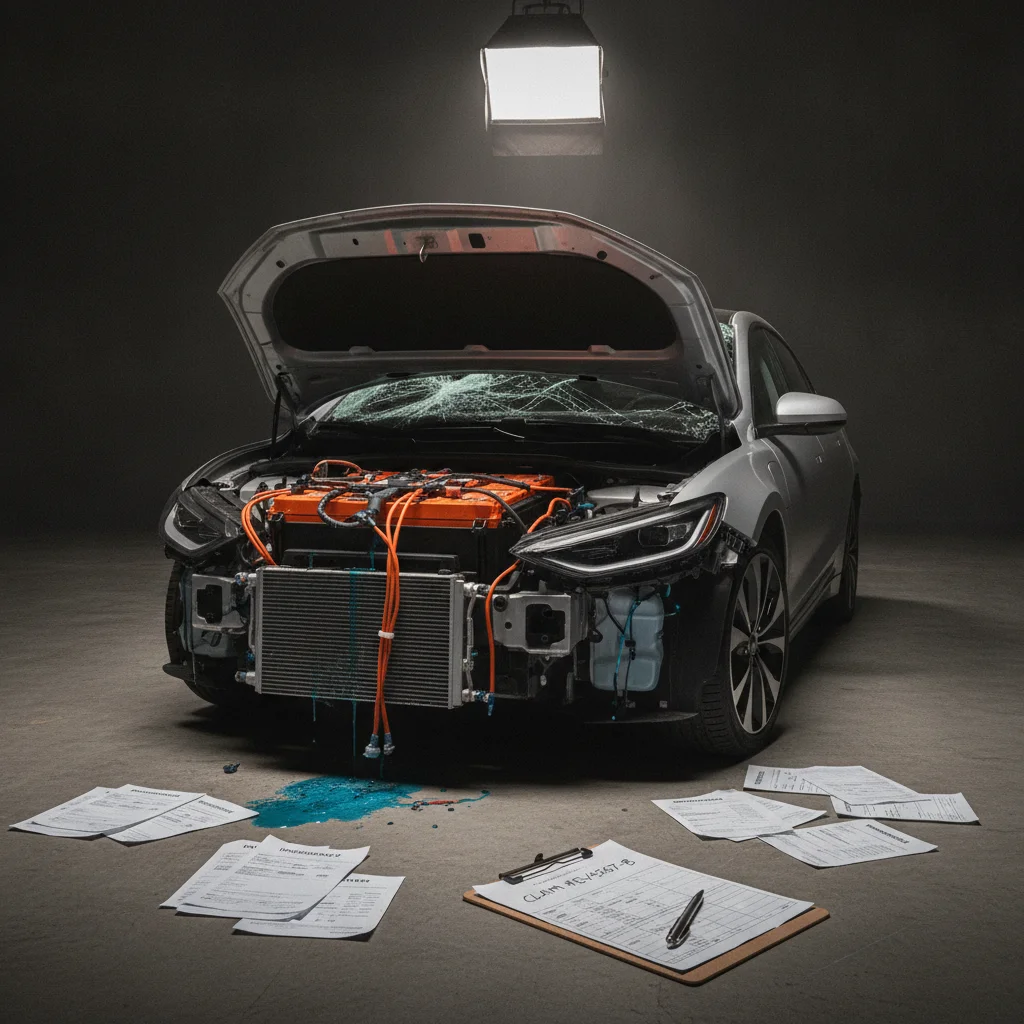
If vehicle value is the starting line, repair costs are where EV premiums really separate from gas-car premiums. Repairing an electric vehicle is a fundamentally different process than repairing a conventional one, and that complexity is priced into every collision and comprehensive claim an insurer expects to pay.
Several factors compound the issue:
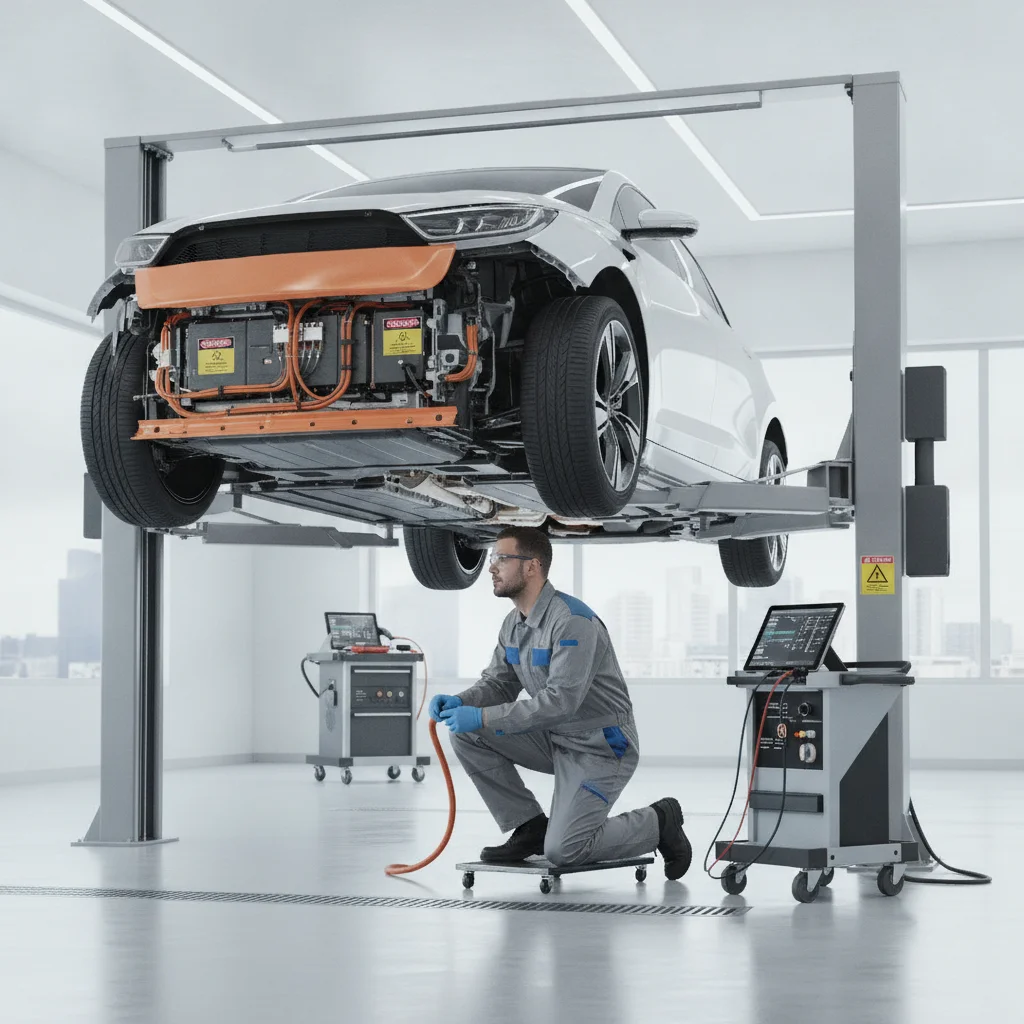
- Specialized labor: Not every body shop or mechanic is certified to work on high-voltage systems. EV repairs typically require technicians with specific training — and that expertise commands a premium. In many parts of the country, there are simply fewer qualified shops, which means vehicles sit longer waiting for service, extending rental car costs and increasing total claim expense.
- Proprietary parts: Many EV manufacturers use components that aren't shared across the broader auto parts market. That limits aftermarket availability and keeps prices high. Some parts must be sourced directly from the manufacturer or through authorized dealers, which adds both cost and delay.
- Integrated systems: In a conventional vehicle, a bumper impact might damage the bumper cover, some sensors, and a hood. In an EV, that same collision could involve the battery management system, thermal management components, or high-voltage wiring — all of which require careful diagnosis and specialized repair protocols. A minor fender-bender can become a five-figure claim quickly.
“EV claims are more complex, more expensive, and take longer to close than equivalent gas-vehicle claims — and all three of those factors flow directly into how we price the risk. We're not making a policy judgment about electric vehicles; we're responding to what the data shows.”
— Carole Walker, Executive Director, Rocky Mountain Insurance Information Association
Why EV repair costs run higher than gas-car repairs is a topic that deserves its own deep dive — but the short version is that every structural element of EV repair infrastructure currently adds cost rather than containing it. That's beginning to shift as the EV fleet grows and more technicians receive certification, but the transition is measured in years, not months.
Ask About EV-Specific Coverage Before You Buy
Not all standard auto policies cover charging equipment, battery degradation-related losses, or EV-specific roadside situations like a charge-depleted vehicle. Before finalizing coverage, ask your insurer explicitly whether these scenarios are included — or whether you need a rider or specialty EV policy. This is especially important for owners who charge primarily at home and have expensive Level 2 charging equipment installed.
Shop Multiple Carriers — EV Pricing Varies Significantly
Unlike gas-vehicle premiums, which have decades of actuarial consensus behind them, EV pricing is still in flux. Different insurers use different loss data and weight variables differently, which means quotes for the same EV from multiple carriers can vary by hundreds of dollars annually. Getting at least three to four quotes — including from specialty EV-focused insurers — is worth the time investment.
Enroll in Telematics Early to Build a Discount Profile
Many insurers offer a discount simply for enrolling in a telematics program, before any driving data is collected. EV drivers who log low mileage and demonstrate smooth driving patterns stand to earn among the highest usage-based discounts available. Enrolling when you first purchase the vehicle maximizes the time your driving profile can accumulate favorable data.
Safety Ratings: Where EVs Actually Work in Your Favor
Not every EV pricing factor works against the driver. Safety performance is one area where battery-electric vehicles frequently outshine their gas counterparts — and insurers do reflect this in their pricing.
EVs tend to earn top marks in crash testing for several structural reasons. The absence of a large engine block up front allows engineers to design more effective crumple zones. The battery pack, typically mounted low in the floor, gives EVs a lower center of gravity that reduces rollover risk. And the high structural rigidity required to protect battery modules also helps protect occupants in side and rear impacts.
Multiple popular EVs have received five-star overall ratings from the National Highway Traffic Safety Administration (NHTSA) and Top Safety Pick+ designations from the Insurance Institute for Highway Safety (IIHS). Vehicles that earn these designations typically qualify for safety-related discounts with most major insurers — a meaningful offset to the repair-cost premium.
Safety Ratings Don't Fully Offset Repair Costs
Strong crash-test performance reduces claim frequency — the likelihood that an accident happens. But it doesn't reduce claim severity — the cost of repairs when an accident does occur. For EVs, severity is the dominant cost driver. So even excellent safety ratings, while genuinely helpful for premium pricing, don't eliminate the repair-cost premium that defines the EV insurance gap.
State Regulations Affect What Insurers Can Charge
In some states, insurers must file and receive approval for rate changes, which can create significant variation in EV premiums across state lines. California, in particular, has strict rate-regulation rules that limit how quickly insurers can adjust pricing to reflect new loss data. This means EV premiums in highly regulated states may not yet fully reflect the actual claims cost trends that are emerging nationally.
EV Depreciation Affects Insurance Differently Than You Might Expect
EVs depreciate differently than gas vehicles — faster in some segments, slower in others — which directly affects actual cash value calculations when claims are settled. A rapidly depreciating EV may settle for less than the owner expects after just two or three years. Understanding how your specific model depreciates can help you decide whether gap coverage or new-car replacement coverage makes sense for your situation. <a href="/maintenance-and-ownership/ownership-costs/depreciation-basics/electric-vehicle-depreciation-how-it-differs-from-gas-powered-cars">EV depreciation patterns</a> differ enough from gas cars to warrant a separate look before purchasing.
Advanced driver assistance systems (ADAS) — which are often standard equipment on EVs at a lower trim level than in comparable gas vehicles — also contribute to fewer frequency-based claims. Automatic emergency braking, lane-keeping assist, and blind-spot monitoring all reduce the likelihood of accidents that generate claims. Insurers have begun to quantify these savings, though the rate at which they're passed on to consumers varies by company.
Theft Profiles, Total Losses, and Claims Frequency
Theft risk is one of the standard inputs in any insurance pricing model, and EVs have a complicated profile here. At the vehicle level, many EVs are actually harder to steal than conventional cars — they rely heavily on key fobs and mobile authentication, and their GPS tracking capabilities make recovery more likely. Some high-profile EV models show theft rates below their gas-powered segment peers.
However, theft of EV-adjacent equipment is a growing concern. Charging cables, charging equipment, and even salvaged battery components represent new targets for thieves, and comprehensive coverage is what protects against those losses. As the second-hand market for EV components matures, insurers are watching claims data carefully.
Total-loss frequency is another area where EVs diverge from conventional vehicles. Because battery damage is difficult to assess without specialized equipment — and because insurers and shops alike are still developing protocols — the threshold for declaring an EV a total loss can be lower than for an equivalent gas vehicle. Some estimates suggest EVs are declared total losses at a rate meaningfully higher than the broader fleet, which raises the expected payout insurers carry into their pricing models.
The specific reasons EV premiums exceed gas-car premiums include this total-loss dynamic alongside repair costs and vehicle value — all interconnected factors that compound rather than simply add up.
Geography, Infrastructure, and the Local Premium Variable
One of the more underappreciated EV insurance variables is geography. Where you garage your vehicle has always affected your premium — urban areas typically pay more due to higher accident frequency, theft rates, and repair costs. But for EVs, geography introduces an additional dimension: the local density of certified repair facilities.
A driver in San Francisco or Austin who owns an EV is likely within reasonable distance of multiple certified repair shops, meaning claims resolve faster and extended rental costs are lower. A driver in rural Tennessee or western Montana with the same vehicle may face a very different situation — one where the nearest certified technician is hours away, parts are shipped across state lines, and a straightforward repair stretches into weeks. Insurers track this geographic repair-network data and it influences regional EV pricing.
Climate is also a factor. Extreme cold can affect battery performance and, in severe cases, battery longevity. Some northern states show higher EV-related claims for cold-weather battery issues than temperate regions. How geography shapes EV insurance rates — from state regulations to local repair networks — can create meaningful premium differences for otherwise identical vehicles and drivers.
Safety Ratings Don't Fully Offset Repair Costs
Strong crash-test performance reduces claim frequency — the likelihood that an accident happens. But it doesn't reduce claim severity — the cost of repairs when an accident does occur. For EVs, severity is the dominant cost driver. So even excellent safety ratings, while genuinely helpful for premium pricing, don't eliminate the repair-cost premium that defines the EV insurance gap.
State Regulations Affect What Insurers Can Charge
In some states, insurers must file and receive approval for rate changes, which can create significant variation in EV premiums across state lines. California, in particular, has strict rate-regulation rules that limit how quickly insurers can adjust pricing to reflect new loss data. This means EV premiums in highly regulated states may not yet fully reflect the actual claims cost trends that are emerging nationally.
EV Depreciation Affects Insurance Differently Than You Might Expect
EVs depreciate differently than gas vehicles — faster in some segments, slower in others — which directly affects actual cash value calculations when claims are settled. A rapidly depreciating EV may settle for less than the owner expects after just two or three years. Understanding how your specific model depreciates can help you decide whether gap coverage or new-car replacement coverage makes sense for your situation. <a href="/maintenance-and-ownership/ownership-costs/depreciation-basics/electric-vehicle-depreciation-how-it-differs-from-gas-powered-cars">EV depreciation patterns</a> differ enough from gas cars to warrant a separate look before purchasing.
Urban vs. rural rate differences apply to all vehicles, but the gap can be more pronounced for EV owners because the repair-network variable amplifies the existing location premium in rural markets.
Discount Opportunities That Can Partially Close the Gap
The premium differential for EVs is real and, for most models in most markets, unavoidable — but it isn't fixed. Several discount mechanisms exist that EV owners can actively pursue to reduce what they pay relative to the base rate.
Telematics Programs
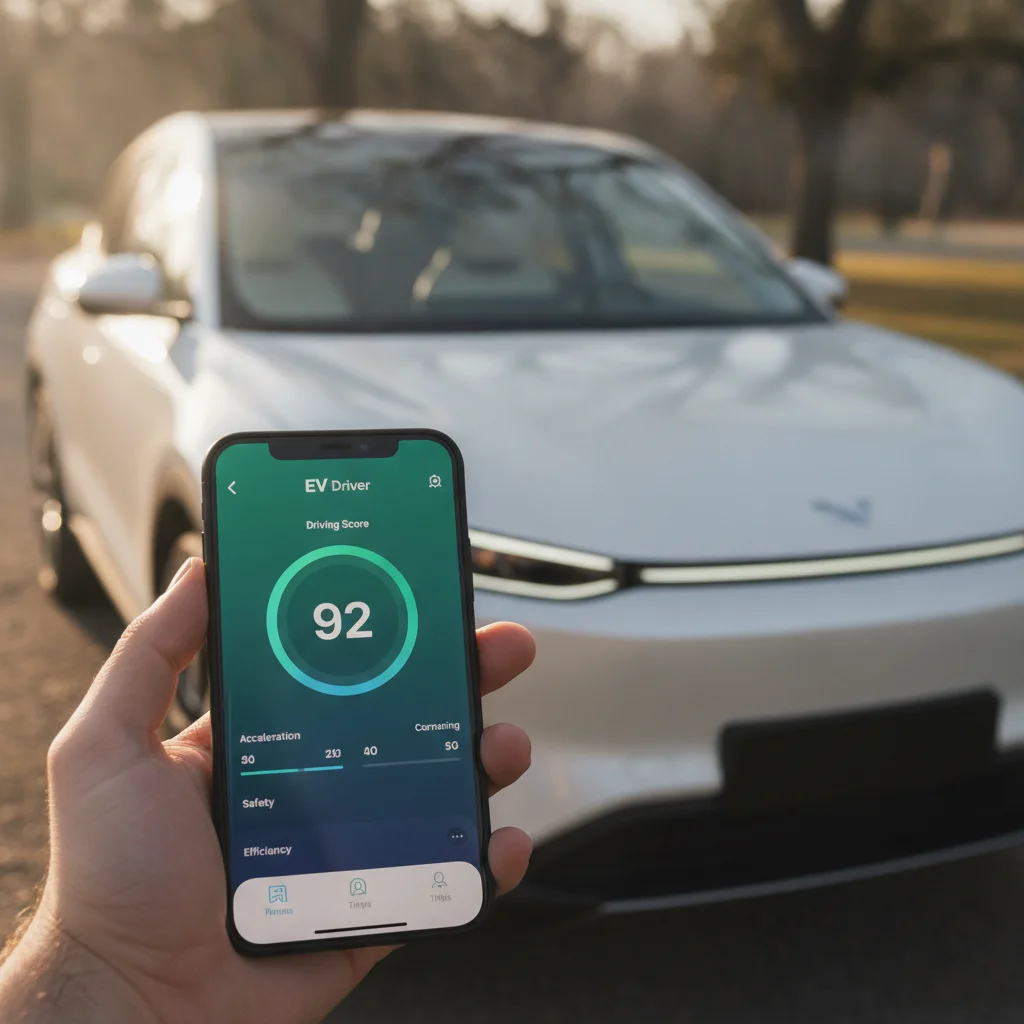
Usage-based insurance (UBI) programs that track driving behavior via a smartphone app or plug-in device are particularly well-suited to the EV ownership profile. EV drivers tend to drive fewer miles than gas-car owners — partly because of range considerations, partly because EVs are disproportionately used as urban commuter vehicles. Low-mileage drivers who also demonstrate smooth braking and consistent speeds can earn meaningful discounts — sometimes in the 10–30% range — through telematics programs offered by major insurers.
Safety Feature Credits
As noted earlier, EVs often come with robust ADAS packages as standard equipment. Most major insurers offer credits for automatic emergency braking, lane departure warning, and similar systems. Documenting the safety features on your specific trim level when obtaining quotes ensures these credits are applied correctly.
Multi-Policy Bundling
Bundling auto and home (or renters) insurance with the same carrier typically generates a 5–15% discount on each policy. This isn't EV-specific, but it's a consistently available lever that can partially offset the higher EV base rate.
EV-Specific and Green Vehicle Discounts
Some insurers — particularly those actively courting the EV market — offer explicit discounts for battery-electric vehicles. These programs vary widely and aren't universal, but they're worth asking about during the quoting process. The full picture of EV insurance pros and cons includes these discount opportunities alongside the premium increases, and the balance looks different for different driver profiles.
Ask About EV-Specific Coverage Before You Buy
Not all standard auto policies cover charging equipment, battery degradation-related losses, or EV-specific roadside situations like a charge-depleted vehicle. Before finalizing coverage, ask your insurer explicitly whether these scenarios are included — or whether you need a rider or specialty EV policy. This is especially important for owners who charge primarily at home and have expensive Level 2 charging equipment installed.
Shop Multiple Carriers — EV Pricing Varies Significantly
Unlike gas-vehicle premiums, which have decades of actuarial consensus behind them, EV pricing is still in flux. Different insurers use different loss data and weight variables differently, which means quotes for the same EV from multiple carriers can vary by hundreds of dollars annually. Getting at least three to four quotes — including from specialty EV-focused insurers — is worth the time investment.
Enroll in Telematics Early to Build a Discount Profile
Many insurers offer a discount simply for enrolling in a telematics program, before any driving data is collected. EV drivers who log low mileage and demonstrate smooth driving patterns stand to earn among the highest usage-based discounts available. Enrolling when you first purchase the vehicle maximizes the time your driving profile can accumulate favorable data.
Making Sense of the Full EV Cost Picture
Auto insurance is one piece of a larger financial equation that EV ownership involves. The premium differential is real, but it exists alongside fuel savings, lower routine maintenance costs, potential federal and state tax incentives, and in many cases, higher resale stability on popular models. The variables that most directly determine your EV premium — battery capacity, vehicle range, regional repair access, and more — help explain why two EV owners in different markets can face very different insurance bills for the same vehicle.
How EV insurance policies differ structurally from conventional coverage is also worth understanding before you commit to a specific carrier, since not all standard policies handle EV-specific risks — particularly battery-related claims and charging equipment — with the same depth.
The core takeaway for prospective and current EV owners is this: insurance pricing is not arbitrary. Every variable insurers use to price your EV policy reflects a genuine difference in how the vehicle is built, what it costs to fix, and how it behaves in claims scenarios. Understanding those variables puts you in a stronger position to shop effectively, ask the right questions, and select coverage that fits both your vehicle and your budget.
Comparing insurance across different vehicle types — including EVs, trucks, and high-value vehicles — is a useful exercise for drivers making a purchase decision, because insurance cost is a meaningful ownership expense that belongs in any total-cost-of-ownership calculation.
Safety Ratings Don't Fully Offset Repair Costs
Strong crash-test performance reduces claim frequency — the likelihood that an accident happens. But it doesn't reduce claim severity — the cost of repairs when an accident does occur. For EVs, severity is the dominant cost driver. So even excellent safety ratings, while genuinely helpful for premium pricing, don't eliminate the repair-cost premium that defines the EV insurance gap.
State Regulations Affect What Insurers Can Charge
In some states, insurers must file and receive approval for rate changes, which can create significant variation in EV premiums across state lines. California, in particular, has strict rate-regulation rules that limit how quickly insurers can adjust pricing to reflect new loss data. This means EV premiums in highly regulated states may not yet fully reflect the actual claims cost trends that are emerging nationally.
EV Depreciation Affects Insurance Differently Than You Might Expect
EVs depreciate differently than gas vehicles — faster in some segments, slower in others — which directly affects actual cash value calculations when claims are settled. A rapidly depreciating EV may settle for less than the owner expects after just two or three years. Understanding how your specific model depreciates can help you decide whether gap coverage or new-car replacement coverage makes sense for your situation. <a href="/maintenance-and-ownership/ownership-costs/depreciation-basics/electric-vehicle-depreciation-how-it-differs-from-gas-powered-cars">EV depreciation patterns</a> differ enough from gas cars to warrant a separate look before purchasing.

All claims are backed by peer-reviewed research. Sources on request.