Key Takeaways
When reviewing a new policy, don't just read the declarations page — pull the full policy document and search for the word 'exclusion.' That single search will show you every carve-out the insurer has built in, and some of them will surprise you.
Declarations pages summarize coverage but rarely enumerate all exclusions in plain sight. The exclusion sections of the full policy are where coverage gaps live.
Ask your insurer specifically whether rideshare or delivery driving voids your personal auto coverage — don't assume the answer. If you use your vehicle for any compensated driving, get the answer in writing before your next shift.
Business-use exclusions are among the most commonly triggered denials, and many drivers don't discover the exclusion applies to them until after a claim is denied.
Pull your NAIC complaint ratio before you commit to any carrier. It's free, publicly available, and more reliable than star ratings on aggregator sites, which often reflect price satisfaction rather than claims experience.
The NAIC complaint ratio normalizes complaint volume by market share, making it a direct, apples-to-apples signal of how a carrier treats its policyholders at claim time.
Why Price Is the Wrong Starting Point
Most drivers open an insurance comparison site, sort by lowest premium, and pick from the top three results. That process is fast, and it almost guarantees a policy that underperforms when you actually need it. Two policies with identical premiums can have wildly different coverage limits, exclusion lists, and claims experiences — the variables that determine whether a policy is worth having at all.
Before we get into the mechanics of evaluation, it helps to understand what you're actually buying. An auto insurance policy is a contract, not a commodity. The price reflects the insurer's estimate of your risk profile, but it says very little about the quality of protection you're purchasing. A cheaper policy could mean higher deductibles, lower liability limits, narrower coverage for rental vehicles, or a carrier known for dragging out claims. A more expensive policy from a well-rated carrier with generous limits might cost $20 more per month but save you thousands in an at-fault accident.
Before you compare any two policies meaningfully, make sure you have a working command of the core terminology. Our plain-language auto insurance glossary covers deductibles, exclusions, and endorsements so every term in this guide makes immediate sense.
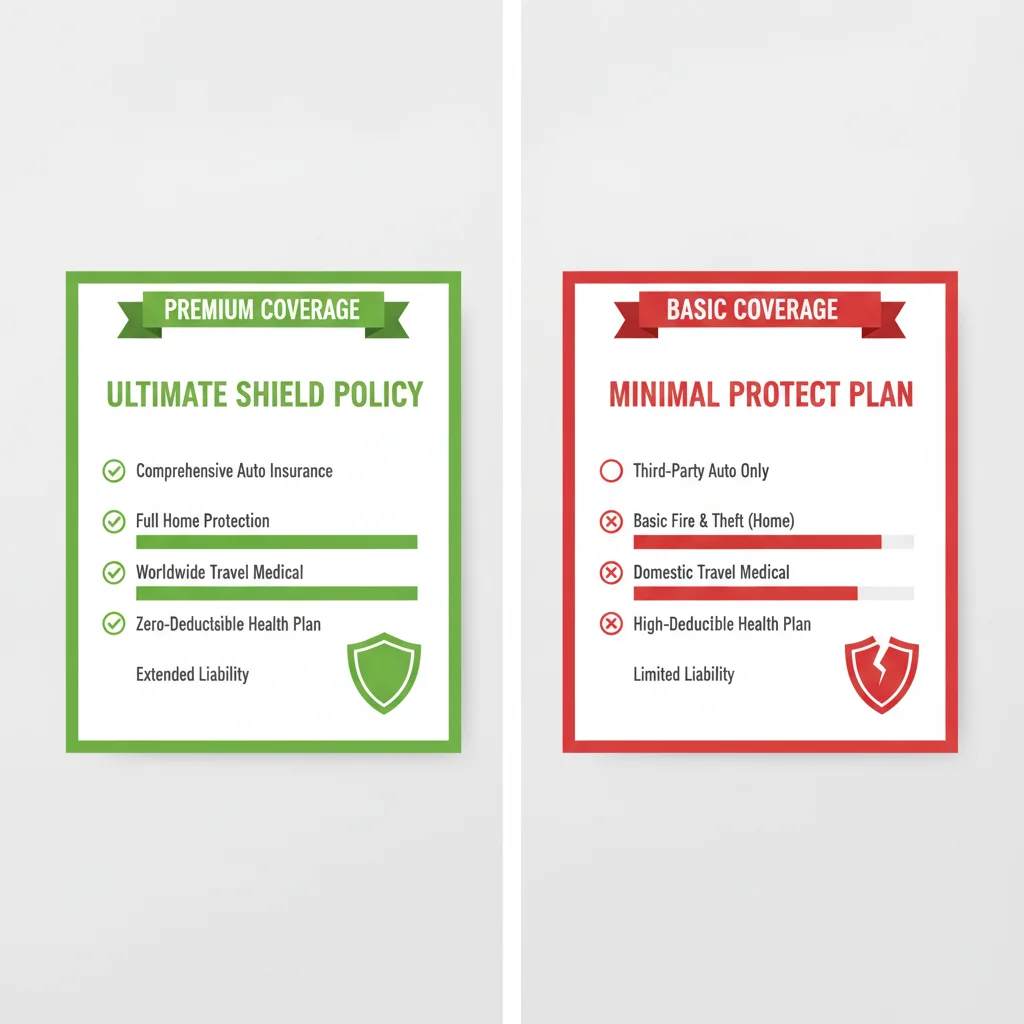
This framework treats policy evaluation as a multi-dimensional process — coverage types, limits, deductibles, exclusions, endorsements, and carrier quality all get their own lens. Work through each dimension in order, then compare policies side by side across all of them before you let price enter the picture.
Coverage Types: What You Need vs. What's Bundled In
Auto insurance is sold in coverage layers. Understanding which layers are legally required, which are situationally essential, and which are nice-to-have extras lets you evaluate whether a policy is genuinely well-suited to your life — or just well-marketed.
Legally Required Coverages
Every state mandates some form of liability insurance, which pays for bodily injury and property damage you cause to others. Some states also require personal injury protection (PIP) or medical payments (MedPay) coverage, and a handful require uninsured/underinsured motorist (UM/UIM) coverage. Know your state's minimums — they are almost always too low for real-world accidents.
Situationally Essential Coverages
- Collision coverage pays for damage to your vehicle from an at-fault accident or a rollover, regardless of who hit what. If your car is financed or leased, your lender requires it. If you own it outright and it's worth less than three times your annual premium for that coverage, dropping it may be rational.
- Comprehensive coverage handles non-collision events: theft, hail, flooding, fire, falling objects, and animal strikes. In areas prone to severe weather or high vehicle theft, this is non-negotiable.
- Uninsured/underinsured motorist coverage steps in when the at-fault driver has no insurance or insufficient limits. Roughly 1 in 8 U.S. drivers is uninsured — this coverage matters more than most people realize.
Add-Ons Worth Scrutinizing
- Rental reimbursement: Covers a rental car while yours is in the shop. Evaluate the daily and total limits — many policies cap reimbursement well below current rental rates.
- Roadside assistance: Convenient, but check whether you already have it through a credit card or manufacturer warranty before paying for it again.
- Gap coverage: If you financed a new vehicle, gap coverage pays the difference between your car's actual cash value and your loan balance if the car is totaled. It's often cheaper through your insurer than through the dealership.
When reviewing a new policy, don't just read the declarations page — pull the full policy document and search for the word 'exclusion.' That single search will show you every carve-out the insurer has built in, and some of them will surprise you.
Declarations pages summarize coverage but rarely enumerate all exclusions in plain sight. The exclusion sections of the full policy are where coverage gaps live.
Ask your insurer specifically whether rideshare or delivery driving voids your personal auto coverage — don't assume the answer. If you use your vehicle for any compensated driving, get the answer in writing before your next shift.
Business-use exclusions are among the most commonly triggered denials, and many drivers don't discover the exclusion applies to them until after a claim is denied.
Pull your NAIC complaint ratio before you commit to any carrier. It's free, publicly available, and more reliable than star ratings on aggregator sites, which often reflect price satisfaction rather than claims experience.
The NAIC complaint ratio normalizes complaint volume by market share, making it a direct, apples-to-apples signal of how a carrier treats its policyholders at claim time.
If you drive an electric vehicle, standard coverage layers may leave real gaps — battery replacement costs and charging equipment are often excluded from base policies. See our guide on EV insurance from start to finish for the full picture.
Reading Coverage Limits and What They Actually Mean
Coverage limits are the maximum dollar amount your insurer will pay for a covered claim. They appear as split limits (e.g., 100/300/100) or as a combined single limit. Understanding what those numbers represent is the difference between a policy that protects you and one that creates a false sense of security.
Breaking Down Split Limits
A policy written as 100/300/100 means:
- $100,000 per person for bodily injury liability
- $300,000 per accident for total bodily injury liability
- $100,000 per accident for property damage liability
State minimums are frequently as low as 25/50/25 or lower. A single serious accident involving a newer vehicle or hospitalization can blow past those figures with ease. If you have significant assets, your liability limits should at minimum equal your net worth — and you should explore an umbrella policy on top of that.
1 in 8
U.S. drivers are uninsured
According to the Insurance Research Council, approximately 12.6% of U.S. motorists were uninsured as of the most recent national estimate.
$48,000+
Average new vehicle transaction price
Cox Automotive data from 2024 shows average new vehicle prices exceeding $48,000, making property damage liability limits of $25,000 dangerously inadequate.
5–25%
Typical savings from policy bundling
Most major carriers offer multi-policy discounts in this range when combining auto with home or renters insurance.
10–30%
Potential savings from telematics programs
Usage-based insurance programs at carriers like Progressive and Allstate have reported premium reductions of up to 30% for low-risk, low-mileage drivers.
A-
Minimum AM Best rating to require from any carrier
AM Best's financial strength ratings indicate an insurer's ability to meet ongoing insurance obligations; A- or better signals solid financial footing.
Actual Cash Value vs. Replacement Cost
When your car is totaled, the settlement amount depends on which valuation method your policy uses. Actual cash value (ACV) pays what the vehicle was worth at the time of the loss — depreciation included. Replacement cost pays what it would take to buy a comparable vehicle today. Most standard auto policies use ACV, which can leave a meaningful gap, especially with used vehicles that depreciated steeply. Some carriers offer a replacement cost endorsement for newer vehicles; it's worth pricing out.
UM/UIM Limits: Match Them to Your Bodily Injury Limits
A common mistake is carrying high bodily injury liability limits but low UM/UIM limits. If an uninsured driver seriously injures you, your UM/UIM coverage is what pays your medical bills and lost income. Set those limits to mirror your liability limits, or you're self-insuring the gap.

Deductibles: How to Set Them Without Shooting Yourself in the Foot
A deductible is the amount you pay out of pocket before your insurer covers the rest of a claim. It applies separately to collision and comprehensive coverage — not to liability or UM/UIM. The higher your deductible, the lower your premium. But setting it higher than you can actually afford to pay at a moment's notice is a trap.
Set Your Deductible to Match Your Emergency Fund
Before choosing a deductible tier, look at your liquid savings — money you can access without penalty in 48 hours. Set your deductible at or below that amount. A $2,000 deductible isn't a bargain if covering it means putting the expense on a credit card at 22% APR. The premium savings rarely justify that hidden cost.
How to Find Your Realistic Deductible Ceiling
Think about what you could genuinely produce within 48 hours without going into debt or tapping retirement savings. That's your ceiling. For most drivers, that's somewhere between $500 and $1,500. If your emergency fund is thin, a $2,500 deductible premium discount isn't worth the exposure — you'll either skip filing small claims out of fear or struggle to cover the deductible when a real loss hits.
The Break-Even Math
Raising your deductible from $500 to $1,000 might save $200 per year. If you file a claim every 5 years on average, that's $1,000 in premium savings vs. a $500 higher out-of-pocket — a net positive over time. But the analysis assumes you won't file a claim in year one. Run this math explicitly rather than defaulting to the highest or lowest option.
Separate Deductibles for Comprehensive vs. Collision
Some carriers allow you to set different deductibles for collision and comprehensive. Because comprehensive losses (hail, theft) tend to be less severe than collision losses, some drivers set a lower comprehensive deductible and a higher collision deductible to reduce exposure on the more financially disruptive event. This is worth asking about specifically.
Exclusions and Endorsements: The Fine Print That Changes Everything
Exclusions tell you exactly when your insurer won't pay. Endorsements — sometimes called riders — add or modify coverage beyond what the base policy offers. Together, they define the real edges of your protection. Most policy comparisons ignore both.
Common Exclusions to Hunt For
- Business use exclusion: Using your vehicle for rideshare driving, delivery, or any commercial purpose is commonly excluded under personal auto policies. If you drive for Uber, Lyft, DoorDash, or similar platforms, you need a rideshare endorsement or a commercial policy.
- Named driver exclusions: Some policies exclude specific household members (typically those with poor driving records) to lower premiums. If an excluded driver causes an accident in your vehicle, the claim will be denied.
- Wear and tear: Auto insurance covers sudden, accidental damage — not mechanical deterioration. Brake pad wear, engine oil degradation, and rust are not covered, and no policy will change that.
- Custom equipment: Aftermarket modifications — lift kits, custom audio systems, performance upgrades — are typically excluded from standard policies. A separate endorsement or a specialty carrier is required.
- Vehicle use abroad: Most U.S. policies limit coverage to the U.S. and Canada. Driving into Mexico requires a separate Mexican auto insurance policy, full stop.
State Minimums Will Not Protect Your Assets
State minimum liability limits exist to ensure basic compensation for accident victims — not to protect drivers from financial ruin. A 25/50/25 policy can be exhausted by a single moderate collision involving injuries and a newer vehicle. If you carry minimum limits and cause a serious accident, anything above your coverage cap can be collected directly from your wages, savings, or future income. Match your liability limits to your actual net worth.
Excluded Drivers Create Total Coverage Voids
If an insurer excludes a named driver from your policy and that person drives your vehicle and causes an accident, the insurer owes nothing — not for the other party's injuries, not for your vehicle damage, nothing. Named driver exclusions are often added without adequate explanation when a household member has a poor record. Read your policy for any exclusion endorsements and understand exactly who in your household is and is not covered before handing over your keys.
Endorsements Worth Adding
Once you understand your base policy's limits, evaluate whether any of these endorsements close meaningful gaps:
- New car replacement: Pays to replace a totaled vehicle with a new one of the same make and model, not its depreciated value.
- Accident forgiveness: Prevents your first at-fault accident from triggering a rate increase. Usually only available if you've maintained a clean record for a defined period.
- OEM parts endorsement: Requires repairs to use original equipment manufacturer parts rather than aftermarket substitutes.
- Diminishing deductible: Reduces your deductible amount for each claim-free year — a meaningful long-term value for cautious drivers.
If you're comparing policies across different carriers, our auto insurance comparison checklist provides a structured way to audit exclusions and endorsements side by side before you commit to switching.
When reviewing a new policy, don't just read the declarations page — pull the full policy document and search for the word 'exclusion.' That single search will show you every carve-out the insurer has built in, and some of them will surprise you.
Declarations pages summarize coverage but rarely enumerate all exclusions in plain sight. The exclusion sections of the full policy are where coverage gaps live.
Ask your insurer specifically whether rideshare or delivery driving voids your personal auto coverage — don't assume the answer. If you use your vehicle for any compensated driving, get the answer in writing before your next shift.
Business-use exclusions are among the most commonly triggered denials, and many drivers don't discover the exclusion applies to them until after a claim is denied.
Pull your NAIC complaint ratio before you commit to any carrier. It's free, publicly available, and more reliable than star ratings on aggregator sites, which often reflect price satisfaction rather than claims experience.
The NAIC complaint ratio normalizes complaint volume by market share, making it a direct, apples-to-apples signal of how a carrier treats its policyholders at claim time.
Evaluating Insurer Quality Beyond the Quote
The insurer behind the policy matters as much as the policy itself. A generous coverage structure is worthless if the carrier is slow to pay, prone to disputes, or financially fragile. This is where most shoppers do the least work — and where the consequences of a bad choice are most expensive.
“The time to read your insurance policy is not after you've had a loss. If you don't understand what you bought before the accident, you'll find out at the worst possible time.”
— J. Robert Hunter, Former Director of Insurance, Consumer Federation of America
Financial Strength Ratings
AM Best, Moody's, and S&P all rate insurer financial stability. Look for an AM Best rating of A- or better. A financially weak insurer may have difficulty paying large claims, particularly after a major catastrophic event that affects many policyholders simultaneously. Check the rating before you buy — it takes two minutes and tells you a lot.
Claims Satisfaction Data
J.D. Power publishes annual auto insurance claims satisfaction studies. The National Association of Insurance Commissioners (NAIC) maintains a complaint ratio database comparing each insurer's complaint volume relative to their market share. A carrier with a complaint ratio significantly above 1.0 deserves scrutiny. A carrier consistently near the bottom of J.D. Power rankings for claims handling is a red flag even if their premium is attractive.
State Department of Insurance Records
Every state's Department of Insurance maintains public records of complaints filed against carriers. If a carrier has a pattern of specific complaint types — delays, underpayment, denial disputes — that pattern will show up. Five minutes with your state's online complaint database can reveal issues that no quote comparison site will surface.
Claims Process Logistics
Ask specific questions before you buy: Does the carrier have 24/7 claims reporting? Do they offer direct repair programs with preferred shops, or will you need to negotiate your own repair? How are total loss valuations handled? How long does a typical claim take to resolve? These process details affect your real-world experience at the worst possible moment.

Discounts, Riders, and Bundling — Where Real Savings Hide
Once you've confirmed a policy has solid coverage, appropriate limits, and a reliable carrier behind it, optimize for price. Not the other way around. With a solid policy identified, there are legitimate ways to reduce your premium without compromising what you're getting.
Discounts Most Drivers Leave on the Table
- Multi-policy (bundling): Combining auto and home or renters insurance with the same carrier typically yields 5–25% off both policies. Run the bundled math explicitly — sometimes it's better to keep the policies separate if each carrier independently offers better rates or coverage.
- Safe driver / telematics programs: Usage-based insurance programs track driving behavior (braking, acceleration, time of day, mileage) and price your policy accordingly. If you're a careful, low-mileage driver, these programs can generate 10–30% savings.
- Defensive driving course discount: Completing a state-approved course often earns a discount, particularly for drivers over 55. Course costs are typically $25–$50.
- Good student discount: Young drivers with a B average or better commonly qualify for 8–25% off.
- Loyalty vs. shopping: Loyalty discounts sound appealing, but insurers frequently raise rates for long-term customers while reserving competitive pricing for new policyholders. Shopping every renewal cycle — even if you stay with your current carrier — is worth the effort.
Don't Let a Coverage Lapse Happen Between Policies
When switching carriers, confirm your new policy's effective date aligns exactly with the cancellation of your old policy — not one day after. Even a 24-hour lapse in coverage creates a gap that insurers can use to raise rates on your next application, and any accident during that window is entirely your financial responsibility. Schedule the switch for the same calendar day.
Loyalty Doesn't Always Pay: Check Renewal Rates Actively
Many insurers quietly increase renewal premiums for long-term policyholders, banking on inertia keeping them from shopping around. Rate hikes of 10–20% at renewal aren't uncommon, especially after industry-wide loss events. Pull competing quotes every renewal cycle — even if you plan to stay — to verify you're not being overcharged for the loyalty.
The Bundling Trap to Avoid
Bundling often makes financial sense, but it can also create inertia that keeps you with a carrier longer than you should be. If your bundled insurer's claims experience deteriorates, or their rates spike, the multi-policy discount may not offset what you'd save by switching each policy independently. Evaluate bundled and unbundled scenarios at every renewal.
Managing your policy actively over time — including tracking renewals, updating coverage after major life changes, and staying on top of rate adjustments — is covered in depth in our guide on auto insurance policy management.
Telematics Programs and Privacy Tradeoffs
Usage-based insurance programs that track driving behavior require you to share location, speed, braking, and sometimes phone usage data with your carrier. For most low-risk drivers, the premium savings are genuine and the data-sharing is a reasonable tradeoff. However, if your driving patterns include occasional hard braking in city traffic or late-night driving, the program may actually increase your premium. Review the carrier's specific scoring methodology before enrolling.
Putting It All Together: Your Evaluation Checklist
At this point you have the framework. What follows is a practical end-to-end checklist you can apply to any policy you're evaluating — whether you're buying for the first time, renewing, or considering a switch.
Step 1: Confirm Your State's Requirements
Know the minimum coverages your state mandates. Treat those as a floor, not a target.
Step 2: Assess Your Coverage Needs
- Do you own or finance your vehicle? (Determines whether collision/comprehensive is required or optional)
- What is your vehicle's current market value? (Informs whether full coverage makes economic sense)
- Do you use the vehicle for any commercial purpose? (Triggers rideshare or commercial coverage need)
- Do you have significant assets that need liability protection above state minimums?
- Is the vehicle an EV with specialized battery or equipment coverage needs? If so, review how to compare EV insurance policies before settling on a carrier.
Step 3: Set Your Limits
Push liability limits to match your net worth. Mirror your UM/UIM limits to your bodily injury limits. Verify how property damage limits stack up against average vehicle prices in your area (the average new vehicle now exceeds $48,000).
Step 4: Choose Your Deductibles Deliberately
Set collision and comprehensive deductibles at the highest level you can genuinely cover from savings within 48 hours. Run the premium-savings math at multiple deductible tiers to see the break-even horizon.
Step 5: Read the Exclusions List
Find the exclusions section in each policy you're comparing. Flag any that apply to your situation — business use, named driver exclusions, custom equipment, geographic limits — before you assume coverage exists.
Step 6: Add Necessary Endorsements
Identify which endorsements close meaningful gaps for your specific situation. Price them separately so you know exactly what you're adding and why.
Step 7: Vet the Carrier
Check AM Best rating (A- minimum). Review J.D. Power claims satisfaction rank. Pull your state's NAIC complaint ratio. Ask your agent or the carrier's rep directly about claims timelines and dispute resolution processes.
Step 8: Optimize for Price
Apply every discount you legitimately qualify for. Compare bundled vs. unbundled scenarios. Use telematics if your driving profile supports it. Then compare the final apples-to-apples premiums across carriers with comparable coverage structures.
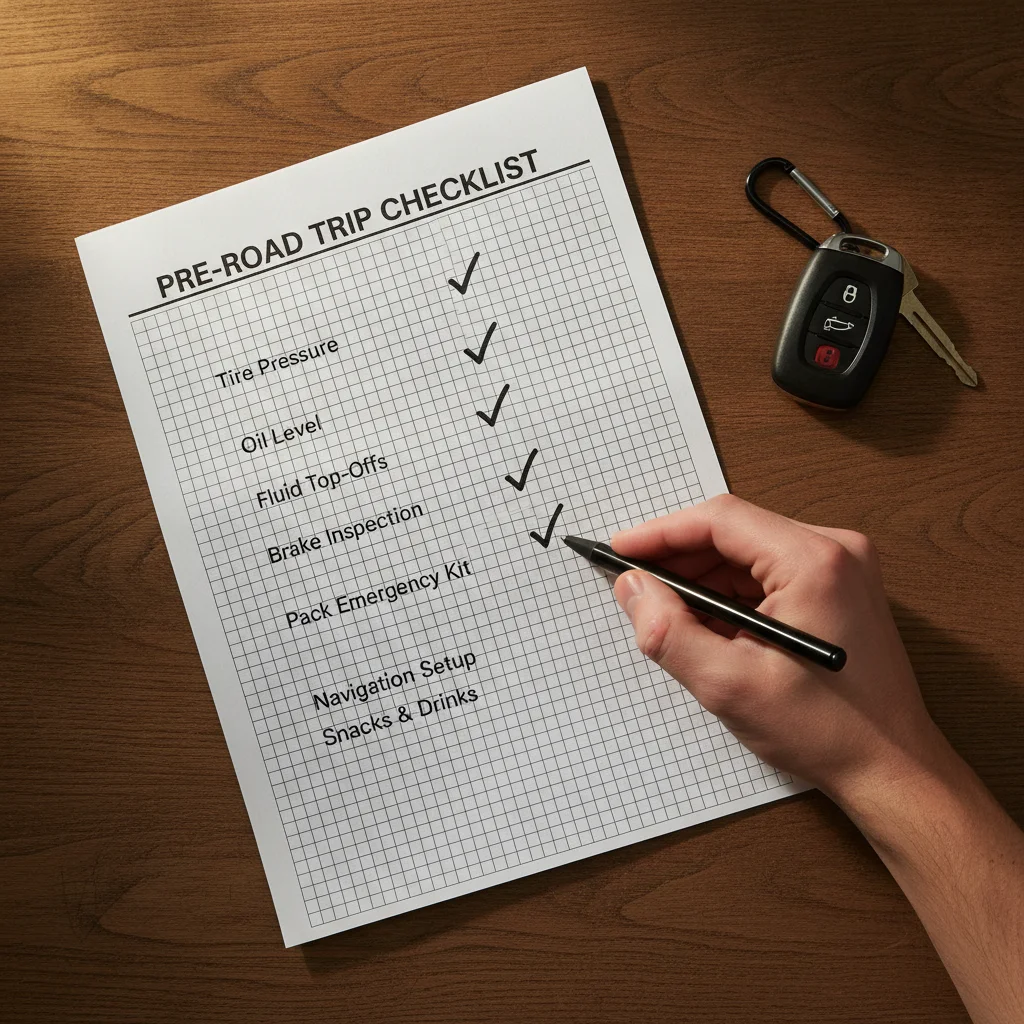
Before you finalize any switch, run through our pre-switch verification checklist to make sure no coverage gap appears between your old policy expiring and your new one activating. A one-day lapse is all it takes to create a problem.
If you're also in the middle of purchasing a vehicle and dealing with financing paperwork, note that your lender will require proof of insurance before loan funding — understanding that intersection is covered in our car buying paperwork and contracts hub.
NAIC Consumer Insurance Search
The National Association of Insurance Commissioners' public database lets you look up complaint ratios for any licensed insurer in your state — free and updated annually.
AM Best Financial Strength Ratings
AM Best provides free consumer lookups for insurer financial strength ratings, helping you verify that any carrier you're considering can actually pay claims.
J.D. Power Auto Insurance Claims Satisfaction Study
J.D. Power's annual study ranks major auto insurers on claims handling, communication, and settlement satisfaction — essential reading before choosing a carrier.
Auto Insurance Comparison Checklist
A structured side-by-side worksheet for auditing coverage limits, exclusions, endorsements, and carrier quality across multiple policies before you switch or renew.
EV Insurance Guide for Owners
A thorough resource covering EV-specific coverage types, battery protection, charging equipment, and which insurers offer the most complete policies for electric vehicle owners.
State Department of Insurance Lookup
Every state's Department of Insurance maintains a public complaint database and license verification system — your state's version is the most locally relevant source for carrier due diligence.

All claims are backed by peer-reviewed research. Sources on request.