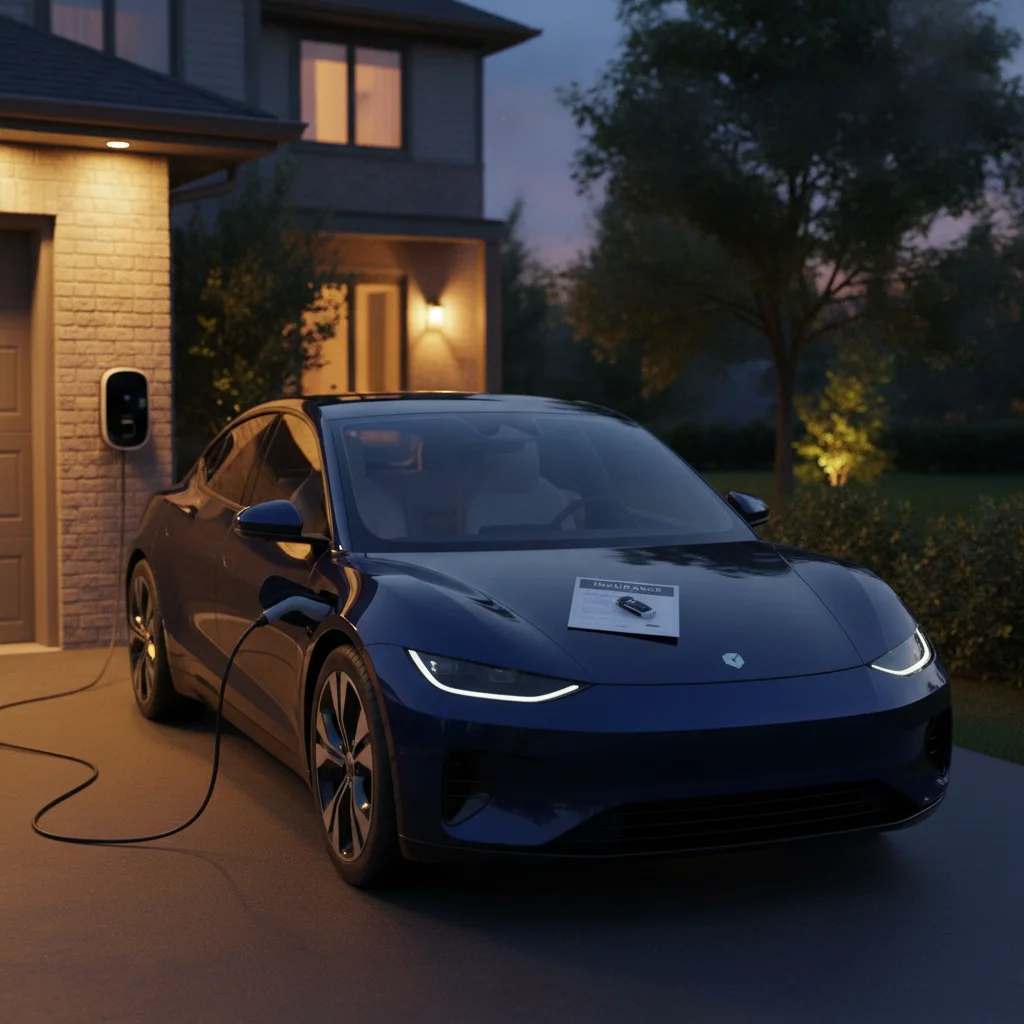

Key Takeaways
Summary
24 items · 20–40 minutes with your agent
Why the Conversation With Your Agent Matters More for EVs
Buying auto insurance for an electric vehicle isn't the same exercise as insuring a conventional car. The technology is different, the repair ecosystem is different, and the risks — particularly around the battery pack — are different. Yet most insurance agents spend the majority of their careers quoting internal combustion vehicles. The gap between their default knowledge and what EV owners actually need can be expensive.
The good news is that a well-prepared conversation closes that gap fast. Agents who specialize in EVs or who work with carriers that have developed EV-specific products will answer these questions confidently and with specifics. Agents who struggle are telling you something equally valuable: this may not be the right policy for your vehicle.
Before you sit down, pull together your vehicle's VIN, the battery's rated capacity in kWh, and any charging equipment you own. For a deeper grounding in what a complete EV policy should include, see the comprehensive EV insurance guide — it covers coverage types, premium factors, and insurer options in full. Then use the checklist below to drive the conversation.

Tools and Information to Bring to the Meeting
Walking into a policy discussion prepared turns a passive quote session into a genuine evaluation. Gather the following before you meet — whether in person or over the phone.
Vehicle Registration or Window Sticker
Confirms exact model year, trim level, and battery capacity — all inputs that affect how the carrier classifies and rates your vehicle.
Battery Warranty Documentation
Shows remaining manufacturer coverage on the battery pack, which directly affects how an agent should frame supplemental battery coverage.
Current Policy Declarations Page
Lets you compare existing coverage limits and exclusions against what the new policy offers, line by line.
Home Charging Equipment Receipt or Specs Sheet
Provides the make, model, and installed cost of your EVSE so you can ask precisely whether it's covered and for how much.
Loan or Lease Agreement
Identifies any lender-required coverage minimums and helps the agent determine whether gap insurance is relevant.
This Question Checklist (printed or mobile)
Keeps the conversation on track and ensures no coverage category is skipped during a time-pressured quote session.
If you're still in the vehicle selection phase rather than the insurance phase, reviewing what to look for in an EV's battery specs first will help you understand what numbers — usable capacity, degradation warranty terms — are most relevant when insurance questions come up.
The Full Question Checklist
Work through these questions in order. The early groups establish whether the agent and carrier understand EV fundamentals. Later groups dig into the policy details that determine whether coverage will actually perform when you file a claim. Take notes on every answer — vague or deflecting responses are red flags worth documenting.
Verbal Promises Don't Bind Coverage
An agent may confidently tell you that battery thermal events are covered or that OEM parts are standard. Those assurances only matter if they appear in your policy documents or as a named endorsement. Always request written confirmation of any specific coverage commitment before binding or paying your first premium.
"Comprehensive" Doesn't Always Mean What You Think
Comprehensive coverage covers non-collision events like fire, theft, and weather damage — but individual carriers define the boundaries differently for high-voltage battery systems. Some policies explicitly exclude battery degradation; others exclude thermal events or damage from non-OEM charging equipment. Read the exclusions section, not just the declarations page.
EV Repair Timelines Are Longer Than Average
Certified EV technicians and OEM battery components are in shorter supply than conventional parts. Industry data consistently shows EV repair cycle times running 20–30% longer than comparable ICE vehicles. Your rental reimbursement limit — often capped at a daily dollar amount — may not cover a three-to-four-week repair window. Ask about extended rental provisions explicitly.
Agent and Carrier EV Experience
Battery Coverage Specifics
Charging Equipment and Infrastructure
Repair Shops and OEM Parts
Total Loss and Valuation
Rental, Rideshare, and Loaner Coverage
Once you've gathered answers, use the EV insurance policy checklist to cross-reference what the agent told you against the actual policy language before signing anything. Verbal assurances don't show up on a claim form.
Battery Replacement Cost Is Not a Small Number
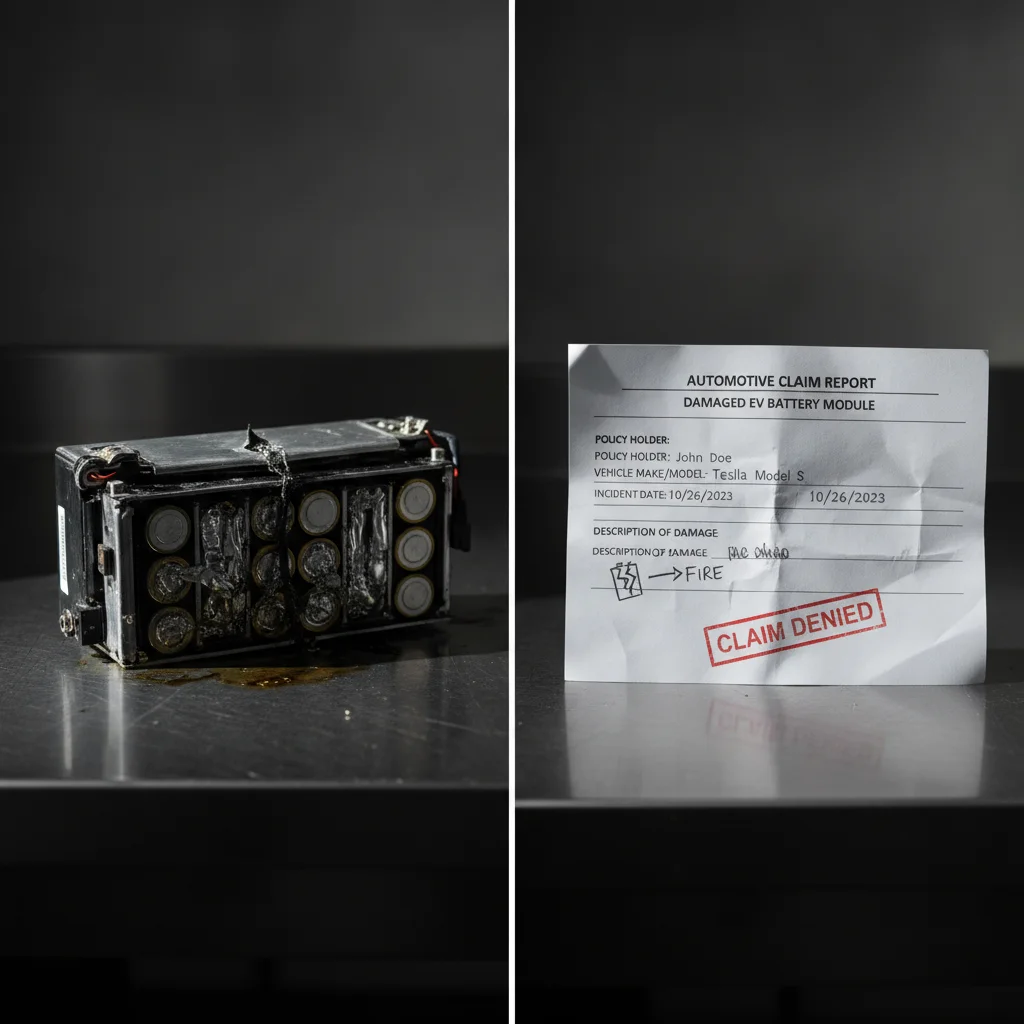
Depending on vehicle make, model year, and capacity, battery pack replacement can range from $8,000 to over $20,000. If your policy's battery coverage is ambiguous, uncapped, or subject to a steep depreciation schedule, a single total-battery claim could leave you with a five-figure gap. This is the single highest-stakes coverage question in any EV policy conversation — do not leave the meeting without a direct, documented answer.
Reading Between the Lines: What Agent Answers Reveal
The content of an agent's answer matters, but so does its character. Here's how to interpret common response patterns:
- Immediate, specific answers with dollar figures: The agent and carrier have processed EV claims before. That's the baseline you want.
- "It depends on the situation": Acceptable for genuinely complex scenarios like total loss valuation, but a concern if it's the answer to direct questions like battery coverage or OEM parts.
- Redirecting to the general policy language: Ask them to point to the specific endorsement or exclusion. If they can't locate it quickly, that's a training gap.
- Conflating the battery with a standard powertrain component: EV battery packs are not analogous to an engine or transmission in terms of cost, failure modes, or coverage triggers. An agent who treats them as equivalent may not understand what they're insuring.
For a structured framework on evaluating policies against each other rather than just interrogating a single agent, the guide to comparing EV insurance policies walks through what to weigh beyond premium price.
After the Meeting: Next Steps
A productive conversation doesn't end when you hang up or leave the office. The follow-through determines whether you're actually covered correctly.
- Request everything in writing. Any coverage commitment the agent made verbally — battery replacement terms, charger equipment inclusion, OEM parts preference — should be reflected in the policy documents or as a written endorsement before you bind coverage.
- Compare at least two carriers. EV insurance is a competitive and fast-moving market. A carrier that offered limited EV options two years ago may now have purpose-built products, and vice versa. Use what you learned in this conversation as a benchmark for the next one.
- Review annually. EV technology and insurance products are both evolving quickly. Battery replacement cost estimates, charging network density, and software update frequency all affect your risk profile. Set a calendar reminder to revisit coverage at each renewal.
- Check for bundling benefits. Some carriers offer meaningful discounts when home and auto policies are bundled, and for EV owners with a Level 2 home charger, that home policy relationship can also cover charger replacement. Ask explicitly whether bundling affects the EV-specific terms you negotiated.
If you installed a home charging setup recently — or are planning to — the adjacent considerations around equipment and electrical work are covered in questions to ask an electrician before EV charger installation. Getting both the hardware and the coverage right protects your investment from both ends.
Finally, keep in mind that any tax credits you claimed or plan to claim on your EV purchase don't affect your insurance premiums directly — but they do affect your vehicle's effective purchase price, which is a relevant input for agreed-value or stated-value coverage conversations. The EV tax credits hub is a useful reference for understanding what you received and what documentation to keep.
All claims are backed by peer-reviewed research. Sources on request.