| Max credit — new BEV or PHEV | $7,500 (IRC Section 30D, as amended by the Inflation Reduction Act, 2022) |
| Max credit — used EV | $4,000 or 30% of sale price (lesser) (IRC Section 25E) |
| PHEV minimum battery size to qualify | 7 kWh (IRC Section 30D eligibility threshold) |
| HEV (non-plug-in hybrid) credit | $0 — not eligible (Standard hybrids excluded from Section 30D) |
| MSRP cap — cars and sedans | $55,000 (IRC Section 30D MSRP limitation) |
| MSRP cap — SUVs, vans, and trucks | $80,000 (IRC Section 30D MSRP limitation) |
| Income limit — joint filers (new EV) | $300,000 MAGI (IRC Section 30D, tax year 2024) |
| Income limit — single filers (new EV) | $150,000 MAGI (IRC Section 30D, tax year 2024) |
| Credit split structure | Two $3,750 halves (minerals + components) (IRC Section 30D battery requirement thresholds) |
| Point-of-sale transfer available since | January 1, 2024 (IRS implementation of IRA dealer transfer provisions) |
The Three Categories of Electrified Vehicles (And Why the Distinction Matters)
Walk into a dealership today and you'll find vehicles marketed as "electric," "hybrid," "plug-in hybrid," and everything in between. The terminology is often used loosely, but under federal tax law, the distinctions are precise — and they determine whether you get a credit worth up to $7,500 or nothing at all.
| Max credit — new BEV or PHEV | $7,500 (IRC Section 30D, as amended by the Inflation Reduction Act, 2022) |
| Max credit — used EV | $4,000 or 30% of sale price (lesser) (IRC Section 25E) |
| PHEV minimum battery size to qualify | 7 kWh (IRC Section 30D eligibility threshold) |
| HEV (non-plug-in hybrid) credit | $0 — not eligible (Standard hybrids excluded from Section 30D) |
| MSRP cap — cars and sedans | $55,000 (IRC Section 30D MSRP limitation) |
| MSRP cap — SUVs, vans, and trucks | $80,000 (IRC Section 30D MSRP limitation) |
| Income limit — joint filers (new EV) | $300,000 MAGI (IRC Section 30D, tax year 2024) |
| Income limit — single filers (new EV) | $150,000 MAGI (IRC Section 30D, tax year 2024) |
| Credit split structure | Two $3,750 halves (minerals + components) (IRC Section 30D battery requirement thresholds) |
| Point-of-sale transfer available since | January 1, 2024 (IRS implementation of IRA dealer transfer provisions) |
The Internal Revenue Code, as amended by the Inflation Reduction Act of 2022, recognizes several categories of electrified vehicles. Each has its own eligibility rules, credit amounts, and qualifying thresholds. Understanding which bucket your vehicle falls into is the first step before you even look at income limits or assembly requirements.
Here's a plain-English breakdown of the three main categories:
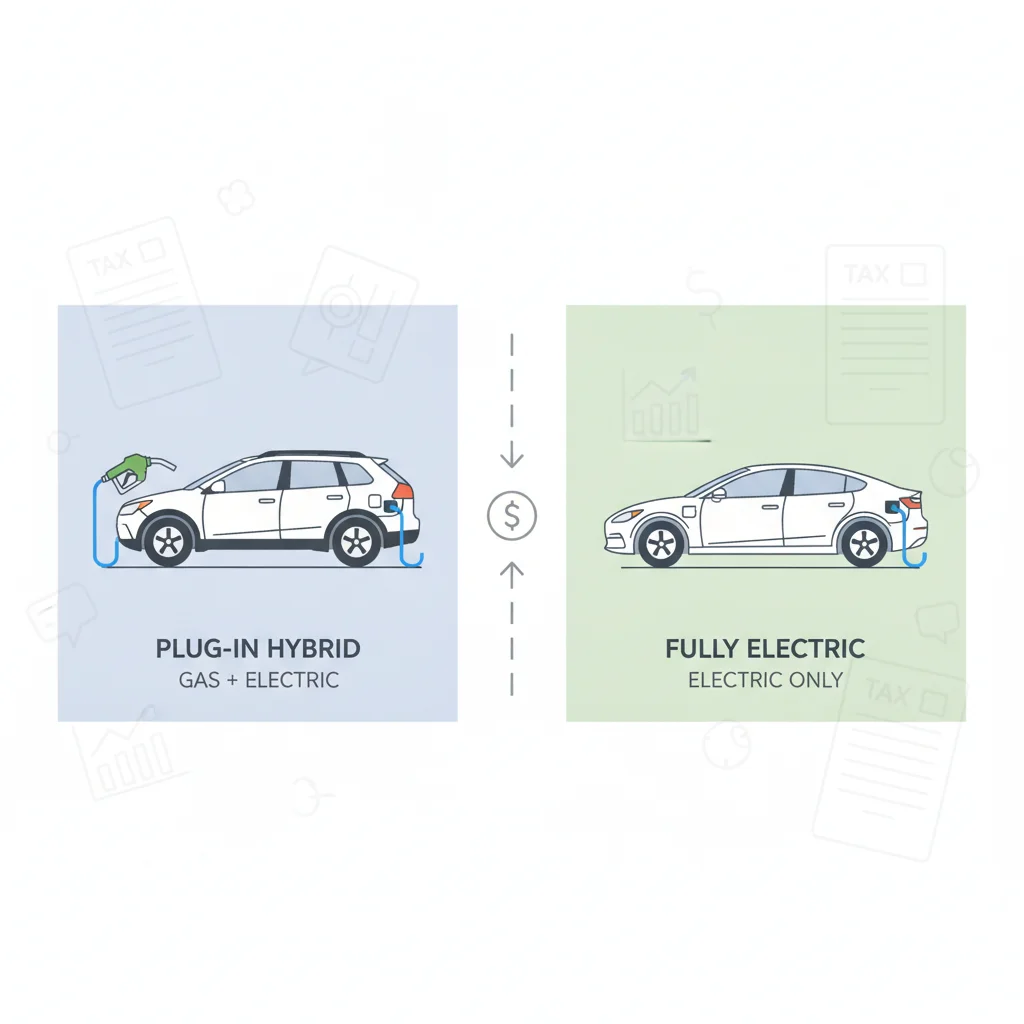
- Battery Electric Vehicles (BEVs): Run entirely on electricity stored in a large onboard battery. No combustion engine. Require charging from an external source.
- Plug-In Hybrid Electric Vehicles (PHEVs): Have both an electric motor with a rechargeable battery and a conventional gasoline engine. Can be charged externally and driven on electricity alone for a limited range.
- Hybrid Electric Vehicles (HEVs): Use a gasoline engine as the primary power source with an electric motor that assists and captures energy through regenerative braking. Cannot be plugged in. The battery charges itself.
That last distinction — whether the vehicle can be plugged in — is the single most important dividing line in federal tax law. PHEVs and full EVs both qualify for federal credits, but the rules diverge in important ways. Standard hybrids do not qualify at all under the current consumer credit.
Battery Electric Vehicle (BEV)
A vehicle powered entirely by electricity stored in a large onboard battery pack. BEVs have no combustion engine and must be charged from an external source — a home outlet, Level 2 charger, or DC fast charger.
Plug-In Hybrid Electric Vehicle (PHEV)
A vehicle with both an electric motor and a gasoline engine. The battery can be charged from an external plug and typically provides 20–50 miles of electric-only range before the gasoline engine takes over.
Hybrid Electric Vehicle (HEV)
A vehicle that uses a gasoline engine as its primary power source with an electric motor for supplemental assist and regenerative braking. The battery charges itself and cannot be plugged in. HEVs do not qualify for the federal consumer EV tax credit.
Section 30D Credit
The federal Clean Vehicle Credit for consumers purchasing new qualifying plug-in electric vehicles, worth up to $7,500. Governed by Internal Revenue Code Section 30D, as amended by the Inflation Reduction Act of 2022.
Section 25E Credit
The federal Previously Owned Clean Vehicle Credit, available to buyers of used qualifying EVs. Capped at $4,000 or 30% of the sale price, whichever is less, with stricter income limits than the new vehicle credit.
Section 45W Credit
The Commercial Clean Vehicle Credit, used by businesses and lessors purchasing qualifying electric vehicles. Not subject to North American assembly or battery sourcing requirements, which is why leased EVs may qualify even if the equivalent purchase would not.
Modified Adjusted Gross Income (MAGI)
A measure of income used by the IRS to determine eligibility for various tax credits, including the EV credit. It starts with adjusted gross income (AGI) and adds back certain deductions. The EV credit uses the lower of your current-year or prior-year MAGI.
Critical Mineral Requirement
One of two battery-related conditions under Section 30D. A percentage of the battery's critical minerals must be extracted or processed in the U.S. or a country with a qualifying free-trade agreement. Meeting this requirement alone earns $3,750 of the total $7,500 credit.
Battery Component Requirement
The second of two battery-related conditions under Section 30D. A percentage of battery components must be manufactured or assembled in North America. Meeting this requirement alone earns $3,750; meeting both mineral and component requirements earns the full $7,500.
Point-of-Sale Transfer
A mechanism introduced in 2024 allowing buyers to transfer their Section 30D tax credit to a registered dealer at the time of purchase, effectively reducing the vehicle's price upfront rather than waiting for a tax refund.
Battery Electric Vehicles (BEVs): The Full Credit Opportunity
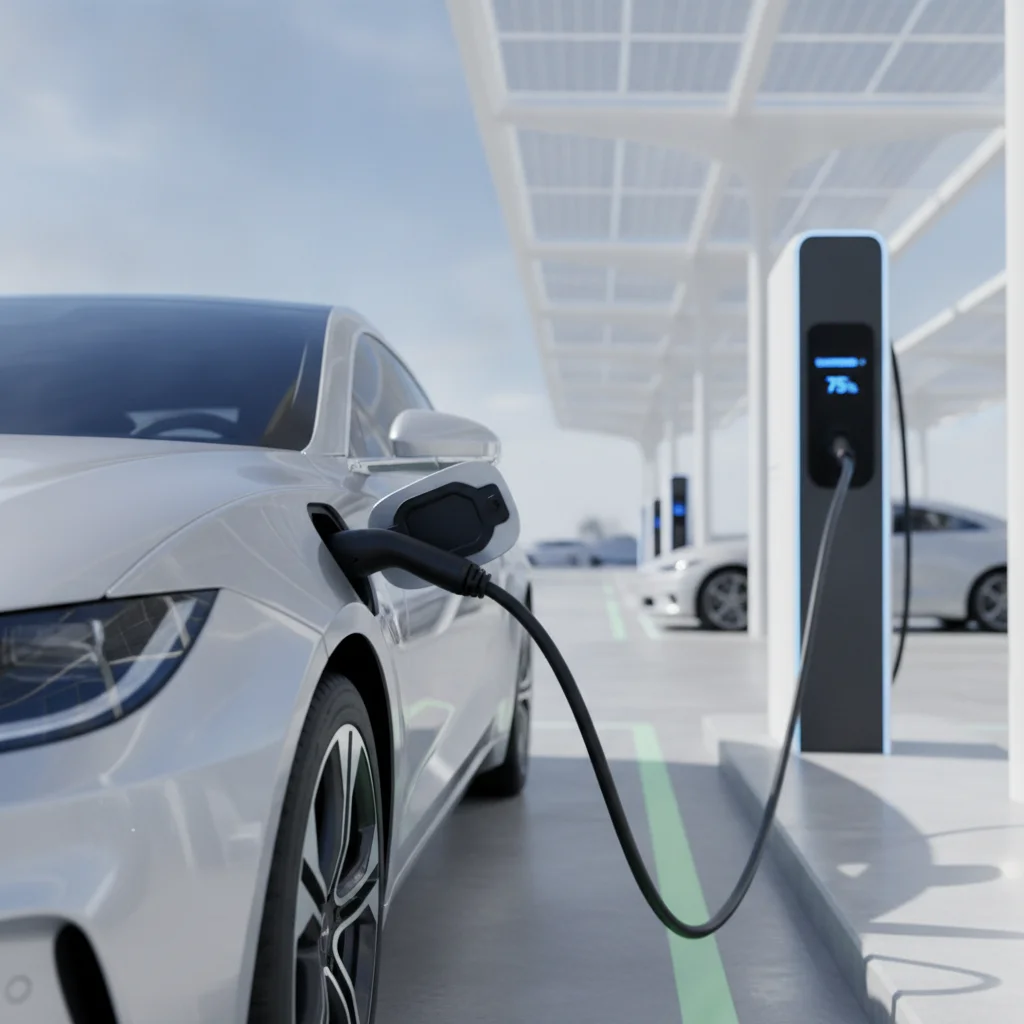
BEVs are the primary target of the Clean Vehicle Credit under IRC Section 30D. A qualifying new BEV can earn up to $7,500 — but "qualifying" involves several simultaneous tests, not just vehicle type.
What makes a BEV eligible?
To receive the full $7,500, a new battery electric vehicle must pass all of the following:
- North American final assembly: The vehicle must be assembled in the United States, Canada, or Mexico. This knocked out several popular models when the IRA took effect in 2023. See which models pass the assembly test and why some popular ones don't.
- Critical mineral and battery component requirements: A portion of battery minerals must be sourced from North America or a U.S. free-trade partner, and battery components must be manufactured or assembled in North America. Each requirement is worth $3,750; meeting both yields the full $7,500.
- MSRP caps: Cars, sedans, and coupes must have an MSRP at or below $55,000. Vans, SUVs, and pickup trucks must be at or below $80,000.
- Buyer income limits: Modified adjusted gross income (MAGI) cannot exceed $150,000 for single filers, $225,000 for heads of household, or $300,000 for joint filers.
The credit is nonrefundable, meaning it can reduce your federal tax liability to zero but won't generate a refund. Starting in 2024, buyers can transfer the credit to a dealer at the point of sale for an immediate price reduction — a significant change for buyers who don't owe enough taxes to benefit from a nonrefundable credit. For the full mechanics, see how the federal EV tax credit works and what changed under the Inflation Reduction Act.
$7,500
Maximum federal credit for a qualifying new BEV or PHEV
The credit is split into two $3,750 halves tied to battery mineral and component sourcing requirements under the Inflation Reduction Act.
7 kWh
Minimum battery capacity for a PHEV to qualify
PHEVs with battery packs smaller than 7 kWh are excluded from Section 30D regardless of other qualifying factors.
$0
Federal consumer tax credit for standard HEVs
Non-plug-in hybrids do not meet the statutory definition of a qualifying plug-in electric vehicle and are ineligible for Section 30D.
$4,000
Maximum federal credit for a qualifying used EV
The Previously Owned Clean Vehicle Credit under Section 25E is capped at $4,000 or 30% of the sale price, whichever is lower.
2024
Year point-of-sale credit transfers became available
Starting January 1, 2024, buyers can transfer their Section 30D credit to a participating dealer at purchase, reducing the out-of-pocket price immediately.
Used BEVs: A separate, smaller credit
Used electric vehicles have their own credit structure under IRC Section 25E — capped at $4,000 or 30% of the sale price, whichever is less. The vehicle must be at least two model years old, purchased from a dealer, and priced at $25,000 or below. Income limits are stricter for used vehicles. The new vs. used credit programs are structured differently — here's how each one works.
Plug-In Hybrid Electric Vehicles (PHEVs): Eligible, But With a Battery Size Floor
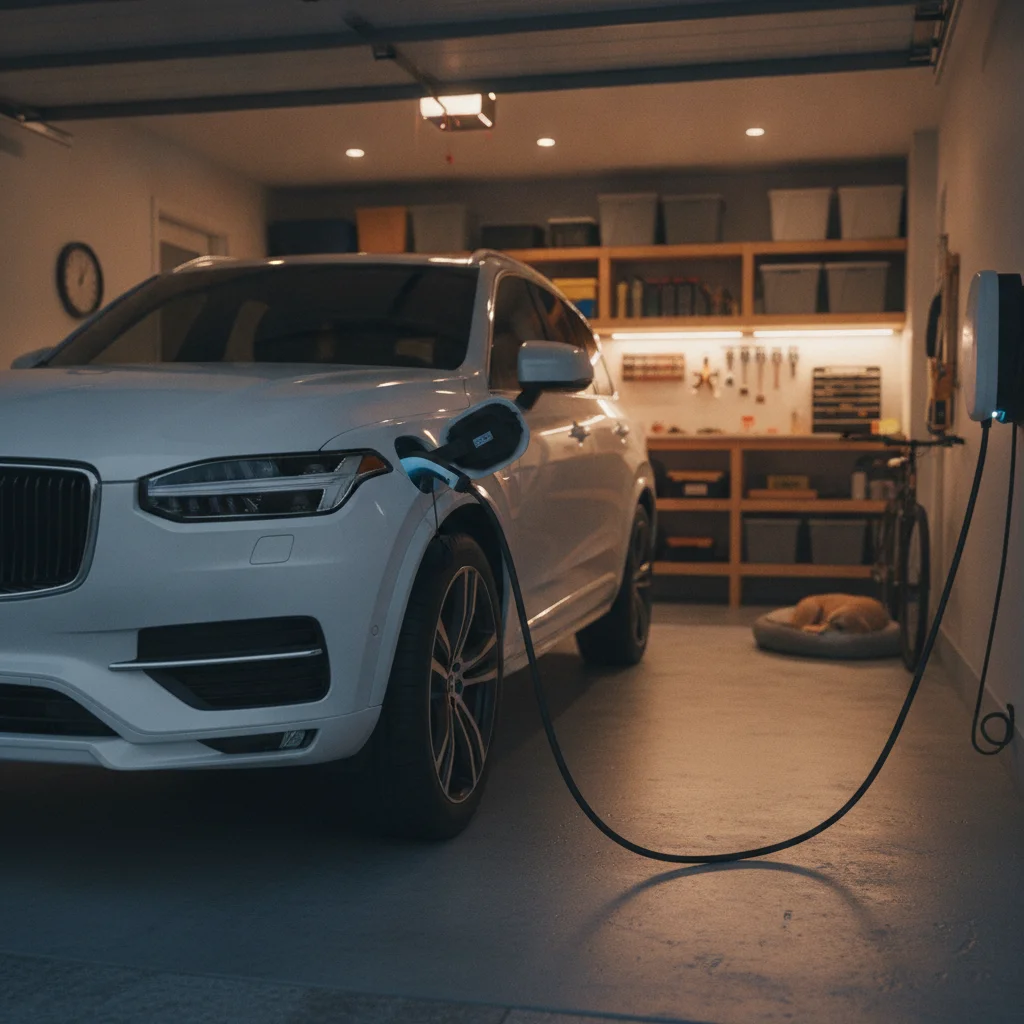
PHEVs qualify for the same Section 30D Clean Vehicle Credit as BEVs, subject to the same MSRP caps, assembly requirements, battery sourcing tests, and income limits. The credit maximum is also $7,500. But there's an important threshold unique to PHEVs.
The 7-kilowatt-hour battery requirement
To qualify under Section 30D, a plug-in hybrid must have a battery capacity of at least 7 kilowatt-hours (kWh). This is a meaningful floor. Early PHEVs — and some current economy models — have battery packs well below that threshold, disqualifying them entirely.
For reference, a PHEV with 7 kWh of usable capacity typically delivers somewhere between 20 and 30 miles of all-electric range, depending on vehicle weight and driving conditions. Models with larger batteries (10–25 kWh) and longer electric ranges tend to clear this bar comfortably.
How the credit amount is calculated for PHEVs
PHEVs don't get a flat $7,500. The credit is split into two $3,750 halves tied to battery mineral and component sourcing — the same framework that applies to BEVs. A PHEV that satisfies one sourcing test but not the other receives $3,750. A PHEV that satisfies both receives $7,500. No vehicle receives a pro-rated amount based on battery size alone.
In practice, the PHEV models that have historically qualified tend to be larger SUVs and trucks with robust battery packs — the vehicles where automakers invested in full plug-in capability rather than minimal compliance hardware. Smaller, lower-cost PHEVs with marginal battery capacity often miss the 7 kWh cutoff or fail the assembly and sourcing requirements.
Eligibility Can Change Mid-Year
The IRS updates the list of qualifying vehicles as automakers certify battery sourcing compliance. A model that qualified in January may lose eligibility partway through the year — or gain it. Always verify on fueleconomy.gov or the IRS clean vehicle credit portal before you sign a purchase agreement. Don't rely solely on what a dealer tells you about credit eligibility.
Leasing Bypasses the Assembly Requirement
Because leased vehicles qualify under the Section 45W commercial credit rather than Section 30D, the North American assembly requirement and battery sourcing tests do not apply. This is why some models that don't qualify for purchase do qualify for lease — and why lessors can often pass the full credit benefit through to customers. Confirm the actual lease pricing reflects this benefit before signing.
Buyers interested in a PHEV should verify the specific model year and trim against the current IRS-approved vehicle list before signing. Credit eligibility can change by model year or even mid-year as battery sourcing compliance shifts. Check which EVs currently meet IRS requirements for the full or partial $7,500 credit.
Hybrid Electric Vehicles (HEVs): Not Eligible for the Consumer Credit
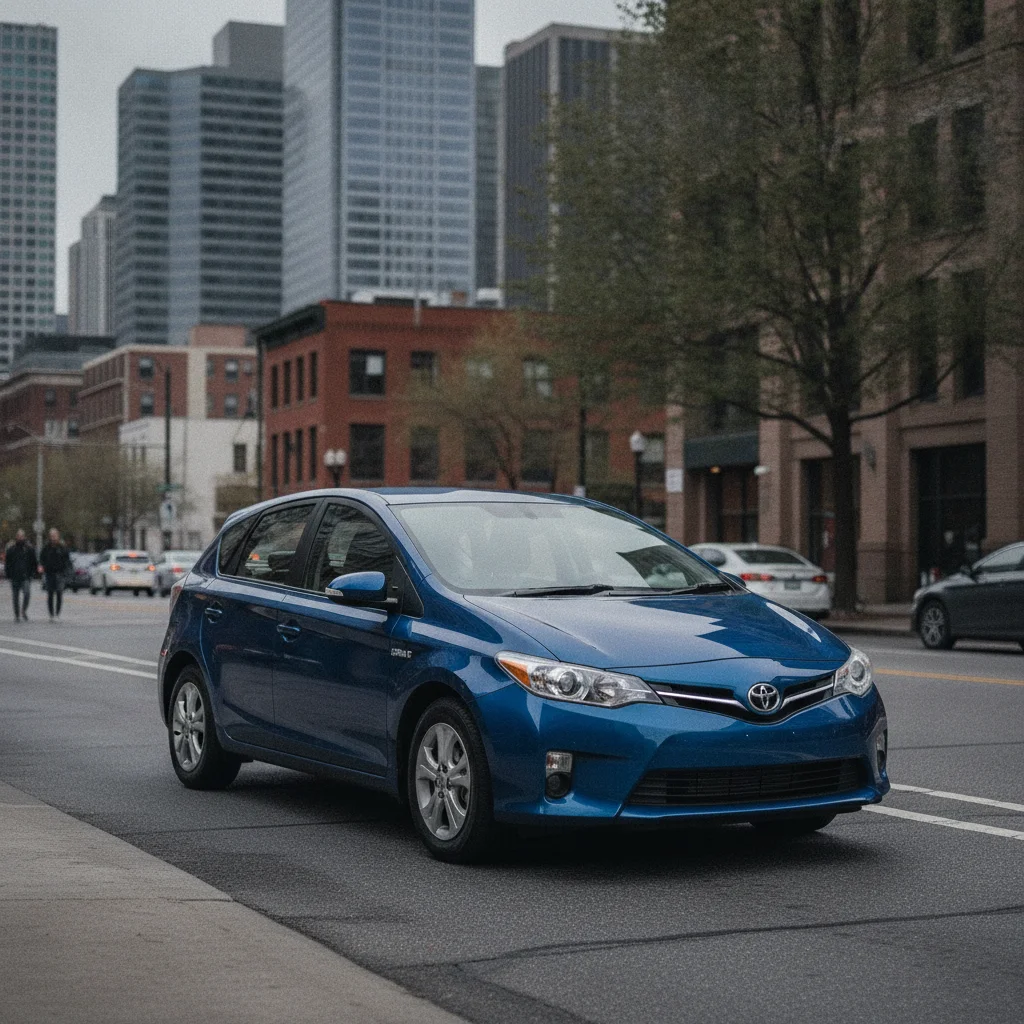
Standard hybrids — Toyota Prius (non-plug-in), Honda CR-V Hybrid, Ford Escape Hybrid, and similar models — do not qualify for any federal consumer tax credit under current law. Full stop.
This catches a lot of buyers off guard. HEVs are marketed heavily as fuel-efficient and environmentally friendly, and they are. But because they cannot be charged from an external source, they fall outside the statutory definition of a "qualified plug-in electric drive motor vehicle" under Section 30D.
Why the plug-in requirement exists
The policy rationale is straightforward: the credit is designed to incentivize adoption of vehicles that can displace gasoline consumption by drawing electricity from the grid. A standard hybrid recaptures energy internally but doesn't meaningfully expand grid-connected electric driving. Congress drew the line at plug-in capability.
This doesn't make HEVs a bad purchase. A well-specified hybrid can deliver 40–50 MPG in real-world driving without range anxiety or charging infrastructure concerns. But buyers should not factor a federal tax credit into the financial case for a standard hybrid — there isn't one available under current federal law.
Mild hybrids and 48V systems
Some vehicles use "mild hybrid" or "48-volt" systems — small electric assists that improve fuel economy marginally. These are even further from eligibility than full HEVs. They do not qualify for any federal EV incentive. If a vehicle doesn't have a plug, assume no federal credit applies.
If you're drawn to a hybrid but want to preserve access to incentives, a PHEV is the bridge category worth examining. You get a gasoline backup engine and, if the model qualifies, access to the Section 30D credit. Here's how the tax credit treats PHEVs and BEVs differently in detail.
Business Buyers and Leased Vehicles: Different Rules Apply
Two scenarios change the eligibility picture significantly: purchasing through a business and leasing instead of buying.
Leased vehicles and the commercial credit loophole
When you lease an EV, the leasing company (typically a captive finance arm of the automaker or a bank) is the legal owner of the vehicle. That means the leasing company — not you — claims the credit. But here's the practical effect: many lessors pass the benefit through as a lower capitalized cost or reduced monthly payment.
Critically, leased EVs qualify under the Section 45W Commercial Clean Vehicle Credit, not Section 30D. This matters because the commercial credit is not subject to the same North American assembly or battery sourcing requirements that have disqualified many popular EV models from the consumer credit. A Hyundai IONIQ 6, for example, assembled in South Korea, does not qualify for the Section 30D consumer credit — but it can qualify for the commercial credit when leased.
Leased EVs qualify under a commercial vehicle loophole — here's how that compares to buying for credit-conscious shoppers.
Businesses buying EVs
Businesses purchasing EVs for commercial use also access Section 45W rather than Section 30D. The commercial credit works differently — it's calculated as a percentage of incremental cost compared to a comparable non-electric vehicle, capped at $7,500 for light-duty vehicles and $40,000 for heavier commercial vehicles. Businesses buying EVs may qualify for a separate commercial credit with different caps and rules.
Eligibility Can Change Mid-Year
The IRS updates the list of qualifying vehicles as automakers certify battery sourcing compliance. A model that qualified in January may lose eligibility partway through the year — or gain it. Always verify on fueleconomy.gov or the IRS clean vehicle credit portal before you sign a purchase agreement. Don't rely solely on what a dealer tells you about credit eligibility.
Leasing Bypasses the Assembly Requirement
Because leased vehicles qualify under the Section 45W commercial credit rather than Section 30D, the North American assembly requirement and battery sourcing tests do not apply. This is why some models that don't qualify for purchase do qualify for lease — and why lessors can often pass the full credit benefit through to customers. Confirm the actual lease pricing reflects this benefit before signing.
Don't overlook home charging infrastructure incentives either. The Section 30C Alternative Fuel Vehicle Refueling Property Credit covers 30% of the cost of installing a home Level 2 charger, up to $1,000 for individuals. Installing a home EV charger may qualify for significant tax credits and local rebates.
How to Check Whether a Specific Vehicle Qualifies
Vehicle eligibility under the IRA isn't static. It can change by model year, trim level, and even calendar quarter as battery sourcing compliance evolves. Here's a practical checklist for any buyer trying to determine whether a specific vehicle qualifies before they sign.
- Confirm vehicle type: Is it a BEV, PHEV, or HEV? If it can't be plugged in, the consumer credit doesn't apply.
- Check the IRS fuel economy website or fueleconomy.gov: The U.S. Department of Energy maintains a regularly updated list of qualifying vehicles. This is the authoritative source — not the dealer's sales pitch.
- Verify MSRP against the cap: Confirm whether the vehicle falls under the $55,000 (car) or $80,000 (SUV/van/truck) threshold. Trim upgrades can push a vehicle over the cap.
- Check your income: Review your most recent and projected MAGI against the applicable threshold. You can use either the prior year's or current year's income, whichever is lower, to qualify.
- Decide between transferring the credit or filing it: The point-of-sale transfer option (available since January 2024) allows you to apply the credit at the dealership as a down payment reduction. You'll need to confirm the dealer is registered with the IRS for this program.
For a comprehensive walkthrough of the eligibility and filing process, see the complete guide from eligibility to filing. And if a federal credit doesn't apply to your situation — because of income, vehicle type, or tax liability — utility rebates, state grants, and dealer incentives are accessible to nearly any buyer.
fueleconomy.gov — Federal Tax Credit Eligible Vehicle List
The U.S. Department of Energy and EPA maintain the official, regularly updated list of vehicles that qualify for the Section 30D credit. This is the most reliable source to verify any specific model's current eligibility status.
IRS Clean Vehicle Credits Overview
The IRS provides direct guidance on Section 30D, 25E, and 45W credits, including income thresholds, vehicle caps, and point-of-sale transfer instructions. Essential reading before you file or transfer the credit.
EV Tax Credits Complete Walkthrough
A step-by-step guide covering federal and state EV incentives, income limits, vehicle price caps, and exactly how to claim your credit — useful for buyers who want to understand the full picture before purchase.
PlugStar Dealer Locator (Plug In America)
Plug In America's PlugStar tool helps buyers find trained EV-knowledgeable dealers and provides educational resources on plug-in vehicle incentives, including credit transfer mechanics.
EV Incentives That Don't Require Filing a Tax Return
If the federal credit doesn't apply to your situation — due to income, vehicle type, or tax liability — this guide covers utility rebates, state grants, and dealer incentives that are available to nearly any buyer.

All claims are backed by peer-reviewed research. Sources on request.