Key Takeaways
Always check your specific vehicle's VIN — not just the model name — against the IRS eligibility list. Two identically named trims can have different assembly locations and different credit eligibility.
Manufacturers like Tesla and GM build some models in multiple plants, and only North American final assembly qualifies. A single digit difference in a VIN can mean a $7,500 swing.
If your income is near the MAGI cutoff, use whichever year (current or prior) gives you the lower number. The IRS explicitly allows this, and for buyers with variable income, it can be the difference between qualifying and not.
The IRA's prior-year lookback provision was specifically designed to give buyers more flexibility, but it's often overlooked in dealer showrooms and even by some tax preparers.
Before using the point-of-sale transfer, verify that your dealer is enrolled in the IRS Energy Credits Online portal — ask them to show you confirmation before you sign anything.
Dealers who aren't enrolled can't process the transfer, and discovering this at the signing table wastes time and negotiating leverage you've already spent.
For used EV purchases, ask the dealer to confirm in writing that the vehicle has never previously been sold under a Section 25E credit claim. Once a used vehicle has been credited once, it can never qualify again.
There is no public consumer-facing database to verify this — you're relying on dealer disclosure and IRS records. Getting written confirmation shifts liability if there's a future dispute.
Layer your credits intentionally: claim the federal credit for the tax year, then apply separately for your state rebate and any utility EV incentives — these are typically independent programs that don't offset each other.
Many buyers assume receiving one benefit reduces another. In most cases, they're entirely separate programs with separate administrators, and stacking them is both legal and encouraged.
How the Federal EV Tax Credit Works
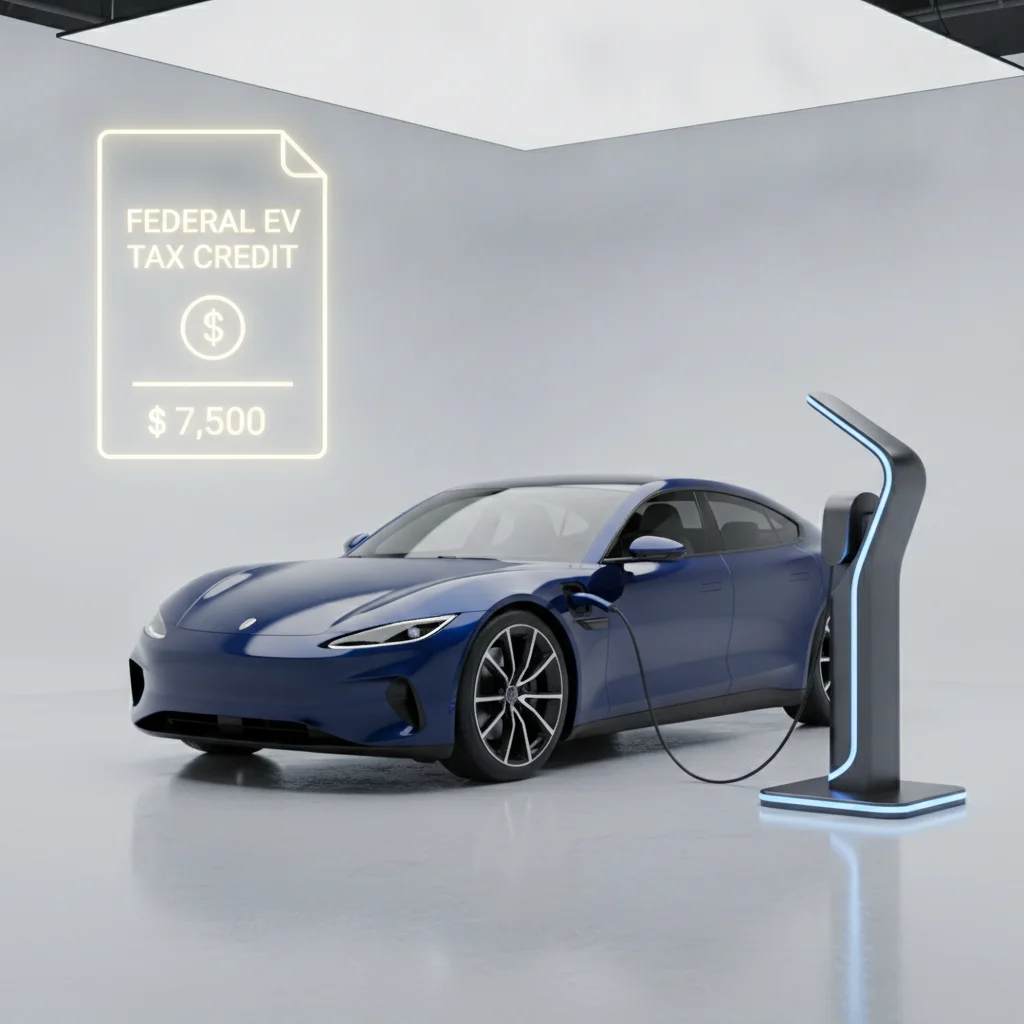
The federal EV tax credit — formally governed by Section 30D of the Internal Revenue Code and significantly reshaped by the Inflation Reduction Act of 2022 — is one of the largest consumer incentives available to car buyers in the United States. At its core, it's a nonrefundable tax credit of up to $7,500 applied against your federal income tax liability for the year you place a qualifying new electric vehicle in service.
The word nonrefundable is critical. If your total federal tax bill for the year is $4,000, you can only use $4,000 of the credit — the remaining $3,500 doesn't come back to you as a refund and can't be carried forward to future years. This is different from a rebate or a refundable credit, and it catches a lot of buyers off guard.
The credit is split into two components, each worth $3,750:
- Critical minerals requirement: A percentage of the battery's critical minerals (lithium, cobalt, nickel, etc.) must be extracted or processed in the U.S. or a country with a U.S. free trade agreement, or recycled in North America.
- Battery components requirement: A percentage of the battery's components must be manufactured or assembled in North America.
Meeting both requirements earns you the full $7,500. Meeting only one earns you $3,750. Meeting neither means no credit at all. These thresholds are phased in over time — the required percentages increase annually through 2029 — so a vehicle that qualifies today may not qualify in a future tax year.
For a solid foundation before diving deeper, see our overview of how the federal EV tax credit works, which covers the IRA changes in detail.
Always check your specific vehicle's VIN — not just the model name — against the IRS eligibility list. Two identically named trims can have different assembly locations and different credit eligibility.
Manufacturers like Tesla and GM build some models in multiple plants, and only North American final assembly qualifies. A single digit difference in a VIN can mean a $7,500 swing.
If your income is near the MAGI cutoff, use whichever year (current or prior) gives you the lower number. The IRS explicitly allows this, and for buyers with variable income, it can be the difference between qualifying and not.
The IRA's prior-year lookback provision was specifically designed to give buyers more flexibility, but it's often overlooked in dealer showrooms and even by some tax preparers.
Before using the point-of-sale transfer, verify that your dealer is enrolled in the IRS Energy Credits Online portal — ask them to show you confirmation before you sign anything.
Dealers who aren't enrolled can't process the transfer, and discovering this at the signing table wastes time and negotiating leverage you've already spent.
For used EV purchases, ask the dealer to confirm in writing that the vehicle has never previously been sold under a Section 25E credit claim. Once a used vehicle has been credited once, it can never qualify again.
There is no public consumer-facing database to verify this — you're relying on dealer disclosure and IRS records. Getting written confirmation shifts liability if there's a future dispute.
Layer your credits intentionally: claim the federal credit for the tax year, then apply separately for your state rebate and any utility EV incentives — these are typically independent programs that don't offset each other.
Many buyers assume receiving one benefit reduces another. In most cases, they're entirely separate programs with separate administrators, and stacking them is both legal and encouraged.
Income Limits: What the MAGI Caps Mean for You
Starting with vehicles placed in service after December 31, 2022, your modified adjusted gross income (MAGI) must fall below specific thresholds to claim the credit. The IRS uses the lower of your MAGI in the year you take delivery or the prior tax year — whichever works in your favor.
$7,500
Maximum new EV federal tax credit
The IRS caps the Section 30D credit at $7,500 for qualifying new electric vehicles purchased after the Inflation Reduction Act took effect.
$4,000
Maximum used EV federal tax credit
The Section 25E used clean vehicle credit equals 30% of the sale price, capped at $4,000 for vehicles priced at $25,000 or less.
$300,000
MAGI limit for joint filers (new EV)
Married couples filing jointly must have a modified adjusted gross income below $300,000 to qualify for the new vehicle credit in either the purchase year or prior year.
$55,000
MSRP cap for sedan/hatchback EVs
Passenger vehicles that are not SUVs, vans, or pickups must have an MSRP at or below $55,000 to qualify for any federal credit under Section 30D.
2029
Year battery sourcing thresholds reach maximum
The IRA phases in increasingly strict battery mineral and component sourcing requirements through 2029, meaning vehicle eligibility can change year to year.
Here are the income limits for the new vehicle credit (Section 30D):
| Filing Status | MAGI Limit |
|---|---|
| Single / Married Filing Separately | $150,000 |
| Head of Household | $225,000 |
| Married Filing Jointly / Qualifying Surviving Spouse | $300,000 |
These caps are hard cutoffs — there is no partial credit for income just above the threshold. If your MAGI exceeds the limit by even $1 in both the year of purchase and the prior year, you're ineligible.
MAGI for this purpose is your adjusted gross income plus certain deductions added back in (foreign earned income exclusions, IRA deductions, student loan interest, etc.). For most W-2 employees without overseas income, MAGI is essentially the same as AGI on your 1040. For the self-employed or those with complex income streams, it's worth running the numbers with a tax professional before you buy.
Prior-Year MAGI Lookback Explained
The IRS allows you to use either your current-year or prior-year MAGI — whichever is lower — to determine income eligibility. This means a buyer who had a low-income year in 2024 but expects higher income in 2025 may still qualify if they purchase in 2025 and their 2024 MAGI was below the cap. This flexibility is worth modeling carefully if your income varies year to year.
Commercial Clean Vehicle Credit Is Different
Businesses and fleet operators purchasing EVs may qualify for the Section 45W Commercial Clean Vehicle Credit instead of the Section 30D consumer credit. The 45W credit has different rules — including no MSRP cap and no assembly requirement — and may be more generous for qualifying commercial use. Consult a tax advisor if you're purchasing through a business entity.
One planning opportunity worth knowing: because the IRS allows you to use either the prior year or purchase year MAGI, a buyer who expects a high-income year (a stock vesting event, business sale, or large bonus) might benefit from purchasing in a lower-income year. Conversely, if last year's income was below the cap but this year's will exceed it, the credit may still be available when you file.
For a plain-language breakdown of terms like MAGI and critical minerals, our EV tax credit glossary is a useful companion resource.
Vehicle Eligibility: MSRP Caps, Assembly, and Battery Rules
Income is only half the eligibility equation. The vehicle itself has to clear several independent hurdles, and failing any one of them disqualifies the entire credit.
MSRP Price Caps
The IRS sets firm manufacturer's suggested retail price ceilings:
- $80,000 for SUVs, vans, and pickup trucks
- $55,000 for all other passenger vehicles (sedans, hatchbacks, coupes)
The relevant price is the vehicle's MSRP — not the price you actually negotiate. Dealer markups above MSRP do not increase the cap, but options and packages that push the sticker above the limit will disqualify you even if you negotiated a lower transaction price. This distinction has caught buyers off guard on high-demand models.
North American Final Assembly
The vehicle must undergo its final assembly in North America (the U.S., Canada, or Mexico). You can verify a specific VIN's assembly location using the Department of Energy's Alternative Fuels Station Locator or the NHTSA VIN decoder. Some models are assembled in multiple plants — a single model line can have both qualifying and non-qualifying VINs depending on where individual units were built.
Battery Sourcing Requirements
As noted above, the credit is split based on battery mineral and component sourcing. The IRS publishes guidance annually on which vehicles meet which requirements. Because these thresholds change year to year and manufacturers update their supply chains, a vehicle's eligibility can shift between model years — or even mid-year if a manufacturer changes suppliers. Always verify current eligibility for the specific model year you're buying.
Our regularly updated list of qualifying EVs shows which vehicles currently meet IRS requirements for the full or partial credit.
Dealer Markups Can Exceed the MSRP Cap
If a dealer adds accessories, protection packages, or market adjustment fees that push the vehicle's listed price above the applicable MSRP cap, you may lose the credit — even if your negotiated price is lower. The IRS uses MSRP as the reference point, not transaction price. Always get an itemized breakdown and compare the sticker MSRP (not dealer-added items) against the applicable cap before you sign.
Model Year Eligibility Can Change Mid-Year
Manufacturers periodically update their battery supply chains, which can cause a vehicle that qualified earlier in the year to become ineligible — or vice versa. Always verify the current IRS eligibility list for your specific model year and VIN close to your purchase date, not just at the beginning of your shopping process.
The Point-of-Sale Transfer Option
One of the most impactful — and underutilized — changes from the IRA is the ability to transfer your anticipated credit directly to the dealer at the point of sale, effective for vehicles placed in service on or after January 1, 2024. This turns the credit into an immediate price reduction rather than a future tax benefit you have to wait for.
Here's how it works in practice:
- You confirm with the dealer that you intend to transfer the credit.
- The dealer submits a time-of-sale report to the IRS through the IRS Energy Credits Online portal, including your taxpayer identification number and the vehicle's VIN.
- The dealer reduces the vehicle's purchase price by the credit amount (up to $7,500), effectively giving you the money upfront.
- The dealer later claims the credit from the IRS — the financial risk shifts to them, not you.
If you transfer the credit and later discover you were ineligible (e.g., your income turns out to exceed the cap for both the purchase year and the prior year), you may have to repay the credit amount when you file. This is called recapture, and it's one reason why it's important to honestly assess your income situation before opting for point-of-sale transfer.
Recapture Risk Is Real — Know It Before You Transfer
If you use the point-of-sale transfer to take the credit as an upfront discount and it later turns out you were ineligible — most commonly because your MAGI exceeded the cap in both the purchase year and the prior year — you must repay the full credit amount when you file your return. The IRS treats this as additional tax owed. Before opting for instant savings at the dealer, honestly assess your income for both years. If you're uncertain, claiming the credit on your return (rather than transferring it) gives you more time to confirm eligibility.
The Dealer's Time-of-Sale Report Is Non-Negotiable
As of January 1, 2024, a valid dealer-submitted time-of-sale report is required for a buyer to claim the Section 30D credit — whether transferred or claimed on a return. If your dealer fails to submit this report to the IRS at the time of sale, your credit may be disallowed even if the vehicle and your income fully qualify. Request a copy of the submitted report at the dealership before you leave with the vehicle.
Dealers are not required to offer the transfer option, and some — particularly smaller independent dealers — have not yet enrolled in the IRS portal. If instant savings at the point of sale matter to you, confirm the dealer's participation before you get deep into negotiations. Large franchise EV dealers and the manufacturer-owned direct sales channels are most likely to have this set up.
Always check your specific vehicle's VIN — not just the model name — against the IRS eligibility list. Two identically named trims can have different assembly locations and different credit eligibility.
Manufacturers like Tesla and GM build some models in multiple plants, and only North American final assembly qualifies. A single digit difference in a VIN can mean a $7,500 swing.
If your income is near the MAGI cutoff, use whichever year (current or prior) gives you the lower number. The IRS explicitly allows this, and for buyers with variable income, it can be the difference between qualifying and not.
The IRA's prior-year lookback provision was specifically designed to give buyers more flexibility, but it's often overlooked in dealer showrooms and even by some tax preparers.
Before using the point-of-sale transfer, verify that your dealer is enrolled in the IRS Energy Credits Online portal — ask them to show you confirmation before you sign anything.
Dealers who aren't enrolled can't process the transfer, and discovering this at the signing table wastes time and negotiating leverage you've already spent.
For used EV purchases, ask the dealer to confirm in writing that the vehicle has never previously been sold under a Section 25E credit claim. Once a used vehicle has been credited once, it can never qualify again.
There is no public consumer-facing database to verify this — you're relying on dealer disclosure and IRS records. Getting written confirmation shifts liability if there's a future dispute.
Layer your credits intentionally: claim the federal credit for the tax year, then apply separately for your state rebate and any utility EV incentives — these are typically independent programs that don't offset each other.
Many buyers assume receiving one benefit reduces another. In most cases, they're entirely separate programs with separate administrators, and stacking them is both legal and encouraged.
Used EV Tax Credit: The Section 25E Rules
If a new EV is out of your budget or you're buying certified pre-owned, there's a separate credit for used electric vehicles under Section 25E. It's smaller but meaningful, and it has its own distinct rules.
Credit Amount
The used EV credit equals 30% of the vehicle's sale price, up to a maximum of $4,000. The $4,000 cap is reached when the purchase price hits approximately $13,333 or more.
Vehicle Requirements
- The vehicle must have a sale price of $25,000 or less.
- It must be at least two model years older than the calendar year of purchase (e.g., a 2025 buyer can credit a 2023 or older model).
- It must be purchased from a licensed dealer — private party sales don't qualify.
- It must be the first time the vehicle is transferred under Section 25E. The credit can only be claimed once per vehicle, ever.
- The buyer must not have claimed a used EV credit in the prior three years.
Income Limits for Used EVs
| Filing Status | MAGI Limit |
|---|---|
| Single / Married Filing Separately | $75,000 |
| Head of Household | $112,500 |
| Married Filing Jointly | $150,000 |
Income limits for the used credit are significantly tighter than for new vehicles — designed to target middle-income buyers. The same prior-year or current-year MAGI flexibility applies here as well.
The used credit is also nonrefundable. The point-of-sale transfer option became available for used vehicle credits starting in 2024 as well, under the same mechanics described above.
Use the IRS Tool Before You Buy
The IRS maintains an online tool at IRS.gov that lets you check whether a specific VIN qualifies for the credit before you complete your purchase. Run your exact VIN through this tool — not just the model — to confirm eligibility. This takes five minutes and can save you from a costly assumption.
Ask Your Tax Software for a Dry Run
Before filing, run a preliminary calculation in your tax software with the Form 8936 credit included. This shows you exactly how much of the $7,500 you can actually use against your liability. If your tax bill is only $3,000, you now know a $55,000 sedan might be a better fit than a $70,000 truck — the credit value is the same either way.
State and Utility Incentives: Stacking Your Savings
The federal credit is the headline number, but in many states, you can layer additional incentives on top of it — sometimes substantially increasing your total savings. These programs vary significantly by state and change frequently, but here's what to know about each category.
State Tax Credits and Rebates
States like California (CVRP), Colorado, New York, and New Jersey offer their own rebate or credit programs. Some are administered by the state DMV or tax authority, others by third-party program administrators. Key differences from the federal credit:
- Some state rebates are refundable or are structured as point-of-purchase rebates, meaning you get the money regardless of your tax liability.
- Income eligibility rules differ — some states have lower caps, others have higher ones or no income limit at all.
- Vehicle eligibility lists don't always match federal lists. A model disqualified at the federal level might still get a state rebate.
Utility Company Rebates
Many electric utilities — especially large investor-owned utilities in California, the Pacific Northwest, and the Midwest — offer rebates for EV purchases and for installing Level 2 home charging equipment. These programs typically don't require you to file a tax return and are often processed within weeks of application. Rebate amounts vary widely: $100 to $1,000 is common, with some utilities offering more for income-qualified customers.
Federal vs. State: No Double Taxation Rule
Receiving a state rebate does not directly reduce your federal credit. However, if the state rebate reduces your vehicle's purchase price for state tax purposes, it may affect depreciation calculations if you're using the vehicle for business. For personal-use vehicles, you can generally receive both federal and state incentives independently.
If you'd rather pursue savings that don't involve any tax return complexity, our guide on EV incentives that don't require filing a tax return covers utility rebates, state grants, and dealer incentives that are accessible to nearly any buyer.
For new buyers still getting oriented to the landscape, our EV incentives primer walks through all the major categories in plain language.
“The IRA's EV incentive structure is genuinely complex — it's not a simple rebate but a conditional credit with multiple independent tests. Buyers who do their homework before signing are the ones who actually capture the full benefit.”
— Anna Stefanopoulou, Director, University of Michigan Energy Institute
How to Claim the Credit on Your Tax Return
If you're not using the point-of-sale transfer, you claim the credit when you file your federal tax return for the year you took delivery of the vehicle. The mechanics are straightforward, but the paperwork chain matters.
What You'll Need
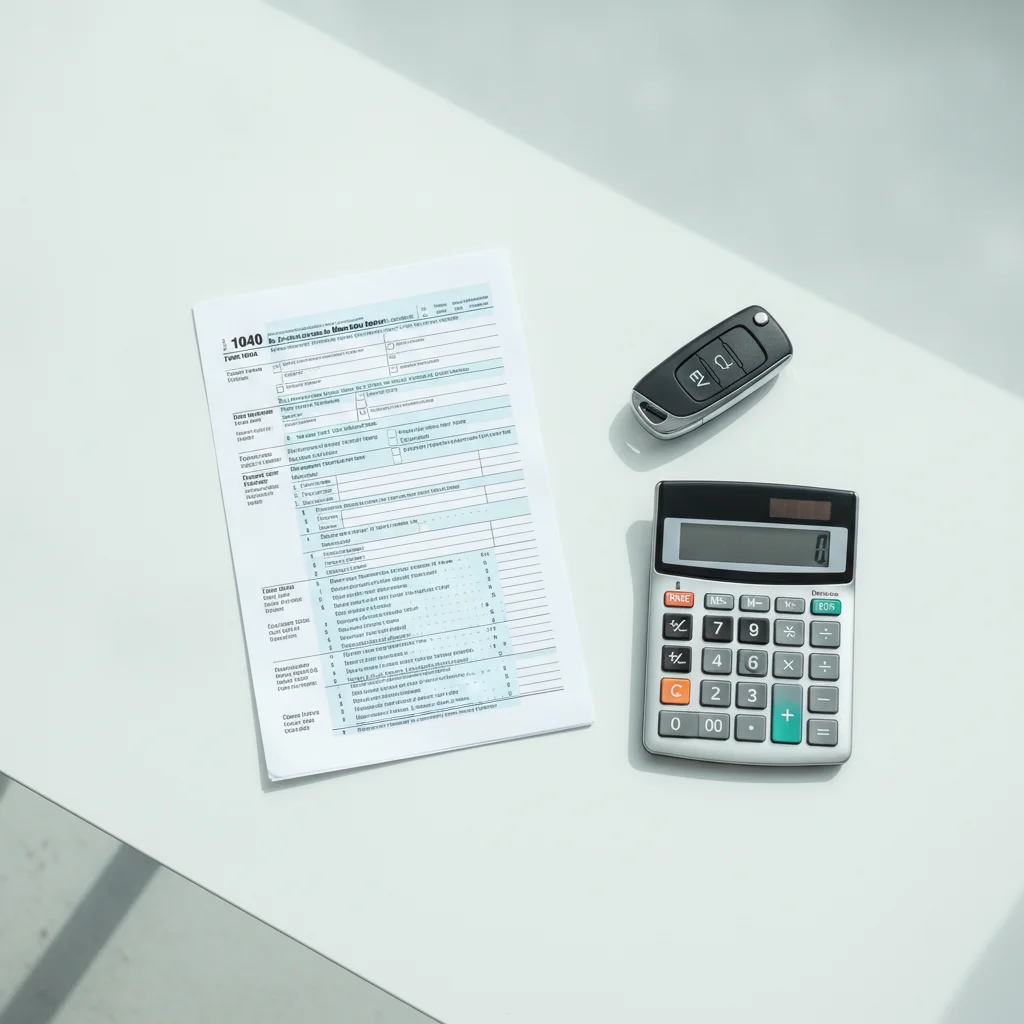
- IRS Form 8936 (Clean Vehicle Credits): This is the primary form. You'll enter the vehicle's VIN, your purchase date, and the credit amount.
- Time-of-Sale Report from the Dealer: As of 2024, dealers are required to submit a time-of-sale report to the IRS at the time of purchase. You should receive a copy of this report (sometimes called a seller's report). Without it, the IRS may disallow your credit — keep it with your tax records.
- Your MAGI calculation: Make sure you've calculated this accurately. If your tax software asks for AGI from your prior-year return, double-check whether any add-backs apply.
Step-by-Step Filing Process
- Confirm the vehicle qualifies (VIN check, MSRP, assembly location) before purchase.
- Receive and retain the dealer's time-of-sale report at purchase.
- When filing your return, complete Form 8936 with the VIN, placed-in-service date, and credit amount.
- The credit flows to Schedule 3 of your Form 1040, reducing your tax liability dollar for dollar.
- If the credit exceeds your liability, the excess is not refunded — it's simply lost.
Use the IRS Tool Before You Buy
The IRS maintains an online tool at IRS.gov that lets you check whether a specific VIN qualifies for the credit before you complete your purchase. Run your exact VIN through this tool — not just the model — to confirm eligibility. This takes five minutes and can save you from a costly assumption.
Ask Your Tax Software for a Dry Run
Before filing, run a preliminary calculation in your tax software with the Form 8936 credit included. This shows you exactly how much of the $7,500 you can actually use against your liability. If your tax bill is only $3,000, you now know a $55,000 sedan might be a better fit than a $70,000 truck — the credit value is the same either way.
Most major tax software (TurboTax, H&R Block, TaxAct) has built-in Form 8936 support and will walk you through the questions. The more complex situations — business use of the vehicle, pass-through entities, or multi-state filing — may benefit from a CPA's review.
Business Use Considerations
If you use your EV partly for business, the calculation changes. The credit may need to be allocated between personal and business use, and additional depreciation rules may apply. If the vehicle is purchased through a business entity, different rules govern the credit — including potential interaction with the commercial clean vehicle credit under Section 45W.
Common Mistakes That Kill Your Credit
The EV tax credit rules are specific enough that small missteps can cost you thousands. Here are the failure points I see most frequently.
Assuming the Vehicle Qualifies Without Checking
Manufacturers and dealers have a financial incentive to sell you the car, not to audit your eligibility. Always verify the specific VIN — not just the model — against the current IRS eligibility list before signing. A VIN built in a different plant than the model's usual location can disqualify a purchase that seemed clean.
Not Checking Income Eligibility Before Purchase
The income limits are firm. If you're anywhere near the cutoff, model your MAGI for both the purchase year and prior year before you commit to the vehicle. A bonus, RSU vesting, or business income spike can push you above the threshold unexpectedly.
Buying Used from a Private Party
The used EV credit (Section 25E) is exclusively for dealer sales. A private party purchase — even a certified used EV from an individual seller — does not qualify, period.
Paying Over MSRP and Assuming You're Still Eligible
If a vehicle's MSRP is $54,000 and a dealer adds $3,000 in dealer-installed accessories, pushing the sticker to $57,000, you may have just exceeded the $55,000 cap for sedans. Get an itemized breakdown of the vehicle's MSRP (not the transaction price) and compare it carefully to the applicable cap.
Missing or Losing the Dealer's Time-of-Sale Report
Without this document, you may face IRS questions about your credit. Keep it with your tax file for the year you purchase the vehicle.
Overlooking Recapture Risk on Point-of-Sale Transfer
If you take the instant discount at the dealership but your income for both the purchase year and prior year exceeds the cap, you may owe that money back at filing. Don't transfer the credit unless you're confident of your income eligibility.
Recapture Risk Is Real — Know It Before You Transfer
If you use the point-of-sale transfer to take the credit as an upfront discount and it later turns out you were ineligible — most commonly because your MAGI exceeded the cap in both the purchase year and the prior year — you must repay the full credit amount when you file your return. The IRS treats this as additional tax owed. Before opting for instant savings at the dealer, honestly assess your income for both years. If you're uncertain, claiming the credit on your return (rather than transferring it) gives you more time to confirm eligibility.
The Dealer's Time-of-Sale Report Is Non-Negotiable
As of January 1, 2024, a valid dealer-submitted time-of-sale report is required for a buyer to claim the Section 30D credit — whether transferred or claimed on a return. If your dealer fails to submit this report to the IRS at the time of sale, your credit may be disallowed even if the vehicle and your income fully qualify. Request a copy of the submitted report at the dealership before you leave with the vehicle.
Understanding these rules thoroughly is what separates buyers who capture the full $7,500 from those who leave money on the table — or worse, owe it back to the IRS. If you're still sorting through the basics, our detailed explanation of the federal EV tax credit is a good starting point before you get into the filing mechanics.
IRS Alternative Fuel Vehicle Credit Tool (IRS.gov)
The IRS's official online tool lets you search by VIN or vehicle model to confirm whether a specific electric vehicle qualifies for the Section 30D credit. Use it to verify eligibility before you finalize any purchase.
IRS Form 8936 and Instructions
The official IRS form and accompanying instructions for claiming the clean vehicle credit on your federal return. The instructions include detailed eligibility rules and examples for both personal and business use.
Department of Energy Alternative Fuels Station Locator (AFDC)
Beyond finding charging stations, the AFDC's vehicle search tool provides assembly location data by VIN and model year — essential for verifying North American final assembly eligibility.
DSIRE (Database of State Incentives for Renewables & Efficiency)
A comprehensive, regularly updated database of state and utility EV incentive programs across all 50 states. Search by state and technology type to find rebates, credits, and exemptions available where you live.
EV Tax Credit Eligibility Checker
Use this calculator to estimate whether you qualify for the federal EV credit based on your filing status, MAGI, and the vehicle you're considering — including both new and used vehicle scenarios.
Consumer Reports EV Buying Guide
Consumer Reports maintains regularly updated guidance on which EVs offer the best value after incentives, factoring in reliability data and total cost of ownership — useful context for pairing credit eligibility with a smart vehicle choice.

All claims are backed by peer-reviewed research. Sources on request.