Key Takeaways
North American Assembly Requirement
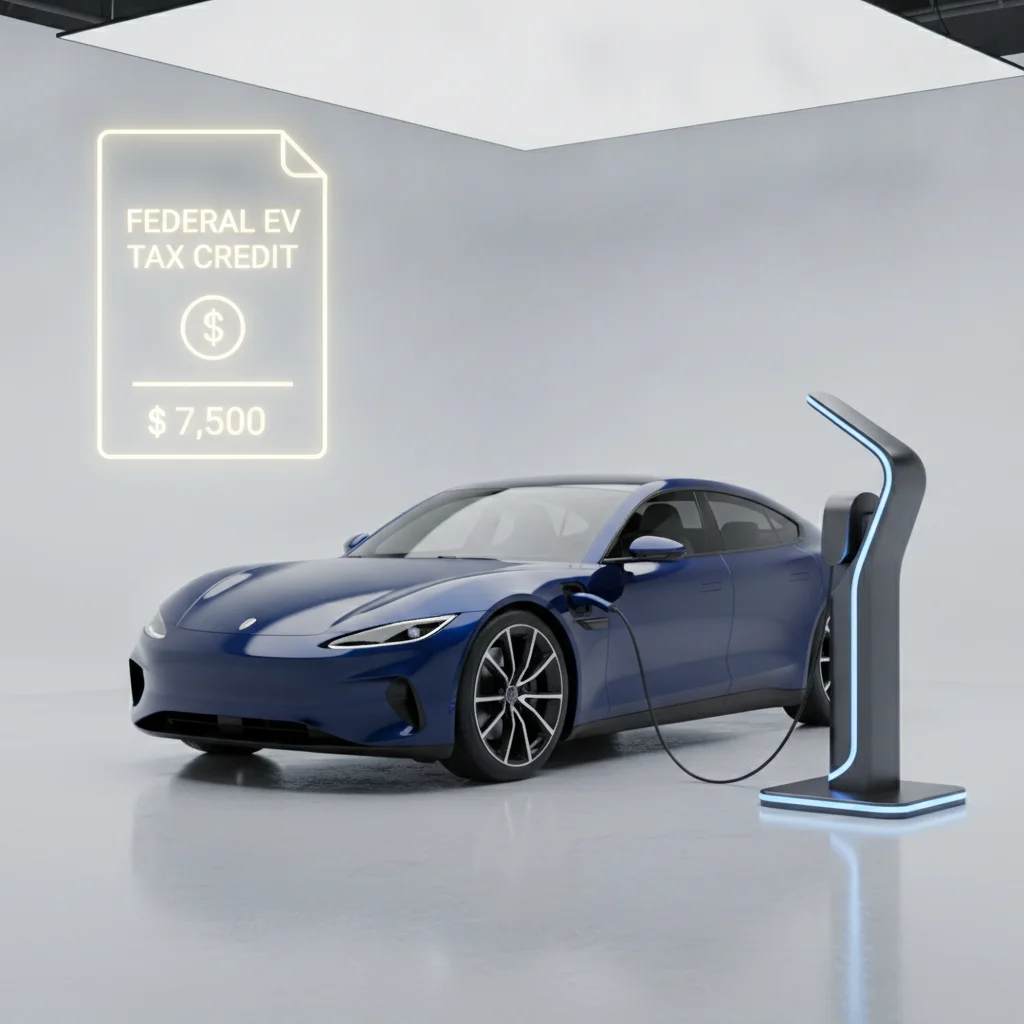
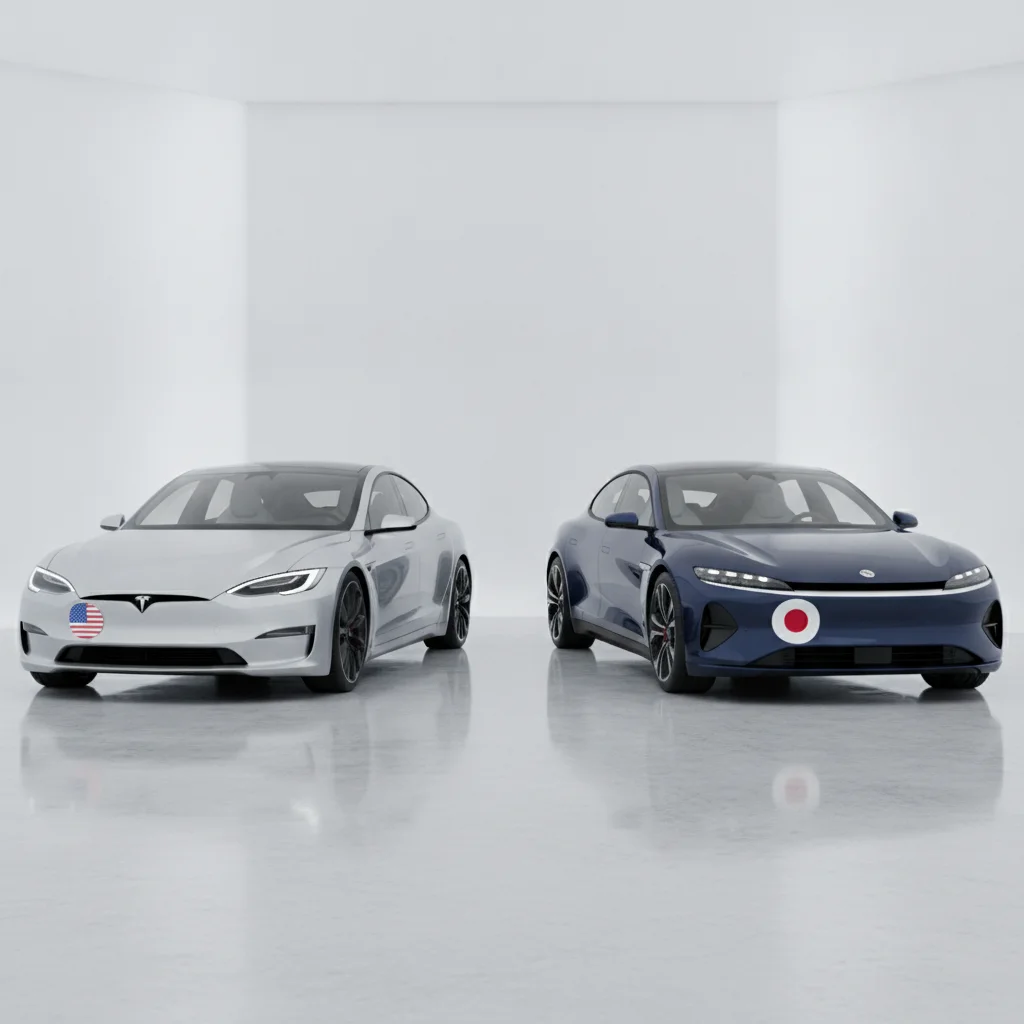
The North American assembly requirement is a rule under the Inflation Reduction Act that limits the federal EV tax credit to electric vehicles whose final assembly takes place in the United States, Canada, or Mexico. It doesn't matter where a car is designed, where its battery cells are made, or what brand produces it — if the vehicle rolls off a line outside North America, it doesn't qualify for the $7,500 credit. This rule took effect for vehicles purchased on or after August 17, 2022.
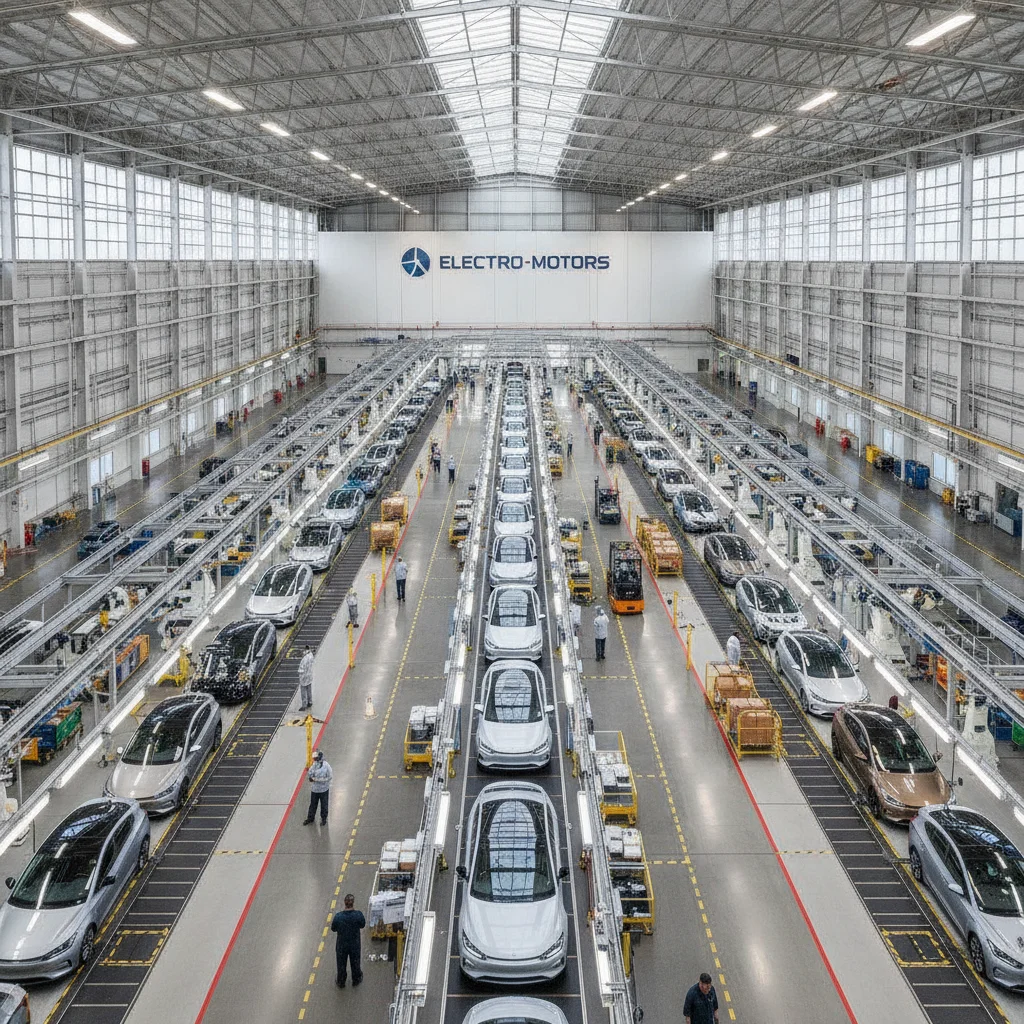
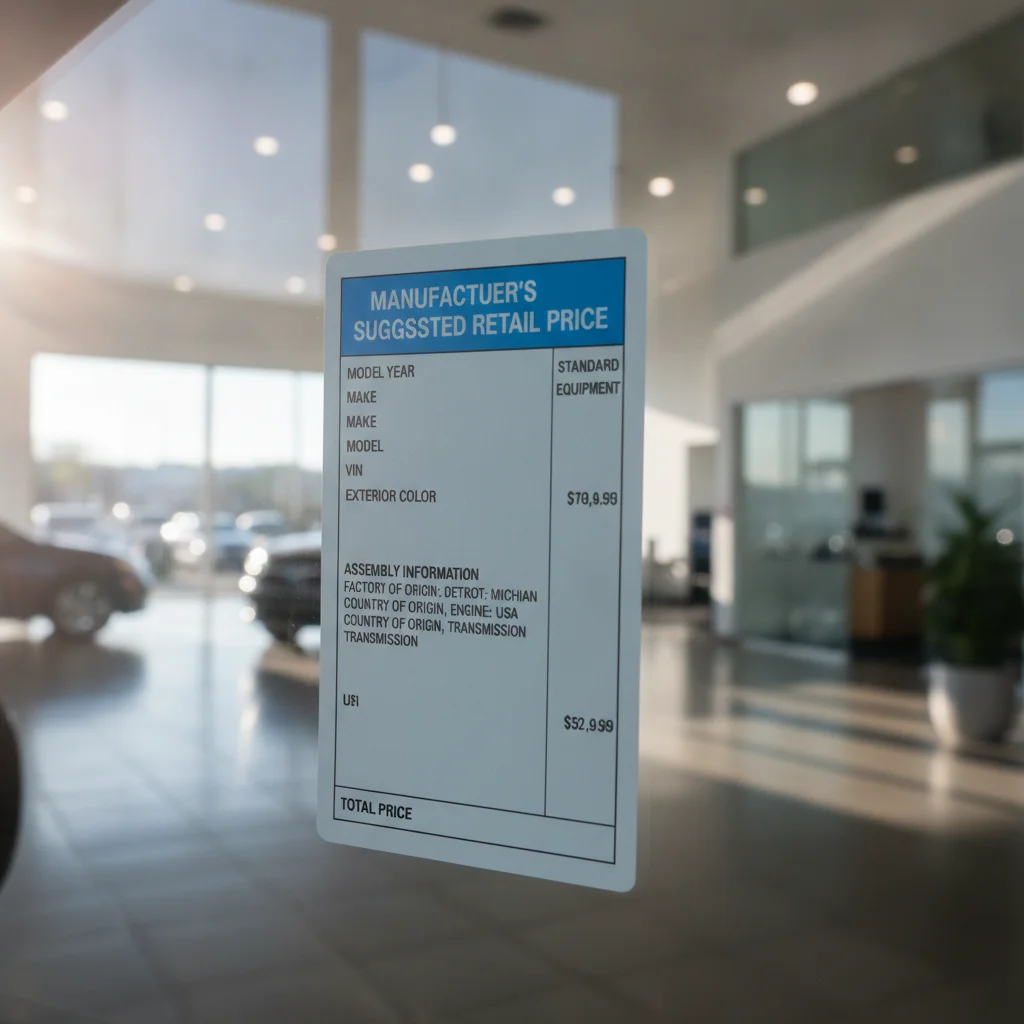
The IRS defines "final assembly" as the process by which a manufacturer produces a new clean vehicle at, or through the use of, a plant, factory, or other place from which the vehicle is sold or distributed in a condition ready for use. Dealers must report the vehicle's final assembly location on the required IRS documentation at point of sale.
Why Assembly Location Became a Federal Requirement
Before the Inflation Reduction Act (IRA) became law in August 2022, the federal EV tax credit was simpler in some ways — and far more limited in others. The old credit phased out once an automaker sold 200,000 qualifying vehicles, which is why Tesla and General Motors buyers lost access to it years ago. The IRA scrapped that manufacturer cap but added a new set of conditions, the most immediately disqualifying of which is final assembly location.
The assembly requirement was inserted for an explicit policy reason: to encourage automakers to build vehicles in North America rather than import them from lower-cost manufacturing regions. Congress and the Biden administration framed it as a way to grow domestic auto jobs and reduce supply-chain dependence on overseas production. Critics — and more than a few foreign automakers — argued it functions as a trade barrier. Regardless of where you stand politically, the practical effect is the same: where your EV is built now determines whether you can access a credit worth up to $7,500.
The rule applies to vehicles with a purchase date on or after August 17, 2022. For vehicles ordered before that date but delivered after, the IRS allowed a transition rule in some cases, but that window has long since closed for new purchases.
Exactly What "Final Assembly" Means — and Why It Matters
The IRS defines final assembly as the stage at which a manufacturer produces a new clean vehicle at a plant or factory in a condition ready for consumer use. This is distinct from where components are manufactured. A battery cell built in South Korea, a motor wound in China, and a body stamped in Michigan can all end up in the same vehicle — but if that vehicle is welded together and finished in Tennessee, it qualifies under the assembly rule.
This distinction trips up a lot of buyers who assume that a car "made by an American brand" is automatically assembled in America. Brand nationality has nothing to do with it. Ford's Mustang Mach-E is assembled in Mexico, which qualifies. But an EV designed by an American startup and built under contract in Germany would not qualify, regardless of where the company is headquartered.
Canada and Mexico Count as North America
Some buyers are surprised to learn that EVs assembled in Mexico or Canada qualify under the same rule as US-assembled vehicles. The Chevrolet Equinox EV, for example, is assembled in Mexico and qualifies for the credit. The rule draws the line at USMCA member countries — any assembly outside those three nations disqualifies the vehicle regardless of the automaker's country of origin.
Leasing Doesn't Mean You Automatically Get the Savings
While the commercial clean vehicle credit has no assembly requirement, leasing companies are not legally obligated to pass those savings to you. The credit belongs to the financial institution. Before leasing a disqualified EV assuming you'll capture the incentive, ask the dealer explicitly: "How is the Section 45W credit being reflected in my lease terms?" Get the answer in writing as part of your deal documentation.
Model Year Can Change Eligibility
An automaker can shift production between facilities from one model year to the next — or even mid-year. A 2023 model that was assembled overseas may have a 2024 version assembled domestically, or vice versa. Always verify eligibility based on the specific vehicle's VIN and model year, not on what the brand qualified for in a previous year.
The three countries that count as "North America" for this purpose are the United States, Canada, and Mexico — a reflection of the existing free-trade relationships under the USMCA trade agreement. Assembly in any other country, regardless of how close geographically or economically, does not satisfy the requirement.
“The final assembly requirement is a blunt instrument, but it's an effective one. Automakers who want access to US consumers subsidized by US taxpayers are now being asked to build those cars where American workers can benefit.”
— John Bozzella, President and CEO, Alliance for Automotive Innovation
Which Popular EVs Fail the Assembly Test
The list of disqualified models shifts as automakers open new facilities or shift production, but as of recent IRS guidance, several well-known vehicles are excluded purely on assembly grounds:
- Toyota bZ4X — assembled in Japan
- Hyundai IONIQ 5 and IONIQ 6 — assembled in South Korea (Hyundai's Georgia plant is now producing some models, which may restore eligibility for future units)
- Kia EV6 and EV9 — assembled in South Korea
- Nissan Leaf (some versions) — assembled in Japan, though some were built in Tennessee
- BMW i4, iX — assembled in Germany
- Audi Q8 e-tron — assembled in Belgium
- Volvo EX30 — assembled in China (as of initial launch)
Note that this list is not static. Automakers routinely adjust production locations, and a model that was disqualified in one model year may qualify in the next. Check the current list of qualifying vehicles before you sign anything.
$7,500
Maximum federal EV tax credit available
Under the Inflation Reduction Act, buyers of qualifying new EVs can receive up to $7,500 at point of sale or on their federal tax return.
Aug 17, 2022
Date assembly requirement took effect
Vehicles with a purchase date on or after August 17, 2022, must meet the North American final assembly requirement to qualify for the federal EV credit.
50%+
Battery component content required (North America)
For 2024 and beyond, at least 60% of battery components must be manufactured or assembled in North America to unlock the second $3,750 credit half — a threshold that rises annually.
3 countries
Countries qualifying as "North America" for the rule
Only the United States, Canada, and Mexico satisfy the IRA's North American assembly requirement — reflecting USMCA trade agreement relationships.
$55K / $80K
MSRP caps (cars vs. SUVs/trucks)
Sedans and cars must be priced at $55,000 or below; vans, SUVs, and pickups at $80,000 or below, per IRS rules for the new vehicle credit.
Which EVs Currently Pass the Assembly Rule
Vehicles that consistently meet the North American assembly requirement include most Tesla models (assembled in Texas and California), the Chevrolet Equinox EV and Blazer EV (assembled in Mexico), the Ford F-150 Lightning (assembled in Michigan), the Rivian R1T and R1S (assembled in Illinois), and the Cadillac LYRIQ (assembled in Tennessee).
The Volkswagen ID.4 is an interesting case: units assembled at VW's Chattanooga, Tennessee plant qualify, while units built in Germany and imported do not. Both versions have been sold in the US, so the VIN check is essential — you cannot assume based on the model name alone.
For a comprehensive and regularly updated breakdown, see which EVs qualify for the federal tax credit right now. The Department of Energy's Alternative Fuels Data Center also publishes a searchable database that reflects the latest IRS determinations.
Verify Before You Visit the Dealership
Look up the VIN of the specific vehicle you're considering using the NHTSA VIN decoder (vpic.nhtsa.dot.gov) before you go in to negotiate. Knowing exactly whether your target vehicle qualifies puts you in a stronger position and prevents any last-minute surprises about credit eligibility after you've already emotionally committed to the purchase.
Point-of-Sale Credit Transfer Simplifies Things
Since January 2024, you can transfer the EV tax credit to the dealer at the point of sale, reducing what you pay upfront rather than waiting for your tax return. The dealer is required to provide IRS documentation confirming the vehicle's eligibility. If a dealer cannot produce this documentation, that's a red flag — don't assume the vehicle qualifies.
Assembly Is Just the First Hurdle — Here's What Else Can Disqualify You
Passing the assembly test doesn't guarantee the credit. The IRA layered in two additional requirements that apply on top of assembly location:
Battery Sourcing Rules
The $7,500 credit is actually composed of two $3,750 halves. One half requires that a set percentage of the battery's critical minerals (lithium, nickel, cobalt, manganese, graphite) be sourced from the US or countries with which the US has a free-trade agreement. The other half requires that a set percentage of battery components be manufactured or assembled in North America. These percentages increase each year, making compliance progressively harder for automakers relying on non-qualifying supply chains.
MSRP Caps
Vans, SUVs, and pickup trucks must have an MSRP of $80,000 or less. Cars and sedans must come in at $55,000 or less. These caps apply to the vehicle's sticker price, not the negotiated sale price — so a popular trim with factory add-ons can push an otherwise qualifying vehicle over the limit.
Buyer Income Limits
The credit phases out for individuals with modified adjusted gross income above $150,000, heads of household above $225,000, and joint filers above $300,000. The IRS uses the lower of your current-year or prior-year income, which can work in your favor if your income dropped recently.
For the full picture on all three tests, see why your EV might not actually qualify for the $7,500 credit.
How to Verify Assembly Location Before You Buy
Don't take a salesperson's word for it — verify independently before you commit to a purchase. Here's how:
- Check the window sticker (Monroney label): Federal law requires new vehicles to display their final assembly point on the window sticker. Look for the line that reads "Final Assembly Point" — it will name the city, state or province, and country.
- Use the NHTSA VIN decoder: Go to vpic.nhtsa.dot.gov and enter the VIN. The results will show the plant of manufacture. A VIN beginning with "1," "4," or "5" indicates US assembly; "2" indicates Canada; "3" indicates Mexico. However, VINs starting with other digits don't automatically mean the vehicle fails — use the full decoder to confirm.
- Cross-reference the DOE's AFDC list: The Alternative Fuels Data Center publishes the IRS's official list of vehicles eligible for the credit by make, model, and model year. This is the most authoritative single source.
- Ask the dealer for IRS documentation: For vehicles sold with the point-of-sale credit transfer (where the dealer applies the credit at the time of purchase rather than you claiming it on your tax return), the dealer is legally required to provide a copy of the IRS time-of-sale report confirming eligibility.
Verify Before You Visit the Dealership
Look up the VIN of the specific vehicle you're considering using the NHTSA VIN decoder (vpic.nhtsa.dot.gov) before you go in to negotiate. Knowing exactly whether your target vehicle qualifies puts you in a stronger position and prevents any last-minute surprises about credit eligibility after you've already emotionally committed to the purchase.
Point-of-Sale Credit Transfer Simplifies Things
Since January 2024, you can transfer the EV tax credit to the dealer at the point of sale, reducing what you pay upfront rather than waiting for your tax return. The dealer is required to provide IRS documentation confirming the vehicle's eligibility. If a dealer cannot produce this documentation, that's a red flag — don't assume the vehicle qualifies.
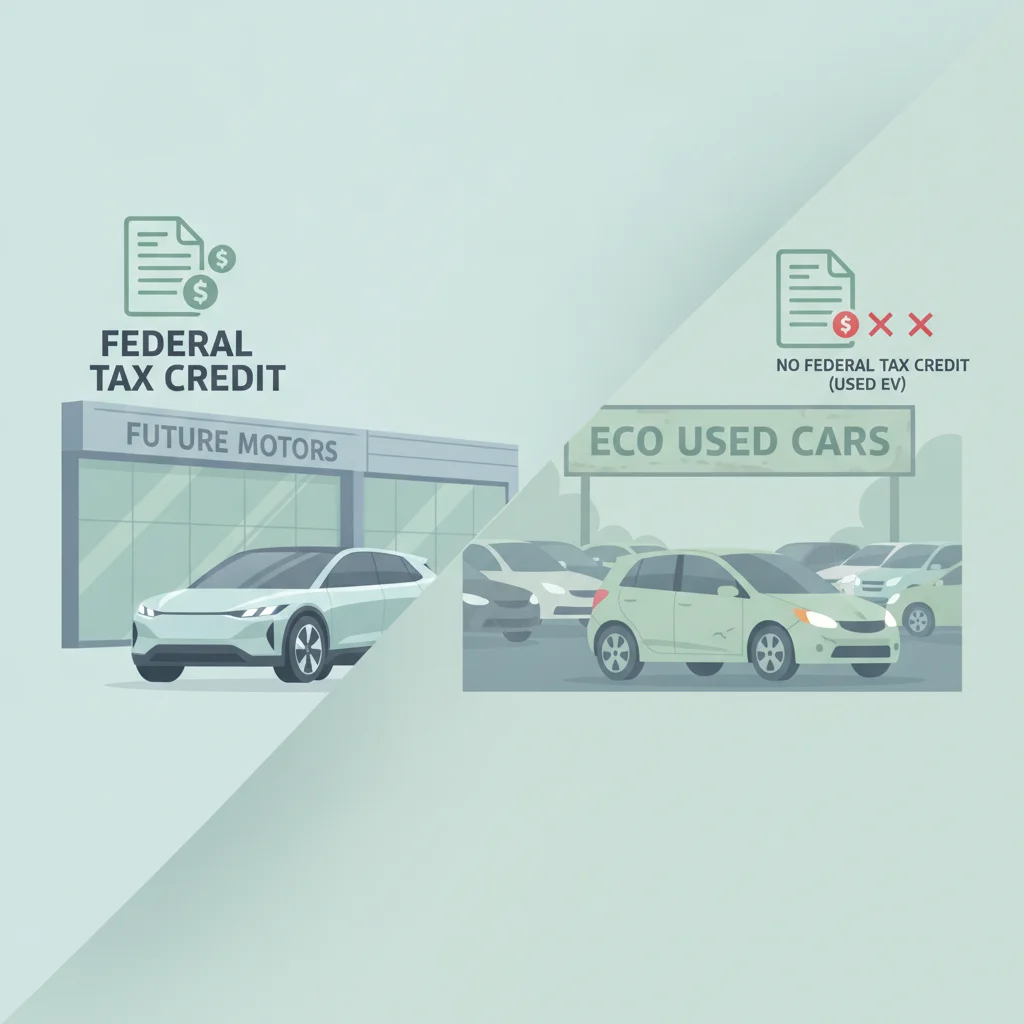
If you're also considering the used EV credit, the assembly rule doesn't apply — but a different set of conditions does. The new vs. used EV tax credit comparison lays out exactly how the two programs differ and which buyers qualify for each.
The Leasing Workaround — and Its Real Limitations
One of the most-discussed workarounds for disqualified vehicles is leasing. When you lease, the financial institution — not you — is technically the owner and purchaser of the vehicle. That entity can claim the commercial clean vehicle credit under Section 45W of the tax code, which has no North American assembly requirement and no critical mineral restrictions.
In practice, many lessors do pass this savings along in the form of reduced capitalized cost or lower monthly payments. Hyundai Financial, for example, was applying a credit equivalent to reduce lease payments on IONIQ 5 and IONIQ 6 models even when those vehicles didn't qualify for the consumer credit.
But there are real caveats:
- The savings are at the lessor's discretion — they are not legally required to pass them through to you.
- Leasing means you don't own the vehicle or its growing resale value.
- You won't benefit from the credit directly on your taxes.
- Lease terms may not align with your actual driving needs or financial situation.
Leasing can be a legitimate path to accessing an effectively subsidized EV, but run the full numbers — don't just compare monthly payments. For context on how different EV ownership costs stack up, the EV insurance guide is worth a read as well, since insurance costs for EVs often differ meaningfully from gas vehicles.
Canada and Mexico Count as North America
Some buyers are surprised to learn that EVs assembled in Mexico or Canada qualify under the same rule as US-assembled vehicles. The Chevrolet Equinox EV, for example, is assembled in Mexico and qualifies for the credit. The rule draws the line at USMCA member countries — any assembly outside those three nations disqualifies the vehicle regardless of the automaker's country of origin.
Leasing Doesn't Mean You Automatically Get the Savings
While the commercial clean vehicle credit has no assembly requirement, leasing companies are not legally obligated to pass those savings to you. The credit belongs to the financial institution. Before leasing a disqualified EV assuming you'll capture the incentive, ask the dealer explicitly: "How is the Section 45W credit being reflected in my lease terms?" Get the answer in writing as part of your deal documentation.
Model Year Can Change Eligibility
An automaker can shift production between facilities from one model year to the next — or even mid-year. A 2023 model that was assembled overseas may have a 2024 version assembled domestically, or vice versa. Always verify eligibility based on the specific vehicle's VIN and model year, not on what the brand qualified for in a previous year.
The Bigger Picture: What This Means for Your EV Purchase Decision
The North American assembly rule has materially reshaped which EVs are financially competitive for US buyers. A $45,000 EV assembled in South Korea costs you $45,000. An equivalent EV assembled in Michigan, assuming it meets all other criteria, effectively costs you $37,500 after the credit — or even less if your state has additional incentives layered on top.
That gap is large enough to change a purchase decision. It's also large enough to justify spending an extra hour verifying eligibility before you sign. The IRS and DOE have made the verification tools freely available — use them.
If you want the full framework for navigating these credits from start to finish, the complete EV tax credit walkthrough covers everything from income qualification to how to actually file for the credit. And if you're unsure whether a BEV, PHEV, or another electrified vehicle type makes more sense for your situation, federal tax credits and which EV types qualify explains how different powertrains are treated under current law.
The bottom line: assembly location is the first filter, not the last. Know the rules, verify the VIN, and don't let a salesperson's assurance substitute for your own due diligence.

All claims are backed by peer-reviewed research. Sources on request.