Key Takeaways
Federal EV Tax Credit
The federal EV tax credit is a dollar-for-dollar reduction in the federal income tax you owe when you buy a qualifying new or used electric vehicle. Unlike a rebate, it reduces your tax bill directly rather than coming back as cash. The maximum credit for a new EV is $7,500; for a used EV, it's up to $4,000. Your eligibility depends on your income, the vehicle's price, and where the vehicle and its battery components were manufactured.
The credit is nonrefundable, meaning it can reduce your tax liability to zero but won't generate a refund for any excess. Starting in 2024, buyers can transfer the credit to a participating dealer and receive it as an immediate point-of-sale discount instead of waiting until tax filing.
What the Federal EV Tax Credit Actually Does
At its core, the federal EV tax credit is a subsidy buried inside the tax code — one that can meaningfully lower the real cost of going electric. But it comes with conditions that trip up a lot of buyers who assume they'll automatically qualify just by purchasing an EV.
The credit works by reducing the amount of federal income tax you owe for the year you purchase a qualifying vehicle. If you owe $8,000 in federal taxes and buy a fully qualifying EV, the $7,500 credit brings your bill down to $500. If you owe only $4,000, you get a $4,000 benefit — not $7,500. The IRS doesn't cut you a check for the difference.
That nonrefundable structure is one of the most misunderstood aspects of the credit. It's not free money regardless of your tax situation. It requires actual federal tax liability to unlock the full value. For buyers with lower incomes or significant deductions, the credit may deliver far less than its headline number suggests.

For a deeper breakdown of how to claim the credit step by step, see our complete EV tax credit walkthrough.
The Credit Is Nonrefundable — Know Your Tax Liability
Before assuming you'll capture the full $7,500, estimate your actual federal income tax liability for the year. Use your prior year return as a baseline. If you owe less than $7,500 in federal taxes — before withholding — you'll receive only a partial benefit from the credit. The point-of-sale transfer bypasses this issue for the current purchase but doesn't change the underlying nonrefundable structure.
State Incentives Don't Always Last
Many state EV rebate programs run on limited annual budgets and are distributed on a first-come, first-served basis. California's Clean Vehicle Rebate Project, for example, has periodically run out of funds mid-year. Check your state's current availability and apply as early as possible after purchase to avoid missing out.
How the Inflation Reduction Act Changed Everything
Before August 2022, the EV tax credit operated under a manufacturer sales cap — once an automaker sold 200,000 qualifying vehicles, the credit phased out entirely for that brand. Tesla and GM buyers lost access years ago under the old rules. The Inflation Reduction Act (IRA) eliminated that cap and rewrote the credit from the ground up.
The new framework introduced several major changes that took effect in stages:
- North American final assembly requirement: Effective immediately in August 2022, the vehicle must be assembled in North America to qualify. This knocked out many popular imported EVs overnight.
- Battery component requirements: A portion of battery components must be manufactured or assembled in North America. This requirement adds up to $3,750 of the credit.
- Critical minerals requirements: A portion of the battery's critical minerals must come from the U.S. or a country with a U.S. free trade agreement. This unlocks the other $3,750.
- Income caps: New income limits screen out higher earners from the credit entirely.
- Vehicle price caps: SUVs and vans must be priced under $80,000; cars and other vehicles under $55,000.
- Used EV credit: A brand-new credit for pre-owned EVs worth up to $4,000.
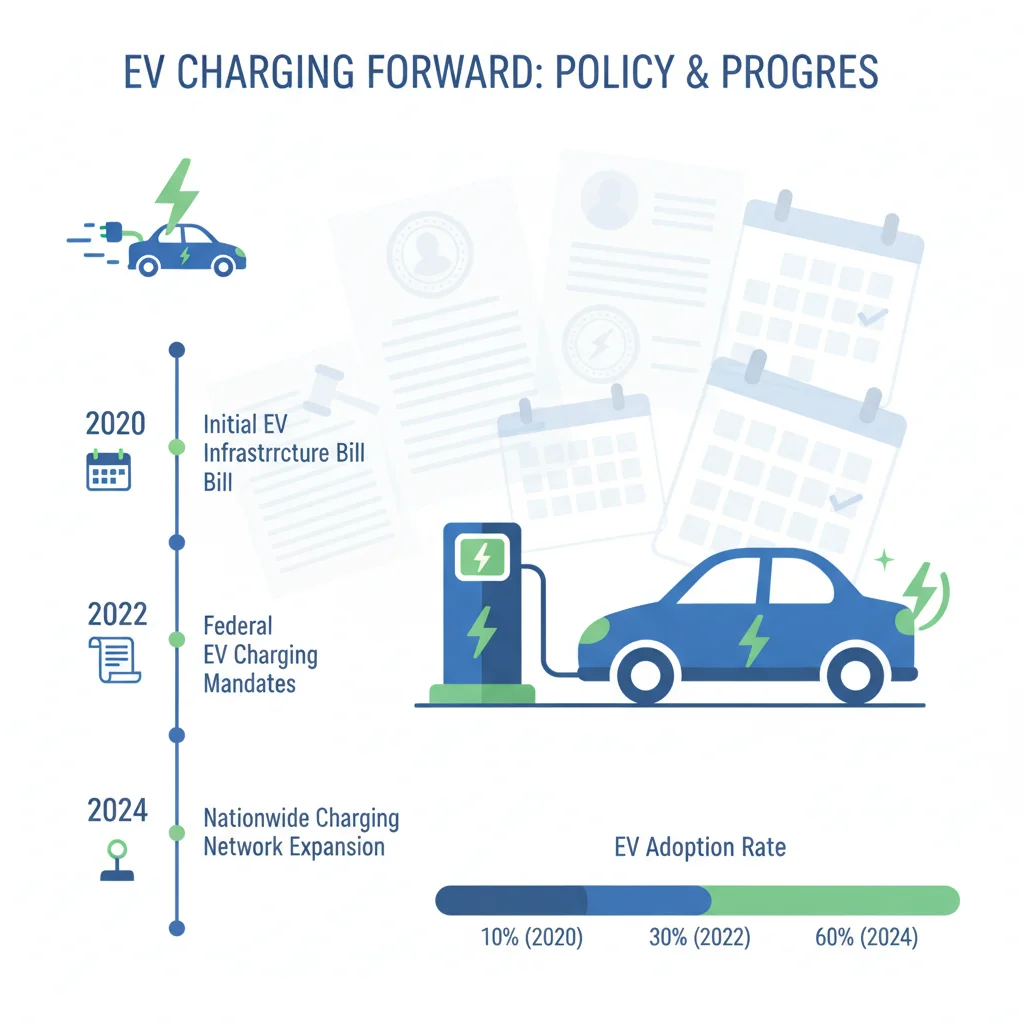
- Point-of-sale transfer: Starting January 2024, buyers can transfer the credit to dealers for an instant discount.
The battery sourcing rules tighten every year through 2029, which means vehicles qualifying today may not qualify in future model years. For a year-by-year breakdown, see our IRA EV tax credit timeline.
$7,500
Maximum new EV tax credit
Set by the Inflation Reduction Act of 2022; split into two $3,750 components based on battery content requirements.
$4,000
Maximum used EV tax credit
Created by the IRA for pre-owned EVs sold by licensed dealers; capped at the lesser of $4,000 or 30% of the sale price.
$25,000
Used EV price ceiling
The vehicle's sale price must not exceed $25,000 to qualify for the used EV tax credit under IRS rules.
2024
Year point-of-sale transfer began
Starting January 1, 2024, qualifying buyers can assign the credit to a registered dealer and receive an immediate purchase discount.
$80,000
SUV and truck MSRP cap
Vehicles classified as SUVs, vans, or pickups must carry an MSRP at or below $80,000 to qualify for the new EV credit.
Who Qualifies: Income, Vehicle Price, and Assembly Rules
Three separate eligibility gates must all be cleared at the same time. Failing any one of them wipes out the credit entirely — or reduces it.
Income Limits
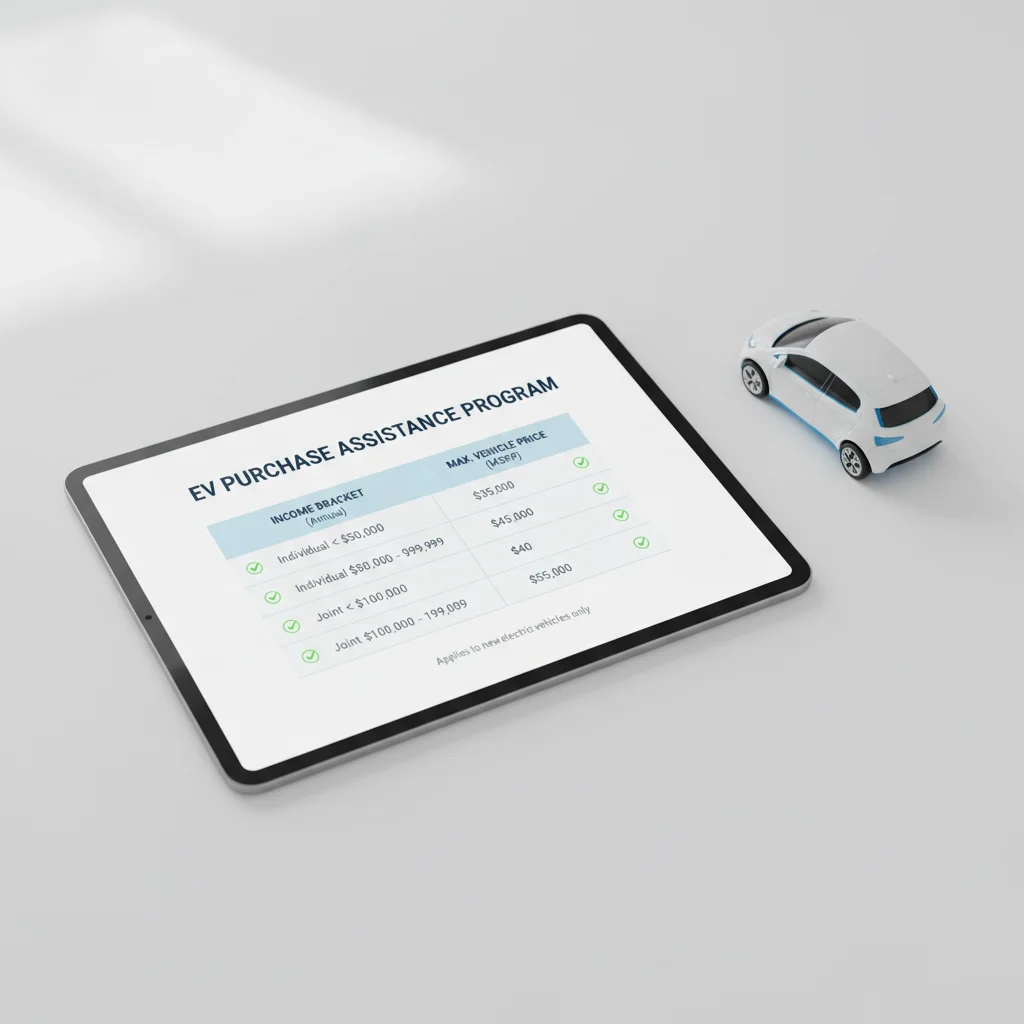
The IRS uses your modified adjusted gross income (MAGI) — which is essentially your gross income before most deductions. For new EVs, the thresholds are:
| Filing Status | Income Limit |
|---|---|
| Single / Married Filing Separately | $150,000 |
| Head of Household | $225,000 |
| Married Filing Jointly | $300,000 |
The IRS allows you to use either the current tax year's income or the prior year's income — whichever is lower. This gives buyers who had a low-income year flexibility to still qualify even if their current-year earnings pushed them over the limit.
Vehicle Price Caps
The MSRP caps are firm cutoffs, not sliding scales. The vehicle's suggested retail price — not what you negotiate — must fall below the threshold:
- SUVs, vans, and pickup trucks: $80,000 or less
- Sedans, wagons, and other cars: $55,000 or less
The IRS determines which category a vehicle falls into, and that classification can sometimes differ from how automakers market their vehicles. A vehicle you think of as an SUV may be classified differently for credit purposes.
Assembly and Battery Sourcing
Final assembly in North America is a hard requirement — no exceptions. Battery content requirements then determine whether you get the full $7,500, a partial $3,750, or nothing at all. Not every model within a qualifying brand qualifies — trim levels and battery configurations matter. Always verify the specific vehicle identification number (VIN) with the IRS tool before purchase.
Not all EV types are treated equally under this law either. Our guide on which EV types qualify for federal tax credits explains how BEVs, PHEVs, and hybrids differ in their treatment.
The Point-of-Sale Transfer: Getting the Discount Instantly
One of the most practical changes from the IRA — and one that many buyers still don't know about — is the ability to transfer the credit to a dealer starting January 1, 2024.
Here's how it works: instead of buying an EV and waiting until April to see your tax credit, you can sign over your credit to a participating dealer at the time of purchase. The dealer applies it directly to your vehicle's price, reducing what you pay out of pocket or what you finance. The dealer then recovers that amount from the IRS.
This is a significant change because it decouples the credit from your year-end tax liability. You still have to meet all eligibility requirements — income, vehicle price, assembly rules — and you attest to that on a form at the dealership. But you don't need to have a large tax bill to take immediate advantage of the full dollar value.
Use the IRS Energy Credits Online Tool
Before visiting a dealership, verify the specific VIN of your target vehicle on the IRS's official vehicle eligibility tool at fueleconomy.gov or IRS.gov. Battery sourcing qualifications can differ by trim level and production date. Don't rely on the automaker's marketing materials — the IRS determination is what counts.
Confirm Dealer IRS Registration Before Signing
For the point-of-sale transfer to work, your dealer must be registered in the IRS Energy Credits Online system. Ask the finance manager to confirm their registration status before you sign — if they're not registered, you'll have to claim the credit on your tax return the traditional way and need sufficient tax liability to benefit.
If you're financing the vehicle, applying the $7,500 upfront reduces your loan principal. On a 60-month loan at 7% interest, that's over $900 in interest savings on top of the $7,500 credit itself. The math strongly favors taking the point-of-sale transfer if you qualify.
“The ability to transfer the credit to the dealer is the single biggest practical improvement in the IRA. It removes the biggest barrier for middle-income buyers — you don't need a big tax bill to benefit from the full incentive.”
— Ingrid Malmgren, Senior Policy Director, Plug In America
The Used EV Credit: A New Option for Budget Buyers
The IRA created an entirely new federal incentive for used EVs — one that didn't exist before 2023. If you're buying a pre-owned electric vehicle from a licensed dealer, you may qualify for a credit worth 30% of the sale price, up to a maximum of $4,000.
The eligibility rules are stricter in some ways:
- The vehicle must be at least two model years old at the time of sale
- The sale price must be $25,000 or less
- The vehicle must be purchased from a licensed dealer, not a private seller
- This must be the first time the used EV credit has been claimed on that specific vehicle
- You can only claim the used EV credit once every three years
Income limits are lower than for new vehicles: $75,000 for single filers, $112,500 for heads of household, and $150,000 for joint filers. Like the new EV credit, it's nonrefundable and can be transferred to the dealer at point of sale starting in 2024.
The used EV credit opens up the incentive program to buyers who can't afford a new car and might otherwise be locked out of the savings entirely.
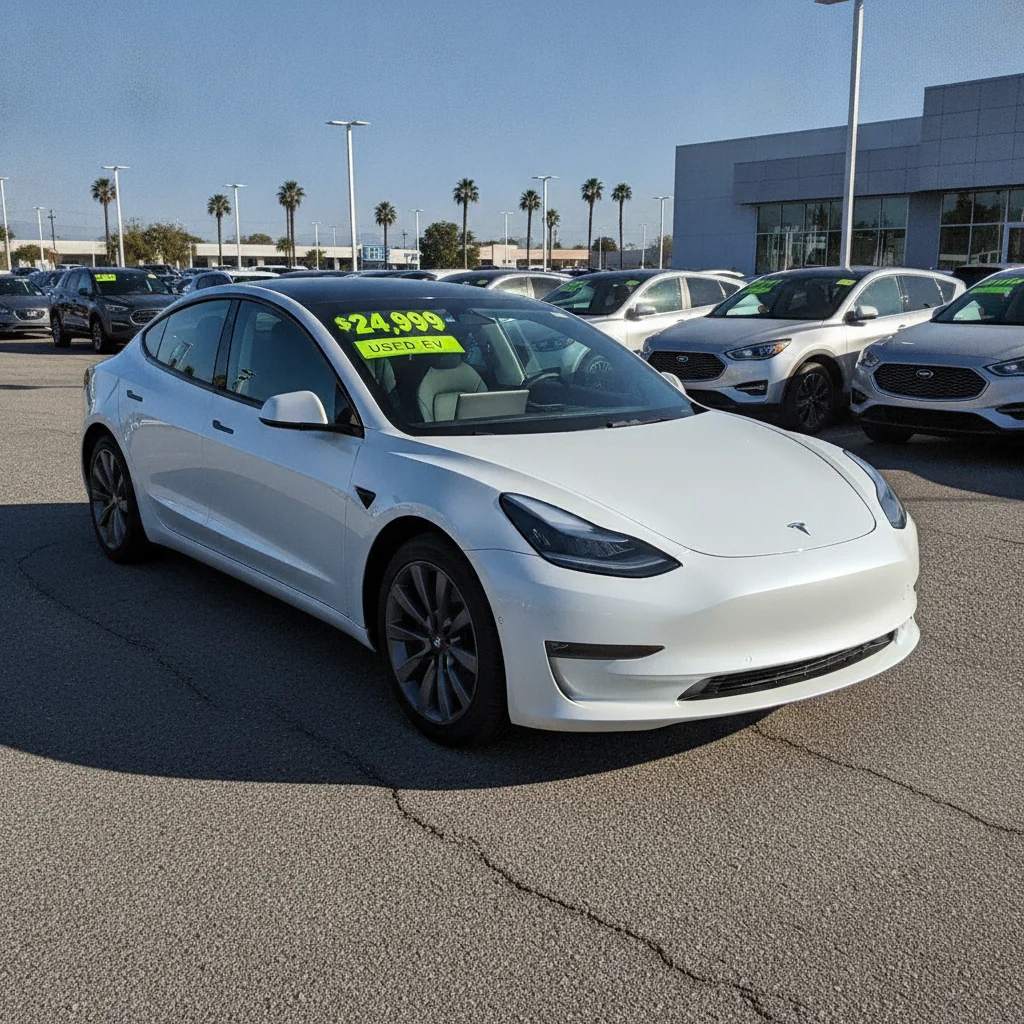
For a complete list of which new and used models currently meet IRS requirements, see our guide to EVs that qualify for the federal credit right now.
Stacking State Incentives on Top
The federal credit doesn't have to be your only incentive. Many states, utilities, and local governments offer their own EV rebates and credits that can be combined with the federal program.
State incentives vary widely:
- California's Clean Vehicle Rebate Project and Clean Air Vehicle sticker programs have historically offered thousands in additional rebates
- Colorado offers a state income tax credit of $5,000 for new EVs (as of recent legislative sessions)
- Several states offer utility rebates for home charging equipment installation
Unlike the federal credit, state rebates are often structured as true rebates — meaning you get money back regardless of your tax liability. Some are income-qualified; others are first-come, first-served until funds run out. Checking your state's energy office or DMV website before purchase is always worth the 20 minutes.
The Credit Is Nonrefundable — Know Your Tax Liability
Before assuming you'll capture the full $7,500, estimate your actual federal income tax liability for the year. Use your prior year return as a baseline. If you owe less than $7,500 in federal taxes — before withholding — you'll receive only a partial benefit from the credit. The point-of-sale transfer bypasses this issue for the current purchase but doesn't change the underlying nonrefundable structure.
State Incentives Don't Always Last
Many state EV rebate programs run on limited annual budgets and are distributed on a first-come, first-served basis. California's Clean Vehicle Rebate Project, for example, has periodically run out of funds mid-year. Check your state's current availability and apply as early as possible after purchase to avoid missing out.
If you're thinking through the total cost of EV ownership — not just the purchase incentives — our EV insurance guide walks through how coverage costs differ from conventional vehicles, which is another ownership cost that often surprises buyers.
Common Mistakes That Cost Buyers the Credit
The IRA's new framework is complex enough that otherwise eligible buyers lose the credit through avoidable errors. Here are the pitfalls worth knowing before you sign anything:
Not Verifying the Vehicle's Eligibility by VIN
Brand-level approval doesn't mean every model or trim qualifies. A specific battery configuration in one trim may meet sourcing thresholds while another doesn't. Always use the IRS's online lookup tool with the specific VIN of the vehicle you're buying.
Buying from a Private Party for a Used EV
The used EV credit only applies to dealer sales. Buying a qualifying used EV from a private seller gets you zero credit, full stop.
Assuming Your Income Qualifies Without Checking MAGI
Many buyers focus on gross salary, not modified adjusted gross income. If you have significant investment income, rental income, or business income, your MAGI can be higher than expected. Run the numbers before committing.
Not Registering the Transfer with the IRS Before Delivery
For the point-of-sale transfer to work, the dealer must report the transaction to the IRS at or before the time of vehicle delivery. Paperwork errors can result in the dealer clawing back the discount after the fact. Confirm the dealer is registered in the IRS's Energy Credits Online system.
Expecting a Refund When You Owe Little
If your tax liability is $2,000 and you claim the full $7,500 credit, you save $2,000 — not $7,500. Plan accordingly, especially if you're financing based on an assumed discount you may not fully realize.
Use the IRS Energy Credits Online Tool
Before visiting a dealership, verify the specific VIN of your target vehicle on the IRS's official vehicle eligibility tool at fueleconomy.gov or IRS.gov. Battery sourcing qualifications can differ by trim level and production date. Don't rely on the automaker's marketing materials — the IRS determination is what counts.
Confirm Dealer IRS Registration Before Signing
For the point-of-sale transfer to work, your dealer must be registered in the IRS Energy Credits Online system. Ask the finance manager to confirm their registration status before you sign — if they're not registered, you'll have to claim the credit on your tax return the traditional way and need sufficient tax liability to benefit.

All claims are backed by peer-reviewed research. Sources on request.