| Federal credit name | Section 30C Alternative Fuel Vehicle Refueling Property Credit (Internal Revenue Code, as amended by Inflation Reduction Act 2022) |
| Credit percentage | 30% of qualified installation cost (IRS Form 8911 instructions, 2023) |
| Maximum residential credit | $1,000 per installation (IRS Publication, Section 30C) |
| Credit type | Nonrefundable (reduces tax owed; not refunded if unused) |
| Credit expiration | December 31, 2032 (Inflation Reduction Act of 2022) |
| IRS form required | Form 8911 (IRS.gov) |
| Qualifying equipment | Level 2 EVSE hardware and professional installation costs |
| State programs available | Yes — varies significantly by state and utility provider (U.S. DOE Alternative Fuels Data Center) |
What the Federal Tax Credit Actually Covers
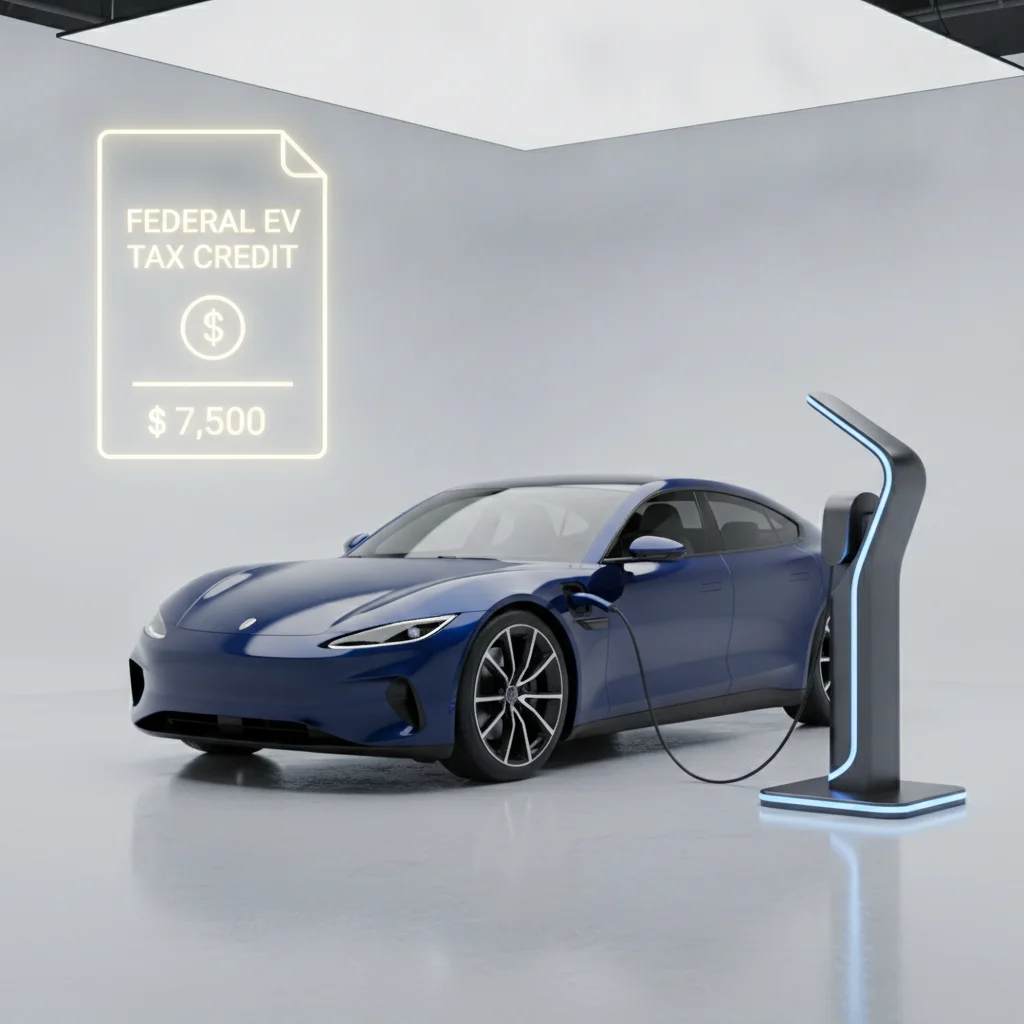
The federal incentive for home EV charger installation falls under Section 30C of the Internal Revenue Code, commonly called the Alternative Fuel Vehicle Refueling Property Credit. The Inflation Reduction Act of 2022 extended and modified this credit through 2032, making it one of the most durable incentives available to EV owners today.
| Federal credit name | Section 30C Alternative Fuel Vehicle Refueling Property Credit (Internal Revenue Code, as amended by Inflation Reduction Act 2022) |
| Credit percentage | 30% of qualified installation cost (IRS Form 8911 instructions, 2023) |
| Maximum residential credit | $1,000 per installation (IRS Publication, Section 30C) |
| Credit type | Nonrefundable (reduces tax owed; not refunded if unused) |
| Credit expiration | December 31, 2032 (Inflation Reduction Act of 2022) |
| IRS form required | Form 8911 (IRS.gov) |
| Qualifying equipment | Level 2 EVSE hardware and professional installation costs |
| State programs available | Yes — varies significantly by state and utility provider (U.S. DOE Alternative Fuels Data Center) |
Here's the core structure: the credit is worth 30% of the total installed cost of qualified EV charging equipment, up to a maximum of $1,000 for residential installations. That means if your Level 2 charger hardware and professional installation runs $3,000, you'd claim a $900 credit — reducing what you owe the IRS dollar-for-dollar. If your total cost is $3,334 or more, you hit the $1,000 ceiling regardless of how much more you spend.
One point that trips up many filers: this is a nonrefundable credit. It can reduce your federal tax liability to zero, but it won't generate a refund if the credit exceeds what you owe. If your federal tax bill for the year is $400, you get $400 in value from the credit — the remaining amount doesn't carry forward or get refunded. Understanding this structural difference between credits and rebates matters for planning your tax strategy.
The credit applies to both the cost of the charging equipment itself and the cost of installation, including any necessary electrical panel upgrades directly associated with the charger installation. Keep every receipt — the IRS expects documentation of both the hardware and labor costs when you file using IRS Form 8911.
Geographic Restriction Added in 2023
Starting with the 2023 tax year, the IRS added a location requirement. The charger must be installed in a low-income community or non-urban area as defined under Census tract classifications to qualify for residential use. However, the IRS has clarified that for most homeowners in standard suburban and urban zip codes, this restriction primarily affects how the credit is calculated — check the IRS guidance or consult a tax professional if you're unsure whether your address qualifies under the current tract definitions. The business-use version of 30C (up to $100,000 per location) has broader geographic applicability.
Panel Upgrades May Also Qualify
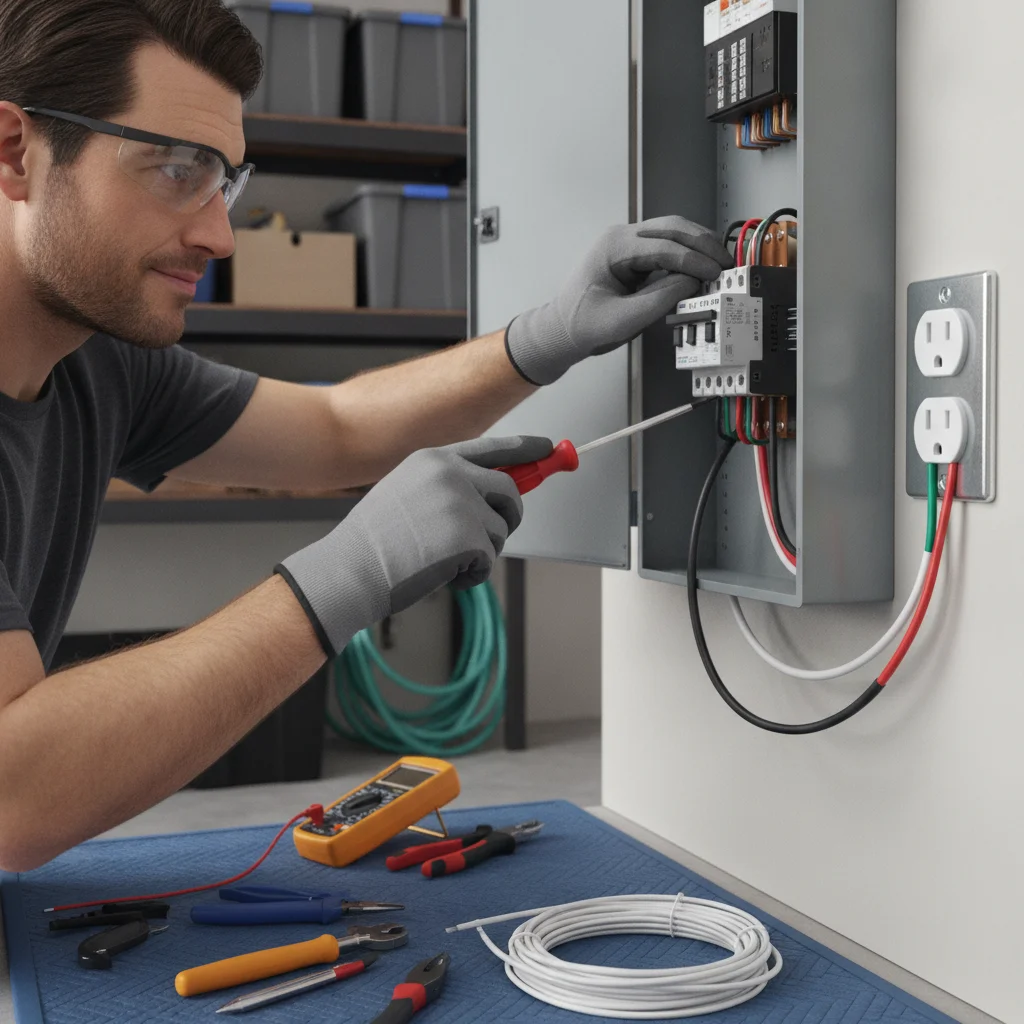
If your electrical panel needs an upgrade to support a Level 2 charger circuit, the cost of that upgrade may be includable as part of your qualified installation expense under Section 30C. The IRS has indicated that costs directly and necessarily associated with the installation of the refueling property can count. Get an itemized invoice from your electrician that separately lists panel work versus general home electrical improvements — mixing non-qualifying work into your 30C claim is a common audit trigger.
Geographic Eligibility Check Required for 2023+ Installations
The IRS introduced a census-tract location requirement for residential 30C credits starting in the 2023 tax year. The charger must be installed in a qualifying low-income or non-urban census tract. You can verify your address using the IRS's online mapping tools or consult the AFDC incentive lookup at afdc.energy.gov. This requirement does not apply to the business-use version of the credit.
Timing Matters: When Is the Charger 'Placed in Service'?
The tax credit applies in the year your EV charger is placed in service — meaning it's fully installed and operational — not the year you paid for it or ordered it. If you make a deposit in December but the electrician finishes the job in January, you claim the credit for the January tax year. Keep the completion date documented on your contractor's invoice or permit sign-off.
Level 1 vs. Level 2: Which Charger Actually Qualifies?
Not all home charging setups are created equal — and the level of charger you choose affects both your daily driving experience and your eligibility for incentives.
Level 1 Charging
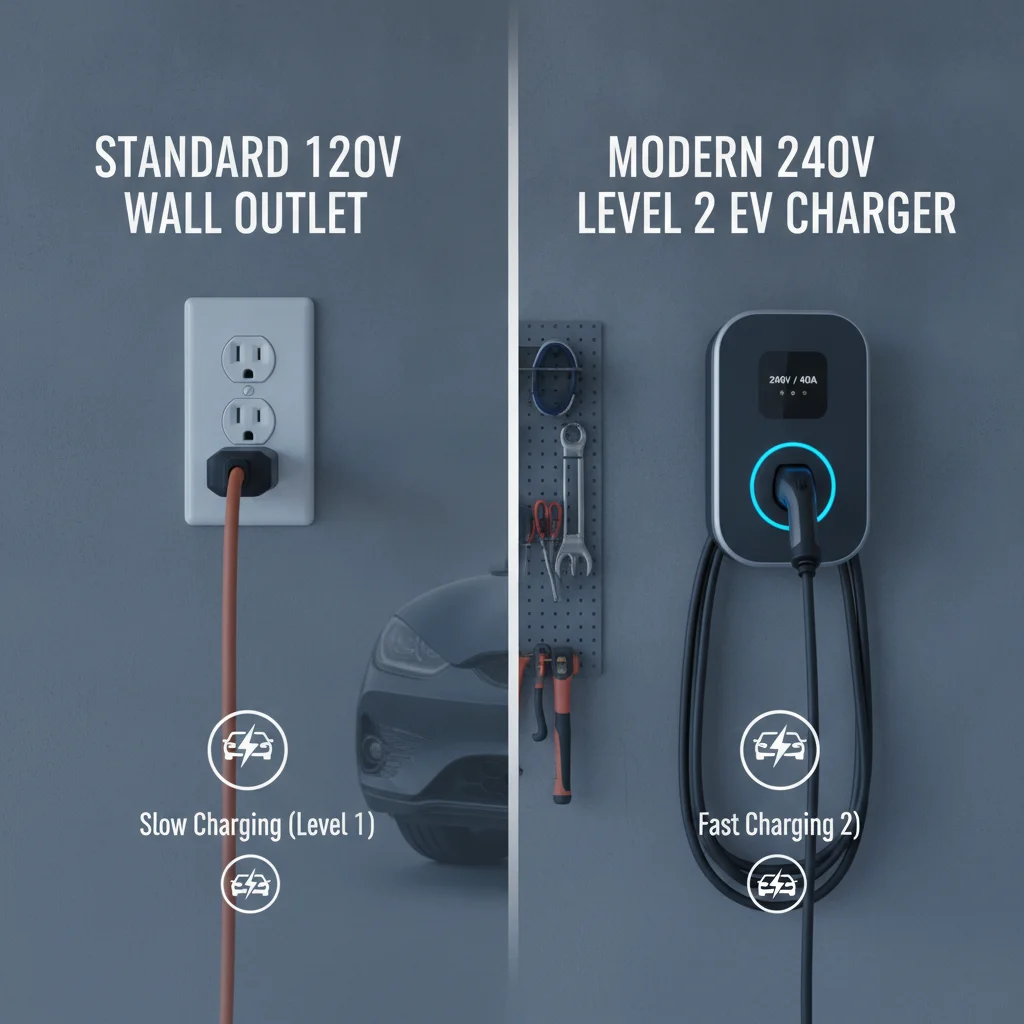
Home EV charging using a standard 120V household outlet, delivering approximately 3–5 miles of range per hour. No special equipment or installation is typically required, but charging is slow for larger battery packs.
Level 2 Charging
Home EV charging using a dedicated 240V circuit and Electric Vehicle Supply Equipment (EVSE), delivering 10–30 miles of range per hour. Requires professional installation and is the practical choice for most battery electric vehicle owners.
EVSE
Electric Vehicle Supply Equipment — the hardware unit that manages the electrical connection between your home's wiring and your vehicle's onboard charger. Commonly called a 'home charger,' though technically the charger is inside the vehicle.
Section 30C Credit
The IRS tax credit for installing qualified alternative fuel refueling property, including home EV chargers. For residential installations, it provides 30% of the total cost up to a $1,000 cap, and is nonrefundable.
Nonrefundable Credit
A tax credit that can reduce your tax liability to zero but cannot generate a refund if the credit exceeds what you owe. Contrasts with a refundable credit, which can result in a payment from the IRS.
Utility Rebate
A cash payment offered by your electricity provider for purchasing and installing qualifying EV charging equipment. Rebates are generally received as a check or bill credit and do not depend on your tax liability.
Level 1 charging uses a standard 120V household outlet. You plug in the charging cable that came with your EV, and you get roughly 3–5 miles of range per hour of charging. It's free to set up if you already have an accessible outlet, but it's painfully slow for most drivers. A full charge on a 300-mile battery EV can take 40–60 hours on Level 1. For plug-in hybrids with smaller batteries (20–50 miles of electric range), Level 1 is often adequate and may not require any electrical work at all.
Level 2 charging uses a 240V circuit — the same type your dryer or oven runs on. A dedicated Level 2 Electric Vehicle Supply Equipment (EVSE) unit delivers 10–30 miles of range per hour, meaning most EVs fully charge overnight. This is the practical choice for battery EVs used as a primary vehicle.
| Factor | Level 1 (120V) | Level 2 (240V) |
|---|---|---|
| Typical miles added per hour | 3–5 miles | 10–30 miles |
| Hardware cost | $0 (included with EV) | $300–$900 |
| Installation cost | $0–$200 (outlet only) | $500–$2,000+ |
| Federal 30C credit eligible? | Possibly (outlet upgrade) | Yes (hardware + install) |
| Typical full charge time (60 kWh battery) | 40–50 hours | 6–10 hours |
For the Section 30C credit, Level 2 EVSE units are the clear target. The IRS defines qualified property as equipment that dispenses electricity for recharging motor vehicles, and a dedicated hardwired or plug-in Level 2 charger fits squarely within that definition. If you're simply plugging into an existing 120V outlet that was already in your garage, there's no qualifying expenditure — you haven't purchased or installed refueling property. But if you pay an electrician to install a new 240V outlet or dedicated circuit even without a separate EVSE unit, that work may count as a qualified installation cost.
For most buyers of full battery EVs, the decision to go Level 2 is practical first, financial second. The tax credit sweetens the math, but the real reason to upgrade is that Level 1 simply doesn't keep pace with daily driving for most households. See our broader look at charging costs and savings strategies for the full picture on what home charging will cost month to month.
State Rebates and Utility Incentives: Where the Real Money Often Is
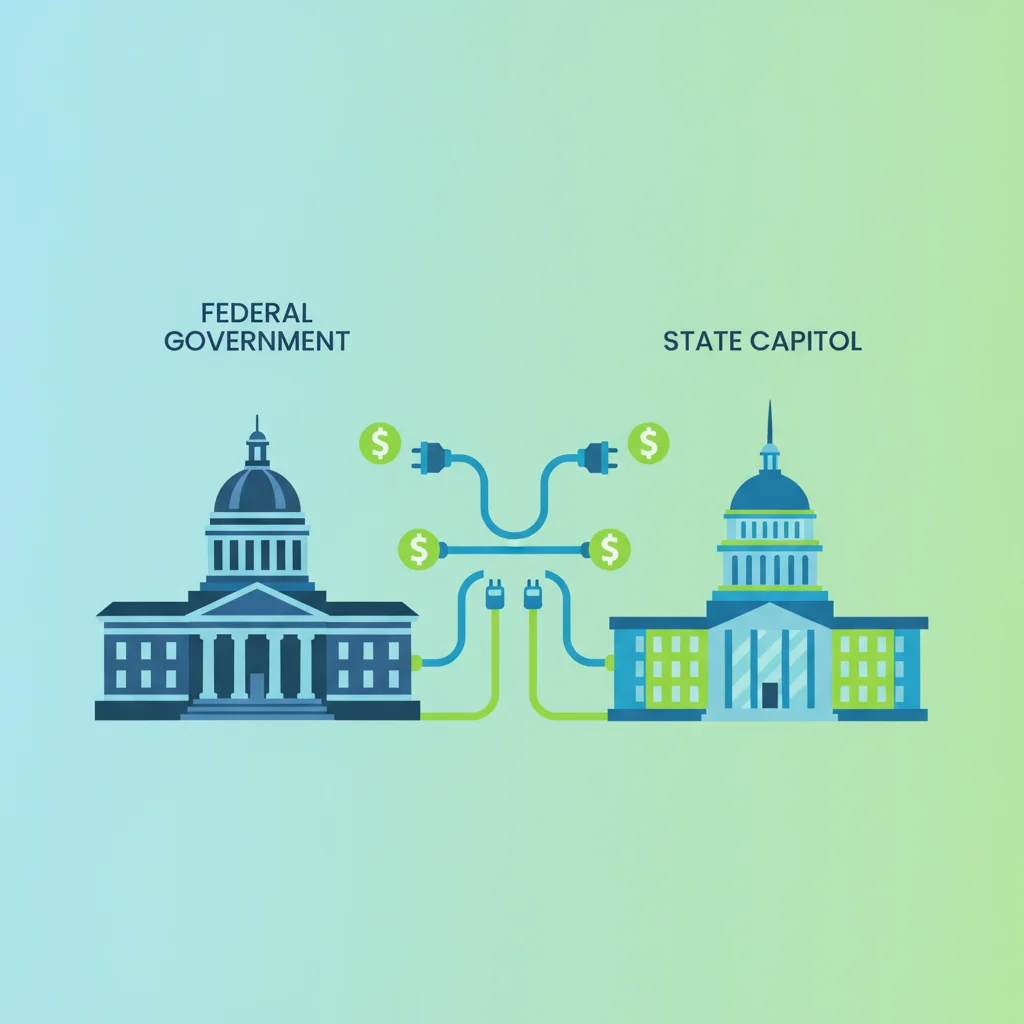
The federal credit is capped at $1,000 — but depending on where you live, your state and local utility may offer additional incentives that dwarf the federal benefit. State programs vary enormously in generosity, structure, and eligibility rules, so this is a lookup exercise rather than a one-size-fits-all answer.
30%
Federal tax credit rate for EV charger installation
The Section 30C credit covers 30% of qualified hardware and installation costs, up to $1,000 for residential properties, per IRS guidelines.
$1,000
Maximum federal residential charger credit
The Inflation Reduction Act set the residential cap at $1,000, available through December 31, 2032.
$500–$1,000
Typical state or utility rebate for Level 2 installation
Programs like NYSERDA (New York) and MassSave (Massachusetts) offer rebates of $500 to $700 or more depending on income and program status.
10–30x
Faster charging speed: Level 2 vs. Level 1
Level 2 delivers 10–30 miles of range per hour compared to 3–5 miles for Level 1, making overnight full charges practical for most EVs.
40%+
Potential cost reduction when stacking federal and state incentives
In states with active utility rebate programs, combining the federal 30C credit and a local rebate can reduce total installation costs by 40–50%.
How State Programs Are Structured
Unlike the federal tax credit, most state EV charger incentives are structured as rebates — meaning you receive cash back after purchase, not a reduction in your tax bill. That distinction matters. A $500 rebate helps you regardless of your tax liability; a $500 nonrefundable credit only helps if you owe at least $500 in federal taxes. See how credits and rebates differ structurally if you want a deeper breakdown of the mechanics.
State programs typically fall into one of three categories:
- State tax credits — Similar structure to the federal credit but applied to your state income tax return. California, for example, has offered state-level EV and charging incentives through various program cycles.
- Direct rebates — State-administered programs that pay you a fixed amount (often $250–$1,000) after you submit proof of purchase and installation. Colorado, New York, and several other states have operated these programs.
- Utility rebates — Your electricity provider may offer its own incentive for installing a Level 2 charger, separate from any state program. These can range from $50 to $500 or more, and some utilities offer time-of-use rate discounts on top of the hardware rebate.
Examples of State and Utility Programs (Representative, Not Exhaustive)
| State / Program Type | Typical Benefit | Notes |
|---|---|---|
| California (CPUC / utility programs) | $500–$1,000 rebate | Varies by utility; PG&E, SCE, SDG&E each administer separately |
| New York (NYSERDA) | Up to $500 rebate | Income-qualified applicants may receive higher amounts |
| Colorado (Xcel Energy) | $50–$300 utility rebate | Stacks with federal credit; requires approved charger models |
| Massachusetts (MassSave) | Up to $700 rebate | Administered through participating electric utilities |
| Texas (Oncor, CPS Energy) | $250–$400 utility rebate | No statewide program; utility-dependent |
Note: Program funding is finite and eligibility rules change. Verify current availability directly with your state energy office or utility before purchasing equipment.
The best starting point for a current, state-specific lookup is the U.S. Department of Energy's Alternative Fuels Station Locator and Incentive Database at afdc.energy.gov, or your state's public utilities commission website. Many utilities also list active rebates on their residential EV pages. This is genuinely worth the 20 minutes of research — a stacked federal credit plus utility rebate can cover 30–50% of a complete Level 2 installation in favorable states.
How to Claim the Federal Credit: Filing IRS Form 8911
Claiming the Section 30C credit is mechanically straightforward, but you need to get the documentation right before you file. Here's the step-by-step process.
Step 1: Keep Your Receipts
You need to document both the cost of the EVSE hardware and the cost of installation, including any related electrical work (dedicated circuit, panel upgrade if directly tied to the charger). Save the original purchase receipt for the charger, the contractor's invoice, and any permit documentation. If your charger came bundled with your EV purchase, ask the dealer to itemize it separately on the sales agreement.
Step 2: Confirm Eligibility
The charger must be installed at your primary residence in the United States. As noted earlier, beginning with 2023 installations, there are census-tract-based location requirements for the residential credit. Verify your address qualifies — the IRS has published mapping tools, or you can use the AFDC incentive database. Also confirm that your tax liability for the year is sufficient to absorb the credit, since it is nonrefundable.
Step 3: Complete Form 8911
IRS Form 8911 (Alternative Fuel Vehicle Refueling Property Credit) is a one-page form with a straightforward calculation:
- Enter the total cost of your qualified refueling property (hardware + installation).
- Multiply by 30% to get your tentative credit amount.
- Apply the $1,000 residential cap if applicable.
- Compare against your tax liability to determine the allowable credit for the year.
The resulting credit flows to Schedule 3 (Additional Credits and Payments) on your Form 1040, reducing your tax owed. If you use tax software, it will walk you through Form 8911 automatically once you indicate you installed home EV charging equipment.
Step 4: File With Supporting Documentation
You don't attach your receipts to your tax return, but you must retain them in case of an IRS inquiry. The IRS recommends keeping documentation for at least three years from the date you file. If your installation was split between two tax years (e.g., electrical work in December, charger installed in January), the credit applies in the year the equipment was placed in service — meaning when the charger was fully operational.

For a complete walkthrough of how EV-related federal credits work together — including the vehicle purchase credit and the charger credit — see our full EV tax credit filing guide. If you're also deciding which EV to buy, our current EV credit eligibility reference covers which vehicles meet IRS requirements right now.
Panel Upgrades May Also Qualify
If your electrical panel needs an upgrade to support a Level 2 charger circuit, the cost of that upgrade may be includable as part of your qualified installation expense under Section 30C. The IRS has indicated that costs directly and necessarily associated with the installation of the refueling property can count. Get an itemized invoice from your electrician that separately lists panel work versus general home electrical improvements — mixing non-qualifying work into your 30C claim is a common audit trigger.
Geographic Eligibility Check Required for 2023+ Installations
The IRS introduced a census-tract location requirement for residential 30C credits starting in the 2023 tax year. The charger must be installed in a qualifying low-income or non-urban census tract. You can verify your address using the IRS's online mapping tools or consult the AFDC incentive lookup at afdc.energy.gov. This requirement does not apply to the business-use version of the credit.
Timing Matters: When Is the Charger 'Placed in Service'?
The tax credit applies in the year your EV charger is placed in service — meaning it's fully installed and operational — not the year you paid for it or ordered it. If you make a deposit in December but the electrician finishes the job in January, you claim the credit for the January tax year. Keep the completion date documented on your contractor's invoice or permit sign-off.
Stacking Incentives and Making the Math Work
The real opportunity for EV owners is combining federal, state, and utility incentives. Here's how that can play out in practice — and the rules for doing it correctly.
Can You Stack Federal and State Credits?
Yes. The federal Section 30C credit and state-level credits or rebates are generally independent of each other, and most states explicitly allow you to claim both. However, a few states require you to reduce your state credit by the amount of any federal credit received, so check your state's specific rules. Utility rebates almost universally stack with both — they're classified as a discount or cash payment, not a tax credit, so they don't create a conflict.
Does a Rebate Reduce Your Federal Credit?
This is a subtle but important point: if you receive a rebate from a utility or state program, you may need to reduce the basis of your qualifying expenditure by the rebate amount before calculating the federal credit. In other words, if your total installation cost is $3,000 and you receive a $500 utility rebate, your qualifying cost for the 30C credit is $2,500 — yielding a credit of $750 rather than $900. This is consistent with general tax principles around incentive stacking.
A Realistic Cost Scenario
| Item | Amount |
|---|---|
| Level 2 EVSE unit (mid-range) | $600 |
| Electrician installation (dedicated circuit) | $1,200 |
| Panel upgrade (if needed) | $800 |
| Gross total cost | $2,600 |
| Utility rebate received | –$400 |
| Net qualifying cost for 30C | $2,200 |
| Federal credit (30% × $2,200) | –$660 |
| Net out-of-pocket after incentives | $1,540 |
In this scenario, a homeowner who started with a $2,600 installation bill ends up paying $1,540 out of pocket — a 41% reduction from stacking a utility rebate and the federal credit. In higher-rebate states like California or Massachusetts, the effective reduction can push past 50%.
The broader ecosystem of incentives that reduce EV charging costs goes beyond the charger itself — some utility programs also offer reduced electricity rates for overnight EV charging, which can compound your savings significantly over years of ownership. And for a complete picture of EV ownership economics, the EV Tax Credits hub pulls together all the federal and state incentive information in one place.
IRS Form 8911 and Instructions
The official IRS form for claiming the Alternative Fuel Vehicle Refueling Property Credit. The instructions include eligibility requirements, calculation steps, and the current census-tract location rules.
DOE Alternative Fuels Data Center (AFDC) Incentive Lookup
The U.S. Department of Energy's searchable database of federal, state, and utility EV incentives. Filter by state and incentive type to find current charger installation rebates in your area.
EnergySage EV Charger Installation Cost Calculator
Estimates your total Level 2 charger installation cost based on your home's panel capacity, charger type, and location — useful for projecting your qualifying expense before filing.
EV Charging Incentives State Guide (NCSL)
The National Conference of State Legislatures maintains a regularly updated summary of state-level EV charging laws and incentive programs, useful for confirming your state's current offerings.

All claims are backed by peer-reviewed research. Sources on request.