Key Takeaways
Option A
Electric Vehicle (BEV)
Fewer moving parts, fewer routine service visits — but not zero maintenance.
Best for: Drivers who want to minimize recurring service costs and can handle periodic tire, brake fluid, and cabin filter upkeep themselves.
Option B
Gas-Powered Vehicle (ICE)
The familiar, fully-supported maintenance model with predictable service intervals.
Best for: Drivers who value a dense service network and are comfortable with regular oil changes, filter swaps, and more complex drivetrain servicing.
If you want the lowest long-term maintenance bill
Electric Vehicle (BEV)
EVs consistently come out ahead on maintenance costs over five or more years, eliminating oil changes, spark plugs, and transmission service that add up quickly for gas cars.
If you live in a rural area with limited EV service infrastructure
Gas-Powered Vehicle (ICE)
Gas car service networks are denser and more established; EV-certified technicians and parts remain harder to find outside metro areas, which can mean longer wait times and higher labor costs.
If you're a high-mileage driver covering 20,000+ miles per year
Electric Vehicle (BEV)
The more you drive, the more oil change and fuel savings compound. High-mileage EV drivers often recoup the price premium faster than average.
If you need complete predictability and the widest repair shop choice
Gas-Powered Vehicle (ICE)
Any independent mechanic or chain shop can service a gas car. EV repairs — especially battery and powertrain issues — often require manufacturer-trained technicians.
If you want to minimize day-to-day maintenance effort
Electric Vehicle (BEV)
No oil changes, no spark plug swaps, no exhaust checks — the list of things you simply don't have to do is substantial, freeing up time and reducing scheduling friction.
What You Stop Doing the Day You Go Electric
The most immediate, tangible difference between EV and gas car maintenance is the list of tasks that simply disappear. For anyone who has owned an internal combustion engine (ICE) vehicle, this list is longer than most people expect.
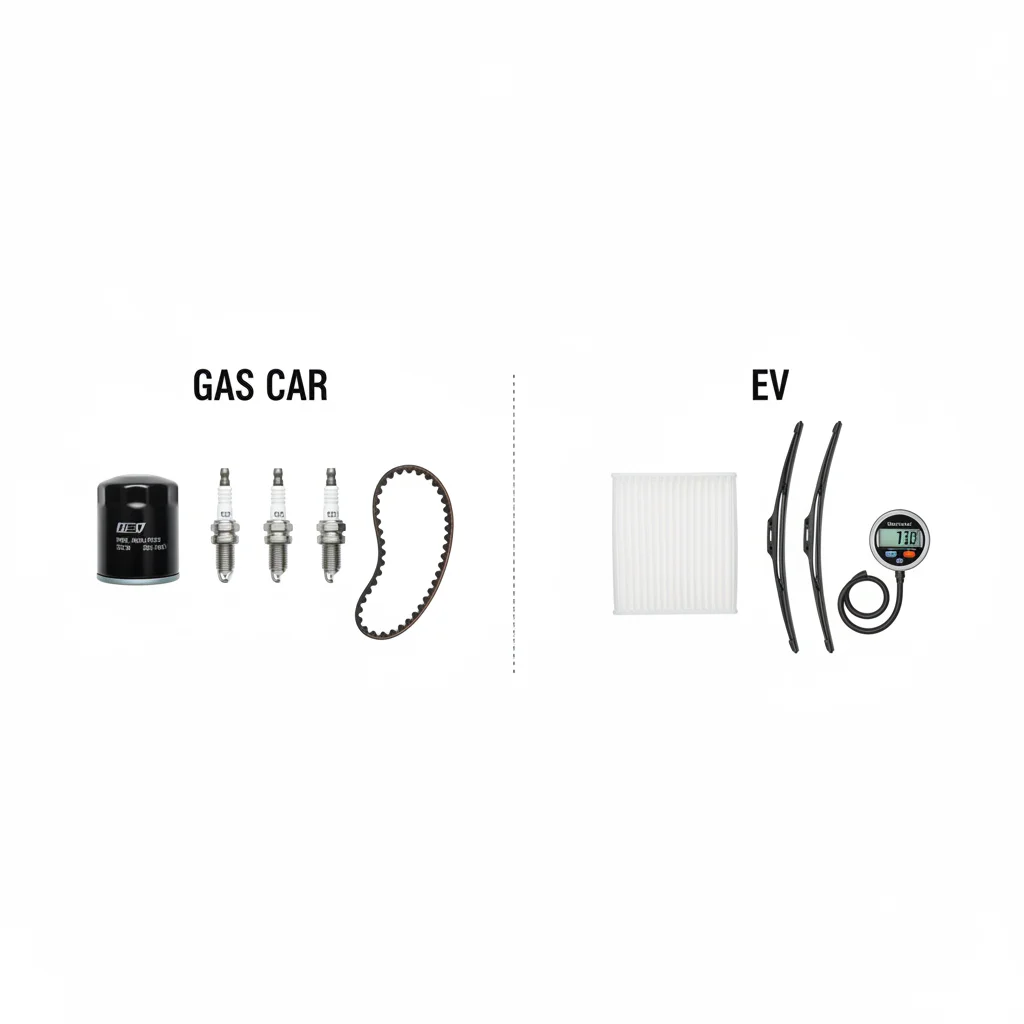
A gas-powered vehicle's engine requires oil and filter changes every 5,000–7,500 miles under conventional oil, or up to 10,000–15,000 miles with full synthetic. Over 150,000 miles of ownership, that's anywhere from 10 to 30 service visits just for oil. At $75–$150 per visit at a dealership, that's $750–$4,500 spent before you've touched anything else.
On top of oil changes, ICE vehicles require periodic replacement of:
- Spark plugs — typically every 30,000–100,000 miles depending on plug type, costing $100–$300 or more
- Air filters (engine) — every 15,000–30,000 miles, $20–$60 DIY or $50–$100 at a shop
- Timing belt or chain service — major job at 60,000–100,000 miles, often $500–$1,000+
- Transmission fluid — every 30,000–60,000 miles for automatics, $80–$250
- Coolant flushes — every 30,000–50,000 miles, $100–$150
- Exhaust system inspection and repair — ongoing wear item
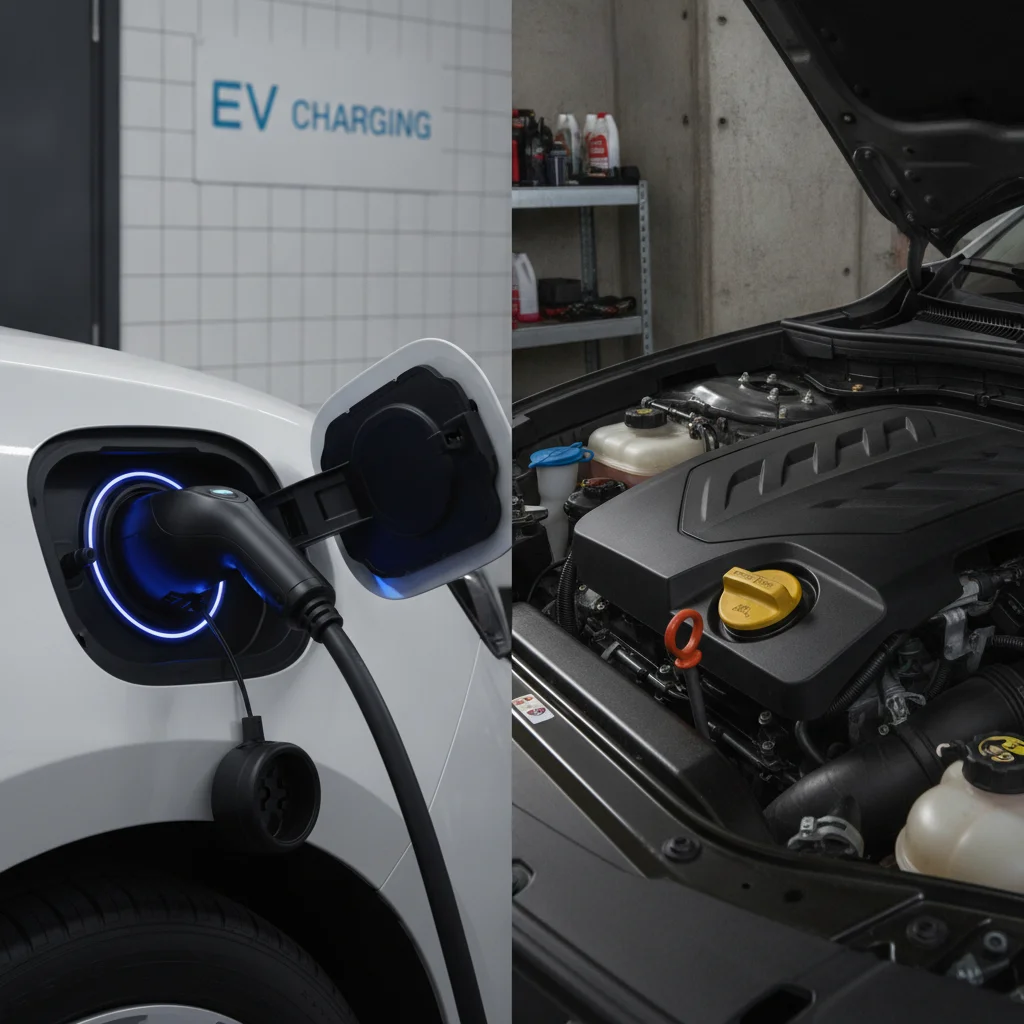
A battery electric vehicle eliminates every single one of these. There's no combustion, no pistons, no camshaft, no multi-speed automatic transmission in most models, and no exhaust system. The drivetrain is dramatically simpler — and dramatically cheaper to maintain. See our full breakdown of what EV maintenance actually involves for a deeper look at what remains.
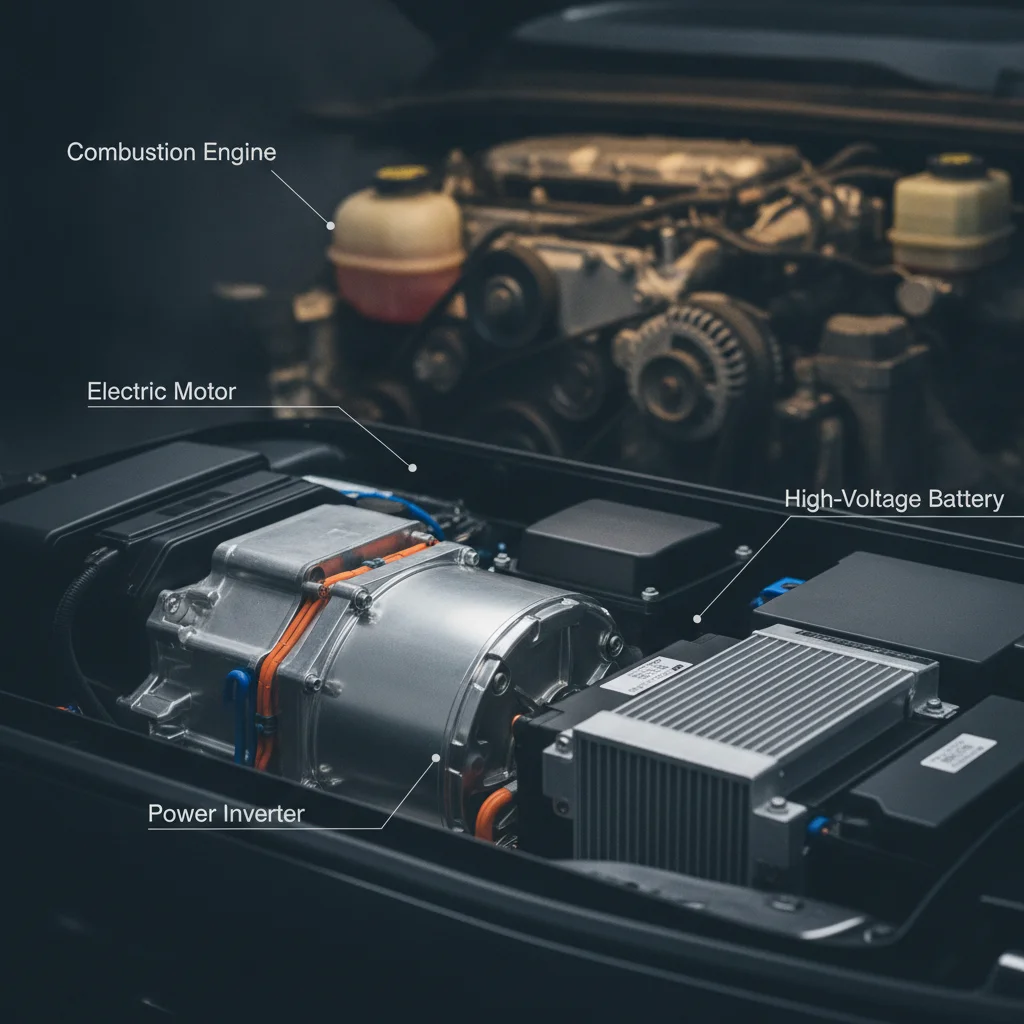
The practical implication: if you drive a typical 12,000–15,000 miles per year and switch from a gas car to a BEV, you're likely eliminating 2–4 shop visits per year that exist purely for routine powertrain servicing. That's not just money — it's time and scheduling friction you'll never get back.
What You Still Have to Do — For Both
EVs are not maintenance-free. Anyone who bought one expecting zero upkeep has probably already been surprised. Several maintenance categories apply equally to both vehicle types, and a few EV-specific tasks exist that gas car owners never deal with.
Shared Maintenance Tasks
Tire rotation and replacement: Both EVs and gas cars need tires rotated every 5,000–7,500 miles and replaced every 25,000–50,000 miles depending on compound and driving style. Here's a wrinkle: EVs are often heavier than equivalent gas cars due to battery weight, and instant electric torque can accelerate tire wear. Some EV owners report needing new tires 10,000–15,000 miles sooner than expected. Budget for this — don't assume tire costs are equal.
Cabin air filter: Both vehicle types use a cabin filter to clean air entering the passenger compartment. Replacement is typically every 15,000–25,000 miles and costs $20–$60 as a DIY job. Neither vehicle type gets a pass here.
Windshield wiper blades: Replacement every 6–12 months regardless of powertrain. Cost: $20–$40 for a quality set.
Brake fluid: This one surprises many new EV owners. Even though regenerative braking dramatically extends brake pad life — sometimes to 100,000 miles or beyond — brake fluid still absorbs moisture over time and degrades. Most manufacturers recommend inspection every 2 years and replacement every 3–4 years. Cost: $80–$150.
Tire pressure monitoring: Both vehicle types require periodic pressure checks. For EVs, proper inflation is especially important because underinflated tires reduce range noticeably.
| Criterion | Electric Vehicle (BEV) | Gas-Powered Vehicle (ICE) |
|---|---|---|
| Oil changes | Not required | Every 5,000–10,000 miles |
| Spark plugs | Not applicable | Every 30,000–100,000 miles |
| Timing belt/chain | Not applicable | Every 60,000–100,000 miles |
| Transmission fluid | Not required (most BEVs) | Every 30,000–60,000 miles |
| Brake pads | Every 80,000–100,000+ miles | Every 25,000–50,000 miles |
| Brake fluid | Inspect every 2 yrs; replace every 3–4 yrs | Inspect every 2 yrs; replace every 3–4 yrs |
| Cabin air filter | Every 15,000–25,000 miles | Every 15,000–25,000 miles |
| Tire rotation | Every 5,000–7,500 miles | Every 5,000–7,500 miles |
| Software updates | Periodic OTA updates required | Rarely needed; dealer-performed |
| Estimated 5-yr maintenance cost | $1,500–$3,000 | $3,000–$6,000+ |
EV-Specific Maintenance Tasks
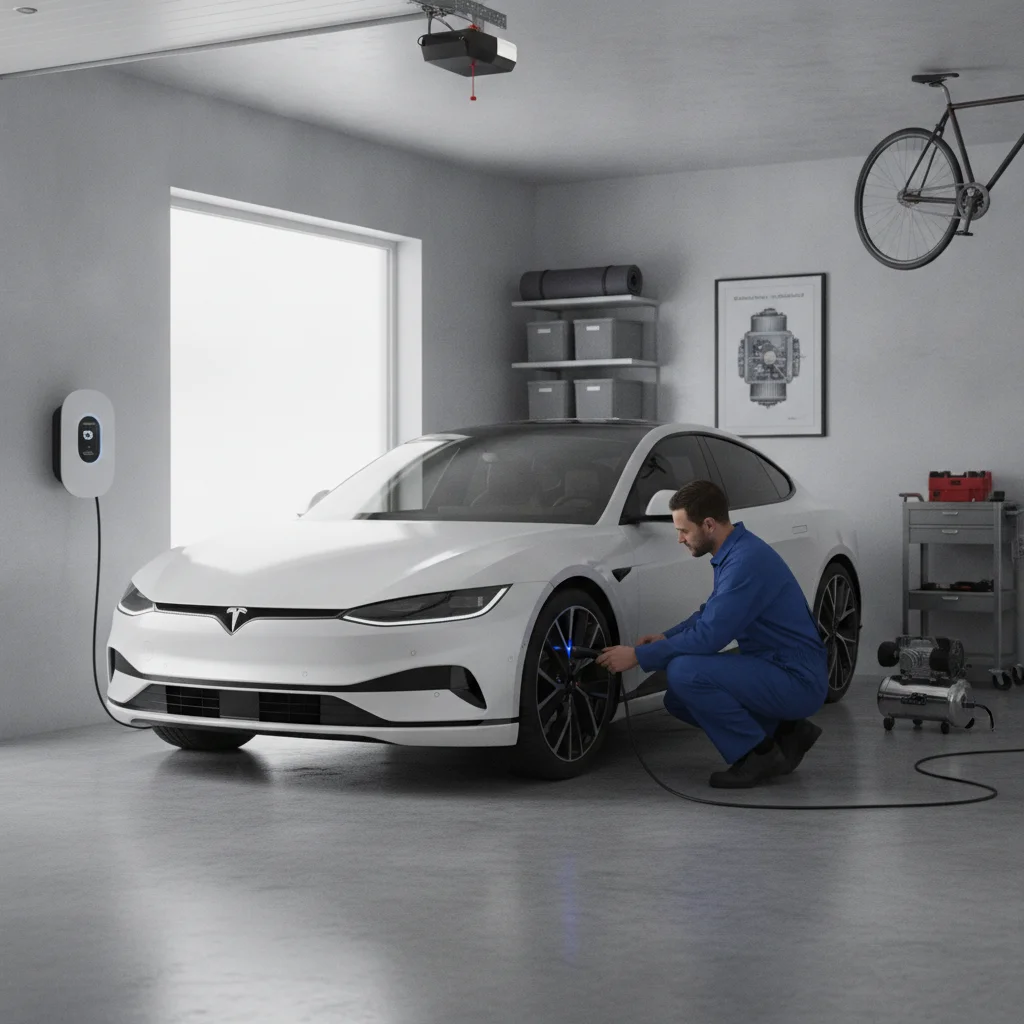
Battery health monitoring: Your EV's battery management system (BMS) handles much of this automatically, but owners should periodically review battery health data through the vehicle's app or dashboard. Avoiding regular 100% charges and deep discharges, managing thermal exposure, and using DC fast charging in moderation all factor into long-term battery longevity — see a complete lifetime EV maintenance guide for specifics on battery care schedules.
Software and over-the-air (OTA) updates: Modern EVs from Tesla, Rivian, GM, and Ford regularly push updates that affect performance, charging behavior, and safety systems. Unlike gas cars where software is relatively static, keeping your EV updated is a genuine ongoing maintenance task — even if it just means parking within Wi-Fi range overnight.
Coolant (thermal management system): Many EVs use liquid cooling for their battery packs and power electronics. This coolant needs periodic inspection and eventual replacement — typically around 5 years or 150,000 miles. It's a less frequent task than ICE coolant service but not one to ignore entirely.
Don't Ignore EV Brake Fluid
Regenerative braking dramatically reduces how often EV brake pads wear out — but it doesn't touch the brake fluid. Brake fluid is hygroscopic, meaning it absorbs moisture from the air over time, which lowers its boiling point and can compromise braking performance. Most EV manufacturers recommend inspection every two years and full replacement every three to four years, regardless of how rarely your physical brakes engage. This is one of the most commonly overlooked EV service items among new owners.
PHEVs Carry Maintenance From Both Worlds
Plug-in hybrid vehicles combine an electric motor and battery with a full internal combustion engine. That means they retain all the ICE maintenance requirements — oil changes, spark plugs, exhaust service — while adding EV-side components like battery management and electric drive components. PHEVs don't offer the same maintenance simplification as a pure BEV. If your primary goal is reducing maintenance burden, a full battery-electric vehicle is the cleaner choice.
Cost Comparison: EV vs. Gas Car Over 5 Years
Numbers matter more than generalizations when you're making a buying decision. Here's a realistic, itemized view of what maintenance typically costs for each vehicle type over a five-year, 75,000-mile ownership period based on industry data and manufacturer service schedules.
~40%
Lower EV maintenance spend vs. gas cars
Consumer Reports analysis found EV owners spend roughly 40% less on maintenance and repairs than owners of conventional gas-powered vehicles.
$4,600
Average gas car 5-year maintenance cost
AAA estimates average annual maintenance and repair costs for a gas-powered sedan at roughly $900–$1,200, totaling $4,500–$6,000 over five years.
$900
Estimated annual EV maintenance cost
Various industry studies estimate annual EV maintenance at $400–$900, depending on model, mileage, and whether tire-related costs are included.
80–90%
Battery capacity retained at 100,000 miles
Data from high-mileage EV fleets and owner surveys consistently show most battery-electric vehicles retain 80–90% of original capacity under normal use at 100,000 miles.
$0
EV oil change cost over lifetime of vehicle
Battery-electric vehicles require no engine oil changes — eliminating a cost that runs $750–$4,500+ over 150,000 miles for a typical gas car.
Consumer Reports research consistently shows that EV owners spend roughly 40–50% less on repairs and maintenance than gas car owners. The gap is clearest in the first five years, when gas cars require the most routine scheduled maintenance and EVs are still under warranty for powertrain and battery coverage.
The math shifts somewhat after the warranty expires — particularly around battery replacement risk for EVs. However, data from high-mileage EV fleets and long-term owner surveys suggest that battery degradation is slower than early critics predicted. Most EVs retain 80–90% of original battery capacity at 100,000 miles under normal use. A full replacement — a worst-case scenario — runs $5,000–$20,000 depending on vehicle and battery size, but it's not a routine or expected expense within the first decade for most owners.
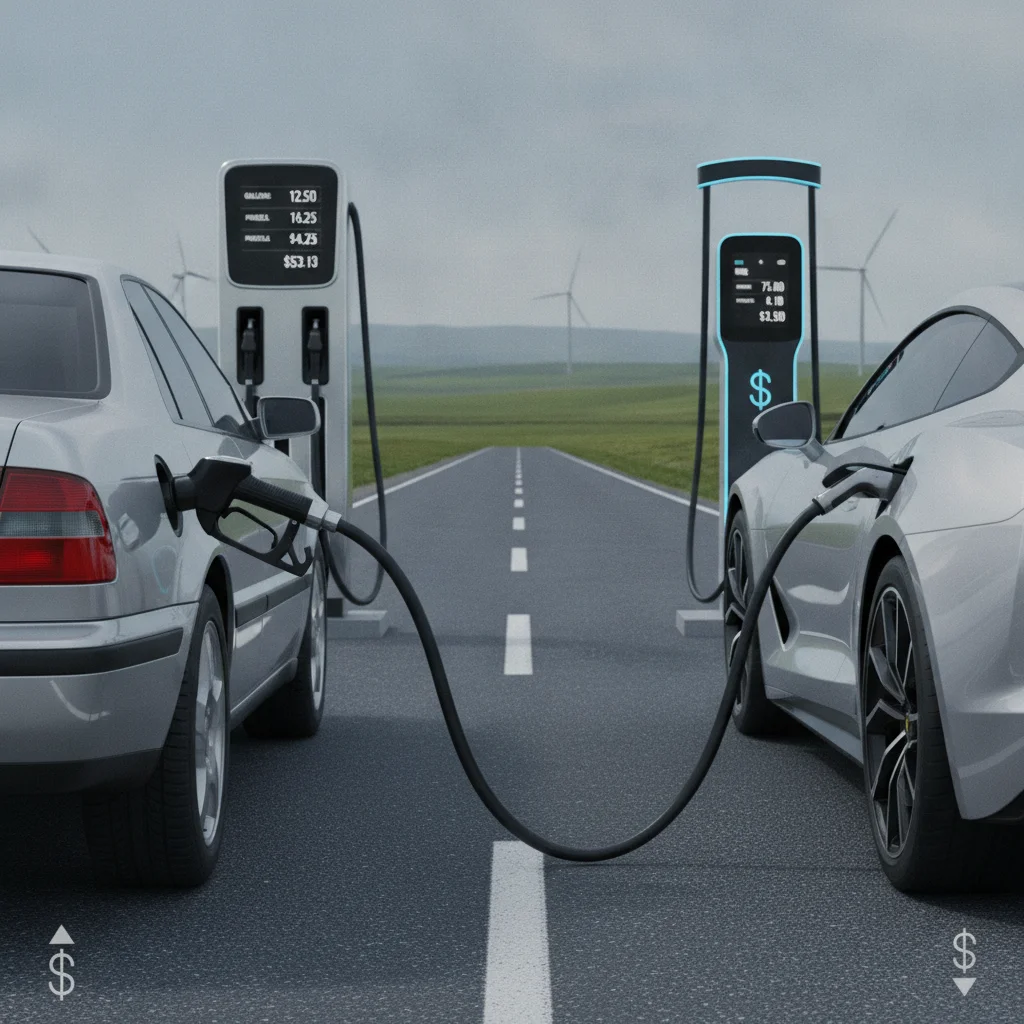
For a per-mile fuel cost comparison that rounds out the total ownership picture, see our gasoline vs. electricity per-mile cost breakdown.
One cost that tilts against EV owners: registration fees. Many states have introduced flat annual EV surcharges — ranging from $50 to over $200 — to compensate for lost gas tax revenue. In some states, these fees exceed what a gas car owner pays annually in gas taxes based on average mileage. Our EV vs. gas car registration fee comparison breaks this down state by state.
Insurance is another variable. EVs often carry higher premiums than comparable gas vehicles due to higher replacement costs for parts and specialized repair requirements. See the EV insurance guide for a full picture of what to expect on premiums.
Service Network and Repair Complexity
Beyond the cost of individual tasks, there's a practical dimension to maintenance that purchase calculators often miss: how easy is it to actually get the work done?
For gas cars, the answer is straightforward. Every independent mechanic, every chain shop, every dealership can service your vehicle. Nationwide, there are over 160,000 auto repair shops capable of handling ICE maintenance. Parts are standardized, abundant, and competitively priced. If your regular mechanic is backed up, you have a dozen other options within a few miles.
EV service is more constrained — for now. While EV brands with large dealer networks (Ford, GM, Hyundai, Kia) can leverage existing service infrastructure, many specialized EV repairs still require manufacturer-certified technicians. Tesla operates its own service centers and mobile service fleet, which works well in metro areas but creates real friction in rural markets. A damaged battery module or power electronics failure may require shipping a vehicle to the nearest authorized facility, which could be hours away.
This service accessibility gap is narrowing. As EVs represent a growing share of the vehicle fleet, more independent shops are training technicians and investing in the diagnostic equipment required for EV work. But in 2025, if you live outside a major metro area, factoring in service access is a legitimate part of the maintenance equation.
For a broader look at how maintenance demands vary across EV types — battery-electric, plug-in hybrid, and standard hybrid — see how maintenance costs differ across BEV, PHEV, and HEV powertrains.
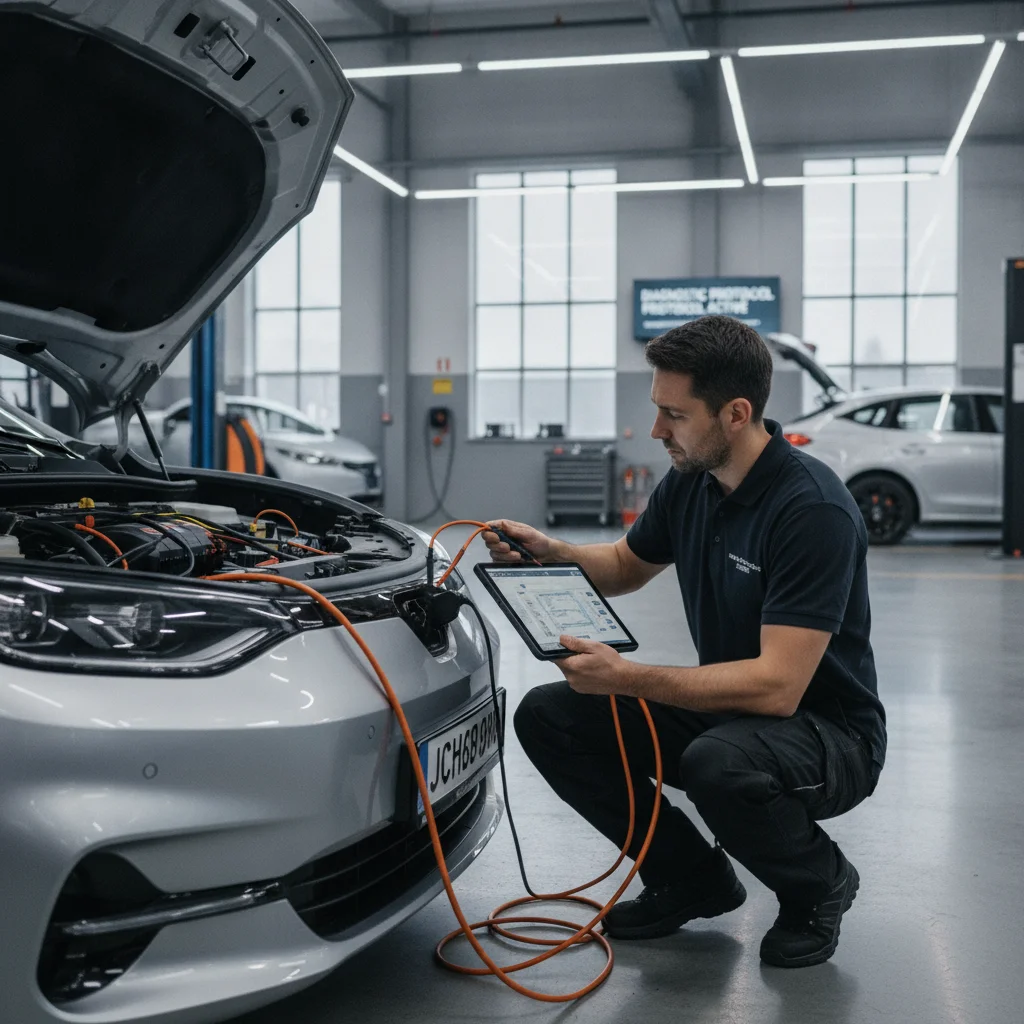
It's also worth noting that plug-in hybrids (PHEVs) sit in an interesting middle ground — they retain an ICE that requires oil changes and gas-engine service, plus they add EV-side components. In some ways, PHEVs carry the maintenance requirements of both vehicle types, which can erode their cost advantage versus a pure BEV. If you're comparison shopping across all three powertrains, the five-year ownership cost comparison across EV types gives you a structured view.
DIY Maintenance: Where Each Vehicle Gives You Leverage
For owners who handle basic maintenance themselves, the calculus changes. DIY has always been a legitimate cost-saving strategy for gas car owners — oil changes, air filters, spark plugs, and brake pads are all within reach for a mechanically inclined person with basic tools. YouTube tutorials and forums have made these jobs accessible to anyone willing to spend an afternoon.
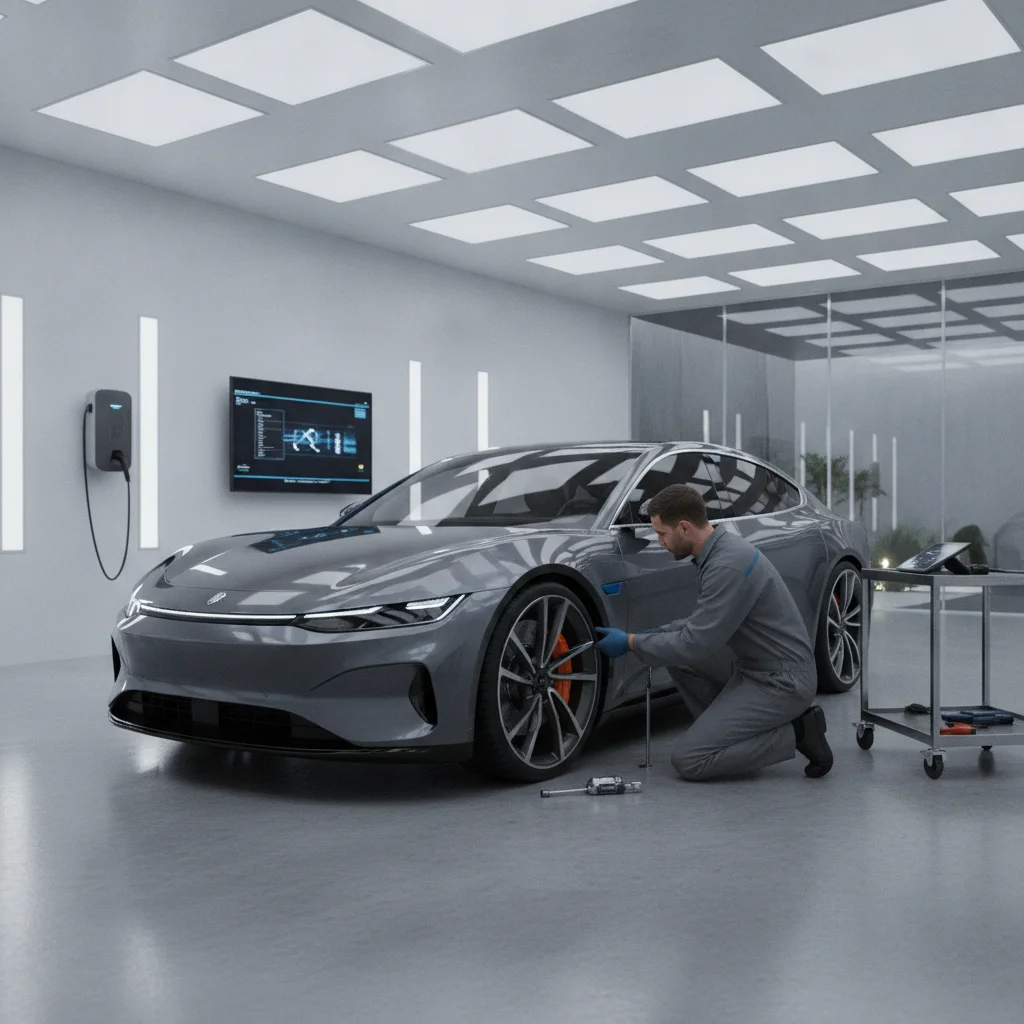
EVs shift the DIY equation in some respects. The jobs that disappear (oil changes, spark plugs) are exactly the ones most DIYers did themselves. What remains is either simpler (cabin air filter replacement) or best left to professionals (battery system work, high-voltage component service). Working on EV high-voltage systems without proper training is genuinely dangerous — this isn't the same risk profile as changing your own oil.
However, several EV maintenance tasks are straightforwardly DIY-friendly:
- Tire rotation — with a jack and lug wrench, same as any vehicle
- Cabin air filter — typically a 10-minute job on most models
- Wiper blade replacement — no change from a gas car
- Tire pressure monitoring and inflation — straightforward, and important for range
- Cleaning brake rotors and calipers — low-frequency task given regenerative braking, but accessible
The honest takeaway: DIY EVs save less labor because there's less labor to do. But the total maintenance burden is lower to begin with, so the overall time investment drops regardless. If you're someone who enjoyed doing your own oil changes as a way to stay on top of your vehicle's condition, you'll find fewer touchpoints with an EV — which is either a relief or a loss depending on your perspective.
For a realistic five-year maintenance budget with itemized cost estimates, see our EV maintenance costs over 5 years. And for a candid look at the upkeep advantages EVs genuinely deliver alongside the tasks people underestimate, see EV ownership: advantages and underestimated tasks.
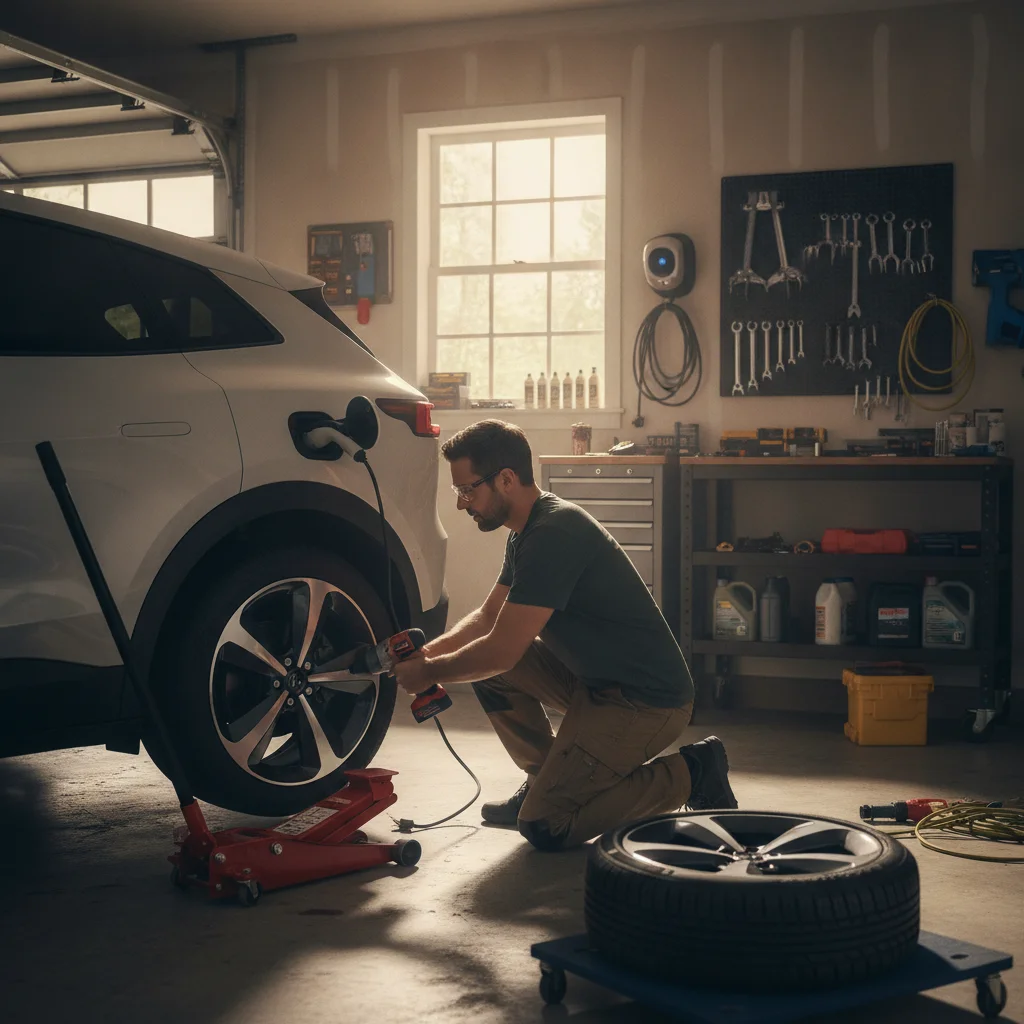
Bottom line: the maintenance simplification is real, and the savings are real. But they're not infinite, and they're not evenly distributed across all ownership scenarios. Know your mileage, know your location, and know what your specific EV model requires — that's the approach that actually saves you money.

All claims are backed by peer-reviewed research. Sources on request.