Key Takeaways
Start here
How EV Maintenance Differs from Gas Cars
Core skill
Battery Care: The Most Important Habit You'll Build
Don't skip
Tires, Brakes, and Fluids: What Still Needs Attention
Modern EVs
Software Updates and Your EV's Digital Health
Put it together
Your First-Year EV Maintenance Schedule
Next step
Finding the Right Service Provider
How EV Maintenance Differs from Gas Cars
If you've spent years owning gas-powered vehicles, your mental model of car maintenance — oil changes every 5,000 miles, spark plugs, timing belts, transmission flushes — doesn't fully apply to an EV. That's genuinely good news. But it's also where new EV owners get tripped up: assuming that because many tasks disappear, all upkeep disappears. It doesn't.
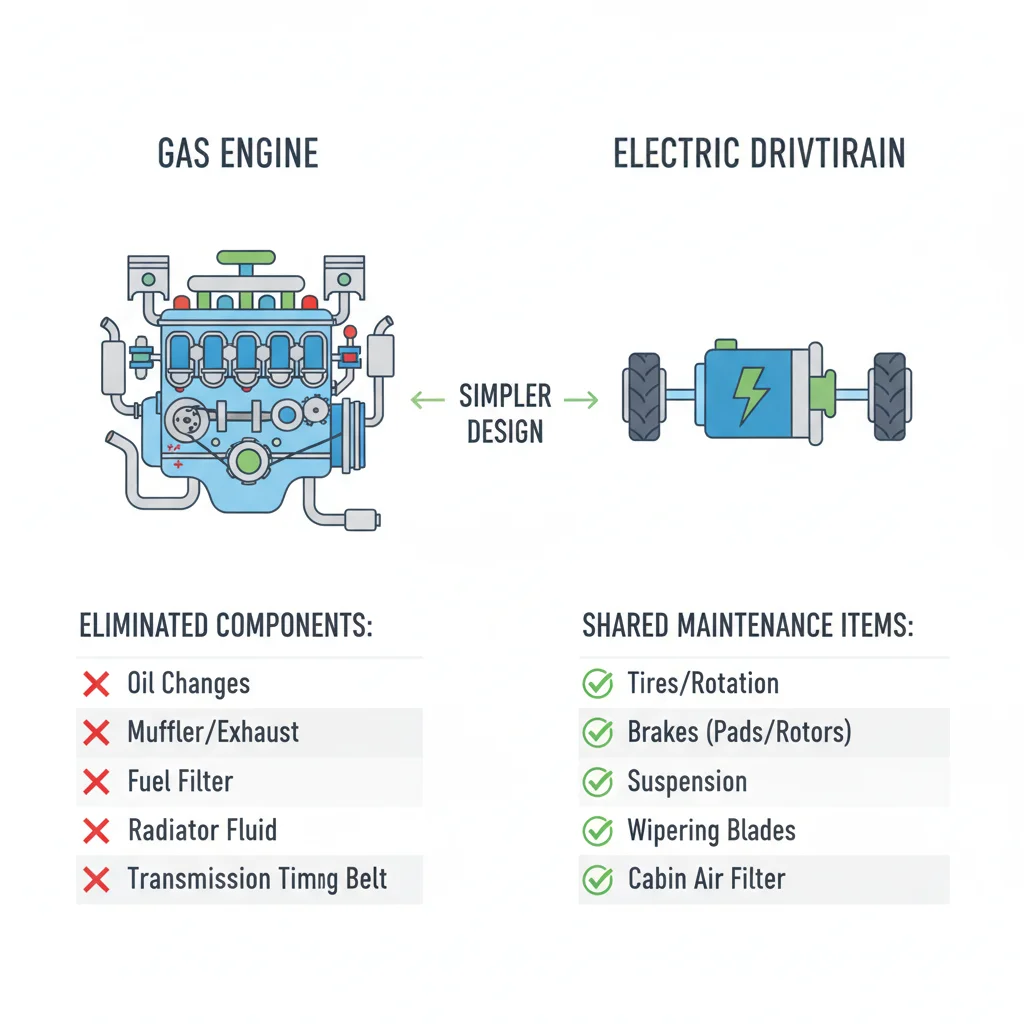
Here's a plain-language comparison of what changes and what stays:
| Maintenance Task | Gas Vehicle | Electric Vehicle |
|---|---|---|
| Engine oil change | Every 5,000–10,000 miles | Not applicable |
| Spark plug replacement | Every 30,000–100,000 miles | Not applicable |
| Timing belt/chain service | Every 60,000–100,000 miles | Not applicable |
| Transmission service | Every 30,000–60,000 miles | Minimal (single-speed drive unit) |
| Tire rotation | Every 5,000–7,500 miles | Every 5,000–7,500 miles (often more critical) |
| Brake inspection | Annually | Annually (brakes last longer but still need checking) |
| Cabin air filter | Every 15,000–25,000 miles | Every 15,000–25,000 miles |
| Coolant/fluid checks | Multiple systems | Battery thermal coolant + brake fluid |
| Software updates | Rare | Regular (often over-the-air) |
Understanding how your EV's drivetrain and battery actually work makes these differences make intuitive sense. Without a combustion engine, you lose the entire category of tasks tied to fuel burning, exhaust systems, and complex multi-gear transmissions. What remains is a shorter but still real list of upkeep items.
Regenerative braking
A system where the electric motor slows the car and converts that energy back into electricity stored in the battery, reducing wear on traditional brake pads.
State of charge (SoC)
The percentage of battery capacity currently available — essentially your EV's equivalent of a fuel gauge. Managing this range day-to-day is a core part of battery care.
Over-the-air (OTA) update
A software update delivered wirelessly to your vehicle, similar to how a smartphone receives app or operating system updates, without requiring a trip to the dealership.
Thermal management system
A cooling and heating system that keeps the battery pack within a safe temperature range to protect performance and longevity — similar in concept to a radiator for a gas engine.
DC fast charging (Level 3)
The fastest type of public EV charger, capable of adding significant range in 20–45 minutes. Convenient for road trips but harder on battery chemistry than slower home charging.
Drive unit
The integrated assembly containing the electric motor, power electronics, and reduction gearbox that propels an EV — a simpler, more compact system than a traditional engine and multi-speed transmission.
The most damaging myth in EV ownership is that you can ignore maintenance entirely. Owners who do that often discover expensive problems down the road — problems that routine attention would have prevented.
Battery Care: The Most Important Habit You'll Build
The battery pack is the most expensive component in your EV — typically 30–50% of the vehicle's total cost. Protecting it isn't complicated, but it does require building a few habits from the very first week of ownership.
Charge level management
Lithium-ion batteries — the kind in virtually every modern EV — degrade faster when held at very high or very low states of charge for extended periods. The practical guidance that most manufacturers publish (and that battery research backs up) is to keep your daily charge range between 20% and 80%. Charge to 100% when you genuinely need the full range for a long trip; don't make it a nightly routine.
Set Your Charge Limit on Day One
The single most impactful battery habit you can build is setting a daily charge limit of 80% before you ever rely on a full charge. Open your vehicle app or go to the charging settings in the infotainment system and configure the limit right when you get home from the dealership. You can always raise it temporarily for a long trip — the goal is making 80% your automatic default.
Use Your Owner's Manual as the Real Schedule
Marketing materials and online forums will give you varying advice on service intervals. Your owner's manual is the legally binding, warranty-relevant source of truth. Pull it up (most are available as PDFs on the manufacturer's website) and flag the maintenance schedule pages in your first week of ownership. Cross-reference it with the <a href="/maintenance-and-ownership/vehicle-maintenance/routine-servicing/everything-new-car-owners-need-to-know-about-scheduled-maintenance">new car scheduled maintenance guide</a> if you want help interpreting what you find.
Almost every EV lets you set a charge limit in the vehicle's app or infotainment system. Set it to 80% for daily driving the day you bring the car home. You can override it any time you need full range.
Temperature awareness
Extreme heat and extreme cold both stress lithium-ion cells. Cold reduces available range temporarily (your range comes back as cells warm up). Heat causes more lasting degradation over time. If you live in a hot climate and park outside, prioritize parking in shade or a garage when possible. Pre-conditioning — warming or cooling the cabin while still plugged in — protects range and reduces battery stress simultaneously.
DC fast charging frequency
DC fast charging (Level 3) is incredibly convenient on road trips, but using it as your primary daily charging method accelerates battery wear compared to Level 1 or Level 2 home charging. The majority of your charging should happen at home or at work on slower chargers. Save DC fast charging for when you need it on the road.
Frequent DC Fast Charging Has Cumulative Costs
Using DC fast charging occasionally — for road trips, emergency top-ups — is completely fine and what the technology is designed for. But relying on public fast chargers as your primary or only charging method over months and years accelerates battery degradation measurably. If you have access to home or workplace Level 2 charging, use it as your default. Your battery will thank you at the 5-year mark.
Don't Let an Unfamiliar Shop Touch High-Voltage Components
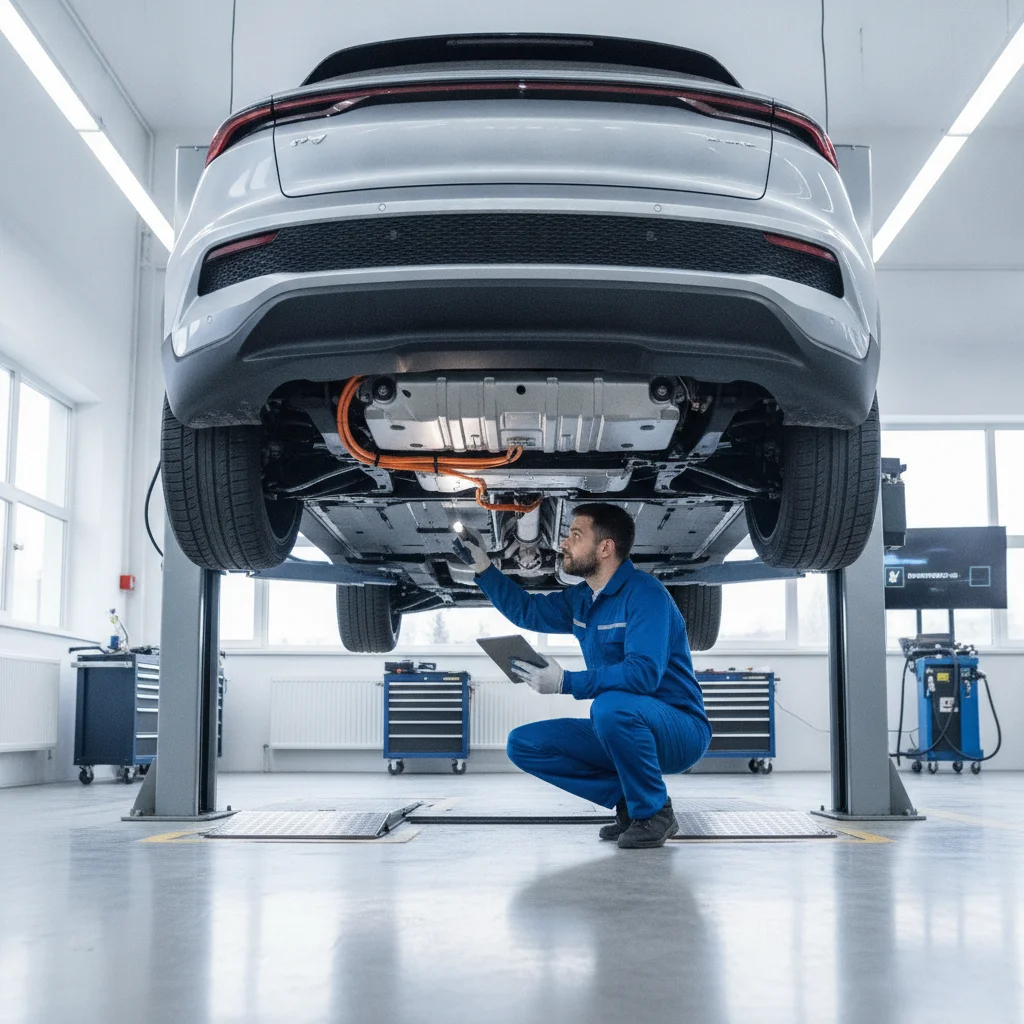
High-voltage EV systems operate at 400–800 volts — a level that is immediately life-threatening to an untrained technician. Beyond the safety risk, improper servicing of battery or motor systems can void your warranty and create failures that are far more expensive than the original repair. If a shop isn't specifically EV-certified, limit what you ask them to do to tires, brakes, and cabin components.
Battery coolant system
Many EVs use a liquid thermal management system to keep the battery at optimal temperature. This system uses a coolant that does need to be checked and eventually replaced — timelines vary by manufacturer but are typically in the 5-year or 100,000-mile range. Check your owner's manual for the exact interval. Don't assume it never needs attention just because you don't think about it.
Tires, Brakes, and Fluids: What Still Needs Attention
These are the maintenance areas where new EV owners most often get caught off guard — assuming that the reduced list means these items are gone, when they're actually just as present as before (and in the case of tires, arguably more critical).
Tires: Rotate more, monitor closely
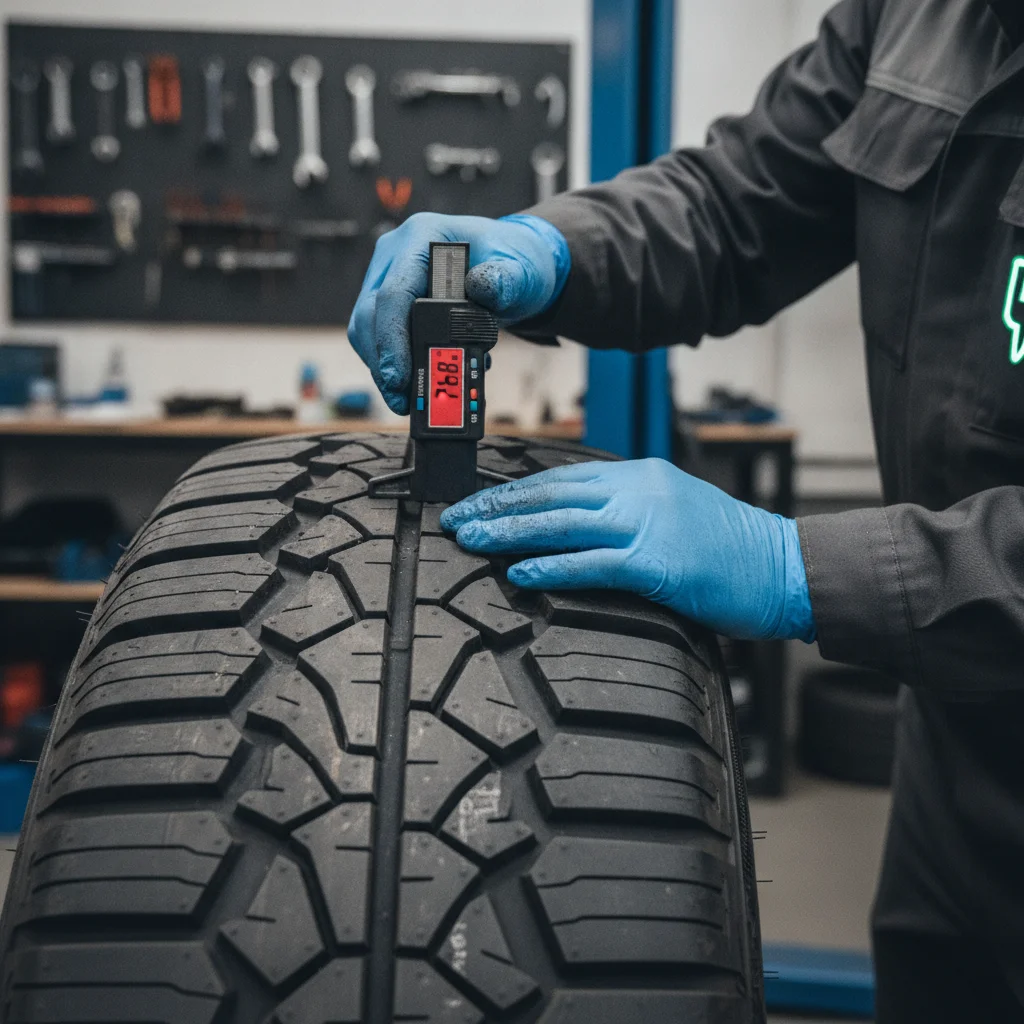
EVs are heavy. A base-model Tesla Model 3 weighs roughly 4,000 lbs — several hundred pounds more than a comparable Honda Accord. That weight, combined with the instant torque electric motors deliver, puts significant stress on tires. Uneven wear happens faster, which is why tire rotation at or before the manufacturer's recommended interval (commonly every 5,000–7,500 miles) is non-negotiable.
Also monitor tire pressure consistently. EV range is sensitive to rolling resistance — underinflated tires don't just wear unevenly, they reduce your range measurably. Check pressure monthly, or any time there's a significant temperature swing (cold weather drops tire pressure by roughly 1 PSI per 10°F drop).
Brakes: Less wear, but not zero
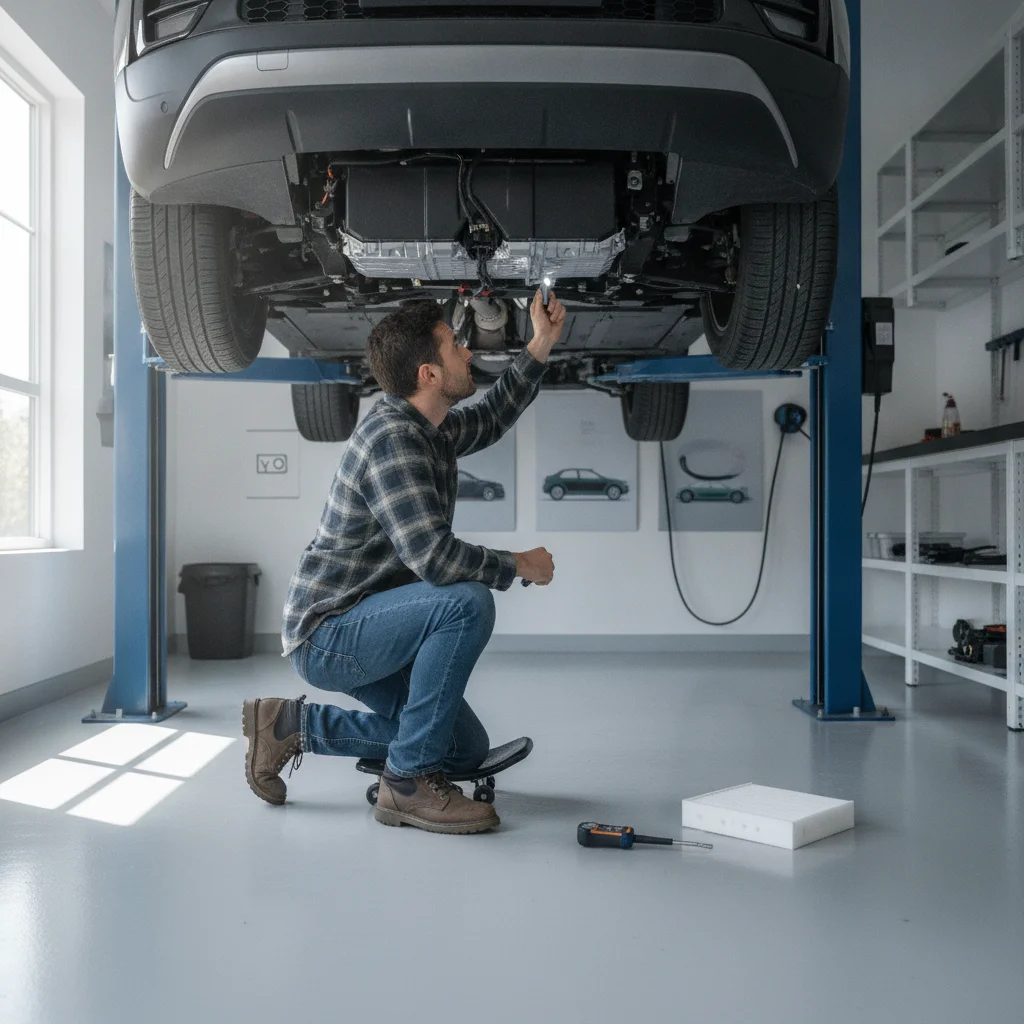
Regenerative braking — where the motor slows the car and recaptures energy — does most of the braking work in everyday driving. This dramatically reduces brake pad wear compared to gas vehicles. It's common for EV owners to get 70,000–100,000 miles from their original brake pads. However, there's a counterintuitive catch: because the brakes are used so infrequently, moisture and corrosion can affect rotors. Annual brake inspections catch this before it becomes a problem. Don't skip them just because you expect the pads to last.
Fluids: Fewer, but real
You no longer deal with engine oil. But your EV still has brake fluid that absorbs moisture over time and needs replacement (typically every 2 years regardless of mileage), windshield washer fluid that needs topping off, and — depending on your model — battery coolant and a small amount of drive unit fluid. The full routine servicing picture for EVs is shorter than for gas cars, but it's not empty.
Cabin air filter
This one is almost universally overlooked. Your EV's HVAC system filters the air coming into the cabin, and that filter gets dirty on the same schedule it would in any vehicle — roughly every 15,000–25,000 miles or annually in dusty environments. A clogged cabin filter reduces HVAC efficiency, which in an EV has a direct cost in range. It's also an easy, inexpensive DIY replacement for most models. See the full breakdown of what you can DIY versus what requires a technician for guidance on this and other owner-serviceable items.
Brake Fluid Degrades by Time, Not Just Mileage
Many EV owners put on fewer miles than they expect because short-trip errands are so cheap to power electrically. But brake fluid absorbs moisture from the air over time regardless of how far you drive. Most manufacturers recommend replacing it every two years. Even if your odometer reads low, don't skip this one based on mileage alone.
Software Updates and Your EV's Digital Health
Modern EVs are rolling computers, and software is a legitimate maintenance category that gas vehicle owners simply don't have to think about. Getting comfortable with your vehicle's update system is part of responsible EV ownership.
Over-the-air (OTA) updates
Many EVs — particularly Tesla, Rivian, and increasingly models from Ford, GM, and Hyundai/Kia — receive over-the-air software updates that are pushed directly to the vehicle, similar to how your phone receives OS updates. These can improve battery management algorithms, adjust regenerative braking behavior, fix software bugs, or add entirely new features. Keep OTA updates enabled and apply them promptly.
Dealer-applied updates
Some manufacturers still require certain updates to be applied at the dealership, particularly for core powertrain or safety system firmware. Pay attention to recall notices and service campaign communications — these often contain required software updates that aren't optional. Delaying them can affect performance and safety.
Monitoring your vehicle's self-diagnostics
Most EVs continuously monitor battery health, motor performance, and charging system status, surfacing alerts through the app or infotainment display. Don't dismiss warning lights or app notifications — they're meaningful signals. An unfamiliar warning is worth a quick check with your dealership or a certified EV technician before it becomes a larger problem.
Your EV Owner's Manual (Manufacturer PDF)
The definitive source for your vehicle's exact maintenance intervals and fluid specifications. Most manufacturers post downloadable PDFs on their owner portals — bookmark it and refer to the maintenance schedule section directly.
Annual EV Ownership Checklist: Maintenance Tasks by Season
A structured seasonal checklist to ensure you stay on top of EV maintenance tasks throughout the year, organized by quarter so nothing slips through the cracks.
EV Maintenance Costs Over 5 Years: A Realistic Estimate
An itemized projection of what EV maintenance actually costs across five years of typical ownership — useful for budgeting and comparing true ownership costs against gas vehicles.
PlugShare
A community-sourced map of EV charging stations across North America. Useful for trip planning and for identifying Level 2 charging options near you that reduce reliance on DC fast charging.
Your First-Year EV Maintenance Schedule
New EV owners often ask: what exactly should I be doing, and when? The honest answer is that your owner's manual is the authoritative source — here's how to actually read and use that section without getting lost in the jargon. But as a general framework for year one, here's what most new EV owners should be tracking:
From day one
- Set your daily charge limit to 80% in the vehicle app or infotainment settings
- Enable automatic software updates if your vehicle supports OTA
- Note your starting tire pressure and check it monthly
- Register your vehicle with the manufacturer to receive recall and service campaign notifications
At 5,000–7,500 miles (or at first scheduled service)
- First tire rotation — don't skip this one; uneven wear establishes quickly on EVs
- Brake system visual inspection (pad thickness, rotor condition, corrosion check)
- Tire tread depth measurement to establish a baseline
- Confirm all pending software updates have been applied
At 12 months or 15,000 miles (whichever comes first)
- Cabin air filter inspection and replacement if needed
- Brake fluid condition check (replace if moisture absorption warrants it)
- Windshield wiper replacement if streaking or skipping
- Tire rotation (second rotation for most owners)
- Full multi-point inspection at a qualified service center
Set Your Charge Limit on Day One
The single most impactful battery habit you can build is setting a daily charge limit of 80% before you ever rely on a full charge. Open your vehicle app or go to the charging settings in the infotainment system and configure the limit right when you get home from the dealership. You can always raise it temporarily for a long trip — the goal is making 80% your automatic default.
Use Your Owner's Manual as the Real Schedule
Marketing materials and online forums will give you varying advice on service intervals. Your owner's manual is the legally binding, warranty-relevant source of truth. Pull it up (most are available as PDFs on the manufacturer's website) and flag the maintenance schedule pages in your first week of ownership. Cross-reference it with the <a href="/maintenance-and-ownership/vehicle-maintenance/routine-servicing/everything-new-car-owners-need-to-know-about-scheduled-maintenance">new car scheduled maintenance guide</a> if you want help interpreting what you find.
For a full look beyond year one — including what to expect at the 3-year, 5-year, and higher-mileage marks — see the complete lifetime EV maintenance breakdown. And if you want a season-by-season checklist to stay on track throughout the year, the annual EV ownership checklist is a practical companion tool.
For a realistic picture of what all this costs over time, the 5-year EV maintenance cost estimate breaks down expected spending by category so you can plan your budget accurately.
Finding the Right Service Provider
Where you take your EV for service matters more than it does for a conventional gas vehicle. High-voltage battery systems, motor controllers, and software diagnostics require technicians with specific training and equipment. Walking into a generic quick-lube shop for anything beyond a tire rotation is a risk.
Manufacturer dealerships
For anything involving the battery system, drive unit, or manufacturer-required software updates, your brand's authorized dealership is typically the safest starting point. Technicians are factory-trained, have access to proprietary diagnostic tools, and work under warranty-compliant conditions. The downside is cost — labor rates at dealerships run higher than independent shops.
Certified independent EV shops
The independent EV repair ecosystem is growing rapidly. Look for shops with technicians who hold ASE certification in electric vehicle systems or manufacturer-specific credentials. Several larger chains have invested in EV-capable service bays. For routine tasks — tire rotations, cabin filters, brake inspections — a well-equipped independent shop that works on EVs is often a cost-effective alternative to the dealership.
What to ask before committing to a service provider
- Do your technicians have specific EV or hybrid training certifications?
- Do you have the diagnostic software for my specific make and model?
- Have you worked on before?
- Are you able to perform manufacturer-required service intervals that affect my warranty?
Frequent DC Fast Charging Has Cumulative Costs
Using DC fast charging occasionally — for road trips, emergency top-ups — is completely fine and what the technology is designed for. But relying on public fast chargers as your primary or only charging method over months and years accelerates battery degradation measurably. If you have access to home or workplace Level 2 charging, use it as your default. Your battery will thank you at the 5-year mark.
Don't Let an Unfamiliar Shop Touch High-Voltage Components
High-voltage EV systems operate at 400–800 volts — a level that is immediately life-threatening to an untrained technician. Beyond the safety risk, improper servicing of battery or motor systems can void your warranty and create failures that are far more expensive than the original repair. If a shop isn't specifically EV-certified, limit what you ask them to do to tires, brakes, and cabin components.
The maintenance experience for EVs is genuinely different from gas vehicles — not just in what you do, but in who you trust to help you do it. Building a relationship with a qualified service provider in your first year sets you up well for everything that follows. For a deeper comparison of how EV ownership costs and upkeep advantages stack up, the balanced look at EV upkeep advantages and underestimated tasks is worth reading alongside this guide.

All claims are backed by peer-reviewed research. Sources on request.