Key Takeaways
Start-Stop Technology
Start-stop technology automatically shuts the engine off when a vehicle comes to a complete stop — at a red light, in traffic, or during a brief pause — and restarts it the moment the driver releases the brake or presses the accelerator. The goal is to reduce fuel consumption and emissions during idle periods. Because the engine can restart dozens of times per trip, the battery powering it must handle a dramatically heavier workload than a conventional battery.
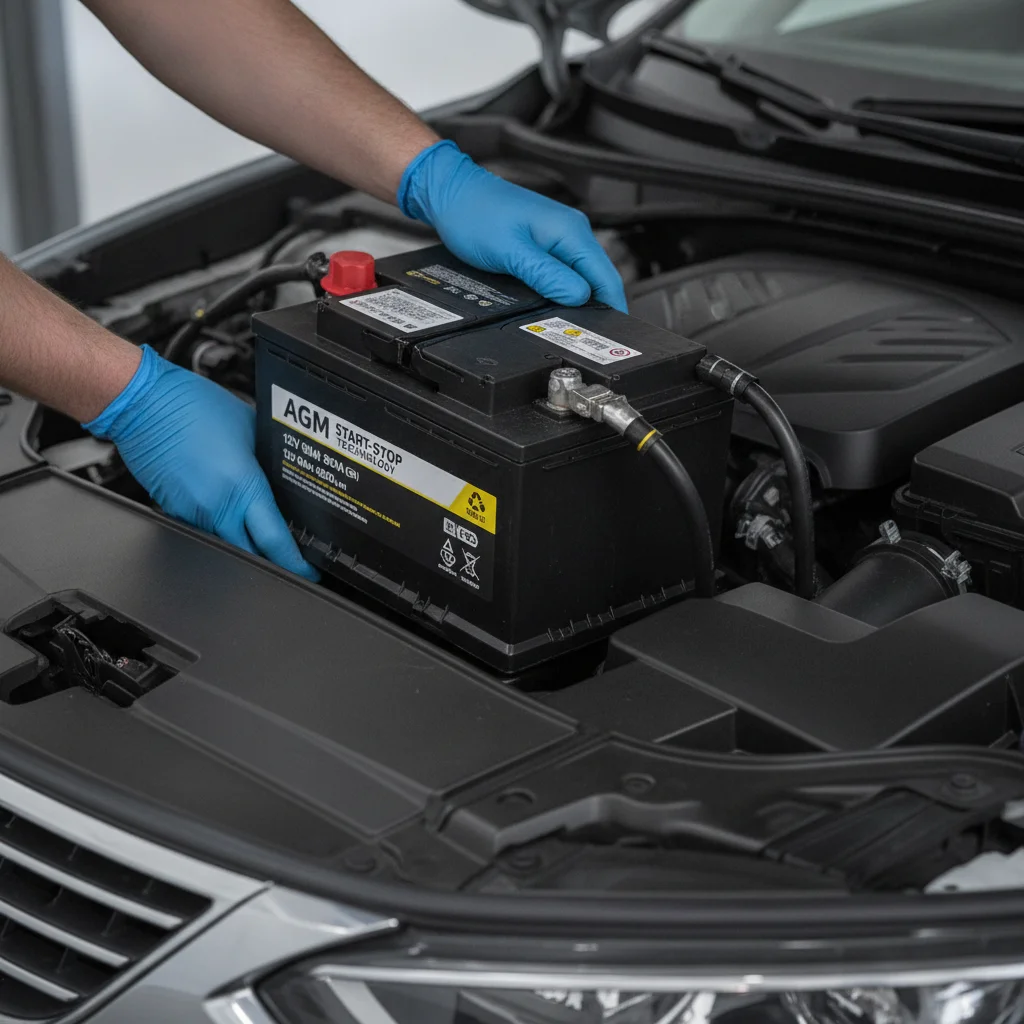
Most start-stop systems rely on Absorbent Glass Mat (AGM) or Enhanced Flooded Battery (EFB) chemistry, which offer significantly higher cycle life and charge acceptance rates than standard flooded lead-acid batteries.
What Start-Stop Actually Asks of Your Battery
The average American driver idles for roughly 16–18% of total driving time in urban environments. Start-stop technology was engineered to claw back fuel from those minutes, but the mechanism that makes it work — silently killing and reviving the engine at nearly every intersection — imposes a fundamentally different kind of stress on the 12-volt battery under your hood.
In a traditional vehicle, the battery's main job is the so-called "cold-cranking" event: a burst of power to spin the starter motor, then a long, easy recharge period as the alternator does its work. That cycle might happen once a day. In a start-stop vehicle, the same battery can be asked to deliver that cranking pulse 10, 15, even 30 times during a single commute. Over a vehicle's lifetime, AAA research suggests the total number of engine start events can exceed 500,000.
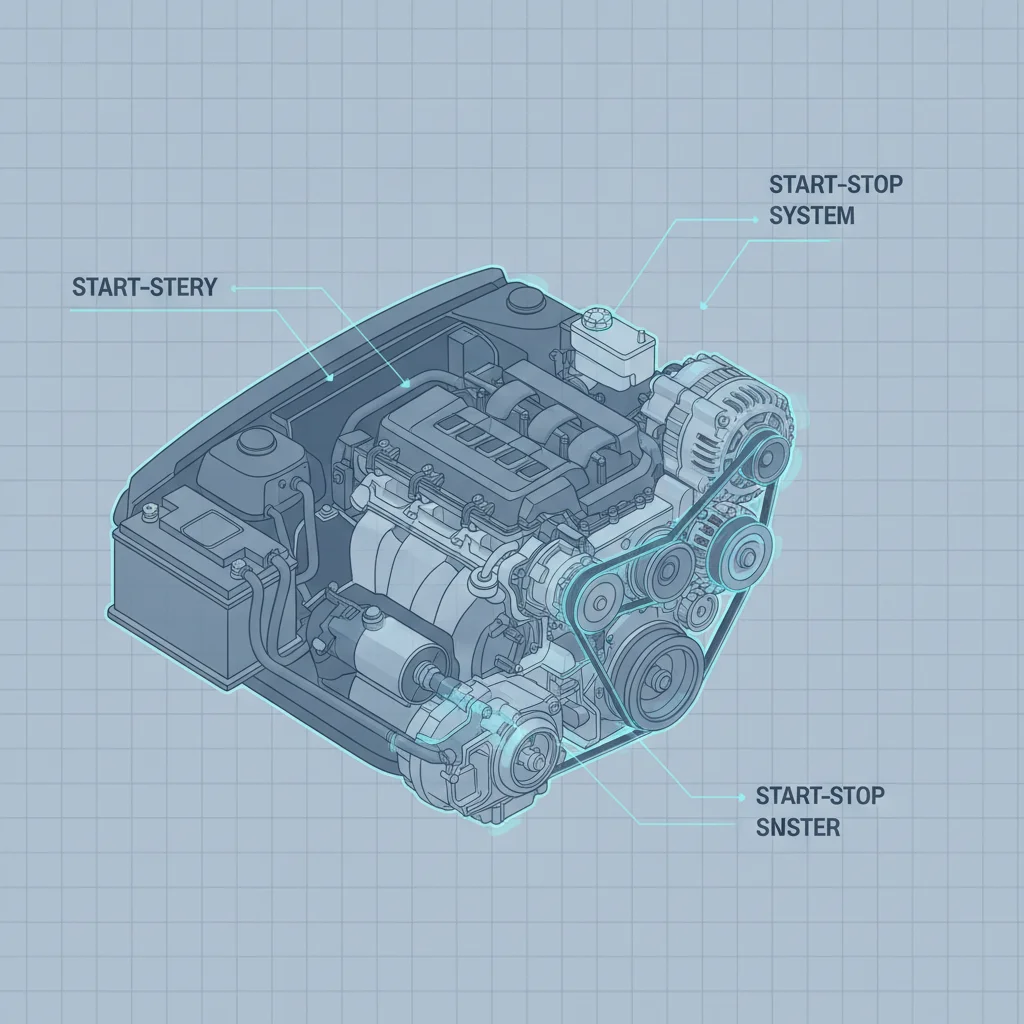
Standard flooded lead-acid batteries — the kind that served drivers reliably for decades — simply weren't designed for this duty cycle. Their internal plate structure degrades rapidly under repeated partial-discharge and recharge events, a condition known in battery chemistry as sulfation. The result is a battery that looks healthy on a basic voltage test but fails under load precisely when the system needs it most.
Start-Stop Is Now Mainstream
As of 2023, start-stop systems are standard equipment on the majority of new gasoline-powered vehicles sold in the United States, driven by CAFE fuel economy standards. If you've bought a new gas car in the past five years, there's a strong chance it has a start-stop system — and an AGM or EFB battery under the hood. Check your owner's manual if you're uncertain.
Not All Batteries Are Labeled Clearly
Battery chemistry isn't always obvious at a glance. AGM batteries are often sealed and may simply be labeled "AGM" or "VRLA" (valve-regulated lead-acid), while EFB batteries sometimes carry only a model number. When in doubt, cross-reference the battery's part number with your vehicle's OEM specification before purchasing a replacement. Fitting the wrong type won't trigger an immediate failure, but it will significantly shorten service life.
AGM Batteries: Why They're Built Differently
Absorbent Glass Mat batteries solve the cycle-life problem through a fundamentally different internal architecture. Rather than free-floating liquid electrolyte, the sulfuric acid is suspended in a fiberglass mat sandwiched between the lead plates. That mat keeps the electrolyte in constant, uniform contact with the plates, which enables faster charge acceptance and dramatically reduces plate degradation under cycling.
500,000+
Engine restart events over vehicle lifetime
AAA estimates start-stop vehicles can cycle the engine this many times, far exceeding what a standard lead-acid battery is designed to handle.
3–10%
Fuel economy improvement from start-stop
The U.S. Department of Energy estimates this range of fuel savings in urban driving conditions where idling accounts for a significant share of total drive time.
5x
Faster charge acceptance vs. flooded lead-acid
AGM batteries can absorb charge up to five times faster than conventional flooded batteries, making them viable for the short recharge windows in stop-and-go traffic.
3–5 years
Typical AGM battery lifespan in start-stop use
Battery manufacturers and automakers widely recommend this replacement window for start-stop applications, versus 5–7 years in conventional vehicles.
$180–$350
Replacement cost for a start-stop AGM battery
Parts pricing for AGM batteries in start-stop vehicles, before labor and any required BMS coding fees, which can bring total replacement cost to $400–$500.
AGM batteries offer three specific advantages that make them viable for start-stop use:
- Higher cycle life: A quality AGM battery can handle 360–500 deep cycles before significant capacity loss, versus roughly 150–200 for a conventional flooded battery.
- Faster charge acceptance: AGM chemistry can absorb charge up to five times faster than flooded lead-acid, which matters because the alternator's recharge window between engine-off events can be very short in slow traffic.
- Vibration resistance: Because the electrolyte is immobilized in the mat, AGM batteries hold up better to road vibration — relevant for vehicles that experience frequent engine shudder during the restart event.
A second option found in some start-stop vehicles, particularly at the lower end of the market, is the Enhanced Flooded Battery (EFB). EFBs use conventional liquid electrolyte but add polyester scrim layers around the plates to improve cycle stability. They offer a meaningful step up from standard batteries but fall short of AGM performance. If your vehicle came with an AGM, replacing it with an EFB is not a compliant substitution.
Always Upgrade to AGM When Replacing EFB
If your vehicle came equipped with an EFB battery, replacing it with an AGM is generally an acceptable — and often advisable — upgrade. AGM's superior cycle life and charge acceptance make it a better fit as start-stop systems become more aggressive in newer software calibrations. Confirm compatibility with your vehicle's BMS specifications before purchasing.
Test Before Winter, Not After
Cold temperatures suppress battery capacity and increase the power required for engine cranking — a double burden on any start-stop battery that's already partially degraded. Schedule a battery load test in early autumn, before cold weather arrives, so you have time to replace a marginal battery before it fails in freezing conditions.
The Battery Management System: Your Battery's Invisible Guardian
Modern start-stop vehicles don't simply wire a battery to a starter motor. They pair the battery with a Battery Management System (BMS) — a sophisticated controller that monitors state of charge, state of health, temperature, and current flow in real time. The BMS decides whether the engine is permitted to shut off at any given stop, and it controls how aggressively the alternator charges the battery during driving.
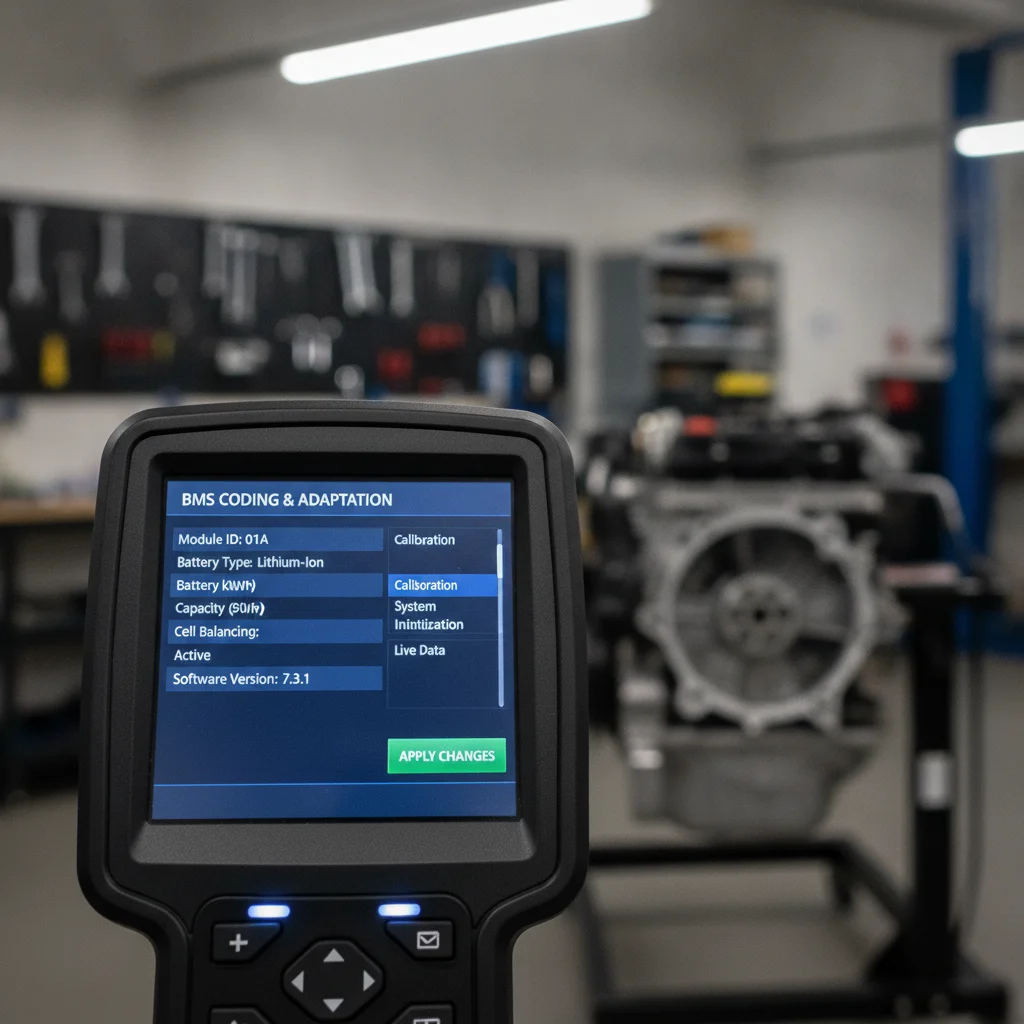
Understanding the BMS matters for one practical reason that catches many drivers and even some technicians off guard: when you replace the battery in a BMS-equipped vehicle, you typically need to register the new battery's chemistry, capacity (in Ah), and sometimes its serial number with the vehicle's computer. This process — called battery coding or registration — resets the BMS's charge management algorithm to assume a healthy new battery rather than the degraded unit it was compensating for.
Skipping the coding step is one of the most common and costly mistakes in start-stop battery replacement. The BMS will continue applying the conservative, low-voltage charging profile it had developed for the worn-out old battery, chronically undercharging the new one. Chronic undercharge is among the fastest ways to destroy an AGM battery. A proper battery registration typically takes a technician less than five minutes using a compatible scan tool.
For a deeper look at how battery management electronics work across the broader spectrum of vehicle electrification, see our explainer on what the Battery Management System does. While the scale differs between a 12-volt start-stop system and a high-voltage EV pack, many of the governing principles are shared.
Service Schedules: When to Test, When to Replace
Battery maintenance in a start-stop vehicle demands a more proactive posture than many drivers are used to. The old rule of thumb — replace the battery when the car won't start — is particularly ill-suited here, because a start-stop battery can reach a failure point that disables the auto-stop function or causes erratic restarts long before a no-start event occurs.
Annual Load Testing After Year Three
The standard recommendation from battery manufacturers and most automakers is to have the battery load-tested annually starting at the three-year mark. A load test (also called a conductance test when performed with a modern tester) measures the battery's actual cranking capacity against its rated specification. It catches degradation that a simple voltage reading misses entirely. Most auto parts retailers will perform this test free of charge.
Replacement Window
Plan for battery replacement at three to five years in a start-stop application, with the lower end of that range applicable if you drive primarily short urban trips. Stop-and-go commuters who rarely reach highway speeds are giving the alternator almost no sustained recharge time, which keeps the battery in a perpetual state of partial charge — the condition most corrosive to AGM longevity.
Warning Signs That Shouldn't Be Ignored
- The start-stop system disabling itself and displaying a dashboard indicator
- Noticeably slower or rougher engine restarts at stops
- Electrical accessories (climate, audio, lighting) dimming momentarily at restart
- A battery warning light that appears and disappears
- The engine failing to auto-stop at low ambient temperatures (some suppression is normal, but consistent failure warrants a test)
It's worth noting that start-stop battery maintenance sits within a broader continuum of modern vehicle upkeep. Compared to the relatively simple maintenance picture of a conventional gas car, and even to the evolving world of EV ownership — covered in our EV Maintenance Basics hub — start-stop battery care occupies a middle ground: more demanding than traditional 12-volt maintenance, but still well within the reach of any driver willing to follow a schedule.
Driving Habits That Protect Your Battery
Hardware quality matters, but the way a driver uses the vehicle shapes battery longevity as much as chemistry does. Several evidence-based habits can meaningfully extend the service life of a start-stop battery.
Take a Highway Drive Weekly
If your daily routine consists of short hops — school runs, grocery trips, short commutes under 15 minutes — your battery may never reach a full state of charge. The alternator needs sustained runtime at moderate engine speed to top the battery off properly. A 20–30 minute highway drive once a week gives the charging system time to restore full capacity and prevent the slow sulfation that accumulates with chronic partial charging.
Use a Smart Charger for Extended Parking
Parking a start-stop vehicle for more than two weeks without driving it is a meaningful risk to battery health. A quality AGM-compatible smart charger (sometimes called a battery maintainer or float charger) connected during storage prevents deep discharge and can actually condition the battery. Confirm the charger explicitly supports AGM mode — standard chargers can apply too high a voltage and damage AGM cells.
Minimize Accessory Load at Startup
High electrical loads — rear defoggers, heated seats, maximum fan speed — immediately after a cold start put additional strain on a battery that's already working to support engine restart. Allowing the engine to run for 60–90 seconds before activating high-draw accessories gives the charging system a brief head start. This is a minor adjustment with compounding benefits over thousands of cold starts.
“The single biggest mistake we see with start-stop batteries is people replacing them with whatever's cheapest at the parts store. The chemistry has to match the application. Put a flooded battery in a start-stop car and you'll be back in six months.”
— John Bezdek, Senior technical instructor, Automotive Training Center
These habits apply equally whether you're managing a start-stop battery in a conventional gas vehicle or thinking about the broader discipline of battery health across vehicle types. If you're curious how these principles translate to the EV world, our piece on EV battery health habits covers the parallels and differences in useful detail.
Always Upgrade to AGM When Replacing EFB
If your vehicle came equipped with an EFB battery, replacing it with an AGM is generally an acceptable — and often advisable — upgrade. AGM's superior cycle life and charge acceptance make it a better fit as start-stop systems become more aggressive in newer software calibrations. Confirm compatibility with your vehicle's BMS specifications before purchasing.
Test Before Winter, Not After
Cold temperatures suppress battery capacity and increase the power required for engine cranking — a double burden on any start-stop battery that's already partially degraded. Schedule a battery load test in early autumn, before cold weather arrives, so you have time to replace a marginal battery before it fails in freezing conditions.
Comparing Start-Stop Battery Costs to the Bigger Maintenance Picture
One honest consideration for drivers shopping start-stop vehicles is the cost of ownership associated with battery replacement. An AGM battery for a start-stop application typically runs between $180 and $350 for the part alone, compared to $80–$150 for a conventional flooded battery. Add labor and coding fees at a dealership or independent shop, and a complete replacement can approach $400–$500 on some European vehicles.
That said, the fuel savings start-stop delivers — conservatively 3–5% in mixed driving — offset some of this cost over time. A driver averaging 15,000 miles per year in a vehicle getting 28 mpg, with gas at $3.50 per gallon, saves roughly $56–$94 annually. Over a four-year battery life cycle, that's $224–$376 in fuel savings — a meaningful fraction of the battery replacement cost.
The comparison also looks different when placed alongside the maintenance cost profile of an EV. Electric vehicles avoid this particular expense entirely, but they carry their own service requirements and, eventually, high-voltage pack costs. Our EV vs. gas car maintenance breakdown puts both cost structures side by side in useful detail. For readers considering an EV, why EVs still require regular maintenance is also worth a read — because skipping service on any vehicle, electric or otherwise, tends to be the most expensive decision of all.
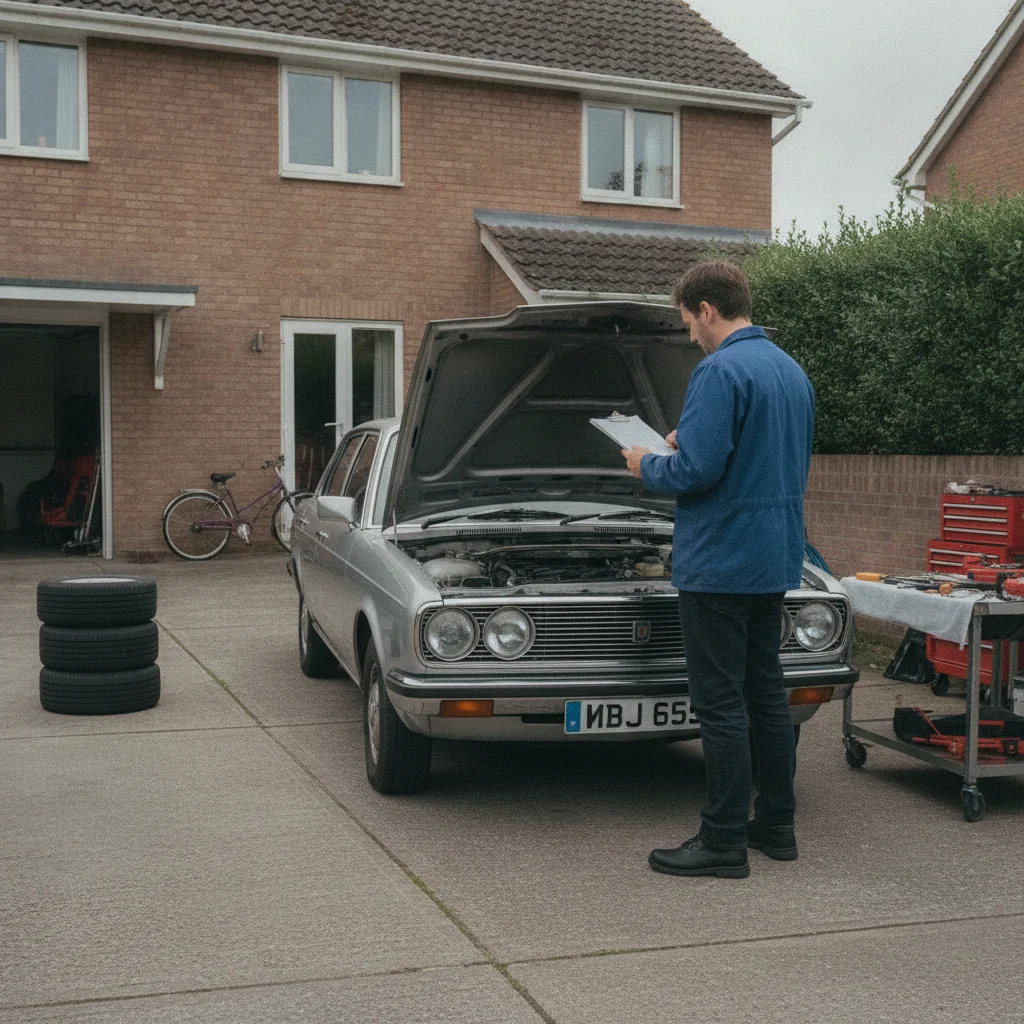
For start-stop owners, the clearest takeaway is budgetary: factor a battery replacement every four years into your ownership cost model, and treat annual battery testing as a non-negotiable line item. The cost of a premature no-start event — or worse, a failed restart in traffic — is considerably higher than the cost of staying ahead of degradation.

All claims are backed by peer-reviewed research. Sources on request.