| Avg. EV maintenance cost (annual) | $600–$900 (AAA, 2023 Your Driving Costs Study) |
| Avg. gas car maintenance cost (annual) | $1,200–$1,500 (AAA, 2023 Your Driving Costs Study) |
| Estimated 5-year EV maintenance total | $1,500–$2,900 (Based on industry averages and component cost data) |
| Battery warranty (most EVs) | 8 years / 100,000 miles (Federal minimum requirement for BEV batteries) |
| EV tire replacement interval | 25,000–35,000 miles (Industry average; varies by model and driving style) |
| Brake fluid flush frequency | Every 2–3 years (Typical manufacturer recommendation) |
| 12V auxiliary battery lifespan | 4–7 years (General industry estimate) |
| Oil changes eliminated over 5 years | 8–12 services (At 12,000 mi/yr with 5,000–7,500 mi change intervals) |
Why EV Maintenance Costs Less — But Not Nothing
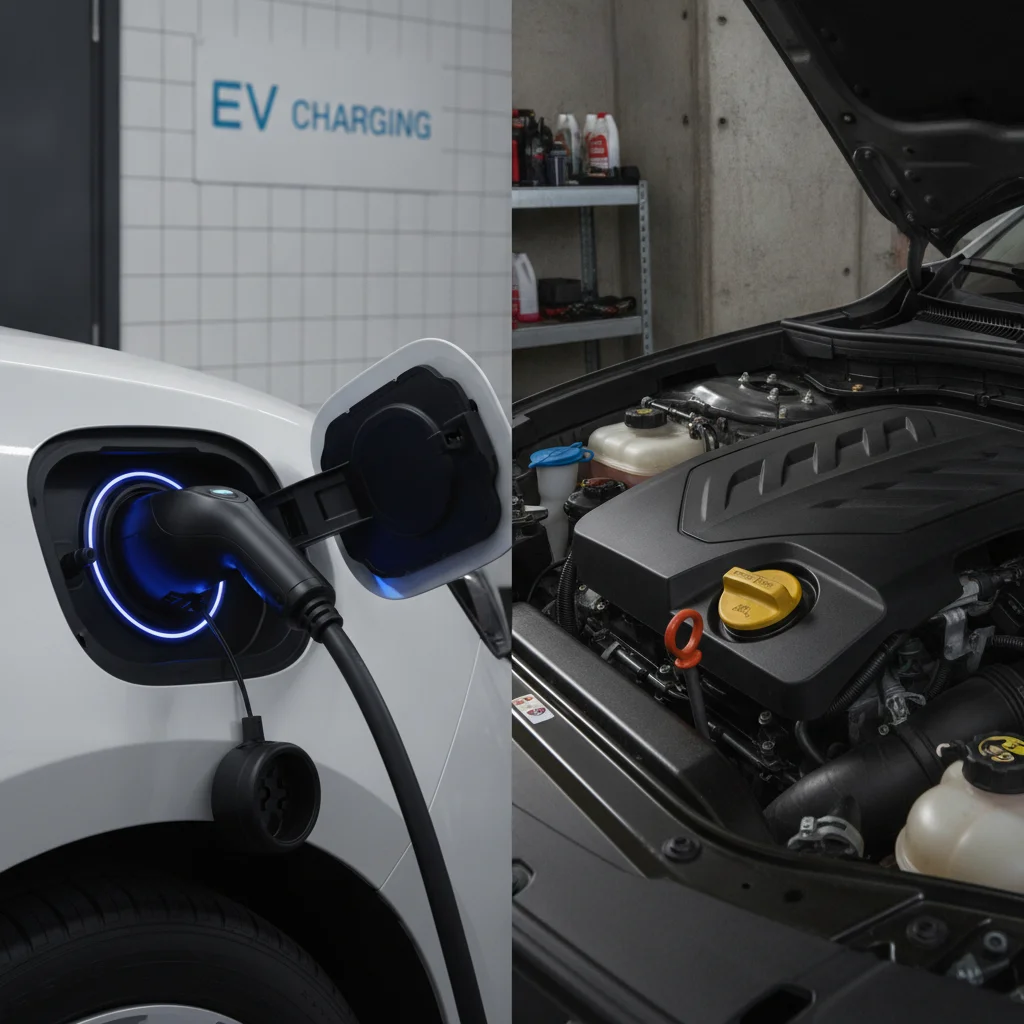
Electric vehicles have fewer moving parts than internal combustion engine (ICE) vehicles. There's no oil to change, no spark plugs to replace, no timing belt to worry about, and no exhaust system to maintain. That mechanical simplicity translates directly into lower maintenance bills — but it doesn't mean your EV is maintenance-free.
Over a five-year ownership window, most EV owners will still pay for tires, brake fluid, cabin air filters, coolant for the thermal management system, and occasional software-related service visits. Battery health, in particular, deserves attention even if it rarely requires expensive intervention within the first five years.
Consumer Reports has consistently found that EV owners spend about half as much on repairs and maintenance as gas vehicle owners. The AAA estimates gas vehicle owners spend roughly $1,200–$1,500 per year on maintenance, while EV owners average closer to $600–$900 annually — depending on the vehicle, driving habits, and geography.
This article gives you an itemized, realistic breakdown of what those costs look like year by year, so you can budget accurately rather than guess. For a broader picture of what you'll spend beyond maintenance, see our full EV vs. gas maintenance cost comparison.
| Avg. EV maintenance cost (annual) | $600–$900 (AAA, 2023 Your Driving Costs Study) |
| Avg. gas car maintenance cost (annual) | $1,200–$1,500 (AAA, 2023 Your Driving Costs Study) |
| Estimated 5-year EV maintenance total | $1,500–$2,900 (Based on industry averages and component cost data) |
| Battery warranty (most EVs) | 8 years / 100,000 miles (Federal minimum requirement for BEV batteries) |
| EV tire replacement interval | 25,000–35,000 miles (Industry average; varies by model and driving style) |
| Brake fluid flush frequency | Every 2–3 years (Typical manufacturer recommendation) |
| 12V auxiliary battery lifespan | 4–7 years (General industry estimate) |
| Oil changes eliminated over 5 years | 8–12 services (At 12,000 mi/yr with 5,000–7,500 mi change intervals) |
Year-by-Year EV Maintenance Cost Breakdown
The table below reflects realistic cost ranges for a mainstream battery-electric vehicle (BEV) — think a mid-range sedan or crossover like a Tesla Model 3, Chevrolet Equinox EV, or Hyundai Ioniq 6. Costs will vary by brand, mileage, climate, and whether you use a dealership or independent shop.

| Year | Key Tasks | Estimated Cost |
|---|---|---|
| Year 1 | Tire rotation (2x), cabin air filter, multi-point inspection | $150–$300 |
| Year 2 | Tire rotation (2x), cabin air filter, brake fluid check/replacement | $200–$400 |
| Year 3 | Tire rotation (2x), cabin air filter, coolant inspection, wiper blades | $250–$500 |
| Year 4 | Tire rotation (2x), cabin air filter, brake fluid flush, possible tire replacement | $500–$900 |
| Year 5 | Tire rotation (2x), cabin air filter, coolant flush, full inspection, possible tire replacement | $400–$800 |
Five-Year Total Estimate: $1,500–$2,900
By comparison, a similarly priced gas vehicle typically accumulates $4,000–$6,000 in maintenance costs over the same period when you factor in oil changes, air filters, spark plugs, belts, and exhaust components.
One important caveat: these figures do not include unexpected repairs or battery-related service. Most EVs sold today include an 8-year/100,000-mile battery warranty, so catastrophic battery failure within five years is unlikely to be an out-of-pocket expense — but not impossible if you've exceeded mileage thresholds.
~50%
Less repair & maintenance spend vs. gas owners
Consumer Reports analysis found EV owners consistently spend roughly half as much on maintenance and repairs as gas vehicle owners.
$2,000–$4,000
Savings from eliminated gas car services over 5 years
Removing oil changes, spark plugs, air filters, and exhaust components creates substantial cumulative savings for BEV owners.
$600–$1,200
Typical cost of one EV tire set installed
EV-spec tires are often wider and carry a weight penalty premium; budget for at least one full replacement within 5 years.
$200–$400
12V auxiliary battery replacement cost
The auxiliary battery is the most commonly overlooked EV maintenance item and typically needs replacement within 4–7 years.
$40–$60
Recommended monthly maintenance savings rate
Setting aside this amount monthly creates a sufficient fund to cover routine EV maintenance without financial stress.
The Big-Ticket Items to Plan For
A few costs deserve special attention because they're either easy to overlook or disproportionately large when they do arise.
Tires
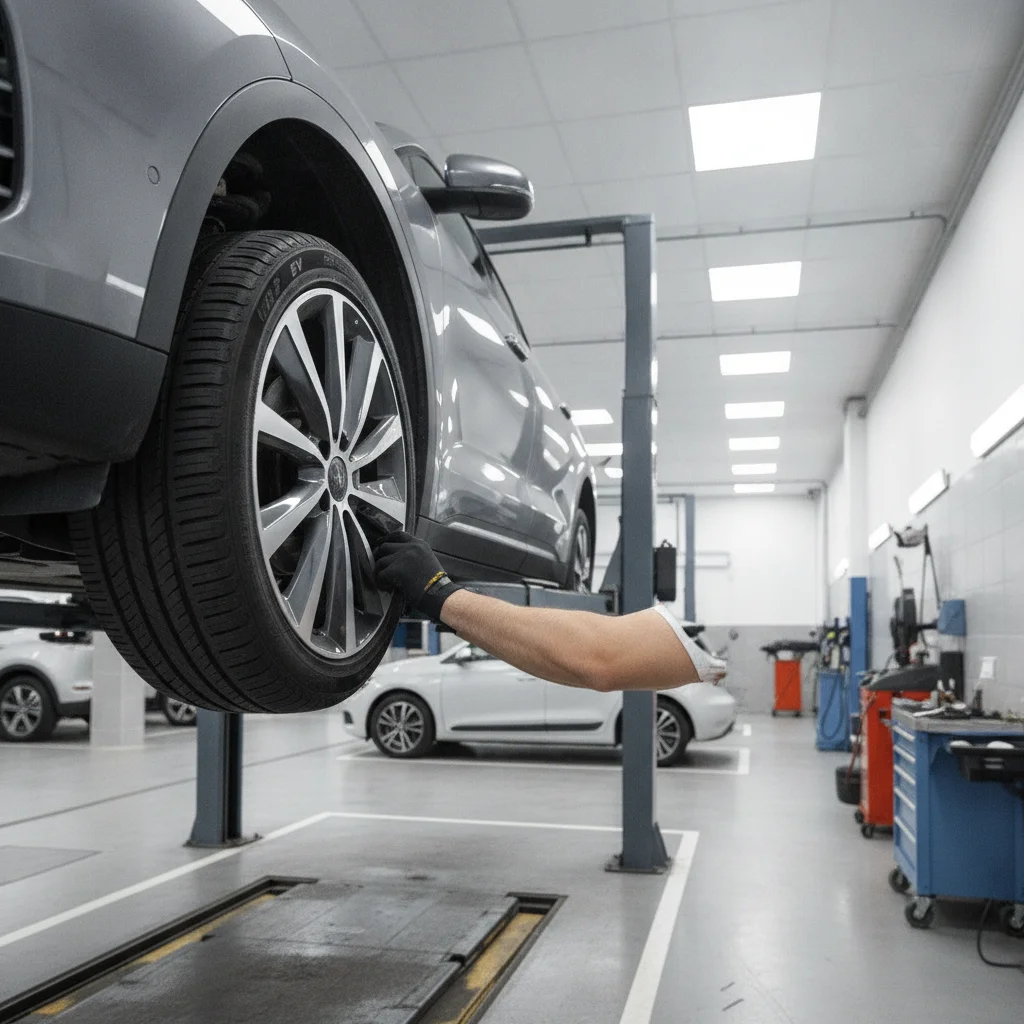
EVs are heavier than equivalent gas vehicles due to battery weight, and their instant torque accelerates tire wear. Most EV owners report needing to replace tires every 25,000–35,000 miles — faster than the 40,000–50,000-mile average for gas cars. Over five years at 12,000–15,000 miles annually, you'll likely go through one full set of tires, possibly a second set for high-mileage drivers.
A set of OEM-spec EV tires typically runs $600–$1,200 installed. Budget toward the higher end for performance-oriented vehicles or larger SUVs with wide, low-profile rubber.
Brake Fluid
EVs use regenerative braking heavily, so the physical brake system sees far less use than in a gas car. That's good for pad and rotor longevity — many EV owners never replace pads within the first five years. However, brake fluid is hygroscopic (it absorbs moisture over time), and most manufacturers recommend replacing it every two to three years regardless of mileage. Expect to pay $80–$150 per flush.
Thermal Management Coolant
Your EV's battery pack, power electronics, and sometimes the motor are liquid-cooled. This coolant degrades over time and typically needs inspection around year three and a flush around years five to seven. Cost: $100–$250.
12-Volt Auxiliary Battery
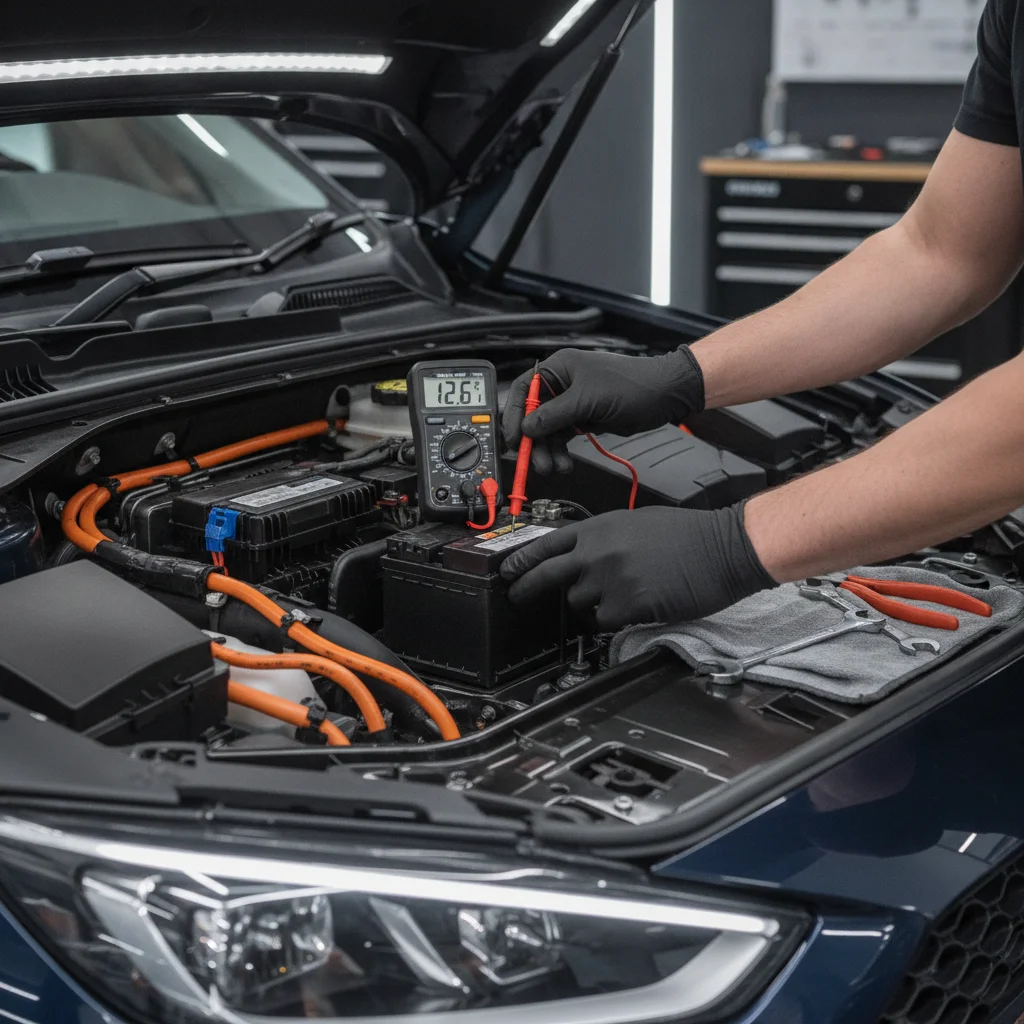
This is the most underappreciated maintenance item for EV owners. Every EV has a small 12V battery (similar to what you'd find in any car) that powers lights, infotainment, locks, and low-voltage systems. Unlike the main traction battery, this auxiliary unit typically lasts only four to seven years. Replacement costs $200–$400, including labor, and should be on your radar by year four or five.
Software and Diagnostic Visits
Many EV manufacturers push software updates over the air (OTA), which eliminates the need for certain service visits. But some diagnostic work, calibration after repairs, or campaign-related checks still require a dealer visit. These are usually covered under warranty, but once out of warranty, a diagnostic session can run $100–$200.
For a comprehensive look at every maintenance task across the full ownership lifecycle, see our complete EV maintenance lifetime guide.
PHEVs and HEVs Have Higher Maintenance Costs
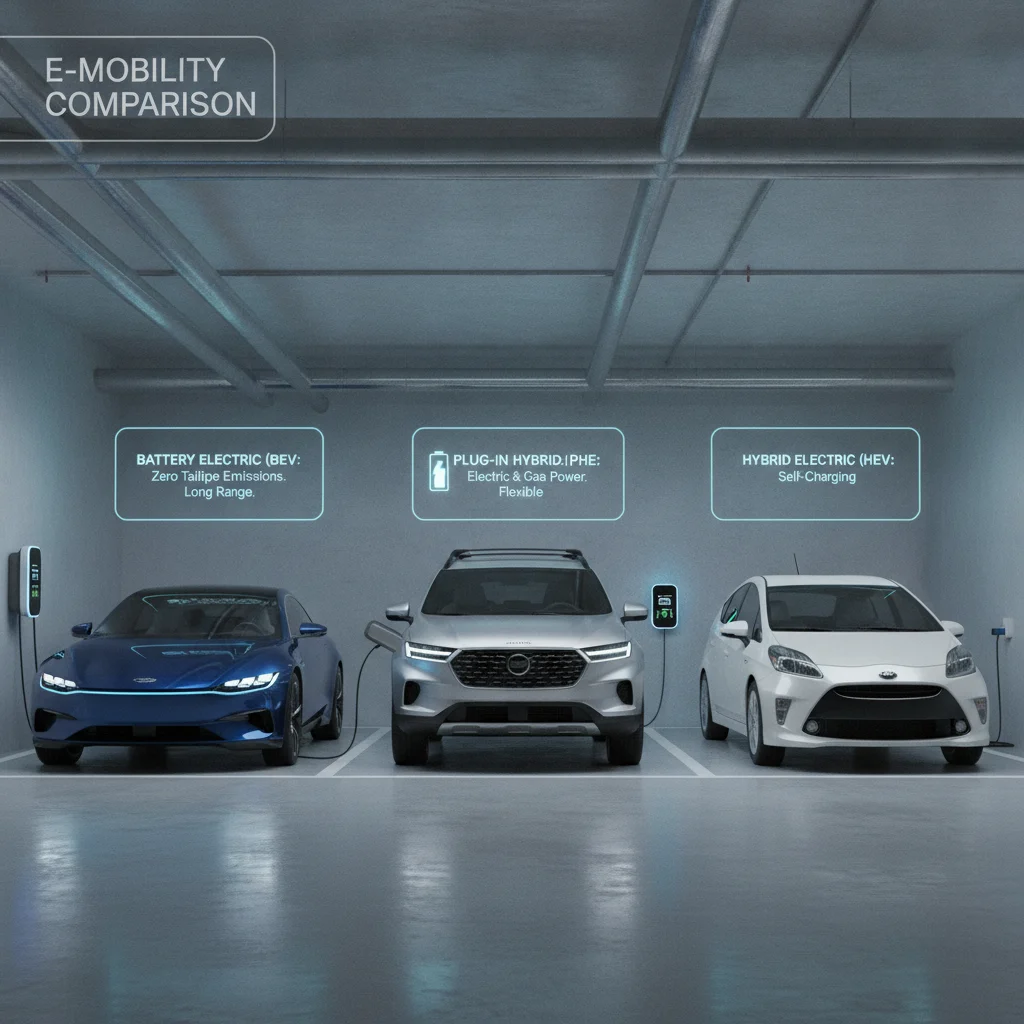
The figures in this article apply to battery-electric vehicles (BEVs) only. Plug-in hybrids (PHEVs) and hybrid vehicles (HEVs) retain a combustion engine and require oil changes, spark plugs, and other ICE-specific maintenance. Their five-year maintenance costs fall between BEVs and traditional gas cars — not as low as a pure EV. See our <a href="/electric-vehicles/ev-basics/ev-types-explained/ownership-costs-across-ev-types-what-youll-spend-over-five-years">ownership cost comparison across EV types</a> for a side-by-side breakdown.
Warranty Coverage Can Offset Unexpected Costs
Most new EVs come with a bumper-to-bumper warranty of 3–5 years and a separate 8-year/100,000-mile battery warranty. Within that coverage window, defects and certain component failures are repaired at no cost. If you're buying used, verify the remaining warranty carefully — an EV outside its battery warranty represents meaningfully higher financial risk.
What's Genuinely Not a Cost: Skipped Gas Car Services
Part of building an accurate five-year budget means knowing what you won't spend money on. EV ownership eliminates several routine costs that gas car owners accept as fixed expenses:
- Oil changes: $60–$150 every 5,000–7,500 miles. Eliminated entirely in a BEV. Over five years at 12,000 miles annually, that's 8–12 oil changes — saving $480–$1,800.
- Spark plugs: $100–$300 every 30,000–100,000 miles depending on plug type. Not applicable to BEVs.
- Transmission fluid: Electric drivetrains use a simple reduction gear that typically requires no fluid changes within five years.
- Air filter (engine): No combustion engine, no engine air filter. EVs only need a cabin air filter for HVAC.
- Exhaust system components: No catalytic converter, muffler, or O2 sensors to fail or replace.
- Timing belt/chain: Not applicable. This alone can cost $500–$1,500 when it needs service on a gas car.
Cumulatively, these eliminated services represent a genuine $2,000–$4,000 in savings over five years for the average driver — which more than offsets any premium on EV-specific maintenance tasks like accelerated tire wear.
If you're comparing ownership costs across vehicle types, our five-year cost comparison across BEVs, PHEVs, and HEVs shows how the math differs depending on what kind of electrified vehicle you own.
Traction battery
The large high-voltage battery pack that powers an EV's electric motor and provides driving range. This is distinct from the smaller 12V auxiliary battery. Most traction batteries carry an 8-year/100,000-mile warranty.
Regenerative braking
A system that recovers kinetic energy during deceleration and converts it back into electricity to recharge the battery. It significantly reduces wear on physical brake pads and rotors compared to gas vehicles.
Thermal management system
A liquid cooling and heating system that maintains the battery pack and power electronics within an optimal temperature range. It uses a dedicated coolant that requires periodic inspection and replacement.
12V auxiliary battery
A small, conventional lead-acid or lithium battery in an EV that powers low-voltage systems such as lights, locks, and infotainment. It is separate from the main traction battery and has a shorter lifespan of 4–7 years.
Over-the-air (OTA) update
A software update delivered remotely via a cellular or Wi-Fi connection, allowing manufacturers to fix bugs, improve performance, or add features without requiring a dealer visit.
Brake fluid flush
The process of draining old, moisture-contaminated brake fluid and replacing it with fresh fluid. Even in EVs where physical brakes are used less frequently, brake fluid degrades over time and should be replaced every two to three years.
Factors That Will Push Your Costs Higher or Lower
The estimates above are starting points. Your actual five-year maintenance tab will shift based on several real-world variables.
Climate and Driving Conditions
Cold climates stress battery thermal management systems more heavily, potentially accelerating coolant degradation. Hot climates can do the same. Drivers in extreme temperature zones should expect to follow the more conservative end of maintenance intervals.
Stop-and-go city driving wears tires faster than highway miles, even with regenerative braking reducing mechanical brake wear. If you live in an urban environment, budget for one tire replacement earlier than the five-year mark.
Mileage
The estimates above assume roughly 12,000–15,000 miles per year — the U.S. average. High-mileage drivers (20,000+ miles annually) should expect tire replacement costs to arrive earlier and possibly occur twice within five years, adding $600–$1,200 to the total.
Brand and Model
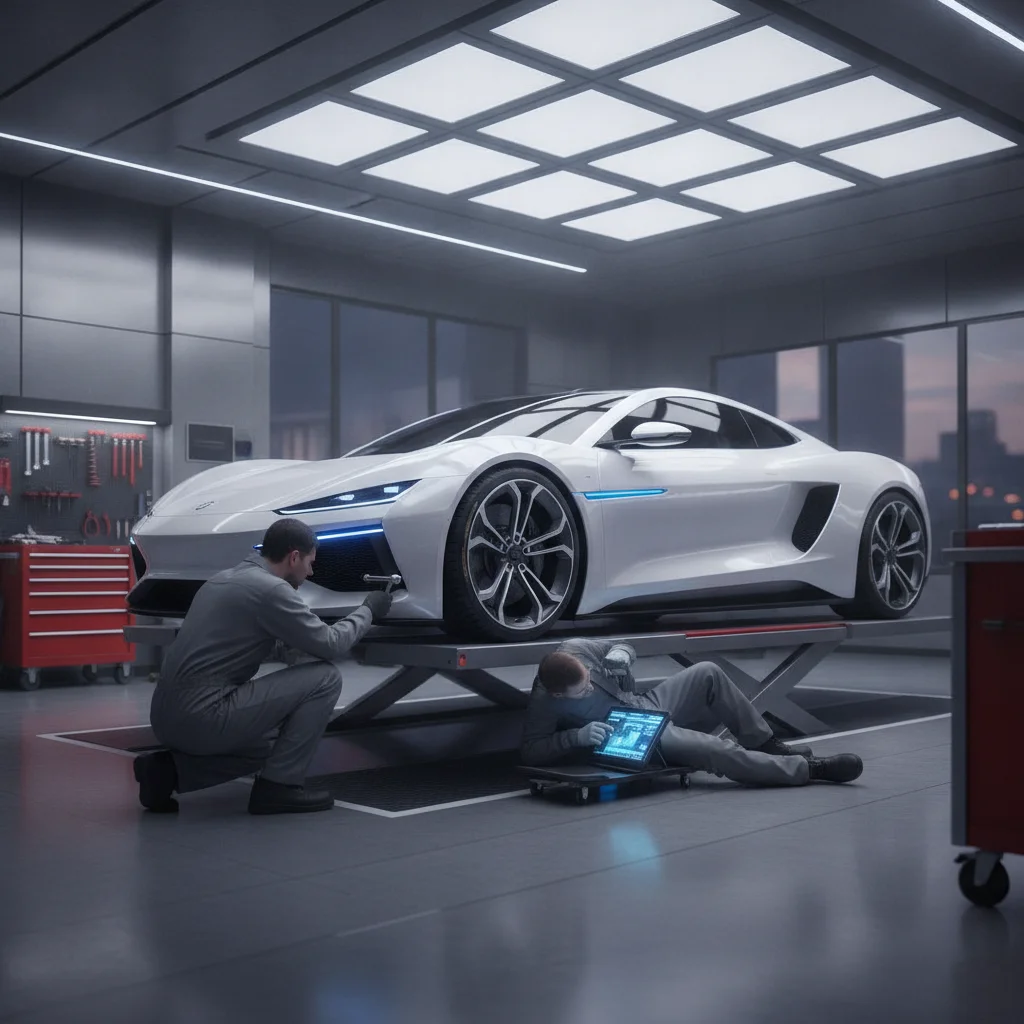
Tesla vehicles are serviced almost exclusively at Tesla Service Centers, and parts can be expensive. Some owners report paying premium prices for routine tire rotations compared to independent shops. Legacy automakers like GM, Hyundai, Ford, and Toyota have broader dealership and independent service networks, which creates more price competition.
DIY Capability
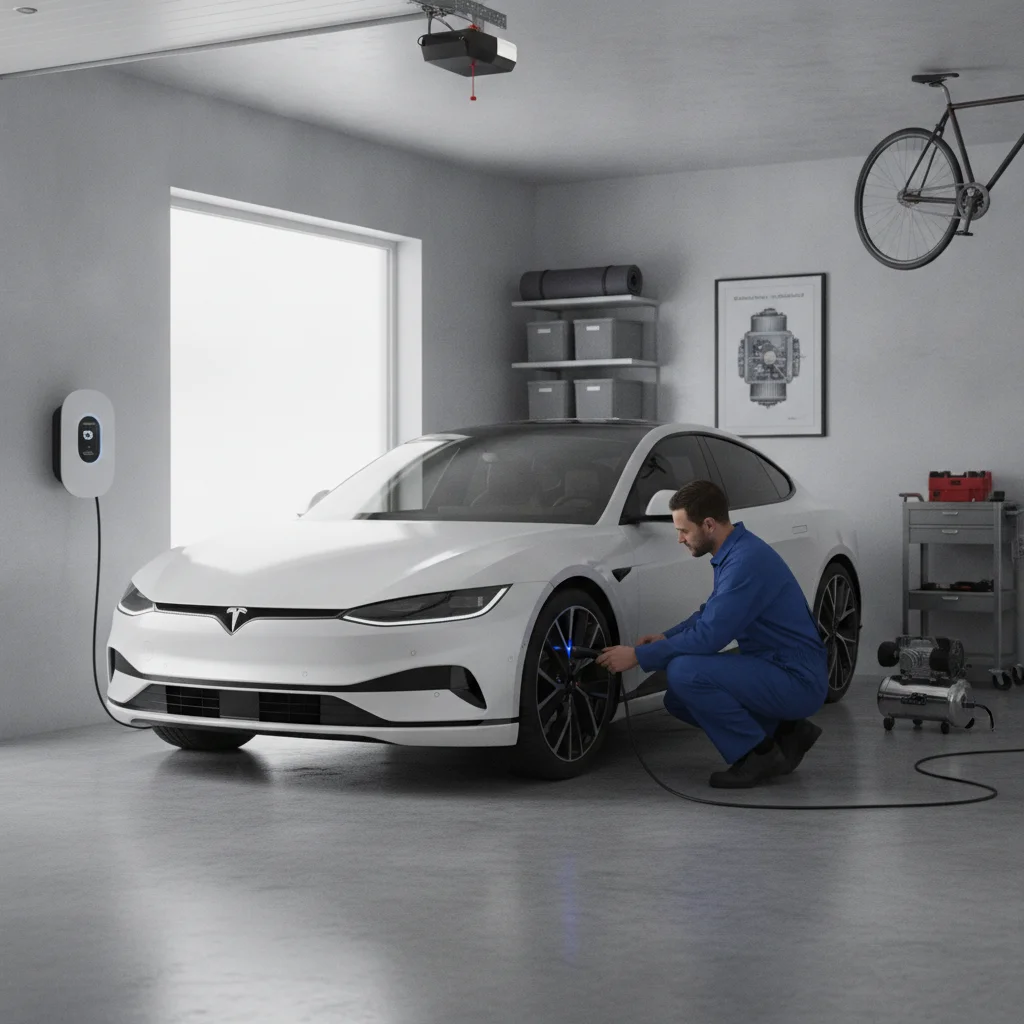
Some EV maintenance tasks — cabin air filter replacement, wiper blades, 12V battery replacement on certain models — are straightforward DIY jobs. Owners comfortable with basic automotive tasks can trim $200–$400 off their five-year total by handling these themselves.
Extended Warranties
If you're considering a used EV or approaching the end of your factory warranty, a third-party extended warranty or certified pre-owned (CPO) coverage can act as a cost hedge against unexpected repair bills. These typically run $1,000–$2,500 for multi-year coverage, which only makes financial sense if your vehicle has a documented reliability concern or you drive high annual mileage.
If you're just getting started with an EV, our day-one EV maintenance guide walks through the first service tasks and what your owner's manual is actually telling you to do.
EV Maintenance from Day One
A clear, task-by-task breakdown of what maintenance new EV owners actually need to stay on top of from the moment they drive off the lot. Useful for setting up your first-year service calendar.
Five-Year EV Ownership Cost Breakdown
Shows how maintenance fits alongside charging costs, depreciation, and insurance over five years — giving you the full cost-of-ownership picture, not just the maintenance slice.
EV Insurance Guide
Explains why EV insurance premiums often differ from gas car coverage and what factors to look for when shopping for a policy — an important part of your total ownership budget.
EV Maintenance vs. Gas Car Maintenance
A side-by-side comparison of every maintenance task and associated cost for BEVs versus traditional gas vehicles, useful for buyers deciding between the two.
How to Budget Realistically for 5 Years of EV Ownership
The cleanest approach is to set aside a fixed monthly amount into a dedicated car maintenance fund. Based on the estimates in this article, a monthly contribution of $40–$60 will cover routine maintenance comfortably for most EV owners. High-mileage drivers or those in extreme climates should bump that to $65–$90 per month.
Here's a simple mental framework:
- Year 1–2: Low spend. Focus on tire rotations, cabin air filter, and your first brake fluid check. Budget $300–$700 total across both years.
- Year 3: Mid-point inspection year. Coolant check, brake fluid flush if not done in year two, wiper blades. Budget $250–$500.
- Year 4–5: Highest spend years. Likely tire replacement, 12V battery on the horizon, possible coolant flush. Budget $800–$1,500 total across both years.
Maintenance is only one piece of the five-year cost picture. Don't forget that charging costs, depreciation, registration fees, and insurance all factor into total cost of ownership. Our five-year EV ownership cost breakdown including charging and the EV insurance guide will help you fill in those remaining numbers.
The bottom line: EV maintenance costs are real, but they're significantly lower than what gas car owners pay. Over five years, a realistic total falls between $1,500 and $2,900 for most mainstream BEVs — roughly half to one-third of what a comparable gas vehicle would cost to maintain. Plan for it, and you won't be caught off guard.
PHEVs and HEVs Have Higher Maintenance Costs
The figures in this article apply to battery-electric vehicles (BEVs) only. Plug-in hybrids (PHEVs) and hybrid vehicles (HEVs) retain a combustion engine and require oil changes, spark plugs, and other ICE-specific maintenance. Their five-year maintenance costs fall between BEVs and traditional gas cars — not as low as a pure EV. See our <a href="/electric-vehicles/ev-basics/ev-types-explained/ownership-costs-across-ev-types-what-youll-spend-over-five-years">ownership cost comparison across EV types</a> for a side-by-side breakdown.
Warranty Coverage Can Offset Unexpected Costs
Most new EVs come with a bumper-to-bumper warranty of 3–5 years and a separate 8-year/100,000-mile battery warranty. Within that coverage window, defects and certain component failures are repaired at no cost. If you're buying used, verify the remaining warranty carefully — an EV outside its battery warranty represents meaningfully higher financial risk.

All claims are backed by peer-reviewed research. Sources on request.