Key Takeaways
Option A
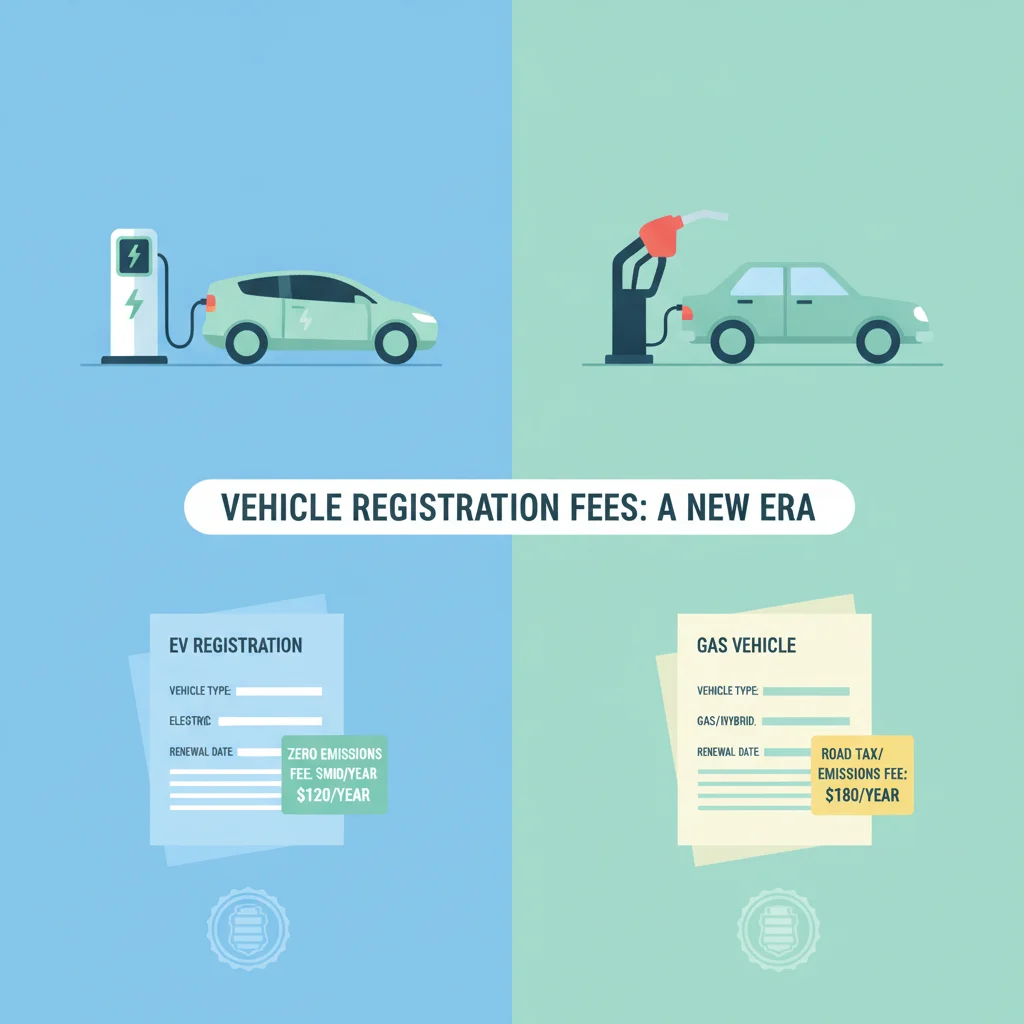
Electric Vehicle Registration Fees
The higher flat fee designed to replace lost gas tax revenue.
Best for: EV owners who want to understand why their renewal bill looks different — and often higher — than a comparable gas car's.
Option B
Gas Car Registration Fees
The familiar, often value-based fee supplemented by per-gallon fuel taxes.
Best for: Gas car owners comparing total road-use costs against the growing number of EV surcharges now appearing in state fee schedules.
If you're buying an EV in a high-surcharge state like Texas or Illinois
Gas Car Registration Fees
In states charging $200+ annual EV surcharges, the registration premium alone can offset a significant portion of your fuel savings. Factor the full fee schedule into your total cost of ownership before committing.
If you're comparing lifetime ownership costs between an EV and a gas car
Electric Vehicle Registration Fees
Even with surcharges, EV owners in most states still come out ahead once you net the surcharge against zero fuel-tax payments and lower maintenance bills — especially in low-surcharge or incentive states.
If you live in a value-based or weight-based registration state
Gas Car Registration Fees
EVs tend to weigh more and carry higher MSRPs, which inflates registration costs under both formulas. A similarly priced or lighter gas car will often register cheaper in these states.
If you want the simplest, most predictable annual renewal cost
Gas Car Registration Fees
Gas car registration fees in flat-fee states are typically low and stable. EV surcharges are newer and still subject to legislative increases as states refine their road-funding formulas.
If you're a high-mileage driver considering an EV
Electric Vehicle Registration Fees
High-mileage drivers pay far more in fuel taxes annually than the flat EV surcharge replaces. The more you drive, the more an EV's fixed registration cost works in your favor versus paying gas taxes per gallon.
Why Registration Fees Differ for EVs and Gas Cars
To understand why your EV registration renewal might be noticeably more expensive than your neighbor's gas car, you need to follow the money — specifically, the gas tax. In most states, a significant share of road maintenance and infrastructure funding comes from per-gallon fuel taxes. The federal rate sits at 18.4 cents per gallon; state rates range from about 14 cents (Alaska) to over 68 cents per gallon (Pennsylvania). Every time a gas car owner fills up, they're paying a road-use contribution proportional to how much they drive.
Electric vehicles pay zero fuel taxes. A driver covering 15,000 miles per year in a gas car averaging 30 mpg buys roughly 500 gallons of fuel — contributing $92 in federal fuel taxes alone, plus whatever their state adds. An EV driver on the same route contributes nothing through that channel. As EV adoption has grown, state legislatures have faced real pressure from transportation departments watching road funds decline. The political and policy response, almost universally, has been the EV registration surcharge: a flat annual fee tacked onto the standard registration cost specifically because the vehicle doesn't pay at the pump.
This isn't fundamentally unfair — it's a reasonable attempt at equivalence. But the execution varies so widely by state that the actual fee burden on EV owners ranges from negligible to genuinely punishing. Meanwhile, gas car registration fees have their own complexity: many states use the vehicle's value, weight, or age to calculate fees rather than a flat rate, meaning a brand-new $55,000 SUV might cost three times as much to register as a ten-year-old economy car. See how those formulas play out over time in our guide to registration fees across a full ownership period.
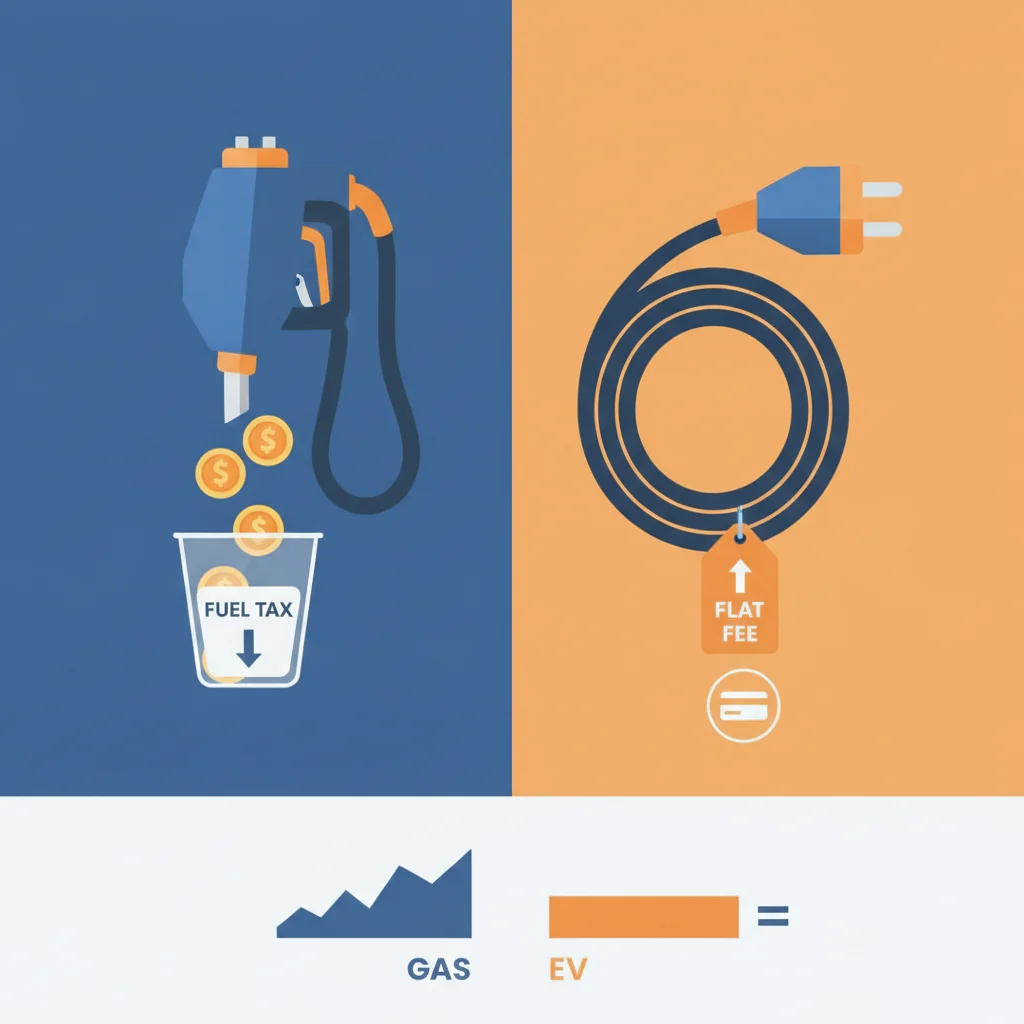
The bottom line: EVs and gas cars operate under fundamentally different fee structures, and comparing them requires understanding both the registration fee itself and the road-use tax embedded in fuel costs for gas vehicles.
How States Calculate EV vs. Gas Car Registration Fees
Registration fee structures fall into a few broad categories, and your state likely uses one or a combination of them. Understanding which formula your state uses is the first step to knowing whether your EV is actually costing you more to register.
Flat-Fee States
Some states charge a simple flat annual fee regardless of vehicle type or value. In these states, the EV surcharge is easy to spot — it's a clearly labeled line item on top of the base fee. Wyoming, for example, charges a modest base fee plus a flat EV surcharge. In flat-fee states, the total EV cost is the most transparent to calculate.
Value-Based (Ad Valorem) States
States like Colorado, Georgia, and Virginia calculate a portion of registration fees based on the vehicle's assessed value or original MSRP. This means a $55,000 Tesla Model 3 Long Range pays more than a $28,000 Nissan Sentra regardless of fuel type — in the first year of ownership. As vehicles depreciate, these fees decline. For EVs, which tend to carry premium price tags, value-based fees add a compounding layer on top of any EV surcharge. Our guide on how vehicle weight affects registration fees covers the weight side of this equation in detail.
Weight-Based States
Oregon, Idaho, and several others tier fees by curb weight or Gross Vehicle Weight Rating (GVWR). This structure quietly penalizes EVs because the battery pack adds substantial mass. A Tesla Model Y weighs roughly 4,400 lbs — about 700–900 lbs heavier than a comparably sized Toyota RAV4 gas model. In a state with strict weight tiers, that difference can move an EV into a higher fee bracket that a gas equivalent would avoid.
EV Surcharges: A Moving Target
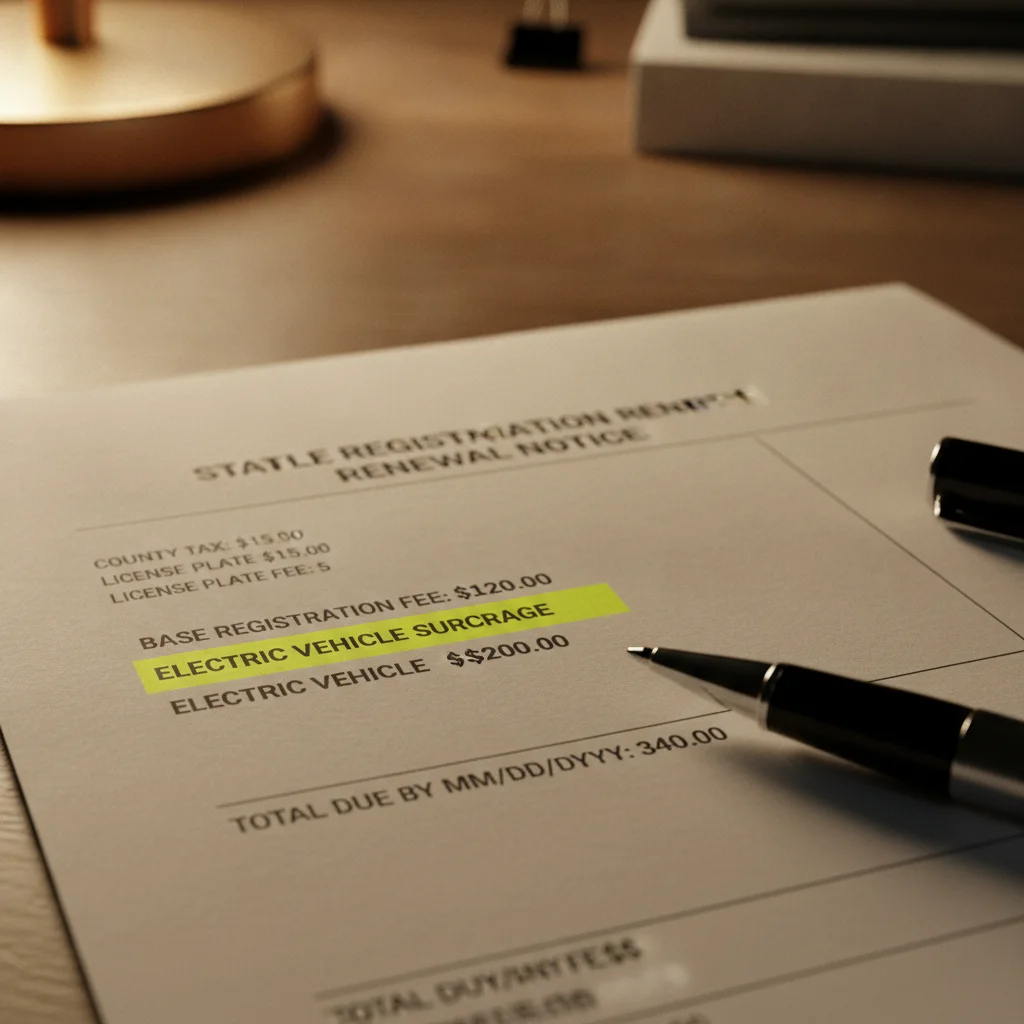
As of 2024, 32 states plus the District of Columbia have enacted dedicated EV registration surcharges. The amounts vary significantly:
- $0–$50: Hawaii, Alaska, South Dakota (minimal or no surcharge)
- $50–$100: California ($100 for BEVs over $60,000 assessed value; otherwise $0 additional), New Mexico, Vermont
- $100–$150: Florida ($135), Ohio ($100), Nevada ($33 + standard fee adjustments)
- $150–$200: Texas ($200), Illinois ($251 for EVs over 8,000 lbs), Georgia ($211.57 flat fee replacing previous exemptions)
These numbers shift as legislatures revisit them — and the trend has been upward. For state-by-state comparisons, our state registration cost rankings offer a broader picture of where you land geographically.
| Criterion | Electric Vehicle | Gas Car |
|---|---|---|
| Annual base registration fee | Same as gas car (state-determined) | Same as EV (state-determined) |
| Annual EV surcharge | $0–$251 depending on state | $0 (no surcharge) |
| Annual fuel tax contribution | $0 (no fuel purchased) | $100–$300+ depending on mpg and mileage |
| Weight-based fee impact | Often higher (battery adds 500–900 lbs) | Lower for comparable body style |
| Value-based fee impact (year 1) | Higher (premium MSRP) | Lower for equivalent segment |
| States with dedicated surcharge | 32 states + DC (as of 2024) | Not applicable |
| Fee predictability | Moderate (surcharges rising) | High (stable flat or value-based) |
| Typical 10-year registration total | $1,500–$4,000+ | $800–$2,500+ |
32
States with dedicated EV surcharges
As of 2024, 32 states plus DC have enacted annual registration surcharges specifically targeting battery electric vehicles, according to the National Conference of State Legislatures.
$251
Highest flat EV registration surcharge
Illinois charges $251 annually for EVs under 8,000 lbs — the steepest straightforward BEV surcharge in the U.S. as of 2024.
18.4¢
Federal gas tax per gallon
The federal fuel excise tax has been fixed at 18.4 cents per gallon since 1993, supplemented by state fuel taxes averaging roughly 31 cents per gallon nationally.
$192
Avg. annual fuel taxes for 30 mpg gas car
A driver covering 15,000 miles/year in a 30 mpg vehicle pays approximately $192 in combined federal and Texas-rate state fuel taxes annually — the implicit road-use contribution EV surcharges are designed to replicate.
700–900 lbs
Extra weight of typical EV vs. gas equivalent
Battery packs add significant curb weight; a Tesla Model Y weighs roughly 4,416 lbs compared to approximately 3,590 lbs for a Toyota RAV4 gas model, pushing EVs into higher weight-based fee tiers in some states.
The True Cost Comparison: What You Actually Pay
To make a fair comparison, you need to think in two columns: what shows up on your registration bill, and what you pay implicitly through fuel taxes. For a gas car owner, the pump contribution is invisible — it's embedded in every gallon price. For an EV owner, the surcharge is explicit and often feels larger by contrast, even when the math favors the EV.
A Worked Example: Texas Resident, 15,000 Miles Per Year
Consider a Texas resident driving 15,000 miles per year. The state fuel tax is 20 cents per gallon, and the federal fuel tax is 18.4 cents — a combined 38.4 cents per gallon.
- Gas car (30 mpg): 500 gallons consumed × $0.384 = $192 in fuel taxes annually, plus a base registration fee of roughly $51.75 = total government road contribution of approximately $244/year.
- EV: $200 annual EV surcharge + $51.75 base fee = $251.75/year in registration costs, zero fuel taxes.
In this example, the EV owner pays roughly $8 more annually in government fees than the gas car owner — a near wash. But at higher gas prices or with a less fuel-efficient vehicle, the gas car's fuel-tax contribution rises while the EV's fee stays flat. Drive 20,000 miles per year in a 25 mpg gas car and you're paying over $300 annually in fuel taxes alone.

The Weight and Value Premium for EVs
Where the math turns against EVs is in value-based and weight-based states during the early years of ownership. A $58,000 EV in Georgia triggers a significantly higher ad valorem component than a $32,000 gas crossover in year one. As the EV depreciates, this gap closes — but it takes several years, and by then the cumulative early premium adds up. Our article on the full lifetime cost of registering a car shows exactly how this compounding works over time.
Don't Forget: EV Owners Save in Other Ways
Registration fees exist within a broader ownership cost picture. EV drivers save substantially on fuel (often $1,200–$1,800 per year depending on electricity rates and local gas prices) and on routine maintenance — no oil changes, no transmission fluid, fewer brake jobs thanks to regenerative braking. The full EV vs. gas maintenance breakdown puts those numbers side by side. Even a $200 annual EV surcharge is typically dwarfed by fuel and maintenance savings for average drivers.
PHEVs and Hybrids: A Middle Ground
Plug-in hybrid vehicles (PHEVs) and standard hybrids occupy a gray zone in most state fee schedules. Many states charge a reduced EV surcharge for PHEVs — typically 50–75% of the full BEV surcharge — since these vehicles still purchase some gasoline and contribute partially through fuel taxes. If you're considering a PHEV specifically to manage ownership costs, check your state's registration fee schedule carefully; the savings over a full BEV can be meaningful in high-surcharge states.
Rental and Fleet EV Registrations Work Differently
Commercial fleet and rental vehicle registrations are governed by different fee structures in most states, often calculated on a per-vehicle or gross fleet weight basis. If you're evaluating EV costs for a small business fleet rather than personal ownership, consult your state's commercial vehicle registration schedule — the surcharges and exemptions may differ significantly from what individual owners face.
EV Surcharges Are Separate From HOV Lane and Parking Perks
In several states, EVs still qualify for HOV lane access with a single occupant, reduced toll rates, or preferred parking — perks that have real monetary value for daily commuters. These benefits are independent of registration fees and may partially offset the surcharge premium. California, Virginia, and Colorado have all offered some version of these access incentives, though availability changes as EV adoption grows and HOV lanes reach capacity.
State-by-State Highlights: Where EV Owners Pay More — and Less
Not all states treat EV registration the same way, and location can swing the annual fee burden by hundreds of dollars. Here are the states where the gap is most consequential.
States Where EV Registration Costs Significantly More
Georgia: After eliminating its EV income tax credit, Georgia restructured EV fees upward. The state's flat EV alternative fuel fee now sits at approximately $211.57 annually — one of the highest in the country. Combined with ad valorem taxes on newer, higher-value EVs, Georgia EV owners can easily pay $300–$500 more per year in government fees than comparable gas car owners in the early ownership years.
Illinois: Illinois charges a flat $251 EV registration fee for vehicles under 8,000 lbs, on top of standard fees. For heavier EVs — think large SUVs or trucks — the fee climbs further. This is one of the steepest straightforward surcharges in the U.S.
Texas: Texas's $200 annual EV fee is notably higher than the implicit fuel tax contribution of an average gas car in the state — meaning EV drivers are arguably over-paying relative to the road-use equivalence argument.
States Where EV Registration Costs Are Comparable or Favorable
California: Despite its reputation for fees, California's EV surcharge only applies to Battery Electric Vehicles (BEVs) with an assessed value over $60,000 ($100 additional). Most mid-range EVs face no extra surcharge beyond standard fees, and the state's Clean Vehicle Rebate program has historically softened upfront costs. Check EV insurance considerations in California for related ownership costs in the state.
Colorado: Colorado has actively incentivized EV adoption, including keeping registration surcharges modest relative to the state's general fee structure. Value-based fees can still sting in year one for premium EVs, but the trajectory of policy has been supportive.
Wyoming and Montana: These low-fee states impose modest base registration costs for all vehicles, and their EV surcharges are on the lower end of the national range. Rural EV ownership in these states carries a lighter registration burden than in most coastal states.
For a deeper look at how where you register shapes your annual costs, see our state-by-state registration cost guide. And if you're weighing the insurance side of the EV ownership equation alongside registration, our EV auto insurance rate guide covers what's different under the hood.
Exemptions, Discounts, and Ways to Reduce Your Fee
Before you accept your registration bill at face value, it's worth knowing that many states have carved out exemptions or discounts that neither DMV clerks nor online renewal portals advertise proactively.
Low-Income and Clean Vehicle Exemptions
California's Clean Vehicle Assistance Program, for example, includes components that reduce ownership costs for qualifying income brackets. Some states waive or reduce EV surcharges for residents below certain income thresholds, recognizing that a flat fee is more regressive than a fuel-tax-per-gallon structure. The full landscape of registration exemptions most owners don't know about is worth reviewing before you renew.
Military, Disabled, and Senior Discounts
Standard registration discounts for disabled veterans, active-duty military, and seniors typically apply to EV registrations just as they do for gas cars. If you qualify for any base registration reduction, it often applies to the standard fee component — though not always to the EV-specific surcharge line item. Confirm with your state DMV.
Multi-Year Registration
Some states allow two-year registration, locking in the current fee rate. If your state's EV surcharge is likely to increase — and the trend suggests it will — registering for two years now can lock in the lower current rate for an additional year. This is a minor but real optimization for cost-conscious EV owners.
Timing New Vehicle Registration
In value-based states, registering a new EV later in the calendar year (after initial depreciation hits the assessed value) can reduce the ad valorem component. Dealers sometimes register vehicles at the last possible moment for this reason. It's a modest optimization but can matter for high-MSRP EVs in aggressive ad valorem states like Virginia or Georgia.
EV charging costs are the other major variable in total ownership math. The EV charging costs and savings hub offers tools to estimate your actual annual fuel cost — which, combined with registration fee data, gives you a complete picture of what you're really paying to operate each vehicle type.
The Long View: Registration Costs Over Full EV Ownership
Buying a vehicle is a multi-year financial decision, and registration fees compound quietly in the background year after year. When you project the registration cost difference between an EV and a comparable gas car over a typical 7–10 year ownership cycle, the numbers become more meaningful.
Flat-Surcharge States: The Cumulative Hit
In a state charging $200 in annual EV surcharges with a $51 base fee, an EV owner pays $251 annually versus a gas car owner paying $51. Over 10 years, that's a $2,000 cumulative surcharge premium. Against this, the gas car owner paid approximately $1,920 in combined federal and state fuel taxes (at the Texas rate, 15,000 miles/year, 30 mpg). The gap is narrow — under $100 over a decade — but the EV owner's burden is front-loaded and visible, while the gas car owner's road contribution is invisible and spread across every fill-up.
Value-Based States: Front-Loaded Costs
In a value-based state like Georgia or Virginia, the EV faces a pronounced cost spike in years one through four due to both the surcharge and the higher assessed value. A $58,000 EV might generate $800–$1,200 in total registration costs in year one. The same figure for a $35,000 gas car might be $400–$600. By year seven or eight, as both vehicles depreciate, the gap narrows — but the cumulative early premium for the EV owner has already been paid. For a detailed year-by-year projection methodology, see registration fees over a full ownership period.
The Trajectory of EV Fees
One underappreciated risk for EV owners is legislative drift. EV surcharges are relatively new policy tools, and states are still calibrating them. The historical pattern has been upward: states that started with $50 surcharges often raised them to $100 or $150 within a few legislative cycles as EV adoption grew and the revenue gap widened. Budgeting for modest annual increases in your EV's registration cost over the next decade is prudent planning, not pessimism.
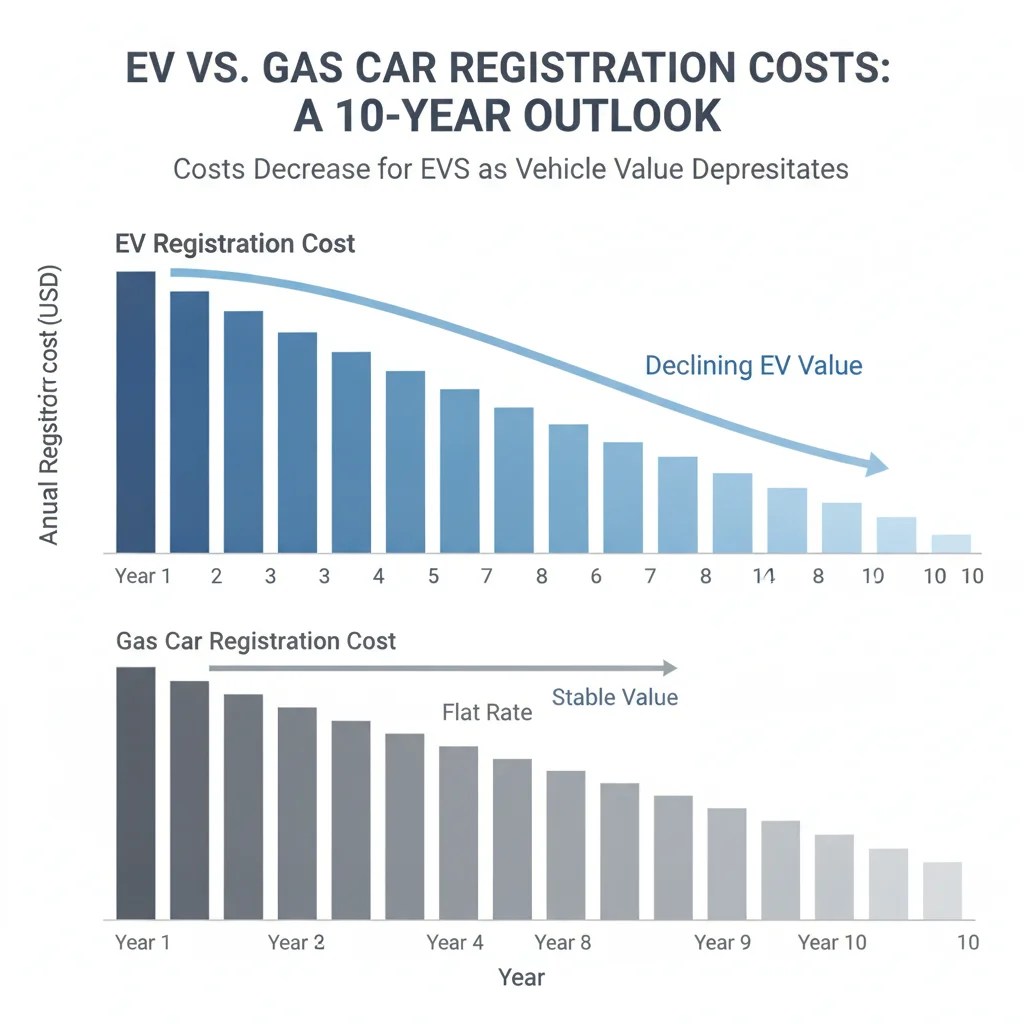
The full ownership cost equation for an EV includes registration, insurance, maintenance, fuel/charging, and depreciation. Registration fees are one piece — and not the largest — but they're a concrete, recurring cost that's easy to overlook when comparing sticker prices or monthly payments. Pair this registration analysis with a look at EV insurance costs and the EV vs. gas maintenance breakdown for a complete ownership cost picture before you sign.

All claims are backed by peer-reviewed research. Sources on request.