Key Takeaways
Summary
32 items · 45–90 minutes per seasonal review
Why Seasonal Maintenance Still Matters for EVs
The pitch for electric vehicles often includes a line about skipping oil changes — and that's true. But the implication that EVs are nearly maintenance-free is a half-truth that costs owners real money. Tires wear, brake fluid degrades, coolant ages, and batteries behave very differently in July than in January. Ignoring these realities doesn't make them go away.
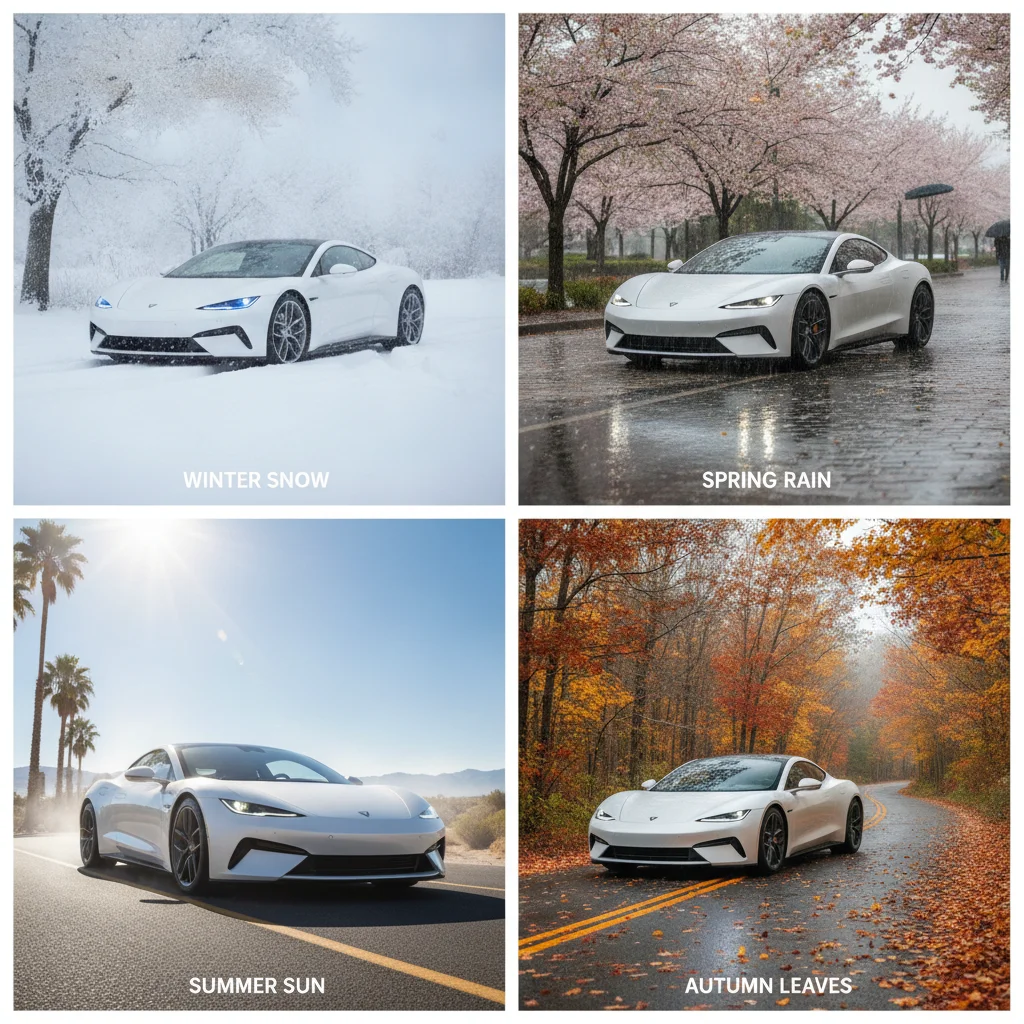
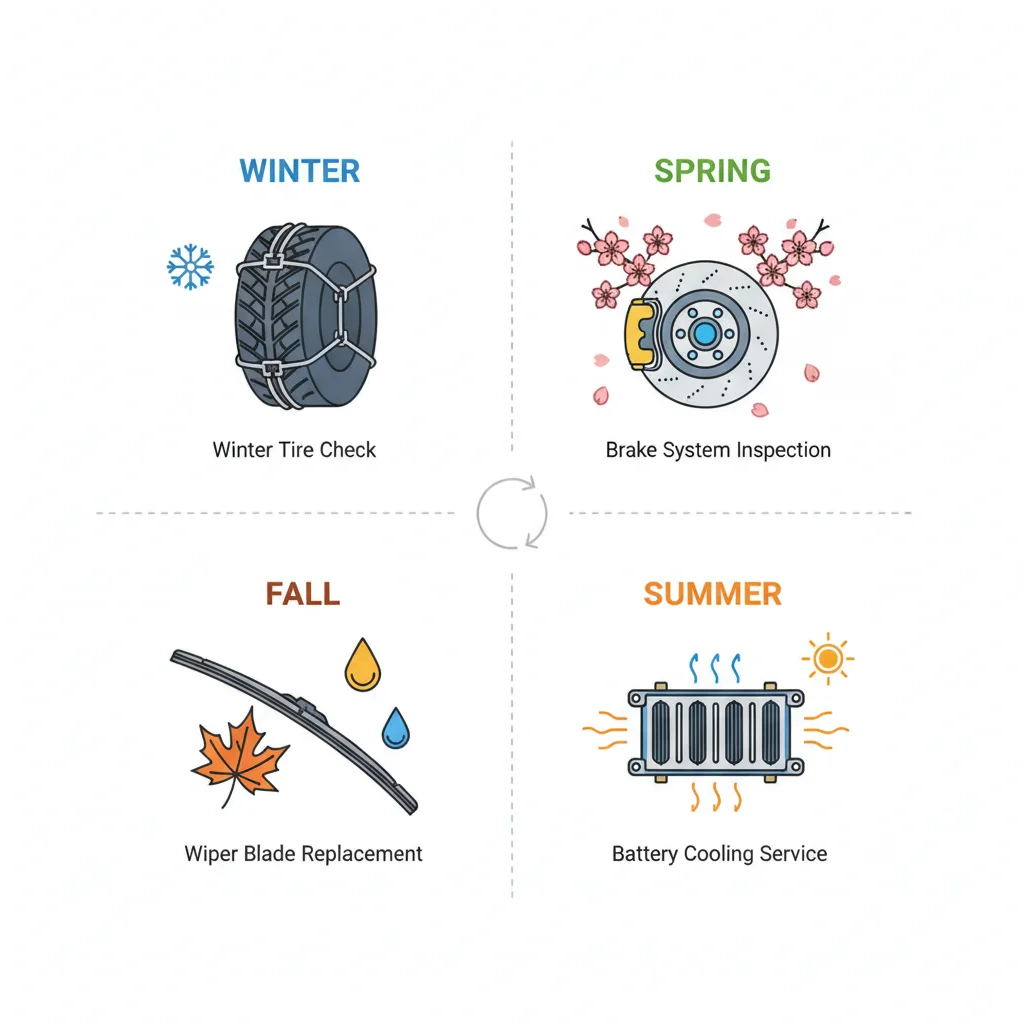
The smarter framing is this: EVs have fewer maintenance items, not zero maintenance items. And because the list is shorter, there's less excuse for skipping the things that remain. A seasonal structure is the most practical way to stay on top of them — you review what's relevant to the conditions you're about to face, not a generic calendar that was designed for combustion engines.
This checklist organizes EV upkeep by season. Work through it once per quarter and you'll cover every recurring maintenance task your electric vehicle actually needs. For a broader look at what's involved across years of ownership, see the full EV lifetime maintenance overview.
If you're brand new to EV ownership, EV maintenance from day one covers the foundational concepts before you dive into seasonal specifics. And if you want the flat interval-based version of this information — rotation at X miles, fluid check every Y months — the EV maintenance schedule by interval is the companion reference.
What You'll Need Before You Start
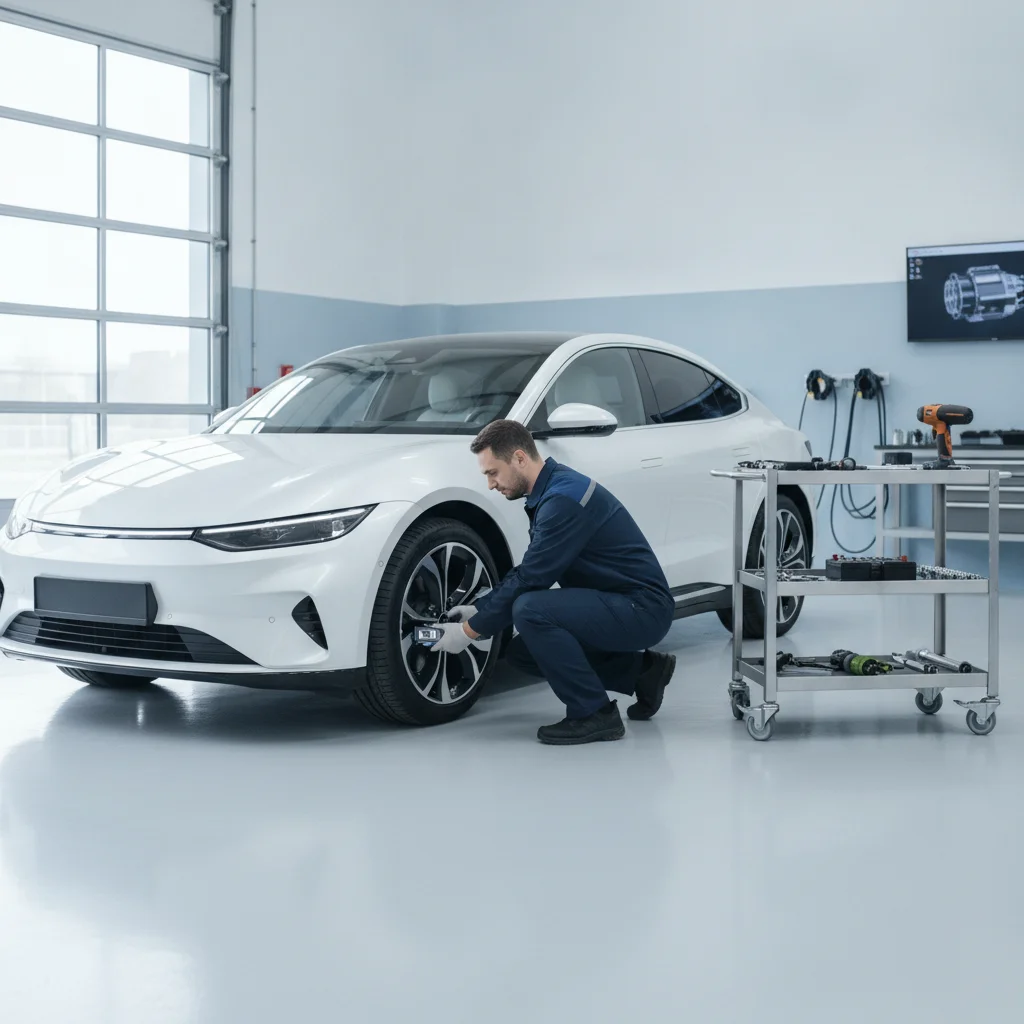
Most seasonal EV checks require only basic tools and about an hour of your time. A few items — brake fluid testing, coolant concentration checks, alignment verification — may require a shop visit, but you can do the initial assessment yourself and decide whether a technician visit is warranted.
Tire pressure gauge (digital)
Check and adjust tire pressure each season as temperatures change.
Tire tread depth gauge
Measure remaining tread depth to determine if tires need replacement before winter or summer.
Brake fluid test strips
Test brake fluid moisture content at home before deciding whether a full flush is needed.
OBD-II scan tool (EV-compatible)
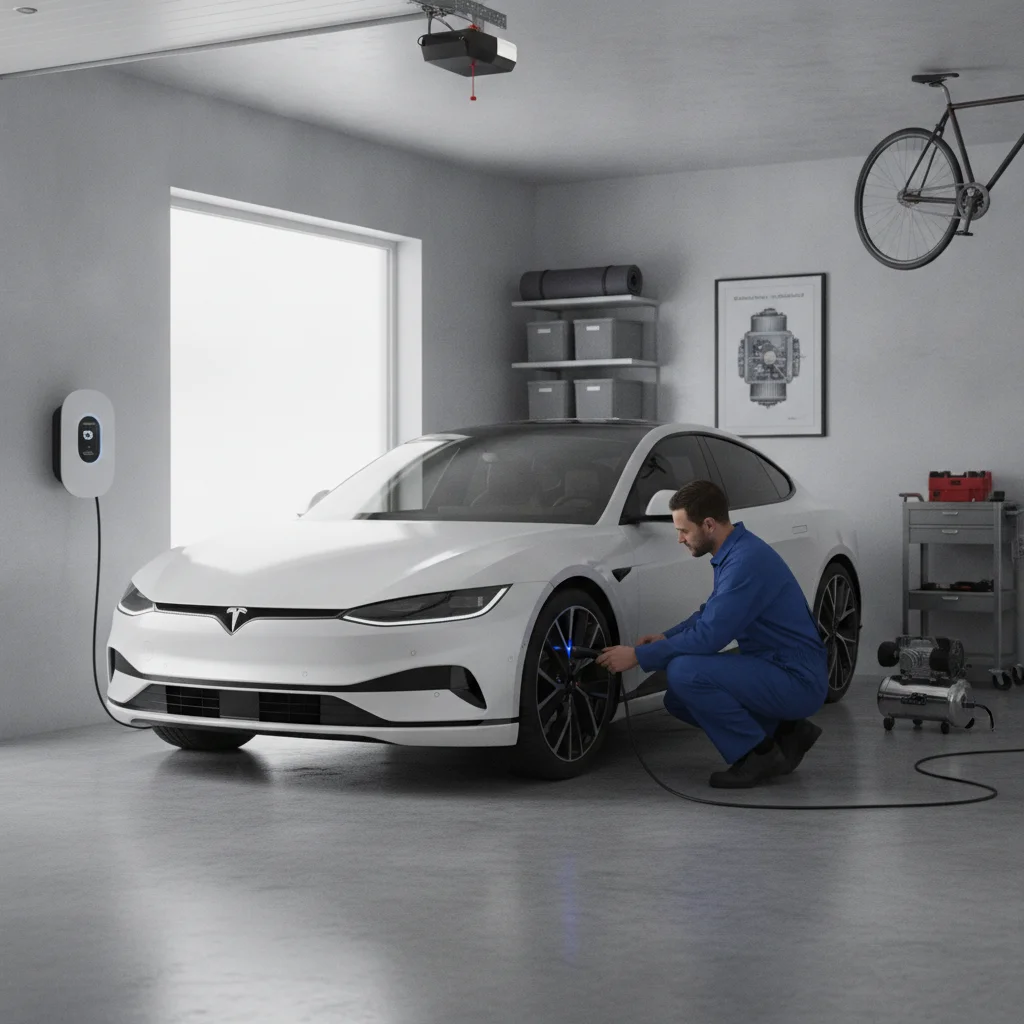
Read battery state of health, cell voltage data, and error codes from your vehicle's battery management system.
Coolant refractometer
Measure the freeze and boil protection level of coolant in the battery thermal management circuit.
Manufacturer companion app
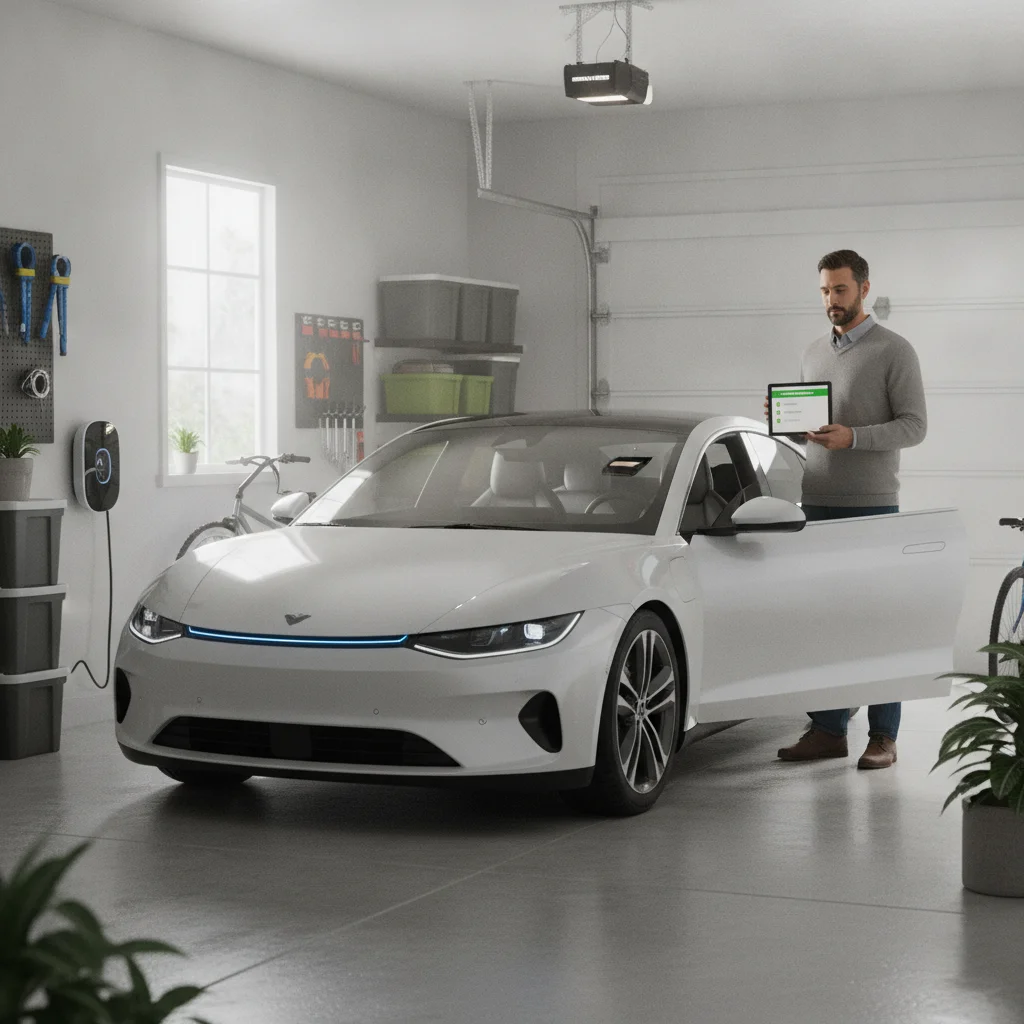
Monitor battery health, check for OTA software updates, and enable pre-conditioning remotely.
Multimeter
Test the 12-volt auxiliary battery voltage to identify a weakening battery before it fails.
For a clear breakdown of which tasks you can handle at home versus which genuinely require dealer-level access, see DIY EV maintenance: what you can do yourself.
The Seasonal EV Maintenance Checklist
Work through these groups in order each season. Some items recur every quarter; others appear only in the season where they matter most. Items marked must are non-negotiable for safety or system longevity. Items marked should are strongly recommended. Nice to have items are worth doing when time permits.
Winter Prep (Complete October–November)
Spring Review (Complete March–April)
Summer Prep (Complete May–June)
Fall Check (Complete September–October)
Annual Tasks (Schedule Once Per Year)
Don't Skip Brake Inspections Because Pads Look Fine
Regenerative braking dramatically reduces mechanical brake use on EVs, so pads can look nearly new even after 50,000 miles. The real risk is brake fluid moisture contamination and caliper corrosion from disuse — both of which can cause brake fade or partial seizure in an emergency stop. Test fluid annually and have calipers inspected if you're not regularly using the mechanical brakes.
Cold Weather Range Loss Is Normal — Severe Loss Isn't
Expect 20–40% range reduction in temperatures below 20°F — that's the battery chemistry and cabin heating load, not a malfunction. But if your range drops significantly more than peers with the same vehicle, or if summer range doesn't recover to near-original levels, that may indicate cell degradation worth investigating. Document your range seasonally so you have baseline data to compare.
Aftermarket Charger Installs Can Void Battery Warranties
Some manufacturers specify approved charging equipment in their battery warranty terms. Using uncertified third-party Level 2 chargers or consistently using DC fast charging hardware outside recommended specs can be cited as a cause of degradation in warranty disputes. Stick to certified equipment and follow manufacturer charging guidelines.
Because EVs rely heavily on regenerative braking, actual brake pad wear is dramatically lower than on gas vehicles. But that doesn't mean the brake system is off the hook — why EVs still need regular maintenance explains exactly why brake fluid and caliper checks remain essential even when pads barely wear.
Wear Items to Track Across Every Season
Some EV components don't follow a neat seasonal schedule — they wear on a mileage or time basis and need to be tracked throughout the year. These include tires, wiper blades, cabin air filters, and a handful of other consumables that are easy to overlook because they're not tied to an oil change reminder.
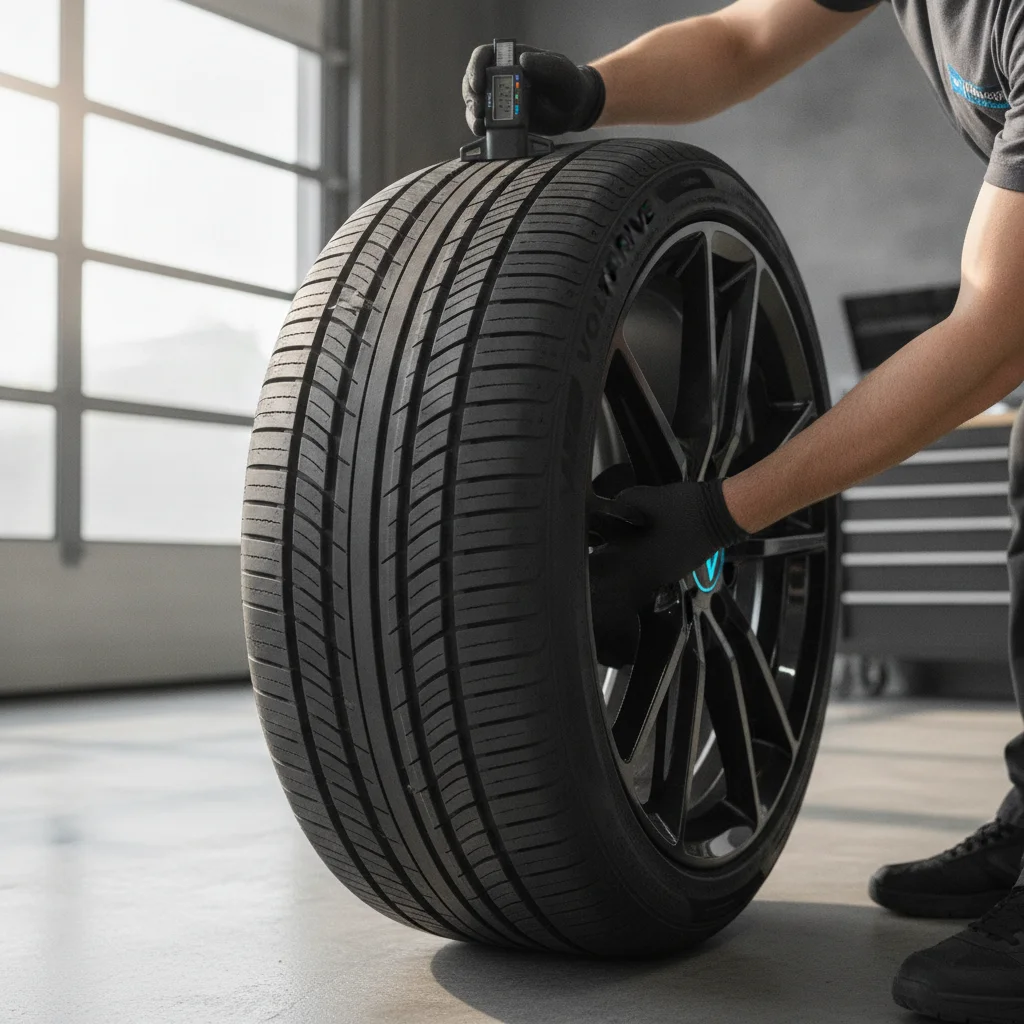
Tires deserve special attention on EVs. The instant torque delivery and heavier curb weight of most electric vehicles accelerates tread wear compared to equivalent gas cars — often by 20–30%. Check tread depth with a gauge every season and rotate every 5,000–7,500 miles or per your owner's manual, whichever comes first. A complete list of EV wear items and replacement timelines is worth bookmarking for reference.
Wiper blades typically last 6–12 months depending on climate. In regions with heavy UV exposure or frequent precipitation, lean toward annual replacement. Cabin air filters generally need replacement every 15,000–25,000 miles or once a year — check your owner's manual for the specific interval since it varies by manufacturer.
The 12-Volt Battery Can Strand You Despite a Full Main Pack
Every EV carries a small 12-volt auxiliary battery that powers computers, contactors, lights, and accessories. When this battery fails, the vehicle may not power on at all — even with 80% charge in the main pack. This battery is not covered under typical EV battery warranties and typically needs replacement every 3–5 years. Test it annually with a multimeter or have your service center load-test it during any shop visit.
High-Voltage System Work Requires a Certified Technician
The battery pack, motor inverter, and associated wiring in an EV operate at 200–800 volts — levels that are immediately fatal without proper training and insulated tools. Do not attempt to inspect, disconnect, or service any orange-cabled high-voltage component yourself. Annual HV system inspections must be performed by a technician certified in high-voltage vehicle systems, either at a dealership or an independent shop with EV credentials.
Battery Health: The Ongoing Annual Priority
Your battery pack is the single most expensive component in your EV and the one most affected by ownership habits. Heat is the primary long-term threat — sustained high temperatures degrade cell chemistry faster than cold ever will. Cold weather, by contrast, causes temporary range reduction that largely reverses when temperatures rise.
Most modern EVs include a battery management system (BMS) that actively monitors cell health and balances charge across modules. Your job is to give it the conditions it needs to work well: avoid sustained 100% state of charge for daily driving, avoid letting the pack sit near 0% for extended periods, and limit DC fast charging to when it's genuinely needed rather than every session.
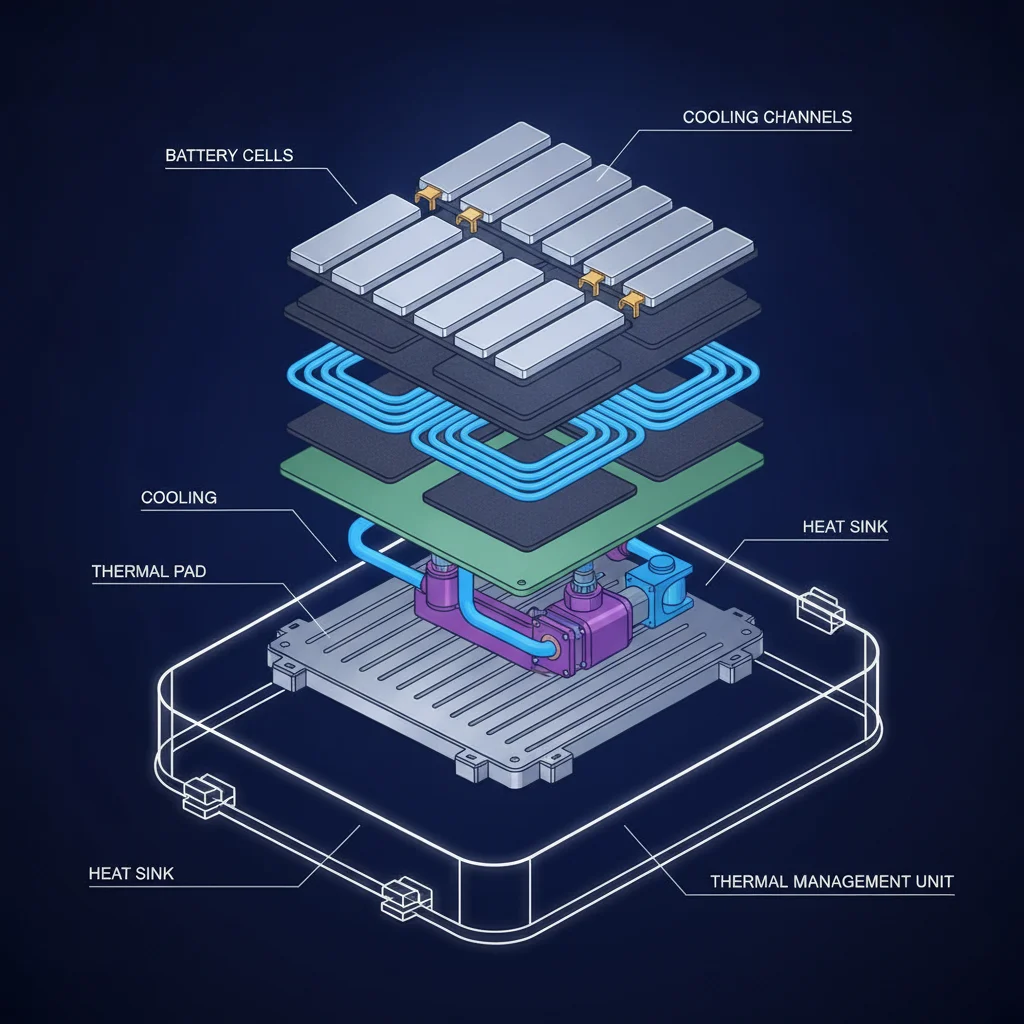
Once a year — ideally in spring before summer heat arrives — run a full battery health check. Many EVs expose this data natively in the instrument cluster or companion app. Third-party tools like a scan tool with BMS access can provide deeper insight. Look for any significant drop in reported capacity versus the original rated range. A drop of more than 20% in the first 5 years warrants a conversation with your manufacturer or dealer, since many battery warranties cover capacity degradation to a defined threshold.
If you want to cross-reference your maintenance habits against financial outcomes, the year-one EV savings checklist pairs well with this guide — good battery habits and smart charging rate choices compound over time.
Putting It All Together: Your Annual EV Maintenance Calendar
Here's the simplest way to implement this checklist: add four recurring calendar events — one per season — each scheduled about two weeks before the season's peak conditions arrive. That gives you time to book a shop visit if something needs professional attention before you're driving in the worst of winter or the height of summer heat.
| Season | Key Focus Areas | Estimated Time |
|---|---|---|
| Winter (Oct–Nov prep) | Tire swap/check, battery pre-conditioning, HVAC, washer fluid | 60–90 min |
| Spring (Mar–Apr) | Battery health check, brake inspection, coolant, alignment | 45–75 min |
| Summer (May–Jun prep) | Thermal management, cabin filter, tire pressure, software update | 30–45 min |
| Fall (Sep–Oct) | Wiper blades, lights, battery status, fluid levels | 30–60 min |
The goal isn't perfection — it's consistency. Missing one item in one quarter is recoverable. Ignoring the checklist entirely for two years is how you end up with degraded tires, contaminated brake fluid, and a battery that's lost more capacity than it should have. For a long view of how these seasonal tasks fit into the full ownership arc, the full ownership maintenance timeline from month one to year ten gives you the complete picture.
And if you're also maintaining a conventional vehicle in the household, seasonal maintenance prep for gas and hybrid vehicles covers the parallel checklist for ICE cars — useful for households running both powertrains.

All claims are backed by peer-reviewed research. Sources on request.