| Tire rotation interval (EV) | Every 5,000–7,500 miles (Stricter than the typical gas vehicle recommendation due to added EV weight) |
| Wiper blade replacement | Every 6–12 months (Same as gas vehicles; inspect more often in climates with harsh UV or heavy precipitation) |
| Cabin air filter | Every 15,000–20,000 miles or annually (Check owner's manual; some EVs specify shorter intervals) |
| Brake fluid replacement | Every 2–3 years (Based on moisture absorption, not brake pad wear) |
| 12V accessory battery | Every 3–5 years (Failure prevents vehicle from starting regardless of main pack charge level) |
| Brake pad life (typical EV) | 80,000–100,000+ miles (Regen braking significantly extends friction brake life vs. gas vehicles) |
| TPMS sensor battery life | 5–10 years (Replace sensors when mounting new tires to avoid mid-interval failure) |
| EV-specific tire tread life | 40,000–50,000 miles (Reinforced EV tires; standard tires on EVs may wear out in 25,000–35,000 miles) |
Why EVs Still Have Consumable Parts
The marketing pitch around electric vehicles often focuses on what you won't need anymore — no oil changes, no spark plugs, no timing belt replacements. That's accurate. But it can create a false impression that EVs are maintenance-free. They're not.
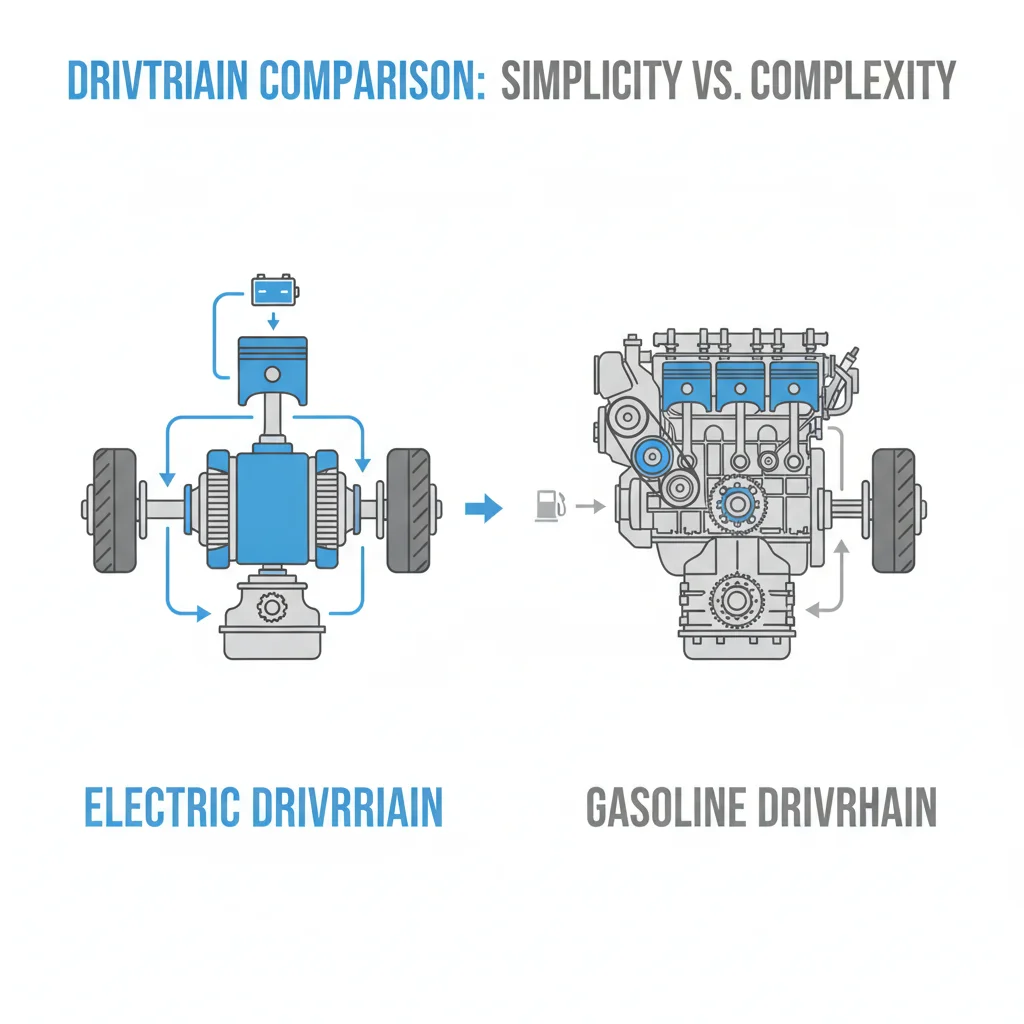
What EVs do is eliminate an entire category of powertrain consumables. Fewer moving parts means fewer wear items in the drivetrain, but the parts that interact with weather, road surfaces, and daily use still wear out on roughly the same schedule as they do on gas vehicles — sometimes faster.
This reference guide covers every significant wear item you'll replace on an EV over its lifetime, with typical replacement intervals and what to watch for. Think of it as the maintenance list nobody included in your owner's manual summary.
| Tire rotation interval (EV) | Every 5,000–7,500 miles (Stricter than the typical gas vehicle recommendation due to added EV weight) |
| Wiper blade replacement | Every 6–12 months (Same as gas vehicles; inspect more often in climates with harsh UV or heavy precipitation) |
| Cabin air filter | Every 15,000–20,000 miles or annually (Check owner's manual; some EVs specify shorter intervals) |
| Brake fluid replacement | Every 2–3 years (Based on moisture absorption, not brake pad wear) |
| 12V accessory battery | Every 3–5 years (Failure prevents vehicle from starting regardless of main pack charge level) |
| Brake pad life (typical EV) | 80,000–100,000+ miles (Regen braking significantly extends friction brake life vs. gas vehicles) |
| TPMS sensor battery life | 5–10 years (Replace sensors when mounting new tires to avoid mid-interval failure) |
| EV-specific tire tread life | 40,000–50,000 miles (Reinforced EV tires; standard tires on EVs may wear out in 25,000–35,000 miles) |
Tires: Your Highest-Priority Wear Item
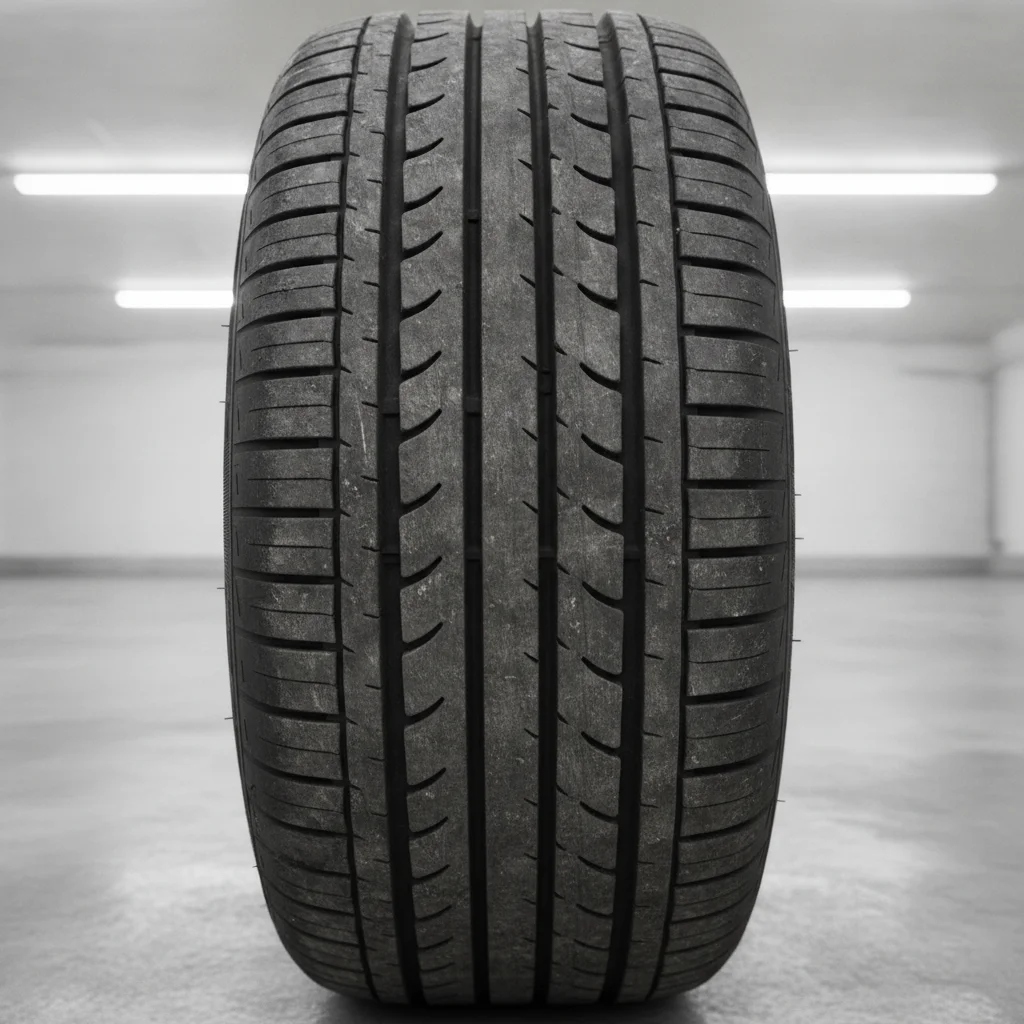
Tires on electric vehicles wear faster than on comparable gas-powered cars. The reason is straightforward: EVs are heavier (battery packs add 400–1,200 lbs depending on the model) and deliver instant torque that increases stress on the contact patch. The result is measurably shorter tread life for the same tire compound.
What Wears Out
- Tread depth: Legal minimum is 2/32 inch, but handling degrades noticeably below 4/32. Check with a tread depth gauge or the penny test monthly.
- Sidewalls: Look for bulges, cracks, or cuts after any curb strike or pothole impact. EVs' added weight makes sidewall damage more consequential.
- Valve stems: Rubber stems degrade over 5–7 years. Replace them whenever you mount new tires.
Replacement Intervals
EV-specific tires from Michelin, Goodyear, and Continental are reinforced for higher load ratings and can last 40,000–50,000 miles under normal use. Standard tires on EVs frequently wear out in 25,000–35,000 miles. Check tread depth every 5,000 miles, and rotate every 5,000–7,500 miles — more frequently than the typical 7,500–10,000 mile interval recommended for gas vehicles.
TPMS Sensors
Every EV has tire pressure monitoring system sensors inside each wheel. These run on batteries with a 5–10 year lifespan. When a sensor battery dies, you lose the warning system entirely. Budget roughly $50–$150 per sensor for replacement, including programming.
400–1,200 lbs
Extra weight added by EV battery packs
Battery pack weight varies by vehicle segment and range rating, directly increasing tire wear rates.
2x
Longer brake pad life vs. gas vehicles
Regenerative braking reduces friction brake use enough to roughly double typical pad lifespan on EVs.
3–5 years
Typical 12V battery replacement interval
The auxiliary 12V battery in EVs degrades on a timeline similar to gas vehicles and must be proactively replaced.
25,000–35,000 miles
Tread life of standard tires on EVs
Non-EV-specific tires wear significantly faster under the heavier weight and instant torque of electric vehicles.
$50–$150
Cost per TPMS sensor replacement
Includes programming; sensor battery life ends after 5–10 years, eliminating the tire pressure warning system.
Wiper Blades and Windshield Washer Components
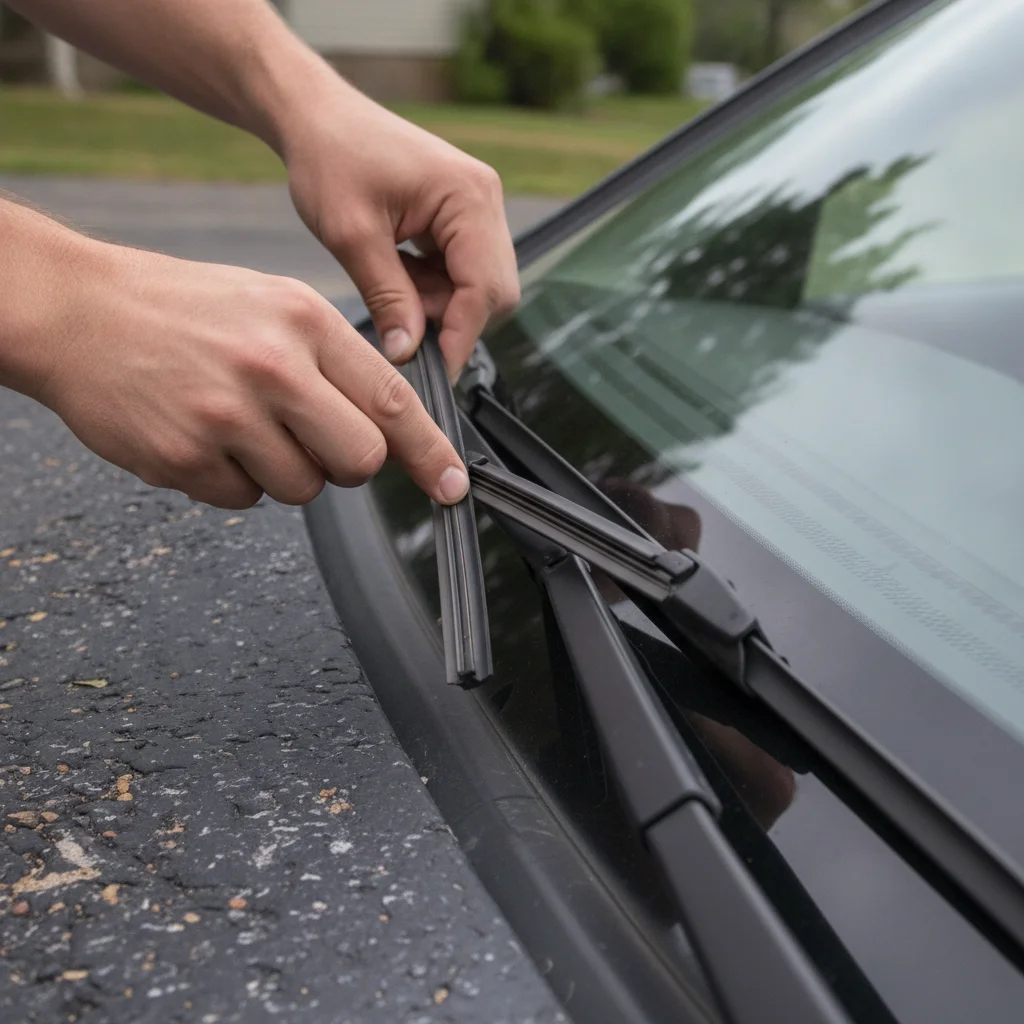
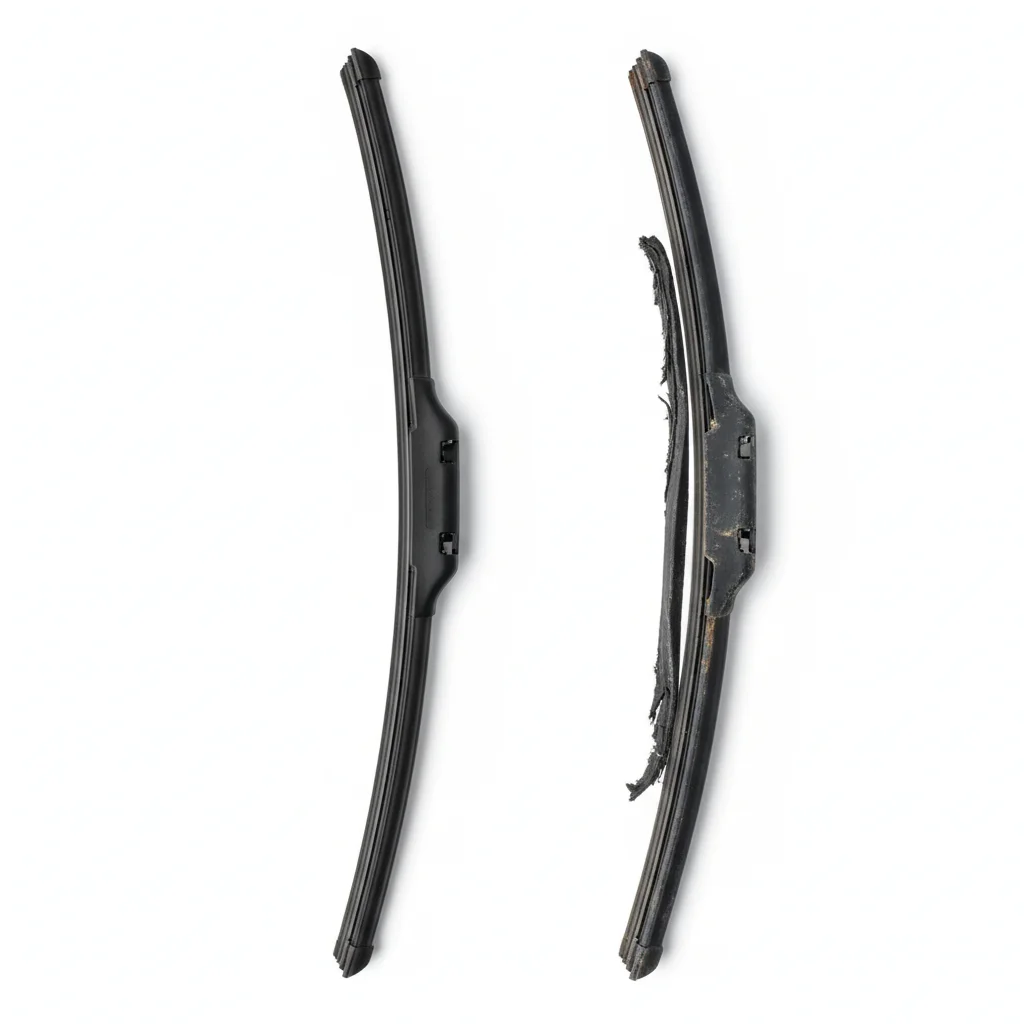
Wiper blades are the same on an EV as on any other vehicle — rubber degrades with UV exposure, temperature cycling, and use. Most blades need replacement every 6–12 months, or sooner if you notice streaking, skipping, or squealing. This schedule doesn't change because you drive electric.
If you've never replaced wiper blades yourself, it's one of the easiest DIY maintenance tasks you can do. Proper installation matters more than most people realize — a blade that isn't fully seated will chatter or streak even when new.
Types of Wiper Blades
- Conventional (bracket) blades: Most common, widely available, $8–$20 each.
- Beam (bracketless) blades: Standard on many newer EVs including Tesla models. Better snow performance, $15–$40 each.
- Hybrid blades: A middle ground — aerodynamic shell over a traditional frame. $15–$30 each.
Rear Wiper Blade
Many EVs with hatchback or liftgate profiles include a rear wiper. It wears at the same rate as front blades but is often forgotten. Check it during every front blade inspection.
Washer Nozzles
Washer nozzles clog over time from mineral deposits, especially in hard-water areas. A clogged nozzle is a safety issue — clear it with a pin or replace the nozzle assembly (usually under $10). Some EVs use heated washer nozzles; confirm this feature before assuming a clog is the problem.
The washer fluid reservoir and pump motor are durable, but the pump can fail after 8–12 years or 100,000+ miles. Replacement is straightforward and inexpensive at under $30 for the part.
Brakes: Slower to Wear, But Not Exempt
Regenerative braking is one of the genuine advantages of EV ownership. By using the motor as a generator to slow the vehicle, regen recovers energy and dramatically reduces wear on friction brakes. In practice, many EV owners get 80,000–100,000+ miles out of their original brake pads — roughly twice the life seen on gas vehicles.
Rotor Rust: An EV-Specific Concern
Because EV owners use friction brakes infrequently, rotors can develop surface rust from moisture exposure between uses. Light surface rust clears on its own after a few brake applications — this is normal. However, if a vehicle sits for weeks or months without driving, deeper rust pitting can form and may require early rotor replacement. This is rarely a problem for daily drivers, but it's worth keeping in mind if your EV sits for extended periods.
EV Tire Pressure and Range
Proper tire inflation on an EV affects more than safety — it directly impacts range. Under-inflated tires increase rolling resistance, which reduces efficiency and cuts miles per charge. Tesla, Rivian, and most EV manufacturers recommend checking tire pressure monthly rather than waiting for the TPMS warning light. The light only activates when pressure is already significantly low.
Software Updates Don't Replace Physical Maintenance
Over-the-air software updates can improve EV performance, charging efficiency, and regen calibration, but they don't address physical wear items. No software update fixes worn tires, a degraded wiper blade, or a failing 12V battery. Keep physical maintenance on its own schedule, separate from any digital update notifications.
What Still Wears Out
- Brake pads: Still consumable, just slower to wear. Inspect at every tire rotation. Replace when friction material drops below 3mm.
- Brake rotors: Here's the counterintuitive problem — because friction brakes are used less frequently, rotors on EVs are prone to rust and surface corrosion rather than wear. Surface rust is normal and clears after a few stops, but deep pitting from extended non-use (think: 3+ months in storage) can require early rotor replacement.
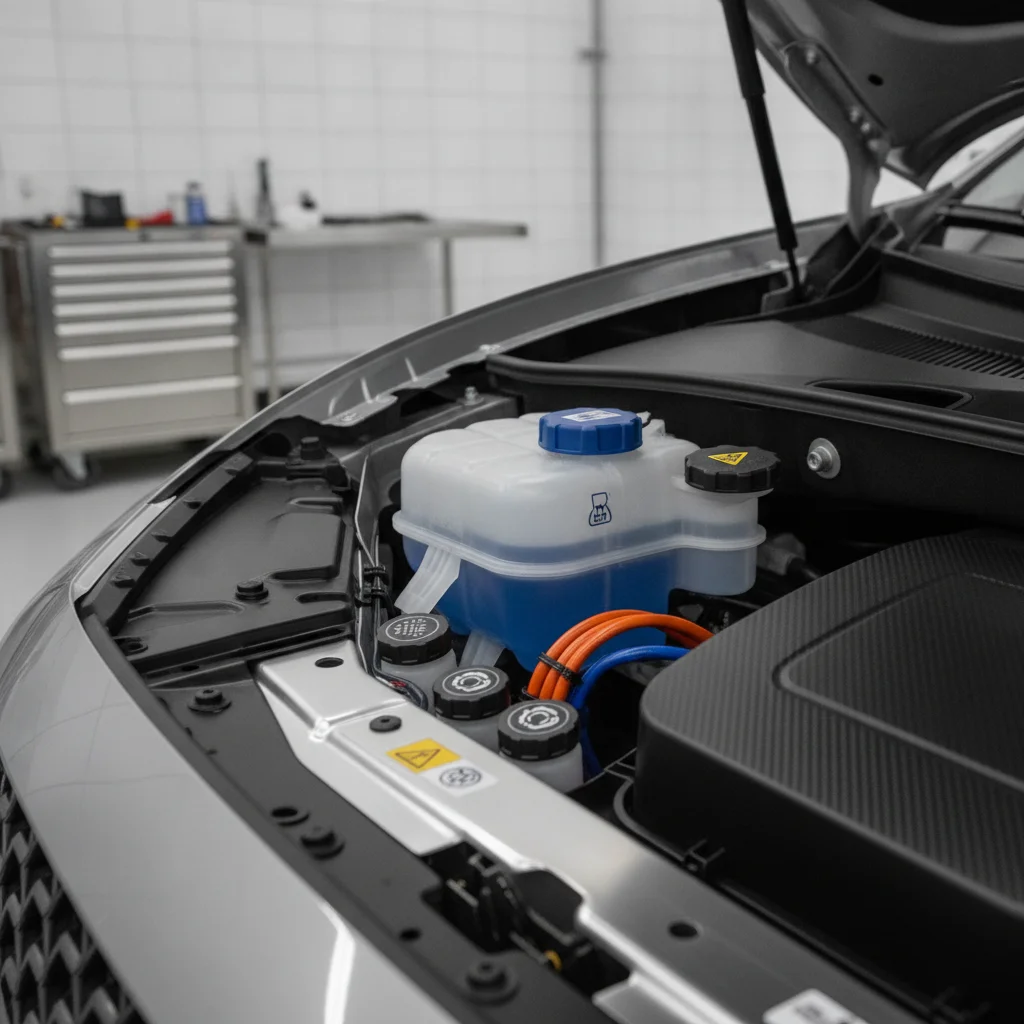
- Brake fluid: Brake fluid absorbs moisture over time regardless of how often the brakes are applied. Most manufacturers recommend replacement every 2–3 years or per the brake fluid test result (test strips are available for under $5).
- Brake calipers: Calipers can seize if friction brakes go unused for extended periods. If you notice uneven pad wear or dragging, caliper service or replacement may be needed.
Parking Brake
EVs with electronic parking brakes (most modern models) have an actuator motor that can wear out. Symptoms include slow engagement, grinding, or warning lights. This isn't a frequent failure, but it's worth knowing about for high-mileage vehicles.
Cabin Air Filter, Trim, and Interior Wear Items
The cabin air filter is one of the most overlooked wear items in any vehicle, and EVs are no exception. In fact, because EVs recirculate cabin air more aggressively to protect HVAC efficiency, a clogged cabin filter can degrade both air quality and range. Most EV owners should replace the cabin air filter every 15,000–20,000 miles or annually, whichever comes first.
Regenerative braking
A system that uses the electric motor as a generator during deceleration to recover kinetic energy and return it to the battery. It slows the vehicle while dramatically reducing wear on friction brake components.
TPMS (Tire Pressure Monitoring System)
A sensor-based system inside each wheel that alerts the driver when tire pressure drops below a safe threshold. Each sensor contains a battery that eventually needs replacement.
12V accessory battery
A small lead-acid or lithium battery separate from the main traction pack that powers lights, computers, locks, and other vehicle accessories. It degrades over time and requires periodic replacement.
Traction battery
The large high-voltage battery pack that stores energy for driving the electric motors. Not a short-interval wear item — most manufacturers warranty traction batteries for 8 years or 100,000 miles.
DC-to-DC converter
A component in EVs that steps down the high-voltage traction battery current to 12V levels to power accessories and recharge the auxiliary 12V battery, replacing the alternator found in gas vehicles.
Beam (bracketless) wiper blade
A wiper blade design without an external metal frame, instead using a pre-curved tensioned strip for contact. Standard on many EVs; performs better in snow and ice than conventional bracket blades.
Exterior Trim and Seals
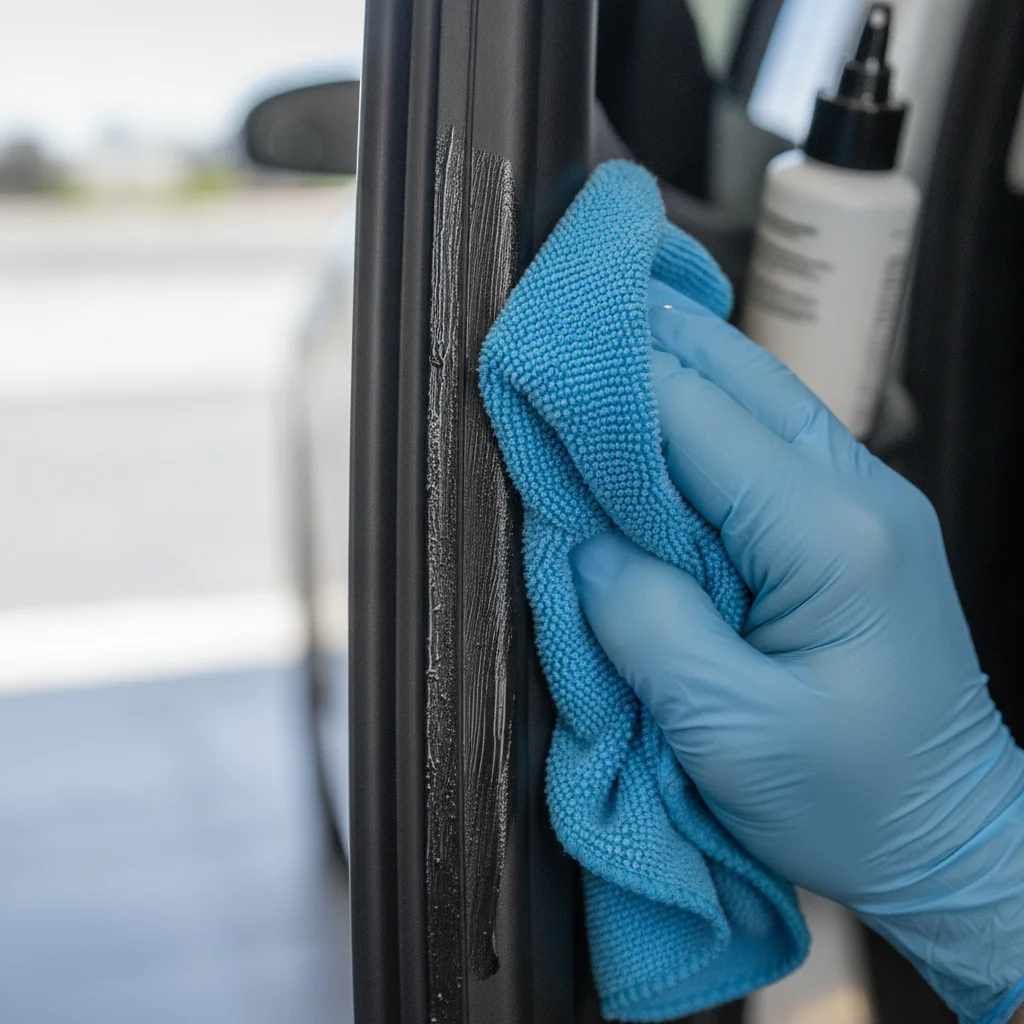
Rubber door seals, window seals, and trim pieces degrade from UV exposure and temperature cycling over 5–10 years. EVs aren't immune to this. Signs of degradation include wind noise, water intrusion, or visible cracking. Applying a rubber conditioner annually extends seal life. Full replacement of a door seal typically runs $30–$150 depending on the vehicle.
Paint and Clearcoat
Paint on EVs wears the same as on any vehicle. Regular washing, clay bar treatment, and wax or paint sealant application protect against oxidation, water spots, and minor scratches. If you're thinking about resale value, exterior detailing and minor paint correction deliver a measurable return when it comes time to sell.
Interior Surfaces
- Floor mats and cargo liners: Wear and tear items. All-weather rubber mats protect the factory carpet but eventually crack and curl.
- Seat upholstery: Leather and leatherette surfaces need conditioning to prevent cracking. Fabric seats benefit from periodic cleaning.
- Steering wheel covering: Leatherette-wrapped steering wheels on EVs like Tesla and Hyundai Ioniq models are known to peel after 3–6 years. Replacement wraps are available for $50–$150 DIY.
Sunroof Seals and Drainage Tubes
Panoramic glass roofs are common on EVs. The drainage tubes that run from the sunroof frame to the vehicle's rocker panels can clog with debris. Clogged drains cause water to pool inside the headliner — an expensive repair if left unaddressed. Flush drainage tubes annually if your EV parks under trees.
Annual EV Ownership Checklist: Maintenance Tasks by Season
A structured seasonal checklist to help EV owners schedule every maintenance task throughout the year — from tire checks in winter to cabin filter replacement in spring.
Coolant, Brake Fluid, and Windshield Washer: The Fluids Your EV Still Uses
Covers every fluid your EV still requires, with service intervals and what happens if you skip them. A natural complement to this wear items reference.
Wiper Blade Installation Done Right: Avoid the Clatter and Streaking
Step-by-step guide to replacing wiper blades correctly on any attachment style, including the beam blades common on modern EVs.
Cabin Air Filter Replacement in EVs: Overlooked but Worth Doing
Explains why cabin air filter replacement matters more in EVs than many owners realize, and how to do it yourself in under 15 minutes on most models.
12V Battery, Lights, and Accessory Wear Items
Every EV has a 12-volt accessory battery alongside its main traction battery. This small battery powers lights, computers, door locks, and other accessories. Unlike in a gas car — where the alternator continuously recharges the 12V battery — in an EV, the traction battery handles this job via a DC-to-DC converter. The 12V battery still degrades and typically needs replacement every 3–5 years. A dead 12V battery will prevent the car from starting, even if the main pack is fully charged.
Lighting
LED headlights, which are standard on virtually all modern EVs, last far longer than halogen bulbs — often 15,000–30,000 hours. You may never replace them in the life of the vehicle. However, LED taillights, turn signals, and interior lights can still fail. Check all exterior lights monthly; replacement LEDs are inexpensive, but labor costs for headlight assemblies can be substantial on vehicles with complex housings.
Charge Port and Connector
The charge port door (if spring-loaded) can wear its mechanism over thousands of charge cycles. The port contacts themselves rarely fail but can corrode in high-humidity environments. Use a contact cleaner safe for electrical components if you notice charging connectivity issues. Charge port door actuators typically cost $50–$200 to replace.
Where EV Maintenance Is Genuinely Simpler
For full context, it's worth acknowledging what's gone. There's no engine oil, no oil filter, no coolant flush for an internal combustion engine, no spark plugs, no air filter for intake, no timing belt, no serpentine belt, no transmission fluid in most cases, and no exhaust system to replace. EVs aren't maintenance-free, but the maintenance burden is genuinely and substantially lower. The wear items in this guide represent what's left — and staying on top of them keeps your EV running well and protecting its resale value.
For a structured approach to scheduling all of these tasks throughout the year, the seasonal EV maintenance checklist is a useful companion to this reference guide.

All claims are backed by peer-reviewed research. Sources on request.