Key Takeaways
Our Verdict
Most EV owners can handle a meaningful slice of routine maintenance themselves — tires, filters, wipers, and visual inspections — without any special training. But the high-voltage systems, thermal management, and onboard software that define modern EVs demand dealer or certified-shop access. The smart strategy is to own the simple stuff confidently and outsource the high-stakes work without hesitation.
| Best for | Recommended |
|---|---|
| Budget-conscious owners comfortable with basic car care | DIY tasks (tires, filters, wipers, fluid top-offs) |
| Owners with complex warning lights or battery concerns | Certified EV technician or dealer service |
| Owners who want a mix of savings and professional oversight | DIY routine tasks + annual dealer inspection |
| Owners still under manufacturer warranty | Dealer or authorized shop for any gray-area repairs |
Why EV Maintenance Is Genuinely Different — But Not Zero
The pitch you hear most often when shopping for an EV is that they're nearly maintenance-free. That's partially true. Electric drivetrains eliminate oil changes, spark plugs, timing belts, exhaust systems, and the labyrinth of components inside a traditional automatic transmission. According to the U.S. Department of Energy, EV powertrain maintenance costs can run roughly 40% lower than comparable gas vehicles over a vehicle's lifetime.
But "lower" is not the same as "none." Tires still wear. Brake fluid still absorbs moisture. Cabin air filters clog. Wiper blades dry out. And the high-voltage battery system — the single most expensive component on any EV — requires periodic professional attention to stay healthy and safe.
If you're new to electric vehicle ownership, what every new owner should know about EV maintenance is a smart starting point before you pick up any tools. For a broader look at the full lifecycle of EV upkeep, everything that goes into maintaining an electric vehicle over its lifetime gives you the complete picture.
The goal of this guide is more specific: a clear, honest split between what you can safely handle in your driveway and what you should hand off to someone with the right training and equipment.
DIY EV Maintenance: Tasks Any Owner Can Handle
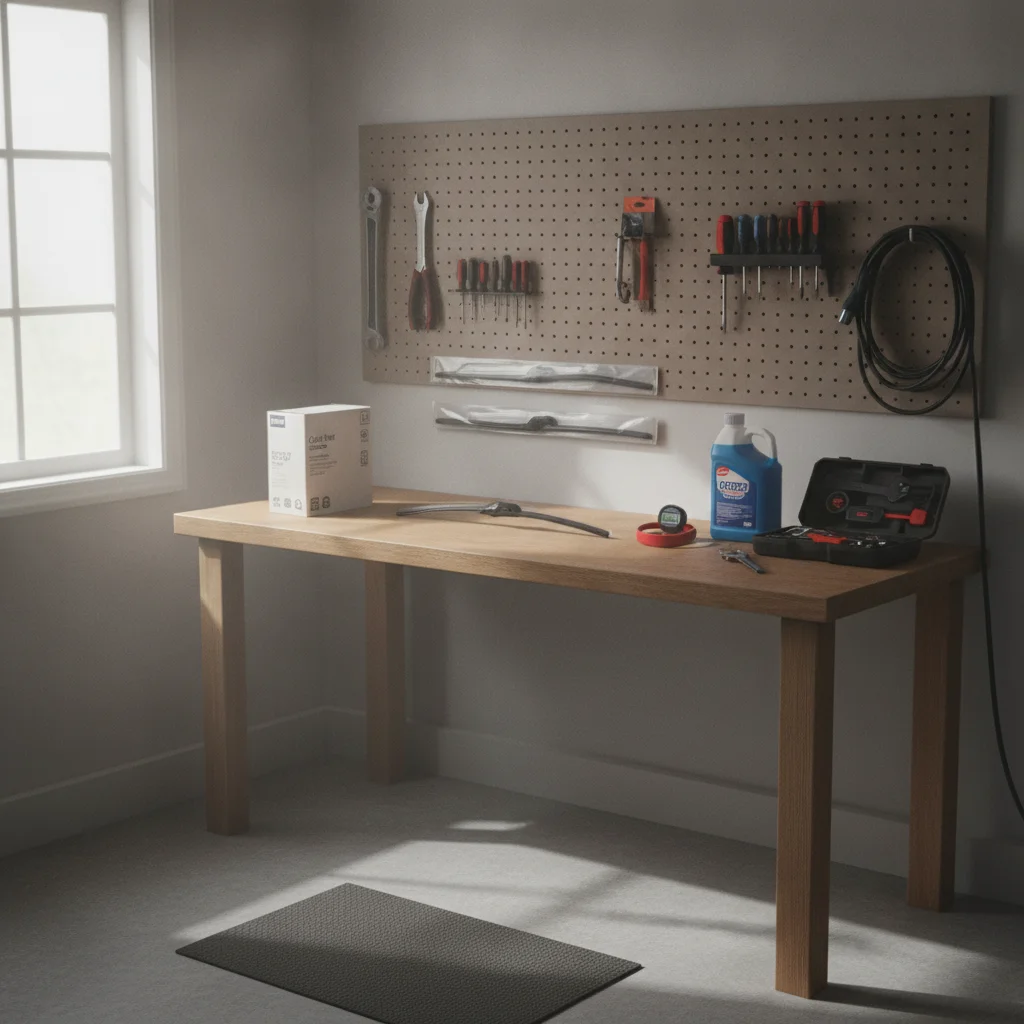
These are the jobs where doing it yourself saves real money, carries minimal risk, and doesn't require anything beyond basic mechanical confidence and a few inexpensive tools.
Tire Rotation and Pressure Checks
EVs are notoriously hard on tires. The instant torque delivery and added vehicle weight (batteries are heavy) accelerate wear, particularly on the front axle of front-wheel-drive models and on all four corners of AWD variants. Most EV manufacturers recommend rotation every 5,000–7,500 miles — more often than many gas car owners are used to.
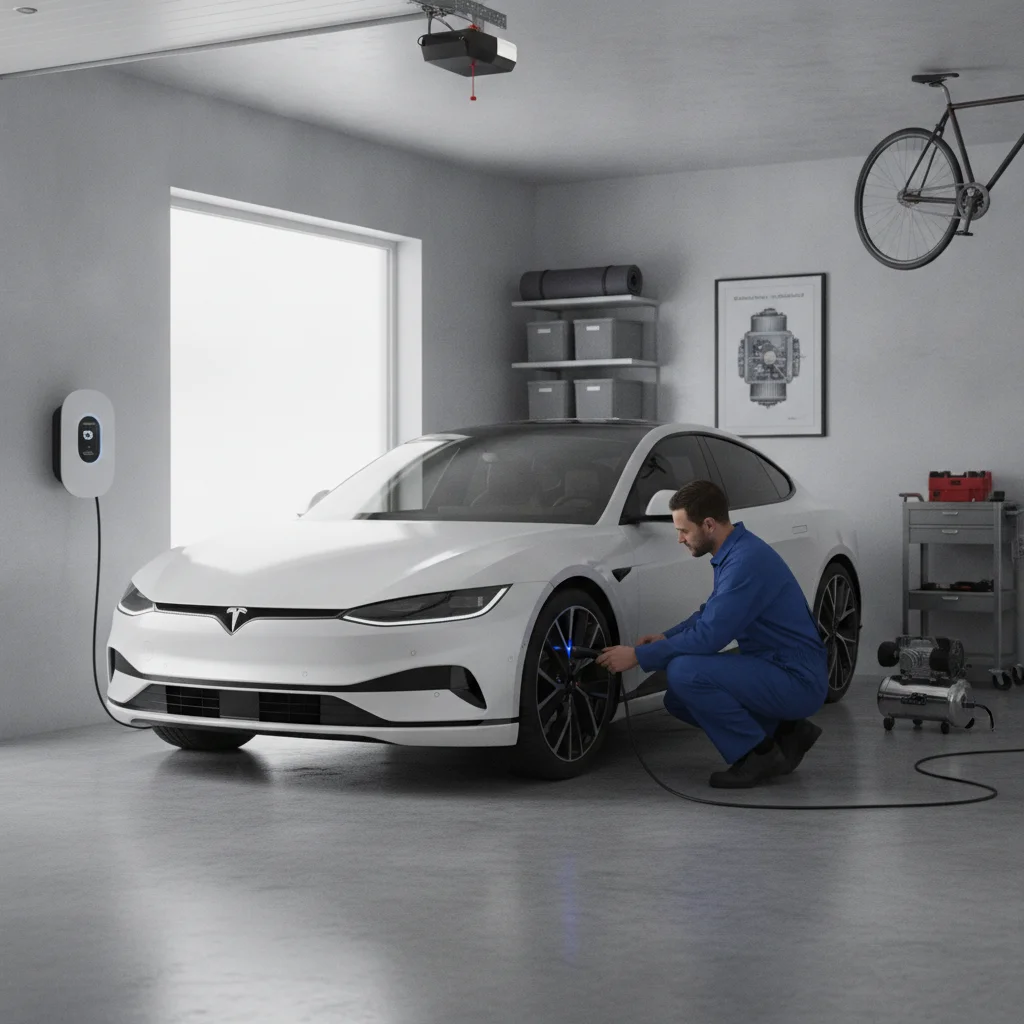
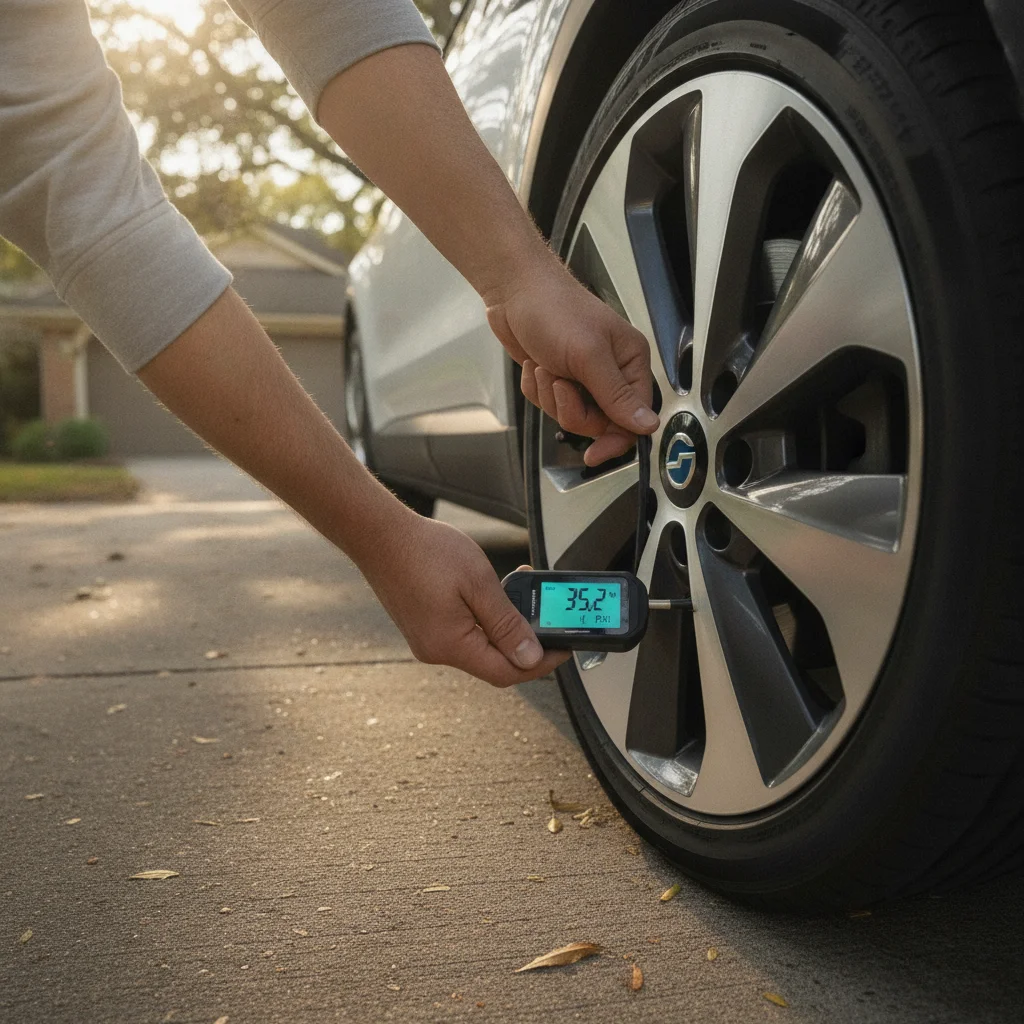
Checking and adjusting tire pressure is something every EV owner should do monthly and before any long trip. A portable inflator rated for your vehicle's PSI spec (found on the door jamb sticker, not the tire sidewall) costs $30–$60 and pays for itself quickly. Rotation itself requires a floor jack, jack stands, and a torque wrench — a one-time investment of around $150–$250 if you don't already own them.
Check Tire Pressure More Often on EVs
EV tires run at higher recommended pressures than many gas car tires, and the added vehicle weight accelerates wear from underinflation. Set a monthly reminder and check when the tires are cold (not driven in the past three hours) for an accurate reading. Even a 4–5 PSI variance from spec can measurably reduce your range.
Keep a Simple Maintenance Log
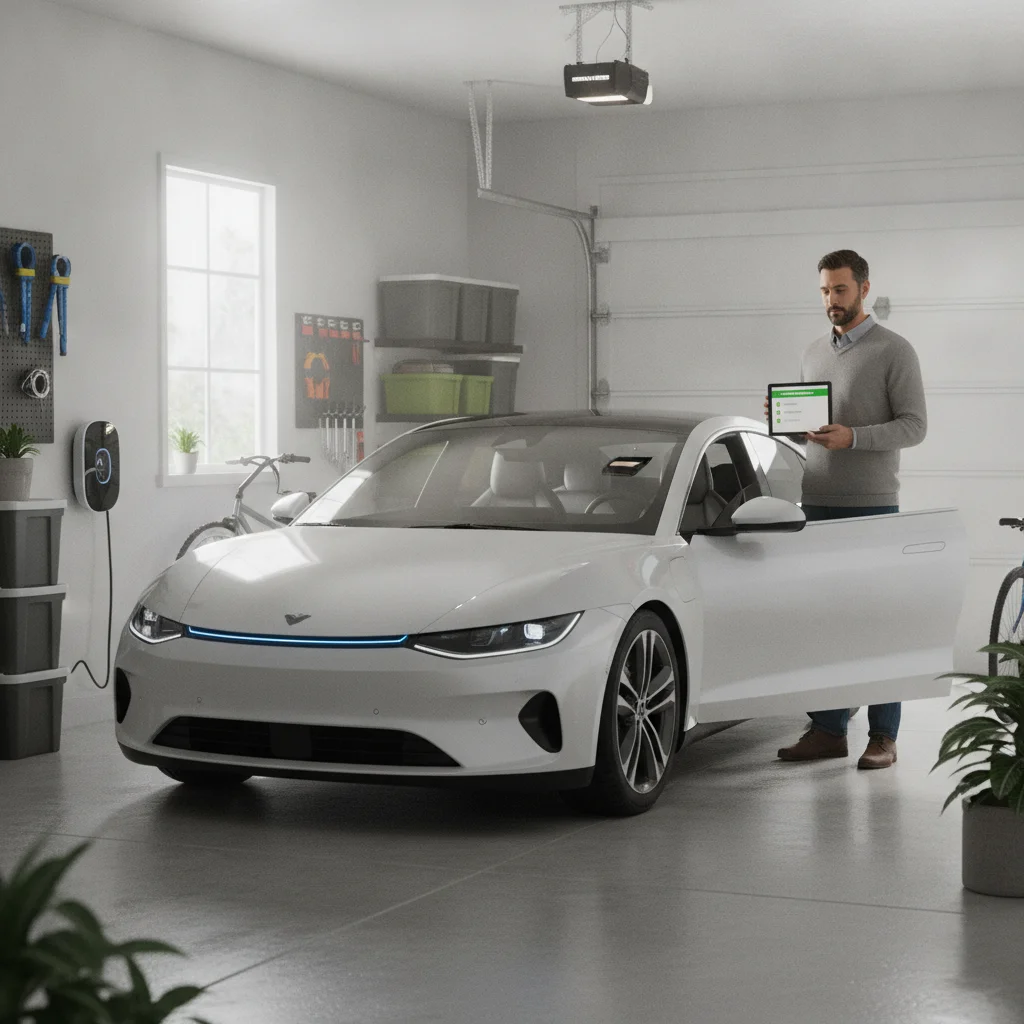
A basic spreadsheet or even a notes app entry logging the date, mileage, and task for every DIY job creates a paper trail that protects you in warranty disputes and makes it easy to stay on schedule. If you sell the vehicle, a documented service history adds real value to a private buyer or dealer trade-in assessment.
Cabin Air Filter Replacement
The cabin air filter cleans the air circulating through your HVAC system. On most EVs it's accessible behind the glove box or under the dashboard with no tools required, or at most a few plastic clips. Replacement filters run $15–$35 depending on the brand and whether you opt for a HEPA-grade unit. Most manufacturers recommend replacement every 15,000–25,000 miles or annually, whichever comes first.
Wiper Blade Replacement
Nothing EV-specific here — wiper blades wear out and need replacement every 6–12 months depending on climate. Beam-style blades generally last longer and clear better than traditional bracketed blades. This is a five-minute job and costs $20–$50 per pair.
Washer Fluid Top-Off
The windshield washer reservoir is one of the few fluid systems on an EV that needs regular attention. Use a quality washer fluid rated for your climate (freeze-resistant in cold regions). This is as simple as it gets — locate the reservoir, fill it, done.
Brake System Visual Inspection
EVs use regenerative braking heavily, which means the friction brakes see far less use than on a gas car. That's largely good news, but reduced use can cause rotors to develop surface rust from sitting or light corrosion from infrequent activation. Visually inspecting your rotors and pads through the wheel spokes takes seconds and can catch obvious issues early. If you see deep grooves, heavy surface rust that doesn't clear after a few brake applications, or very thin pad material, flag it for a shop.
Exterior Washing and Paint Care
Regular washing, occasional clay bar treatment, and wax or ceramic coating application are squarely in DIY territory. Keeping the exterior clean protects paint from road salt, brake dust, and contaminants — all of which can accelerate corrosion on exposed metal and undercarriage components.
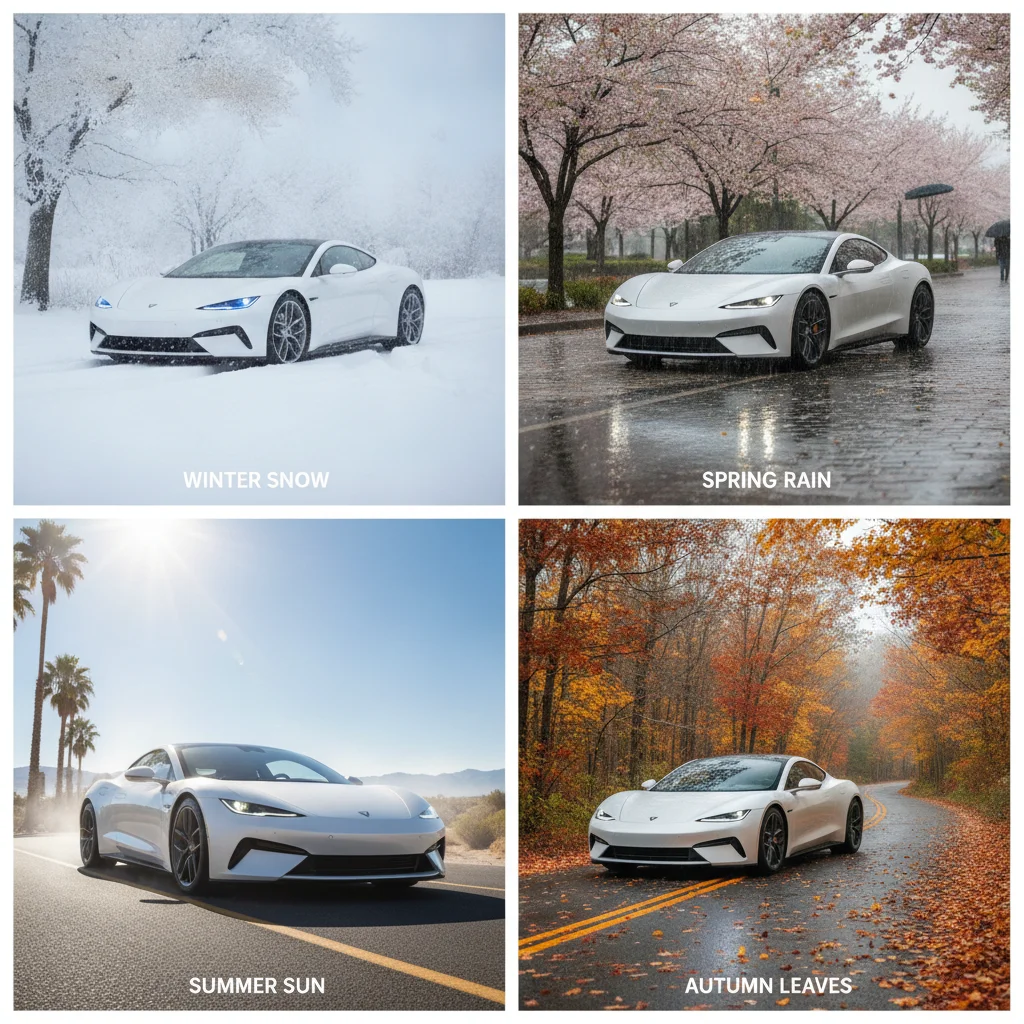
For a structured seasonal breakdown of which of these tasks to prioritize and when, the annual EV ownership checklist by season is worth bookmarking.
Technician-Only Territory: What Not to Touch Yourself
This is where the EV's unique architecture creates hard limits for the home mechanic — not because of complexity alone, but because of genuine safety risk and the potential to trigger warranty voids or create problems that cost far more to fix than you'd save.
High-Voltage Systems Are Not DIY Territory
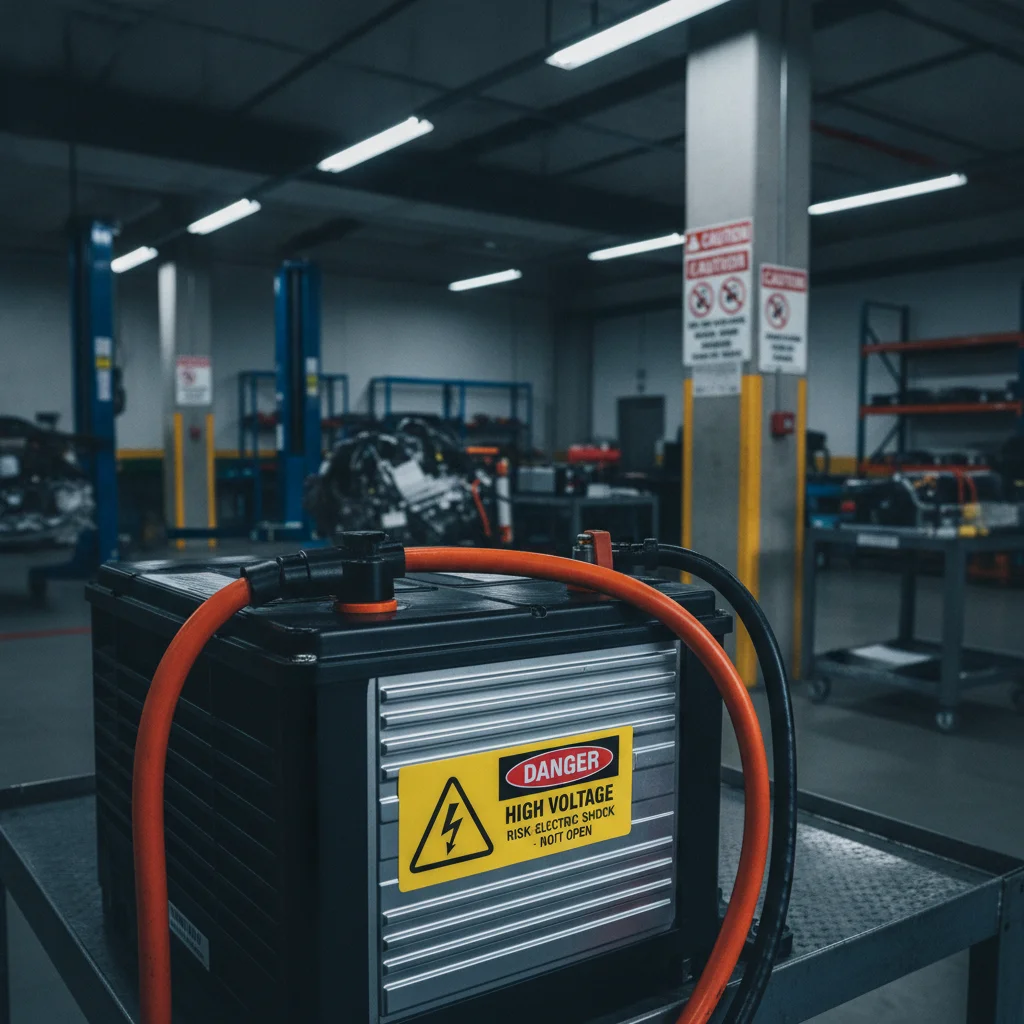
EV battery packs, inverters, and motor systems operate at voltages that are lethal without proper protective equipment and training. Do not open battery enclosures, cut orange high-voltage cables, or attempt any repair on components marked with high-voltage warning symbols. Even with the vehicle powered off, residual charge can remain in the system. This is a non-negotiable boundary — not a matter of skill level.
High-Voltage Battery Service
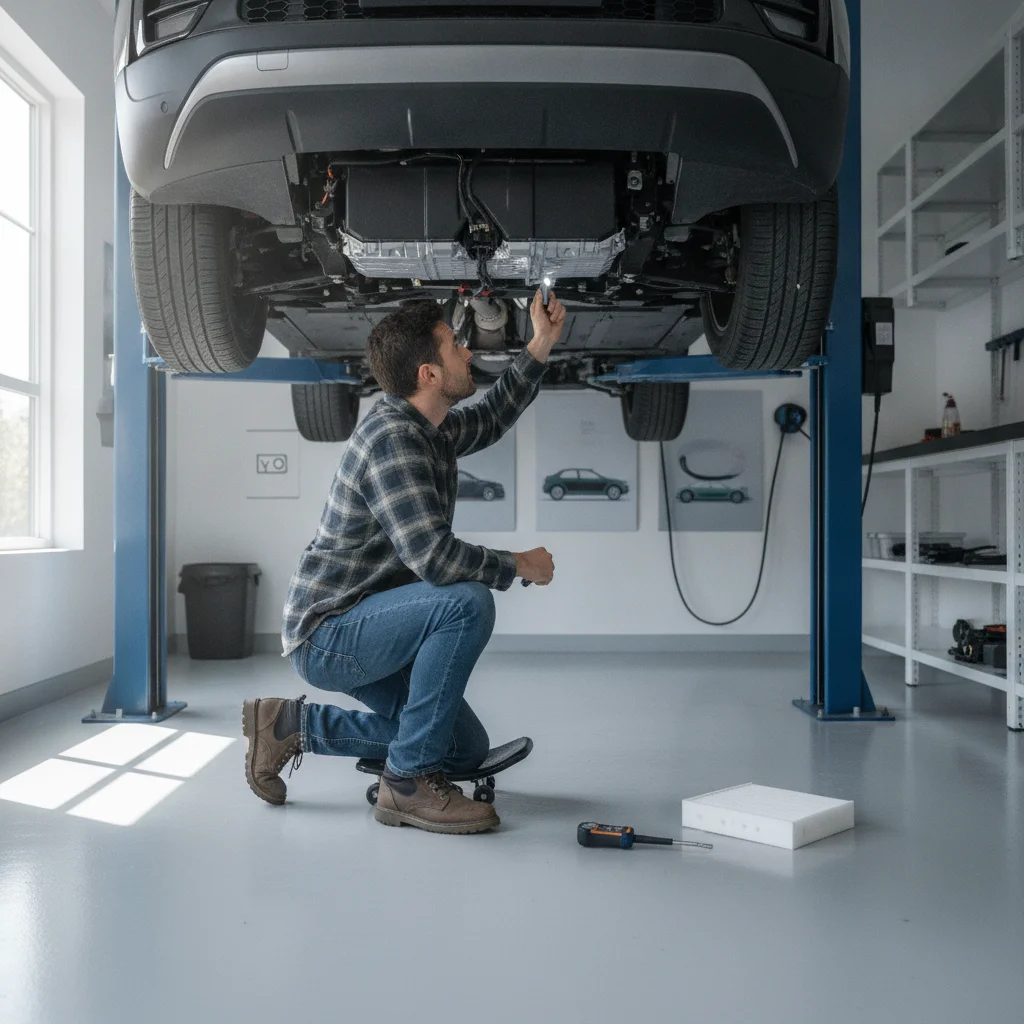
The traction battery pack on an EV operates at voltages ranging from roughly 400V to 800V depending on the vehicle. Exposure to those levels is not survivable without proper protective equipment and training. Any work involving the battery pack — including inspection of the battery management system (BMS), thermal management components, cell replacement, or pack removal — must be performed by a technician certified to work on high-voltage systems.
Even disconnecting the service disconnect plug (a safety interlock many EVs include) can still leave residual charge in capacitors if done incorrectly. Don't.
Brake Fluid Flush
Wait — isn't this a simple job on a gas car? Often, yes. On an EV, the brake-by-wire and regenerative braking systems are electronically integrated in ways that make a standard gravity or pressure bleed unreliable or incomplete. Most EV manufacturers recommend using a dealer-level scan tool to properly bleed and reset the system. Tesla, for example, explicitly recommends brake fluid replacement every 2 years regardless of condition, performed by a Tesla-authorized shop. Attempting this at home risks introducing air into the lines in ways you can't detect without the right diagnostic equipment.
HVAC Thermal Management and Refrigerant
EVs use their heat pump or resistance heating systems not just for cabin comfort but for active battery thermal management — warming the pack in cold weather and cooling it during fast charging or aggressive driving. This system uses refrigerant (typically R-1234yf) and is sealed. Refrigerant handling requires EPA Section 609 certification and specialized recovery equipment. Attempting any HVAC refrigerant work yourself is illegal without certification and can damage the thermal management loop.
Software Updates and Onboard Diagnostics
Most major EVs (Tesla, Rivian, GM's Ultium platform, Ford's Mach-E and F-150 Lightning) receive over-the-air (OTA) software updates that handle this automatically. But when a software fault generates a warning code, clearing or diagnosing it almost always requires manufacturer-level scan tools — not a generic OBD-II reader. A standard $30 OBD-II dongle will read basic codes on some EVs but will miss the vast majority of fault codes that live in the BMS, inverter, or motor control modules. Misreading or improperly clearing these codes can mask real problems.
Electric Motor and Inverter Service
The electric motor itself is remarkably reliable and rarely needs attention in normal service life. But when it does — bearing failure, winding issues, inverter fault — you're dealing with high-voltage components that require full workshop equipment. This is dealer or certified independent shop territory, full stop. Understanding how EV motors and inverters work can help you interpret what a technician tells you, but it won't make this DIY-safe.
Suspension and Steering on Air-Suspended or Electronically Controlled Platforms
Vehicles like the Tesla Model S/X, Rivian R1T/R1S, and others use air suspension or adaptive dampers controlled by electronic modules. While basic visual inspection is fine, any actual suspension work — replacing air bags, compressors, or electronic dampers — requires software calibration after installation. Without that calibration, ride height sensors and stability systems may behave unpredictably.
Side-by-Side: DIY vs. Technician-Required Tasks
The table below gives you a quick reference across the most common EV maintenance tasks, with typical cost comparisons between doing it yourself and paying a shop.
| Maintenance Task | DIY-Friendly? | Typical DIY Cost | Typical Shop Cost | Warranty Risk if DIY? | |
|---|---|---|---|---|---|
| Tire pressure check | Yes | $0–$30 (gauge/inflator) | $0 (free at most shops) | None | |
| Tire rotation | Yes (with jack/stands) | $0–$20 (tools amortized) | $25–$60 | None if documented | |
| Cabin air filter | Yes | $15–$35 | $60–$120 w/labor | None | |
| Wiper blade replacement | Yes | $20–$50 | $40–$80 w/labor | None | |
| Windshield washer fluid | Yes | $5–$10 | Minimal | None | |
| Brake fluid flush | No — scan tool required | N/A | $100–$200 | High — improper bleed | |
| High-voltage battery service | Absolutely not | N/A | Varies widely | Voids battery warranty | |
| 12V auxiliary battery | Sometimes (model-specific) | $80–$150 (parts) | $150–$300 | Low to moderate | |
| HVAC / refrigerant service | No — EPA cert required | N/A | $150–$400+ | High | |
| Software diagnostics / fault codes | Partial (basic OBD only) | $30 (generic reader) | $75–$150 (dealer diag) | Moderate if codes cleared |
Costs above are national averages and will vary by region, vehicle brand, and shop rates. Labor rates at EV-authorized dealers tend to run $130–$200/hour, while independent EV-certified shops may charge $80–$130/hour. For more on choosing between dealer and independent service, see dealer servicing vs. independent shops for EV maintenance.
The Gray Zone: Tasks That Depend on Your Vehicle and Comfort Level
A handful of jobs sit in the middle — not dangerous enough to be strictly off-limits for a capable DIYer, but complicated enough that the wrong approach causes real problems.
12V Auxiliary Battery Replacement
Every EV has a 12V auxiliary battery (usually lead-acid or AGM) that powers accessories, the BMS keep-alive circuit, and onboard computers when the main pack is disconnected. When this battery fails, the EV may not wake up or charge correctly.
Replacement is DIY-possible on many models — the battery is often accessible without removing high-voltage components — but the procedure varies significantly by make. On some vehicles (certain Tesla models, for example), replacing the 12V battery without the car being in "Service Mode" through the app can trigger fault codes. Check your owner's manual and model-specific forums before attempting this one.
Coolant System Top-Off
Many EVs use a liquid-cooled battery and motor thermal management system. The coolant reservoir for this loop (separate from any HVAC refrigerant circuit) is typically accessible and can be topped off with distilled water or the specified coolant type. However, if the level is consistently dropping, that indicates a leak — which is a technician issue, not a top-off situation. Don't mask a leak by repeatedly topping the fluid.
Tire Replacement
Sourcing and mounting new tires is a shop job (you need a tire machine and balancer), but selecting the right tires for your EV is a decision you can and should make yourself. EV-specific or EV-rated tires are worth the premium for most owners — they're optimized for the weight and torque profile of electric vehicles and typically show better wear and range impact than general-purpose all-season tires. The EV maintenance schedule includes tire recommendations by mileage interval.
40%
Lower EV powertrain maintenance costs vs. gas
According to the U.S. Department of Energy's analysis of lifetime vehicle ownership costs.
5,000–7,500 mi
Recommended EV tire rotation interval
More frequent than gas vehicles due to the added weight and instant torque of electric drivetrains.
8 yrs / 100K mi
Federal minimum battery warranty requirement
Required for all EVs sold in the U.S. under federal law; some manufacturers exceed this threshold.
400–800V
Operating voltage range of EV battery packs
Exposure at these levels is lethal without proper PPE and certified high-voltage training.
Protecting Your Warranty: Where the Stakes Are Highest
If your EV is still under its powertrain or battery warranty — most manufacturers offer 8 years/100,000 miles on the battery pack to comply with federal EV incentive rules — what you do (or don't do) during that period matters for more than just safety. It matters for your financial protection.
The Magnuson-Moss Warranty Act prohibits manufacturers from voiding a warranty solely because you used aftermarket parts or performed your own maintenance, provided those actions didn't cause the defect you're claiming. But the burden of proof in a dispute is messy, and dealers know it. The safest approach during the warranty period:
- Document every DIY task — keep receipts for parts (cabin filters, wipers, washer fluid) and note dates and mileage.
- Use manufacturer-specified fluids and parts where called out in the owner's manual.
- Don't attempt any high-voltage system access — this will void your battery warranty at virtually every manufacturer.
- Perform software-dependent procedures (brake flush, suspension calibration) at an authorized shop so there's a service record.
For anything that falls into a gray area, your owner's manual is authoritative for your specific vehicle. Model-specific owner forums (the Tesla Motors Club, Rivian Forums, Chevy Bolt EV Forum, etc.) are also excellent resources for what the DIY community has successfully done — and failed trying — on your exact configuration.
If you want a broader reference for what's safely within DIY reach on any vehicle (not just EVs), The Complete At-Home Car Maintenance Playbook covers the fundamentals well.
Check Tire Pressure More Often on EVs
EV tires run at higher recommended pressures than many gas car tires, and the added vehicle weight accelerates wear from underinflation. Set a monthly reminder and check when the tires are cold (not driven in the past three hours) for an accurate reading. Even a 4–5 PSI variance from spec can measurably reduce your range.
Keep a Simple Maintenance Log
A basic spreadsheet or even a notes app entry logging the date, mileage, and task for every DIY job creates a paper trail that protects you in warranty disputes and makes it easy to stay on schedule. If you sell the vehicle, a documented service history adds real value to a private buyer or dealer trade-in assessment.
Building a Practical EV Maintenance Routine
The smartest EV owners I've talked to treat maintenance the same way they'd approach any complex asset: they have a clear mental map of what they own, what they can control, and where they need outside expertise. Here's a practical framework:
Monthly (Owner-Handled)
- Check tire pressure on all four corners (including the spare if equipped)
- Inspect wiper blades for streaking or skipping
- Top off windshield washer fluid
- Scan the instrument cluster for any new warning indicators
Every 6 Months or 7,500 Miles
- Rotate tires (DIY or shop)
- Inspect brake rotors and pads visually through wheel spokes
- Check the coolant reservoir level (thermal management loop)
Annually or Per Manufacturer Schedule
- Replace cabin air filter
- Inspect and test 12V auxiliary battery
- Have brake fluid tested for moisture content (and flushed if needed — shop job)
- Schedule a dealer or authorized shop inspection to pull any stored fault codes
Every 2 Years or as Recommended
- Brake fluid flush (shop)
- HVAC system inspection (shop)
- Battery health check (shop diagnostic)
That annual dealer or certified shop visit is worth budgeting for even if nothing feels wrong. Many battery or software issues show up as stored fault codes long before they surface as symptoms. Catching them early is far cheaper than reacting to a failure. The EV maintenance schedule guide goes deeper on specific intervals by system.
For owners who want a companion checklist to track all of this across the calendar year, the annual EV ownership checklist organizes these tasks by season, which is especially useful in climates where winter battery behavior and summer thermal load shift your priorities significantly.

All claims are backed by peer-reviewed research. Sources on request.