Key Takeaways
Why Battery Size Is the Wrong Place to Start
When most people shop for an electric vehicle, they zero in on one number: the battery's kilowatt-hour (kWh) capacity. The logic seems airtight — more kWh, more range, end of story. But that's not how EVs actually work, and treating battery size as the primary measure of range leads buyers to make expensive mistakes.
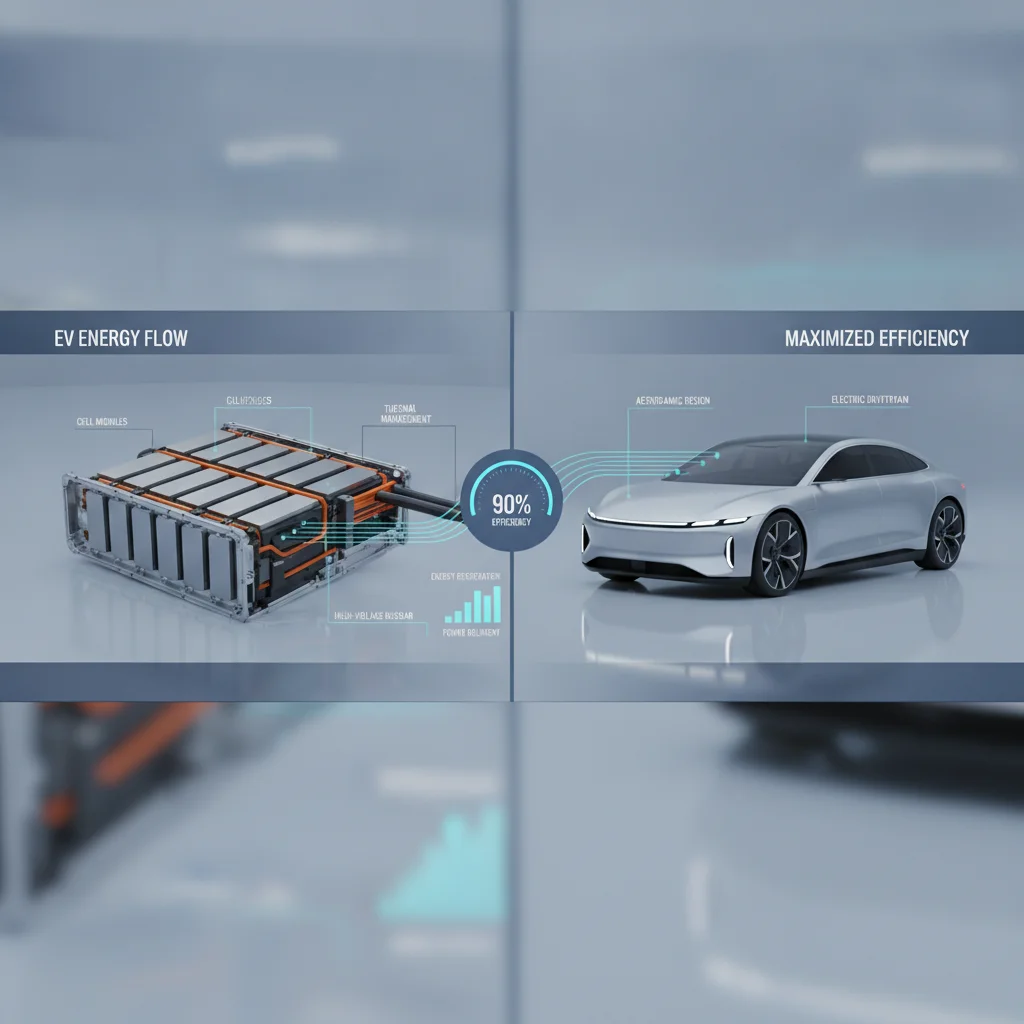
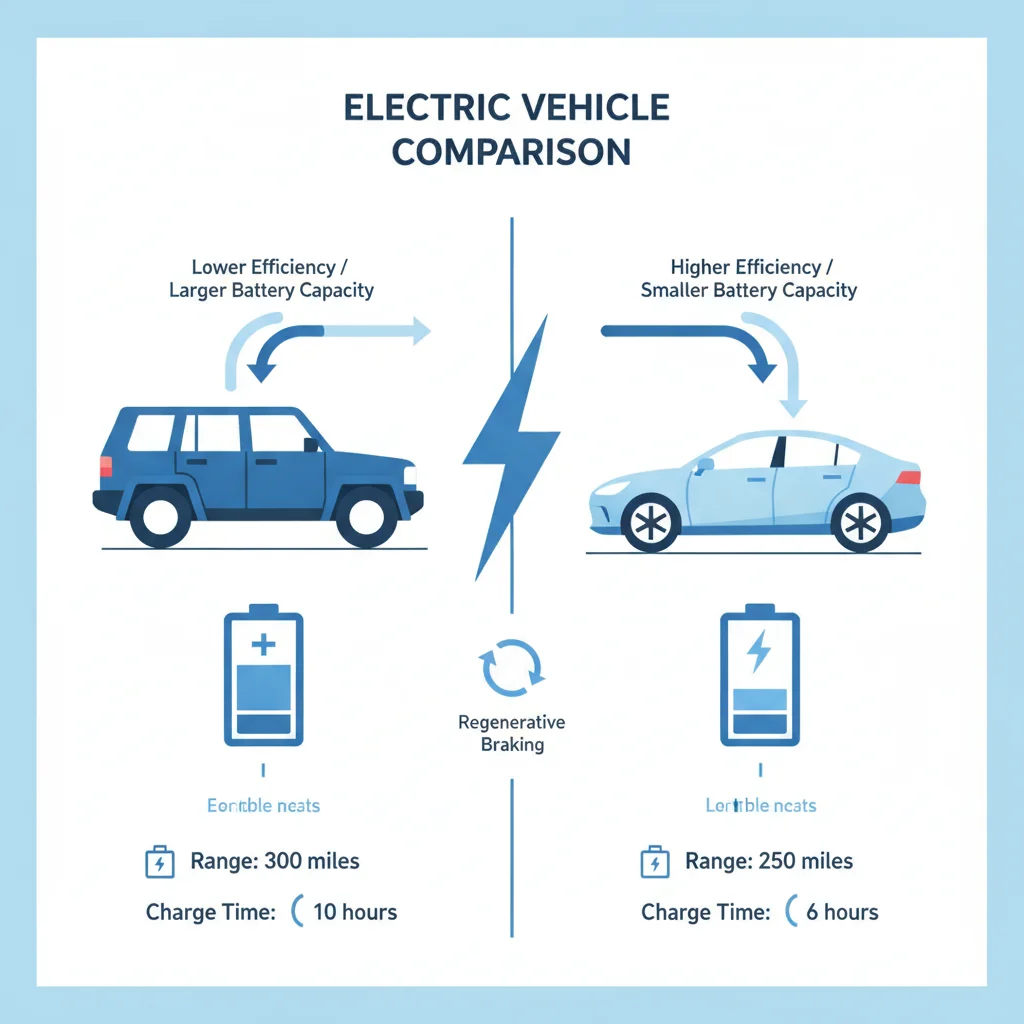
Think of it this way: a semi truck and a compact sedan might share the same fuel tank size, but you'd never assume they travel the same distance on a full tank. The same principle applies to electric vehicles. A 100 kWh battery powering a heavy, aerodynamically blunt SUV will deliver far less range than a 75 kWh battery in a sleek, lightweight sedan. Efficiency — measured in miles per kWh — is the variable that links battery capacity to real-world distance.
Beyond efficiency, a host of external factors swing your range in real-time: ambient temperature, highway speed, climate control use, passenger load, and even tire pressure. None of these appear on the window sticker. Understanding them is the difference between managing your EV confidently and spending every road trip white-knuckling the remaining charge.
This article debunks the most persistent myths about EV range and gives you the factual foundation to evaluate any EV purchase with clear eyes. For a deeper look at how efficiency ratings and battery capacity interact, see how battery size and efficiency interact.
The Myths vs. the Reality
The following myth-fact pairs address the most common misconceptions EV buyers carry into the showroom. Each one has a real cost — either in misplaced purchase decisions or in daily range mismanagement.
Myth
A bigger battery always means more range. If you want more miles, just buy the vehicle with the largest kWh pack.
Fact
Battery capacity is only one input. Efficiency — how many miles the vehicle extracts per kWh — determines whether a larger pack actually translates to longer range.
A 100 kWh battery powering a heavy, aerodynamically poor SUV may deliver fewer real-world miles than a well-engineered 75 kWh sedan. The Tesla Model 3 Long Range, for example, has consistently delivered real-world efficiency north of 3.8 mi/kWh, while some larger EVs with bigger battery packs struggle to reach 3.0 mi/kWh in comparable conditions. The math is straightforward: 75 kWh × 3.8 mi/kWh = 285 miles; 100 kWh × 3.0 mi/kWh = 300 miles. The gap is smaller than the battery size difference suggests, and real-world conditions can flip the outcome entirely.
When comparing EVs, always look at the EPA efficiency rating alongside capacity. The window sticker shows both; most buyers only read the range number.
Myth
Cold weather only costs you a few miles of range — it's not a big deal in practice.
Fact
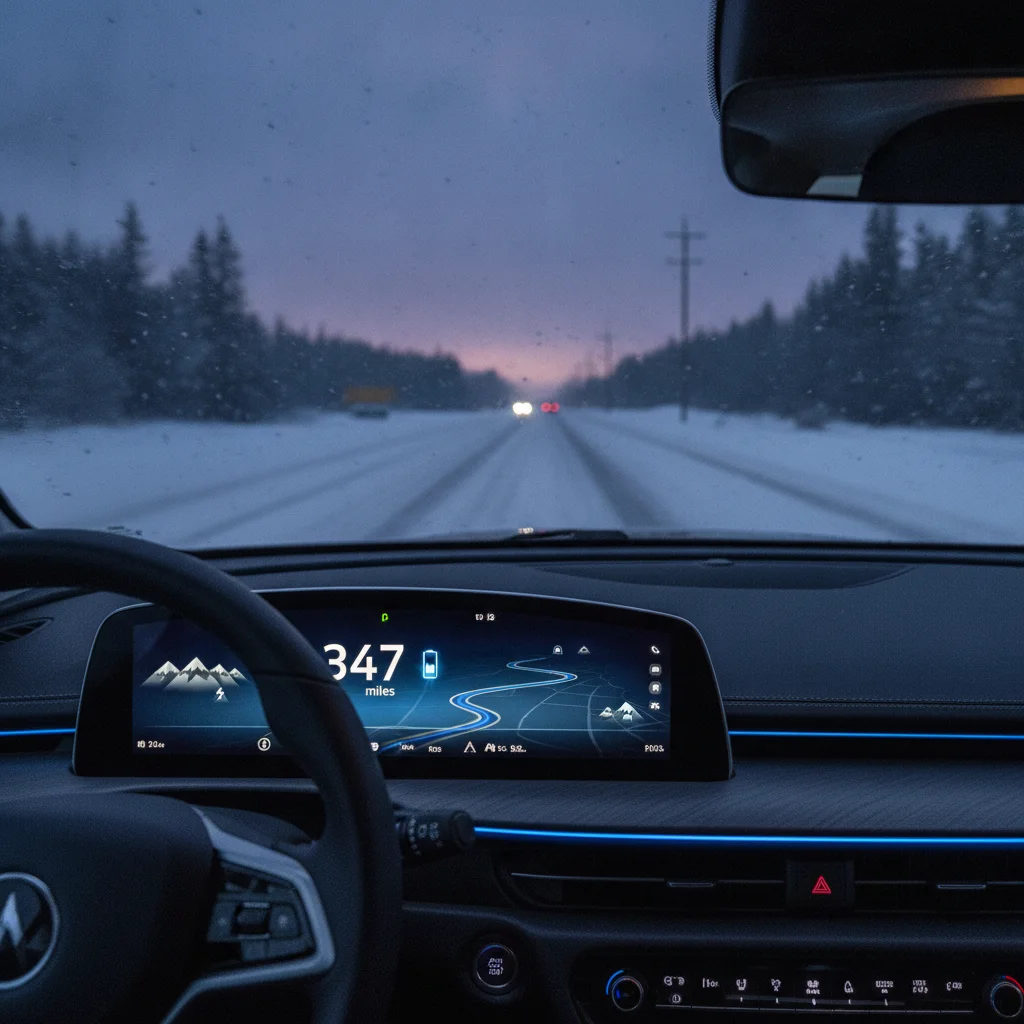
In sub-freezing temperatures, real-world EV range commonly drops 20–40%, primarily because cabin heating draws heavily from the main battery pack.
This is one of the most consequential misconceptions for buyers in northern climates. The AAA has tested this repeatedly, finding range reductions of 41% at 20°F with the heater running — not 5%, not 10%, but nearly half the rated range. The culprit is primarily the cabin heater, not battery chemistry alone. In a gasoline car, cabin heat is essentially free (waste engine heat). In a battery-electric vehicle, every BTU of cabin warmth is paid for in kilowatt-hours.
EVs equipped with heat pumps instead of resistance heaters fare significantly better — some manufacturers report 30–50% lower heating energy consumption. If you're buying an EV for use in a cold climate, the presence and quality of a heat pump system is a genuinely important spec, not a marketing footnote.
Pre-conditioning — warming the cabin while still plugged in — is the most effective practical mitigation. It costs grid electricity rather than battery range, and it also warms the battery pack itself, improving both efficiency and DC fast-charging speed in cold weather.
Myth
The EPA range on the window sticker is a realistic estimate of what I'll get in daily driving.
Fact
EPA estimates are measured under controlled laboratory conditions that rarely match real-world driving. Most drivers achieve 75–90% of EPA range in temperate conditions, and less in cold weather or at highway speeds.
The EPA's Multi-Cycle test procedure involves a standardized speed trace, controlled ambient temperature (around 72°F), and no climate control load. It's designed for comparability, not accuracy to your specific situation. Edmunds' real-world range testing — which involves driving at a steady 75 mph on actual roads — typically produces results 10–20% below EPA figures for most vehicles.
The gap isn't a scandal; it's an expected consequence of standardized testing. The problem is that most buyers treat the EPA number as a real-world guarantee rather than a benchmark. Understanding why EVs rarely hit their advertised range is essential reading before you commit to a vehicle based on its sticker number.
A practical approach: use 80% of the EPA figure as your planning range for mixed driving, 70% for sustained highway driving, and 60–65% for winter highway driving. If the vehicle still meets your needs at those adjusted figures, the range is genuinely sufficient.
Myth
Driving at highway speeds only slightly reduces range — EVs are efficient at all speeds.
Fact
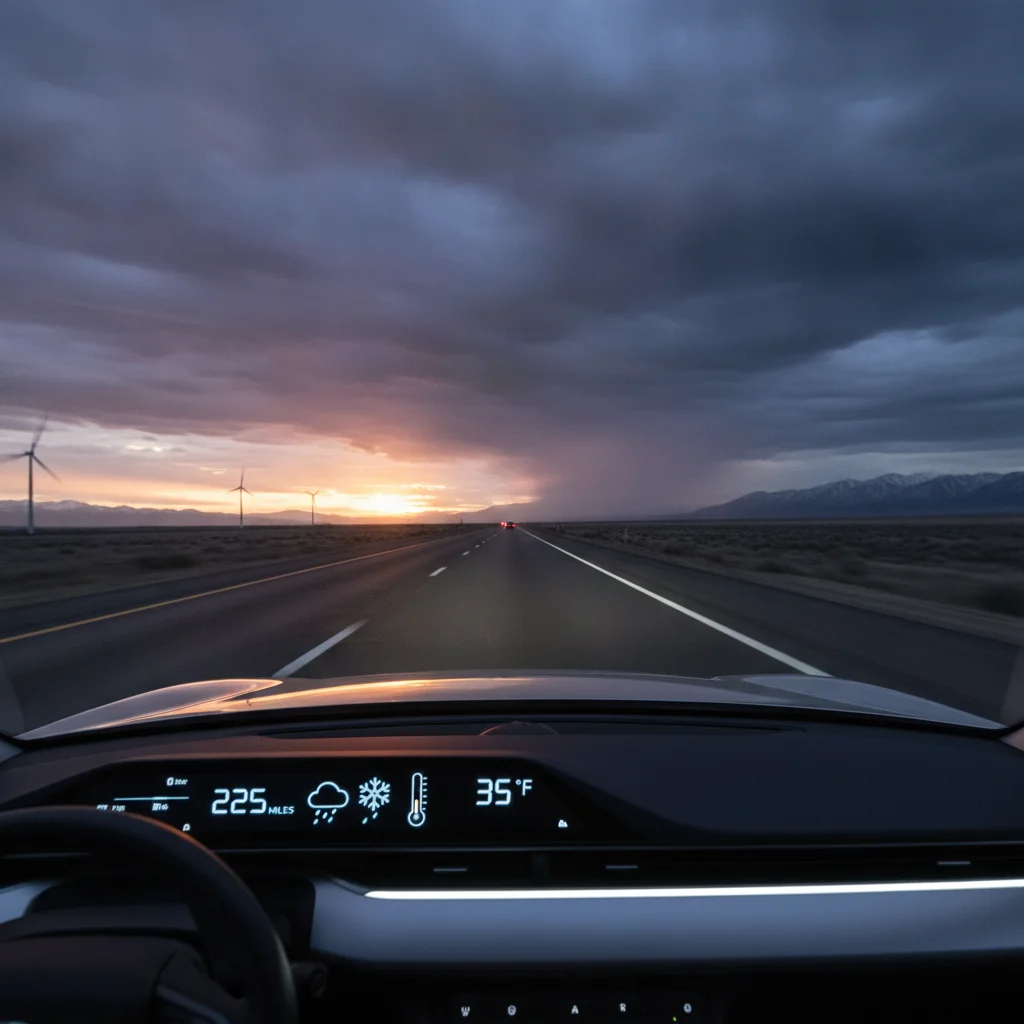
Aerodynamic drag increases with the square of speed. Driving at 75–80 mph can reduce range by 25–35% compared to 55–60 mph, making highway cruising one of the largest single range drains.
This surprises drivers who are used to gasoline vehicles, where highway driving often yields better fuel economy than city driving. For EVs, the relationship inverts at high speeds. The regenerative braking advantage that makes city driving efficient disappears on the highway, and aerodynamic drag — which grows exponentially with speed — becomes dominant.
Real-world data from owners and third-party testers consistently shows that a vehicle rated for 300 miles EPA may deliver closer to 210–225 miles on a true 75 mph highway run. That's a 25–30% reduction, not the 10–15% many buyers assume.
The practical implication for road trips: plan charging stops based on highway-speed range, not EPA range. Most EV navigation systems and apps like PlugShare or ABRP (A Better Route Planner) account for speed and weather when calculating charging stop recommendations. Use them.
Myth
Running the air conditioner or heater barely affects range — it's just a small electrical load.
Fact
Climate control is one of the largest individual energy loads in an EV. Heating in cold weather can consume 3–5 kW continuously, representing a substantial fraction of highway driving energy demand.
At highway speeds, a typical EV might consume 25–35 kWh per 100 miles of propulsion energy. A resistive heater drawing 4–5 kW adds the equivalent of 16–20 kWh per 100 miles at 75 mph — that's a range reduction of 30–40% from climate control alone. Air conditioning is less severe (typically 1–2 kW) but still meaningful, reducing range by 5–15% depending on conditions.
Heat pumps are the industry's answer to this problem. By moving heat rather than generating it, a heat pump can deliver the same cabin warmth for roughly one-third to one-half the electrical consumption of a resistance heater. Vehicles like the Hyundai Ioniq 6, Volkswagen ID.4, and recent Tesla models use heat pumps as standard equipment. If you're buying an EV for a climate with real winters, this spec deserves explicit attention in your comparison.
Seat heaters and steering wheel heaters are a smart workaround — they warm the occupant directly for a fraction of the energy required to heat the entire cabin to a comfortable air temperature. Using them in combination with a lower cabin temperature set point can meaningfully reduce heating energy consumption.
Myth
Range anxiety is a legitimate concern that should make most buyers hesitant about going fully electric.
Fact
For the vast majority of American drivers, daily mileage is well within the range of any modern EV. Range anxiety is a real psychological phenomenon, but it is often disconnected from statistical driving reality.
The U.S. Department of Transportation's National Household Travel Survey consistently finds that American households average under 40 miles of driving per day. Even accounting for the range reductions discussed in this article, a modern EV with 250+ miles of EPA range provides several days of typical driving on a single charge — and most EV owners charge at home overnight, starting each day with a full battery.
Range anxiety is a legitimate concern in two specific scenarios: road trips on corridors with sparse DC fast-charging infrastructure, and for drivers who cannot charge at home (apartment dwellers, for instance, who depend on public charging). For everyone else, the statistical risk of running out of charge is low and declining as charging infrastructure expands.
The anxiety persists partly because running out of charge is a novel failure mode — gasoline drivers have decades of muscle memory around gas stations. New EV owners typically report that range anxiety fades significantly within the first few months of ownership as they build intuition for their vehicle's real-world behavior. Data on range anxiety versus actual driving risk supports this pattern clearly.
41%
Range reduction at 20°F with heat running
AAA testing found EVs lost an average of 41% of their range in 20°F temperatures with the cabin heater operating at normal settings.
25–35%
Range drop at 75–80 mph vs. 55 mph
Real-world testing by Edmunds and independent EV owners consistently shows this range of highway speed penalty versus moderate-speed driving.
~37 miles
Average U.S. daily driving distance
The U.S. Department of Transportation National Household Travel Survey finds the average American household drives well under 40 miles per day.
80%
Practical planning target for EPA range
A commonly cited rule of thumb among EV fleet operators and range testing organizations for mixed real-world conditions at moderate temperatures.
30–50%
Range reduction when towing a trailer
EV manufacturers and third-party testers consistently report this range when towing near rated capacity due to combined aerodynamic and weight effects.
The Variables That Actually Move the Needle
Once you accept that battery size is just one input, the question becomes: which factors deserve the most attention? Here's a practical breakdown of the variables that have the largest measurable impact on your real-world range.
Speed and Aerodynamic Drag
Aerodynamic drag increases with the square of velocity. That means driving at 75 mph doesn't just cost a little more energy than 65 mph — it costs significantly more. At highway speeds, aerodynamic resistance is typically the dominant energy load on the drivetrain, eclipsing rolling resistance and accessories. Most real-world tests show EVs consuming 25–35% more energy per mile at 75–80 mph compared to 55–60 mph. If your EPA estimate was built on a mixed city/highway cycle that averages closer to 48 mph, a pure highway trip at 75 mph will look dramatically different.
Don't Plan Road Trips Using the EPA Number
If you're mapping out a long highway trip, using your vehicle's EPA range to space out charging stops is a recipe for arriving at a charger with uncomfortably little charge remaining. Plan on 70–75% of rated range for sustained highway driving at 70+ mph, and add a further 10–15% buffer in cold weather. Most EV-specific navigation systems and apps like ABRP already apply these adjustments automatically — let them do the math.
Avoid Letting the Battery Hit Zero in Cold Weather
Cold lithium-ion cells are less able to deliver high current, which means an already-reduced cold-weather range can drop abruptly as the battery approaches low state-of-charge. Plan to arrive at your destination or charging stop with at least 10–15% remaining in sub-freezing conditions — more than you'd keep as a buffer in summer. Some vehicles also restrict DC fast-charging speed when the battery is very cold, making pre-conditioning before a charging stop worthwhile.
Temperature and Battery Chemistry
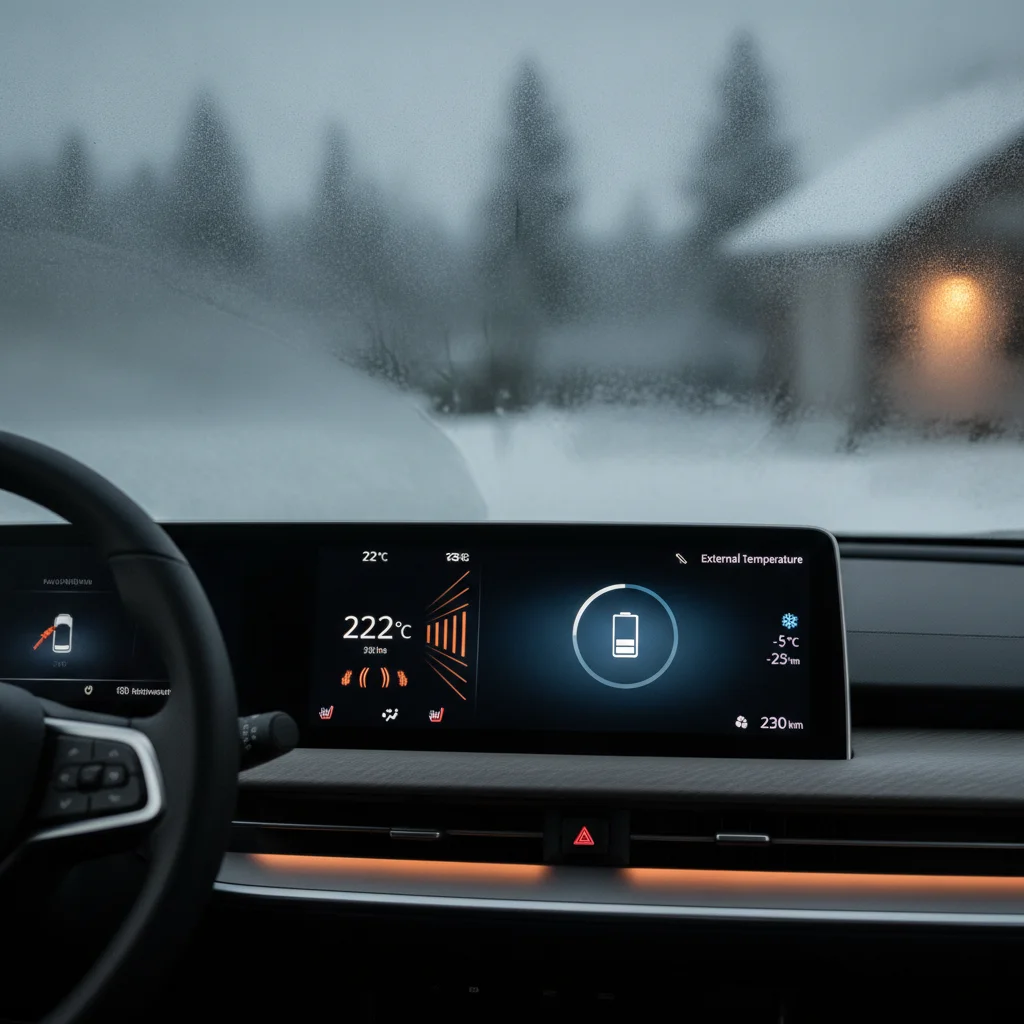
Lithium-ion batteries are chemically sensitive to temperature. Cold weather slows the electrochemical reactions inside the cells, reducing both the power available and the total energy the battery can deliver before hitting its lower voltage threshold. Cold also forces the cabin heating system — which in many EVs draws directly from the main battery pack — to work hard for extended periods. The combination can reduce usable range by 20–40% in sub-freezing conditions.
Heat creates different problems. While warm batteries perform better electrically, extreme heat accelerates cell degradation over time and triggers thermal management systems that consume additional energy. Summer heat in Phoenix will cost you less range per trip than January in Minneapolis, but it takes a longer-term toll on battery health.
Climate Control: The Hidden Range Drain
This is the one that surprises new EV owners most. In a gasoline vehicle, the heater is essentially free — it uses waste heat from the engine. In a battery-electric vehicle, there is no waste heat to harvest. Every degree of cabin warmth has to come from the battery. Resistance heaters are particularly power-hungry; more efficient heat pump systems (now standard on many newer EVs) can cut heating energy consumption by 30–50%, but still draw meaningful power in extreme cold.
Air conditioning is less severe but still significant. Running the AC at maximum on a hot day can reduce range by 10–20% depending on ambient temperature and the vehicle's thermal architecture.
Driving Style and Regenerative Braking
Aggressive acceleration is a real range killer. Hard launches draw peak current from the battery, which reduces the battery's round-trip efficiency. Smooth, gradual acceleration keeps energy consumption closer to theoretical minimums. Similarly, anticipating stops and lifting off the accelerator early — allowing regenerative braking to recapture kinetic energy — can meaningfully extend range on routes with frequent stops. City driving often yields better efficiency than highway driving for this reason, which runs counter to the experience of most gasoline-car drivers.
Weight and Towing
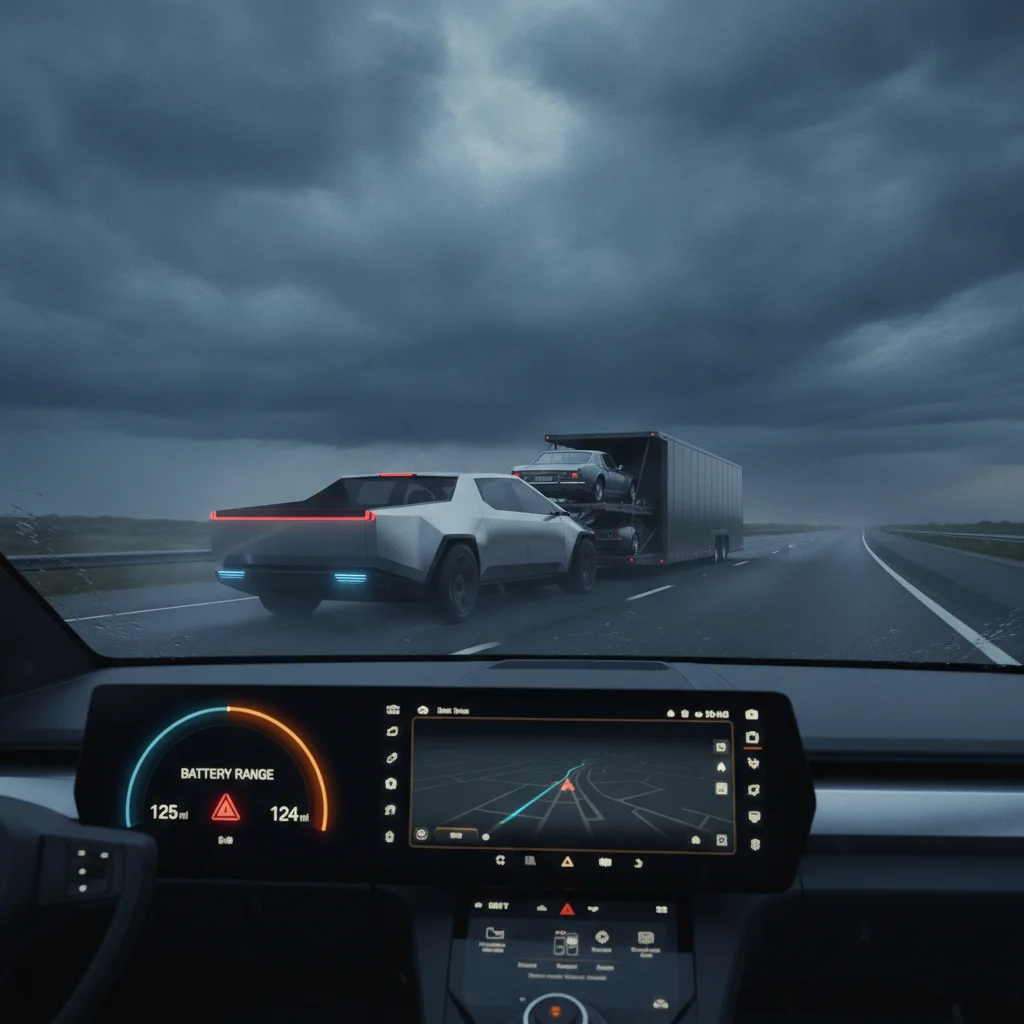
Every extra pound costs efficiency. Passengers, cargo, roof racks, and trailer loads all raise the energy demand. Towing is an extreme case: the aerodynamic drag of a trailer combined with the additional rolling resistance can cut range by 30–50% or more. Towing with an EV deserves its own analysis — the range impact is large enough to affect whether an EV is the right tool for the job at all.
Towing Fundamentally Changes the Range Equation
If you're evaluating an EV for towing duty — even occasional trailering — you need to run the math on towing range specifically, not overall EPA range. A 300-mile EPA-rated truck may deliver 130–180 miles while towing near its rated capacity. That dramatically changes the frequency and location of required charging stops. For frequent towers, the combination of range reduction and slower charging speed (due to high sustained power demand) makes this a primary purchase consideration, not a footnote.
Reading EPA Estimates With the Right Skepticism
The EPA range figure on the window sticker is a standardized estimate, not a promise. The agency's test cycle involves laboratory conditions — controlled temperature, no climate control load, moderate speeds — that rarely replicate real-world driving. The result is a number that most drivers will not achieve on a consistent basis, particularly in cold climates or on highway-heavy routes.
That doesn't make the EPA estimate useless. It's a consistent benchmark that lets you compare vehicles against each other on equal footing. A vehicle rated at 320 miles EPA will almost certainly go further in real-world conditions than one rated at 220 miles EPA, even if neither hits its rated number. The gap between estimate and reality, however, varies considerably by vehicle and conditions. Understanding why rated and real-world range diverge is essential background for any EV shopper.
Third-party testing organizations like Edmunds and ADAC run their own range tests under more realistic conditions, often producing numbers 10–20% below the EPA figure. Comparing EPA versus third-party range test methodologies can help you calibrate which estimate is closer to your specific driving pattern.
A practical rule of thumb: budget for roughly 80% of EPA range in mixed real-world conditions, dropping closer to 65–70% in winter or at sustained highway speeds. Use that adjusted figure when evaluating whether a vehicle's range meets your actual needs.
Putting Range Anxiety in Perspective
Range anxiety — the fear of running out of charge before reaching a destination — consistently ranks as the top barrier to EV adoption. The data, however, suggests the fear is outsized relative to real-world risk. Research on range anxiety versus actual driving patterns shows that the vast majority of American drivers travel well under 100 miles per day, putting most EV range in the 250–300 mile class far beyond their daily needs even after accounting for real-world losses.
The anxiety is rational in one narrow context: long road trips on corridors with sparse DC fast-charging infrastructure. In that scenario, knowing your realistic range under highway conditions — not the EPA estimate — becomes genuinely important for trip planning. But for the daily commute, school runs, and local errands that make up most Americans' driving, range is rarely the operative constraint.
If you're a new EV owner trying to recalibrate your expectations, setting realistic range expectations from day one can save a lot of unnecessary stress. The learning curve is real, but short.
For buyers considering a plug-in hybrid as a hedge against range concerns, it's worth noting that range anxiety is largely a battery-EV issue — PHEVs and HEVs sidestep it almost entirely by design.
Making a Smarter EV Purchase Based on Real Range
Armed with a realistic picture of what drives EV range, you can shop more intelligently. Here's a framework that works:
- Calculate your actual daily mileage, not your worst-case road trip distance. If you drive 35 miles a day, a 250-mile EPA-rated EV gives you roughly 175–200 miles of real-world range — more than enough margin for multiple days between charges.
- Apply a cold-weather discount if you live in a region with sustained winter temperatures below 20°F. Budget 60–70% of EPA range for your worst-case winter days to see if the vehicle still meets your needs.
- Account for highway driving. If your commute or regular routes are predominantly at 70+ mph, expect 20–30% below EPA. Use that adjusted figure as your planning number, not the sticker.
- Compare efficiency (mi/kWh), not just battery size. A vehicle that delivers 4.0 mi/kWh from a 75 kWh pack will out-range a 3.0 mi/kWh vehicle with a 90 kWh pack.
- Look at charging speed alongside range. A vehicle with modest range but fast DC charging capability (150+ kW) can be more practical on road trips than a longer-range EV limited to 50–75 kW charging.
For a comprehensive look at all the variables that shape real-world performance, a ranked breakdown of EV range factors puts everything in one place. And if you're factoring ownership costs beyond the purchase price, don't overlook how EV insurance works and what affects premiums — it's another area where real-world costs often surprise new owners.

All claims are backed by peer-reviewed research. Sources on request.