Key Takeaways
Why Range Anxiety Persists Despite Reassuring Data
Range anxiety — the fear of running out of battery charge before reaching a destination or charger — has become one of the most-discussed psychological barriers in the automotive world. Survey after survey names it the number one reason prospective buyers hesitate before going electric. Yet when you stack those fears against actual driving data, a striking gap emerges between what people imagine will happen and what statistically does happen.
According to the U.S. Department of Energy, the average American passenger vehicle trip is just 10.6 miles, and median daily vehicle travel sits at roughly 37 miles. Meanwhile, the average new battery electric vehicle (BEV) sold in the United States in 2024 carries an EPA-estimated range of more than 270 miles. The math alone should be reassuring — yet it isn't, for reasons that are deeply rooted in human psychology and reinforced by selective media coverage of high-profile stranding incidents.
This article uses published data, real-world range studies, and charging network benchmarks to dismantle the most persistent myths around range anxiety, so you can evaluate EVs on facts rather than fear. For a deeper look at how driving variables like speed and temperature affect range beyond the EPA window sticker, see our companion piece: what affects EV range more than battery size.
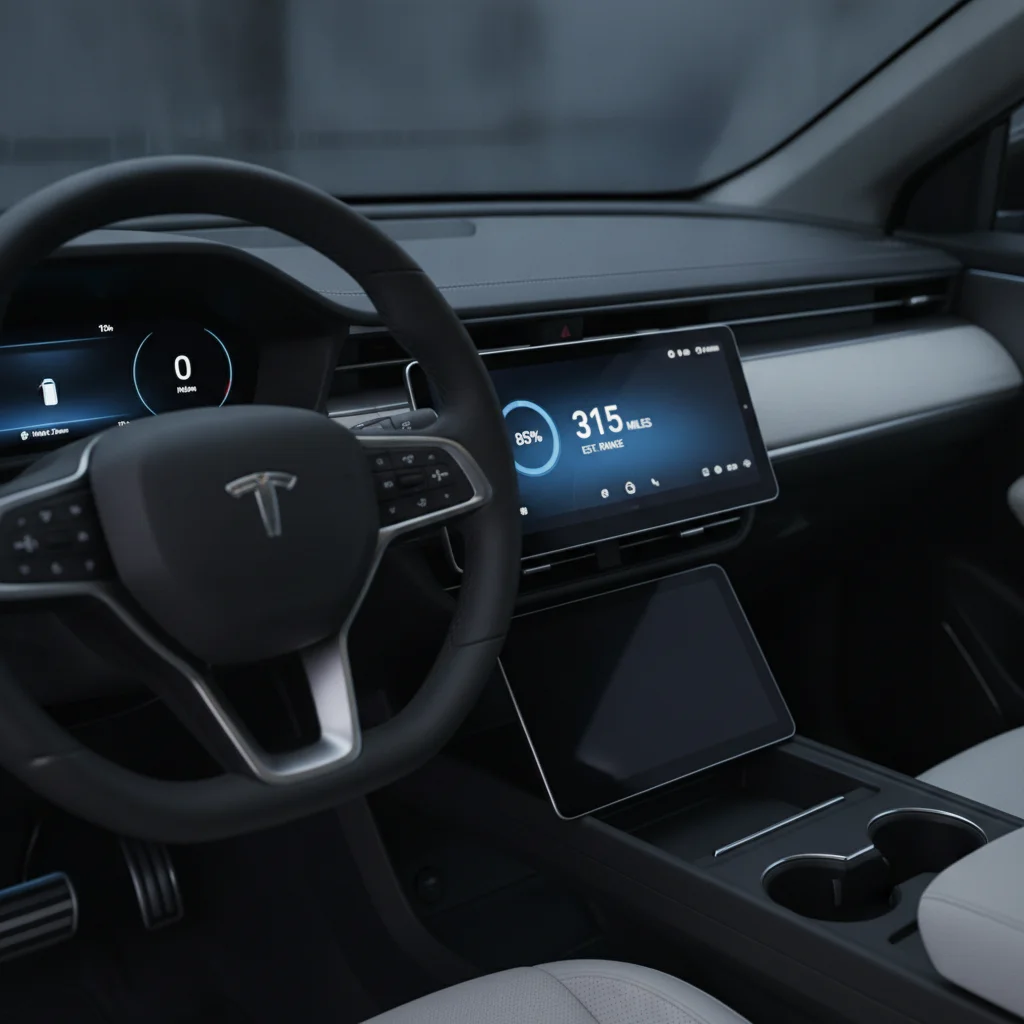
The Myths vs. The Facts
Below, each of the most common range-anxiety beliefs is paired with what peer-reviewed studies, government data, and large-scale EV owner surveys actually show. Working through these one by one is the fastest way to recalibrate your risk model before making a purchase decision.
Myth
Most drivers will regularly run out of charge because EV ranges aren't long enough for everyday life.
Fact
The average U.S. driver travels about 37 miles per day — a fraction of the 200–300+ mile range on most current BEVs.
This myth persists because people anchor on worst-case road-trip scenarios rather than their actual daily driving patterns. Federal Highway Administration travel data consistently shows median daily vehicle miles traveled (VMT) hovering around 37 miles. The lowest-range mainstream BEV available in the U.S. market today still offers over 100 miles of real-world range — enough to cover more than two average days of driving on a single charge.
The lived reality for EV owners reflects this. A 2023 Consumer Reports survey found that 96% of BEV owners reported being satisfied with their vehicle's range for daily driving. Running out of charge on a routine commute is, statistically, a near-non-event for the vast majority of owners who have access to any form of home or workplace charging.
Myth
The EPA range estimate tells you exactly how far you can drive on a full charge.
Fact
EPA estimates are a standardized benchmark, not a guarantee — real-world range varies 10–30% based on speed, temperature, and driving style.
The EPA's Multi-Cycle Test is designed for comparability across vehicles, not for predicting your personal range. It uses a weighted blend of city and highway driving at speeds that don't reflect today's highway norms. When Edmunds conducted real-world 70-mph highway range tests on popular EVs, several models returned 10–25% less range than their EPA label.
That gap cuts both ways. At lower city speeds with regenerative braking, many EVs exceed their EPA estimates. The key is understanding that the number on the window sticker is a reference point, not a promise. Adjusting your mental model to treat advertised range the way you treat gas-car MPG estimates — as a starting point, not a guarantee — leads to far more realistic expectations and far less anxiety. For a detailed breakdown of all the variables that move the range needle, see what affects EV range more than battery size.
Myth
Public charging is so unreliable and sparse that you can't depend on it for anything beyond short local trips.
Fact
The U.S. network exceeded 192,000 public ports in early 2025, with federally mandated highway corridor coverage underway — though reliability at older stations remains a legitimate concern.
The charging network anxiety is partially rooted in memory. Early EV adopters genuinely did face sparse, unreliable infrastructure. That reality has shifted significantly. The NEVI program alone is funding chargers at roughly 500 highway locations across the country, with a federally mandated 97% uptime requirement — a standard that will force operators to meaningfully improve reliability or lose funding.
The reliability concern is real but improving. J.D. Power's 2023 data flagging a 21% session-failure rate applies unevenly across networks. Tesla's Supercharger network, now accessible to non-Tesla vehicles, consistently scores highest for reliability in independent assessments. For drivers who plug in at home each night, public fast charging is an occasional supplement, not a daily dependency — which puts the reliability concern in proper perspective.
Myth
Cold weather will kill your EV's range so drastically it becomes unusable in winter climates.
Fact
Cold weather does reduce EV range — typically 20–40% in extreme conditions — but preconditioning, smart routing, and proper charging habits mitigate most of the practical impact.
Recurrent's 2022 analysis of real-world range across thousands of EVs found an average range reduction of about 25% at 20°F compared to 70°F. That's meaningful, but it's not catastrophic for a vehicle that starts with 250 miles of range — you still have roughly 190 miles available, more than enough for most daily driving even in Minneapolis in January.
Battery preconditioning — warming the pack to optimal temperature while the vehicle is still plugged in — is available on virtually every modern BEV and substantially reduces cold-start losses. Planning to arrive at a fast charger with the battery pre-warmed (most navigation systems do this automatically) also improves charging speeds in winter. Drivers who understand these tools experience winter range reduction as an inconvenience to plan around, not a dealbreaker. EV range myths that confuse first-time buyers covers the cold-weather misconception among others in additional depth.
Myth
If you don't have a home garage, an EV is impractical — you'll be perpetually scrambling for public charging.
Fact
Workplace charging, Level 2 public infrastructure at retail locations, and destination chargers have made apartment and condo living increasingly viable for EV ownership.
Home charging is undeniably the most convenient setup, but it is not a prerequisite for EV ownership. A 2022 NREL study found that approximately 45% of apartment dwellers who owned EVs relied primarily on workplace or public Level 2 charging without significant hardship. The growth of "charging while you shop" infrastructure at grocery stores, shopping centers, and parking garages has made top-up charging an organic part of errands rather than a separate task.
Multi-unit dwelling (MUD) charging access remains a policy gap in many cities — landlord permission and electrical panel capacity are real hurdles. But for drivers in urban cores where daily mileage is lowest and Level 2 options are most dense, the no-home-charger scenario is increasingly manageable. The honest answer: it adds friction, but for many people it doesn't add enough to make an EV impractical.
Myth
Range anxiety affects all types of electric vehicles equally.
Fact
Range anxiety is largely specific to battery electric vehicles (BEVs); plug-in hybrids (PHEVs) and hybrid electric vehicles (HEVs) don't share the same constraint.
Grouping all electrified vehicles under the same range-anxiety umbrella is a categorization error that confuses a lot of prospective buyers. A PHEV like the Toyota RAV4 Prime carries both a battery (for 40–50 miles of EV-only driving) and a full gasoline tank as backup. Running low on electric charge just means you're driving a conventional hybrid — you never face stranding risk. HEVs like the Toyota Prius don't plug in at all; their batteries recharge through regenerative braking and the engine.
True range anxiety — the specific fear of battery depletion with no nearby charging option — applies only to BEVs. Understanding this distinction matters when you're deciding which type of electrified vehicle fits your current life situation. Our full breakdown of why range anxiety is mostly a BEV concern explains the differences across all electrified drivetrain types.
If you're shopping for an EV and want a structured checklist for evaluating range claims before signing, our guide on what to check about an EV's real-world range performance walks you through exactly what to ask.
The Psychology Behind the Gap
Data alone rarely closes a fear gap. Psychologists call the phenomenon driving range anxiety availability heuristic bias — our brains overweight dramatic, easily recalled examples (a stranded EV on the news) over statistically mundane outcomes (millions of uneventful EV commutes). The result is a perceived risk that far exceeds the actuarial one.
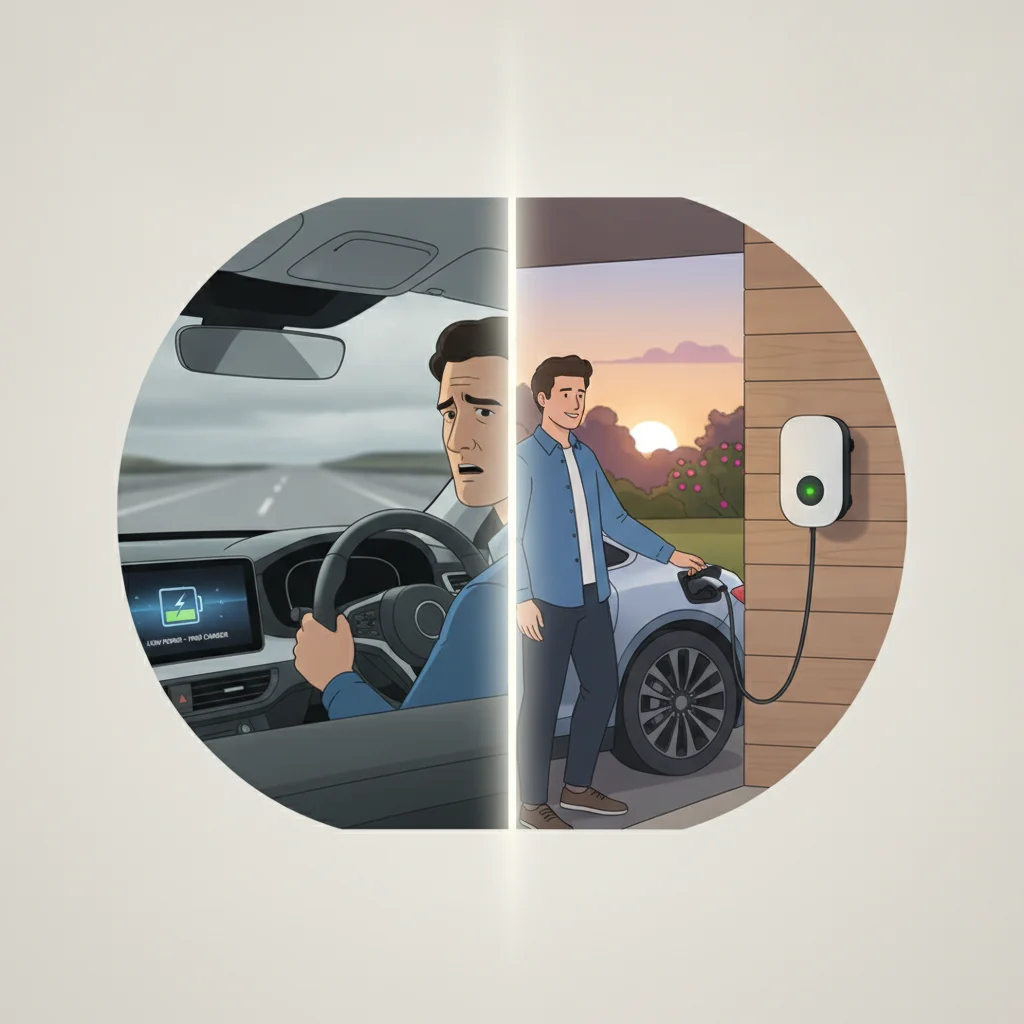
A 2022 study published in Nature Energy found that EV owners' self-reported anxiety dropped sharply after just three months of ownership, once the rhythm of home charging became habit. The same study noted that non-owners consistently overestimated how often they would need public fast charging — predicting 4–5 times per month when the actual median for comparable drivers was fewer than twice per month.
This suggests that range anxiety is, in large part, a pre-ownership phenomenon. Automakers and policymakers who want to accelerate adoption need to address the psychological component, not just add more kilowatt-hours to the battery pack. For first-time buyers who have made the leap, our guide to setting EV range expectations from day one provides a practical framework for building that confidence early.
37 miles
Median U.S. daily driving distance
According to Federal Highway Administration travel survey data, the median American drives approximately 37 miles per day — far below the range of any current mainstream BEV.
96%
BEV owners satisfied with daily range
A 2023 Consumer Reports survey found that 96% of battery electric vehicle owners reported their vehicle's range met or exceeded their daily driving needs.
192,000+
Public EV charging ports in the U.S.
The U.S. Department of Energy's Alternative Fuels Station Locator counted more than 192,000 public Level 2 and DC fast charging ports in early 2025, up roughly 40% from 2022.
25%
Average range reduction at 20°F
Recurrent's 2022 real-world data study found that EV range drops an average of approximately 25% at 20°F compared to performance at 70°F, with preconditioning mitigating a significant share of that loss.
21%
Public charging sessions abandoned
J.D. Power's 2023 Electric Vehicle Experience Public Charging Study found that 21% of attempted public charging sessions were abandoned due to equipment failure or excessive wait times, though the figure varies widely by network.
Don't Use EPA Range as a Trip Planning Number
Treating the EPA-rated range as the absolute distance you can drive before needing to charge is one of the most common first-time EV owner mistakes. Real-world range at highway speeds can run 15–25% below the EPA figure. Always plan road trips with a 20% buffer and verify charger availability and real-time status using tools like PlugShare or A Better Routeplanner before departing.
Rural Buyers: Do the Math Before Committing
For buyers in rural areas with round-trip daily commutes exceeding 150 miles and no access to home or workplace charging, range anxiety may reflect a legitimate operational constraint rather than an irrational fear. Carefully calculate your specific driving profile and charging options before assuming the data averages apply to your situation. A PHEV may be a more practical bridge vehicle in this scenario.
Charging Infrastructure: Perception vs. Reality
One of the most cited practical fears is simply: "There aren't enough chargers." This concern has a real historical basis — the public charging network in the United States was genuinely sparse as recently as 2018. But the landscape has changed substantially.
As of early 2025, the U.S. had more than 192,000 public Level 2 and DC fast charging ports across more than 61,000 stations, according to the Alternative Fuels Station Locator maintained by the Department of Energy. That figure represents roughly a 40% increase over the 2022 count. The federally funded National Electric Vehicle Infrastructure (NEVI) program, authorized under the Bipartisan Infrastructure Law, is deploying fast chargers every 50 miles along the entire U.S. Interstate system.
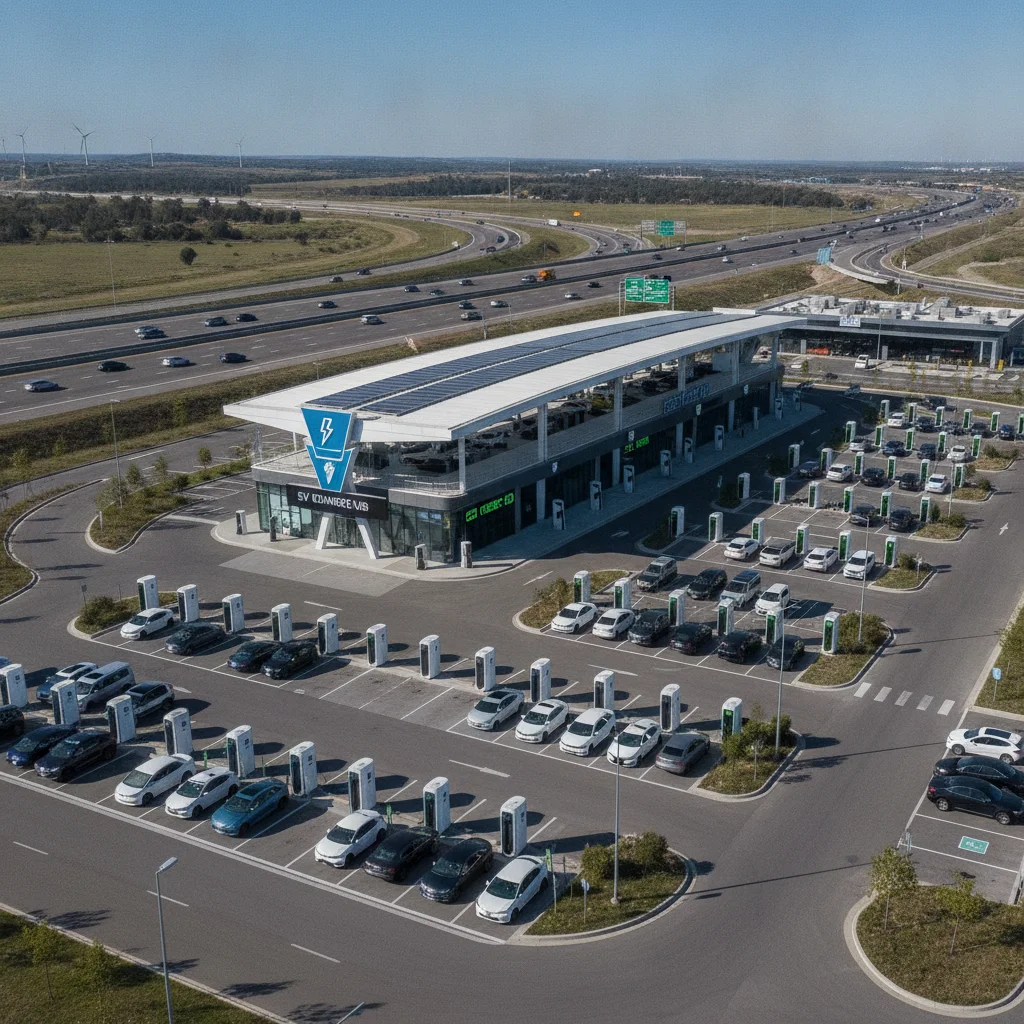
Reliability remains a legitimate concern — a 2023 J.D. Power Electric Vehicle Experience Public Charging Study found that 21% of charging sessions were abandoned due to equipment malfunction or excessive wait times. That's a real problem, but it's concentrated at certain older networks and is improving quarter over quarter as operators face competitive pressure from Tesla's now-open Supercharger network. The key insight is that most EV drivers won't rely on public charging as their primary source of energy. Level 2 home charging handles the bulk of daily needs for the majority of owners.
It's also worth noting that range anxiety applies differently across EV types. If you're considering a plug-in hybrid rather than a full BEV, the concern is largely moot — our explainer on why range anxiety is mostly a BEV concern breaks down the distinction clearly.
NEVI Uptime Requirement Changes the Reliability Story
Stations funded under the federal NEVI program must maintain a minimum 97% uptime to receive continued funding — a standard that significantly exceeds what many existing networks currently deliver. As NEVI-compliant chargers roll out across interstate corridors, the reliability picture for long-distance travel will look materially different from the 2023 J.D. Power data. Buyers making EV decisions today should weigh both the current reality and the near-term trajectory of the network.
When Range Anxiety Is Justified — And How to Plan Around It
Intellectual honesty requires acknowledging that range anxiety is not always irrational. There are genuine edge cases where it reflects a real operational constraint:
- Rural drivers with long daily commutes and limited public charging access face a different risk profile than urban dwellers. If your round-trip to work exceeds 150 miles and Level 2 home charging isn't possible in your living situation, the math changes meaningfully.
- Frequent long-distance travelers who regularly drive 300+ miles in a single day will spend more time planning stops than a gas-vehicle driver. DC fast charging is fast, but it's not as frictionless as a five-minute gas fill yet.
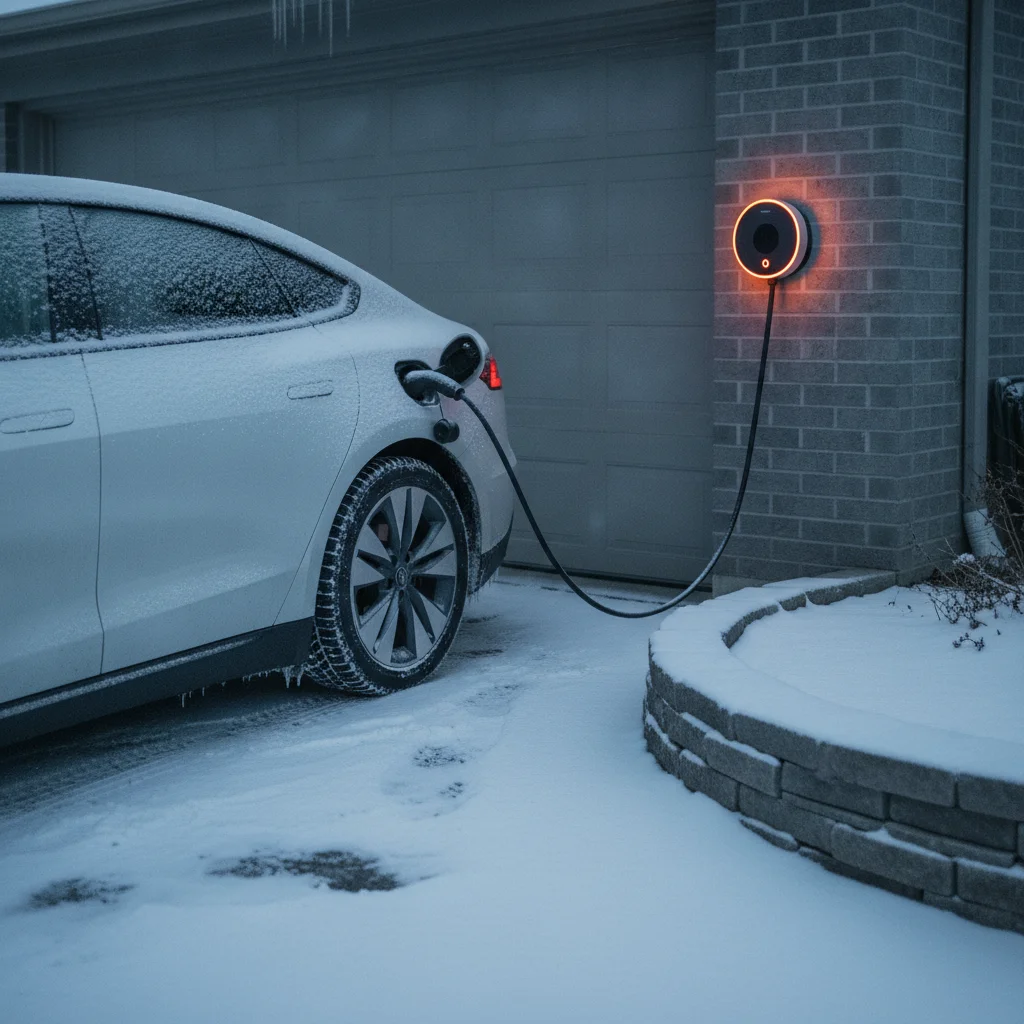
- Cold-climate owners in states like Minnesota or Montana can see 20–40% range reductions in deep winter. This is real, well-documented, and matters for range planning.
The solution in each case is strategic rather than avoidance. Tools like PlugShare, A Better Routeplanner (ABRP), and built-in navigation on most modern EVs route trips around charger locations with live availability data, eliminating most of the guesswork. Preconditioning the battery before cold-weather drives — a feature available on virtually every current BEV — mitigates a significant portion of winter losses.
For buyers still on the fence about how myths compound genuine concerns before a purchase, our article EV range myths that confuse first-time buyers addresses the full spectrum of misconceptions in more depth. And if ownership costs — including insurance premiums that can differ from gas vehicles — factor into your hesitation, the EV insurance guide offers a thorough breakdown.
Making a Data-Driven EV Decision
Range anxiety, when stripped of emotional amplification, resolves into a straightforward planning exercise for most prospective buyers. The data consistently shows that the overwhelming majority of American drivers can meet their daily transportation needs with any current mid-range BEV — typically a vehicle with 200–300 miles of EPA range — with charge to spare. The fear is real, but it is disproportionate to the actual risk for the median driver profile.
Here's a practical self-assessment framework before you let range anxiety drive your decision:
- Calculate your real daily mileage. Pull your odometer readings from the past three months. Most people are surprised at how few miles they actually log day-to-day.
- Identify your home charging options. A Level 2 charger (240V outlet) can add 20–30 miles of range per hour overnight. If you have access to a dedicated parking spot, this single factor resolves most range concerns.
- Map your longest recurring drive. If you visit family 200 miles away twice a year, identify the DC fast chargers on that route. A single 20-minute stop is usually sufficient for mid-journey top-ups on modern 150–350 kW capable vehicles.
- Account for your climate. If you live in an extreme cold region, subtract 25–30% from advertised range for planning purposes in winter months.
- Check real-world range data, not just EPA estimates. Sites like Edmunds and EV Database publish real-world efficiency figures across standardized test cycles that better reflect highway driving conditions.
The gap between what drivers fear and what the data shows is not a reason to dismiss concerns — it's an invitation to replace anxiety with analysis. Armed with your own driving profile and a clear view of the infrastructure landscape, the EV decision becomes far less intimidating than headlines suggest.
All claims are backed by peer-reviewed research. Sources on request.