Key Takeaways
Start here
Why Your EV's Range Isn't a Fixed Number
Understand the baseline
How EPA Range Ratings Are Calculated
Know what changes it
The Biggest Factors That Shrink Real-World Range
Read your car's data
How to Read Your Range Estimate Accurately
Build your habits
Building a Daily Range Routine That Works
Troubleshoot with confidence
When to Worry — and When to Relax
Why Your EV's Range Isn't a Fixed Number
Pull up any EV listing and you'll see a range figure printed in bold — 270 miles, 358 miles, 516 miles. For a new owner, that number feels like a contract. It isn't.
Range is a dynamic output, not a fixed specification. It changes every day depending on temperature, speed, how hard you accelerate, whether you're running the heat or AC, and even the age of the battery. The figure displayed on your dashboard at any given moment is your car's best current estimate based on recent driving conditions — not a guaranteed distance you'll travel before stopping.
This distinction matters enormously in the first weeks of EV ownership, when the gap between expectation and experience tends to feel largest. Drivers who understand from day one that range is variable — and learn what moves it up or down — adapt quickly. Those who expect the sticker figure every time often feel cheated by a car that's actually performing exactly as designed.
The full picture on EV range covers the technical depth behind these variables in detail, but this guide focuses on the practical side: what you'll experience as a new owner, and how to build an accurate mental model from day one.
EPA Range Rating
A government-standardized estimate of how far an EV can travel on a full charge, produced under controlled lab conditions. It's a comparison benchmark, not a real-world guarantee.
State of Charge (SOC)
The percentage of energy remaining in the battery at any given moment, similar to a fuel gauge. Expressed as a percentage from 0% (empty) to 100% (full).
Miles Per kWh (mi/kWh)
An efficiency metric showing how far your EV travels on each kilowatt-hour of battery energy. Higher numbers mean better efficiency and more real-world range.
Kilowatt-Hour (kWh)
The unit used to measure battery capacity, the same unit your electric utility uses to bill for home electricity. A larger kWh pack generally means more range, all else being equal.
Regenerative Braking
A system that converts the kinetic energy of slowing down back into electricity, partially recharging the battery while you brake or coast. It extends range and reduces brake pad wear.
Preconditioning
Heating or cooling the EV cabin while the car is still plugged in, so the climate system draws energy from the grid rather than the battery before you start driving.
Level 2 Charging
Home or public charging using a 240-volt connection, typically adding 20–40 miles of range per hour. The most common form of overnight home charging for EV owners.
DC Fast Charging (DCFC)
High-power public charging using direct current, capable of adding 100–200+ miles of range in 20–40 minutes depending on the vehicle and charger output.
How EPA Range Ratings Are Calculated
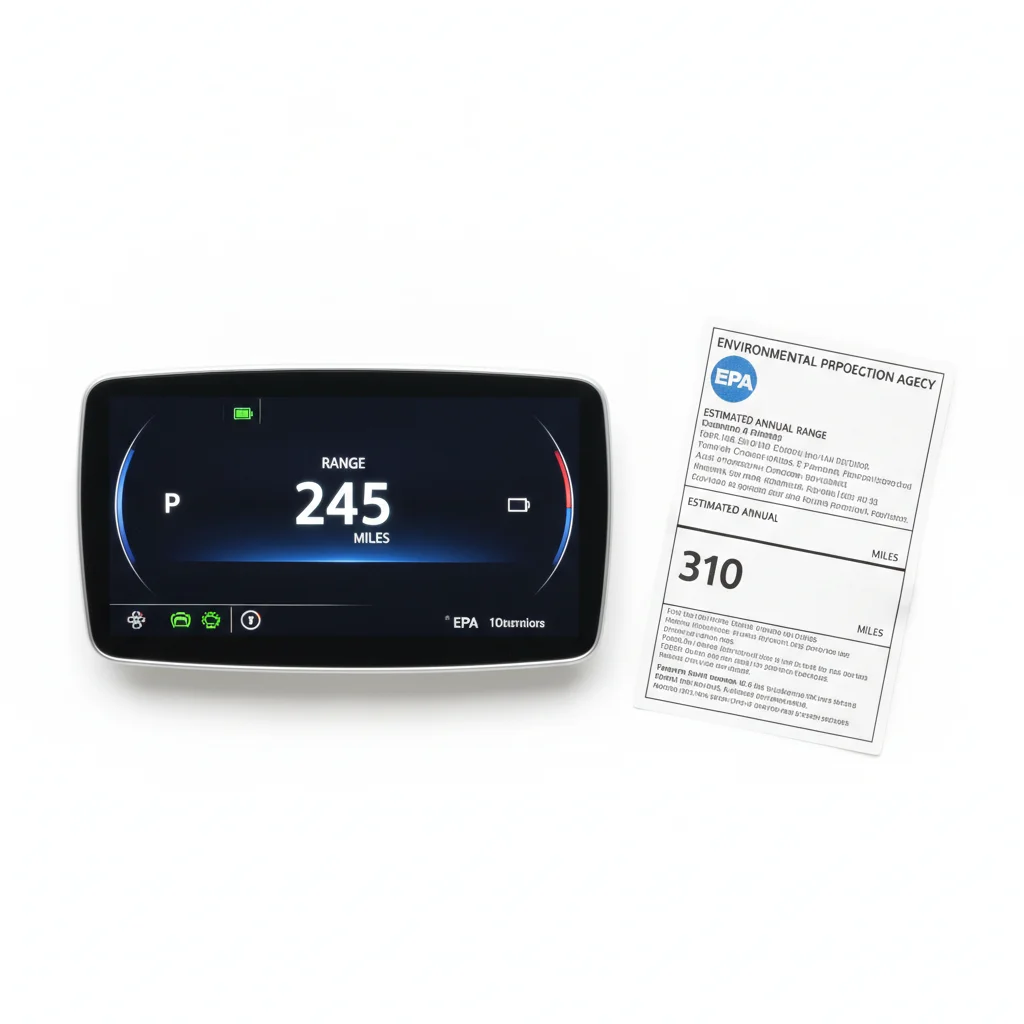
The EPA range figure on a window sticker comes from a standardized laboratory test — the same one used to measure fuel economy in gas vehicles, adapted for electric powertrains. The test combines a city driving cycle and a highway driving cycle, running the vehicle on a dynamometer (essentially a treadmill for cars) at controlled temperature and with minimal accessory load.
The result is useful for one specific purpose: comparing EVs against each other on an equal footing. It was never designed to predict what you will see on your commute.
| Test Condition | EPA Lab Setting | Typical Real-World Condition |
|---|---|---|
| Ambient temperature | 75°F (24°C) | Varies from -10°F to 105°F |
| Top speed | ~60 mph peak | 70–80 mph highway common |
| Climate control | Minimal use | Often full heat or AC |
| Road surface | Smooth dynamometer | Variable pavement, grades, wind |
Independent testing consistently shows real-world range landing 10–20% below the EPA rating for the average driver. Some vehicles perform better than their rating; others fall short. Factors like aggressive highway driving or brutally cold winters can push that gap to 30–40% on a bad day.
This isn't a flaw. It's the expected difference between a standardized benchmark and the messy variability of actual roads. Common EV range myths often stem from treating the EPA number as an absolute ceiling rather than a reference point.
The Biggest Factors That Shrink Real-World Range
Four variables account for the vast majority of real-world range variation. Understand these and you'll be able to predict your range with reasonable confidence rather than being surprised by it.
Temperature
Cold is the most dramatic range thief. Lithium-ion chemistry slows down at low temperatures, reducing the energy the pack can deliver. Simultaneously, electric cabin heaters — which draw directly from the traction battery in most EVs, unlike gas cars where engine heat is essentially free — can consume 3–5 kW of continuous power. AAA's testing found average range losses of 41% when driving at 20°F with the heat on, compared to a 75°F baseline.
Heat also hurts, though less severely. At 95°F with the AC running, AAA recorded losses around 17%. Parking in the shade and preconditioning while plugged in are practical countermeasures in summer.
Don't Trust the Range Display at Cold Start
When you first start an EV in cold weather, the displayed range estimate often looks alarming — sometimes 30–40% below what you'd expect. This is the car accurately reporting that the cold battery can't deliver its full capacity at that moment. As the battery warms up through driving (or through a preconditioning cycle), the estimate typically improves. Don't make charging decisions based solely on a cold-start range figure.
100% Daily Charging Wears Batteries Faster
Charging to 100% every night is not the recommended practice for most EVs. Lithium-ion batteries degrade faster when consistently held at maximum charge. Most automakers explicitly recommend a daily limit of 80%, reserving 100% for days when you genuinely need maximum range. Check your vehicle's owner manual or app settings to configure a charge limit.
Speed
Aerodynamic drag increases with the square of velocity. Driving at 75 mph doesn't just use a little more energy than 65 mph — it uses roughly 30% more per mile. For most EVs, the sweet spot for range efficiency sits between 55–65 mph. Many long-range road trip veterans deliberately drive at 65 on the highway and arrive with more battery than their nav system predicted.
Driving Style
Hard acceleration is expensive in energy terms. Not catastrophically so — modern EVs can handle spirited driving — but drivers who consistently accelerate firmly from stops will see meaningfully lower efficiency than those who ease into speed. Regenerative braking recaptures some energy on deceleration, but it never fully offsets aggressive acceleration.
HVAC and Accessories
Heated seats and a heated steering wheel consume far less energy than heating the full cabin air. If your EV offers those features, using them first and keeping the cabin temperature modest can recover meaningful range in cold weather. The same logic applies in summer — setting the cabin to 72°F instead of 68°F reduces compressor load.
For a deeper analysis of how each of these variables interacts, see what affects EV range more than battery size.
Use Seat Heat First, Cabin Heat Second
Heated seats warm you directly and draw only 50–100 watts — a fraction of the 3–5 kW a full cabin heater consumes. In cold weather, turn on the seat and steering wheel heat first, then set the cabin temperature modestly rather than blasting maximum heat. You'll stay just as comfortable and preserve significantly more range.
Slow Down to Extend Your Reach
Dropping your highway cruising speed from 75 mph to 65 mph can recover 15–20% of range on a long trip. For many EVs, this single adjustment can mean the difference between making it to your next charging stop comfortably and arriving with an anxious sliver of battery. Many navigation apps that route EV trips will also recommend the speed that keeps your plan viable.
How to Read Your Range Estimate Accurately
The range number on your dashboard — sometimes called the Guess-O-Meter (GOM) by veteran EV owners — is not calculated from a fixed formula. It's a rolling estimate based on your recent driving behavior. Drive aggressively in cold weather for a week, and the estimate will be pessimistic. Drive gently on mild days, and it will be optimistic.
This adaptive behavior is by design, but it confuses new owners who expect a stable, predictable number. Here's how to interpret it correctly:
- Treat it as a current-conditions estimate, not a guarantee. The GOM reflects what you'd travel if conditions stayed exactly as they've been recently. A highway trip after a week of city driving will likely outperform the estimate. A cold-snap after mild fall weather will underperform it.
- Learn your personal miles-per-kWh (mi/kWh) figure. This efficiency metric, displayed in most EVs, tells you how effectively you're using stored energy. Track it over a few weeks to establish your personal baseline. A Tesla Model 3 Long Range owner averaging 3.8 mi/kWh with a 82 kWh usable pack can expect roughly 311 miles — regardless of what the dashboard range display says at any moment.
- Use state of charge (SOC) percentage as your primary reference. Percentages don't fluctuate the way estimated miles do. Knowing you have 60% charge and your car averages 200 miles on a full charge tells you more reliably that you have roughly 120 miles available.
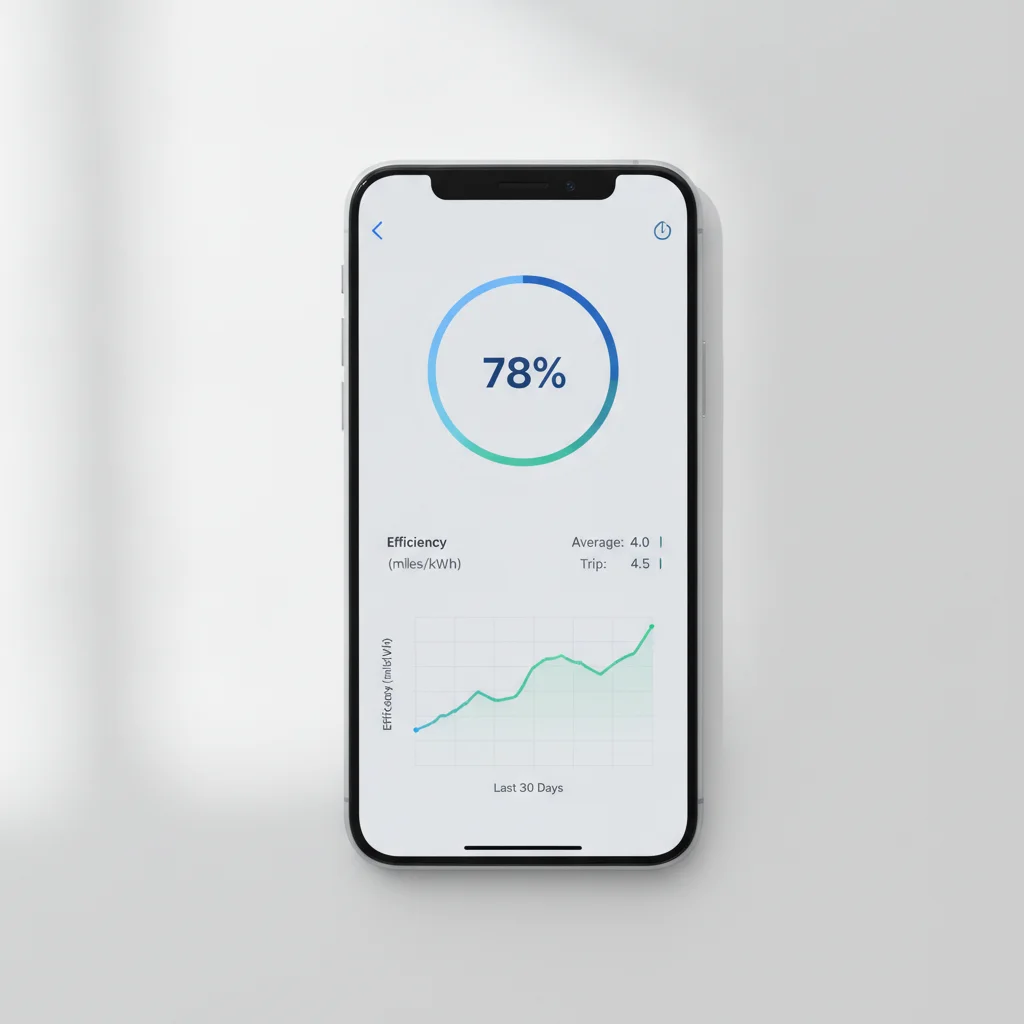
Some EVs now offer route-integrated range predictions that factor in elevation changes, traffic, and weather along your specific planned path. If your vehicle has this feature — accessible through built-in navigation — it's significantly more accurate than the generic dashboard range display for trip planning.
Your Car Is Learning Your Habits
The range estimate displayed on your dashboard uses a rolling average of your recent driving efficiency. This means the estimate during your first few weeks of ownership may be less accurate than it will be after 30–60 days. Give the system time to calibrate to your actual driving patterns before drawing conclusions about your vehicle's real-world range capability.
Route-Integrated Range Is More Accurate
If your EV's built-in navigation offers route-based range planning, use it for any trip over 50% of your estimated range. These systems factor in actual elevation changes, traffic, and sometimes even weather along your specific route — making them significantly more accurate than the flat dashboard estimate. Some EVs, including current Tesla and Rivian models, will automatically route you through charging stops if needed.
OTA Updates Can Shift Range Behavior
Over-the-air software updates occasionally change how your car estimates, reports, or manages range. After a major update, you may notice your range display behaving differently — this isn't necessarily degradation. <a href="/electric-vehicles/ev-basics/how-evs-work/how-over-the-air-updates-change-what-your-ev-can-do">How OTA updates change what your EV can do</a> explains how to interpret these changes and what they mean for your ownership experience.
Building a Daily Range Routine That Works
Most new EV owners discover within the first month that their daily range anxiety was misplaced. The median American drives fewer than 40 miles per day. Even the most modest modern EV — rated around 150 miles — covers that round-trip three times over on a single charge.
The practical challenge isn't running out of range. It's building the habit of plugging in so that running out never becomes a possibility.
Charge At Home If You Can
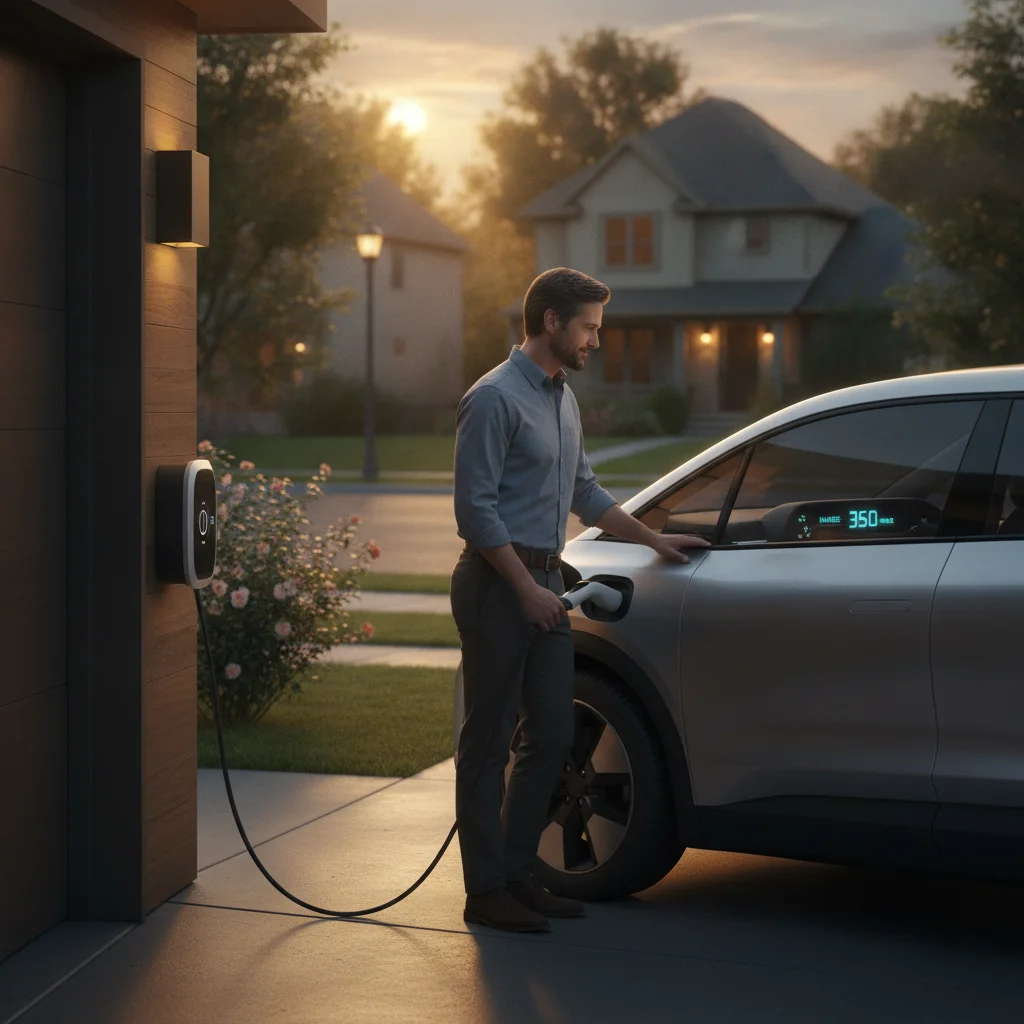
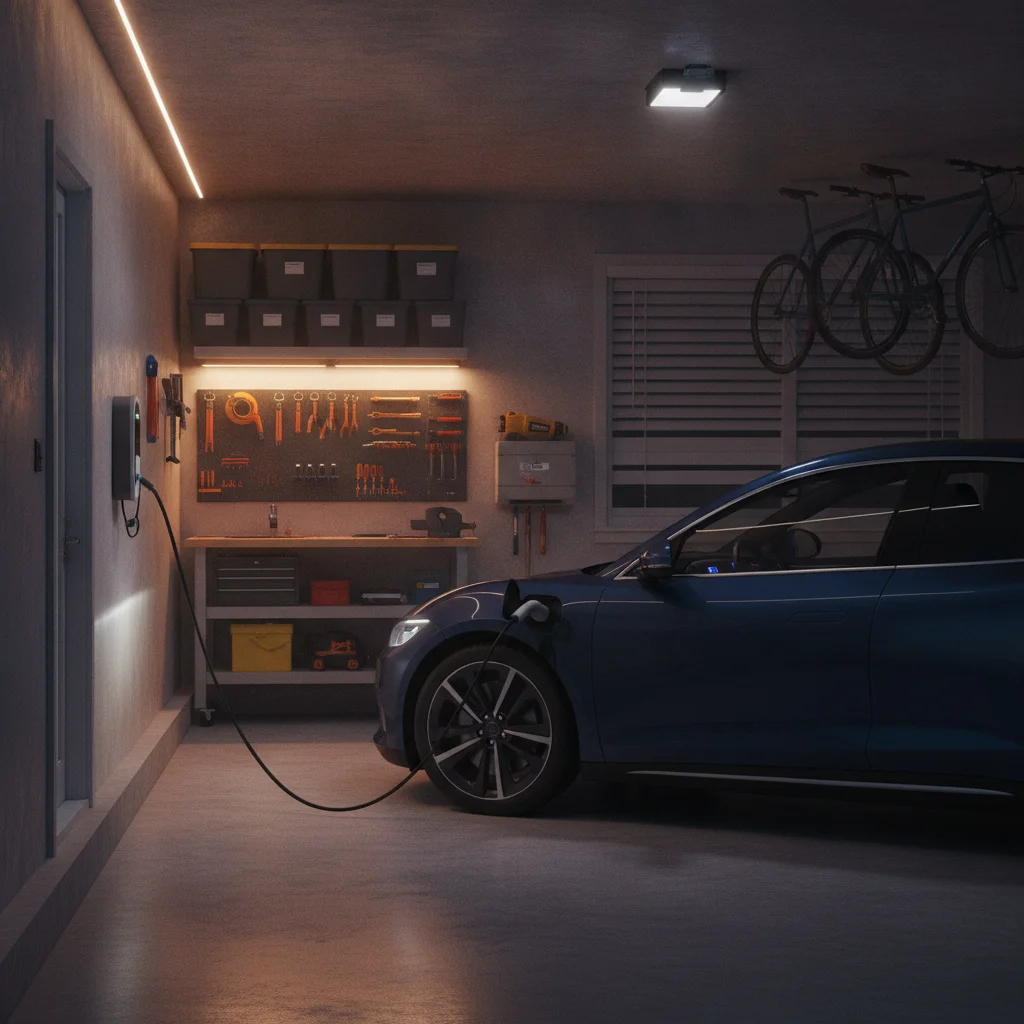
Level 2 home charging (240V, typically 25–40 miles of range added per hour) is the foundation of comfortable EV ownership. Plug in every evening the way you plug in your phone, and you start every morning with a full — or target-level — charge. Public charging becomes something you do on road trips, not daily life.
Set a Daily Charge Limit
Most EVs allow you to set a charge limit in the app or vehicle settings. For daily driving, set this to 80%. Charging to 100% every night accelerates long-term battery degradation in most lithium-ion chemistries. The 80% limit also leaves headroom for regenerative braking to function at full efficiency from the moment you leave.
Use Departure Scheduling
Virtually every current EV lets you schedule a departure time, triggering the heater or AC to precondition the cabin while still plugged in. This is one of the most underused features by new owners. Preconditioning costs grid electricity rather than battery energy, and it means you start your drive in a comfortable, warm (or cool) car without sacrificing range.
Common EV range planning mistakes walks through the specific errors that leave drivers short on longer trips — most of which stem from skipping these foundational habits.
Recurrent Auto EV Battery Health Reports
Recurrent tracks real-world battery degradation data across hundreds of thousands of EVs. Their free vehicle reports show how a specific used EV's range has held up over time — invaluable for used buyers and curious owners.
PlugShare
A crowd-sourced charging network map that shows real-time charger availability, user check-ins, and comments. Essential for road trip planning and finding backup charging options on unfamiliar routes.
A Better Route Planner (ABRP)
ABRP calculates EV road trip routes with charging stops factored in, accounting for your specific vehicle model, speed, weather, and elevation. Far more useful than generic GPS apps for multi-stop EV travel.
EV Range Myths That Confuse First-Time Buyers
A companion article that debunks the most persistent misconceptions about EV range — from highway death spirals to software magic — so you start ownership with accurate expectations.
When to Worry — and When to Relax
Not every range anomaly warrants concern. But some patterns are worth paying attention to, particularly as your battery ages or if you're buying a used EV.
Normal Variation — Nothing to Do
- Range drops 15–25% in temperatures below 32°F (0°C)
- Dashboard estimate seems pessimistic after a highway trip, optimistic after slow city driving
- Range varies noticeably between summer and winter
- New vehicle range estimate takes a few weeks to stabilize as the car learns your habits
Worth Monitoring
- Consistent range that's more than 20–25% below EPA rating in mild, moderate-speed conditions — check your driving baseline first, then consider a dealer diagnostic
- A sudden, persistent drop in range that didn't correlate with weather or behavior change — could indicate a cell group issue
- Charge never reaching the set limit without error messages — worth a service visit
Battery Degradation Is Real but Slow
All batteries lose some capacity over time. Independent data from Recurrent, which tracks real-world EV battery health across hundreds of thousands of vehicles, shows median degradation of around 2–3% per year in the first several years of ownership, with most modern EVs retaining over 85% capacity at 100,000 miles. This is a gradual background process, not a cliff.
If you're buying used, what to check about an EV's real-world range performance outlines how to assess battery health before committing.
Range anxiety — the fear of running out of charge — is almost universal among new EV owners and nearly absent among experienced ones. Studies and owner surveys consistently show it fades sharply after 30–60 days as drivers internalize their vehicle's actual behavior relative to their actual life. The learning curve is real, but it's short.
Beyond range, owning an EV involves a broader set of considerations. The EV maintenance basics hub covers what routine upkeep looks like, and the EV insurance guide explains why premiums can differ from gas vehicles — both worth understanding as you settle into ownership.
Your Car Is Learning Your Habits
The range estimate displayed on your dashboard uses a rolling average of your recent driving efficiency. This means the estimate during your first few weeks of ownership may be less accurate than it will be after 30–60 days. Give the system time to calibrate to your actual driving patterns before drawing conclusions about your vehicle's real-world range capability.
Route-Integrated Range Is More Accurate
If your EV's built-in navigation offers route-based range planning, use it for any trip over 50% of your estimated range. These systems factor in actual elevation changes, traffic, and sometimes even weather along your specific route — making them significantly more accurate than the flat dashboard estimate. Some EVs, including current Tesla and Rivian models, will automatically route you through charging stops if needed.
OTA Updates Can Shift Range Behavior
Over-the-air software updates occasionally change how your car estimates, reports, or manages range. After a major update, you may notice your range display behaving differently — this isn't necessarily degradation. <a href="/electric-vehicles/ev-basics/how-evs-work/how-over-the-air-updates-change-what-your-ev-can-do">How OTA updates change what your EV can do</a> explains how to interpret these changes and what they mean for your ownership experience.
All claims are backed by peer-reviewed research. Sources on request.