Key Takeaways
Why EPA Range Ratings Are Just the Starting Point
Every new EV sold in the United States carries an EPA-estimated range on its window sticker. That number is determined under controlled laboratory conditions — a specific temperature, a fixed speed cycle, no accessories running — and it almost never matches what drivers experience on public roads. The gap between rated range and real-world range isn't a flaw in the rating system so much as an unavoidable consequence of the enormous variability in real driving conditions.
EPA testing conditions don't replicate real life, and the disconnect is more pronounced for EVs than for gas-powered vehicles because electric motors are far more sensitive to temperature swings, aerodynamic load, and accessory draw. A combustion engine loses efficiency as conditions worsen, but it doesn't lose 35% of its fuel tank capacity when it's 10°F outside. An EV battery effectively does.
This article ranks the variables that most influence real-world range — not by anecdote, but by magnitude of impact supported by engineering data, third-party testing from organizations like AAA and Recurrent Auto, and manufacturer disclosures. Knowing which factors hit hardest allows you to plan smarter, drive more efficiently, and avoid the frustration of arriving at a charger with far less battery than you anticipated.
A comprehensive reference covering EPA ratings and real-world derating factors puts these variables in broader context. What follows is the ranked breakdown itself.
The Ranked Factors
The factors below are ordered from greatest to least impact on real-world range under typical driving conditions. Some will interact — cold weather combined with highway speeds, for instance, compounds losses far beyond what either factor causes alone. Where relevant, those interactions are noted.
Ambient Temperature (Especially Cold)
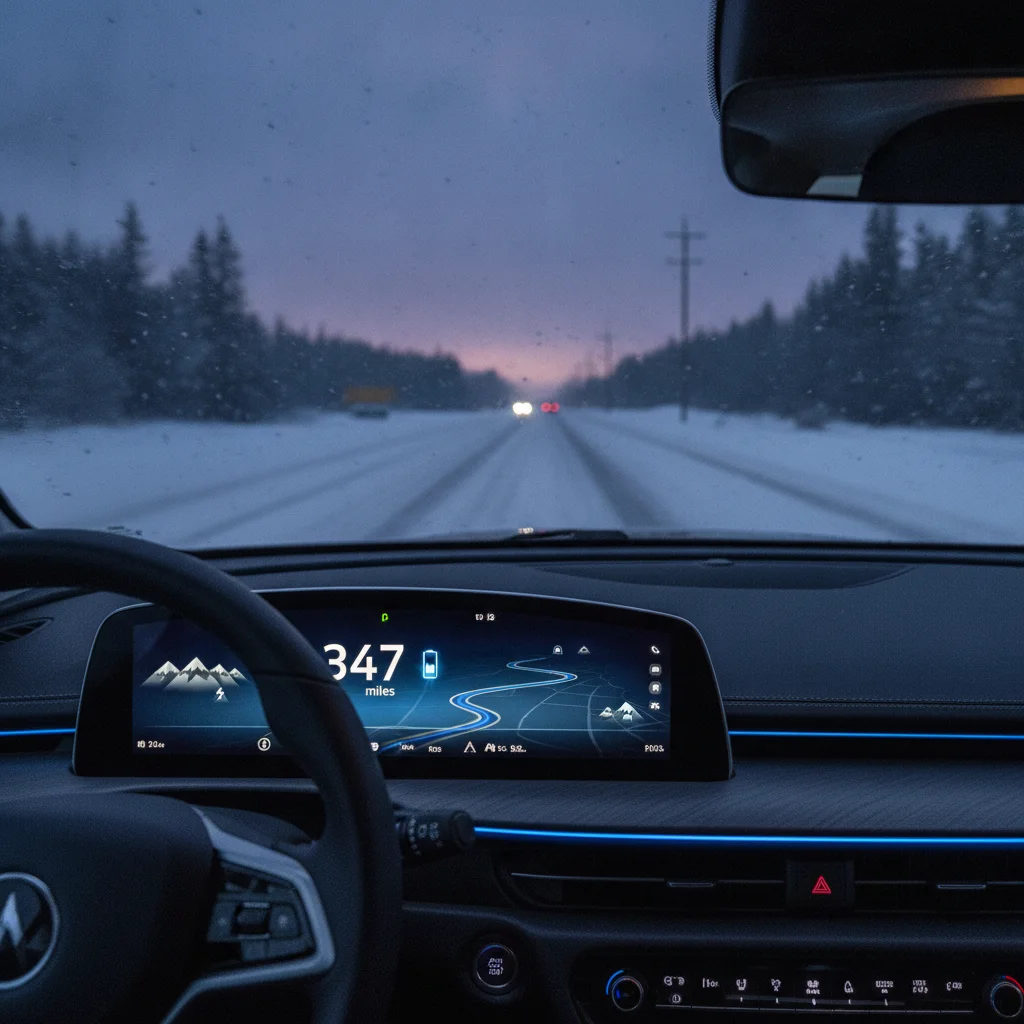
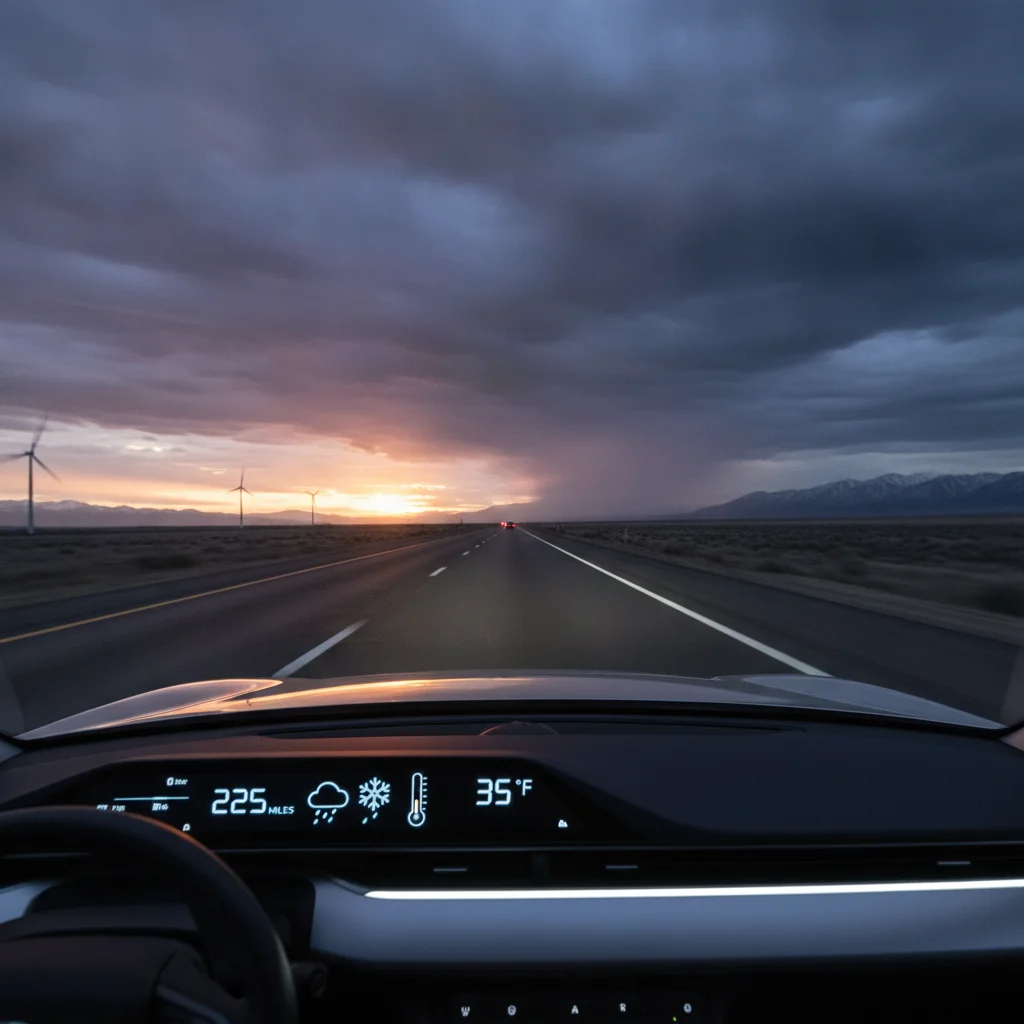
No single variable reduces real-world EV range more consistently or more dramatically than cold ambient temperature. AAA testing found that at 20°F, EV range dropped an average of 41% compared to performance at 75°F. That's not a minor efficiency penalty — it's a fundamental electrochemical constraint. Lithium-ion batteries generate and store energy through chemical reactions, and those reactions slow considerably as temperatures fall. Internal resistance rises, usable capacity shrinks, and the battery management system may deliberately limit charge acceptance and discharge rates to protect cell longevity.
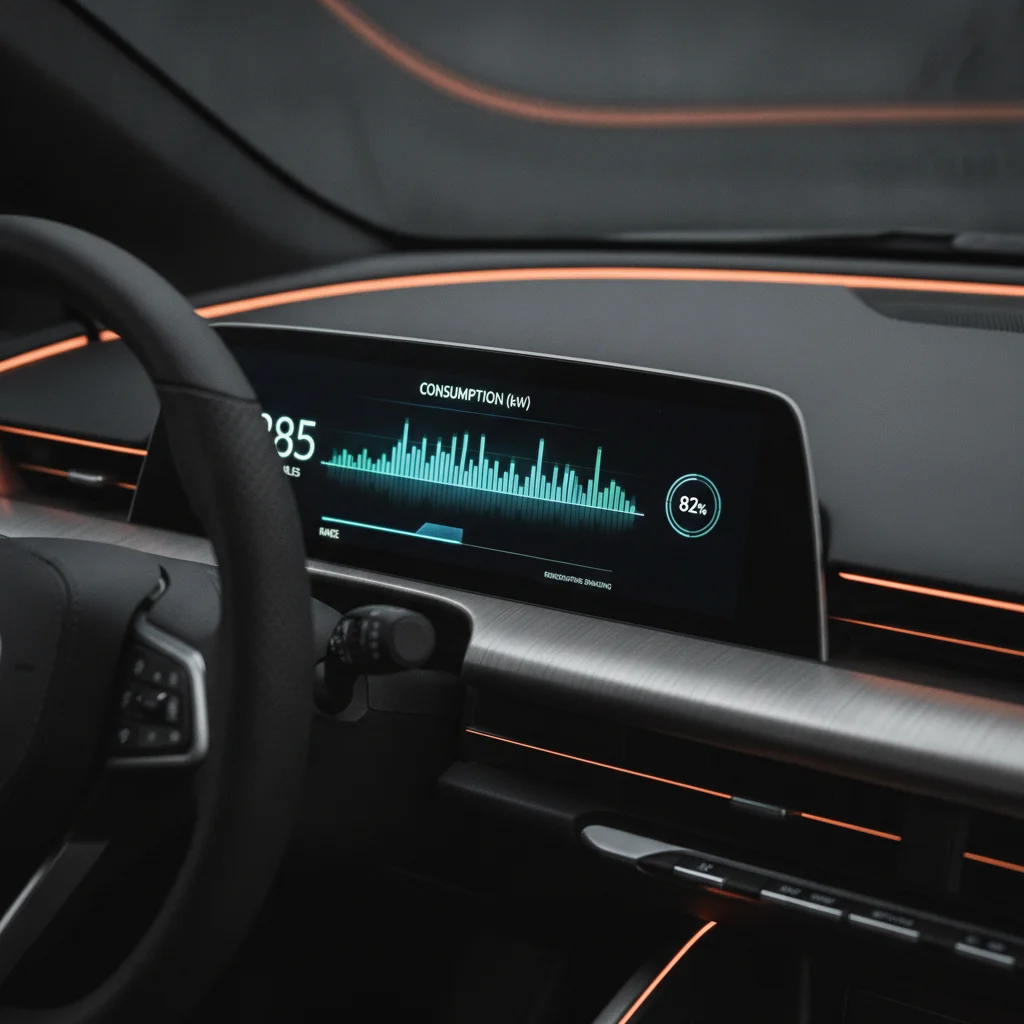
Compounding the battery's direct cold-weather limitation is the energy demand from cabin heating. Unlike combustion-engine vehicles that recycle waste heat to warm the interior, most battery-electric vehicles must generate heat electrically. Resistive heating elements — essentially the same technology as an electric space heater — are highly effective but energy-hungry. On a 10°F day, a mid-size EV can consume 3–5 kWh per hour just maintaining cabin temperature, which translates directly to reduced driving range.
[in_content_images:1]Heat pumps, now standard or available on many newer EVs including the Tesla Model Y, Hyundai IONIQ 6, and Volkswagen ID.4, significantly reduce this penalty by moving ambient heat rather than generating it. A heat pump can deliver 2–3 units of heat energy for every unit of electrical energy consumed — roughly three times more efficient than resistive heating in moderate cold. However, heat pumps lose effectiveness below approximately -4°F, at which point most systems switch back to resistive elements anyway.
Hot weather also affects range, though less severely. At 95°F, AAA measured an average range reduction of about 17%, largely from air conditioning load rather than battery chemistry degradation. The asymmetry between heat and cold impacts is important: plan much more conservatively for winter driving than summer driving.
At 20°F, AAA testing found EV range dropped an average of 41% compared to 75°F conditions.
Driving Speed and Aerodynamic Drag
Aerodynamic drag — the resistance an object encounters moving through air — increases with the square of velocity. This means doubling your speed quadruples the aerodynamic force your EV must overcome. In practical terms, the difference between driving 65 mph and 80 mph is not marginal; it's substantial. Third-party testing by Edmunds and others has shown that driving at 70 mph versus the EPA test cycle speed can reduce range by 20–30% depending on the vehicle's drag coefficient and frontal area.
The EPA test cycle used for range ratings includes an urban segment (average ~21 mph) and a highway segment (average ~48 mph), with a brief burst to 60 mph. Modern American highway driving routinely involves sustained speeds of 70–80 mph, well above those test parameters. A vehicle rated at 300 miles under EPA conditions might realistically deliver 225–240 miles at a continuous 75 mph on flat terrain.
[tip_callout]Vehicle aerodynamics vary enormously. The Tesla Model 3 Long Range, with a Cd of 0.23, is among the most slippery production EVs available and consequently holds range better at highway speeds than blockier competitors. A large electric SUV or pickup truck with a Cd above 0.30 will experience more pronounced speed-related range losses.
Roof cargo — bike racks, kayak carriers, cargo boxes — dramatically worsens aerodynamics. A loaded rooftop cargo box can reduce highway efficiency by 10–25% even at moderate speeds. If you're planning a road trip, roof-mounted gear should be considered a significant range factor, not an afterthought.
Driving at 75 mph versus EPA test speeds can reduce real-world range by 20–30% on flat terrain.
HVAC System Load
Heating, ventilation, and air conditioning — collectively HVAC — represents the largest non-propulsion energy consumer in most electric vehicles. The impact is most severe in winter for reasons detailed under temperature above, but even summer air conditioning meaningfully reduces range. A typical EV air conditioning compressor draws 1–2 kW continuously; a resistive heater can draw 4–6 kW or more. When a vehicle's total propulsion consumption at highway speed might be 20–25 kW, a 5 kW cabin heater represents 20–25% additional load.
Preconditioning — warming or cooling the cabin while the vehicle is still plugged in — is the most effective mitigation strategy. By using grid power rather than battery power for initial thermal conditioning, you can leave home with a comfortable cabin and a full battery. Most modern EVs support scheduled preconditioning through a companion app. The energy consumed during preconditioning comes from the charger, not the pack, so your range is entirely unaffected.
Seat heaters and steering wheel heaters are meaningfully more efficient than cabin air heating because they warm the occupant directly rather than the entire air volume of the interior. On cold days, using seat heaters and setting the cabin temperature conservatively (e.g., 65°F rather than 72°F) can reduce HVAC draw by 30–50% with minimal comfort sacrifice. Rear-window defrost is another frequently overlooked draw — typically 150–300W — that accumulates over extended winter drives.
A resistive cabin heater can draw 4–6 kW continuously — up to 25% of highway propulsion energy.
Elevation Changes and Terrain
Climbing elevation requires energy proportional to vehicle mass and vertical gain. A 4,500-pound EV climbing 3,000 feet over a mountain pass expends significant energy that a flat-road trip of the same distance would not require. The upside is regenerative braking: descending that same pass recovers a portion of the energy as the motor operates in generator mode. However, regeneration is not 100% efficient — typical round-trip efficiency through the motor and battery is roughly 70–80%. You will always spend more energy climbing than you recover descending.
Route planning tools like ABRP (A Better Route Planner) account for elevation profiles when generating range estimates and charging stop recommendations. Using such tools rather than relying on the vehicle's own range estimate — which may not fully incorporate upcoming elevation data — produces more accurate trip planning on mountainous routes.
Headwinds and tailwinds also function like terrain changes for aerodynamic purposes. A sustained 20 mph headwind effectively increases the aerodynamic load on your vehicle as if you were driving faster into still air. Real-world crosswind and headwind conditions are difficult to predict but can cause 10–15% range variance on open, exposed highway stretches.
Regeneration recovers only 70–80% of climbing energy — you always lose ground on hilly terrain.
Driving Style and Acceleration Habits
How aggressively you accelerate has a direct and measurable effect on energy consumption. EVs deliver instantaneous peak torque, which makes spirited acceleration effortless — and expensive from an energy standpoint. A hard 0–60 mph run in a performance EV can consume several times the energy of a gradual acceleration to the same speed. Repeated across dozens of intersections in a day, aggressive driving style compounds into a significant range deficit versus smooth, anticipatory driving.
Anticipatory driving — looking ahead, coasting toward red lights rather than braking hard, maintaining consistent speed rather than surging and decelerating — maximizes regenerative braking opportunity and minimizes kinetic energy waste. In urban environments with frequent stops, experienced EV drivers use one-pedal driving (aggressive regen on lift-off) to convert deceleration energy back into stored electricity rather than dissipating it as brake heat.
Recurrent Auto's real-world data from thousands of battery-electric vehicles confirms that the same model driven by different owners can show 10–15% range variation attributable primarily to driving behavior. That's a meaningful number — equivalent to roughly 20–40 miles on a 300-mile-rated vehicle.
Driving behavior alone can account for 10–15% range variation in the same EV model, per Recurrent data.
Tire Pressure and Rolling Resistance
Tire pressure is the easiest variable on this list to control and one of the most consistently underestimated. Underinflated tires flex more as they roll, converting kinetic energy into heat rather than forward motion — this is rolling resistance. The U.S. Department of Energy estimates that for every 1 psi drop in tire pressure below recommended levels across all four tires, fuel (or energy) efficiency decreases by approximately 0.2%. That figure sounds small, but most drivers don't check tire pressure frequently, and seasonal temperature swings of 30–40°F can cause 3–5 psi drops in tire pressure without any leak.
Tire type matters substantially as well. EVs are increasingly equipped with low-rolling-resistance tires specifically engineered to reduce this loss. Switching to all-season or winter tires — common for owners in northern climates — typically increases rolling resistance and reduces range by 5–10% compared to the OEM low-resistance tire. Winter tires are still worth fitting for safety in ice and snow, but the range cost should be factored into cold-weather trip planning alongside the temperature penalty already discussed.
[in_content_images:2]Wheel size and weight also affect rolling resistance and rotational inertia. Larger-diameter wheels with lower-profile tires are popular aesthetically but often decrease efficiency compared to the OEM wheel-tire combination optimized by the manufacturer for range. Upsizing wheels — a common modification — can reduce real-world range by 3–7% depending on the size differential.
Seasonal temperature swings can cause 3–5 psi pressure loss, quietly eroding range without any visible sign.
Vehicle Load and Cargo Weight
Mass is the enemy of efficiency in any vehicle, but EVs are particularly sensitive to it because they typically weigh 20–30% more than comparable combustion-engine vehicles due to battery pack mass. Adding cargo, passengers, or towing load compounds an already heavy baseline. The energy required to accelerate a heavier vehicle is proportionally greater, and that energy cannot be fully recovered during deceleration.
Towing deserves special mention because the range penalty is dramatic and frequently surprises first-time EV truck or SUV owners. A mid-size electric truck rated at 300+ miles unloaded may deliver only 100–150 miles while towing a moderately loaded trailer, depending on trailer aerodynamics, weight, and road grade. The SAE J2807 tow rating standard does not currently require range disclosure under tow load, so consumers must rely on third-party testing — organizations like MotorTrend and TFL Truck have published towing range figures for several models.
For everyday driving without towing, passenger and cargo load is a secondary concern — a few hundred extra pounds matters far less than temperature or speed. But on a maximum-range road trip where every mile counts, minimizing unnecessary weight (luggage, gear, roof cargo) is a legitimate optimization worth a few minutes of effort.
An electric truck rated at 300+ miles may deliver only 100–150 miles while towing a loaded trailer.
Battery Age and State of Health
Lithium-ion batteries degrade over time and charge cycles. This is an electrochemical inevitability, not a manufacturing defect, though the rate of degradation varies by chemistry, thermal management quality, and charging habits. As cells age, their maximum energy storage capacity — state of health — declines. A battery at 90% state of health can store only 90% of what it could when new, meaning a 300-mile-rated vehicle may only achieve a best-case ~270 miles after meaningful degradation.
Recurrent Auto's analysis of over 15,000 EVs found that the average battery retains approximately 90% capacity after 100,000 miles, with significant variance by model and climate. Vehicles regularly fast-charged in hot climates — maximizing two of the primary stressors — tended toward the lower end of that retention range. Moderate charging practices (avoiding regular 100% charges, minimizing DC fast charging frequency, keeping the battery between 20% and 80% for daily use) are consistently associated with slower degradation.
Most manufacturers warrant EV batteries for 8 years or 100,000 miles at a minimum of 70% state of health. If your battery degrades below that threshold within the warranty period, replacement is covered. Used EV buyers should request battery health reports — available from services like Recurrent or through OBD-II-connected diagnostic tools — before purchasing, as state of health is an important factor in total ownership value alongside range performance.
Most EVs retain roughly 90% battery capacity at 100,000 miles — degradation is real but manageable.
Rankings Reflect Averages, Not Every Vehicle
The rankings below reflect average real-world impact across a broad range of EVs currently on U.S. roads. Individual vehicles vary considerably — a heat-pump-equipped model will lose less range in cold weather than one using resistive heating, and a low-drag sedan will handle highway speeds more efficiently than a boxy SUV. Use these rankings as a framework, not an exact prescription for your specific vehicle.
Factors Often Work in Combination
Real-world range losses are rarely caused by a single factor in isolation. A January highway road trip combines cold temperatures, high speed, and elevated HVAC demand simultaneously — each factor compounding the others. In such conditions, it is not unusual for actual range to fall 45–55% below the EPA-rated figure. Planning for worst-case combinations, not individual factors, produces the most reliable trip estimates.
The rankings below reflect average real-world impact across a broad range of EVs. Individual vehicles vary — a heat-pump-equipped EV will lose less range in cold weather than one using resistive heating, and a low-drag crossover will handle highway speeds more efficiently than a boxy SUV.
How to Use This Knowledge on Your Next Trip
Understanding the hierarchy of range-robbing factors shifts you from reactive to proactive. Before any long drive, check the forecast: if temperatures are below 40°F, plan for at least one additional charging stop and charge to 90–100% rather than your usual 80% limit. If you're driving a sustained 75–80 mph stretch of interstate, apply the same logic — your on-board range estimate likely hasn't fully accounted for that speed yet.
Use One-Pedal Driving in Urban Settings
Activating maximum regenerative braking and driving with one pedal in stop-and-go traffic maximizes energy recovery and reduces brake wear simultaneously. In dense urban environments, this technique alone can improve efficiency by 10–15% compared to conventional two-pedal driving. Experiment with your EV's regen settings — most models offer adjustable levels.
Precondition Before Every Cold-Weather Drive
Schedule cabin preconditioning to complete 15–20 minutes before your departure time while the vehicle is still connected to a charger. This draws thermal energy from the grid rather than the battery pack, preserving your full rated range for the road. Most EVs allow this to be automated by departure time through their companion app.
Preconditioning the cabin while plugged in is one of the highest-leverage actions an EV owner can take. Done consistently in cold weather, it can recover 10–20% of the range that resistive heating would otherwise consume from the battery. Most EVs allow scheduling this through their smartphone app.
Tire management is the easiest no-cost gain. Underinflated tires increase rolling resistance continuously — it's a slow, invisible drain that accumulates over every mile. Check pressures monthly, or more frequently in climates where temperatures swing dramatically between seasons. The efficiency gain from properly inflated tires doesn't sound dramatic in isolation, but it adds up over thousands of miles. Speed, temperature, HVAC use, and driving style can swing your real-world range dramatically — and managing even two or three of these factors simultaneously produces meaningful, compounding improvements.
Finally, rated range and real-world range differences directly affect what you pay per mile. If your EV is consistently returning 75% of its EPA-rated range due to cold weather and highway driving, you're effectively paying more per usable mile at DC fast chargers. That financial reality is another reason to take these factors seriously — not just for convenience, but for cost control. For owners evaluating total EV ownership costs, understanding EV insurance and how premiums are structured is a parallel consideration worth exploring alongside efficiency management.
Final Thoughts
Real-world EV range isn't a mystery — it's physics. Temperature affects electrochemical reaction rates. Aerodynamic drag scales with the square of velocity. Resistive heating pulls watts that would otherwise move wheels. Once you understand which forces are working against your battery and in what order of magnitude, you can make practical adjustments that genuinely extend usable range rather than relying on optimistic dashboard estimates.
The ranked list above is intended as a living reference, not a single-use checklist. Return to it when you're planning a road trip in winter, considering a higher-speed route, or simply trying to understand why last Tuesday's commute delivered 40 fewer miles than expected. The answers are almost always traceable to one or more of these factors — usually the top three working in combination.
Comparing BEV, PHEV, and HEV options is also worth revisiting if you're still in the pre-purchase phase and wondering which powertrain best suits the climate and driving patterns where you live. Range sensitivity varies significantly across EV types, and that variability should factor into your decision just as much as sticker price or charging speed.
All claims are backed by peer-reviewed research. Sources on request.