Key Takeaways
Towing & Cargo Range Impact
When an electric vehicle tows a trailer or carries heavy cargo, its real-world range drops sharply — often far more than most buyers anticipate. This happens because weight increases the energy needed to accelerate and climb hills, while a trailer dramatically worsens aerodynamic drag. Together, these two forces can cut an EV's rated range by 30 to 50 percent or more. Unlike a gas engine that can simply burn more fuel, an EV draws down a fixed battery, so the penalty hits immediately and can't be mitigated by a quick fill-up.
Aerodynamic drag scales with the square of velocity, so towing at highway speeds compounds the penalty exponentially. Rolling resistance and drivetrain load also increase, pushing total energy consumption to 2–3× the baseline kWh-per-mile figure used in EPA range estimates.
Why the EPA Range Number Is Essentially Useless When Towing
Every EV on the market carries an EPA-estimated range on its window sticker. That number is generated under controlled laboratory conditions: no trailer, moderate temperature, low speeds, and no significant cargo. It is a useful baseline for everyday commuting, but the moment you hitch a trailer, it becomes nearly irrelevant.
The EPA's standard range test — based on a modified version of the Federal Test Procedure — does not include any towing scenario. Neither do most manufacturer-quoted ranges. What this means in practice is that if you buy a Ford F-150 Lightning rated at 320 miles and drive it to a campsite 200 miles away while towing a mid-size travel trailer, you may not make it without an unplanned charging stop.
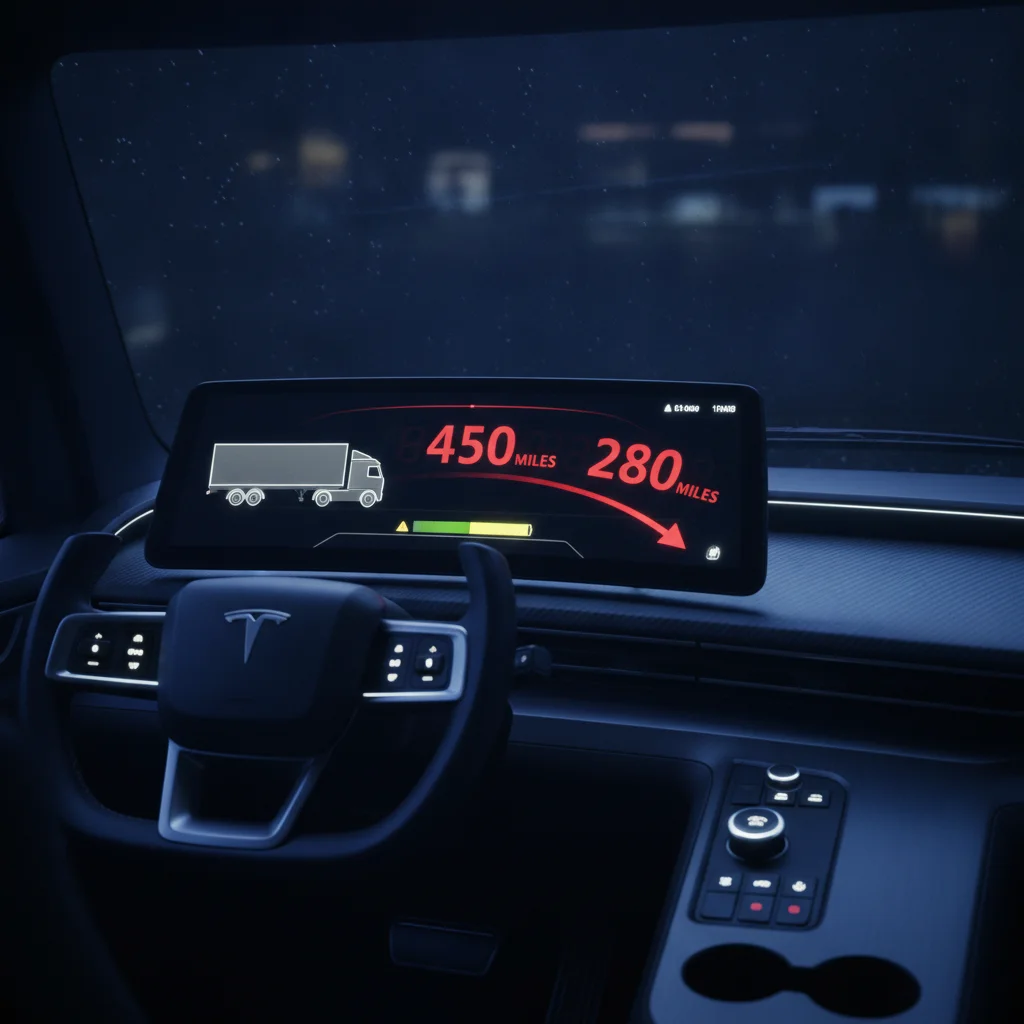
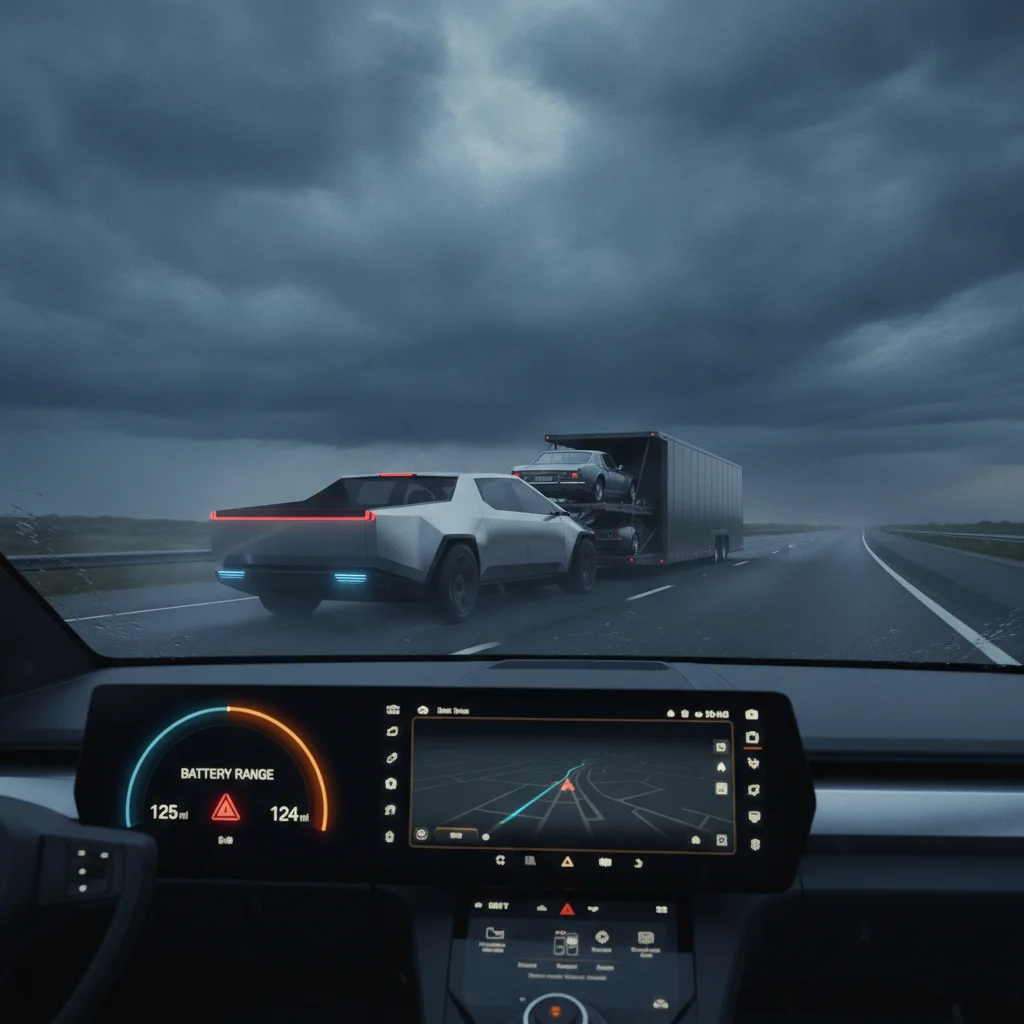
Real-world towing data from owners and third-party testers consistently shows range reductions of 30–50% for typical trailers. At the extreme end — heavy fifth-wheel campers or boat trailers at highway speeds — losses above 60% have been documented. A 300-mile-rated EV truck towing aggressively might deliver fewer than 120 miles of real range.
For a broader look at all the variables that chip away at rated range, see the ranked breakdown of real-world EV range factors. Towing sits near the very top of that list.
Tow Ratings vs. Payload: Know the Difference
An EV's advertised tow rating (e.g., 10,000 lbs) and its payload rating are separate numbers that interact. The tongue weight of a trailer — typically 10–15% of trailer weight — counts against the vehicle's payload capacity, not its tow rating. EV trucks are heavy from their battery packs, which can reduce available payload significantly. Always check both figures before buying, and factor in the weight of passengers, cargo, and fuel or charge when calculating your real-world limits.
The Physics: Two Forces Working Against You at Once
To understand why towing hits EV range so hard, you need a basic feel for the two forces involved: aerodynamic drag and rolling resistance from added weight. In a conventional vehicle, both forces reduce fuel economy — but in an EV, they compete directly against a finite energy reserve that can't be replenished on the fly.
Aerodynamic Drag: The Bigger Culprit
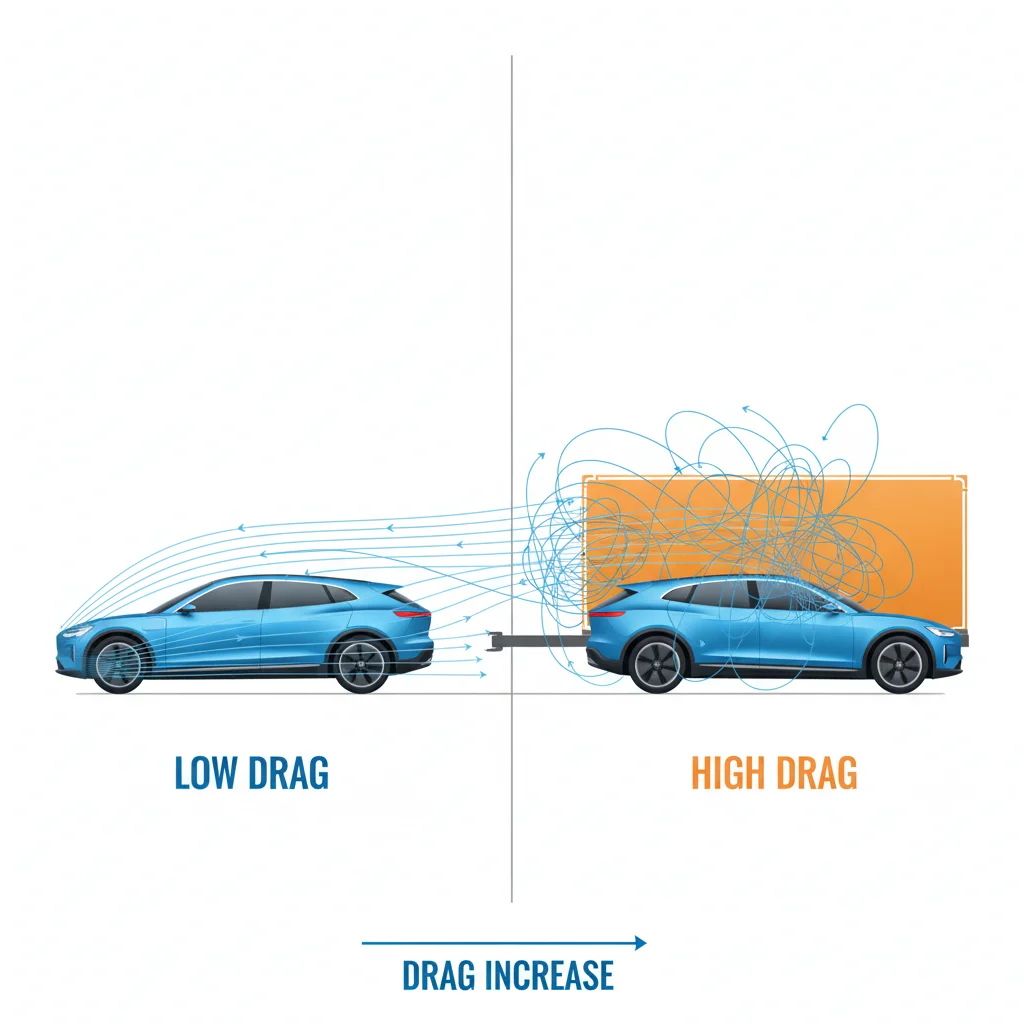
A trailer dramatically increases the frontal area and aerodynamic profile of your vehicle. Even a small utility trailer with a flat front face can more than double the effective drag of the tow vehicle. The physics here are unforgiving: aerodynamic drag increases with the square of your speed. Drive twice as fast, and drag quadruples. This is why towing at 70 mph is vastly more punishing than towing at 55 mph.
Speed alone can cut EV range significantly — add a trailer's drag penalty on top, and you're compounding two exponential curves. It's the single most important reason towing range loss surprises people: they think about the weight, but underestimate the wall of air resistance that trailer creates.
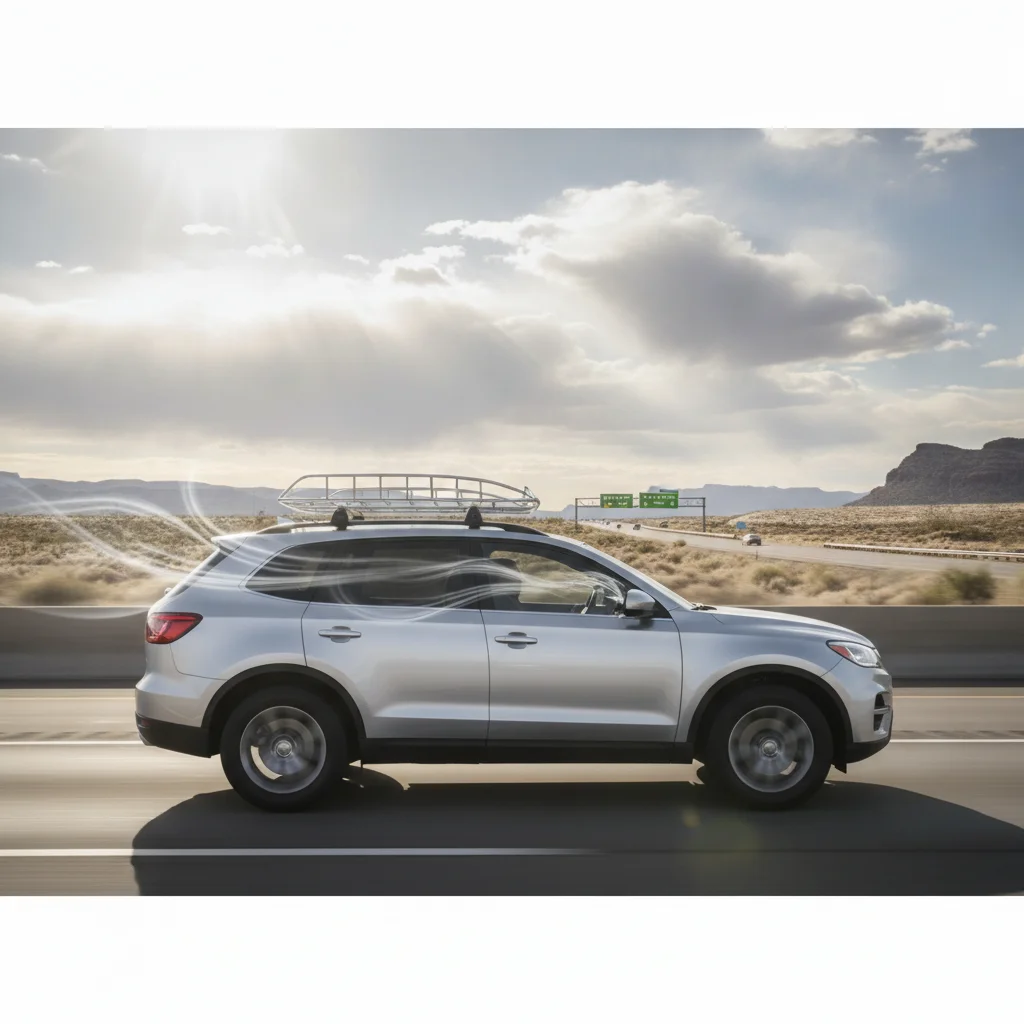
An empty roof rack on a car, for context, can reduce fuel economy by roughly 25% at highway speeds — and that's just a rack with no cargo attached. Roof racks and cargo carriers produce similar drag penalties for gas vehicles. A full-width trailer face is dramatically worse.
Weight: Real but Secondary
Weight matters too, but its effect is more intuitive and somewhat less severe than drag at highway speeds. Heavier loads require more energy to accelerate from a stop and to maintain speed on grades. An EV's regenerative braking system does recover some energy during deceleration and downhill segments, partially offsetting the weight penalty in stop-and-go or hilly driving. On a flat highway, drag dominates; in city driving with many stops, weight becomes more significant.
30–50%
Typical EV range reduction when towing
Consistently documented in real-world owner data and third-party tow tests across major EV truck and SUV models.
2–3×
Energy consumption increase while towing
EV trucks towing a mid-size travel trailer at highway speeds commonly consume 2–3 kWh per mile versus roughly 0.4–0.5 kWh per mile unladen.
~1–2%
Range loss per 100 lbs of cargo
Cargo and passenger weight without towing produces a more modest penalty, similar in percentage terms to the effect seen in gas-powered vehicles.
10–15%
Range recovered by dropping from 70 to 60 mph
Aerodynamic drag's speed-squared relationship means modest speed reductions produce outsized efficiency gains when towing.
25%
MPG reduction from an empty roof rack at highway speed
U.S. Department of Energy data shows aerodynamic accessories reduce fuel economy substantially even without payload — trailers compound this effect dramatically.
The interaction between these two forces is why towing range losses are so hard to predict precisely. A small, aerodynamically shaped teardrop trailer at moderate speeds might only cut range 25–30%. A large, boxy pop-up camper at interstate speeds could push losses above 55%. The trailer's shape and your speed matter as much as how much it weighs.
Use a Tow-Specific Route Planner
Before any EV tow trip, use a dedicated EV route planning app like A Better Route Planner (ABRP) or your vehicle's built-in tow mode if available. Input your trailer weight and dimensions to get a realistic range estimate and charging stop plan. Never rely on the standard dashboard range display when a trailer is attached — it will consistently overestimate how far you can go.
Pre-Condition Before Every Tow Trip
If your EV supports scheduled pre-conditioning, activate it 30–45 minutes before departure while the vehicle is still plugged in. This brings the battery to its optimal operating temperature — especially critical in cold weather — so you start with maximum usable capacity. Pre-conditioning while plugged in costs grid energy, not battery energy, so your starting range is preserved.
Cargo Load Inside the Vehicle: A Smaller but Real Penalty
Even without a trailer, a fully loaded EV cabin takes a range hit. Passengers, gear, tools, and luggage all add weight that the motor must overcome. The penalty is far less dramatic than towing — typically in the range of 1–2% range reduction per 100 pounds added — but it compounds with other factors.
Fill a seven-seat EV SUV with six adults and their luggage for a road trip and you might add 1,200 pounds. At 1.5% per 100 lbs, that's roughly an 18% range reduction before accounting for highway speeds, headwinds, or temperature. On a 300-mile rated vehicle, that's about 54 miles of range gone just from passengers and bags.
Weight from passengers and cargo affects EV range in ways that stack up quickly — especially when combined with other unfavorable conditions. For comparison, in a gas-powered vehicle, every 100 extra pounds reduces fuel economy by roughly 1–2% as well, so the cargo weight effect is broadly similar between powertrains. What differs is the consequence: a gas driver refuels in minutes; an EV driver needs to plan around it. See how cargo weight drains gas-vehicle fuel economy for a direct comparison.
“The aerodynamics of what you're towing matter as much as what it weighs. A small teardrop trailer can be friendlier to EV range than a lightweight but boxy pop-up camper, simply because of how air flows around it at speed.”
— Bjørn Nyland, EV automotive journalist and long-distance EV towing tester
Roof-mounted cargo is doubly penalizing: it adds weight and increases aerodynamic drag simultaneously. A rooftop cargo box loaded with ski equipment can add 150+ pounds and meaningfully reshape airflow over the vehicle, producing drag penalties well beyond the weight effect alone. Rolling resistance from under-inflated tires adds yet another layer of loss that's easy to overlook when loading for a trip.
Which EVs Handle Towing Best — and Why It Matters Before You Buy
Not all EVs are engineered with towing in mind. Before purchasing an EV with the intention of towing regularly, buyers need to evaluate several factors beyond rated towing capacity and EPA range.
Battery Size Is a Starting Point, Not the Whole Story
A larger battery pack gives you more total energy to draw from, which directly translates to more towing range even at elevated consumption rates. An EV with a 135 kWh pack towing at 2.5 kWh per mile has roughly 54 miles of range. That same vehicle at 1.5 kWh per mile (unladen highway) covers about 90 miles. Bigger packs buffer the penalty better, but the percentage loss remains similar regardless of pack size.
Onboard Range Estimators and Tow Modes
Some newer EV trucks and SUVs include tow-specific range estimation tools. The Ford F-150 Lightning's onboard system and the Rivian R1T's trip planner, for example, can incorporate trailer weight data and provide a more realistic remaining range number. The standard instrument cluster range estimate — derived from recent driving patterns — will wildly overestimate range once you hook up a trailer, because it was calibrated without that load. Always use a tow-specific tool or a third-party EV towing calculator for trip planning.
Charging Speed and Network Access
Because towing dramatically shortens your range between stops, DC fast-charge access and charging speed become critical. An EV that charges at 250 kW versus one limited to 150 kW adds meaningful flexibility. With reduced range per leg, you'll be stopping more frequently — so faster charging keeps total trip time reasonable. Understanding charging costs and how to minimize them matters more when you're stopping every 100 miles instead of every 250.
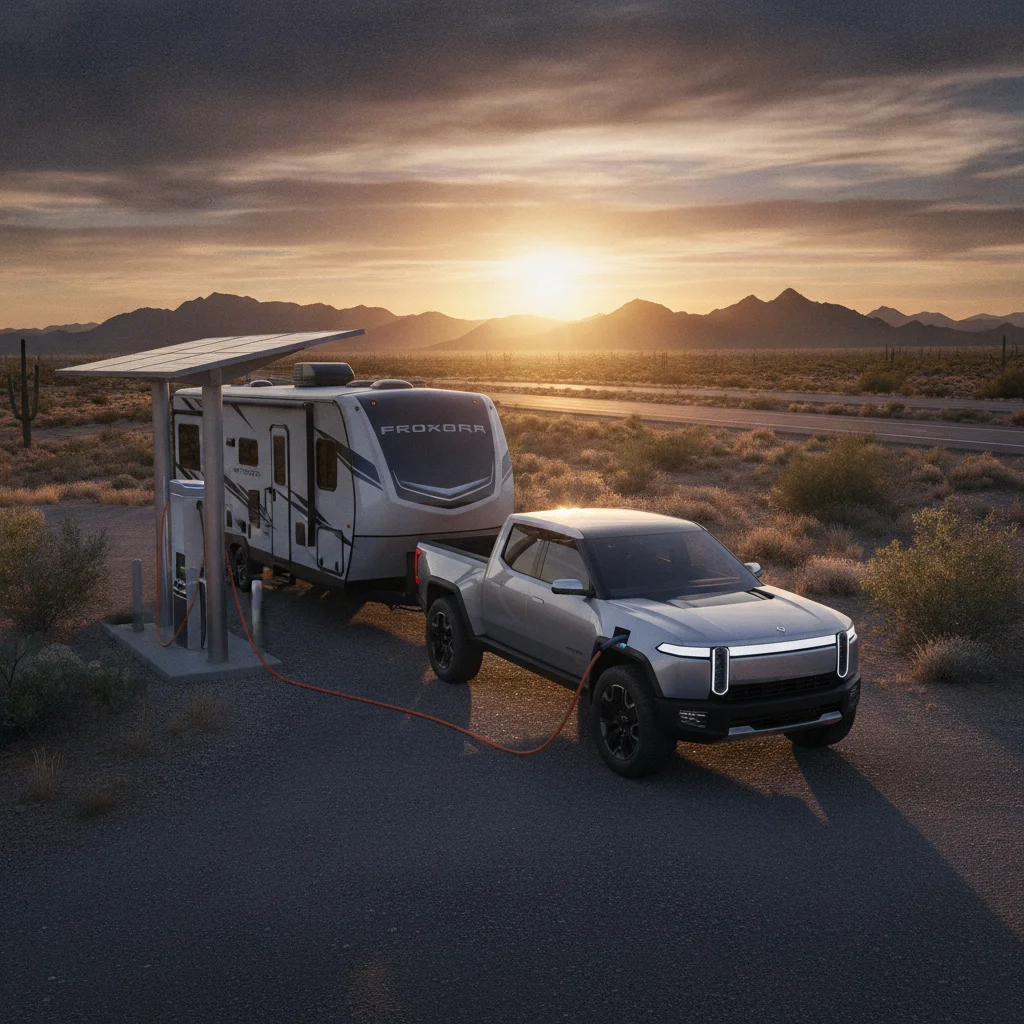
Buyers should also check the manufacturer's stated tow rating carefully. EVs are heavy from their battery packs, and some have gross vehicle weight ratings (GVWR) that limit usable tow capacity below the headline number once passengers and cargo are accounted for. The tongue weight of a trailer counts against payload, not just tow rating.
Practical Planning: How to Tow an EV Without Getting Stranded
Towing with an EV is entirely doable — but it requires a different planning mindset than towing with a gas truck. Here's what experienced EV towers consistently recommend.
Calculate Range Conservatively — Then Add a Buffer
Start with the assumption that your real range will be 40–50% of the EPA estimate when towing a typical trailer at highway speeds. Then plan charging stops to never exceed 70–80% of that reduced range. Being wrong on the conservative side costs you a slightly longer break; being wrong on the optimistic side costs you a roadside emergency call.
For a full picture of the variables that interact with towing losses, range anxiety vs. reality covers the broader driver behavior and environmental factors that stack on top of tow-specific penalties. Temperature alone can shave another 20–40% in winter conditions.
Slow Down — It Makes a Disproportionate Difference
Dropping from 70 mph to 60 mph when towing doesn't just feel safer — it can recover 10–15% of range because drag decreases with the square of speed. On a long tow trip, that's the difference between making a charging stop or not. Many experienced EV towers target 60–65 mph as a sweet spot between reasonable progress and tolerable range loss.
Use the Correct Range Tool
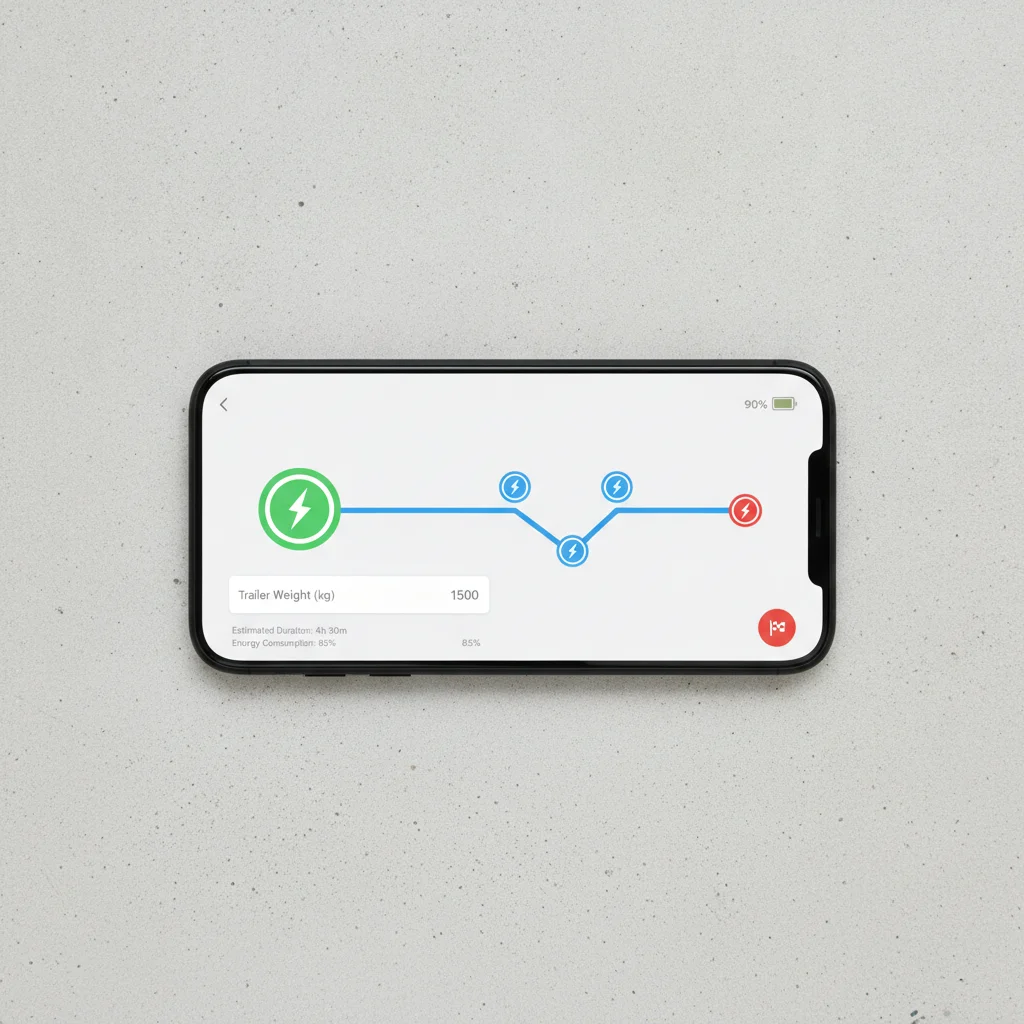
Do not trust the standard instrument cluster range estimate when towing. Use ABRP (A Better Route Planner), manufacturer tow-trip tools where available, or other EV-specific route planners that let you input trailer weight and dimensions. Plan charging stops before you leave — do not improvise based on the dash display.
Pre-condition the Battery
If your EV supports it, pre-condition the battery to optimal temperature before a towing trip. Cold batteries deliver less usable energy; pre-conditioning while still plugged in preserves battery capacity for the road. This is especially important in winter months where temperature effects compound the towing penalty.
Use a Tow-Specific Route Planner
Before any EV tow trip, use a dedicated EV route planning app like A Better Route Planner (ABRP) or your vehicle's built-in tow mode if available. Input your trailer weight and dimensions to get a realistic range estimate and charging stop plan. Never rely on the standard dashboard range display when a trailer is attached — it will consistently overestimate how far you can go.
Pre-Condition Before Every Tow Trip
If your EV supports scheduled pre-conditioning, activate it 30–45 minutes before departure while the vehicle is still plugged in. This brings the battery to its optimal operating temperature — especially critical in cold weather — so you start with maximum usable capacity. Pre-conditioning while plugged in costs grid energy, not battery energy, so your starting range is preserved.
The Bottom Line for Buyers Considering EV Towing
If towing is a core use case for you — weekend camping, a boat, a work trailer — an EV can still be the right choice. But it has to be the right EV, and your expectations around trip planning need to adapt. Range reduction from towing is not a flaw that software updates will eliminate; it's a consequence of physics that affects every EV and every gas vehicle, just with different refueling consequences.
The buyers who struggle most are those who purchased an EV primarily for its rated range without accounting for how dramatically towing changes that number. A 300-mile rating sounds like a comfortable buffer for a 200-mile tow trip — until you realize that buffer evaporates the moment you hook up the trailer.
The buyers who succeed treat EV towing as a logistics exercise: they know their reduced tow range, they identify fast-charger locations along their route in advance, and they drive at speeds that keep energy consumption manageable. That planning discipline is a real adjustment from gas-truck habits, but it's not an insurmountable one. For most tow-trip use cases — weekend recreation, occasional hauling — it's a workable tradeoff. For high-frequency long-distance towing, current battery technology still presents meaningful constraints that are worth evaluating honestly before signing a purchase agreement.
The EV range and efficiency hub has additional tools and guides to help you model your specific use case before committing to a vehicle.

All claims are backed by peer-reviewed research. Sources on request.