Key Takeaways
Why the 'Range Anxiety' Label Gets Misapplied
Walk into any car conversation today and 'range anxiety' gets thrown at electrified vehicles as a category — as if a Toyota RAV4 Hybrid and a Tesla Model 3 share the same limitations. They don't. The conflation happens because the auto industry, media, and marketing departments compress a whole spectrum of drivetrains under loose labels like 'EV' or 'electric vehicle,' making it nearly impossible for a first-time buyer to parse what's actually at risk.
Range anxiety has a precise definition: the fear or real risk that a vehicle's battery will deplete before the driver reaches their destination or a charging point. That fear is rational when your vehicle has no backup energy source. It becomes largely irrelevant the moment a gasoline engine enters the equation.
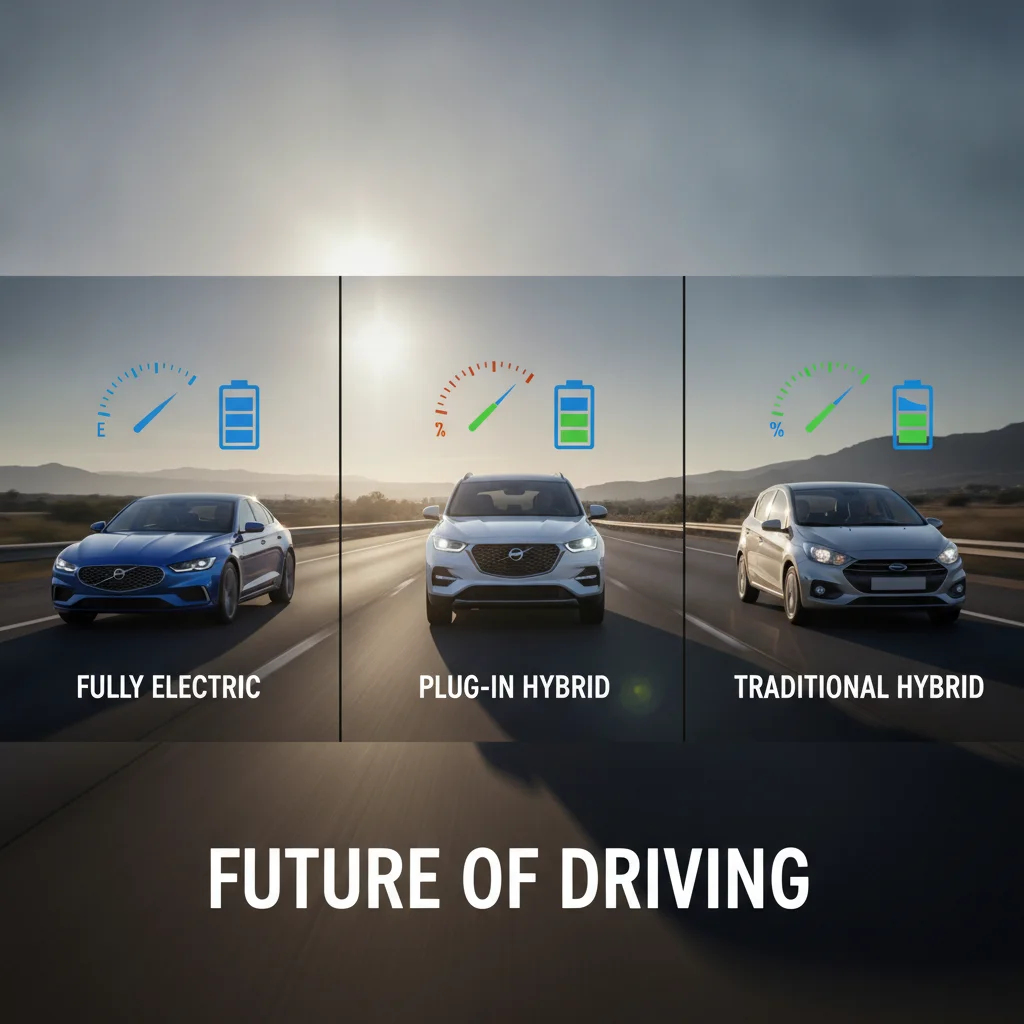
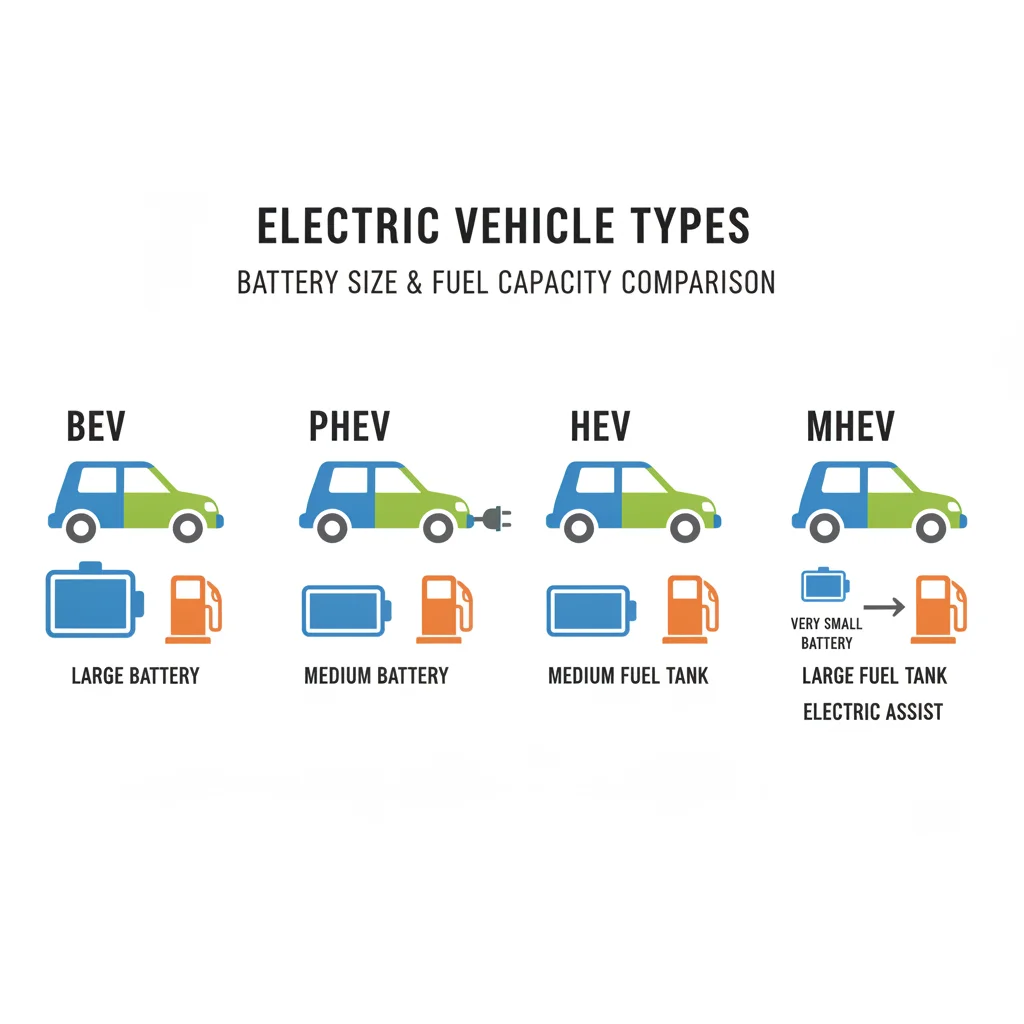
Here's the taxonomy that actually matters for a purchase decision:
- BEV (Battery Electric Vehicle): 100% electric. No gas tank. Range ends when the battery ends.
- PHEV (Plug-in Hybrid Electric Vehicle): Battery-first, gasoline backup. Plugs in, but can also refuel at any gas station.
- HEV (Hybrid Electric Vehicle): Gasoline-primary with an electric assist. Cannot plug in. Refuels like a conventional car.
- MHEV (Mild Hybrid): A small battery assists the engine but never drives the wheels alone. Essentially a conventional car with fuel-saving tech.
Once you understand these distinctions, the range anxiety conversation changes completely. See our EV Range & Efficiency hub for a deeper look at how range ratings are measured across these categories.
Common Myths — Debunked
The myths below are ones real buyers encounter — in dealership showrooms, on car forums, and in family debates about whether to go electric. Each one conflates vehicle categories in a way that either pushes buyers toward unnecessary anxiety or, conversely, leads them to underestimate the genuine planning BEV ownership requires.
Myth
All electric and hybrid vehicles suffer from range anxiety equally.
Fact
Range anxiety applies specifically to BEVs, which have no backup energy source. HEVs and PHEVs can both refuel at any gas station, eliminating stranding risk.
This is the most pervasive myth in the electrified vehicle conversation, and it costs buyers real decision-making clarity. The fear of being stranded is legitimate when your only energy store is a battery with finite charge. It becomes irrational when your vehicle also has a 10–14 gallon gasoline tank that you can fill in three minutes at any one of the 145,000 gas stations in the U.S.
A Toyota Camry Hybrid driver has never once needed to worry about finding a charger. A Honda CR-V Hybrid driver has the same experience. These vehicles self-charge through regenerative braking and the gasoline engine — the driver simply puts gas in when the tank gets low, exactly as they always have. PHEVs add a plug-in option but retain the same gasoline safety net.
The conflation happens because marketing and media shorthand lumps every vehicle with a battery pack under the 'EV' umbrella. A clearer label — electrified vehicle for the broader category, battery electric vehicle for the plug-only type — would eliminate most of this confusion.
Myth
PHEVs are just as range-limited as BEVs because their electric-only range is short.
Fact
PHEVs switch automatically to gasoline when the battery depletes, giving them a combined range of 300–600 miles — comparable to or better than most gas cars.
It's true that the electric-only range of most PHEVs is modest: 20–50 miles depending on the model. The Ford Escape PHEV offers about 37 miles electric-only. The Toyota RAV4 Prime manages roughly 42 miles. The Jeep Wrangler 4xe sits around 22 miles. Compared to a BEV's 200–350 miles of electric range, these numbers look small.
But the comparison is wrong because PHEVs don't stop when the battery runs out — they keep going, seamlessly, on gasoline. A RAV4 Prime driver with a depleted battery has roughly 580 miles of additional gasoline range available. That's not range anxiety territory; that's better total range than most gas-only crossovers.
The more relevant number for PHEV buyers is whether the electric range covers their daily commute. If your roundtrip commute is 35 miles and you charge at home overnight, you may rarely touch the gasoline engine at all on weekdays — while still having full gasoline capability for weekend road trips.
Myth
HEVs are basically the same as BEVs — both are 'electric cars.'
Fact
HEVs are fundamentally gasoline-powered vehicles with an electric assist system. They cannot be plugged in and their small battery packs are not designed for driving the vehicle on electricity alone at highway speeds over significant distances.
The label confusion here has real consequences. Buyers sometimes walk into a dealership expecting a hybrid to behave like a plug-in or a BEV — and then feel misled when they discover they still buy gasoline the same as before.
A conventional HEV's battery pack is typically 1–2 kWh in usable capacity. Compare that to a PHEV's 8–18 kWh or a BEV's 60–100+ kWh. The HEV battery is sized specifically to capture energy from braking, assist the engine during acceleration, and allow brief low-speed electric-only creep — not to propel the vehicle on extended electric-only trips.
At highway speeds, most HEVs are running primarily on gasoline. The electric motor chips in opportunistically to improve efficiency, not to replace fuel. The result is outstanding fuel economy — the Toyota Prius regularly achieves 50+ MPG in combined driving — but the experience is nothing like driving a BEV or even a PHEV in electric mode.
None of this is a knock on HEVs. They're reliable, efficient, and require no behavioral change. But buyers need to understand what they're actually buying.
Myth
If you drive a PHEV mostly on gasoline, you're getting no benefit from the electric system.
Fact
Even when operating primarily in hybrid mode, PHEVs use their battery for regenerative braking and engine assist, improving fuel economy over a comparable non-hybrid gasoline vehicle.
This myth discourages buyers who can't charge regularly from considering PHEVs — and that's a mistake. A PHEV running in 'charge-sustaining' mode (gasoline primary, battery depleted) still behaves like a conventional HEV. The battery captures energy during deceleration, assists the engine during hard acceleration, and can power accessories without idling. The efficiency benefit doesn't disappear just because you're not plugging in.
The EPA publishes both an MPGe (miles per gallon equivalent) rating for a PHEV's electric mode and a conventional MPG rating for when it's running on gasoline in hybrid mode. That second number is the floor — and it's typically better than a comparable non-hybrid vehicle. The Toyota RAV4 Prime, for example, achieves approximately 38 MPG in hybrid-only mode, versus about 26 MPG for the standard RAV4 with a conventional engine.
Of course, the biggest benefits come when the PHEV is regularly charged and driven primarily on electricity. But the vehicle doesn't become a liability if you occasionally (or even frequently) skip charging. This flexibility is exactly why PHEVs make sense for buyers whose charging access is inconsistent.
[important_callout]Myth
Range anxiety will be solved when all EVs get 400+ miles of range.
Fact
Range anxiety is driven as much by charging infrastructure availability, charging speed, and individual driver psychology as it is by the raw number on the spec sheet.
Battery capacity is one lever. It's not the only one — and arguably not the most important one for many buyers. A 400-mile BEV that takes 60 minutes to charge to 80% at a congested highway rest stop doesn't eliminate anxiety for a driver on a tight schedule. A 250-mile BEV with fast, reliable DC fast charging every 80 miles along a route may cause far less actual stress.
Research consistently shows that range anxiety correlates strongly with charging infrastructure confidence. Drivers who know where chargers are, trust they'll be functional, and have built mental models for how long a charge takes report dramatically lower anxiety — even with shorter-range vehicles. Our companion piece on what the data says vs. what drivers fear digs into this psychology in detail.
For HEV and PHEV buyers, this entire dimension is irrelevant. The infrastructure they depend on — gas stations — is mature, ubiquitous, and standardized. That's not a knock on BEVs or the direction the market is heading. It's an honest acknowledgment that infrastructure maturity matters as much as range numbers when evaluating anxiety risk.
Myth
PHEVs are just a temporary compromise — they'll be obsolete once BEV range improves.
Fact
PHEVs serve a structurally distinct market segment: buyers who need zero-compromise flexibility today, regardless of how BEV range evolves.
The 'bridge technology' framing of PHEVs is common in automotive media, but it underestimates how many buyers have legitimate, long-term reasons to prefer a gasoline backup. Rural buyers with limited charging infrastructure. Frequent long-haul drivers who can't plan around charging stops. Buyers in multi-driver households where one car needs to satisfy wildly different use cases. Fleet operators who need zero downtime risk.
For these buyers, a 400-mile BEV still doesn't solve the problem if the closest fast charger is 90 miles away and occasionally out of service. A PHEV with a 40-mile electric range and a full gasoline tank does. The structural advantage isn't just about today's infrastructure — it's about matching the right drivetrain to the right use case, which is a permanent problem, not a temporary one.
That said, as DC fast charging networks mature and reliability improves, the calculus shifts for many buyers. The honest answer is that PHEVs will remain the right call for some buyers indefinitely, while becoming less necessary for others as BEV infrastructure catches up.
~40 miles
Average U.S. daily driving distance
According to U.S. Department of Transportation data, the median American driver covers roughly 37–40 miles per day — within the electric-only range of most PHEVs.
145,000+
Gas stations in the U.S.
The U.S. has approximately 145,000 retail gasoline stations, giving HEV and PHEV drivers a mature, ubiquitous refueling network with no range planning required.
20–50 miles
Typical PHEV electric-only range
Most 2023–2025 model year PHEVs offer between 20 and 50 miles of all-electric range before seamlessly transitioning to gasoline hybrid operation.
58%
Prospective buyers citing range as top BEV concern
A 2023 J.D. Power EV Consideration Study found that range/charging anxiety remains the most frequently cited barrier to BEV purchase among non-EV owners.
What This Means for Your Buying Decision
The practical question isn't 'should I worry about range?' — it's 'which drivetrain matches my actual driving life?' Range anxiety is a real and legitimate consideration for BEV buyers who live in rural areas, lack home charging access, or regularly drive long-haul trips. For those buyers, understanding real-world range variation matters deeply. Our article on what actually affects EV range explains why EPA estimates can be misleading in practice.
But if you're evaluating a PHEV or HEV, range anxiety simply isn't your problem. Here's how to frame the decision:
Choose a BEV if:
- You have reliable home charging (Level 2 preferred).
- Your regular routes are within your vehicle's real-world range with margin to spare.
- You have workplace or destination charging access for longer trips.
- You're willing to plan road trips around the DC fast-charging network.
Choose a PHEV if:
- You want to run most daily errands on electricity but need zero-compromise road trips.
- You don't have consistent home charging access yet.
- You want to qualify for federal tax credits (many PHEVs qualify under the Inflation Reduction Act).
- You're not ready to fully commit to BEV infrastructure dependency.
Choose an HEV if:
- You want better fuel economy with no behavioral changes whatsoever.
- You don't want to think about charging — ever.
- Your budget is tighter and you want the most proven, low-maintenance tech.

For buyers on the fence, PHEVs have become the rational middle ground. Models like the Toyota RAV4 Prime, Hyundai Tucson PHEV, and Ford Escape PHEV offer 25–42 miles of electric-only range — enough to handle most weekday commutes on battery alone — while carrying a full gasoline tank for everything else. The data on driver behavior consistently shows that most Americans drive under 40 miles per day, which means a PHEV owner could theoretically run on electricity alone during the workweek and never touch the gas engine.
Don't Assume a PHEV Will Always Run on Electricity
If you buy a PHEV expecting to run primarily on electricity but don't have reliable home charging, you may spend most of your miles burning gasoline in hybrid mode — eliminating the main financial benefit of going plug-in. Before purchasing a PHEV, confirm you have or can install a Level 2 charger at home, or that workplace charging is consistently available. Running a PHEV exclusively on gasoline is not harmful to the vehicle, but it defeats the purpose and the economics.
Mileage Estimates for PHEVs Can Be Misleading
EPA MPGe ratings for PHEVs assume a specific blend of electric and gasoline miles that may not match your actual usage. A buyer who rarely charges could see real-world fuel economy far below the advertised figure. Always look at both the electric-mode MPGe and the gasoline-mode MPG rating when comparing PHEVs — the latter is what you'll live with if charging is inconsistent.
A Note on Insurance and Ownership Costs
Range anxiety isn't the only calculus. Insurance costs, maintenance schedules, and depreciation curves differ meaningfully across drivetrain types — and buyers sometimes discover these surprises after the purchase.
BEVs generally carry higher insurance premiums than comparable HEVs and PHEVs. Repair costs for high-voltage battery systems, specialized labor, and parts availability all factor into actuarial risk. Our EV insurance guide breaks down why premiums differ and what to look for when shopping coverage.
HEVs, by contrast, are among the least expensive electrified vehicles to insure and maintain. The regenerative braking system extends brake life. The gasoline engine is smaller and less stressed. Battery packs in HEVs are sized conservatively and have demonstrated strong longevity — the Toyota Prius battery, for instance, has a documented track record stretching back to 1997.
PHEVs sit in the middle: more complex than an HEV (larger battery, dual charging systems) but simpler than a BEV (no full dependency on charging infrastructure). Maintenance costs track closer to conventional hybrids than to BEVs in most real-world data.
PHEV Tax Credit Eligibility Has Changed
Under the Inflation Reduction Act, many PHEVs qualify for a federal EV tax credit of up to $7,500 — but eligibility depends on battery capacity (minimum 7 kWh), vehicle MSRP caps, and buyer income limits. As of 2024, the credit can also be applied as a point-of-sale discount at participating dealers. Verify current eligibility using the IRS's official tool or the Department of Energy's fueleconomy.gov before making a purchase decision, as qualifying models and rules have changed since the law's passage.
If you're new to electrified vehicle ownership and want to calibrate your expectations from the start, our guide on setting EV range expectations from day one covers what surprises new owners most — and how to avoid them.
Beyond BEV and PHEV: The Categories Most Buyers Miss
There are two additional drivetrain types that rarely make it into mainstream buying conversations but are worth knowing: EREVs (Extended-Range Electric Vehicles) and FCEVs (Fuel Cell Electric Vehicles).
EREVs, like the Chevrolet Volt (discontinued) or the current Nissan Note e-Power sold overseas, run primarily on battery but carry a small gasoline engine that acts solely as a generator — it never directly drives the wheels. From a range anxiety standpoint, EREVs behave much like PHEVs: the gas engine eliminates stranding risk. Our overview of extended-range EVs and fuel-cell vehicles covers these categories in detail for buyers who want to go deeper.
FCEVs (Toyota Mirai, Hyundai NEXO) use hydrogen to generate electricity onboard. They refuel in minutes like a gasoline car and have ranges of 350–400 miles. Range anxiety is essentially nonexistent — but hydrogen fueling infrastructure is extremely limited, concentrated mostly in California. For most U.S. buyers, FCEVs aren't a practical option yet.
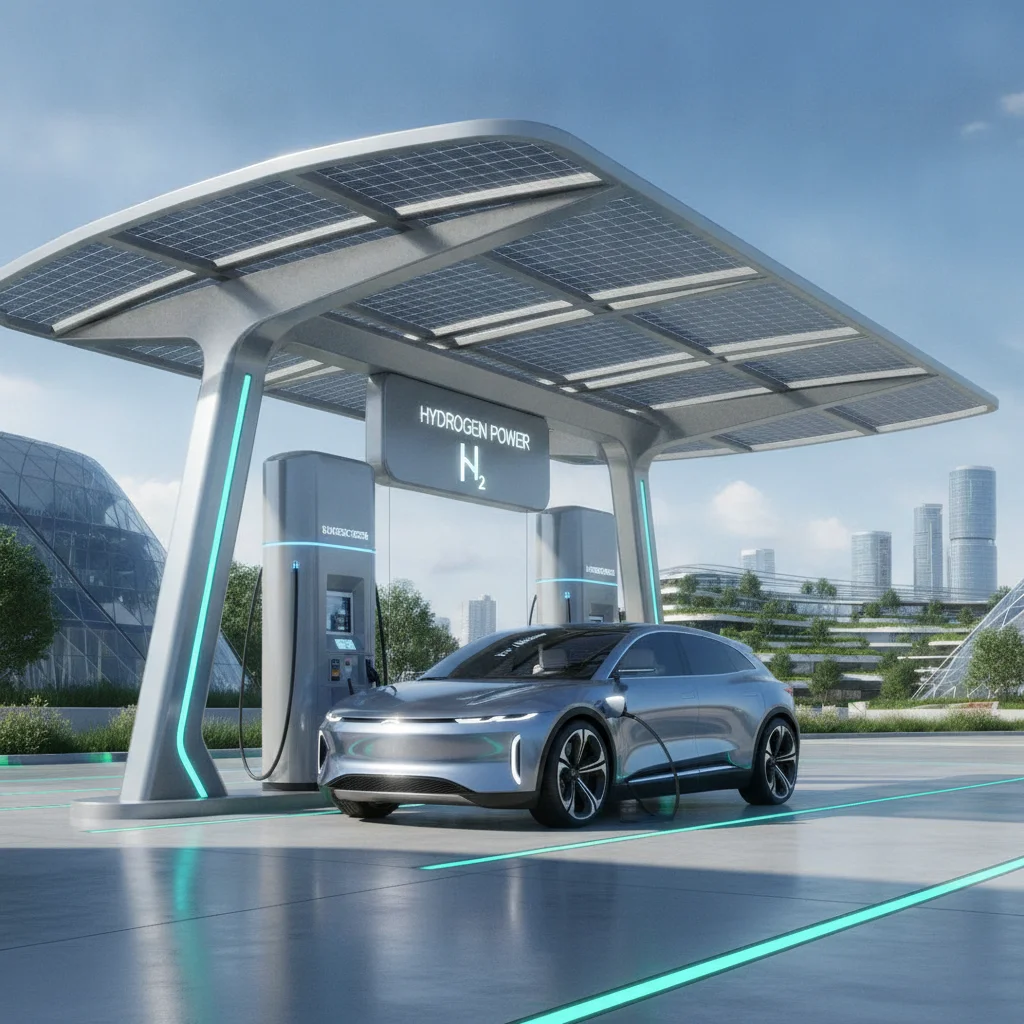
The common thread across all these non-BEV categories: some form of liquid or gaseous fuel backup ensures the driver is never stranded waiting for a charger. That's the core structural reason range anxiety doesn't generalize beyond BEVs.
The Bottom Line: Match the Drivetrain to Your Life
Range anxiety is real — for BEV drivers in specific situations. It's not a universal property of electrified vehicles, and treating it as such leads buyers to dismiss perfectly practical options (PHEVs, HEVs) or to overestimate the risk of BEV ownership for their particular driving profile.
The smarter framing is this: every vehicle has range constraints. A gasoline car with a 12-gallon tank and poor fuel economy has range constraints too. The difference with BEVs is that the refueling infrastructure is less ubiquitous and the refueling time is longer. That gap matters for some buyers and not at all for others.
If you're still sorting through the myths — including common ones like 'EVs lose half their range in winter' or 'charging speed always matches the rated max' — our article on EV range myths that confuse first-time buyers is worth reading before you step into a dealership.
Ask yourself two questions before your next vehicle purchase:
- How far do I actually drive on a typical day — and on my longest regular trip?
- Do I have reliable access to charging at home, work, or both?
Your answers will tell you more than any spec sheet. A BEV may be the right call. A PHEV may be smarter. An HEV may be the simplest path to lower fuel costs with zero lifestyle disruption. Range anxiety is the BEV's challenge to manage — not a reason to avoid electrification altogether.

All claims are backed by peer-reviewed research. Sources on request.