Key Takeaways
Start here
Why Home Charging Is the Foundation of EV Ownership
Understand your options
Level 1 Charging: The Cord That Came in the Box
Go deeper
Level 2 Charging: Faster, Smarter, and Worth the Investment for Many Owners
Make your decision
How to Decide: Level 1 vs Level 2 for Your Situation
Plan the spend
Installation, Costs, and Incentives
Get going
Your First Week of Home Charging: What to Expect
Why Home Charging Is the Foundation of EV Ownership
When most people think about charging an electric vehicle, their mind jumps to public fast-charging stations along the highway. That's understandable — those dramatic charging stops make for good marketing. But the reality of day-to-day EV life looks very different: the vast majority of charging happens at home, overnight, while you sleep.
Industry data consistently shows that roughly 80% of EV charging sessions occur at home. That means the decisions you make about your home charging setup will shape your experience with the vehicle far more than any public network. Getting it right from the start saves you frustration, money, and the kind of range anxiety that makes people regret switching.
The good news is that home charging is simpler than it looks. There are really only two options — Level 1 and Level 2 — and the choice between them comes down to a handful of practical factors about your driving habits and living situation. This guide walks you through both, helps you figure out which makes sense for you, and explains what installation and costs actually look like.
If you want a broader look at the full setup process — including electrical panel considerations and permit requirements — the complete home EV charging setup guide covers the technical side in depth. But if you're just getting started and want to understand your options clearly, you're in the right place.
Level 1 Charging
Charging using a standard 120-volt household outlet. It's the slowest method but requires no special equipment — just the cord that came with your EV.
Level 2 Charging
Charging using a 240-volt circuit, similar to what powers a clothes dryer. It charges 4–8 times faster than Level 1 and requires a dedicated circuit installed by an electrician.
EVSE
Electric Vehicle Supply Equipment — the technical name for what most people call a charger. It controls and safely delivers electricity from your home's wiring to your car's battery.
Kilowatt-hour (kWh)
The unit used to measure how much energy a battery holds or how much electricity is consumed. Think of it like gallons in a gas tank — bigger kWh means more range.
Time-of-Use (TOU) Rate
An electricity pricing plan where the cost per kWh varies by time of day. Rates are typically lowest late at night, making overnight EV charging significantly cheaper.
J1772 Connector
The standard plug used by Level 2 chargers to connect to most non-Tesla electric vehicles in North America. It's safe, weatherproof, and widely compatible.
Dedicated Circuit
An electrical circuit serving only one appliance or device. Level 2 chargers require their own dedicated circuit so they don't overload wiring shared with other devices.
State of Charge (SOC)
The current battery level of your EV, expressed as a percentage — similar to the fuel gauge in a gas car. Managing SOC well (staying between 20% and 80% for daily use) extends battery life.
Level 1 Charging: The Cord That Came in the Box
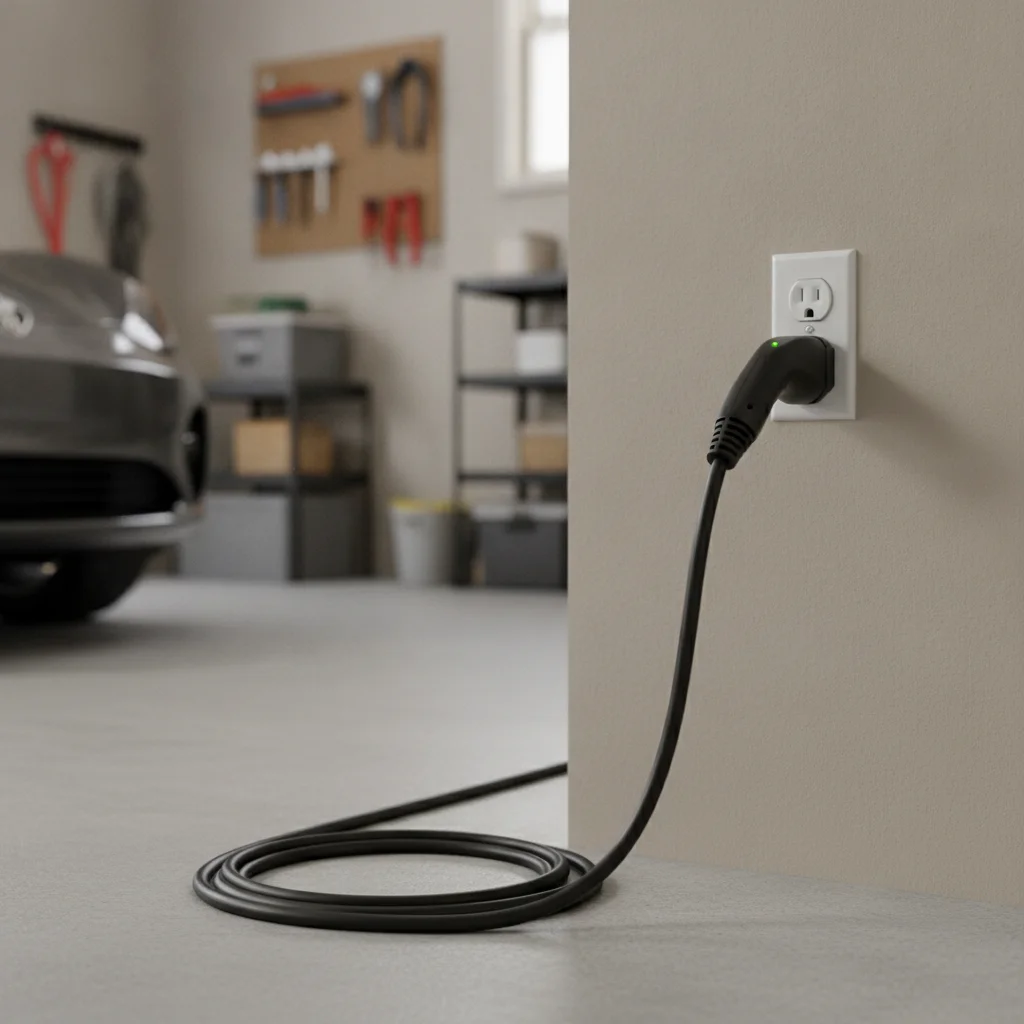
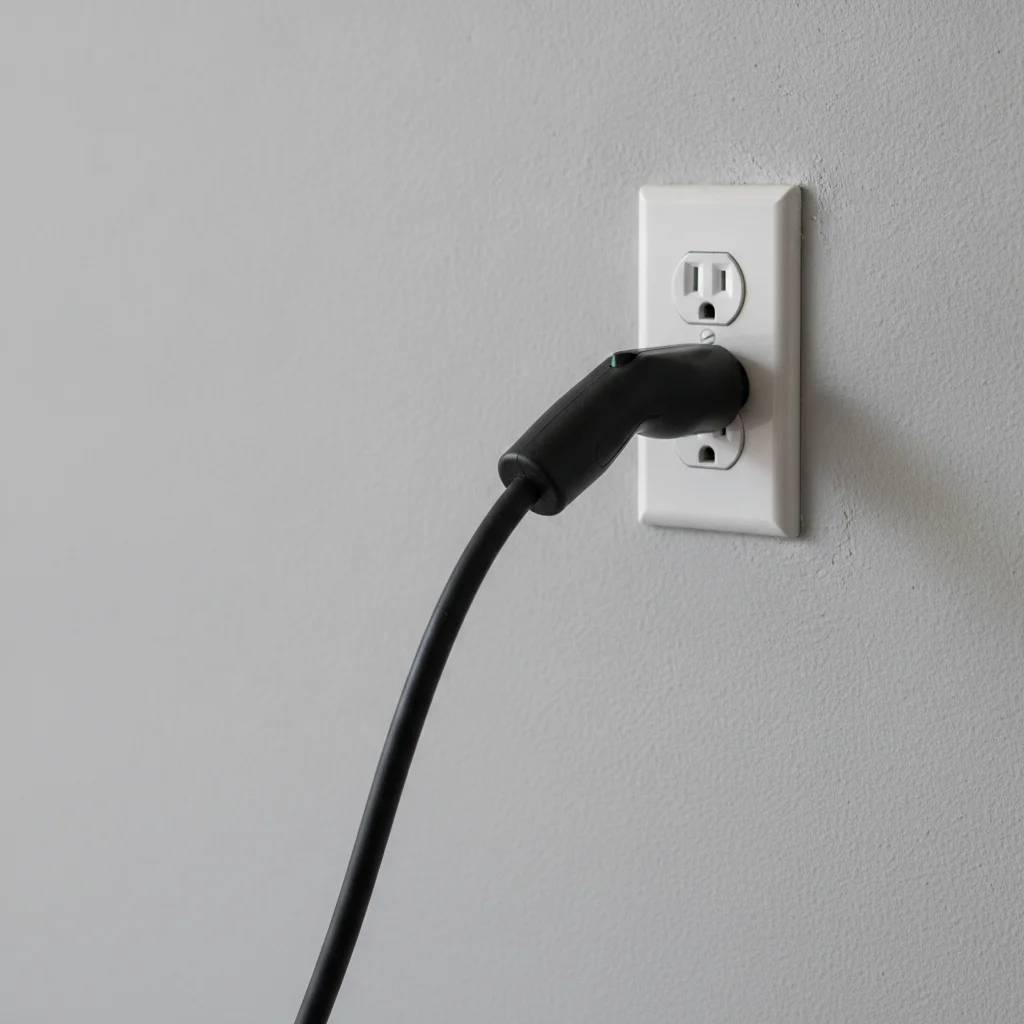
Open the trunk or frunk of your new EV and you'll likely find a charging cord bundled with the vehicle. This is your Level 1 Mobile Charging Cord — sometimes called an EVSE (Electric Vehicle Supply Equipment) — and it plugs into a standard 120-volt household outlet. No installation, no electrician, no permit. Just plug it in.
What Level 1 Actually Delivers
Level 1 operates on the same voltage as your kitchen appliances. It typically draws 12 amps on a standard 15-amp circuit (or 16 amps on a dedicated 20-amp circuit), which translates to roughly 1.2 to 1.9 kilowatts of charging power. In practical range terms, expect to recover about 3 to 5 miles of range per hour of charging.
That sounds slow — and over a single hour, it is. But think about it differently: if your car sits plugged in for 10 hours overnight, you wake up with 30–50 miles of added range. The average American drives about 37 miles per day according to the Federal Highway Administration. For a lot of people, Level 1 keeps up just fine.
When Level 1 Is Enough
- You drive fewer than 40 miles per day on most days
- You have a second vehicle for longer trips or high-mileage days
- You park in a garage or near an outlet where the car can charge for 8–12 hours nightly
- You want to test EV ownership without a significant upfront infrastructure investment
The Real Limitations
Level 1 struggles when your daily driving is consistently high — say, 60 or more miles — or when you come home late and need a full charge by early morning. If you work long shifts and your car sits uncharged for part of the day, you may not recover enough range. It also takes so long to recover from a near-empty battery (potentially 40+ hours for a large pack) that running it low feels risky.
The case for sticking with Level 1 longer than you think is genuinely underappreciated. Don't let EV enthusiast forums rush you into an upgrade you don't need yet.
Level 2 Charging: Faster, Smarter, and Worth the Investment for Many Owners
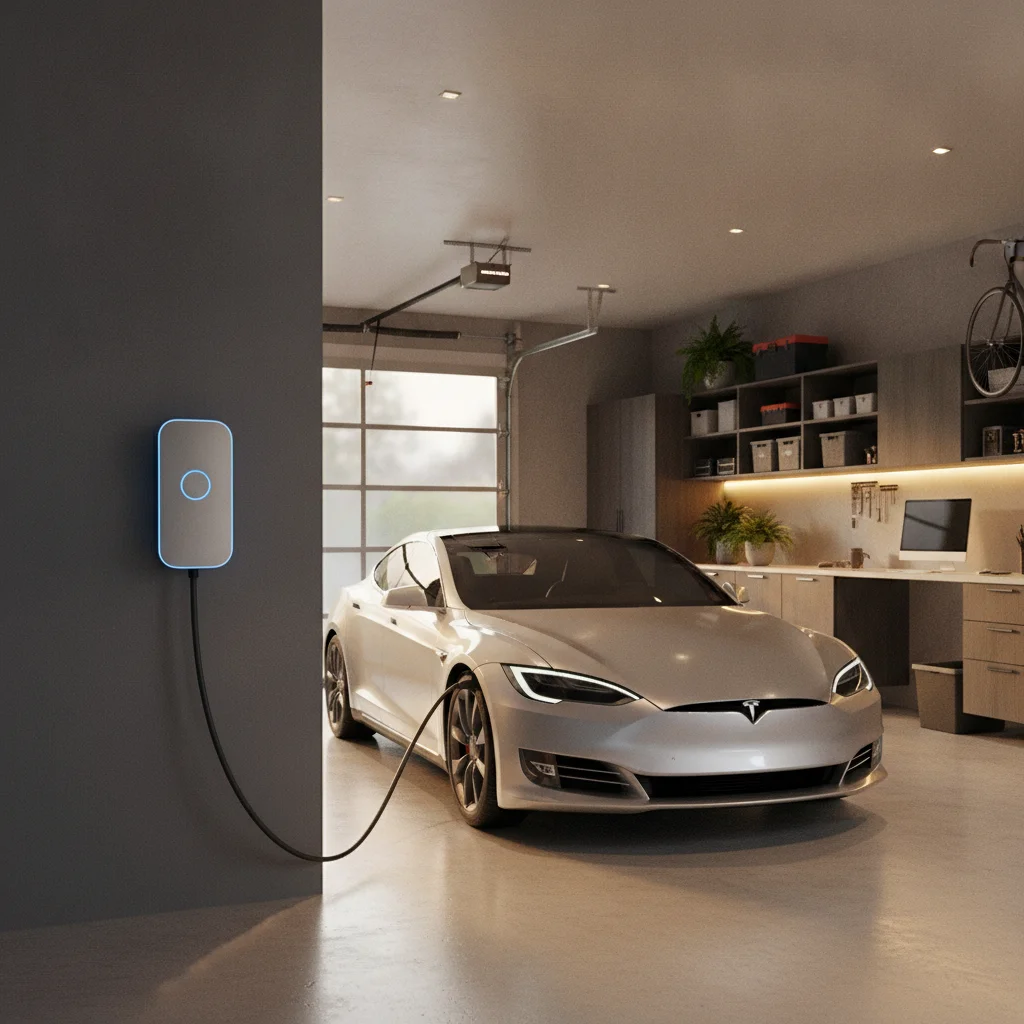
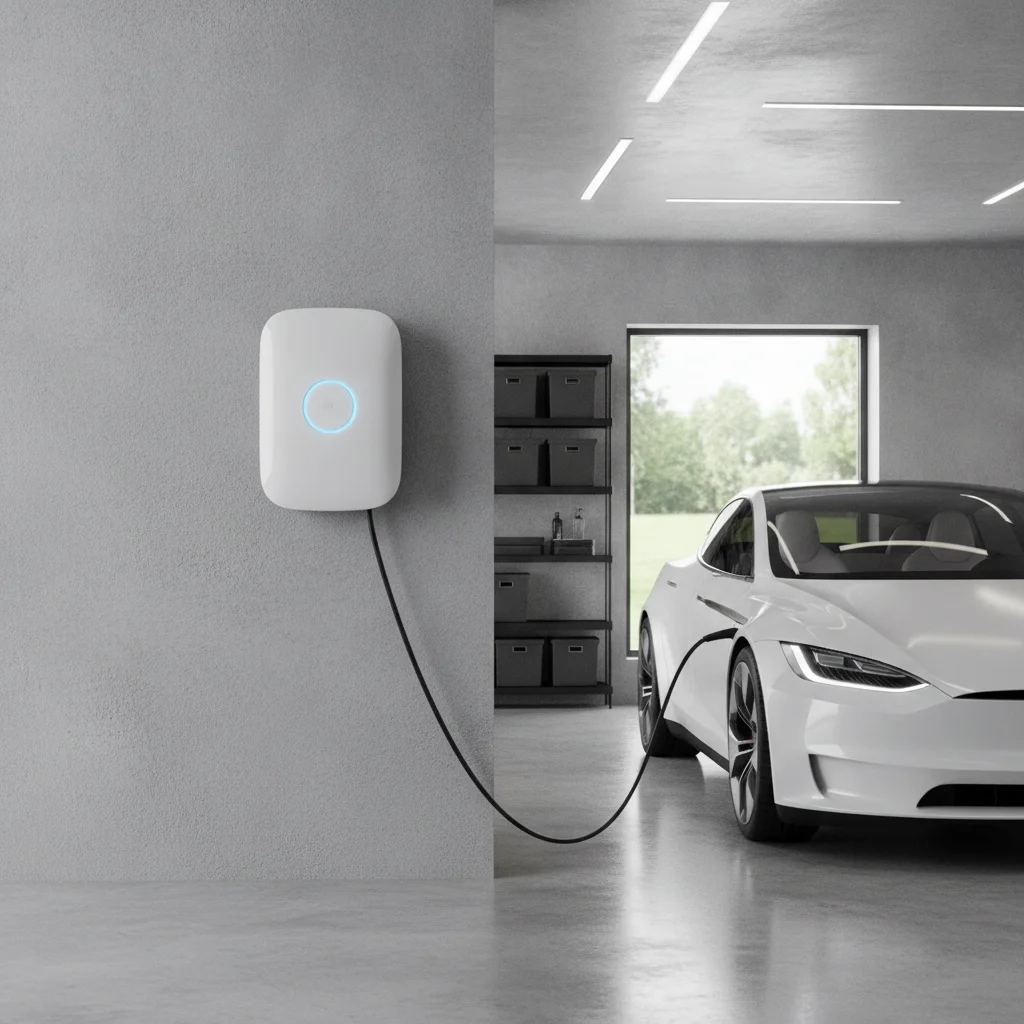
Level 2 charging runs on 240 volts — the same voltage as your dryer or electric range. It requires a dedicated circuit and either a hardwired charger or a 240V outlet (NEMA 14-50 or NEMA 6-50 are the most common). The equipment itself is called an EVSE or, colloquially, a home charging station or wall charger.
What Level 2 Actually Delivers
A typical residential Level 2 charger operates at 32 amps on a 40-amp circuit, delivering around 7.2 kilowatts of power. Some units go up to 48 amps (requiring a 60-amp circuit) for up to 11.5 kW. In range terms, you're looking at 20 to 30 miles of range recovered per hour, with some combinations hitting 35+ miles per hour.
That's a transformative difference. A mid-size EV with a 75 kWh battery that would take 40+ hours to charge from empty on Level 1 charges in roughly 8–10 hours on Level 2 — easily done overnight.
Connector Compatibility
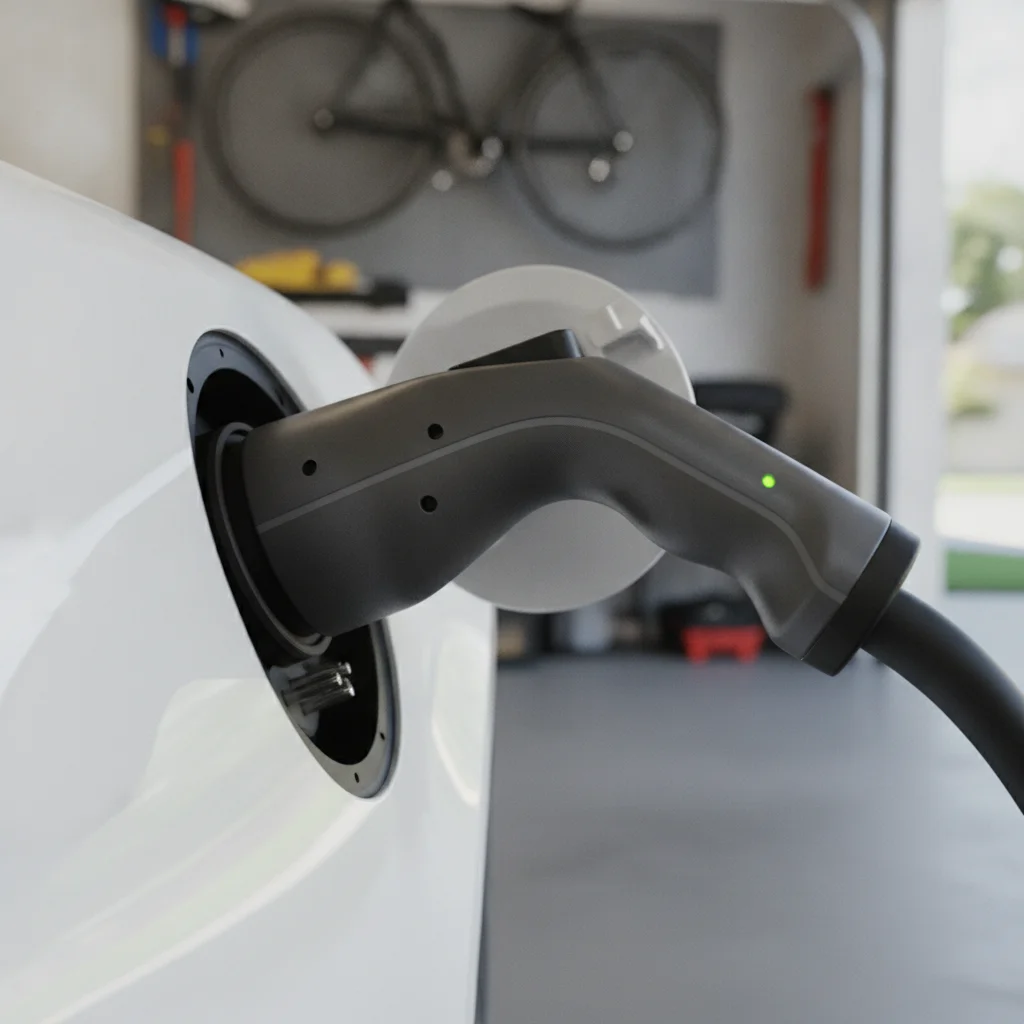
Almost all non-Tesla EVs use the J1772 connector for Level 2 charging — it's the industry standard. Tesla vehicles use the NACS connector natively but ship with a J1772 adapter. If you're shopping chargers, the J1772 standard and what it means for your EV is worth understanding before you buy.
Smart vs. Basic Chargers
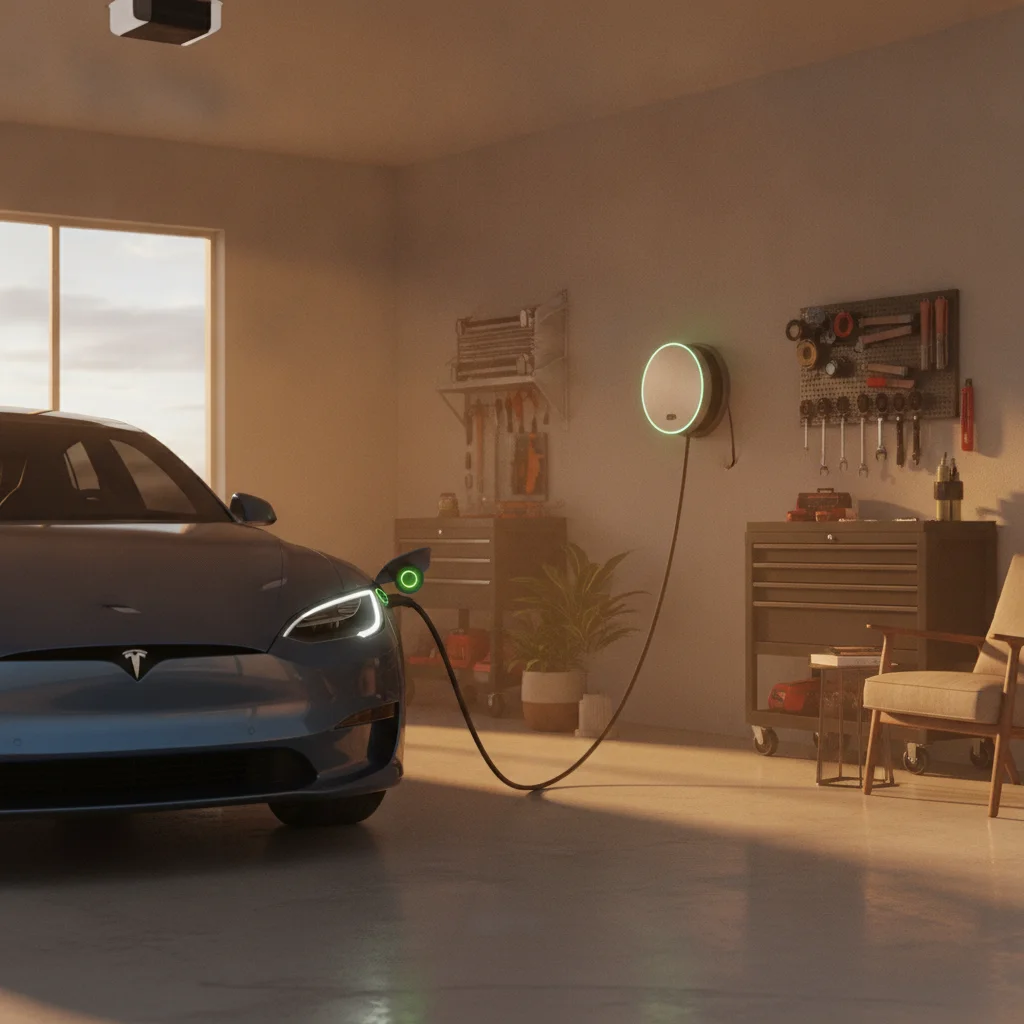
Level 2 chargers come in two flavors: basic and smart. Basic chargers start charging the moment you plug in, draw power at a fixed rate, and have no app or scheduling features. Smart chargers connect to Wi-Fi, let you set charging schedules, track energy usage, and in some cases integrate with your utility's time-of-use rates to automatically charge during cheap off-peak hours.
Whether the extra $100–$250 for a smart charger pays off depends on your electricity rate structure. If your utility offers time-of-use pricing — where electricity is cheaper at night — a smart charger can save real money over time. The comparison of smart vs. basic EV chargers breaks down which use cases justify the upgrade.
How to Decide: Level 1 vs Level 2 for Your Situation
There's no universal right answer here, but there's usually a clear better fit once you look at your actual situation. Work through these factors honestly before spending money on equipment or installation.
Factor 1: Daily Mileage
This is the most important variable. If you consistently drive fewer than 40 miles a day, Level 1 will almost certainly keep up with your charging needs. If you regularly drive 60+ miles, Level 2 is worth the investment. The gray zone is roughly 40–60 miles per day — that's where other factors tip the decision.
Factor 2: Charging Window
How many hours does your car sit parked at home? If you work from home or park overnight for 10–12 hours, Level 1 has more room to work. If your parking window is compressed — say, you leave early, return late, and the car only sits home for 6 hours — Level 2 gives you the margin to recover meaningful range quickly.
Factor 3: Your Home's Electrical Setup
Installing Level 2 requires available capacity in your electrical panel. Older homes with 100-amp panels (or ones already near capacity) may need a panel upgrade, which adds cost. Your parking situation — garage, driveway, or carport also affects installation complexity and cost.
Factor 4: Whether You Rent or Own
Renters face the obvious challenge of needing landlord approval for electrical work. If you rent, Level 1 may be your only practical home charging option — at least until more multi-family charging solutions become available. Some landlords are increasingly willing to allow installations given EV adoption trends, but you'll need to negotiate it.
Quick Decision Table
| Your Situation | Likely Best Fit |
|---|---|
| Under 40 miles/day, own home, have a garage outlet | Level 1 (start here, upgrade later if needed) |
| 40–60 miles/day, own home | Consider Level 2, especially with TOU rates |
| 60+ miles/day, own home | Level 2 strongly recommended |
| Renter with garage outlet access | Level 1 by default; negotiate Level 2 if possible |
| No home outlet access (apartment, street parking) | Rely on public charging; see public charging guide |
If you live somewhere without reliable home outlet access, your charging strategy will look different — the first-timer's guide to public EV charging covers what that looks like in practice.
Installation, Costs, and Incentives
If you've decided Level 2 is right for you, here's what to realistically expect when budgeting for the project.
Equipment Cost
A basic 32-amp Level 2 EVSE (charger) from a reputable brand — think Grizzl-E, Emporia, or Autel — runs $200–$400. Smart chargers with Wi-Fi, scheduling, and energy monitoring from brands like ChargePoint, JuiceBox, or Wallbox run $400–$700. Your vehicle manufacturer may also sell a branded wall charger, though they're often priced at a premium.
Installation Cost
Electrician labor to install a 240V dedicated circuit typically runs $300–$1,200, depending on how far the panel is from your parking spot, whether conduit needs to be run through walls or underground, and local labor rates. In a newer home with a nearby panel and a clear path to the garage, installation can be straightforward and on the low end. In an older home requiring panel work or a long conduit run, costs climb quickly.
All-in budget estimate: $800 to $2,000 for most typical single-family home installations. Budget toward the higher end if you have an older electrical panel or complex routing.
Tax Credits and Utility Rebates
The federal Alternative Fuel Vehicle Refueling Property Credit (IRS Form 8911) covers 30% of equipment and installation costs, up to $1,000 for homeowners. This credit applies to tax year 2023 and beyond under the Inflation Reduction Act provisions. You'll claim it on your federal tax return for the year the charger is installed.
On top of that, many state governments and electric utilities offer their own rebates — sometimes $250 to $500 or more — for purchasing and installing a Level 2 charger. Some utilities even offer discounted charger equipment directly. The overview of EV incentives for new buyers is a good starting point for finding what's available in your state.
What About Electricity Costs?
Adding an EV to your household will increase your electricity bill. How much depends on your local rate and how many miles you drive. At the national average of roughly $0.17/kWh and a typical EV efficiency of 3–4 miles per kWh, you're looking at about $0.04–$0.06 per mile to charge at home — significantly cheaper than gasoline at any recent price. Understanding exactly how those charges show up on your bill is covered in the EV owner's guide to reading an electricity bill, and the broader Charging Costs & Savings hub has tools and guidance for estimating your ongoing costs.
PlugShare
A crowd-sourced map of EV charging locations, including home outlets shared by owners. Useful for finding nearby Level 2 options when away from home and for researching charging availability in your area.
U.S. Department of Energy Alternative Fuels Station Locator
The DOE's official tool for finding public EV charging stations by location, network, and connector type. Also links to state incentive programs for home charger installation.
IRS Form 8911 Instructions
The official IRS publication explaining how to claim the Alternative Fuel Vehicle Refueling Property Credit for home EV charger installation — covers eligibility, calculation, and filing.
Charging Costs & Savings Hub
A curated resource covering how to estimate your EV charging costs, compare them to gasoline, and find strategies to reduce your electricity bill as a new EV owner.
Your First Week of Home Charging: What to Expect
New EV owners often have an adjustment period in the first week — not because anything is wrong, but because charging a car at home is genuinely different from gassing up. Here's how to set yourself up for a smooth start.
Day 1: Use the Level 1 Cord Immediately
Don't wait for a Level 2 installation before you start charging. Plug in your Level 1 cord the first night you have the car. This gets you in the habit immediately and gives you real data on how much range you need per day — useful if you're still deciding whether to upgrade.
Set Your Charge Limit
Most EVs allow you to set a maximum charge level, and manufacturers typically recommend keeping daily charging between 20% and 80% for battery longevity. Reserve 100% charges for days when you need maximum range. You can set this limit in your vehicle's infotainment system or companion app. Check your owner's manual for specifics.
Track Your Daily Usage
Spend your first week paying attention to how many miles you drive each day and what percentage of battery you're using. Most EV apps give you a detailed energy usage history. After 5–7 days, you'll have real data to confirm whether Level 1 is keeping up or whether Level 2 makes sense.
Explore Time-of-Use Rates
Contact your electric utility — or check their website — to see if they offer time-of-use (TOU) rate plans for EV owners. These plans charge less for electricity used during off-peak hours (typically late night to early morning). Switching to a TOU plan and scheduling your charging accordingly is one of the highest-impact savings moves available to new EV owners. The year-one EV savings checklist walks through this and a dozen other money-saving steps worth taking in your first year.
Don't Stress About Range
Range anxiety fades quickly once you experience waking up to a charged car every morning. The mental model shift — from stopping at a gas station reactively to plugging in at home proactively — takes a week or two to feel natural. Most EV owners report that after 30 days, they wouldn't go back.

All claims are backed by peer-reviewed research. Sources on request.