Key Takeaways
When getting electrician quotes, ask each one to quote the wire run in conduit rather than in-wall wherever possible. Conduit makes future upgrades far easier — you can pull larger wire later without tearing open walls.
Future-proofing the conduit run costs very little extra at installation time but can save hundreds when you upgrade your EVSE or add a second charger later.
Before hiring anyone, call your utility and ask specifically about EV charger rebates and whether any require pre-approval before installation. Some utilities require you to apply before work begins — not after.
Missing a pre-approval requirement is one of the most common ways homeowners lose access to $250–$500 utility rebates that would otherwise be straightforward to claim.
Ask your electrician to install a weatherproof NEMA 14-50 outlet rather than hardwiring your first EVSE. This gives you the flexibility to swap chargers without calling an electrician again.
EVSE technology is still evolving. A plug-in outlet future-proofs your setup and makes it portable if you move.
Why Home Charging Is the Foundation of EV Ownership
For the vast majority of EV owners, home charging is where 80–90% of their total charging happens. It's the most convenient option, the cheapest per kilowatt-hour, and the one you have the most control over. Understanding your home setup isn't just a nice-to-have — it's the practical backbone of living with an electric vehicle day to day.
Public fast-charging networks have their place, particularly on road trips or in a pinch. But if you're relying on public charging for routine top-ups, you're paying more per kWh and spending time you don't need to. The goal of a well-configured home charging setup is simple: you plug in when you arrive home, and you leave in the morning with a full battery. No gas station stops, no scheduling anxiety.
Understanding your home charging options from day one is essential if you're just entering EV ownership. This guide goes deeper — covering the technical decisions, real costs, and installation realities that determine whether your home setup works for you long-term.
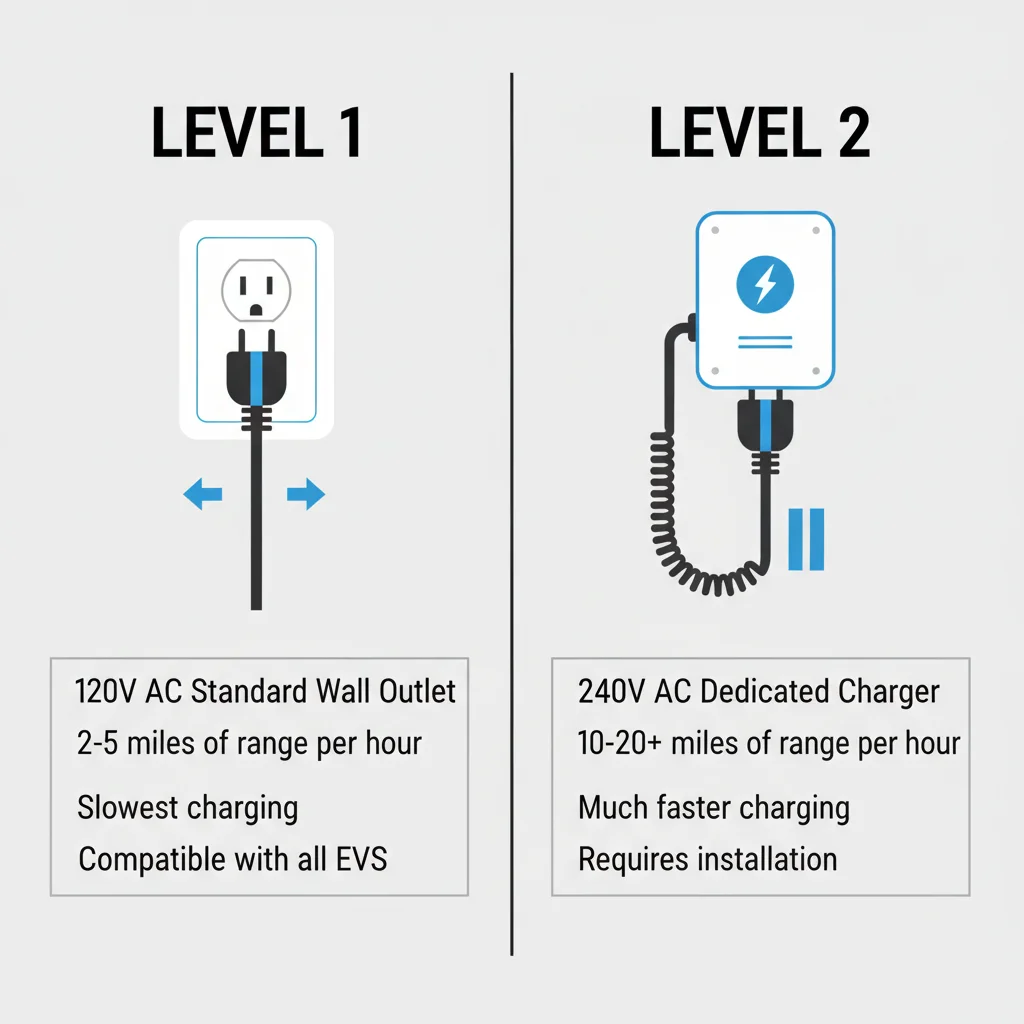
Before diving into specifics, it helps to understand the three charging levels at a high level:
- Level 1 (120V): Standard household outlet. Slow but requires no installation.
- Level 2 (240V): Dedicated circuit, faster charging, requires professional installation in most cases.
- DC Fast Charging (Level 3): Commercial/public infrastructure only. Not applicable for home use.
The decision between Level 1 and Level 2 is the central question for most homeowners, and we'll work through it methodically.
Level 1 vs Level 2 Charging: The Core Decision
This is the decision most new EV owners agonize over — and often get wrong by defaulting to one extreme or the other without thinking through their actual driving patterns.
Level 1: The Case for Doing Nothing
Every EV comes with a portable Level 1 charging cable (sometimes called the EVSE cord or "granny charger"). You plug it into a standard 120V outlet — the same outlet powering your lamp or phone charger — and charging begins. Delivery rate is typically 3–5 miles of range per hour of charging.
That sounds slow, and it is. But context matters. If you drive 25–30 miles per day and park for 10+ hours overnight, Level 1 can fully replenish your daily usage every night. Many plug-in hybrid owners and light-use EV drivers genuinely don't need more than this.
The catch: if your daily mileage is higher, you drive a long-range EV you actually want to keep topped up, or you take frequent unexpected trips, Level 1 leaves you perpetually behind. A 300-mile battery depleted to 50% would take 30+ hours to fully charge at Level 1 speeds.
Level 2: The Standard for Serious EV Use
Level 2 chargers use a 240V circuit — the same voltage as your dryer or oven. They deliver 15–30+ miles of range per hour, depending on the charger's amperage and your vehicle's onboard charger capacity. Most EV owners who install Level 2 can fully charge their vehicle in 4–10 hours overnight, regardless of how depleted the battery is.
80–90%
Share of EV charging done at home
According to the U.S. Department of Energy's Alternative Fuels Data Center, most EV drivers rely on home charging for the majority of their energy needs.
3–5 mi/hr
Range added per hour on Level 1
Standard 120V outlet charging delivers 3–5 miles of range per hour, per typical EV manufacturer specifications.
15–30+ mi/hr
Range added per hour on Level 2
A 32-amp Level 2 EVSE delivers approximately 20–25 miles of range per hour for most mid-range EVs.
$700–$2,200
Typical total Level 2 setup cost
Combined hardware and installation costs for a standard home Level 2 charger installation, before incentives, based on industry averages.
30%
Federal tax credit for EVSE installation
The IRS Alternative Fuel Vehicle Refueling Property Credit (Form 8911) covers 30% of qualified EV charger costs, up to $1,000 for individuals.
The math for most households strongly favors Level 2. A full charge from empty on a mid-size EV with a 75 kWh battery takes roughly 8–10 hours on a 32-amp Level 2 charger — comfortably within a typical overnight window. The same charge on Level 1 would take over 60 hours.
The Honest Middle Ground
If you drive fewer than 40 miles daily and have reliable overnight parking near a 120V outlet, Level 1 may be enough — at least initially. You can always upgrade later. But if you're on the fence, budget for Level 2 from the start. Retrofitting later means paying for an electrician visit twice.
When getting electrician quotes, ask each one to quote the wire run in conduit rather than in-wall wherever possible. Conduit makes future upgrades far easier — you can pull larger wire later without tearing open walls.
Future-proofing the conduit run costs very little extra at installation time but can save hundreds when you upgrade your EVSE or add a second charger later.
Before hiring anyone, call your utility and ask specifically about EV charger rebates and whether any require pre-approval before installation. Some utilities require you to apply before work begins — not after.
Missing a pre-approval requirement is one of the most common ways homeowners lose access to $250–$500 utility rebates that would otherwise be straightforward to claim.
Ask your electrician to install a weatherproof NEMA 14-50 outlet rather than hardwiring your first EVSE. This gives you the flexibility to swap chargers without calling an electrician again.
EVSE technology is still evolving. A plug-in outlet future-proofs your setup and makes it portable if you move.
For a more detailed side-by-side comparison of these two approaches, see what home EV charging setup actually involves.
What Your Electrical Panel Needs to Support Home Charging
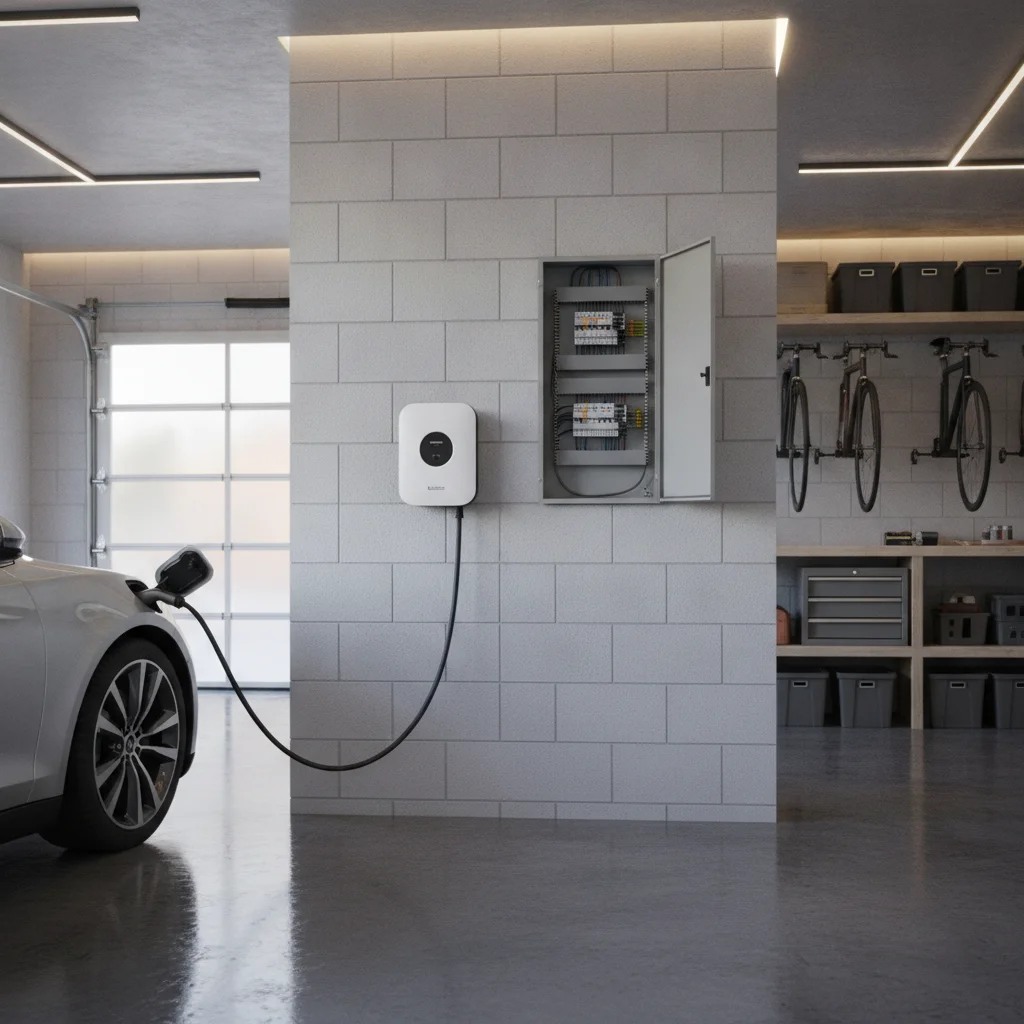
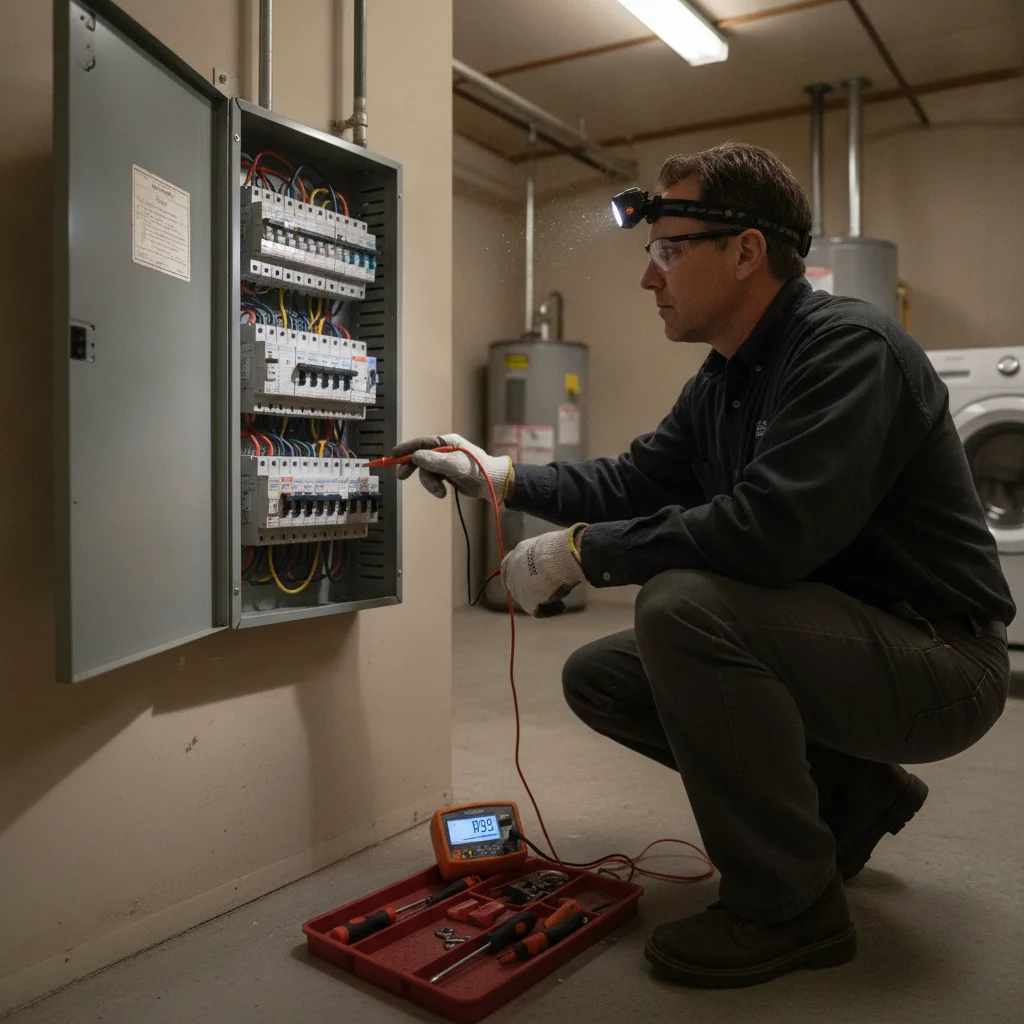
This is where theory meets the physical reality of your home — and where costs can swing dramatically. Your electrical panel (the breaker box) is the gatekeeper for everything that follows.
Panel Capacity: The First Thing to Assess
Most homes built after 1990 have a 200-amp service panel, which generally has enough headroom for a dedicated 40- or 50-amp circuit for a Level 2 charger. Older homes may have 100-amp or even 60-amp service — not enough capacity to safely add a high-draw circuit without upgrading the panel.
A 40-amp dedicated circuit (the most common Level 2 setup) uses 32 amps continuously under the 80% rule required by the National Electrical Code. That leaves the remaining panel capacity for your home's other loads — HVAC, water heater, kitchen appliances, etc.
Panel Capacity Is Non-Negotiable
Do not attempt to add a Level 2 charging circuit to an already-overloaded electrical panel. An overloaded panel is a fire hazard. Before any charger purchase, have a licensed electrician evaluate your panel capacity. If your panel is undersized or at capacity, budget for an upgrade as part of the total project cost — not as an optional add-on.
Don't Let Contractors Skip Permits
Any electrician who suggests skipping permits to save time or money is putting your home and insurance coverage at risk. Unpermitted electrical work can void your homeowner's insurance coverage for fire damage related to the installation, and it can derail a home sale when discovered during inspection. Always insist on permitted, inspected work.
What an Electrician Will Evaluate
- Available breaker slots: Is there room in the panel for a new double-pole breaker?
- Total panel load: Is the service adequate for the charger plus existing usage peaks?
- Distance from panel to parking spot: Longer wire runs cost more — sometimes significantly.
- Outdoor vs. indoor installation: Outdoor installations require weatherproof hardware and may need conduit.
- Existing wiring condition: Older aluminum wiring or knob-and-tube requires remediation before adding circuits.
Panel Upgrades: When They're Necessary and What They Cost
If your panel is at capacity or undersized, you're looking at a panel upgrade before a charger can be installed. Panel upgrades typically run $1,500–$4,000 depending on the amperage increase and your local utility's requirements. This is a significant expense, but it also improves your home's overall electrical capacity and resale value.
Some utilities offer load management programs — smart panels or EV-specific service that allows charger installation without a full panel upgrade by automatically limiting charger draw during peak usage. Enphase, Span, and similar smart panel products are emerging solutions worth exploring if you're facing a panel capacity constraint.
The 80% Rule for Circuit Sizing
The National Electrical Code requires that continuous loads — including EV charging — not exceed 80% of a circuit's rated amperage. This is why a 40-amp circuit actually delivers 32 amps to your charger, and a 50-amp circuit delivers 40 amps. Manufacturers design EVSEs around this rule; it's already factored into the specifications on the product label.
Smart Panel Solutions Are Emerging
Products like the Span Smart Panel and similar devices can dynamically manage household electrical loads, allowing EV charger installation without a traditional panel upgrade in some cases. These cost $3,000–$5,000+ installed, so they're not always cheaper than a standard panel upgrade — but they add broader home energy management capabilities that may be worth the premium for some homeowners.
Choosing the Right EVSE: Hardware That Fits Your Life
EVSE stands for Electric Vehicle Supply Equipment — the technical term for what most people call an EV charger. (Technically, the actual charger is built into your car; the EVSE is the equipment that delivers power to it.) Here's what to look for when choosing one.
Amperage: Match Your Circuit, Know Your Vehicle's Limit
Level 2 EVSEs typically come in 16-amp, 24-amp, 32-amp, and 48-amp configurations. More amps = faster charging, but only up to your vehicle's onboard charger limit. A vehicle with a 7.2 kW onboard charger maxes out at roughly 30 amps — feeding it more power accomplishes nothing except costing more for a higher-rated EVSE.
The most versatile choice for most homeowners: a 32-amp or 40-amp EVSE on a 50-amp circuit. This covers the majority of current and near-future EVs. If you drive a Tesla Model S or Lucid Air with a higher onboard charger capacity, a 48-amp unit on a 60-amp circuit makes sense.
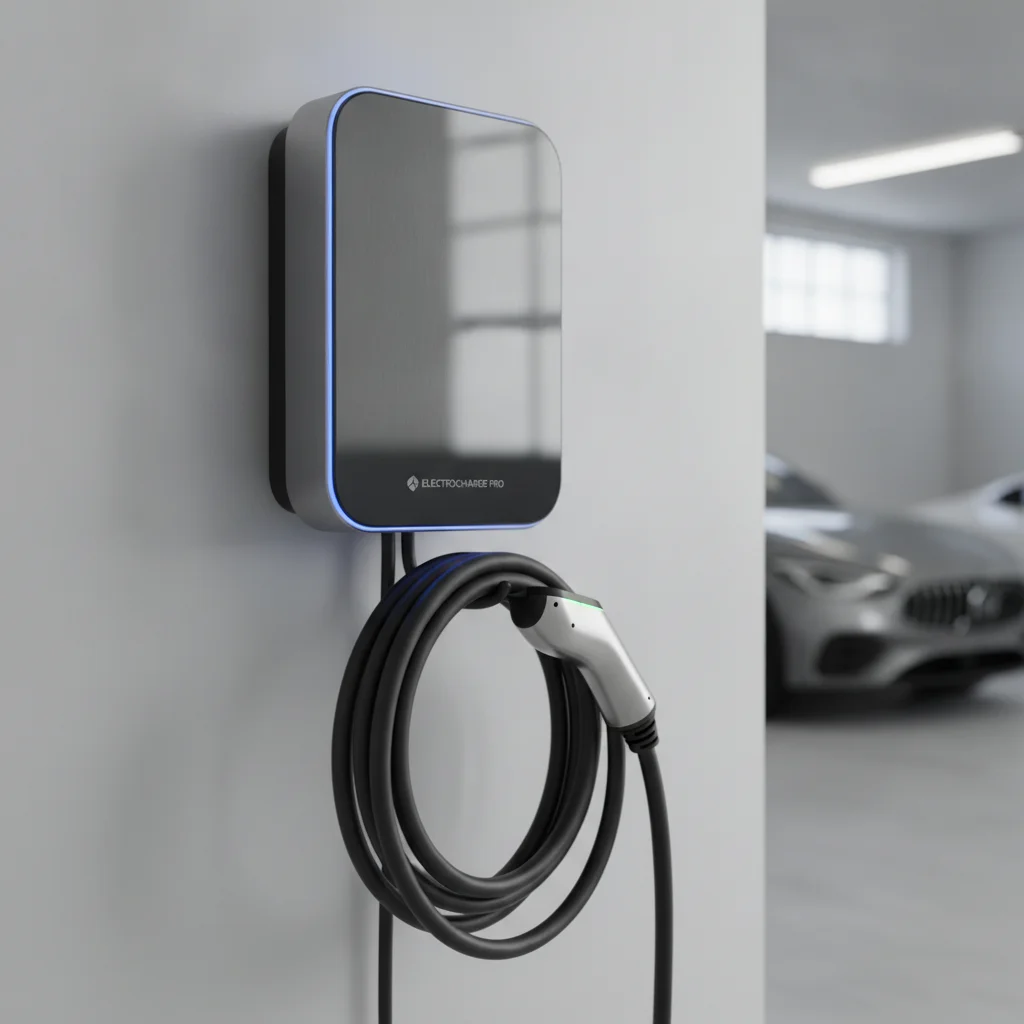
Hardwired vs. Plug-In
Level 2 EVSEs come in two installation types:
- Hardwired: Wired directly to the circuit. More permanent, required in some jurisdictions, slightly cleaner look.
- Plug-in (NEMA 14-50 or NEMA 6-50): Plugs into a 240V outlet. Easier to take with you when moving, slightly more flexibility, but requires a compatible outlet to be installed.
Neither is inherently superior. Plug-in units are increasingly popular because they offer portability — you can take the EVSE with you if you move.
Smart vs. Basic Chargers
Smart chargers connect via Wi-Fi and offer scheduling, energy monitoring, and sometimes demand response integration with your utility. Basic chargers just charge your car. The cost premium for smart functionality is typically $50–$150.
If your utility has time-of-use (TOU) rates — where electricity is cheaper overnight — a smart charger that schedules charging automatically pays for itself quickly. If your rate structure is flat, smart features matter less. For a thorough breakdown of the tradeoffs, smart vs. basic EV chargers covers the full picture.
Top Brands Worth Considering
| Brand | Model | Max Amperage | Smart Features | Approx. Price |
|---|---|---|---|---|
| ChargePoint | Home Flex | 50A | Yes | $549–$699 |
| Grizzl-E | Classic | 40A | No | $229–$269 |
| Emporia | Smart Home EV Charger | 48A | Yes | $349–$399 |
| JuiceBox | 32/40 | 40A | Yes | $399–$599 |
| Tesla | Wall Connector | 48A | Yes (Tesla app) | $395–$475 |
Prices approximate as of 2024. Check manufacturer sites for current pricing.
Installation: Permits, Contractors, and What to Expect
Installation is not a DIY project for most homeowners. A 240V circuit carries enough current to cause fires or serious injury if improperly wired, and most jurisdictions require a licensed electrician to pull permits for this work. Here's how the process typically unfolds.
Step 1: Get Multiple Quotes
Contact at least three licensed electricians. Ask each to assess your panel capacity, estimate wire run length, and quote the full job including permits. Labor costs vary enormously by region — San Francisco or New York installations routinely cost 2–3x what the same job costs in a mid-sized Midwestern city.
When getting electrician quotes, ask each one to quote the wire run in conduit rather than in-wall wherever possible. Conduit makes future upgrades far easier — you can pull larger wire later without tearing open walls.
Future-proofing the conduit run costs very little extra at installation time but can save hundreds when you upgrade your EVSE or add a second charger later.
Before hiring anyone, call your utility and ask specifically about EV charger rebates and whether any require pre-approval before installation. Some utilities require you to apply before work begins — not after.
Missing a pre-approval requirement is one of the most common ways homeowners lose access to $250–$500 utility rebates that would otherwise be straightforward to claim.
Ask your electrician to install a weatherproof NEMA 14-50 outlet rather than hardwiring your first EVSE. This gives you the flexibility to swap chargers without calling an electrician again.
EVSE technology is still evolving. A plug-in outlet future-proofs your setup and makes it portable if you move.
Step 2: Permits and Inspections
Most municipalities require an electrical permit for EV charger installation. Your electrician should handle permit applications — if they tell you permits aren't necessary or suggest skipping them to save money, find a different electrician. Unpermitted work can void your homeowner's insurance, create problems when selling your home, and leave you liable if something goes wrong.
After installation, a municipal inspector will typically verify the work meets code. This is a standard part of the process, not a red flag.
Step 3: Utility Notification (Sometimes Required)
Some utilities require notification or even approval before a Level 2 charger is connected to the grid, particularly if you're adding significant load. Check with your utility early — this is rarely a blocker, but failing to notify when required can cause problems later, especially if you're pursuing rebates.
What the Installation Day Looks Like
For a straightforward job — 200-amp panel with capacity, garage parking, short wire run — installation typically takes 2–4 hours. An electrician runs a new dedicated circuit from your panel to the charger location, installs the breaker, mounts the EVSE or outlet, and tests the system. More complex jobs (long conduit runs, exterior installations, subpanel work) take longer.
Extension Cords and EV Chargers Don't Mix
Never use a standard household extension cord with a Level 1 or Level 2 EV charger. EV charging draws continuous high current loads that standard cords aren't rated for, creating a real fire risk. If your parking area isn't near a compatible outlet, have a licensed electrician install one — it typically costs $100–$300 and is the only safe solution.
Rebates Have Expiration Dates and Requirements
Utility and state rebate programs change frequently — funding runs out, programs close, qualifying equipment lists update. Don't assume a rebate you read about six months ago is still available or applies to your chosen charger model. Verify current availability directly with your utility or state energy office before finalizing your purchase.
Apartment and Condo Situations
If your parking is in a shared garage or you don't have a private parking space, installation becomes significantly more complicated. See the dedicated section below on renters and condo owners for specifics.
Cost Breakdown: Equipment, Installation, and Ongoing Electricity
Let's put real numbers on this. Home EV charging setup has three cost components: the EVSE hardware, installation labor, and ongoing electricity costs.
Hardware Costs
- Basic Level 2 EVSE (non-smart, 32A): $200–$350
- Smart Level 2 EVSE (32–48A): $350–$700
- Premium/high-amp EVSE: $500–$900+
Installation Labor and Materials
- Simple installation (short wire run, capacity available): $200–$500
- Moderate complexity (conduit, longer run, outdoor work): $500–$1,000
- Complex installation (panel upgrade, long run, subpanel): $1,000–$4,500+
Available Incentives That Reduce Your Net Cost
The federal Alternative Fuel Vehicle Refueling Property Credit (IRS Form 8911) covers 30% of qualified EV charger installation costs, up to $1,000 for individuals. Many states stack additional credits on top. Utility rebates — sometimes $250–$500 per installation — are available from dozens of major utilities across the country. Check the EV charging costs and savings hub for current incentive programs by region.
Stack Your Incentives Before You Buy
Check federal, state, and utility incentives before purchasing any hardware. Some utility rebates apply only to specific UL-listed charger models, and a few require pre-registration before installation. Doing this research first — not after — can save $500 to $1,500 on your total project cost.
Enroll in Time-of-Use Rates First
Before your charger is even installed, contact your utility about TOU rate enrollment. It takes a billing cycle or two to process, and you want it active from day one. Overnight off-peak rates in many markets can cut your charging electricity cost by 30–50% compared to standard rates.
Ongoing Electricity Costs
The average U.S. residential electricity rate is around 16–17 cents per kWh as of 2024. A typical EV consuming 3.5 miles per kWh and driven 12,000 miles annually needs roughly 3,400 kWh — about $575 per year at average rates. That compares to $1,800–$2,400+ for gasoline at comparable mileage in an average new vehicle. The fuel savings alone typically justify the installation cost within 1–3 years.
Off-peak rates can cut electricity costs further. Many utilities offer TOU rates where overnight power is 30–50% cheaper. On a TOU plan, that same 3,400 kWh could cost $350–$420 annually — making the economics even more compelling. See the full breakdown at charging costs and savings.
Renters, Condo Owners, and Non-Traditional Living Situations
Home charging assumes you own your home and your parking spot. Millions of EV owners don't fit that profile. Here's what to know if you rent or live in a multi-unit building.
Renters: Your Legal Position
Many states have enacted "right to charge" laws that prevent landlords from unreasonably denying a tenant's request to install EV charging. California, Florida, Colorado, and several others have strong protections. The catch: you typically pay for installation, must use a licensed electrician, and may be required to restore the parking space to its original condition when you leave.
Even in states without explicit right-to-charge laws, the approach is to make your landlord a reasonable proposal: you pay all costs, use permitted work, and take liability for the installation. Many landlords agree when they understand the financial exposure is yours, not theirs.
For a comprehensive look at the tenant-landlord negotiation process, renting and EV charging: what tenants and landlords need to know walks through it in detail.
Condo and HOA Situations
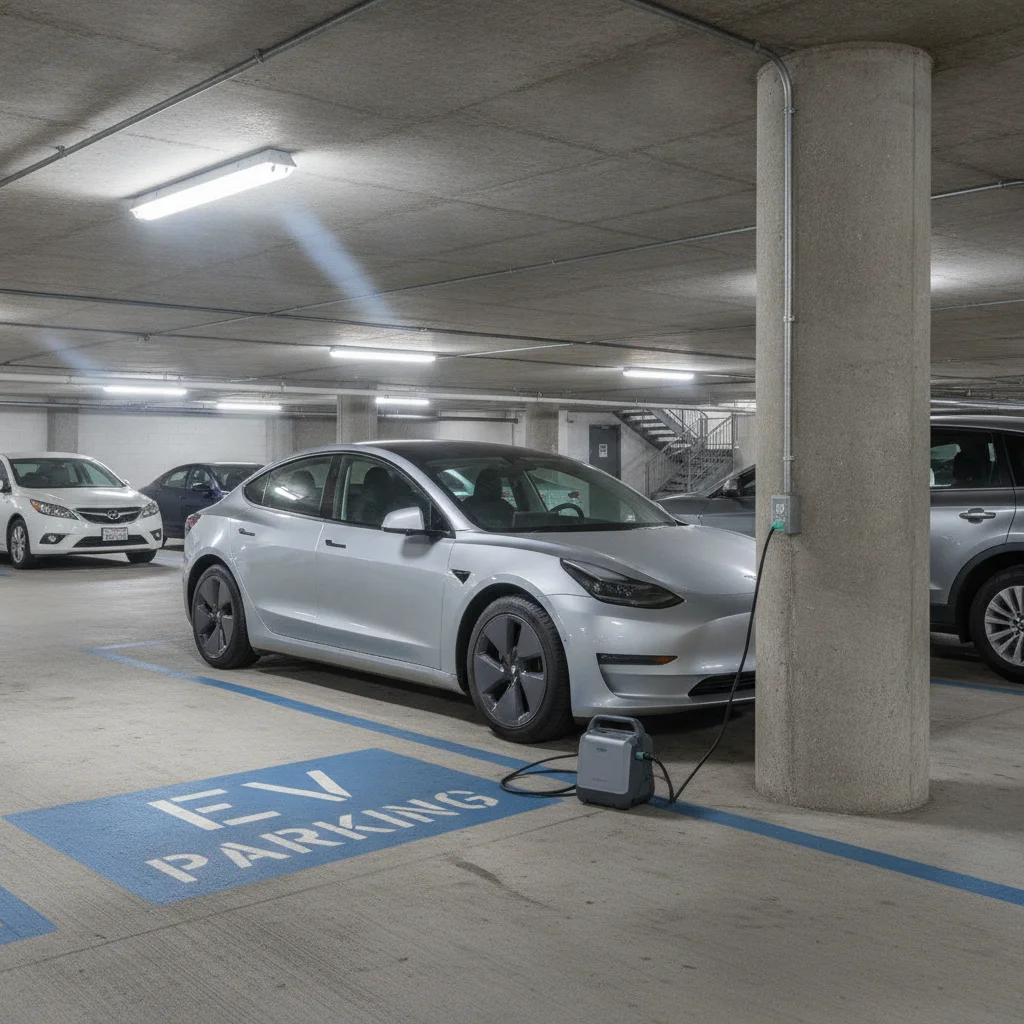
Condos and HOAs add governance complexity. Many HOAs have the authority to approve or deny modifications to common areas or limited common elements. If your parking space is a common element, you may need board approval. California's Civil Code 4745 and similar statutes in other states limit HOA power to block EV charger requests, but the process still requires paperwork and patience.
If Home Charging Isn't Possible Right Now
If installation isn't feasible in your current situation, lean on Level 1 charging at home and supplement with public charging. It's less convenient, but it works. Getting started with public EV charging covers how to navigate public charging networks efficiently so that gap-filling doesn't become a daily frustration.
Maximizing Savings: Utility Rates, Incentives, and Smart Charging
A home EV charger isn't just a convenience — managed well, it's a meaningful financial asset. Here's how to get the most out of it.
Time-of-Use Rate Plans
This is the single highest-leverage action most EV owners can take. If your utility offers TOU rates, enrolling and scheduling your charging to run overnight (typically 9 PM–6 AM) can cut your per-kWh charging cost by 30–60% compared to daytime rates. On a smart charger, set a schedule once and forget it. On a basic charger, your EV's built-in scheduling feature handles the same function — most EVs allow you to set a departure time so charging completes just before you need the car.
“If you charge at home and you have a time-of-use rate, you're essentially getting fuel for the equivalent of under a dollar a gallon. That's the economic case for home charging in a single sentence.”
— David Reichmuth, Senior Engineer, Clean Transportation Program, Union of Concerned Scientists
Net Metering and Solar Integration
If you have or are considering rooftop solar, a home charger and solar system together create a powerful combination. Excess daytime solar production offsets the cost of overnight charging through net metering credits in most states. Some smart chargers (and bidirectional capable EVs) can even discharge stored battery energy back to the home during peak rate windows — a capability called Vehicle-to-Home (V2H) that's still emerging but increasingly available.
Federal and State Tax Credits
The IRS Form 8911 credit covers 30% of EVSE purchase and installation costs up to $1,000 for homeowners. Some states (California, New York, Colorado among them) offer additional credits or rebates. Many utilities offer their own rebates — $100–$500 is common — for installing qualifying smart chargers or enrolling in managed charging programs. Stack these together and you can realistically cut your total setup cost by $500–$1,500.
Stack Your Incentives Before You Buy
Check federal, state, and utility incentives before purchasing any hardware. Some utility rebates apply only to specific UL-listed charger models, and a few require pre-registration before installation. Doing this research first — not after — can save $500 to $1,500 on your total project cost.
Enroll in Time-of-Use Rates First
Before your charger is even installed, contact your utility about TOU rate enrollment. It takes a billing cycle or two to process, and you want it active from day one. Overnight off-peak rates in many markets can cut your charging electricity cost by 30–50% compared to standard rates.
Demand Charge Awareness
A small number of residential utility rates include demand charges — fees based on your peak 15- or 30-minute power draw in a billing period. EV charging can trigger these charges if you're on such a rate. Check your current rate structure before assuming time-of-use enrollment is the right move. Your utility's customer service line can tell you what rate you're currently on and what alternatives are available.
Common Mistakes to Avoid
After walking through the full process, here are the errors that cost EV owners time, money, or both.
Undersizing the Circuit
Installing a 30-amp circuit when a 50-amp circuit costs only marginally more to rough-in is a common regret. Future EVs or a second EV in the household may need more capacity. Run a 50-amp or 60-amp circuit even if your first EVSE only uses 32 amps — the wire run is the expensive part, not the breaker size difference.
Skipping Permits
Already covered above, but worth repeating. Unpermitted electrical work is a liability, not a savings.
Choosing the Wrong Electrician
Not all electricians have EV charger experience. Ask specifically about their EV installation history, whether they're familiar with your local utility's rebate programs (some rebates require installer coordination), and whether they'll handle permit applications. An EV-experienced electrician often saves money by knowing efficient installation approaches and rebate eligibility rules.
Panel Capacity Is Non-Negotiable
Do not attempt to add a Level 2 charging circuit to an already-overloaded electrical panel. An overloaded panel is a fire hazard. Before any charger purchase, have a licensed electrician evaluate your panel capacity. If your panel is undersized or at capacity, budget for an upgrade as part of the total project cost — not as an optional add-on.
Don't Let Contractors Skip Permits
Any electrician who suggests skipping permits to save time or money is putting your home and insurance coverage at risk. Unpermitted electrical work can void your homeowner's insurance coverage for fire damage related to the installation, and it can derail a home sale when discovered during inspection. Always insist on permitted, inspected work.
Ignoring Your Vehicle's Onboard Charger Limit
Buying a 48-amp EVSE for a vehicle with an 11.5 kW (roughly 48A) onboard charger capacity is sensible. Buying the same unit for a vehicle limited to 7.2 kW (roughly 30A) means you paid extra for charging capacity you can't use. Check your vehicle's spec sheet for maximum AC charging rate before purchasing hardware.
Not Checking Incentives Before Purchase
Some utility rebates require you to purchase specific qualifying charger models, or to apply before installation rather than after. Verify eligibility requirements first so you don't buy a unit that doesn't qualify or miss a rebate deadline.
Extension Cords and EV Chargers Don't Mix
Never use a standard household extension cord with a Level 1 or Level 2 EV charger. EV charging draws continuous high current loads that standard cords aren't rated for, creating a real fire risk. If your parking area isn't near a compatible outlet, have a licensed electrician install one — it typically costs $100–$300 and is the only safe solution.
Rebates Have Expiration Dates and Requirements
Utility and state rebate programs change frequently — funding runs out, programs close, qualifying equipment lists update. Don't assume a rebate you read about six months ago is still available or applies to your chosen charger model. Verify current availability directly with your utility or state energy office before finalizing your purchase.
Frequently Asked Questions
Do I need a permit to install a Level 2 charger at home?
In most jurisdictions, yes. Electrical permits are required for new 240V circuit installations. Your licensed electrician should pull the permit as part of the job. Some rural counties have minimal enforcement, but skipping permits creates insurance and resale risks regardless.
Can I install an EV charger myself?
If you're a licensed electrician, yes. If you're not, it's generally inadvisable and may be illegal under local codes. Beyond safety risks, DIY electrical work may void equipment warranties and isn't eligible for rebates that require professional installation.
How long does a Level 2 charger installation take?
A straightforward installation — adequate panel capacity, garage location, short wire run — typically takes 2–4 hours on installation day. The full process from getting quotes to passing inspection is usually 2–6 weeks, depending on permit processing times in your area.
What if my panel is full?
You have three options: a panel upgrade ($1,500–$4,000+), a load management device that limits charger draw based on total home demand, or smart panel solutions like Span that manage circuits intelligently without a service upgrade. An experienced electrician can advise which makes sense for your specific situation.
Will home EV charging increase my electric bill significantly?
Yes, but typically far less than you'd spend on gasoline. Most EV owners see their electric bill increase $50–$120 per month, replacing a $150–$300+ monthly gas spend. The net savings are real and compound over time.
Can I use a 120V extension cord for Level 1 charging?
Charger manufacturers and the NEC strongly advise against it. Standard extension cords aren't rated for continuous high-current loads, creating fire risk. If your outlet is too far from your parking spot for the provided cord, have an outlet installed closer to the vehicle instead.
For readers who are just beginning to think through these decisions, understanding your home charging options from day one provides a solid starting framework. And if you're comparing the home charging ecosystem against what's available on public networks, public charging networks covers the DC fast-charging landscape in depth.
U.S. DOE Alternative Fuels Station Locator
Find EV charging stations near your home or along routes. Also includes data on charger types and network affiliations to help with public charging planning.
IRS Form 8911 (Alternative Fuel Vehicle Refueling Property Credit)
The official IRS form and instructions for claiming the 30% federal tax credit on qualified EV charger purchase and installation costs.
DSIRE — Database of State Incentives for Renewables & Efficiency
Comprehensive state-by-state database of EV charger incentives, utility rebates, and tax credits. Use it to find stackable programs available in your state.
PlugStar Home Charging Advisor
A free tool from Plug In America that helps EV owners determine the right charging level for their driving habits and estimate installation costs.
Smart EV Chargers vs Basic Chargers Guide
An in-depth comparison of smart and basic Level 2 EVSEs covering scheduling, energy monitoring, and whether the added cost is worth it for your situation.
EV Charging Costs & Savings Hub
Covers how to estimate your real-world home charging costs, compare them to gasoline, and identify savings opportunities through rate plans and incentives.

All claims are backed by peer-reviewed research. Sources on request.