Key Takeaways
True Cost of EV Charging
The true cost of charging an electric vehicle goes beyond the advertised price per kilowatt-hour. It accounts for your vehicle's real-world energy efficiency, the type of charger you use, your local electricity rate structure, and any fees attached to public charging sessions. When all these variables are combined, the actual cost per mile driven can differ substantially from back-of-the-envelope estimates.
Efficiency losses during AC-to-DC conversion, battery thermal management, and charging speed throttling all reduce the usable energy delivered per kWh paid, a factor called charging efficiency or round-trip efficiency, typically ranging from 85% to 92% for home Level 2 charging.
Why the Price Per kWh Is Only the Beginning
Ask most EV owners what it costs to charge their car and they'll quote you their local electricity rate. It's a reasonable starting point—but it's about as useful as quoting the price of gasoline without knowing a vehicle's MPG. The true cost of charging an electric vehicle is an equation with multiple moving parts, and understanding each one is what separates EV owners who actually save money from those who wonder why the math isn't working out.
There are four core variables that determine your real per-mile charging cost: your electricity rate structure, your vehicle's real-world efficiency, the charging equipment you're using, and where you charge. Change any one of these and the final number shifts meaningfully. Change all four at once—say, using a highway DC fast charger in a cold state during peak hours—and you could be paying three to four times what a careful home charger pays per mile.
This article works through the actual math so you can build a number that reflects your life, not a press release. If you want to go further and project monthly totals based on your driving habits, see our monthly EV charging bill estimator before you commit to a vehicle purchase.
The Charging Efficiency Factor: Paying for Energy You Don't Drive On
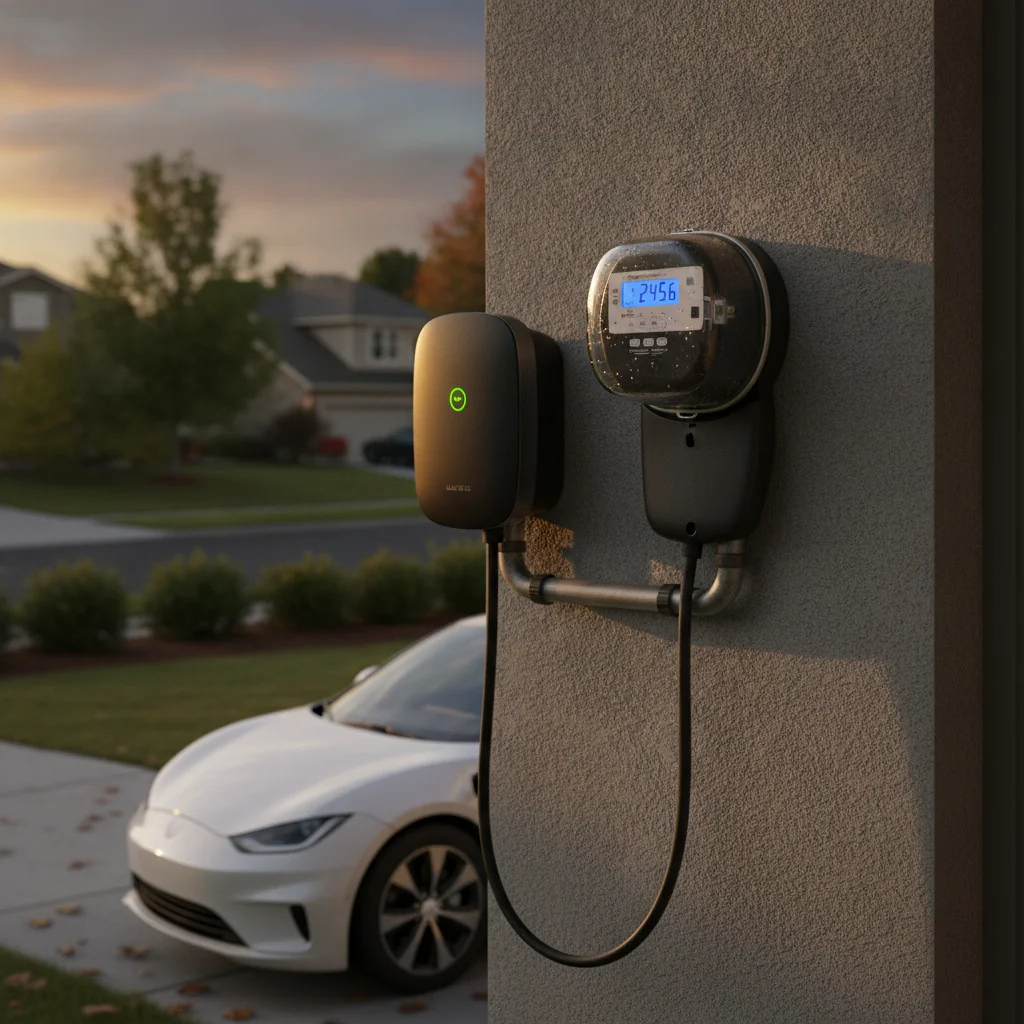
Here's the variable most EV cost comparisons quietly ignore: not all the electricity you pay for ends up in your battery. When alternating current from your home or a public charger is converted to direct current that the battery can store, some energy is lost as heat. This loss is called charging efficiency, and it's real money.
For a home Level 2 charger, charging efficiency typically runs between 85% and 92%. That means for every 100 kWh of electricity your meter records, only 85 to 92 kWh reach your battery. DC fast charging is more complex—conversion losses are handled differently and thermal management systems kick in—but the net result is similar or slightly worse at very high charge rates.
85–92%
Typical Level 2 home charging efficiency
Charging efficiency figures from SAE International and real-world EV testing data; losses occur during AC-to-DC power conversion.
3x+
Public DC fast charging cost vs. home rates
Based on comparison of average U.S. home electricity rates (~$0.16/kWh) versus major DC fast charging network pricing ($0.35–$0.60/kWh) as of 2024.
$0.026–$0.202
Real per-mile charging cost range
Calculated across best-case home TOU off-peak charging and worst-case public DC fast charging in cold weather conditions.
3x
Electricity rate spread across U.S. states
U.S. Energy Information Administration (EIA) data shows retail electricity rates ranging from under $0.10/kWh in Louisiana to over $0.30/kWh in Hawaii.
~$1,148
Annual savings: home vs. public-only charging
Estimated for a driver covering 15,000 miles/year at 3.5 mi/kWh in a vehicle charged exclusively at home ($0.16/kWh) vs. exclusively at public DC fast chargers ($0.45/kWh).
To find your true effective electricity rate, divide your nominal rate by your charging efficiency. If you pay $0.16 per kWh and your charger operates at 88% efficiency:
$0.16 ÷ 0.88 = $0.182 effective per kWh
That $0.022 difference sounds small, but across 15,000 miles per year in a vehicle that uses 4,000 kWh annually, it adds up to roughly $88 in extra electricity costs that never moved the car an inch. This is a concept worth understanding deeply—see our end-to-end guide to EV charging cost factors for a complete breakdown of each variable.
Charging Efficiency Varies by Equipment
Not all Level 2 home chargers perform identically. Older or lower-quality EVSE units can see efficiency dip below 85%, while premium units from established brands typically maintain 90% or higher. If you're installing a home charger, Energy Star–certified units are tested for efficiency. See <a href="/electric-vehicles/charging-infrastructure/home-charging-setup">our home charging setup guide</a> for hardware recommendations.
Utility Rate Plans Require Opt-In
Time-of-use electricity plans are rarely the default rate structure your utility assigns. You typically need to actively request to switch. Check your utility's website for EV-specific rate plans—many states mandate that utilities offer at least one. Savings are only realized if your charger is set to draw power during the designated off-peak window.
Free Charging Isn't Always Truly Free
Workplace charging, dealership charging credits, and trial network memberships all appear free on the surface, but may come with constraints—limited session times, per-kWh caps, or promotional expiration dates. <a href="/electric-vehicles/charging-infrastructure/charging-costs-savings/free-ev-charging-whats-actually-free-and-what-comes-with-strings">Understanding what's actually free vs. what comes with strings</a> is essential before building free charging into your monthly cost projections.
Real-World Efficiency vs. EPA Ratings: The Miles-Per-kWh Truth
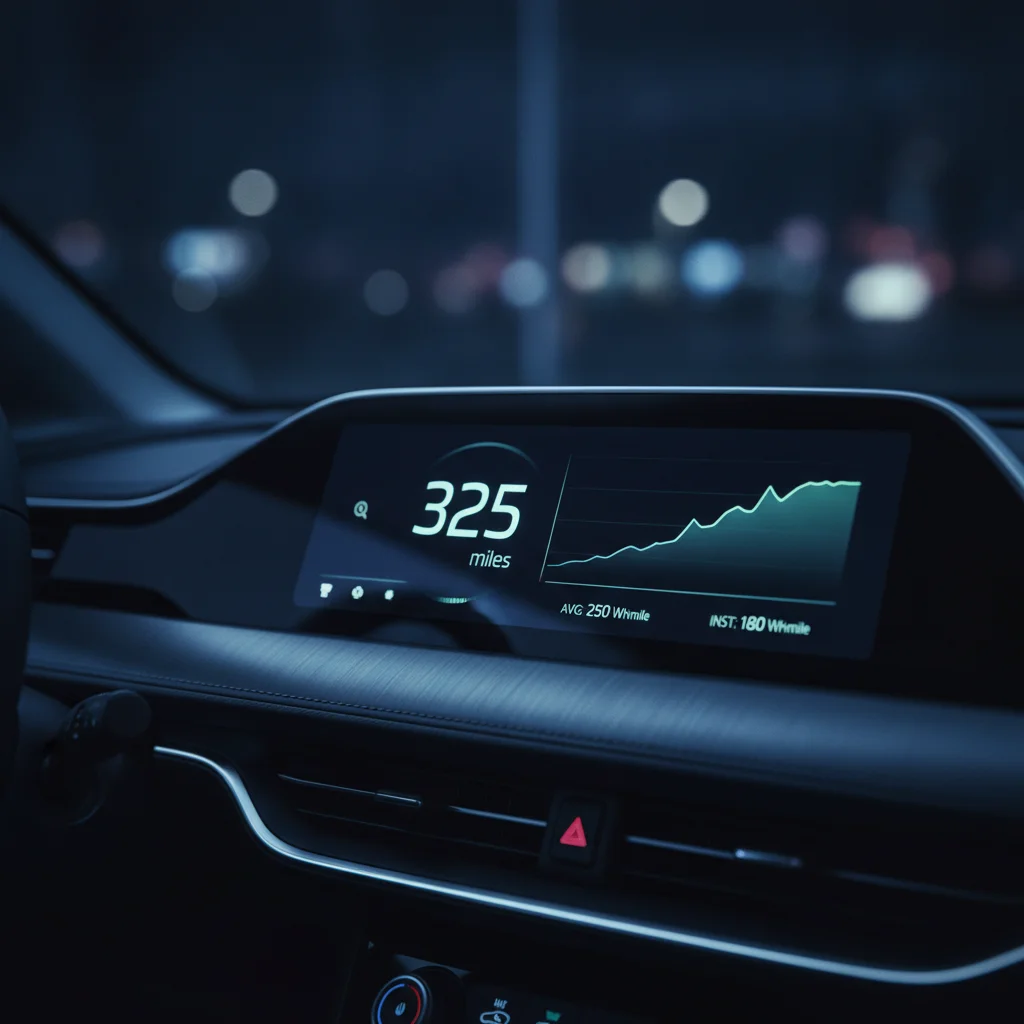
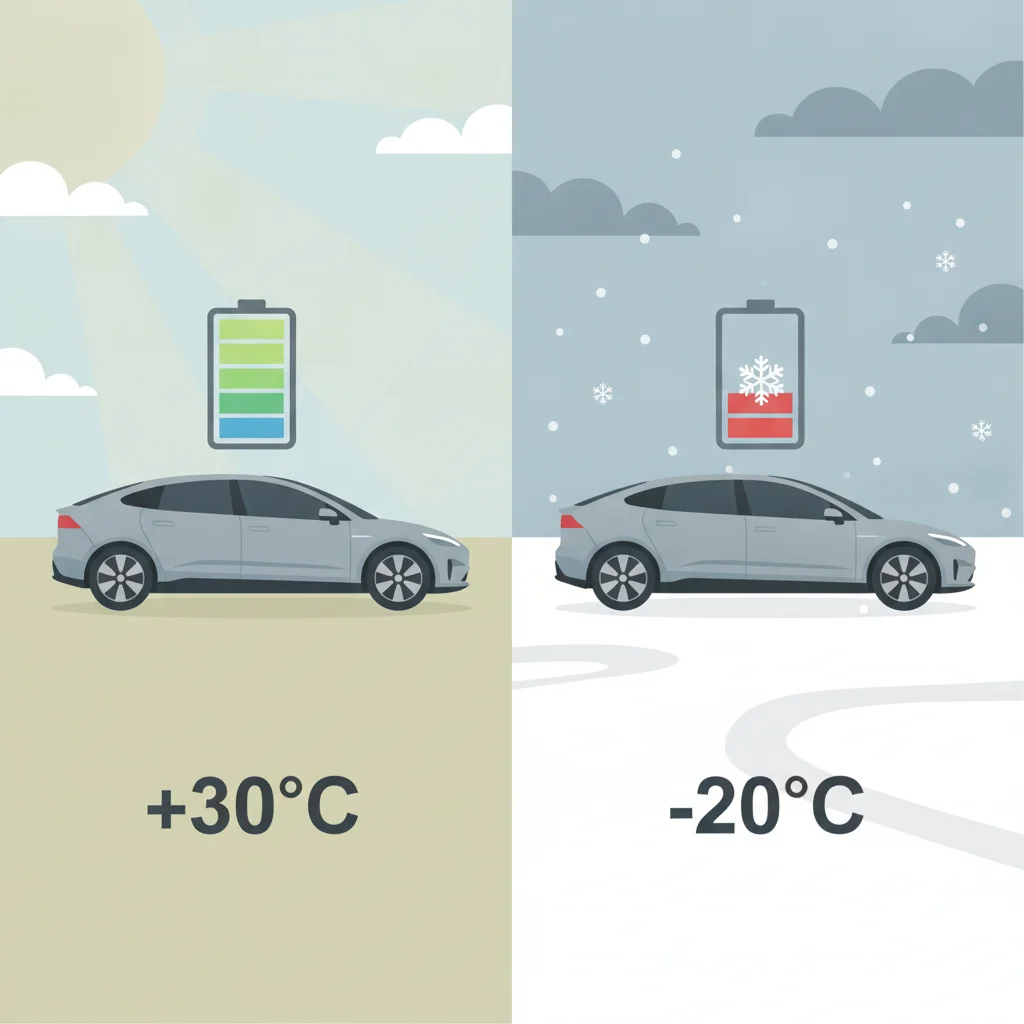
The EPA efficiency rating on a vehicle's window sticker is derived under controlled conditions. Real-world driving involves hills, headwinds, high-speed highway cruising, aggressive acceleration, and—critically in winter—cabin heating that can consume several kilowatts on its own. Depending on conditions, a vehicle rated at 4.0 miles per kWh may realistically deliver 3.0 to 3.5 miles per kWh in daily use.
That gap directly inflates your cost per mile. Here's the comparison at a $0.16/kWh rate with 88% charging efficiency:
| Real-World Efficiency | Effective Rate ($/kWh) | Cost Per Mile |
|---|---|---|
| 4.0 mi/kWh (EPA rated) | $0.182 | $0.046 |
| 3.5 mi/kWh (moderate real-world) | $0.182 | $0.052 |
| 3.0 mi/kWh (winter or highway) | $0.182 | $0.061 |
| 2.5 mi/kWh (cold weather, heavy use) | $0.182 | $0.073 |
Over an annual 15,000-mile driving year, the difference between 4.0 and 2.5 miles per kWh at home charging rates means paying roughly $405 more for the same distance. That's not a rounding error—it's a meaningful real-world cost that deserves attention when comparing EVs. For a deeper look at how efficiency variation reshapes your effective charging cost, see why your EV's real-world range changes your effective charging cost.
Use EPA's real-world efficiency data, not the sticker
The EPA's fueleconomy.gov database lists both city and highway efficiency estimates that more closely reflect real driving than the combined MPGe figure on a window sticker. Cross-reference these numbers—and owner-reported efficiency on sites like Fuelly or EV owner forums—before projecting your per-mile charging cost for a vehicle you're considering.
Audit your charging mix before assuming savings
Track for one month where each charging session happens—home, workplace, or public—and at what rate. Many EV owners are surprised to find that unplanned DC fast charging stops during errands are quietly raising their blended cost per mile. A simple spreadsheet or your vehicle's app can surface this data quickly.
Home Charging vs. Public Charging: A Cost Comparison That May Surprise You
Home charging and public charging are not interchangeable from a cost standpoint. The difference between them can determine whether an EV is a financial win or a near-wash compared to a gas vehicle.
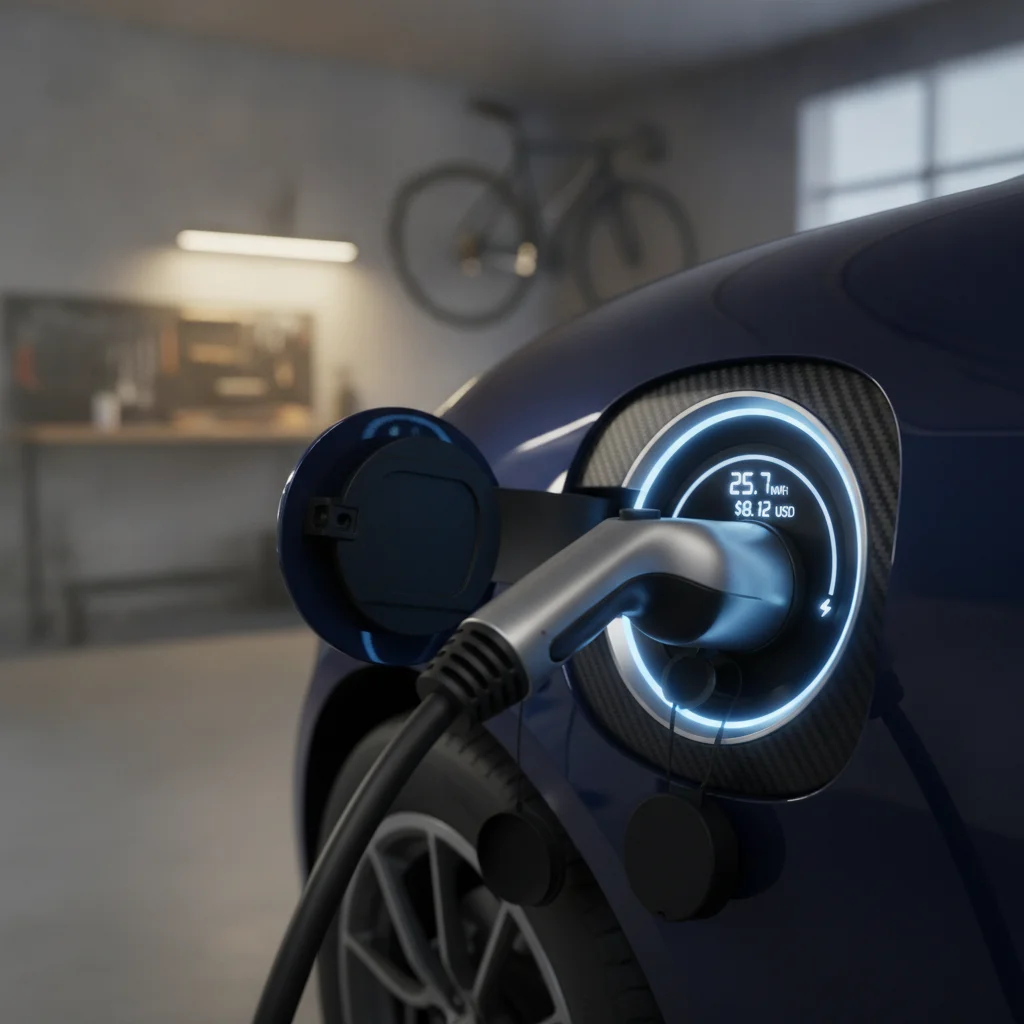
Level 1 charging (standard 120V household outlet) is the slowest but cheapest option—you're simply paying your home electricity rate with no additional fees. Level 2 home charging (240V, with a dedicated charger installed) is faster and similarly priced, though the hardware and installation add a one-time upfront cost. For more on setting up home charging efficiently, see our home charging setup guide.
Public DC fast charging is where the economics shift. Major networks including Electrify America, EVgo, and ChargePoint typically charge between $0.30 and $0.60 per kWh, and some add per-minute fees on top. A 75 kWh battery filled at $0.48/kWh costs $36—nearly three times what a home session costs. Add an idle fee if you leave the car plugged in after charging completes, and the bill climbs further.
“The dirty secret of EV economics is that public fast charging can cost more per mile than a hybrid. The savings are real—but only for drivers who do the majority of their charging at home, at the right time of day.”
— Ingrid Malmqvist, Automotive energy economist and EV total-cost-of-ownership researcher
The math becomes especially stark on road trips. A driver relying entirely on public DC fast charging for 15,000 miles annually, in a vehicle averaging 3.5 miles/kWh, would consume roughly 4,285 kWh. At $0.45 per kWh average public rate, that's approximately $1,928 per year. The same driver charging at home at $0.16/kWh pays approximately $780 per year—a $1,148 annual difference.
This is why apartment dwellers and those without home charging access face a fundamentally different financial equation. Navigating EV charging costs without a home charger requires a more careful analysis of your local public network options.
Electricity Rate Structures: Time-of-Use Plans and Their Impact
Not all home electricity costs the same at all hours. Most U.S. utilities offer time-of-use (TOU) rate plans that charge more during peak demand hours—typically 4 p.m. to 9 p.m.—and significantly less overnight. For EV owners who can schedule charging to run after midnight, TOU plans are one of the most powerful tools available for reducing charging costs.
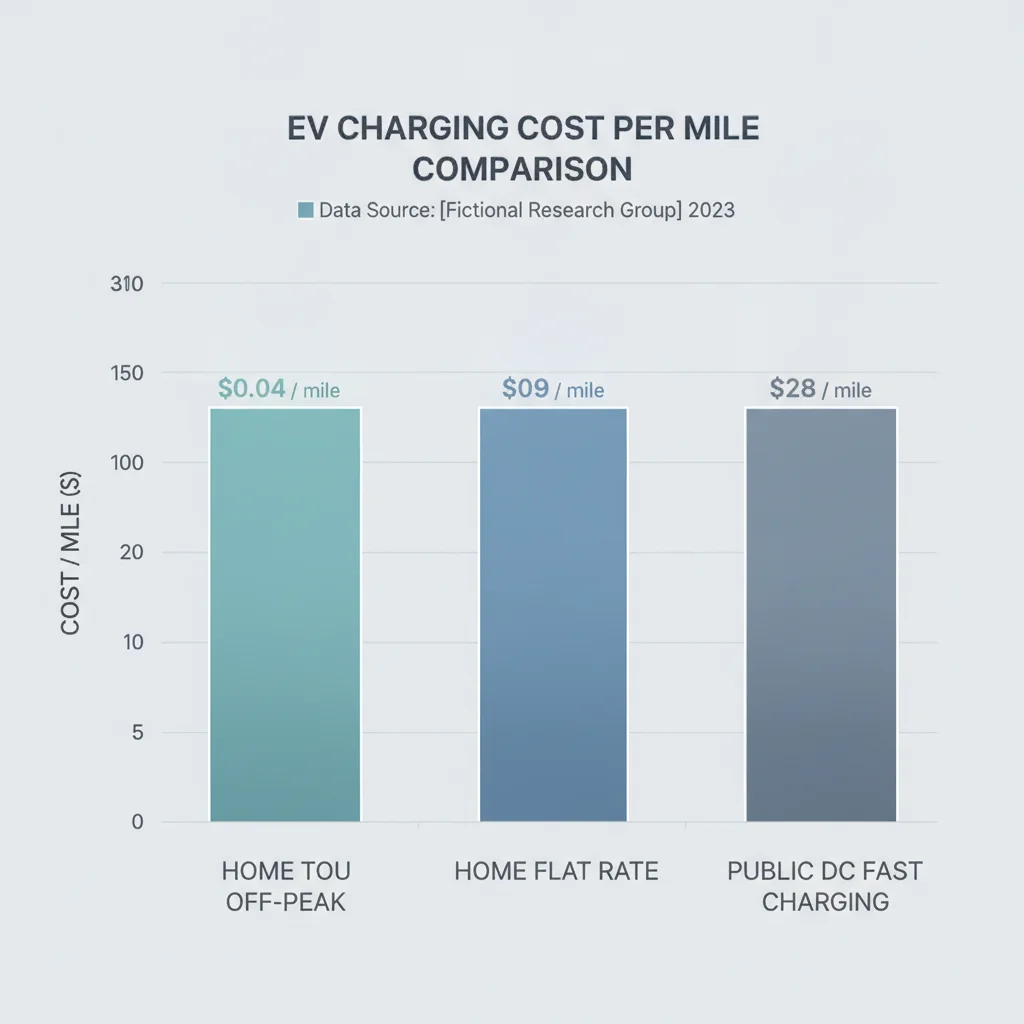
Overnight rates on TOU plans commonly fall between $0.07 and $0.12 per kWh in states like California, Texas, and Michigan. Standard daytime rates on the same grid can reach $0.25–$0.35 per kWh during summer peak periods. An EV owner who charges entirely during off-peak hours can cut their effective per-mile cost nearly in half compared to a neighbor on a flat-rate plan who charges whenever the car arrives home.
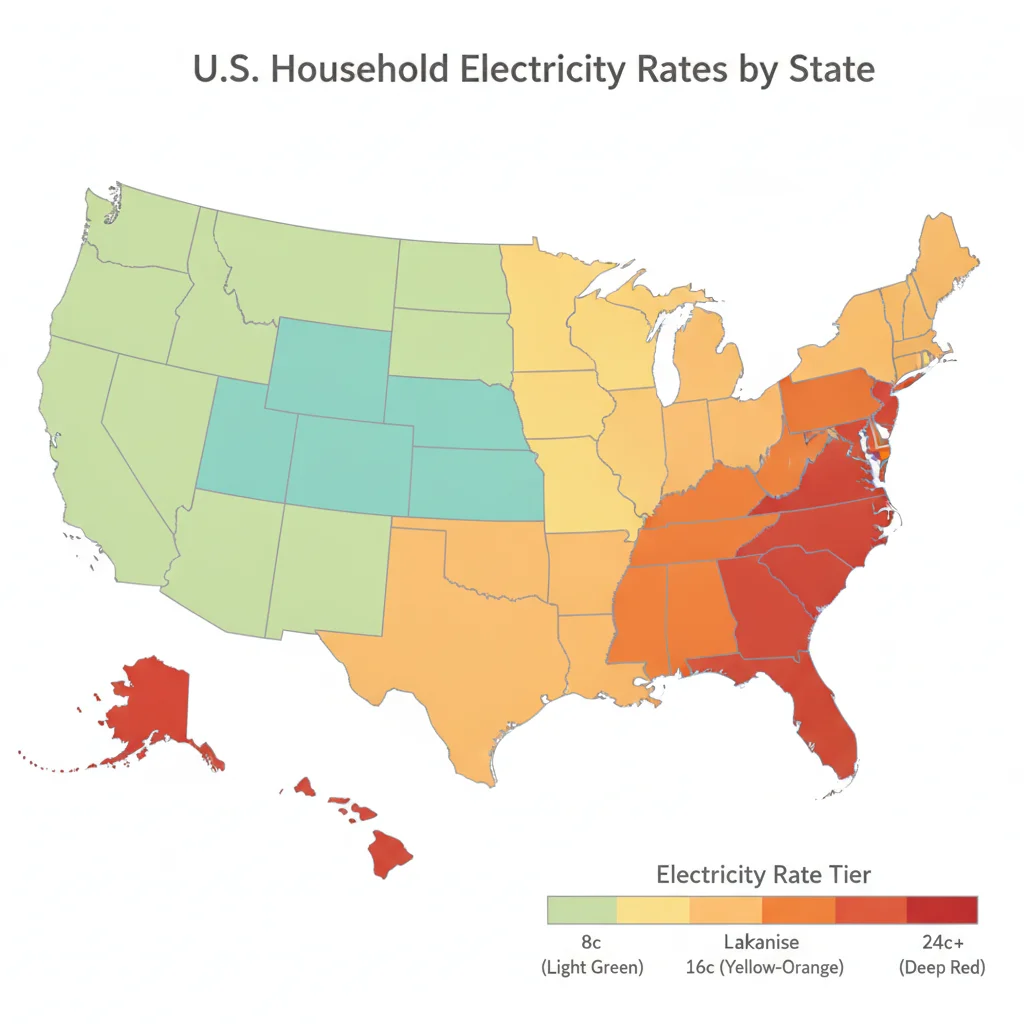
State-level electricity pricing adds another layer. Louisiana and Oklahoma regularly post average retail rates below $0.10/kWh, while Hawaii and parts of New England exceed $0.25/kWh. The variance is not trivial—charging the same EV, driving the same miles, costs more than three times as much in high-rate states. See how your state's electricity rates affect your monthly EV charging cost for a detailed regional breakdown.
Charging Efficiency Varies by Equipment
Not all Level 2 home chargers perform identically. Older or lower-quality EVSE units can see efficiency dip below 85%, while premium units from established brands typically maintain 90% or higher. If you're installing a home charger, Energy Star–certified units are tested for efficiency. See <a href="/electric-vehicles/charging-infrastructure/home-charging-setup">our home charging setup guide</a> for hardware recommendations.
Utility Rate Plans Require Opt-In
Time-of-use electricity plans are rarely the default rate structure your utility assigns. You typically need to actively request to switch. Check your utility's website for EV-specific rate plans—many states mandate that utilities offer at least one. Savings are only realized if your charger is set to draw power during the designated off-peak window.
Free Charging Isn't Always Truly Free
Workplace charging, dealership charging credits, and trial network memberships all appear free on the surface, but may come with constraints—limited session times, per-kWh caps, or promotional expiration dates. <a href="/electric-vehicles/charging-infrastructure/charging-costs-savings/free-ev-charging-whats-actually-free-and-what-comes-with-strings">Understanding what's actually free vs. what comes with strings</a> is essential before building free charging into your monthly cost projections.
Hidden Fees and Common Mistakes That Inflate Charging Costs
Even EV owners who carefully manage home charging can overspend at public stations due to fees that don't appear in headline rate comparisons. Understanding what these fees are—and when they apply—prevents quiet budget leaks.
Session fees: Some networks charge a flat $1–$2 just to initiate a session, on top of per-kWh or per-minute rates. For a partial top-up of 5–10 kWh, that fee meaningfully raises your effective per-kWh cost.
Idle fees: Leaving your car plugged in after it reaches full charge at a public station triggers idle fees at most major networks—often $0.40–$1.00 per minute. A 30-minute oversight at $0.50/min adds $15 to a charging session.
Membership pricing: Many networks offer monthly membership plans at $7–$10/month that reduce per-kWh rates significantly. For frequent users, this saves money. For occasional public charging users, the membership fee can exceed the savings.
Roaming fees: Using a charging network through a third-party app or a different EV's onboard payment system often triggers a premium—sometimes 15–25% above direct network pricing.
These issues compound when drivers overuse DC fast charging when Level 2 alternatives are available nearby. Read more about the charging cost mistakes that quietly drain EV savings for a detailed look at avoidable pitfalls.
Use EPA's real-world efficiency data, not the sticker
The EPA's fueleconomy.gov database lists both city and highway efficiency estimates that more closely reflect real driving than the combined MPGe figure on a window sticker. Cross-reference these numbers—and owner-reported efficiency on sites like Fuelly or EV owner forums—before projecting your per-mile charging cost for a vehicle you're considering.
Audit your charging mix before assuming savings
Track for one month where each charging session happens—home, workplace, or public—and at what rate. Many EV owners are surprised to find that unplanned DC fast charging stops during errands are quietly raising their blended cost per mile. A simple spreadsheet or your vehicle's app can surface this data quickly.
Putting the Math Together: Your Actual Cost Per Mile
With all variables in hand, the formula for your true per-mile EV charging cost is straightforward:
Cost Per Mile = (Electricity Rate ÷ Charging Efficiency) ÷ Real-World Miles Per kWh
Let's run three realistic scenarios to show the range:
| Scenario | Rate ($/kWh) | Efficiency | Real Mi/kWh | Cost Per Mile |
|---|---|---|---|---|
| Home, TOU off-peak, mild climate | $0.09 | 90% | 3.8 | $0.026 |
| Home, flat rate, moderate climate | $0.16 | 88% | 3.4 | $0.054 |
| Public DC fast charger, cold weather | $0.48 | 85% | 2.8 | $0.202 |
The spread between Scenario 1 and Scenario 3 is stark: $0.026 per mile versus $0.202 per mile. A driver covering 15,000 miles annually under those two extremes would pay $390 or $3,030 per year respectively—a $2,640 difference from the same vehicle. This is why charging behavior matters nearly as much as the vehicle itself when projecting total EV ownership costs.
To see how charging costs fit alongside depreciation, maintenance, and insurance over a full five-year ownership period, see our five-year EV ownership cost analysis. And if you want to run your own numbers before buying, the EV charging cost calculator guide walks through every input that shapes your monthly bill.
One additional consideration worth noting: some EV owners dramatically cut costs by pairing home charging with rooftop solar. When structured correctly, solar generation during the day can offset overnight charging costs via net metering. Whether solar plus EV charging pencils out for your home depends on your system size, local net metering policy, and actual consumption patterns.
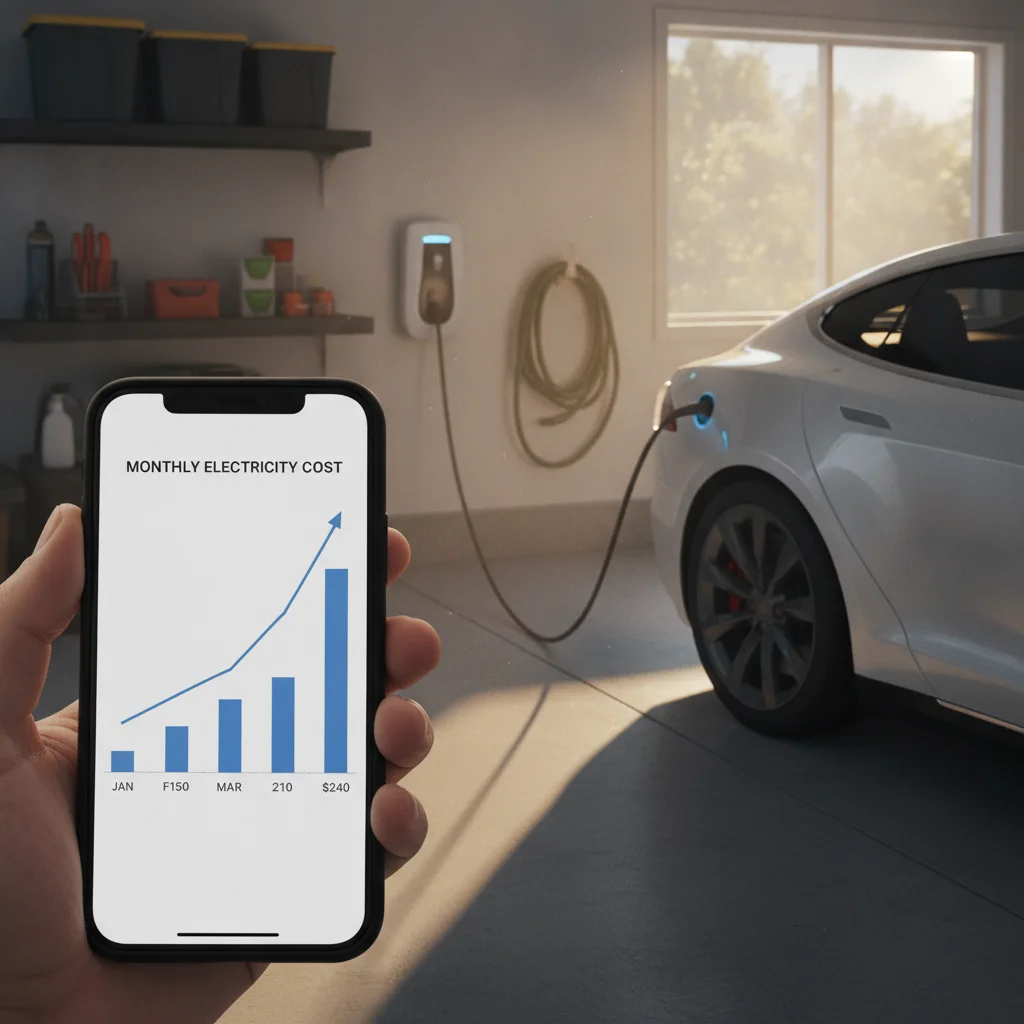
Also worth examining is the direct impact on your electricity bill month-to-month. How home EV charging affects your electricity bill unpacks the actual kWh consumption numbers and what they mean for your household budget.
Charging Efficiency Varies by Equipment
Not all Level 2 home chargers perform identically. Older or lower-quality EVSE units can see efficiency dip below 85%, while premium units from established brands typically maintain 90% or higher. If you're installing a home charger, Energy Star–certified units are tested for efficiency. See <a href="/electric-vehicles/charging-infrastructure/home-charging-setup">our home charging setup guide</a> for hardware recommendations.
Utility Rate Plans Require Opt-In
Time-of-use electricity plans are rarely the default rate structure your utility assigns. You typically need to actively request to switch. Check your utility's website for EV-specific rate plans—many states mandate that utilities offer at least one. Savings are only realized if your charger is set to draw power during the designated off-peak window.
Free Charging Isn't Always Truly Free
Workplace charging, dealership charging credits, and trial network memberships all appear free on the surface, but may come with constraints—limited session times, per-kWh caps, or promotional expiration dates. <a href="/electric-vehicles/charging-infrastructure/charging-costs-savings/free-ev-charging-whats-actually-free-and-what-comes-with-strings">Understanding what's actually free vs. what comes with strings</a> is essential before building free charging into your monthly cost projections.
All claims are backed by peer-reviewed research. Sources on request.