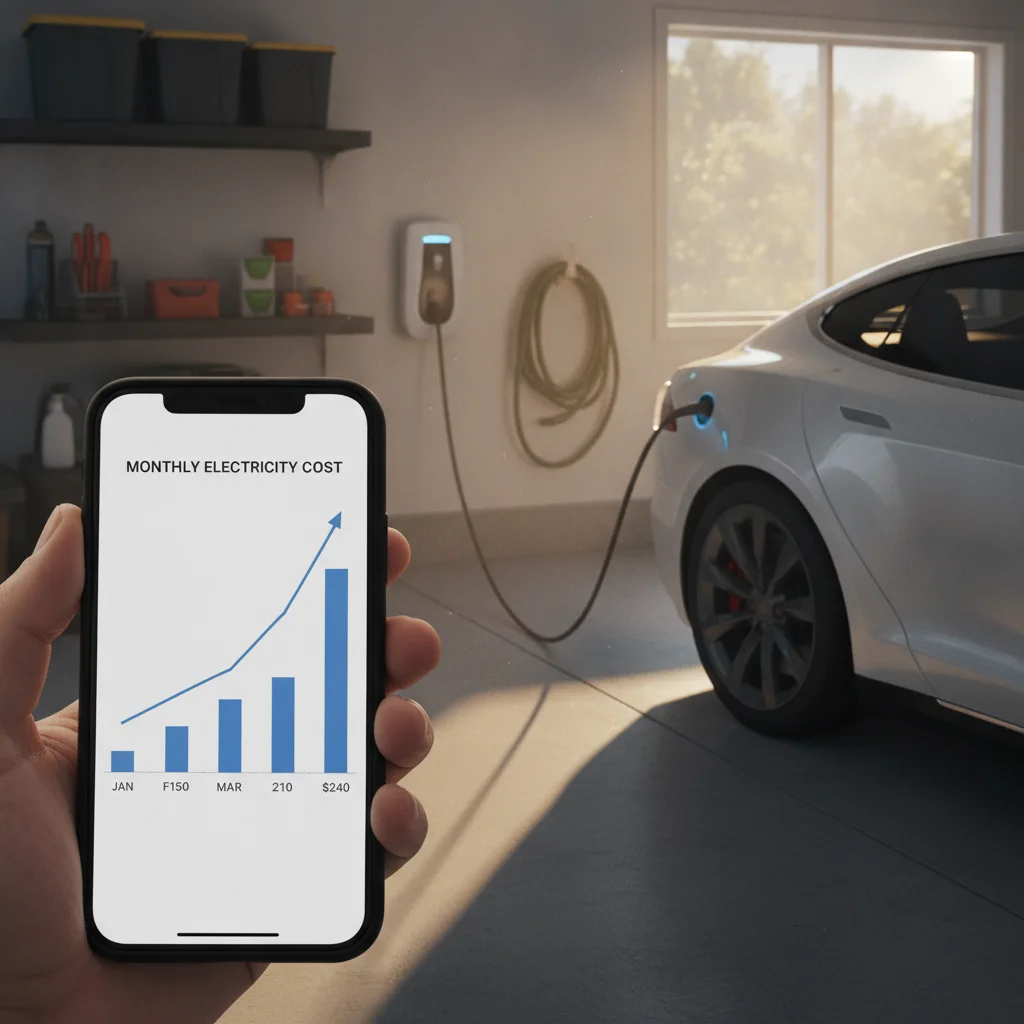
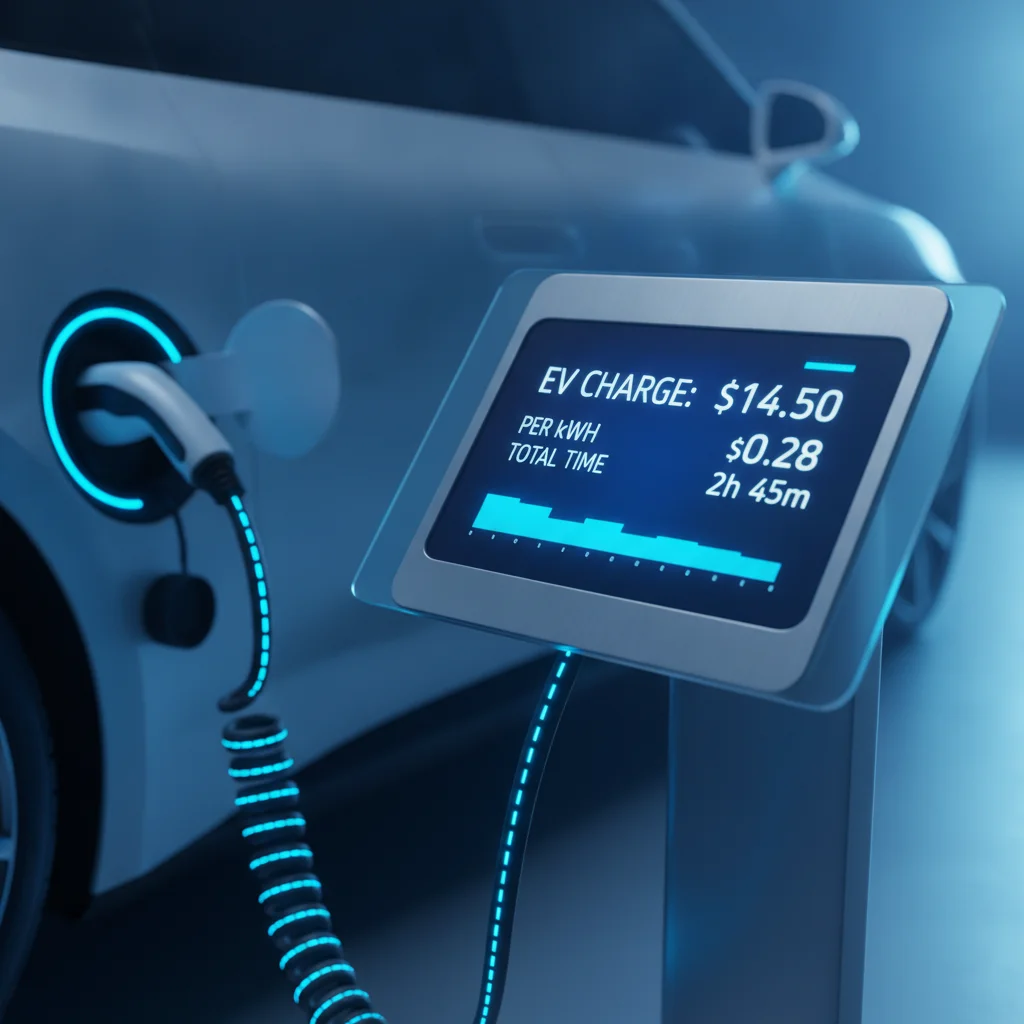
Key Takeaways
EV Charging Cost Calculator
An EV charging cost calculator is a tool that estimates how much you'll pay to charge an electric vehicle based on specific inputs: your local electricity rate, your vehicle's battery size, its real-world energy efficiency, and how many miles you drive. By combining these variables, the calculator converts kilowatt-hours consumed into a dollar amount — either per charge session, per month, or per year. Unlike gas cost estimates, EV charging math requires understanding both the supply side (what electricity costs) and the demand side (how efficiently your car uses it).
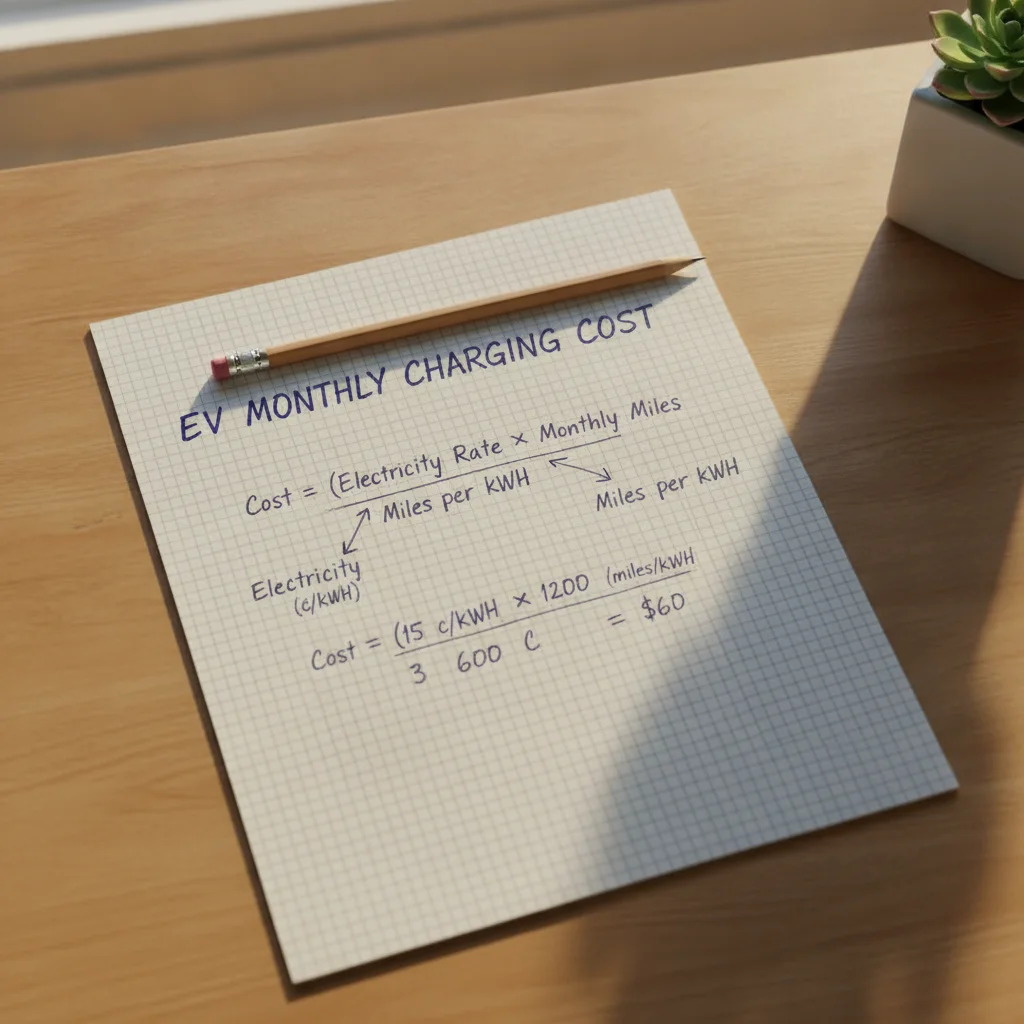
Calculators typically use the formula: Cost = (Miles Driven ÷ Efficiency in miles/kWh) × Rate per kWh. Accuracy depends heavily on real-world efficiency figures, which deviate from EPA ratings by 10–20% under real driving conditions.
Why the Inputs in a Charging Calculator Matter More Than the Output
Most EV shopping guides lead with a simple promise: charging is cheaper than gas. That's often true — but by how much depends entirely on variables that differ from one driver to the next. A charging cost calculator is only as useful as the numbers you feed into it. Plug in inaccurate inputs, and you'll get a misleading estimate that could leave you budgeting incorrectly for months.
The four primary inputs that govern EV charging cost are electricity rate, battery capacity, vehicle efficiency, and monthly mileage. Secondary factors — time-of-use rate plans, public versus home charging mix, seasonal efficiency changes — layer additional complexity. Understanding each input individually lets you cross-check any calculator's output against your own situation.
This article walks through each variable in depth, explains how errors in estimation compound, and shows you how to assemble a credible cost estimate for your specific driving life. If you're trying to project what an EV will cost to fuel before you buy, the inputs covered here are exactly what you need to get right.
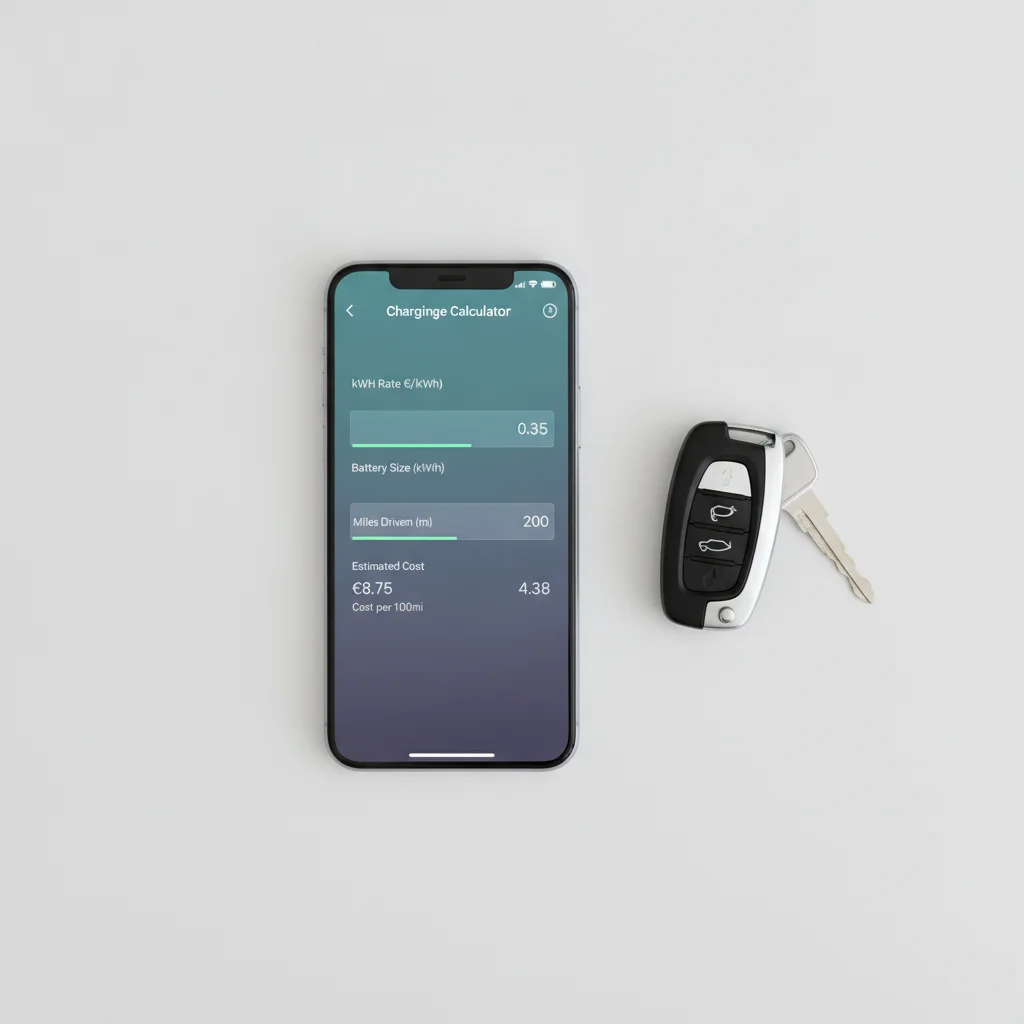
Input #1: Electricity Rate — The Most Consequential Number
The price you pay per kilowatt-hour of electricity is the dominant cost lever in any EV charging scenario. As of 2024, the national average residential electricity rate in the U.S. sits around 16 cents per kWh, but that figure masks enormous geographic variation. Hawaii residents pay upwards of 40 cents per kWh. Louisiana and Oklahoma frequently dip below 10 cents. That four-to-one spread means the same EV, driven the same distance, can cost dramatically different amounts to charge depending on where you live.
State-by-state EV charging cost data makes the regional impact concrete: an owner in Washington state charging at 10 cents per kWh will pay roughly half what a Connecticut driver pays at 20 cents for the exact same vehicle and the same miles driven.
Finding Your True Effective Electricity Rate
Your utility bill's published rate per kWh often excludes delivery charges, transmission fees, and taxes that appear as separate line items. To find your true effective rate, divide your total monthly bill amount by the total kilowatt-hours consumed. This blended number — typically higher than the advertised energy rate — is what belongs in a charging cost calculator. The difference can be 20–40% in high-fee states.
Calculator Defaults May Not Match Your Reality
Most online EV charging calculators pre-populate national average values for electricity rate, efficiency, and mileage. These defaults can produce estimates that are significantly off for any individual driver. Always replace default values with your own data — your utility bill rate, your vehicle's onboard efficiency reading, and your actual monthly mileage from your odometer or navigation history.
Long-Term Rate Trends Matter for Ownership Decisions
Electricity rates in the U.S. have increased at an average annual rate of roughly 2–3% over the past decade, compared to gasoline's more volatile pricing. When projecting five-year ownership costs, apply a modest annual rate escalation to your electricity inputs. Even small rate increases compound meaningfully over a six- or seven-year ownership period.
Your electricity rate also isn't a single fixed number. Most utilities blend several charges — energy supply, transmission, delivery, and various taxes — into a final per-kWh figure on your bill. To find your true effective rate, divide your total monthly bill amount by total kWh consumed that month. The EV owner's guide to reading an electricity bill breaks down each line item in detail.
16¢
Average U.S. residential electricity rate per kWh
U.S. Energy Information Administration (EIA), 2024 average; rates range from under 10¢ in Louisiana to over 40¢ in Hawaii.
80%
Share of EV charging that happens at home
According to the U.S. Department of Energy's Alternative Fuels Data Center, the vast majority of EV energy is added overnight at home.
20–30%
Range reduction in cold weather
AAA and Recurrent Auto testing shows lithium-ion EV batteries deliver significantly less range at sub-freezing temperatures.
2–4×
Cost premium for public DC fast charging vs. home
Public DC fast charging networks in the U.S. typically charge 25–48¢ per kWh, versus a national home average near 16¢.
51%
Potential savings from off-peak TOU rate plans
Drivers who shift home charging to overnight off-peak windows can cut their per-kWh rate roughly in half on qualifying utility plans.
Time-of-Use Plans: A Rate Variable Within a Variable
Many utilities offer time-of-use (TOU) rate plans that charge different prices depending on when you consume electricity. Off-peak hours — typically overnight between 9 p.m. and 6 a.m. — can carry rates as low as 6–8 cents per kWh on some plans, compared to on-peak rates of 25–35 cents per kWh during evening demand surges. For EV owners who charge overnight, this difference is transformative.
Consider an owner driving 1,200 miles per month in a vehicle that gets 3.5 miles per kWh. That's roughly 343 kWh per month. At a flat rate of 16 cents, monthly charging cost is about $55. On an off-peak TOU rate of 8 cents, the same consumption costs $27 — a 51% reduction. Over a year, that's more than $330 saved without changing a single driving habit.
Enroll in a TOU Rate Plan Early
Contact your utility provider before or shortly after taking delivery of your EV. Many utilities require a smart meter upgrade and a brief enrollment window. The sooner you switch, the sooner overnight charging savings begin accumulating. Some utilities also offer dedicated EV rate plans that go below standard off-peak rates.
Separate Your Public Charging Costs
Keep a simple log of public charging sessions for the first two to three months of EV ownership. Note the kWh dispensed and total cost. This gives you a real blended public rate that's far more accurate than any network's listed pricing, which can vary by state, membership level, and connector type.
Not every utility offers EV-specific TOU plans, and some require smart meter installation before you can enroll. Check your utility's website or call their residential services line to explore available rate structures. This is one of the highest-return decisions an EV owner can make early in ownership — and it directly affects the accuracy of any cost estimate you build from a calculator.
Input #2: Battery Capacity and State of Charge
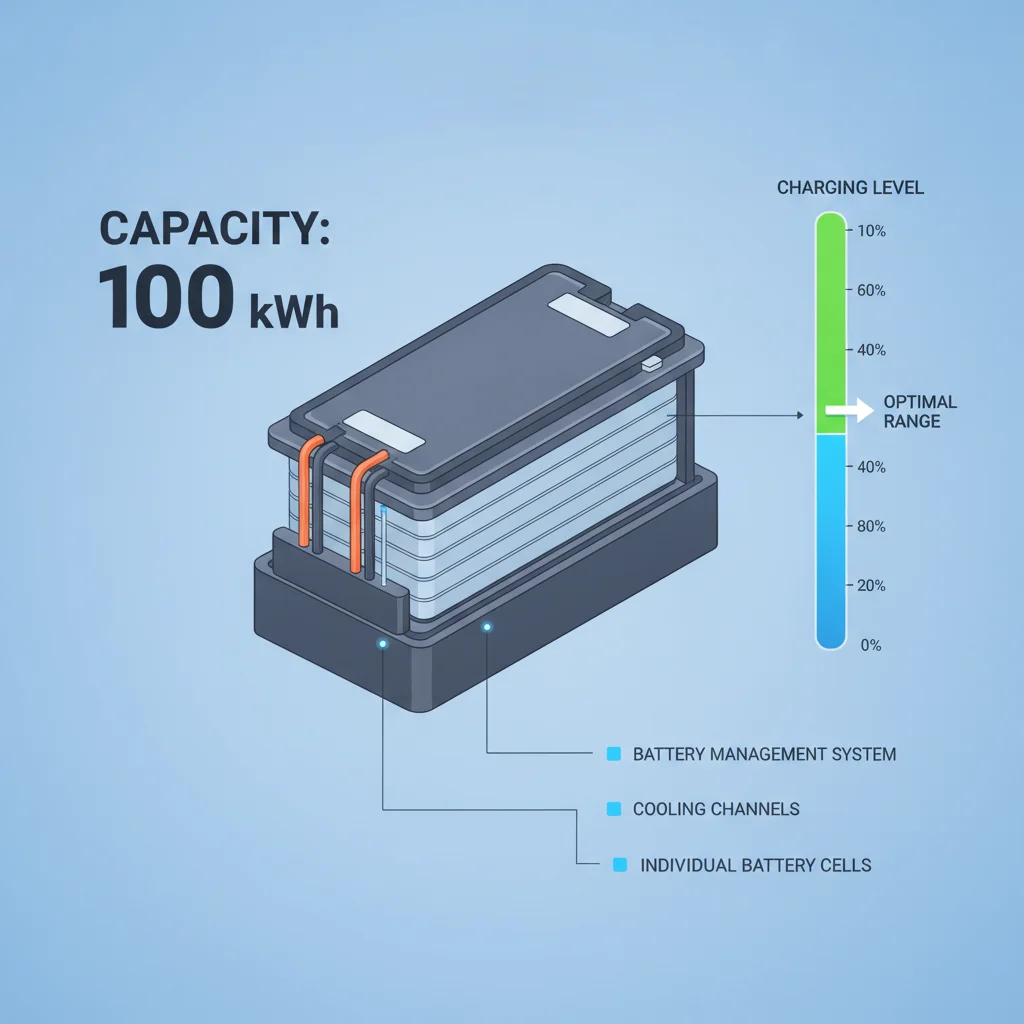
Battery capacity — measured in kilowatt-hours — sets the ceiling on how much energy a vehicle can accept in a single charge session. A 2024 Tesla Model 3 Long Range carries a usable capacity of about 75 kWh. A Chevrolet Bolt EV sits closer to 65 kWh. A Rivian R1T truck offers up to 135 kWh in its Max Pack configuration. These figures establish the maximum theoretical cost per full charge session.
However, most EV owners never charge from 0% to 100% in practice. Battery longevity best practices suggest keeping daily charging between 20% and 80% — a 60% usable window. For a 75 kWh battery, that's 45 kWh per typical charge session, not 75. At 16 cents per kWh, the difference is $7.20 per session versus $12. For drivers doing this five times a month, the annual gap between using real-world state-of-charge data versus rated capacity is over $280.
This is a common point of confusion in calculator inputs. Always use your typical state-of-charge swing, not the nameplate battery capacity, when estimating per-session or monthly costs.
Input #3: Vehicle Efficiency — Where Specs and Reality Diverge
Efficiency — how many miles an EV travels per kilowatt-hour consumed — is perhaps the most misunderstood input in any charging cost calculator. The EPA rates EVs in miles per kWh (or equivalently, kWh per 100 miles), and those figures appear on every new-car window sticker. But real-world efficiency frequently diverges from the EPA estimate, sometimes significantly.
Cold weather is the primary culprit. Lithium-ion battery chemistry delivers less energy in sub-freezing temperatures, and cabin heating in an EV draws directly from the battery pack rather than waste engine heat. Studies from Recurrent Auto and AAA have documented range reductions of 20–30% in cold climates. At 25°F, a vehicle rated at 4.0 miles per kWh may deliver only 3.0 miles per kWh in practice.
Highway driving at 75+ mph also degrades efficiency due to aerodynamic drag. Conversely, city driving with frequent regenerative braking can sometimes exceed EPA ratings. The point is that your real efficiency figure — not the EPA sticker — is what belongs in a cost calculator.
For the most accurate input, check your vehicle's onboard trip computer after 1,000–2,000 miles of varied driving across seasons. That figure is your actual efficiency baseline. Understanding terms like MPGe and efficiency rating helps translate between the different units manufacturers and the EPA use to express this metric.
“The EPA efficiency rating is a controlled-conditions benchmark, not a real-world promise. The fastest way to get an accurate charging cost estimate is to pull your own miles-per-kWh figure from the car's trip computer after a few months of normal driving.”
— Genevieve Cullen, President, Electric Drive Transportation Association
Input #4: Monthly Mileage — The Scaling Factor
How far you drive each month determines how much energy you consume, which multiplies against your rate to produce your monthly cost. The U.S. average is approximately 1,100–1,200 miles per month across all drivers. But that average hides enormous individual variation — a remote rural commuter might cover 2,500 miles monthly, while an urban driver using transit for most trips might log only 400.
The math is linear: double your miles, double your charging cost. At 16 cents per kWh and 3.5 miles per kWh efficiency, every additional 350 miles of monthly driving adds roughly $16 to your bill. Someone underestimating their monthly mileage by 25% — say, entering 900 miles when they actually drive 1,200 — will underestimate their annual charging cost by around $192.
Mileage also determines how often you'll rely on public charging versus home charging — a distinction that matters enormously for cost, since public DC fast charging typically runs two to four times the per-kWh cost of home electricity. The full math behind EV charging costs accounts for this home-versus-public split in ways that simple calculators often skip.
Public Charging: A Separate Cost Structure Entirely
When a charging cost calculator asks for a single electricity rate, it's implicitly assuming all charging happens at home. For many owners, that's a reasonable approximation — the Department of Energy estimates that roughly 80% of EV charging occurs at home. But frequent road-trippers, apartment dwellers without home charging access, or drivers in regions with poor home-charging infrastructure may rely heavily on public networks, and the cost structure there is fundamentally different.
Public Level 2 chargers at workplaces or retail locations often charge by the hour rather than by the kWh. DC fast chargers — Tesla Superchargers, Electrify America, EVgo — typically bill per kWh at rates ranging from 25 to 48 cents, with some networks adding idle fees or session fees. A single DC fast charge session that adds 200 miles of range can cost $20–$35 depending on the network and vehicle's charging rate.
If public charging represents even 20% of your monthly energy consumption, it can shift your blended effective rate upward by several cents per kWh — enough to materially change your monthly cost estimate. Any honest cost calculator should include a field for your public charging percentage and the applicable public rate. If it doesn't, adjust your electricity rate input upward to reflect the blend.
Enroll in a TOU Rate Plan Early
Contact your utility provider before or shortly after taking delivery of your EV. Many utilities require a smart meter upgrade and a brief enrollment window. The sooner you switch, the sooner overnight charging savings begin accumulating. Some utilities also offer dedicated EV rate plans that go below standard off-peak rates.
Separate Your Public Charging Costs
Keep a simple log of public charging sessions for the first two to three months of EV ownership. Note the kWh dispensed and total cost. This gives you a real blended public rate that's far more accurate than any network's listed pricing, which can vary by state, membership level, and connector type.
Setting up reliable home charging is one of the most effective ways to control long-term EV fuel costs. Owners who can charge at home consistently capture the largest savings relative to gasoline. See our full guide on the real impact of home EV charging on your monthly electricity bill for a detailed breakdown of what to expect on your utility statement.
Building a Reliable Estimate: Putting the Inputs Together
With all four primary inputs in hand — electricity rate, real-world efficiency, typical state-of-charge swing, and monthly mileage — the core calculation is straightforward:
- Determine monthly kWh consumption: Divide monthly miles by real-world efficiency (miles/kWh). Example: 1,200 miles ÷ 3.5 miles/kWh = 343 kWh.
- Apply your blended electricity rate: Multiply kWh by your effective rate. Example: 343 kWh × $0.16 = $54.88/month.
- Adjust for public charging: If 20% of charging is public at $0.35/kWh and 80% is home at $0.16/kWh, blended rate = (0.80 × $0.16) + (0.20 × $0.35) = $0.198/kWh. Revised monthly cost: 343 × $0.198 = $67.91.
- Account for seasonal variation: In winter months, add 15–25% to your kWh consumption estimate if you live in a cold climate.
This four-step approach generates a credible monthly estimate that a simple calculator can confirm or refine. It also makes the sensitivity analysis transparent: you can see exactly how a 5-cent change in electricity rate, or a 10% drop in winter efficiency, moves your monthly number.
For drivers considering EV ownership for the first time, understanding available EV tax credits and incentives alongside these operating costs gives a more complete picture of total cost of ownership. Federal credits of up to $7,500 can offset the higher purchase price that often accompanies larger, more efficient battery packs.
Finding Your True Effective Electricity Rate
Your utility bill's published rate per kWh often excludes delivery charges, transmission fees, and taxes that appear as separate line items. To find your true effective rate, divide your total monthly bill amount by the total kilowatt-hours consumed. This blended number — typically higher than the advertised energy rate — is what belongs in a charging cost calculator. The difference can be 20–40% in high-fee states.
Calculator Defaults May Not Match Your Reality
Most online EV charging calculators pre-populate national average values for electricity rate, efficiency, and mileage. These defaults can produce estimates that are significantly off for any individual driver. Always replace default values with your own data — your utility bill rate, your vehicle's onboard efficiency reading, and your actual monthly mileage from your odometer or navigation history.
Long-Term Rate Trends Matter for Ownership Decisions
Electricity rates in the U.S. have increased at an average annual rate of roughly 2–3% over the past decade, compared to gasoline's more volatile pricing. When projecting five-year ownership costs, apply a modest annual rate escalation to your electricity inputs. Even small rate increases compound meaningfully over a six- or seven-year ownership period.
All claims are backed by peer-reviewed research. Sources on request.