
Key Takeaways
Start here
Why Your Electricity Bill Suddenly Looks Different
Build your foundation
Anatomy of a Utility Bill: The Line Items That Matter
Understand pricing
The Energy Charge: What You Actually Pay Per kWh
Optimize timing
Time-of-Use Rates and Why Timing Your Charging Matters
Spot hidden costs
Demand Charges, Fixed Fees, and Other Hidden Costs
Take action
Practical Steps to Lower Your Charging Costs
Why Your Electricity Bill Suddenly Looks Different
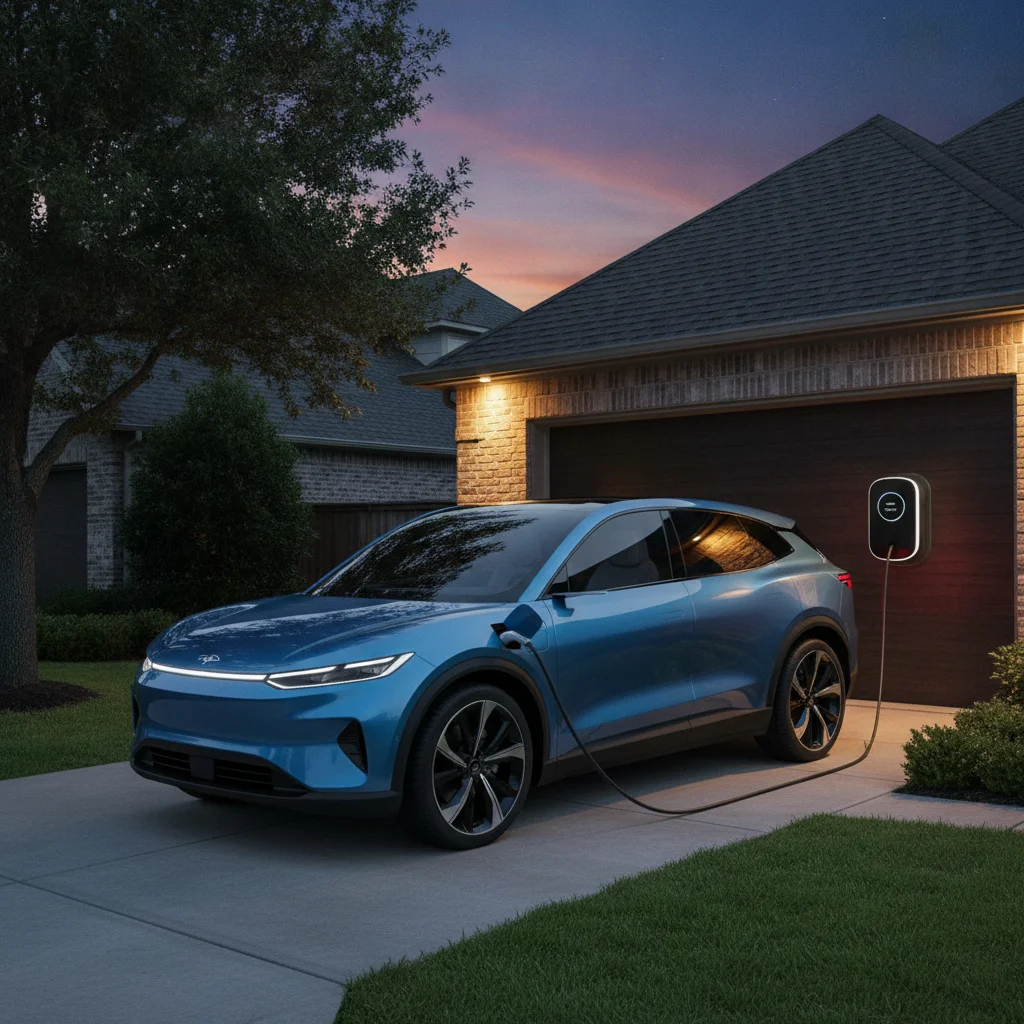
The month after you bring home your first EV, the electricity bill arrives and the total is noticeably higher. That's expected — you've added a large new load to your home's electrical system. What surprises most new EV owners isn't the higher number itself; it's that they have no idea which part of the bill reflects charging costs, or whether they're being billed efficiently at all.
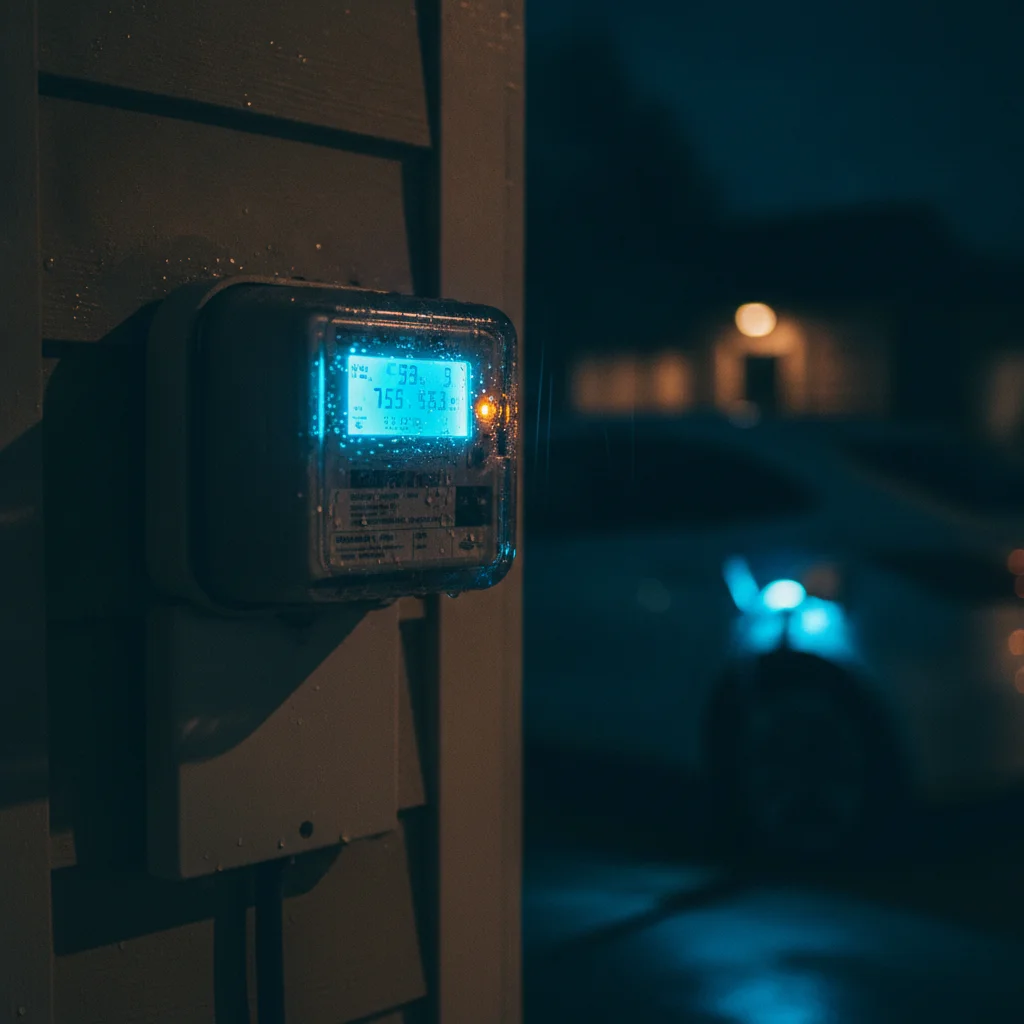
Reading a utility bill as an EV owner is a different exercise than it was when you were simply paying to run your lights and appliances. The bill is no longer background noise. It's your fuel receipt — and unlike a gas station printout, it bundles your EV fuel cost together with your home energy use, infrastructure fees, regulatory surcharges, and sometimes rate structures you never opted into knowingly.
This guide walks through every major component of a standard U.S. residential electricity bill, explains what each one means for an EV owner specifically, and shows you how to calculate your true cost per mile of electric driving. Whether you're on a flat rate, a time-of-use plan, or something in between, you'll leave this page able to read your bill with confidence.
For a broader look at every variable that shapes what you pay to charge, see our end-to-end EV charging cost guide.

Anatomy of a Utility Bill: The Line Items That Matter
A residential electricity bill is not a single charge. It's a stack of distinct line items that utilities are required to disclose, though the labeling varies significantly from one provider to the next. Here are the core components you'll find on most U.S. utility bills:
Kilowatt-hour (kWh)
The standard unit of electrical energy measurement. One kWh equals 1,000 watts of power consumed for one hour. Your electricity bill charges you based on the total kWh you consume each month.
Energy charge
The portion of your bill that reflects the cost of the actual electricity you consumed, calculated by multiplying your total kWh usage by a per-kWh rate.
Delivery charge
A fee covering the cost of transmitting and distributing electricity from the power plant to your home through the grid's infrastructure — wires, poles, and substations.
Time-of-use (TOU) rate
A pricing structure where the cost per kWh changes throughout the day. Electricity costs more during high-demand 'peak' hours and less during low-demand 'off-peak' hours, usually overnight.
Demand charge
A fee based on your highest rate of power draw (measured in kilowatts) during a billing period, not on total consumption. It rewards spreading power use evenly across the day rather than drawing a large amount all at once.
Effective rate
Your true cost per kWh once all bill components — energy, delivery, taxes, and fixed fees — are included. Calculated by dividing your total bill amount by your total kWh consumed.
Customer charge
A flat monthly fee charged by your utility simply for maintaining your grid connection, regardless of how much electricity you actually use.
Kilowatt (kW)
A unit measuring the rate of power consumption at any given moment. A Level 2 EV charger typically draws 7.2 kW or more. Demand charges are based on kW, while energy charges are based on kWh.
| Line Item | What It Represents | EV Relevance |
|---|---|---|
| Energy charge | Cost per kWh consumed | High — directly tied to charging |
| Distribution/delivery charge | Cost of moving power to your home | Medium — applies to all usage including EV |
| Transmission charge | Cost of high-voltage grid infrastructure | Low — fixed or near-fixed per kWh |
| Customer/service charge | Flat monthly fee for grid connection | Low — fixed regardless of EV use |
| Demand charge | Fee based on peak power draw (kW) | High if applicable — EV charging can trigger |
| Taxes and surcharges | State, local, and regulatory fees | Medium — adds to effective per-kWh cost |
| Fuel adjustment charge | Reflects utility's fuel procurement costs | Medium — varies with market conditions |
Not every utility lists all of these separately. Some bundle distribution and transmission into a single 'delivery charge.' Others roll taxes into the stated per-kWh rate. The key habit to develop is reading past the total and examining each individual line before comparing months or evaluating rate plans.
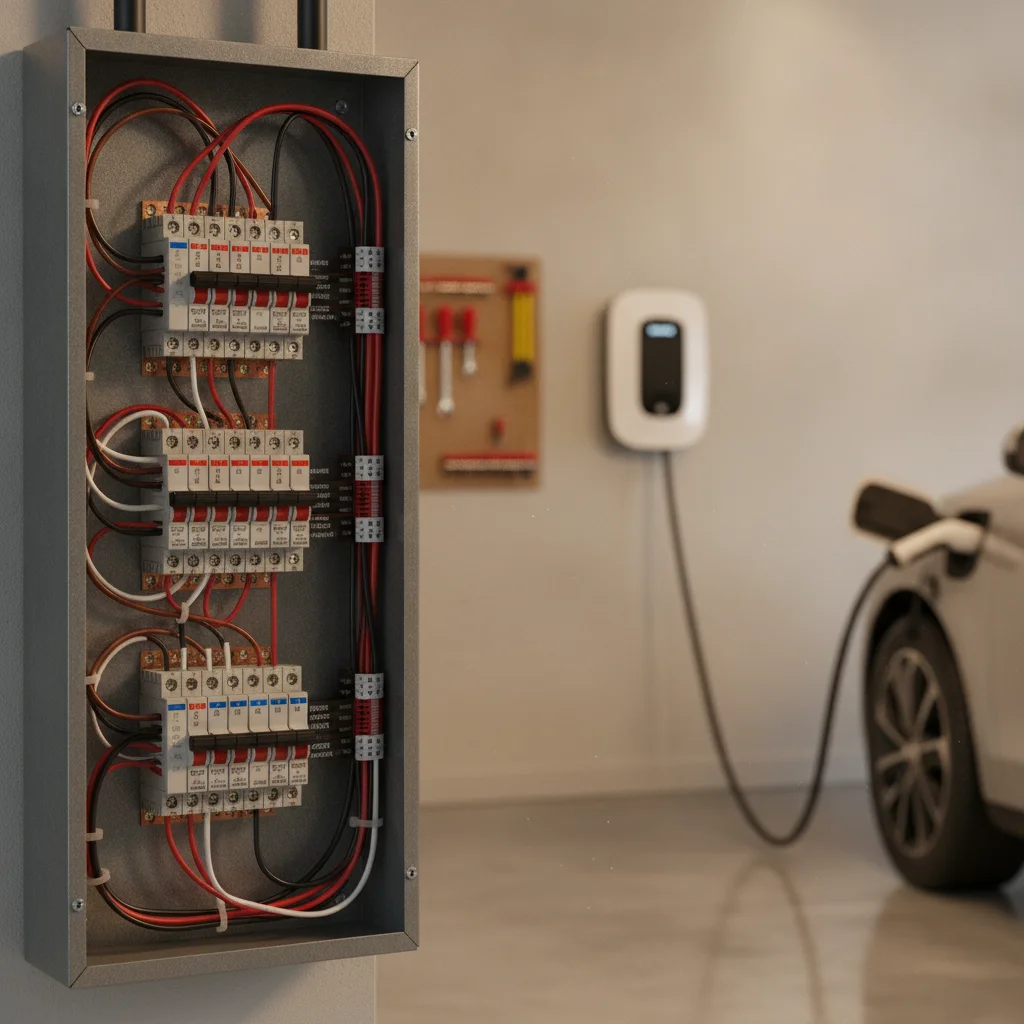
Understanding how your home electrical system supports all these loads together is also worth reviewing — our plain-English guide to your home electrical panel explains the hardware side of the equation.
The Energy Charge: What You Actually Pay Per kWh
The energy charge is the line item most directly connected to your EV charging activity. It's calculated by multiplying your total kilowatt-hour consumption by a per-kWh rate. In the U.S., the residential average hovers around $0.16 per kWh as of 2024, though rates range from under $0.10 in states like Louisiana and Idaho to over $0.30 in Hawaii and California.
Here's the math that matters for EV owners: if your car travels approximately 3.5 miles per kWh (a reasonable average for a mid-size EV), and you drive 1,000 miles per month, you're adding about 286 kWh of demand to your home each month. At $0.16/kWh, that's roughly $46 in pure energy costs — before any fixed fees, taxes, or delivery charges are layered on top.
Calculate Your Effective Rate, Not Just the Listed Rate
Divide your total bill by your total kWh consumed to find your true effective cost per kWh. This is the number to use when comparing rate plans or calculating your cost per mile. The stated energy rate alone understates what you're actually paying because it excludes fixed fees and taxes.
Check for EV Plan Eligibility Before Your First Full Bill
Don't wait until you've been billed at the standard rate for six months to investigate EV-specific plans. Contact your utility in the first week of EV ownership and ask whether an EV rate or TOU plan is available. Enrollment windows and effective dates vary, and getting on the right plan from the start can save hundreds of dollars annually.
That last point is critical. The advertised energy rate is never your true cost per kWh. To find your effective rate — what you actually pay per kWh once everything is included — divide your total bill amount by your total kWh consumed. The result is often 20–50% higher than the stated energy rate alone, because fixed fees and taxes are spread across every kilowatt-hour you use.
For example: if your bill totals $120 and you consumed 700 kWh, your effective rate is $0.171/kWh — not just the $0.12/kWh energy rate printed on the bill. This effective rate is what you should use when calculating your cost per mile of EV driving.
To go deeper on rate structures and how they affect what you pay, this article on electricity rates and EV charging costs is the logical next read.
Time-of-Use Rates and Why Timing Your Charging Matters
A flat rate plan charges the same per-kWh price around the clock. A time-of-use (TOU) plan charges different rates depending on when you consume electricity — higher during peak demand hours (typically late afternoon through early evening) and lower during off-peak hours (usually late night through early morning).
For EV owners, TOU plans are one of the most powerful cost-reduction tools available. An EV owner in California on a TOU plan might pay $0.09/kWh to charge between midnight and 6 a.m., compared to $0.45/kWh during the 4–9 p.m. peak window. Charging an EV exclusively overnight versus exclusively in the evening could represent a difference of more than $100 per month for a high-mileage driver.
On your bill, TOU usage may appear as separate line items for each pricing tier — 'peak kWh,' 'off-peak kWh,' and sometimes 'super off-peak kWh.' Each tier will show the kWh consumed in that window and the corresponding rate. If you see these entries and your peak usage is high, it's a strong signal that your EV's charging schedule needs adjustment.
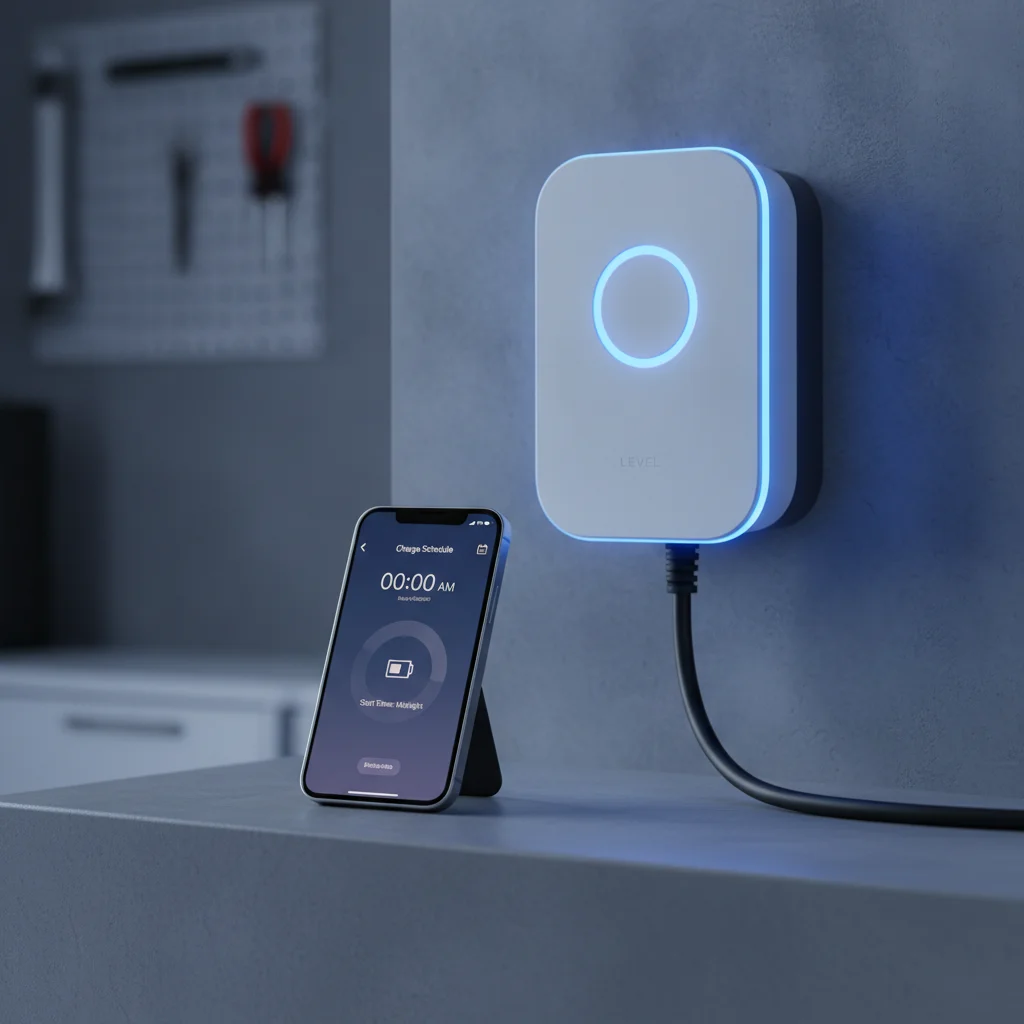
Most modern EVs and Level 2 home chargers allow you to schedule charging sessions to begin at a specific time. Setting a departure time and letting the car or charger handle the scheduling is typically the easiest approach. The car charges during the cheapest hours and finishes before you need it in the morning.
Our full guide to TOU rates and home EV charging includes examples from multiple utilities and step-by-step instructions for setting up scheduled charging.
Not All Utilities Offer TOU Plans to All Customers
TOU rate availability varies by utility, state, and sometimes by local service territory within a single utility's footprint. Some utilities are rolling out TOU plans gradually and may only offer them to customers with smart meters. If your utility doesn't currently offer a TOU option, check back annually — regulatory pressures are pushing more utilities toward dynamic pricing structures nationwide.
Demand Charges, Fixed Fees, and Other Hidden Costs
Beyond the energy charge, several other bill components can significantly inflate what you pay — especially as an EV owner drawing more power than a typical household.
Demand Charges
A demand charge is based not on how much electricity you use, but on how fast you draw it. It's measured in kilowatts (kW) and typically calculated using your highest 15-minute or 30-minute average power draw during the billing period. Most residential customers never encounter demand charges — they're common for commercial accounts. However, some utilities do apply them to residential customers, and a 7.2 kW Level 2 charger running while you cook dinner and run the dryer can push your peak demand high enough to trigger a measurable fee.
Our deep-dive on demand charges for EV owners explains exactly how these fees work, which utilities apply them, and how to avoid them.
TOU Plans Can Backfire Without Behavior Changes
Switching to a time-of-use plan without actually shifting your EV charging to off-peak hours can increase your bill significantly. Peak-window rates on TOU plans are often much higher than the flat rate you'd otherwise pay. Always schedule overnight charging before enrolling, and verify your charger's scheduling features work reliably.
Demand Charges Can Be Significant and Surprising
If your utility applies demand charges to residential accounts, running a Level 2 EV charger simultaneously with other high-draw appliances can spike your peak demand and result in a substantial fee. Check your bill carefully for any line item labeled 'demand charge' or 'peak demand,' and ask your utility whether your rate plan includes one.
Fixed Customer Charges
Nearly every utility charges a flat monthly fee — often labeled 'customer charge,' 'service charge,' or 'basic charge' — simply for being connected to the grid. This fee typically ranges from $5 to $20 per month and is entirely independent of how much electricity you use. It's not negotiable and not avoidable, but it's worth understanding because it means you're paying for grid access even in months when you charge very little.
Distribution and Transmission Charges
These fees cover the physical infrastructure that delivers electricity from power plants to your home — the poles, wires, substations, and transformers. They may appear as a flat per-month fee, a per-kWh rate, or both. As you consume more kWh due to EV charging, the per-kWh component of delivery charges rises proportionally.
Taxes and Regulatory Surcharges
State and local taxes, renewable energy surcharges, low-income assistance program fees, and other regulatory add-ons appear at the bottom of most bills. These are non-negotiable and often percentage-based, meaning they scale with your total energy consumption. A high-consumption EV owner will pay more in absolute dollar terms on these surcharges than a low-consumption household.
How to Calculate Your EV's Share of the Bill
Isolating exactly how much of your electricity bill is attributable to EV charging requires a bit of detective work, but the math is straightforward once you have the right inputs.
Method 1: Use Your EV's Onboard Data
Most modern EVs display cumulative energy added in charging sessions — accessible through the vehicle's infotainment system or companion smartphone app. Check the 'charging history' or 'energy' section of your app at the start and end of each billing period. The kWh added during that window is your EV's consumption.
Multiply that figure by your effective per-kWh rate (total bill ÷ total kWh) to estimate your EV's true dollar contribution to the bill. Note that onboard data reflects energy delivered to the battery, not energy drawn from the wall — charger efficiency losses of 10–15% mean wall consumption is slightly higher than what the car reports.
Method 2: Use a Smart Charger with Energy Monitoring
A smart Level 2 charger with energy monitoring tracks exactly how many kWh flow through it each session and logs totals by day, week, or month. This is the most accurate method because it measures at the point of delivery from the wall, capturing all charging losses. Apps like ChargePoint, Emporia, or Wallbox partner apps provide this data in clear dashboards.
Method 3: The Before-and-After Comparison
If you recently got your EV and have prior-year bills for the same months, compare last year's bill to this year's. The difference in kWh (adjusted for weather and any new appliances) approximates your EV's contribution. This method is less precise but useful for a quick sanity check.
Once you know your EV's monthly kWh consumption, you can also project costs for future months using a tool like the one explained in our EV charging cost calculator guide.
To understand how your EV's onboard efficiency display relates to these numbers, reading your EV's energy consumption display accurately explains the dashboard figures and how to interpret them correctly.
EV-Specific Rate Plans and How to Find Them
A growing number of utilities across the United States have introduced rate plans specifically designed to encourage EV owners to charge during off-peak hours. These plans go by different names — 'EV rate,' 'EV-TOU,' 'smart charging rate' — but they share a common structure: deeply discounted overnight rates in exchange for higher peak-window rates.
Some examples of what these plans look like in practice:
- Pacific Gas & Electric (California): The EV2-A rate offers a super off-peak rate around $0.09/kWh from midnight to 3 p.m. on weekdays, compared to a peak rate above $0.40/kWh during afternoon hours.
- Duke Energy (Carolinas): Offers an EV overnight charging plan with rates as low as $0.025/kWh between 11 p.m. and 6 a.m., a fraction of their standard residential rate.
- Xcel Energy (Colorado): The EV Accelerate at Home program combines a lower overnight rate with a rebate on qualifying Level 2 charger hardware.
To find EV-specific plans from your utility, visit your utility's website and search for 'EV rates,' 'electric vehicle programs,' or 'smart charging.' You can also call their customer service line and ask specifically whether any EV rate plans are available in your area. Not all utilities offer them, and some require you to have a dedicated meter or a smart charger enrolled in their program.
Calculate Your Effective Rate, Not Just the Listed Rate
Divide your total bill by your total kWh consumed to find your true effective cost per kWh. This is the number to use when comparing rate plans or calculating your cost per mile. The stated energy rate alone understates what you're actually paying because it excludes fixed fees and taxes.
Check for EV Plan Eligibility Before Your First Full Bill
Don't wait until you've been billed at the standard rate for six months to investigate EV-specific plans. Contact your utility in the first week of EV ownership and ask whether an EV rate or TOU plan is available. Enrollment windows and effective dates vary, and getting on the right plan from the start can save hundreds of dollars annually.
Before you switch plans, run the numbers using your actual consumption data. EV-specific TOU plans sometimes raise your standard household peak rates significantly. If you have other high-consumption appliances running during peak hours — central air conditioning, an electric dryer, an electric water heater — a TOU plan could cost you more on the household side than you save on EV charging. Model both scenarios with real data before committing.
If you're still in the process of estimating costs before your first EV purchase, estimating your monthly EV charging bill before you buy gives you a framework for projecting costs using your driving habits and local rate data.
EV Charging Cost Calculator Guide
Walks through the key inputs — kWh rate, battery size, and efficiency — needed to estimate your actual monthly EV charging cost. Essential for validating what you see on your bill.
Time-of-Use Rate Scheduling Guide
A step-by-step explanation of how TOU electricity rates work for home EV charging and how to schedule overnight sessions to capture the lowest available rates.
Home Charging Setup Hub
Covers everything from choosing a Level 2 charger to installation requirements, helping you set up the hardware that makes scheduled, off-peak charging straightforward.
Demand Charges Explainer
A detailed look at how demand charges work, which utilities apply them to residential EV owners, and specific strategies to avoid triggering them during charging sessions.
Practical Steps to Lower Your Charging Costs
Understanding your bill is only useful if it leads to action. Here are the highest-impact steps an EV owner can take to reduce what they pay each month:
- Audit your current rate plan. Log into your utility account, identify your current rate structure, and compare it to any available EV or TOU alternatives. Many utilities have online rate comparison tools.
- Schedule overnight charging. Set your EV or charger to begin charging after 10 p.m. or 11 p.m. and complete before 6 a.m. Most EVs support departure-time scheduling that handles this automatically.
- Install a smart charger with energy monitoring. Knowing exactly how many kWh your EV consumes per month is the foundation of every other cost optimization. A smart charger pays for itself in insight alone. Our home charging setup hub covers charger selection in detail.
- Shift other high-power appliances. Avoid running your dishwasher, electric dryer, or water heater simultaneously with your EV charger — especially if you're on a rate plan with demand charges or time-sensitive pricing.
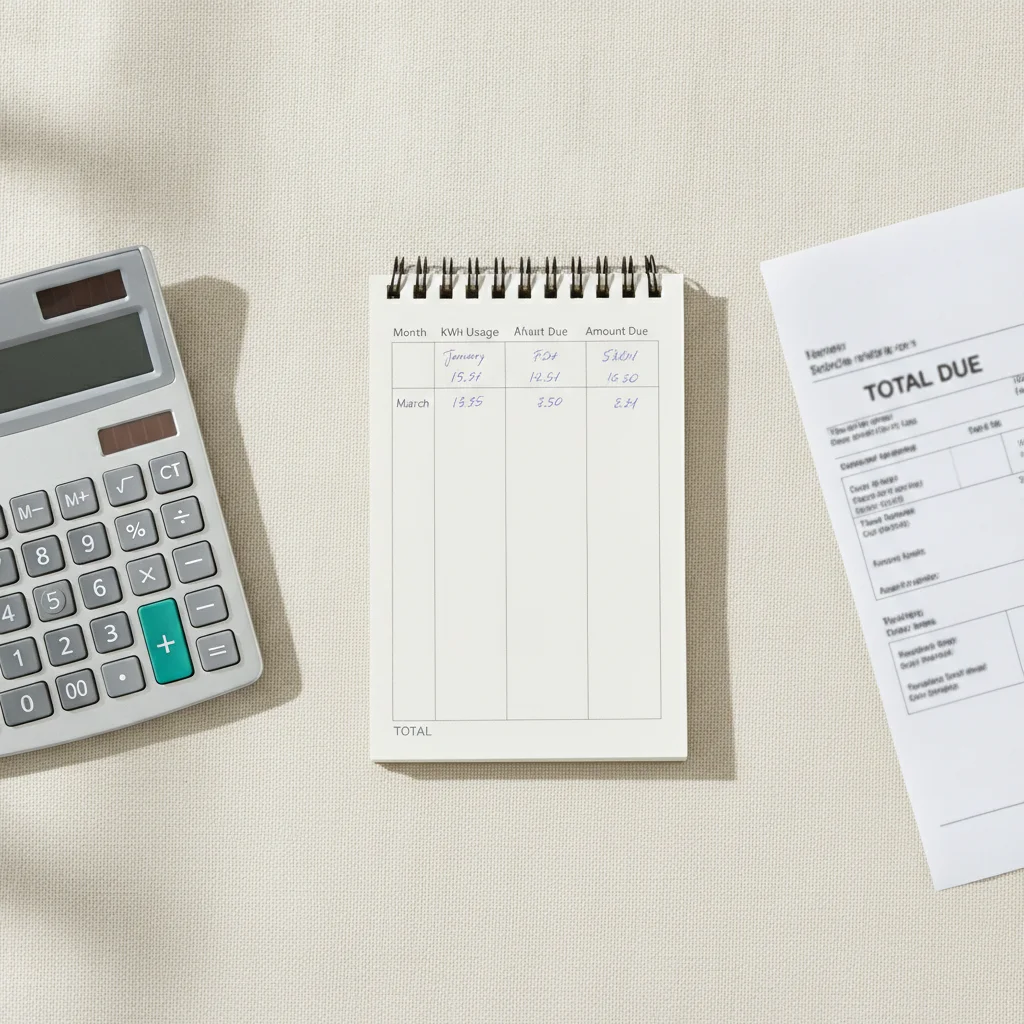
- Track your effective rate monthly. Keep a simple spreadsheet with your total bill and total kWh each month. Watching your effective rate trend over time will alert you quickly if a rate increase or plan change is eating into your savings.
- Check for utility rebates and incentives. Many utilities offer rebates on Level 2 charger hardware, smart charger enrollment bonuses, or bill credits for off-peak charging. These don't appear on your bill, but they reduce your net annual charging cost.
For a complete view of how home EV charging affects your overall electricity expenses, our analysis of the real impact of home EV charging on your monthly electricity bill works through the math in detail with real-world examples.
Finally, keep in mind that your electricity costs are just one part of the total EV ownership picture. EV insurance costs can also differ meaningfully from what you paid for gas vehicle coverage — a factor worth reviewing as you build your full monthly budget.
All claims are backed by peer-reviewed research. Sources on request.