Key Takeaways
Electricity Rate Structure
An electricity rate structure is the pricing framework your utility company uses to calculate what you owe for the power you consume. It determines not just the price per kilowatt-hour (kWh), but when you're charged more or less depending on the time of day, season, and how much total energy you use. For EV owners, this structure is effectively their fuel pricing formula — understanding it can mean the difference between cheap home charging and a surprisingly high monthly bill.
Rate structures are set by state public utility commissions (PUCs) and vary significantly by utility territory. Common types include flat-rate, tiered (inclining block), and time-of-use (TOU), each with different implications for EV charging economics.
Why Your Rate Structure Matters More Than the Sticker Price
Most EV buyers focus on the advertised price per kilowatt-hour when estimating charging costs. It's a reasonable starting point — but it's only one piece of a more complicated pricing puzzle. The structure of how your utility charges you determines whether that headline rate applies to all your usage, only part of it, or only at certain times of day.
Think of it like a cell phone plan. The price per minute of a call is less meaningful once you understand you're on an unlimited nights-and-weekends plan — or that you'll pay overage fees after 500 minutes. Electricity rate structures work the same way, and the implications for EV owners are significant.
Every factor that affects EV charging costs — from hardware to driving habits — matters, but the rate structure sets the ceiling and floor. An EV owner on a smart overnight TOU plan in the same ZIP code as one on a standard residential rate can pay 40–60% less for identical miles driven. That gap compounds over years of ownership.
Understanding your rate structure isn't an accounting exercise — it's one of the highest-leverage financial decisions an EV owner can make.
The Four Main Types of Residential Electricity Rate Structures
U.S. utilities use several different pricing models. Most residential customers fall into one of four categories, each with distinct implications for EV charging economics.
1. Flat-Rate Pricing
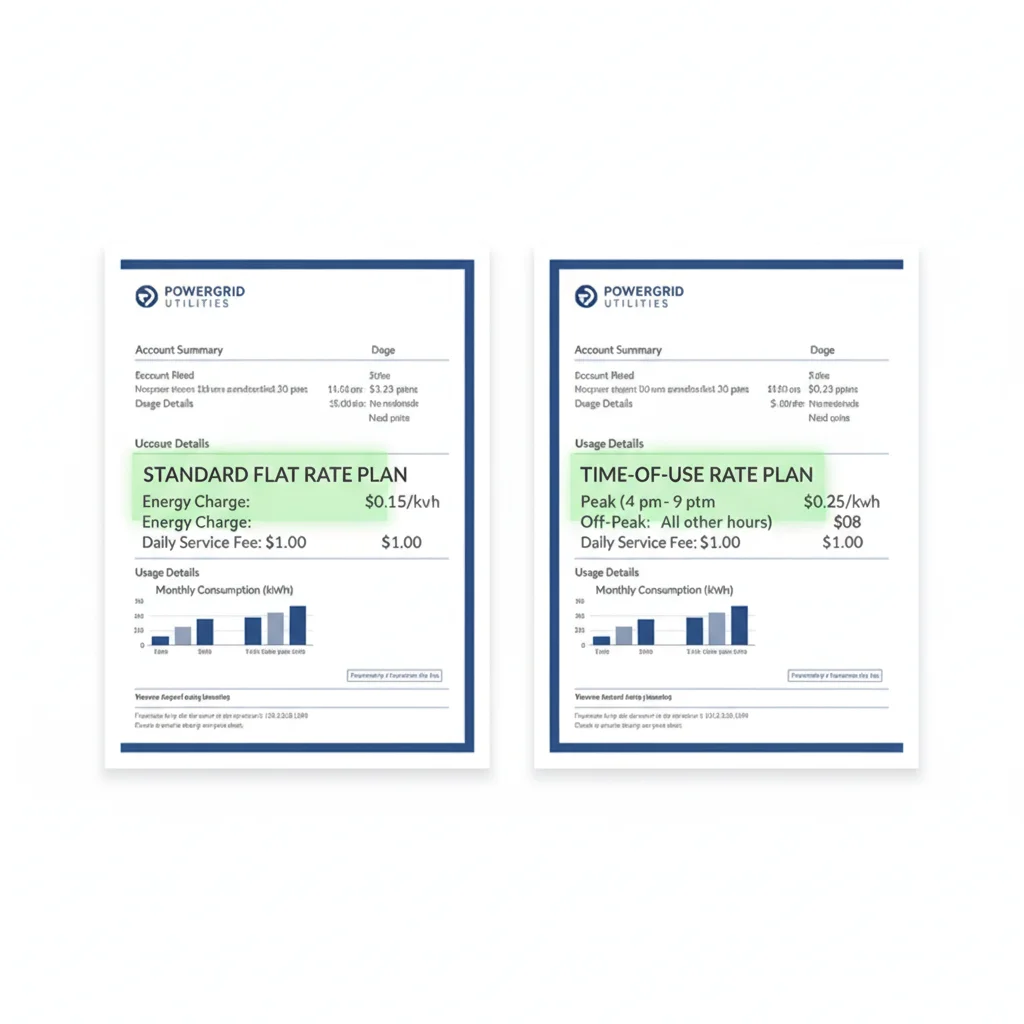
The simplest structure: you pay a fixed price per kWh regardless of when or how much you use. If your utility charges 14¢/kWh, that's what you pay at 2 a.m. and at 6 p.m. alike. For EV owners, flat rates are predictable and easy to calculate, but they offer no opportunity to shift charging to cheaper windows. States like Texas (deregulated markets aside) and parts of the Midwest commonly feature competitive flat-rate plans.
2. Tiered (Inclining Block) Pricing
Tiered pricing, sometimes called inclining block rates, charges a lower rate for baseline consumption and a progressively higher rate for usage above defined thresholds. California's investor-owned utilities (PG&E, SCE, SDG&E) are the most prominent example in the U.S. A household in PG&E territory might pay roughly 31¢/kWh for the first 350 kWh per month (baseline), then 43¢/kWh for the next block, and higher still beyond that.
Adding an EV to a home already in a higher tier means every kWh of charging may be billed at the marginal — and most expensive — rate. This makes tiered-rate territories particularly important to evaluate before purchasing an EV, and a strong argument for switching to an EV-specific TOU plan if one is available.
Tiered Rates and EV Tax: A California Example
California's tiered residential rate structure, used by all three major investor-owned utilities, was designed for a pre-EV era of electricity consumption. State regulators have acknowledged the tension between tiered pricing and EV adoption goals, and all three utilities now offer EV-specific TOU plans as an opt-in alternative. If you're in PG&E, SCE, or SDG&E territory and haven't switched, you're almost certainly paying more per kWh to charge than you need to.
Fixed Fees Don't Scale With Usage
A utility's fixed monthly customer charge is the same whether you charge one EV or three, and whether you drive 500 miles or 2,000 miles in a month. High-mileage EV drivers effectively 'dilute' this fixed cost across more kWh of useful charging, which slightly improves their all-in per-kWh economics compared to low-mileage drivers on the same plan.
3. Time-of-Use (TOU) Pricing
TOU rates vary the per-kWh price based on time of day and sometimes season. Off-peak hours — typically midnight to 6 a.m. or similar windows — carry the lowest rates, while on-peak hours (often 4–9 p.m. on weekdays) carry the highest. Many utilities are now defaulting new customers to TOU plans as grid modernization efforts accelerate.
For EV owners who can program their vehicle or charger to charge overnight, TOU rates represent the single biggest opportunity to reduce charging costs. SCE's EV-TOU-5 plan, for instance, offers off-peak rates as low as 9¢/kWh during super-off-peak hours — less than a third of that utility's standard peak rate.
16.9¢
U.S. average residential electricity rate per kWh
According to the U.S. Energy Information Administration (EIA) 2024 data, the national average residential retail price of electricity.
3x
Rate spread from cheapest to most expensive U.S. states
EIA data shows residential rates ranging from roughly 10¢/kWh in the cheapest states to over 30¢/kWh in Hawaii and parts of California and New England.
30–50%
Potential savings from EV-specific TOU rate plans
Studies by the Rocky Mountain Institute and utility pilot programs suggest EV TOU rate adopters save 30–50% on charging costs versus standard residential rates.
~10–15%
Energy lost to charging inefficiency (Level 2)
Industry data from the Department of Energy indicates that Level 2 AC home charging typically delivers 85–90% of grid energy drawn to the battery.
48
U.S. states with at least one utility EV rate plan
According to the Edison Electric Institute's 2023 EV infrastructure report, nearly all U.S. states now have at least one utility offering a dedicated EV rate or pilot program.
4. EV-Specific Rate Plans
A growing number of utilities have introduced rate plans specifically for EV owners, often featuring deeply discounted off-peak or overnight rates. These plans sometimes include a separate meter for EV charging, allowing the utility to price EV electricity independently from household usage. Duke Energy, Xcel Energy, and Pacific Power are among the utilities with active EV rate programs. Pairing an EV-specific rate with the right home charger setup can maximize the savings these plans offer.
Reading Your Bill: What the Numbers Actually Mean
Most utility bills are not designed for clarity. Between energy charges, distribution charges, transmission fees, and taxes, the line-item total can obscure what you're actually paying per kWh of delivered electricity. Reading your electricity bill as an EV owner requires identifying a few key figures.
The energy charge is the core rate — typically expressed in ¢/kWh — that most rate discussions refer to. But the all-in cost per kWh includes delivery charges, distribution fees, and various regulatory surcharges that can add 2–8¢/kWh on top of the energy rate. In high-cost markets like New England and California, the all-in delivered rate can exceed 30¢/kWh even when the energy-only charge looks more modest.
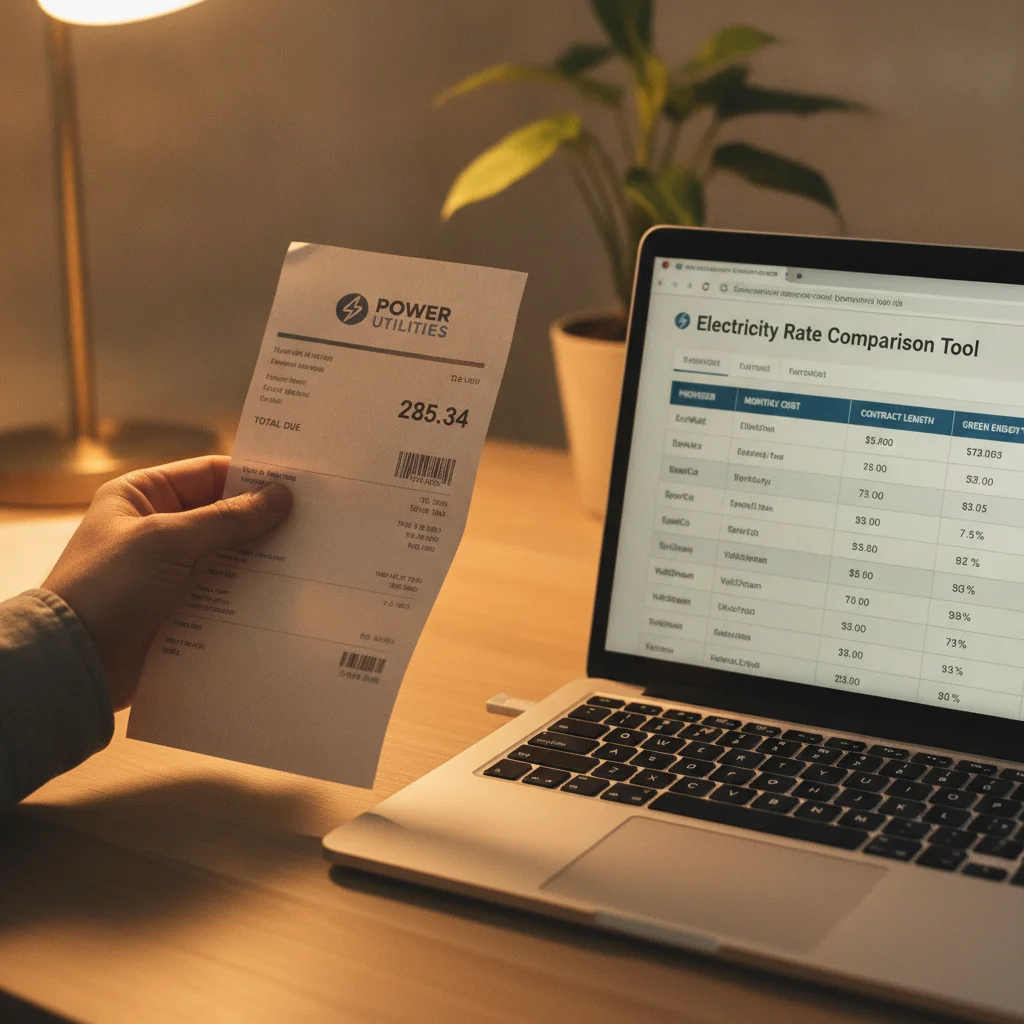
To calculate your true EV charging cost, divide your total monthly bill (excluding any fixed charges unrelated to usage) by your total kWh consumed. That figure is a more honest per-kWh cost than the energy rate alone. Then apply it to your EV's efficiency — typically expressed in miles per kWh or kWh per 100 miles — to get a real per-mile fuel cost.
Use Your Utility's Rate Analysis Tool
Most large utilities offer a 'rate analysis' or 'plan comparison' feature in their online account portals. Upload 12 months of usage data — often available as a downloadable file — and the tool will model projected annual costs under each available plan. This is the fastest way to see whether a TOU or EV-specific plan would save you money based on your actual consumption patterns.
Schedule Charging Before Midnight If Rates Allow
Many TOU plans define off-peak windows starting at 9 p.m. or 10 p.m. rather than midnight. Check your utility's specific schedule before setting your charging timer — starting charging two hours earlier could qualify for the same low rate and ensure your vehicle is fully charged well before your morning departure.
The math behind EV charging costs often surprises new owners in both directions — sometimes cheaper than expected, sometimes more, depending almost entirely on the rate structure and how well it aligns with charging behavior.
Geographic Variation: Where You Live Shapes Your Costs
Electricity rates in the United States vary by a factor of more than three from the cheapest to most expensive states. The U.S. Energy Information Administration (EIA) reports average residential rates ranging from roughly 10¢/kWh in states like Oklahoma and North Dakota to over 30¢/kWh in Hawaii and parts of California and New England.
“The single biggest variable in EV fuel costs for most drivers isn't the car they buy — it's the electricity rate structure they're on. Most people don't know what plan they're on, let alone whether it's optimized for EV charging.”
— Leia Guccione, Senior Principal, Carbon-Free Electricity, Rocky Mountain Institute
That spread has enormous consequences for EV economics. An EV averaging 3.5 miles per kWh driven 12,000 miles per year requires about 3,430 kWh of charging annually. At 10¢/kWh all-in, that's $343 in annual charging costs. At 30¢/kWh, the same vehicle costs $1,029 to fuel — nearly triple, and closer to what some drivers pay for gasoline.
State-level averages also mask significant intrastate variation. California's tiered structure means that two households in the same city — one modest electricity user and one with a larger home — can face very different marginal charging rates. Geography shapes EV costs beyond just electricity, including insurance premiums, repair infrastructure, and local incentive programs.
How to Optimize Your Rate Structure for EV Charging
Once you understand your current rate structure, there are concrete steps you can take to minimize what you pay to charge.
Step 1: Audit Your Current Plan
Log in to your utility's website or call customer service and identify exactly which rate plan you're currently on. Many customers are on default plans that aren't optimal for EV charging. Utilities are legally required to show you all available rate options.
Step 2: Model the Alternatives
Many utilities provide online rate comparison tools that let you upload your usage data (or enter estimated kWh) and see projected costs under different plans. If your utility doesn't offer this, you can model it manually using your bill's kWh total and the rate schedules published on the utility's tariff page. Projecting your monthly EV charging bill before making a rate switch is the most reliable way to avoid surprises.
Step 3: Enable Smart Charging
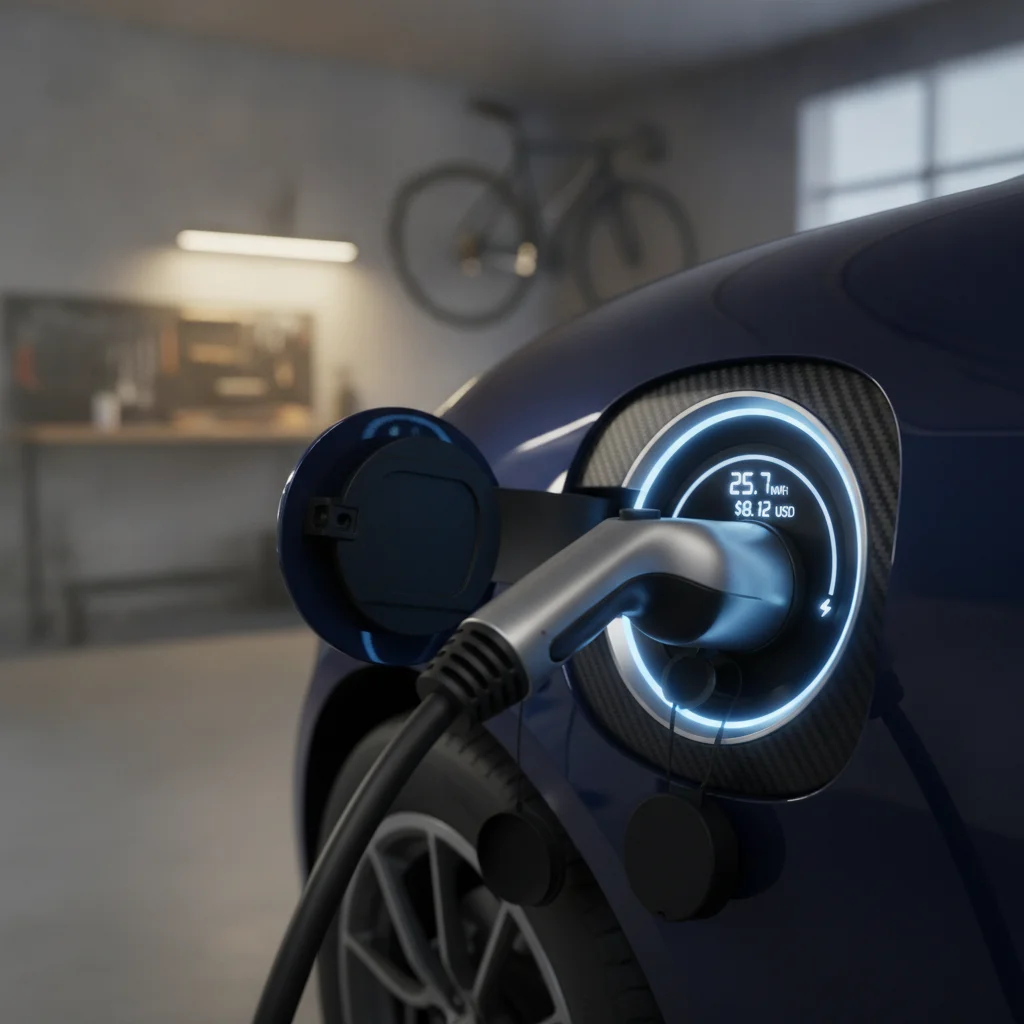
If you switch to a TOU plan, the savings only materialize if your charging actually happens during off-peak windows. Most modern EVs allow you to set a departure time and charging schedule directly from the vehicle's infotainment system or companion app. Level 2 home chargers from brands like ChargePoint, Enel X, and Wallbox also allow schedule-based charging. Choosing and installing the right home charger is foundational to making TOU savings work reliably.
Use Your Utility's Rate Analysis Tool
Most large utilities offer a 'rate analysis' or 'plan comparison' feature in their online account portals. Upload 12 months of usage data — often available as a downloadable file — and the tool will model projected annual costs under each available plan. This is the fastest way to see whether a TOU or EV-specific plan would save you money based on your actual consumption patterns.
Schedule Charging Before Midnight If Rates Allow
Many TOU plans define off-peak windows starting at 9 p.m. or 10 p.m. rather than midnight. Check your utility's specific schedule before setting your charging timer — starting charging two hours earlier could qualify for the same low rate and ensure your vehicle is fully charged well before your morning departure.
Step 4: Revisit Annually
Electricity rates and available plans change. Utilities file rate cases with regulators regularly, and new EV-specific programs are added as EV adoption grows. A plan that was optimal in 2022 may not be the best option today. Set a calendar reminder to review your rate plan each year, especially after any rate change notification from your utility.
The Role of Demand Charges and Fixed Fees
Two often-overlooked components of electricity pricing deserve attention from EV owners: demand charges and fixed monthly fees.
Demand Charges
Demand charges bill you based on your highest rate of power draw — measured in kilowatts (kW) — during a billing period, rather than on total energy consumed. They are standard on commercial and industrial accounts and are the reason why DC fast chargers at public stations are so expensive to operate. On residential accounts, demand charges are uncommon but not unheard of; some utilities in Arizona, Nevada, and other Sun Belt states have experimented with residential demand charges.
If your residential rate includes a demand charge, a Level 2 charger operating at 7.2 kW or 11.5 kW can meaningfully increase your bill during months when the charger's peak draw coincides with the billing period's maximum demand interval. Managed charging — spreading load or reducing charge rate — can mitigate this.
Fixed Monthly Fees
Most utility bills include a fixed customer charge — typically $5–$20/month — that you pay regardless of usage. These fees don't affect your per-kWh rate but do affect the total economics of home charging. In markets with very high fixed charges and low volumetric (per-kWh) rates, the financial case for reducing consumption is weaker, but the case for maximizing efficiency remains strong.
Tiered Rates and EV Tax: A California Example
California's tiered residential rate structure, used by all three major investor-owned utilities, was designed for a pre-EV era of electricity consumption. State regulators have acknowledged the tension between tiered pricing and EV adoption goals, and all three utilities now offer EV-specific TOU plans as an opt-in alternative. If you're in PG&E, SCE, or SDG&E territory and haven't switched, you're almost certainly paying more per kWh to charge than you need to.
Fixed Fees Don't Scale With Usage
A utility's fixed monthly customer charge is the same whether you charge one EV or three, and whether you drive 500 miles or 2,000 miles in a month. High-mileage EV drivers effectively 'dilute' this fixed cost across more kWh of useful charging, which slightly improves their all-in per-kWh economics compared to low-mileage drivers on the same plan.
Putting It All Together: A Real-World Cost Framework
With a clear view of your rate structure, calculating your true per-mile EV fuel cost is straightforward. Here's a simple framework:
- Find your all-in effective rate per kWh: Divide last month's total bill by total kWh consumed. This accounts for all fees and charges.
- Identify your EV's efficiency: Check the EPA label or your vehicle's onboard trip computer. Common values range from 2.8 to 4.5 miles/kWh depending on vehicle size and driving conditions.
- Calculate per-mile fuel cost: Divide your effective rate by your efficiency. At 16¢/kWh and 3.5 miles/kWh, that's roughly 4.6¢ per mile.
- Project monthly cost: Multiply per-mile cost by average monthly mileage. At 1,000 miles/month, that's about $46.
- Compare to alternatives: Run the same math on a TOU off-peak rate if one is available and compare the monthly totals.
This framework works as a baseline, though real-world costs will vary based on charging losses (typically 10–15% of energy drawn from the wall), seasonal efficiency changes, and public charging sessions. For a deeper breakdown, see how the full EV charging math works in practice.
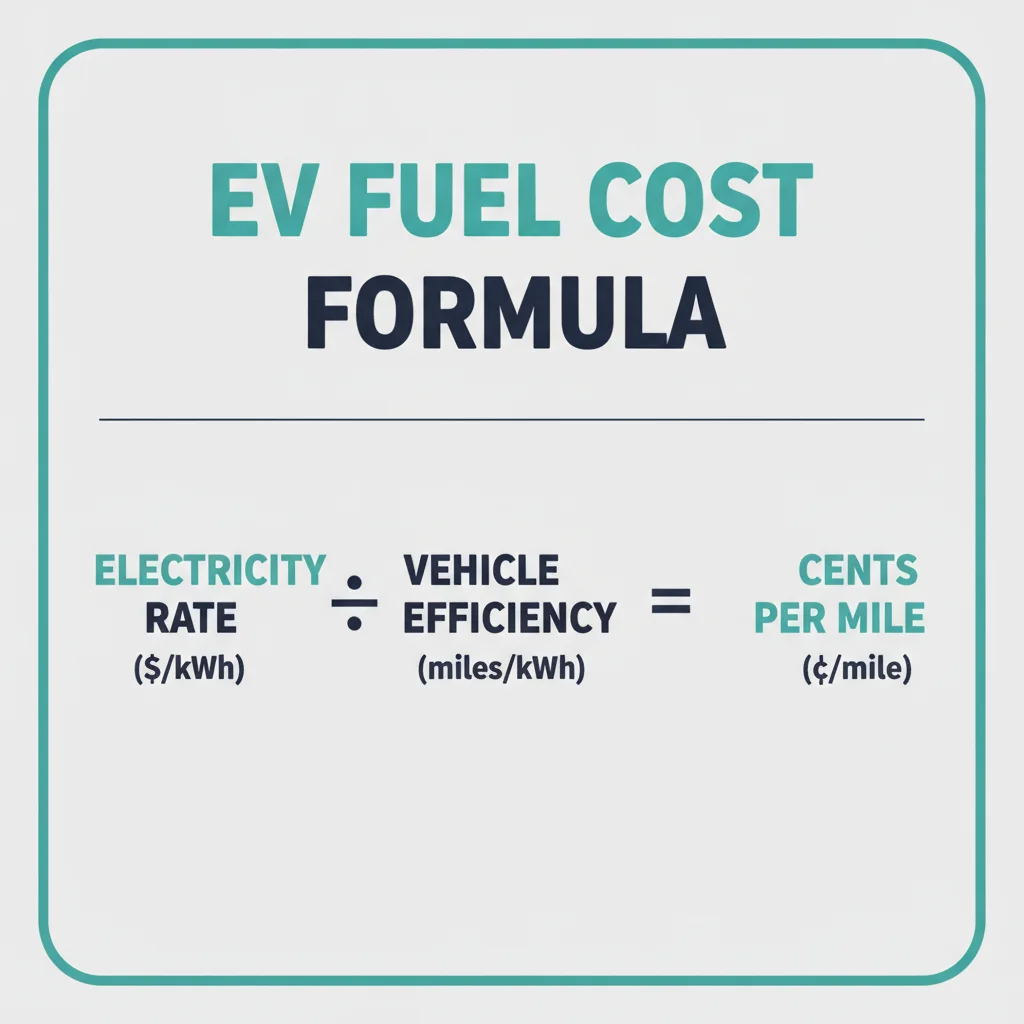
The bottom line: electricity rate structures are not a fixed cost of EV ownership — they're a variable that informed owners can actively manage. Understanding yours is among the most practical steps you can take toward cheaper, smarter EV charging.
All claims are backed by peer-reviewed research. Sources on request.