Key Takeaways
Demand Charge
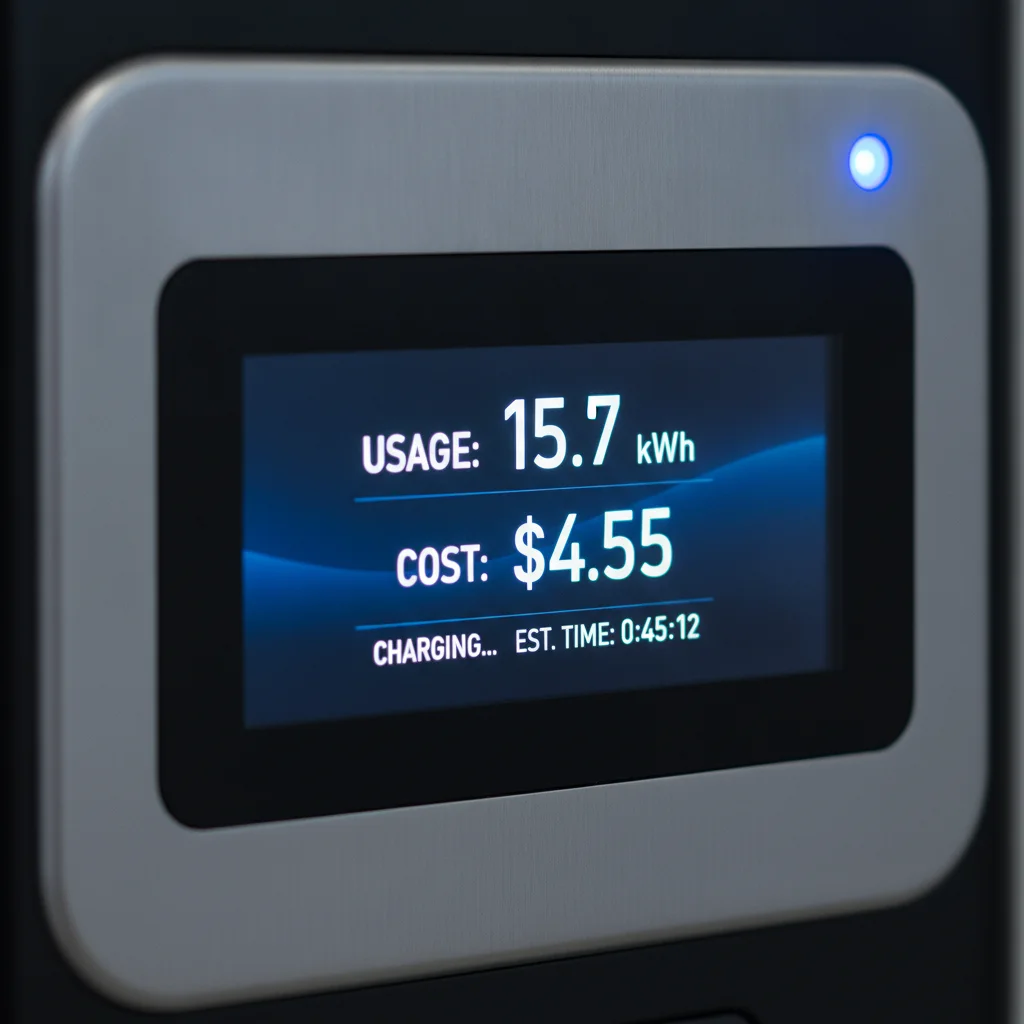
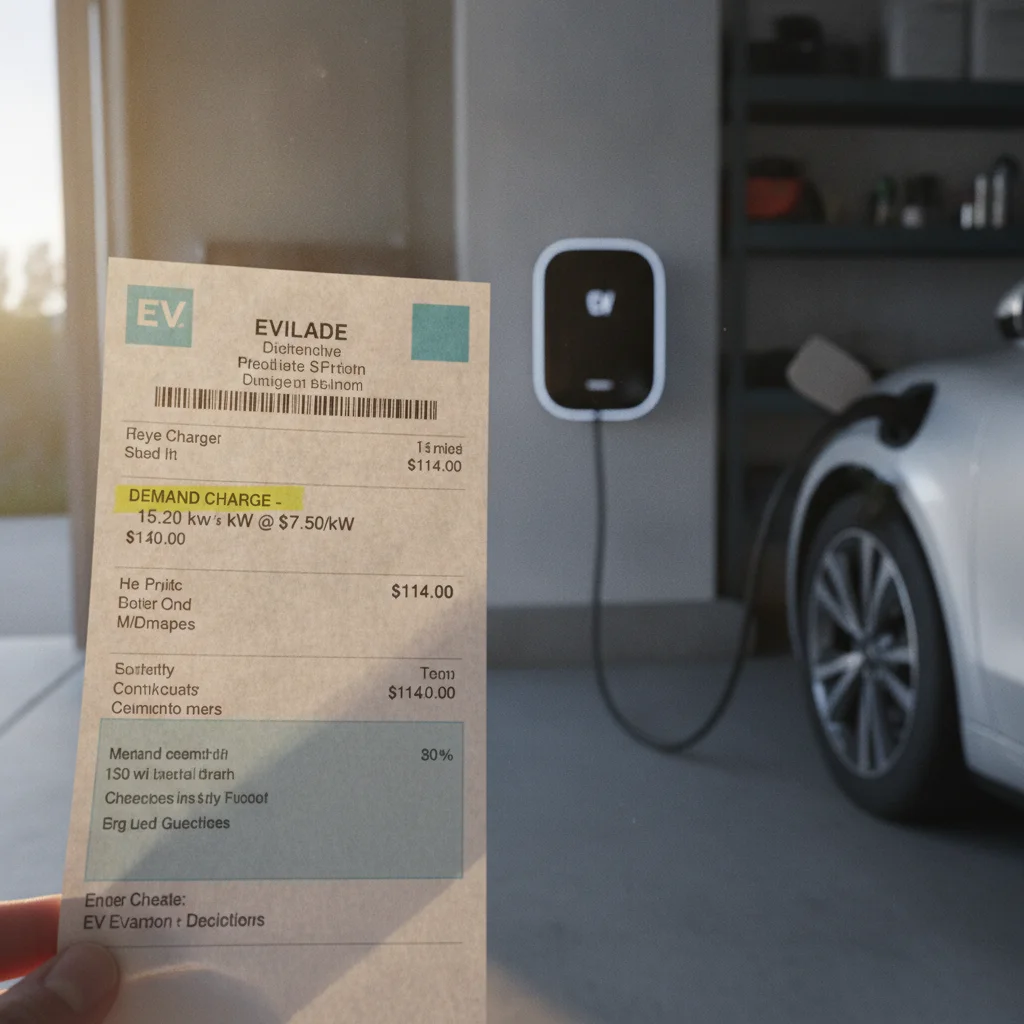
A demand charge is a fee on a utility bill based not on how much electricity you use overall, but on the highest rate at which you draw power during a billing period — typically measured in kilowatts (kW) over a 15- or 30-minute interval. When an EV charges at high power, it can spike that peak draw and trigger a significant charge. Unlike the energy charge (cents per kWh), the demand charge penalizes the intensity of consumption, not just the volume.
Utilities measure peak demand in kilowatts (kW) rather than kilowatt-hours (kWh). A 50 kW DC fast charger running for just 15 minutes is enough to set a monthly demand peak that drives the charge calculation for the entire billing cycle.
Why Your Utility Bill Has Two Very Different Cost Levers
Most people understand electricity billing in one dimension: you use kilowatt-hours, you pay per kilowatt-hour. It's the same mental model as buying gasoline by the gallon. But utilities don't only care about volume — they also care about how fast you pull power from the grid at any single moment. That second dimension is where demand charges live, and it's one that most EV owners are completely unprepared for.
The energy charge on your bill reflects total consumption. The demand charge reflects your peak consumption rate — the highest sustained power draw you impose on the grid during a billing period. Utilities impose it because servicing a customer who briefly pulls enormous power requires infrastructure built to handle that spike, whether the spike lasts five minutes or five hours. That infrastructure cost gets passed back to you.
For most households running refrigerators, air conditioners, and the occasional electric dryer, peak demand stays modest — rarely above 5–10 kW — and many residential tariffs don't apply demand charges at all. Add a Level 2 home charger pulling 7.2 kW and you've barely moved the needle. But connect a 50 kW DC fast charger and you've just multiplied your peak demand by a factor of five or more. That's when demand charges stop being theoretical and start appearing as real dollar amounts on real bills.
Demand Charges vs. Time-of-Use Rates: Not the Same
Time-of-use (TOU) rates adjust the price per kWh based on time of day — cheaper at night, more expensive during peak hours. Demand charges are different: they're based on your highest power draw over a short interval, regardless of when it occurs. Some utility plans include both structures simultaneously. Avoiding peak TOU hours does not necessarily prevent a demand charge if your peak draw within off-peak hours is still high.
Battery Storage Can Buffer Demand Spikes
Commercial EV charging sites increasingly pair chargers with on-site battery energy storage systems (BESS). The battery charges slowly from the grid during off-peak periods and discharges during fast-charging sessions, so the meter never records the full charger power draw as a demand event. This approach can dramatically reduce demand charges at high-utilization commercial sites, though the capital cost of storage adds to overall infrastructure investment.
Idle Fees Are a Separate Issue
Demand charges and idle fees are two distinct costs that both add to the true expense of EV charging. While demand charges apply to the rate of electricity consumption, idle fees are penalties charged by networks when a car remains plugged in after charging is complete. See <a href="/electric-vehicles/charging-infrastructure/public-charging-networks/idle-fees-at-public-chargers-what-they-are-and-how-to-avoid-them">how idle fees work and how to avoid them</a> for a complete picture of public charging surcharges.
See our plain-English glossary of EV charging cost terms to get comfortable with kW versus kWh and other terminology before diving deeper into rate structures.
How Demand Charges Are Actually Calculated
Utilities measure demand in kilowatts (kW), not kilowatt-hours (kWh). The distinction matters enormously. A kilowatt-hour is energy — the amount of work done over time. A kilowatt is power — the rate at which energy is consumed at any instant. Demand charges are assessed on the highest power rate recorded during a billing period, typically averaged over a 15- or 30-minute interval window.
Here's what that looks like in practice: suppose your utility applies a demand charge of $10 per kW per month. One afternoon you plug into a 50 kW DC fast charger for 20 minutes. Your meter records a peak demand of 50 kW during that window. Even if every other hour of the month you drew only 2 kW, your demand charge for that billing cycle is $10 × 50 = $500. The energy cost for those 20 minutes — maybe 16 kWh at $0.15 — comes to about $2.40. The demand charge dwarfs it.
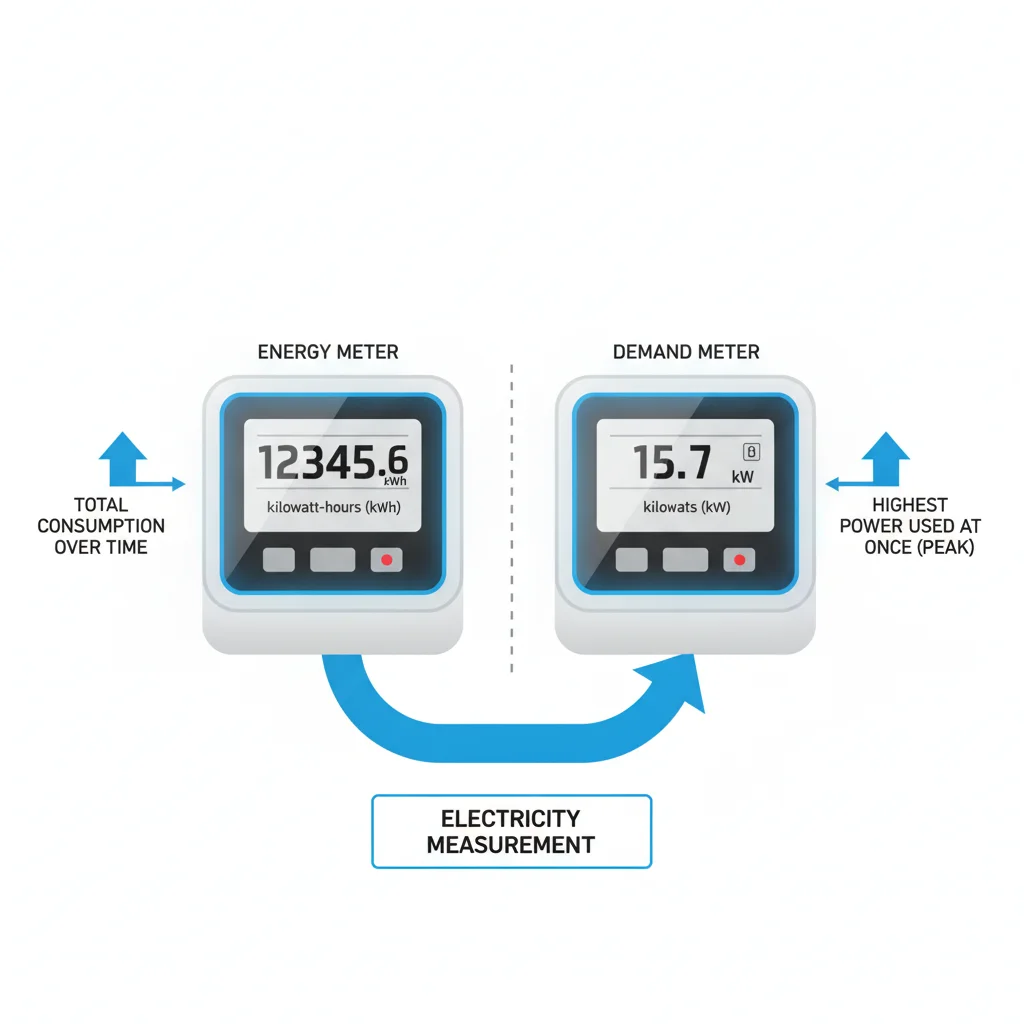
The formula is blunt: Demand Charge = Peak kW × Rate per kW. And because just one peak reading sets the floor for the entire month, there's no averaging across time. Utilities argue this reflects true grid infrastructure costs. Critics argue it disproportionately penalizes customers — including EV owners — who have occasional but legitimate high-power needs.
$5–$25
Per kW monthly demand charge rate range
Demand charge rates vary by utility and customer class; commercial EV charging sites in high-cost markets like California and New York often sit at the top of this range.
Up to 90%
Share of a charging bill that can be demand charges
Rocky Mountain Institute research has documented cases where demand charges constitute the majority of a commercial EV charging site's electricity cost, especially at low-utilization stations.
15 minutes
Typical demand interval that sets your monthly peak
Most U.S. utilities measure peak demand as the highest average power draw over any consecutive 15-minute interval during the billing month — a single fast-charging session can set it.
50+ kW
Typical DC fast charger power draw
Standard DC fast chargers operate at 50–150 kW; newer 350 kW units can set an even more severe demand peak, compounding the cost impact for sites on commercial metered accounts.
Demand charge rates vary significantly by utility and customer class. Commercial customers in some markets pay $15–$25 per kW per month, meaning a single DC fast-charging station installed at a workplace can add hundreds of dollars monthly to electricity costs before a single kWh is billed.
Who Actually Pays Demand Charges — and Who Doesn't
The short answer: commercial and industrial customers almost universally face demand charges. Residential customers often don't — but the exceptions are growing.
Standard residential rate plans at most major utilities are flat or time-of-use structures with no demand component. If you charge your EV at home on a Level 2 charger overnight, you're almost certainly paying only the per-kWh energy rate. That's the norm.
Where it gets complicated:
- EV-specific residential plans: Some utilities have created dedicated EV rate plans with demand charge components, often framed as a way to offset grid infrastructure costs from high-power home chargers. Southern California Edison's TOU-D-PRIME plan, for example, has carried demand charge provisions that surprised enrollees.
- Commercial property owners: Landlords installing chargers for tenants, businesses with workplace charging, and fleet operators almost always fall under commercial tariffs with demand charges baked in.
- Multi-family housing: HOAs and apartment complexes adding shared chargers frequently discover demand charges when the first utility bill arrives after installation.
- Small business owners: Any business on a commercial meter — a car wash, a mechanic's shop, a small office — can trigger demand spikes with DC fast charger use.
Home charging setup decisions have downstream billing consequences that most installers won't walk you through. The hardware is only half the story — the rate plan you're on determines whether you'll be penalized for using it.
Ask Your Utility One Specific Question
Before enrolling in any EV rate plan, ask your utility: 'Does this plan include a demand charge, and if so, what is the rate per kW and how is peak demand measured?' Most customer service representatives can answer this directly. If they can't, ask to speak with someone in the rate design or EV programs team. Getting this answer before your charger is installed can save hundreds of dollars annually.
Slower Charging Is Often Smarter Charging
If you're on a rate plan with demand charges, the fastest charger is not always the cheapest charger. A Level 2 charger at 7.2 kW running overnight will almost always produce a lower total bill than a DC fast charger session that takes 20 minutes but sets a 50 kW demand peak. Build your charging habits around your rate structure, not just your schedule.
The Public Charging Network Problem You're Already Paying For
Even if demand charges never appear on your personal utility bill, you're almost certainly paying for them indirectly at public DC fast chargers. This is one of the least-discussed drivers of public charging pricing, and it fundamentally shapes why fast charging costs as much as it does.
Charging networks like Electrify America, EVgo, and Blink operate on commercial utility accounts. They face demand charges on every site that has high-power chargers. A station with six 150 kW chargers could theoretically draw 900 kW in a single 15-minute interval — generating a demand charge bill that dwarfs the energy costs. Networks have to recoup those costs somewhere, and they do it through the per-minute or per-kWh pricing you see at the charger.
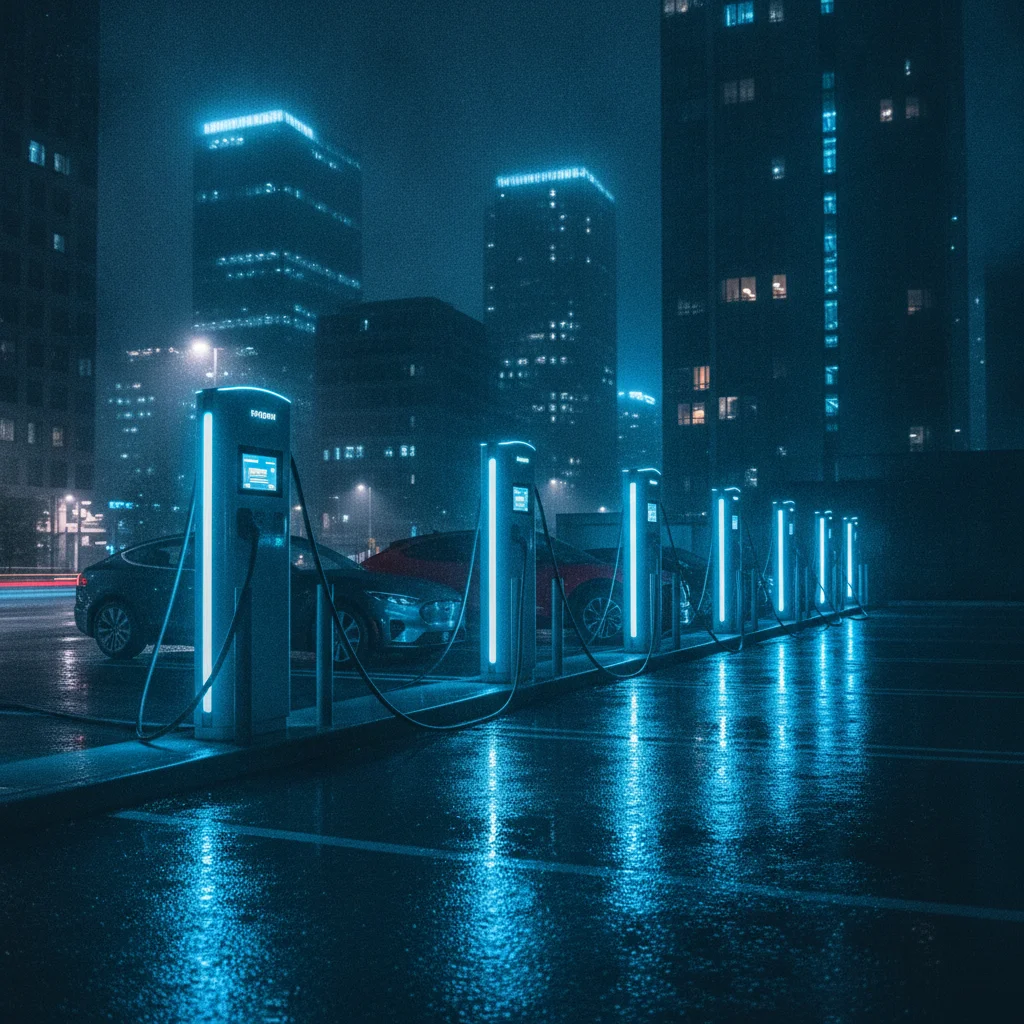
This is part of why public charging networks are priced the way they are — and why comparing the cost-per-kWh of public fast charging to home electricity rates is an incomplete analysis. The demand component is embedded in the network's operating costs and passed through to users, invisibly.
It also explains why utilization matters so much to charging network economics. A station that's fully occupied throughout the day spreads its demand charge across more sessions, bringing down the effective per-session cost. A station sitting idle most of the day still has to pay the same peak demand bill — meaning each session that did occur carries a heavier cost burden.
For a fuller picture of what public and home charging actually costs, see The True Cost of Charging an EV: What the Math Actually Shows.
“Demand charges are the single biggest barrier to making public DC fast charging economically viable at low-utilization sites. Until rate structures evolve, the cost burden is effectively subsidized by higher per-session prices paid by every driver who plugs in.”
— Jeff Dahn, EV battery and grid infrastructure researcher, Dalhousie University
Real-World Scenarios Where Demand Charges Bite
Abstract explanations only go so far. These scenarios show where demand charges actually surface in EV ownership.
The common thread in each scenario: the demand charge arrives as a surprise because nothing in the car-buying process, the charger installation process, or the network sign-up process flags it. It's the kind of charging cost mistake that quietly drains EV savings precisely because it's invisible until the bill arrives.
How to Reduce or Avoid Demand Charges
Demand charges respond to behavior. The peak demand event that triggers the charge can often be prevented or reduced with targeted strategies.
Control Charge Rate
The most direct lever: lower the power level at which you charge. Using a Level 2 charger at 7.2 kW instead of a 50 kW DC fast charger cuts peak demand by roughly 85%. If you're on a rate plan with demand charges, the math on fast charging changes dramatically. Slower charging spread over a longer window costs far less on a demand-inclusive tariff.
Schedule Charging Strategically
Many utilities allow demand charges to be reset or limited within specific off-peak windows. Scheduling charging to run overnight — when overall grid demand is low — can qualify you for exemptions or reduced demand tiers depending on your utility's tariff structure. Check whether your plan includes a demand charge waiver during defined off-peak hours.
Use a Smart Charger with Power Management
Modern Level 2 home chargers from brands like ChargePoint, JuiceBox, and others support load management features that cap peak draw by coordinating with other home loads. Some utilities actively subsidize these devices because smoothing residential demand benefits the grid. A charger that intelligently ramps power up or down can keep you below demand charge thresholds.
Review Your Rate Plan Before Installing Hardware
This step belongs before installation, not after. Contact your utility's EV rate team, ask explicitly whether your target plan includes a demand charge component, and request the full rate schedule in writing. Some utilities have EV-specific plans designed to eliminate demand charges for home charging — but you have to ask for them.
Avoid DC Fast Charging at Sites on Commercial Meters
If you own or manage property with shared EV chargers, model out the demand charge exposure before adding high-power equipment. In some cases, adding battery energy storage to the charger installation can buffer peak demand spikes — the battery absorbs demand rather than the meter recording it directly from the grid.
Ask Your Utility One Specific Question
Before enrolling in any EV rate plan, ask your utility: 'Does this plan include a demand charge, and if so, what is the rate per kW and how is peak demand measured?' Most customer service representatives can answer this directly. If they can't, ask to speak with someone in the rate design or EV programs team. Getting this answer before your charger is installed can save hundreds of dollars annually.
Slower Charging Is Often Smarter Charging
If you're on a rate plan with demand charges, the fastest charger is not always the cheapest charger. A Level 2 charger at 7.2 kW running overnight will almost always produce a lower total bill than a DC fast charger session that takes 20 minutes but sets a 50 kW demand peak. Build your charging habits around your rate structure, not just your schedule.
The common myth that fast charging costs nothing extra is directly related to demand charge invisibility. Once you understand how demand pricing works, the true cost of convenience charging becomes much clearer.
Demand Charges vs. Time-of-Use Rates: Not the Same
Time-of-use (TOU) rates adjust the price per kWh based on time of day — cheaper at night, more expensive during peak hours. Demand charges are different: they're based on your highest power draw over a short interval, regardless of when it occurs. Some utility plans include both structures simultaneously. Avoiding peak TOU hours does not necessarily prevent a demand charge if your peak draw within off-peak hours is still high.
Battery Storage Can Buffer Demand Spikes
Commercial EV charging sites increasingly pair chargers with on-site battery energy storage systems (BESS). The battery charges slowly from the grid during off-peak periods and discharges during fast-charging sessions, so the meter never records the full charger power draw as a demand event. This approach can dramatically reduce demand charges at high-utilization commercial sites, though the capital cost of storage adds to overall infrastructure investment.
Idle Fees Are a Separate Issue
Demand charges and idle fees are two distinct costs that both add to the true expense of EV charging. While demand charges apply to the rate of electricity consumption, idle fees are penalties charged by networks when a car remains plugged in after charging is complete. See <a href="/electric-vehicles/charging-infrastructure/public-charging-networks/idle-fees-at-public-chargers-what-they-are-and-how-to-avoid-them">how idle fees work and how to avoid them</a> for a complete picture of public charging surcharges.
What EV Owners Should Actually Do Right Now
Demand charges aren't a reason to avoid EV ownership — they're a reason to be a more informed EV owner. The gap between EV owners who manage charging costs well and those who don't almost always comes down to rate plan awareness.
Start by pulling your current utility rate schedule. Look for words like "demand," "kW charge," or "peak demand" in the rate table. If you find them, call your utility and ask specifically: does this apply to residential EV charging, and is there an alternative plan that excludes demand charges? In many states, utilities are required to offer EV-friendly plans and will walk you through options if you ask directly.
If you're a commercial customer, a landlord with shared chargers, or a fleet operator, demand charge modeling should be part of any charging infrastructure business case before a single charger goes in the ground. The hardware ROI calculation is incomplete without it.
And if you rely on public DC fast charging regularly, factor demand charges into your mental model of why those sessions cost what they do. The per-kWh or per-minute rate at a public charger isn't pure energy cost — it's energy plus infrastructure plus demand charge recovery, all bundled together.
For a complete view of the hidden and not-so-hidden costs that add up over an EV's lifetime, see what the math actually shows about EV charging costs. And before assuming your current behavior is cost-optimal, it's worth reviewing the charging cost mistakes that quietly drain EV savings — demand charges are just one item on a longer list.
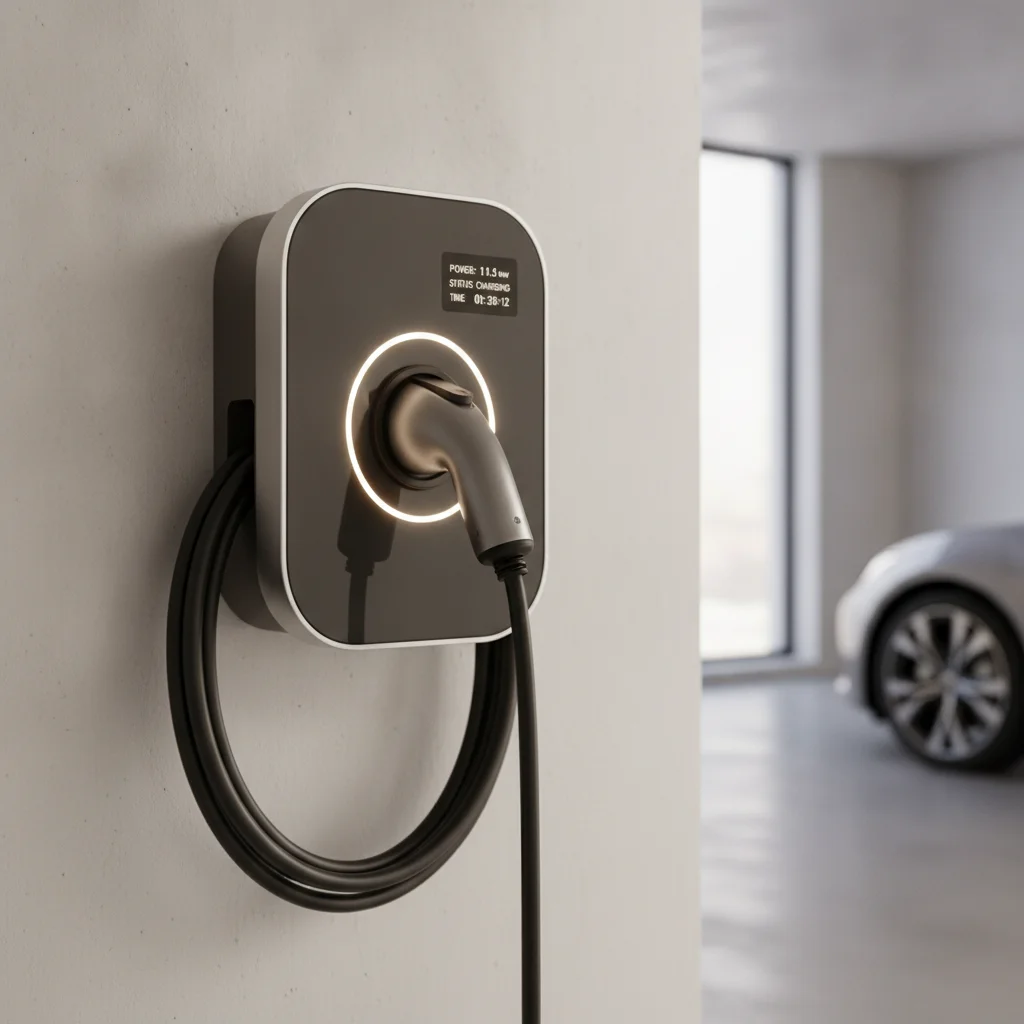
Demand charges reward the EV owners who pay attention. The cost of not paying attention can be substantial — and entirely avoidable.
All claims are backed by peer-reviewed research. Sources on request.