| Federal charger credit amount | 30% of costs, up to $1,000 (residential) (IRS Section 30C, Inflation Reduction Act 2022) |
| Federal charger credit — commercial cap | Up to $100,000 per charger (IRS Section 30C, for equipment placed in service after 2022) |
| Typical state charger rebate range | $250–$1,500 (DSIRE database, 2024) |
| TOU rate savings vs. flat-rate | 30–60% reduction per kWh (Varies by utility and state) |
| Federal solar tax credit | 30% of full system cost (IRS Section 25D, available through 2032) |
| IRS form for charger credit | Form 8911 (IRS.gov) |
| States with active charger rebate programs | Approximately 30 states (DSIRE database, 2024) |
| Typical utility charger equipment rebate | $200–$500 (Varies by utility provider) |
The Incentive Landscape at a Glance
Charging an EV costs real money — both upfront for equipment and installation and ongoing through your electricity bill. But a layered system of federal tax credits, state rebates, and utility programs exists specifically to reduce those costs. Understanding which incentives apply to you, and how they stack, is the difference between paying full price and dramatically lowering your total charging expenditure.
| Federal charger credit amount | 30% of costs, up to $1,000 (residential) (IRS Section 30C, Inflation Reduction Act 2022) |
| Federal charger credit — commercial cap | Up to $100,000 per charger (IRS Section 30C, for equipment placed in service after 2022) |
| Typical state charger rebate range | $250–$1,500 (DSIRE database, 2024) |
| TOU rate savings vs. flat-rate | 30–60% reduction per kWh (Varies by utility and state) |
| Federal solar tax credit | 30% of full system cost (IRS Section 25D, available through 2032) |
| IRS form for charger credit | Form 8911 (IRS.gov) |
| States with active charger rebate programs | Approximately 30 states (DSIRE database, 2024) |
| Typical utility charger equipment rebate | $200–$500 (Varies by utility provider) |
The incentives fall into four broad categories: federal tax credits tied to charging equipment, state-level rebates and tax credits, utility company programs, and low-income-specific assistance. Each has its own eligibility rules, caps, and application timelines. Some are claimed on your tax return; others arrive as direct rebate checks or bill credits without any IRS paperwork. See EV incentives that don't require filing a tax return for programs that bypass the tax filing process entirely.
This reference covers the primary programs currently available, what they cover, how much they're worth, and how to claim them. Because program details change with legislation and state budgets, always verify current availability through official program websites before making purchasing or installation decisions.
Federal Tax Credits for Charging Equipment
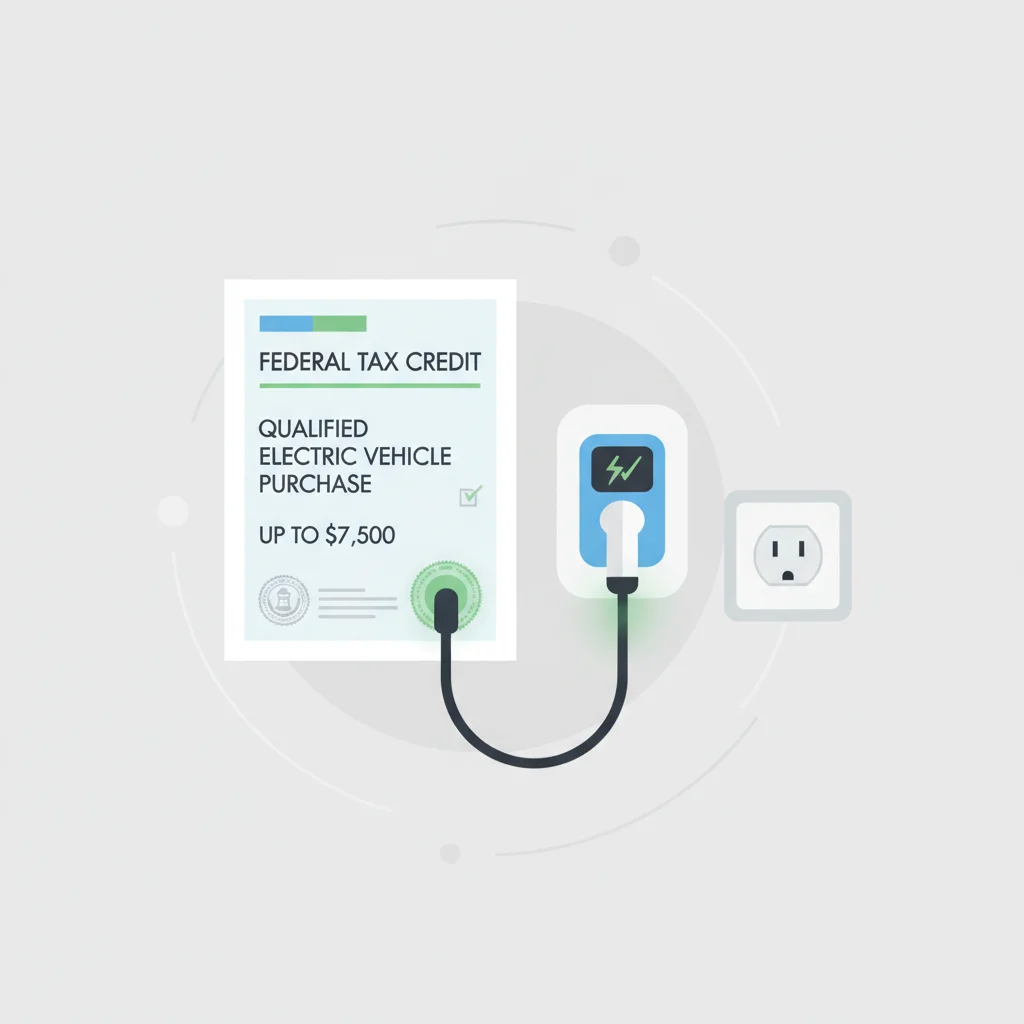
The federal government's most significant incentive for EV charging is the Alternative Fuel Vehicle Refueling Property Credit, established under Section 30C of the Internal Revenue Code and significantly expanded by the Inflation Reduction Act of 2022.
What It Covers
The credit applies to the cost of purchasing and installing qualified EV charging equipment at your primary residence. This includes Level 2 EVSE (Electric Vehicle Supply Equipment), the associated electrical panel upgrades directly related to the charger installation, and wiring costs. Standard 120V outlet installations typically do not qualify unless the outlet is dedicated and meets code requirements for EV charging.
How Much It's Worth
For residential installations, the Section 30C credit covers 30% of total qualified costs, up to a maximum credit of $1,000 per property. For a typical Level 2 charger installation costing $1,500–$3,000 including equipment and labor, this credit offsets $450–$900 of that expense. The credit is nonrefundable, meaning it reduces your tax liability dollar-for-dollar but cannot generate a refund if the credit exceeds what you owe.
Commercial and Business Property
For charging equipment installed at business locations or rental properties, the credit cap rises substantially — up to $100,000 per charger for equipment placed in service after 2022, subject to prevailing wage and apprenticeship requirements for larger installations. This makes the commercial credit especially meaningful for employers considering workplace charging programs. Workplace charging can be worth hundreds of dollars annually to individual employees, but the employer-side tax benefit makes installation financially attractive for businesses too.
How to Claim It
File IRS Form 8911 with your federal tax return for the year the equipment was placed in service. Keep all receipts for equipment purchases and installation labor. The credit applies to the tax year in which the charger becomes operational, not when you ordered or paid a deposit.
For a deeper look at how the federal charger credit compares to state-level programs, see federal tax credits and state rebates for home EV charger installation.
State-Level Incentives: Rebates, Credits, and Rate Programs
State programs vary enormously — from generous upfront rebates to modest tax credits to time-of-use electricity rate structures that reduce your ongoing charging costs. The most valuable state incentives often stack directly on top of federal credits, compounding your savings.
30%
Federal tax credit for EV charger installation
The Section 30C credit covers 30% of qualified purchase and installation costs under the Inflation Reduction Act of 2022.
$5B
NEVI federal investment in public charging
The National Electric Vehicle Infrastructure program is distributing $5 billion across all 50 states to expand public fast-charging access.
30–60%
Electricity cost reduction via TOU rates
EV owners who shift home charging to off-peak overnight hours can reduce per-kilowatt-hour costs by 30–60% versus flat-rate plans, depending on utility territory.
~30
States offering EV charger rebates
As of 2024, approximately 30 U.S. states have active rebate or tax credit programs for residential EV charger purchase and installation, per the DSIRE database.
$1,000
Maximum federal residential charger credit
Residential installations using IRS Form 8911 can claim up to $1,000 against federal tax liability for qualifying Level 2 charger costs.
Charger Rebates
Roughly 30 states offer some form of rebate or tax credit for residential EV charger purchases and installation. Program values range from $250 in some states to $1,500 or more in states with active electrification goals. California's CPUC-administered programs, Colorado's EVSE tax credit (up to $500), and New York's Drive Clean Rebate program are among the most established. These programs are frequently funded in limited tranches, meaning they may close mid-year when allocations run out. State EV incentives that stack on top of federal credits provides a current rundown of which programs combine with the federal credit.
Time-of-Use Electricity Rates
Many states require or encourage utilities to offer time-of-use (TOU) rate structures, which charge significantly less for electricity consumed during off-peak hours — typically late night and early morning. For EV owners who charge at home, enrolling in a TOU plan and scheduling charging to occur between 9 PM and 6 AM can reduce per-kilowatt-hour costs by 30–60% compared to flat-rate plans. In states with expensive daytime electricity, this translates to substantial annual savings. EV charging costs vary significantly by state, and TOU savings are greatest in high-electricity-cost states like California, Connecticut, and Massachusetts.
State Income Tax Credits
Some states offer income tax credits for charger installation that function similarly to the federal 30C credit. These are nonrefundable in most cases and claimed on your state tax return. States with active programs include Maryland (up to $700), New Mexico (up to $400), and Utah (a set dollar amount tied to equipment type). State credit amounts change with budget cycles and legislative updates, so confirm current values through your state's department of revenue or energy office.
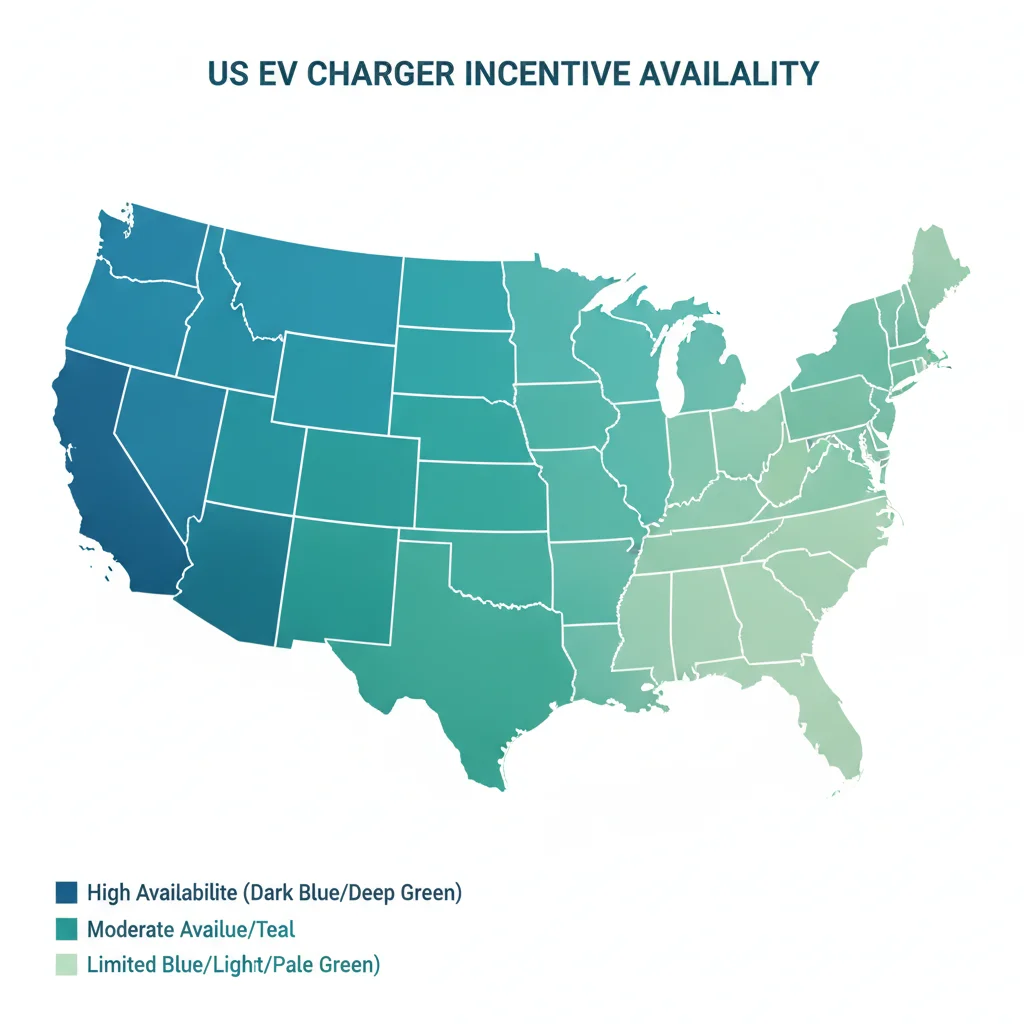
Geographic Coverage and NEVI Impact
Public charging access is also being improved by federal infrastructure spending. The National Electric Vehicle Infrastructure (NEVI) program has allocated $5 billion to states for public fast-charging buildout. While NEVI doesn't directly reduce your charging costs today, it expands the network of stations available to you. See what the NEVI program means for public charging infrastructure for how these stations are being deployed and what reliability standards they must meet.
Utility Company Programs and Rebates
Electric utilities have a direct financial interest in EV adoption — more EVs mean more electricity consumption, growing their customer base. As a result, many utilities run their own rebate and incentive programs independent of state government, and they're often underutilized by EV owners who don't know to ask.
Section 30C Credit
A federal income tax credit covering 30% of the cost to purchase and install qualified EV charging equipment at a residence or business. For residential use, the credit is capped at $1,000; for commercial installations, it can reach $100,000 per charger.
Level 2 EVSE
Electric Vehicle Supply Equipment operating at 240 volts, the standard for home and workplace EV charging. Level 2 chargers deliver 10–30 miles of range per hour of charging and are the most common installation target for home charger incentives.
Time-of-Use (TOU) Rate
An electricity pricing structure in which per-kilowatt-hour rates vary based on time of day, with lower prices during off-peak hours such as late night and early morning. EV owners who charge overnight can significantly reduce their effective electricity cost under TOU plans.
Nonrefundable Tax Credit
A tax credit that reduces your federal or state tax liability dollar-for-dollar but cannot generate a refund if the credit amount exceeds what you owe. If your credit is $800 but you only owe $500 in taxes, you receive $500 in benefit, not $800.
Net Metering
A utility billing arrangement that credits solar panel owners for excess electricity fed back to the grid, typically at or near the retail electricity rate. EV owners with solar installations can use these credits to offset overnight charging costs.
DSIRE
The Database of State Incentives for Renewables and Efficiency, a federally funded online database maintained by NC State University that catalogs state, utility, and federal incentives for renewable energy and energy efficiency, including EV charger programs.
Demand Response Program
A utility program in which customers voluntarily allow the utility to reduce or delay their electricity consumption during periods of peak grid demand. EV owners with smart chargers may participate and receive bill credits or special rate access in return.
IRS Form 8911
The federal tax form used to claim the Alternative Fuel Vehicle Refueling Property Credit (Section 30C) for EV charger installation. It must be filed with your standard federal income tax return for the year the charging equipment was placed in service.
Common Utility Offerings
- Equipment rebates: Many utilities offer $200–$500 rebates on the purchase of a qualifying Level 2 EVSE unit. Some programs require the charger to be a smart charger with communication capability (often WiFi-enabled) that allows the utility to manage charging during grid stress events.
- Installation rebates: Separate from equipment rebates, some utilities reimburse a portion of electrical panel upgrades or dedicated circuit installation costs — often $100–$400.
- EV rate plans: Beyond standard TOU rates, some utilities offer dedicated EV rate plans with even lower overnight rates, sometimes as low as $0.05–$0.08 per kWh, compared to residential rates of $0.14–$0.25 per kWh in the same territory.
- Demand response incentives: Customers who allow the utility to delay or interrupt charging during peak demand periods may receive bill credits or reduced rate access. These programs are voluntary and typically require a smart charger or connected vehicle.
How to Find Your Utility's Programs
Start at your utility's website and look for an "EV" or "Electric Vehicles" section. The Database of State Incentives for Renewables and Efficiency (DSIRE) at dsireusa.org lists utility programs alongside state and federal incentives in a searchable format. Calling your utility's customer service line and specifically asking about EV charger rebates is also effective — programs sometimes exist that aren't prominently advertised online.
Stacking a utility charger rebate with the federal 30C credit and a state credit simultaneously is allowed in most cases, since they operate through different channels (utility billing vs. federal and state tax returns). Always confirm that your specific utility program doesn't require you to forfeit other incentives as a condition of participation.
Low-Income and Equity-Focused Programs
A growing set of programs specifically target lower-income households that may not benefit from nonrefundable tax credits because they have limited tax liability. These programs typically offer grants, forgivable loans, or direct rebates that don't depend on what you owe the IRS.
Federal Low-Income Provisions
The Inflation Reduction Act created an enhanced credit for charging equipment installed in low-income census tracts or non-urban areas. Under this provision, the residential credit percentage increases and additional bonus credit layers apply. The IRS has been implementing the specific rules for these bonus amounts through Treasury guidance, so current applicability should be confirmed through a tax professional or IRS publications. EV incentives for low-income buyers covers the full landscape of programs available beyond standard credits.
State and Utility Equity Programs
California's Clean Vehicle Assistance Program, the Colorado EVSE rebate income tiers, and New York's Charge Ready NY program all include enhanced benefits for income-qualifying households. These can include higher rebate amounts, free installation assistance, or income-verified grants that require no tax filing. Several utilities — including Pacific Gas & Electric and San Diego Gas & Electric — offer dedicated low-income EV rate plans with further-reduced overnight rates.
Combining Programs for Maximum Benefit
A low-income household in a well-incentivized state might realistically combine: a federal bonus credit for equipment in a low-income census tract, a state income-verified rebate, a utility installation rebate, and access to the lowest available TOU electricity rate. In the best-case scenarios this effectively covers the full cost of charger installation and reduces ongoing electricity costs to a fraction of the standard rate. The key is researching all four layers — federal, state, utility, and income-targeted — rather than stopping after finding one program.
Solar Integration and Long-Term Charging Cost Reduction
For homeowners, pairing rooftop solar with home EV charging represents the most powerful long-term strategy for reducing electricity costs — and both the solar installation and the charging equipment can qualify for incentives simultaneously.
The Federal Solar Investment Tax Credit
Residential solar installations qualify for a 30% federal tax credit on the full system cost under Section 25D of the Internal Revenue Code, also extended by the Inflation Reduction Act through 2032. This credit is separate from the Section 30C EV charging credit. A homeowner who installs both solar panels and a Level 2 charger in the same tax year can claim both credits on the same return. How solar panels and home EV charging work together explains the technical and financial interplay in detail.
Net Metering and Effective Charging Rates
In states with favorable net metering policies, excess solar generation credits your electricity bill at or near the retail rate. EV owners who generate more solar power than they consume during the day effectively bank credits that offset overnight charging costs, potentially driving the effective cost of EV electricity to near zero. Net metering rules vary significantly by state and utility, and some states have moved to less favorable "net billing" structures that compensate excess solar at wholesale rather than retail rates.
Incentive Timing Considerations
Both solar and EV charger tax credits require the equipment to be placed in service within the tax year you're claiming. If you're planning a combined solar-and-charger installation, coordinating timing to ensure both systems are operational before December 31 allows you to capture both credits in a single filing year. See how incentive deadlines should shape your buying timeline for a broader view of how legislative timing affects EV-related financial decisions.
DSIRE — Database of State Incentives for Renewables & Efficiency
The most comprehensive database of federal, state, and utility incentives for EVs and charging equipment. Search by state or technology type to find current programs applicable to your situation.
IRS Form 8911 Instructions
Official IRS instructions for claiming the Alternative Fuel Vehicle Refueling Property Credit. Essential reading before filing for the Section 30C charger installation credit.
PlugStar EV Incentive Estimator
An online tool from Plug In America that helps estimate combined federal, state, and utility incentives available for EV purchases and home charging equipment by ZIP code.
EnergySage Marketplace
A comparison platform for solar and EV charger installation quotes. Useful for benchmarking installation costs before calculating how much a 30% federal credit is actually worth in your market.
State Energy Office Directory
The U.S. Department of Energy maintains a directory of all state energy offices — the primary source for authoritative, up-to-date information on state-level EV and charger incentive programs.
Finally, remember that some EV charging appears free but carries hidden costs — evaluating the true value of charging perks, network credits, and dealership offers requires the same analytical lens as evaluating formal incentive programs. For a comprehensive view of your overall EV charging expenses, see the full EV tax credits hub and the home charging setup guide.
All claims are backed by peer-reviewed research. Sources on request.