Key Takeaways
Why Charging Membership Math Is Harder Than It Looks
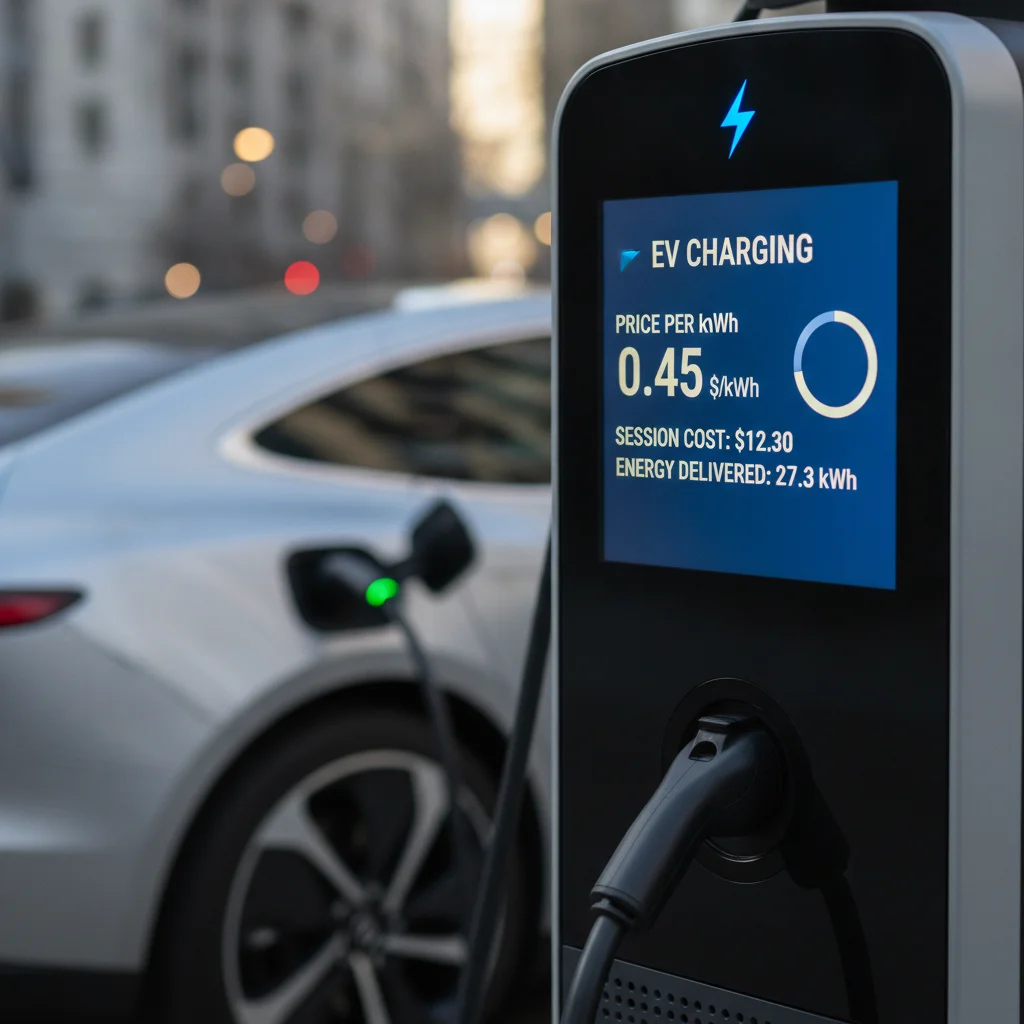
The sales pitch for charging network membership plans is simple: pay a flat monthly fee and unlock lower per-kWh or per-minute rates every time you plug in. On the surface, it sounds like a straightforward discount program. In practice, the financial calculus is considerably more nuanced — and for many EV owners, the math never quite works out.
The core problem is that charging networks earn revenue from non-members, so they set pay-as-you-go rates high enough to make membership look attractive even to light users. Meanwhile, membership rates are set low enough to entice subscribers but not so low that the network loses money on heavy users. The break-even point is real, but it shifts depending on your vehicle, your driving habits, the pricing model in your region, and how often you actually use that specific network's infrastructure.
To understand the different pricing models you'll encounter before you even get to the membership question — per-kWh, per-minute, and flat-session fees — see our primer on how charging pricing models work across major networks. That context matters because the membership discount is always expressed against the baseline pricing model, and a 30% discount on a per-minute rate means something very different for a slow-charging vehicle than for a fast-charging one.
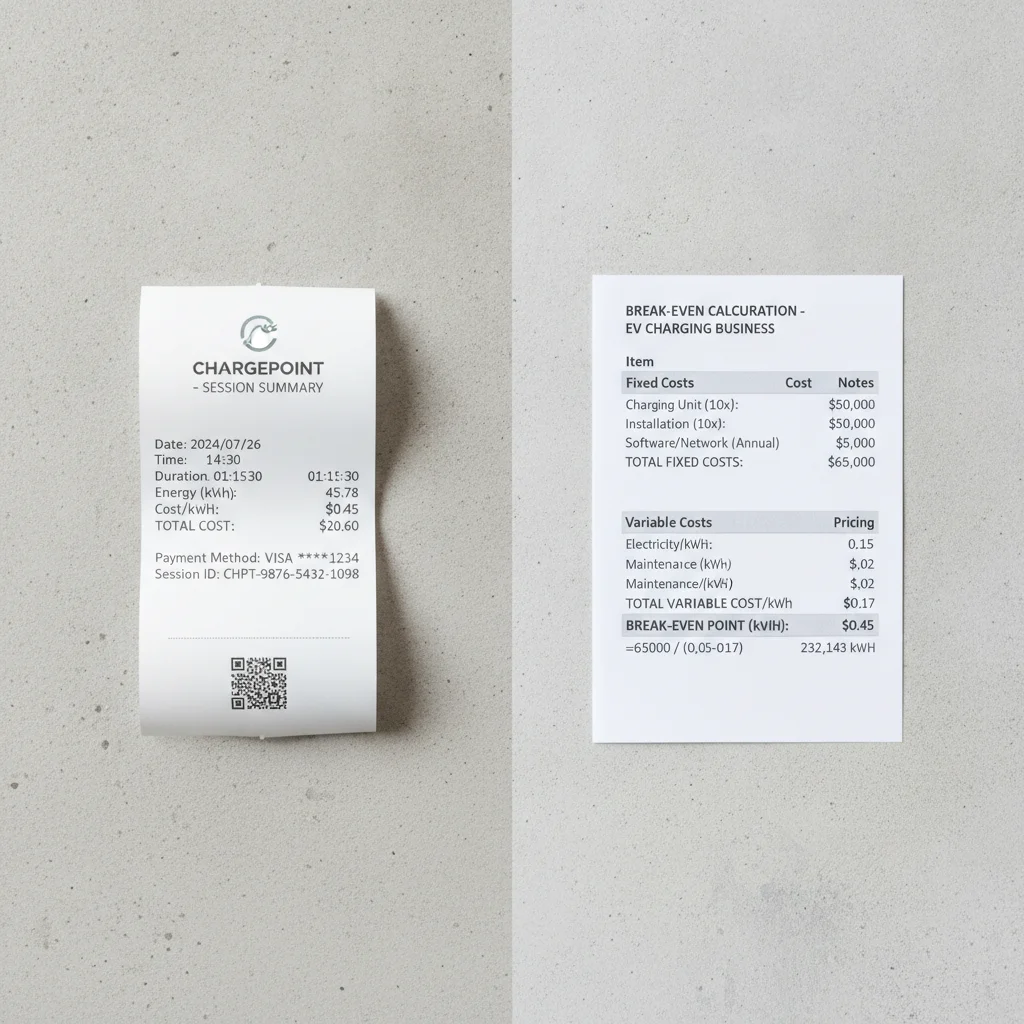
This guide walks through a repeatable financial framework you can apply to any network's membership offer. You'll need about 30 minutes of focused time, access to your charging history (or reasonable estimates), and a basic spreadsheet or calculator.
What you will need
What the Major Networks Currently Offer
Membership structures vary significantly across the dominant public charging networks in the U.S. Here is a snapshot of the general landscape as of 2024, though rates change frequently and vary by state:
| Network | Monthly Fee | Member Rate Benefit | Annual Option |
|---|---|---|---|
| Electrify America | $4/mo | Reduced per-kWh rate (approx. 25–30% off non-member) | Yes |
| EVgo | $6.99–$9.99/mo | Flat member per-minute or per-kWh rate, varies by tier | No |
| Blink | Varies by plan | Reduced per-kWh rate at Level 2 stations | Yes |
| ChargePoint | Free base / $4/mo Pass+ | Waived roaming fees; driver perks vary by station owner | No |
Tesla's Supercharger network remains subscription-free for Tesla drivers paying per-kWh, while non-Tesla vehicles pay a higher per-kWh or per-minute rate depending on vehicle compatibility. The network does not currently offer a traditional membership tier for public access.
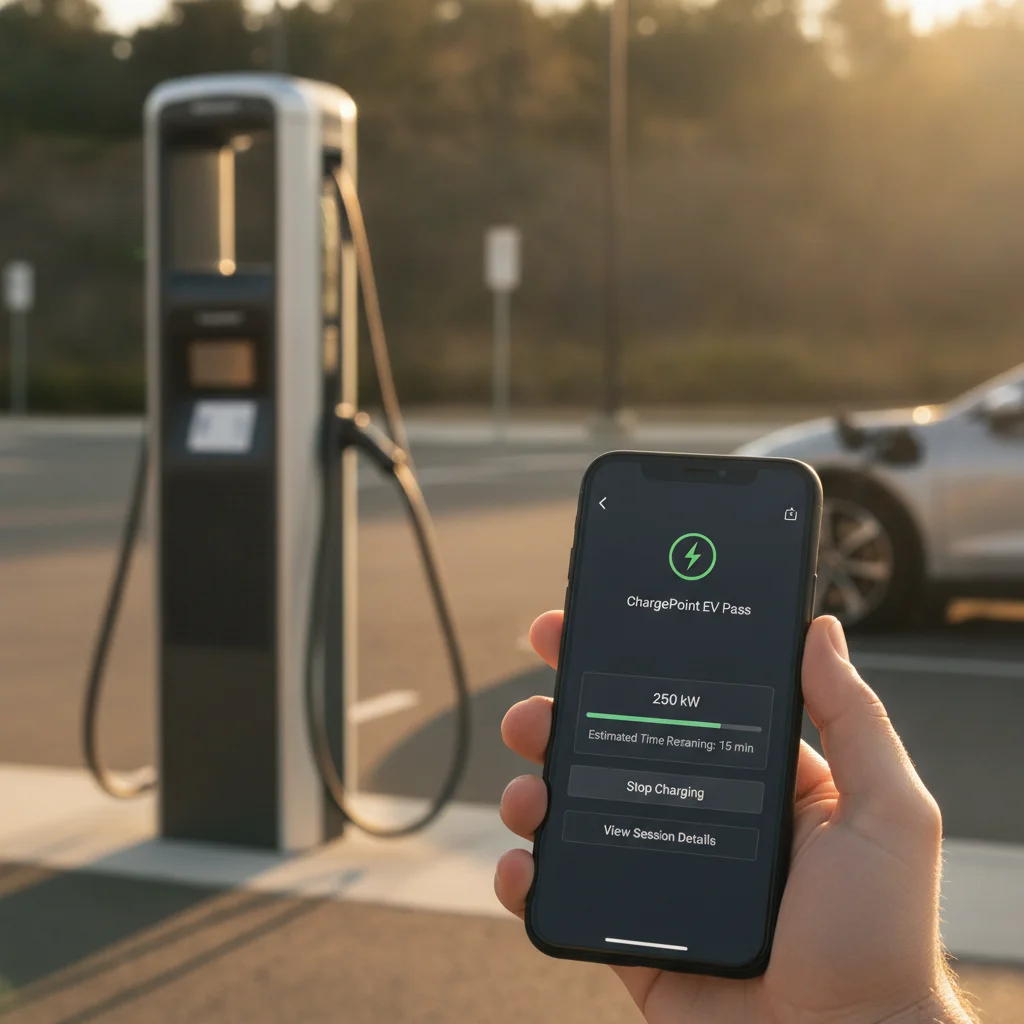
It's worth noting that ChargePoint operates a fundamentally different model — the network largely sets the infrastructure while individual station owners set pricing. A Pass+ subscription there primarily reduces roaming fees when using partner networks, not ChargePoint-specific session costs. That distinction matters enormously when you're comparing apples to apples.
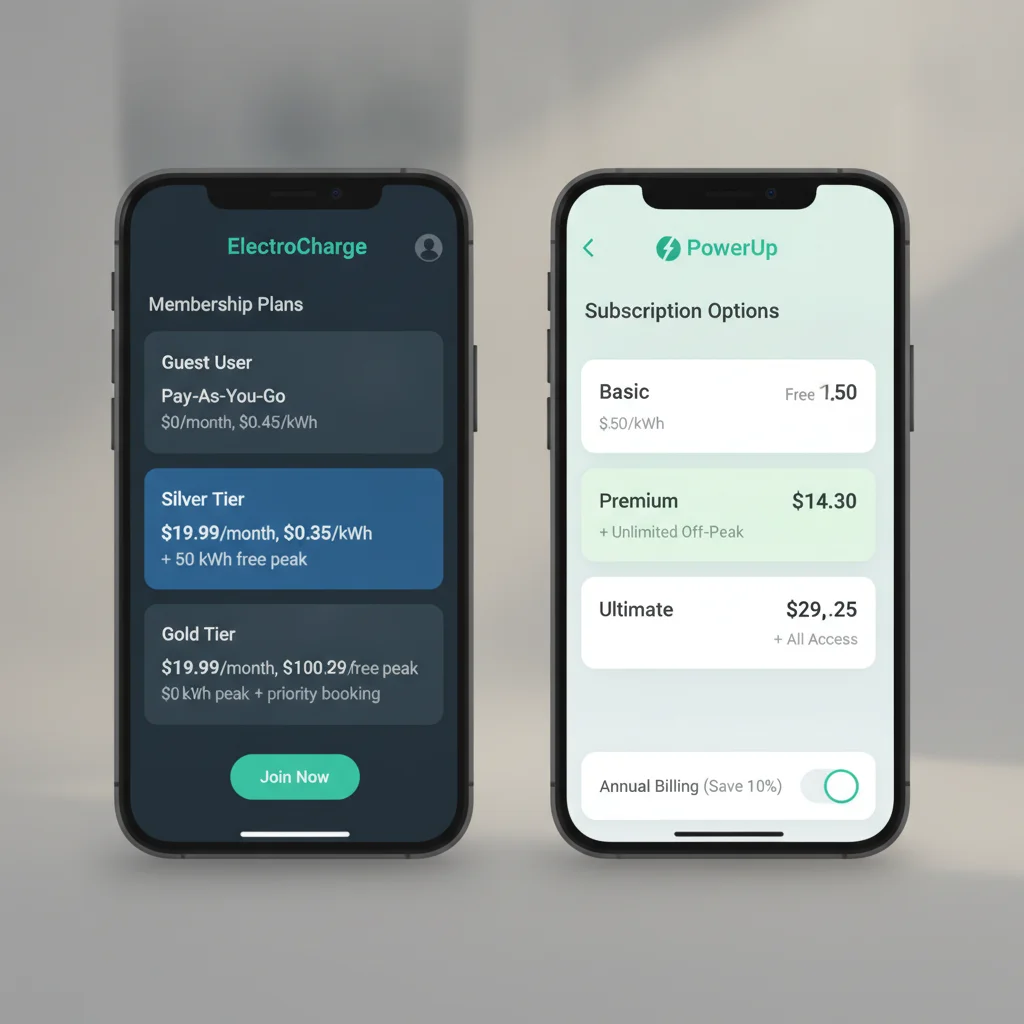
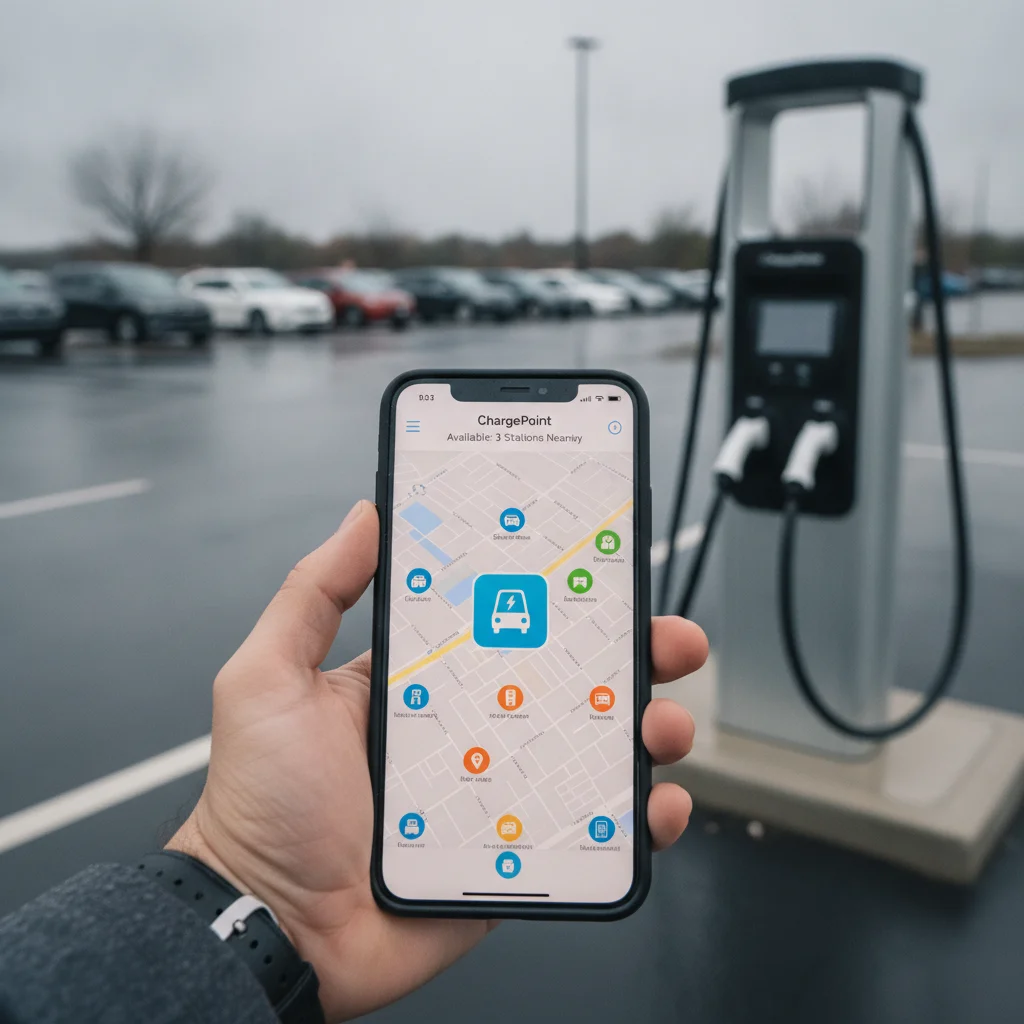
For a deeper look at how each network's app affects your ability to even find and use these stations reliably, the charging network apps comparison breaks down navigation accuracy, real-time availability data, and payment experience side by side.
Charging Network Account Dashboard
Provides historical session data including kWh delivered, session duration, and cost per session for accurate usage calculations.
Spreadsheet Application (e.g., Google Sheets, Excel)
Used to build a break-even model comparing monthly membership cost against projected per-session savings across varying usage volumes.
Network's Current Pricing Page
Confirms the current pay-as-you-go and member rates, which change periodically and must be verified before each calculation.
Vehicle Owner's Manual or Spec Sheet
Confirms your EV's maximum DC fast charge acceptance rate in kW, which determines whether per-minute billing is cost-effective for your vehicle.
PlugShare or ABRP (A Better Route Planner)
Helps estimate how frequently you will realistically use a specific network's stations along your typical routes and road trips.
Step-by-Step: How to Calculate Your Break-Even Point
The following steps will produce a concrete monthly savings figure for any network membership you're evaluating. Work through them in order, and be honest with your inputs — optimistic assumptions produce flattering numbers that won't reflect your actual bill.
Pull Your Actual Charging History for That Network
Log into your account on the specific charging network's app or website and navigate to your session history. Export or manually record the following for each session over the past three to six months:
- Date of session
- kWh delivered (not miles estimated)
- Session duration in minutes
- Amount charged to your account
If you do not yet have a history on a network because you've been using pay-as-you-go without an account, use your vehicle's onboard energy data and your receipts from the charging station as a proxy. The goal is a realistic picture of your actual network-specific usage, not your total public charging across all networks.
Calculate Your Average Monthly kWh on That Network
Add up the total kWh delivered across all sessions in your history period, then divide by the number of months covered.
Total kWh ÷ Number of Months = Average Monthly kWh
For example: 340 kWh over 5 months = 68 kWh/month average.
Also note your average session count per month. You'll use this to understand whether your usage is spread across many small sessions (more sensitive to per-minute pricing) or concentrated in fewer large sessions (more sensitive to per-kWh pricing).
Find the Current Pay-As-You-Go and Member Rates
Navigate to the network's pricing page directly — do not rely on third-party comparison sites, which may carry outdated figures. Record:
- Non-member rate (per kWh, per minute, or per session)
- Member rate under the plan you are evaluating
- Monthly membership fee
- Annual plan cost, if offered (divide by 12 for effective monthly cost)
Note whether different rates apply at different charger speeds (Level 2 vs. DC fast charge) or in different states. Most networks have regional pricing variations, and you should use rates applicable to the stations you actually use, not national averages.
Calculate Your Current Monthly Cost Without Membership
Using your average monthly kWh figure from Step 2 and the non-member rate from Step 3, calculate what you are currently spending (or would spend) per month as a pay-as-you-go user.
Average Monthly kWh × Non-Member Rate ($/kWh) = Current Monthly Cost
If the network bills per minute rather than per kWh, convert using your vehicle's average charge acceptance rate:
Average Monthly kWh ÷ Vehicle Charge Rate (kW) × 60 = Average Monthly Minutes
Average Monthly Minutes × Non-Member Per-Minute Rate = Current Monthly Cost
Example: 68 kWh ÷ 150 kW × 60 = 27.2 minutes; 27.2 min × $0.48/min = $13.06/month.
Calculate Your Projected Monthly Cost With Membership
Apply the same kWh volume to the member rate, then add the monthly membership fee.
Average Monthly kWh × Member Rate ($/kWh) = Charging Cost With Membership
Charging Cost With Membership + Monthly Fee = Total Monthly Cost With Membership
Using the same example: 68 kWh × $0.25/kWh = $17.00 + $4.00 membership fee = $21.00/month.
Compare this to the non-member total from Step 4. In this example, the non-member cost was $13.06, meaning the membership would cost more, not less, for this usage level.
Find the Break-Even Volume
To determine the minimum monthly kWh at which the membership starts saving money, set the two cost expressions equal and solve for kWh:
Non-Member Rate × X = (Member Rate × X) + Monthly Fee
X × (Non-Member Rate − Member Rate) = Monthly Fee
X = Monthly Fee ÷ (Non-Member Rate − Member Rate)
Example with per-kWh billing: $4.00 ÷ ($0.48 − $0.25) = $4.00 ÷ $0.23 = 17.4 kWh/month break-even.
If your average monthly usage on this network exceeds the break-even kWh figure, the membership saves you money. If it falls below, you pay more with the membership than without it. The larger the gap above break-even, the greater your monthly savings.
Stress-Test the Result Against Low-Usage Months
Your break-even analysis using an average is only as reliable as the consistency of your usage. If your lowest-usage month on this network was 10 kWh and your highest was 140 kWh, an average of 60 kWh may be misleading.
Check how many of your historical months fell below the break-even threshold you calculated in Step 6. Each month where your actual usage was below break-even is a month the membership cost you money rather than saved it. If more than three or four months out of twelve fell below break-even, a monthly subscription carries meaningful risk of net negative value in any given month — though an annual plan may still net out positively across the full year if high-use months dominate.
Promotional Rates Don't Last Forever
Several networks have historically offered introductory membership rates to attract subscribers, then raised prices once a user base was established. If the membership rate you're evaluating is labeled as promotional or introductory, your break-even calculation should use the standard post-promotional rate if it's disclosed — or account for the risk that rates will rise. Locking into an annual plan based on a promotional rate is particularly risky.
Idle Fees Can Wipe Out Member Savings
Most major DC fast charging networks charge idle fees when a vehicle remains plugged in after charging is complete — typically $0.40–$1.00 per minute. These fees apply to members and non-members alike. If your charging habits or vehicle software lead to frequent idle-fee situations, the fees can easily exceed your membership discount savings in a single session. Review your session history for idle fee charges before calculating net membership value.
Once you've completed the calculation for one network, repeat it independently for each network you're considering. Bundling multiple memberships together without running separate break-even analyses for each is one of the most common financial mistakes EV owners make — and it's covered in detail in our piece on charging cost mistakes that quietly drain EV savings.
When the Math Works — and When It Doesn't
After running the numbers, most EV owners fall into one of three categories:
Category 1: Clear Yes
You charge on a specific network more than 3–4 times per month on average, you consistently add meaningful energy per session (not just top-ups), and the discount is expressed as a per-kWh rate reduction. Road-trip-heavy drivers, commercial EV operators, and those without reliable home charging are the most likely to see genuine savings. If your break-even volume is 80 kWh per month on Electrify America and you regularly pull 120 kWh, the membership pays for itself and then some.
Category 2: Clear No
You charge primarily at home and use public fast charging fewer than twice per month. In this scenario, the membership fee will rarely be recovered. Even if you save $0.10/kWh on the rare session you do use, you'd need to charge enormous amounts in a single month to offset a $7–$10 monthly subscription. For most home-centric drivers, paying as you go is the financially rational choice.
Category 3: The Gray Zone
You charge publicly 2–3 times per month, or your usage is seasonal — heavy in summer road trips, minimal in winter. Here, an annual plan at a network that offers one could make sense if your high-use months dominate and you're willing to accept the math across the full year. Alternatively, some networks allow you to cancel monthly, so trial-and-cancel during a heavy-use period is a legitimate strategy.
Track One Network at a Time
Resist the urge to evaluate all your charging networks simultaneously in a single spreadsheet. The pricing structures, billing models, and rate differences vary so significantly between networks that a combined analysis tends to produce misleading averages. Run a clean, separate break-even calculation for each network you're considering, using only session data from that network's infrastructure.
Revisit Your Calculation Every Quarter
Network pricing changes more frequently than most EV owners expect. Electrify America, EVgo, and others have revised rates and membership tiers multiple times in recent years, sometimes significantly. A membership that paid off at the old rate structure may no longer be financially justified after a rate adjustment. Set a quarterly calendar reminder to re-check posted rates and re-run your break-even math.
Free Charging Reduces Your Membership ROI
Every kilowatt-hour you receive for free — at a workplace charger, a hotel, or a retail destination — directly reduces the volume of paid public charging against which a membership can generate savings. If your free charging access increases, revisit your membership subscriptions. The effective kWh volume you're paying for may have dropped below break-even without you noticing.
One variable many drivers underestimate is the interplay between public fast charging costs and home charging costs. If you have access to time-of-use electricity pricing at home, your off-peak residential rate might be $0.10–$0.13/kWh — dramatically cheaper than even the best member rates at any public network. Every kilowatt-hour you shift back to home charging reduces the volume of public charging on which a membership could ever save you money.
Similarly, if you're exploring home charging infrastructure more broadly, the home charging setup hub covers equipment selection and installation considerations that affect your total cost of EV ownership.
Membership Does Not Lock In Rates
Subscribing to a charging network membership does not guarantee that the member rates you calculated against will remain stable for the duration of your subscription. Networks reserve the right to adjust pricing with typically 30 days' notice. Your break-even math must be re-verified against current rates, not the rates at the time you subscribed. This is particularly important for drivers on annual plans who may not check pricing regularly.
Per-Minute Billing Punishes Slower Vehicles
If a network bills by the minute rather than by the kWh, the effective cost per kWh is entirely dependent on your vehicle's charge acceptance rate. Older EVs or entry-level models with DC fast charge acceptance below 60 kW can pay two to three times more per kWh than a high-acceptance vehicle at the same station, even on the same member rate. Always convert per-minute rates to effective per-kWh rates using your vehicle's real-world average charge rate before comparing membership plans across networks.
Troubleshooting: Common Scenarios and What to Do
"My usage varies too much month to month to know."
Pull six months of charging data from your car's app or your network account history if available. Calculate the average monthly kWh consumed at that specific network. Use that average, not your best month, as your break-even input. If you don't have six months of data yet, wait before subscribing — the cost of a few extra pay-as-you-go sessions while you build a data baseline is smaller than the cost of a wrong subscription decision.
"I use multiple networks depending on location."
This is the most common scenario for long-distance drivers. Do not average your total public charging across all networks and apply it to a single membership calculation. Run the break-even analysis for each network independently using only the kWh you've consumed on that specific network's infrastructure. Most drivers discover that their usage is concentrated enough on one or two networks to potentially justify a single membership, but not multiple subscriptions simultaneously.
"The network changed its rates after I subscribed."
Network pricing is not locked in when you subscribe — rates can and do change. Electrify America, EVgo, and others have adjusted pricing tiers multiple times in recent years. Set a calendar reminder every three months to re-run your break-even calculation using current posted rates. If the math no longer works, cancel before the next billing cycle. Monthly plans give you this flexibility; annual plans do not.
"My vehicle charges slowly at DC fast chargers."
If your EV accepts DC fast charging at 50 kW or less — common in older or entry-level EVs — per-minute billing at some networks can be punishing even with a membership discount. A vehicle pulling 40 kW paying $0.16/min (member rate) is effectively paying $0.24/kWh, which compares poorly against per-kWh billing at many stations. In this specific case, prioritize networks that bill by the kWh rather than by the minute, regardless of which offers a cheaper membership fee on paper. The pricing model explainer covers exactly this dynamic in detail.
"I'm considering a membership primarily for convenience features, not savings."
Some networks bundle membership with features like plug-and-charge capability, priority support, or guaranteed stall access. Quantifying convenience is legitimate — but be explicit about it. If you're paying $8/month and only saving $3 on charging costs, you're paying $5/month for convenience features. Decide whether that's worth it to you deliberately, not by accident.
Building a Longer-Term Charging Cost Strategy
A membership decision is not a one-time calculation — it's a recurring financial maintenance task. EV charging infrastructure is still maturing rapidly, with pricing structures, network footprints, and competitive dynamics shifting on a quarterly basis. The subscription that makes sense today may be irrelevant in 18 months if a competing network expands in your area or your employer installs free workplace charging.
The most financially disciplined EV owners treat their charging setup as a portfolio with several components: home charging costs (ideally minimized through off-peak charging practices), public network subscriptions evaluated quarterly, and opportunistic free charging at workplaces, hotels, and retail destinations. Free charging is free whether or not you have a membership card in your wallet.
For those considering whether to invest in smarter home charging infrastructure as a way to reduce public charging dependence, the smart EV charger comparison and the question of solar panel pairing for EV charging are both worth examining as part of that broader cost picture.
Finally, review the general membership value question — not just the math — in our overview article on whether EV charging memberships are worth signing up for, which frames the decision from a broader ownership perspective beyond pure arithmetic.

The bottom line: charging network memberships are a legitimate savings tool for a specific type of EV driver — one who charges publicly with meaningful frequency on a specific network and can demonstrate a positive break-even calculation using their own real usage data. For everyone else, pay-as-you-go remains the more flexible and often cheaper default. Run your numbers, not the network's marketing copy.
All claims are backed by peer-reviewed research. Sources on request.